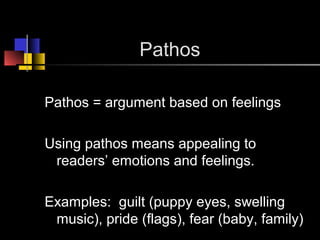
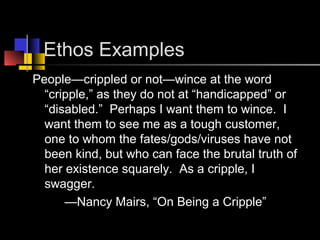
Aristotle identified four modes of persuasion: logos, ethos, pathos, and kairos. Logos refers to logical argument based on facts and evidence. Ethos involves establishing one's credibility and trustworthiness to persuade an audience. Pathos means appealing to an audience's emotions. Kairos involves using a sense of urgency or timing to persuade. The document then provides examples of each mode from speeches and writing to illustrate how they are used to change views or motivate action.