Rhabdomyolysis
Dr. Osama El-Shahat
Head of Nephrology Department
New Mansoura General Hospital (international)
ISN Educational Ambassador
WEEKLY SCIENTIFIC
MEETING
Nephrology Department
New Mansoura General Hospital
(international)
Definition
 Destruction or disintegration of striated
muscle resulting in the leakage of the
intracellular muscle constituents into the
circulation and extracellular fluid
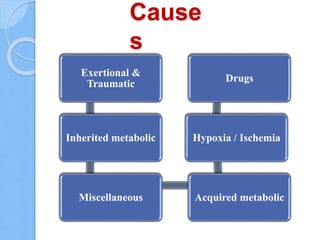
Cause
s
Exertional &
Traumatic
Inherited metabolic
Miscellaneous Acquired metabolic
Hypoxia / Ischemia
Drugs
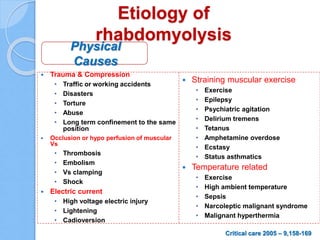
Etiology of
rhabdomyolysis
Physical
Causes
 Trauma & Compression
• Traffic or working accidents
• Disasters
• Torture
• Abuse
• Long term confinement to the same
position
 Occlusion or hypo perfusion of muscular
Vs
• Thrombosis
• Embolism
• Vs clamping
• Shock
 Electric current
• High voltage electric injury
• Lightening
• Cadioversion
 Straining muscular exercise
• Exercise
• Epilepsy
• Psychiatric agitation
• Delirium tremens
• Tetanus
• Amphetamine overdose
• Ecstasy
• Status asthmatics
 Temperature related
• Exercise
• High ambient temperature
• Sepsis
• Narcoleptic malignant syndrome
• Malignant hyperthermia
Critical care 2005 – 9,158-169
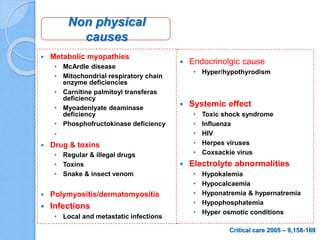
Non physical
causes
 Metabolic myopathies
• McArdle disease
• Mitochondrial respiratory chain
enzyme deficiencies
• Carnitine palmitoyl transferas
deficiency
• Myoadenlyate deaminase
deficiency
• Phosphofructokinase deficiency
•
 Drug & toxins
• Regular & illegal drugs
• Toxins
• Snake & insect venom
 Polymyositis/dermatomyositis
 Infections
• Local and metastatic infections
 Endocrinolgic cause
• Hyper/hypothyrodism
 Systemic effect
• Toxic shock syndrome
• Influenza
• HIV
• Herpes viruses
• Coxsackie virus
 Electrolyte abnormalities
• Hypokalemia
• Hypocalcaemia
• Hyponatremia & hypernatremia
• Hypophosphatemia
• Hyper osmotic conditions
Critical care 2005 – 9,158-169
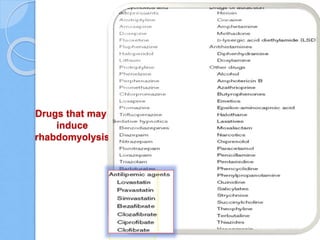
Drugs that may
induce
rhabdomyolysis
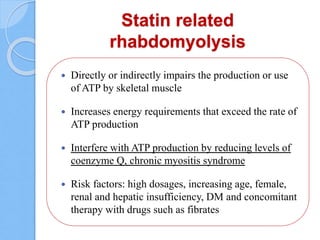
Statin related
rhabdomyolysis
 Directly or indirectly impairs the production or use
of ATP by skeletal muscle
 Increases energy requirements that exceed the rate of
ATP production
 Interfere with ATP production by reducing levels of
coenzyme Q, chronic myositis syndrome
 Risk factors: high dosages, increasing age, female,
renal and hepatic insufficiency, DM and concomitant
therapy with drugs such as fibrates
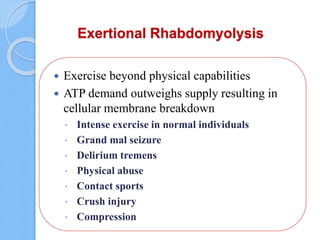
Exertional Rhabdomyolysis
 Exercise beyond physical capabilities
 ATP demand outweighs supply resulting in
cellular membrane breakdown
 Intense exercise in normal individuals
 Grand mal seizure
 Delirium tremens
 Physical abuse
 Contact sports
 Crush injury
 Compression
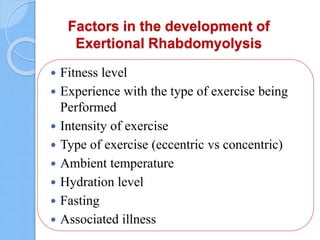
Factors in the development of
Exertional Rhabdomyolysis
 Fitness level
 Experience with the type of exercise being
Performed
 Intensity of exercise
 Type of exercise (eccentric vs concentric)
 Ambient temperature
 Hydration level
 Fasting
 Associated illness
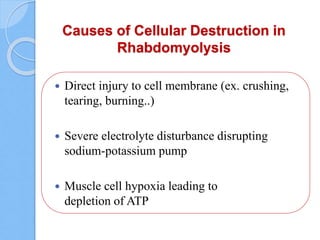
Causes of Cellular Destruction in
Rhabdomyolysis
 Direct injury to cell membrane (ex. crushing,
tearing, burning..)
 Severe electrolyte disturbance disrupting
sodium-potassium pump
 Muscle cell hypoxia leading to
depletion of ATP
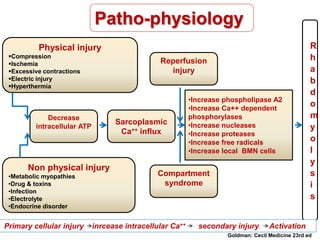
Physical injury
Compression
Ischemia
Excessive contractions
Electric injury
Hyperthermia
Non physical injury
•Metabolic myopathies
•Drug & toxins
•Infection
•Electrolyte
•Endocrine disorder
Decrease
intracellular ATP
Sarcoplasmic
Ca++ influx
Reperfusion
injury
Compartment
syndrome
•Increase phospholipase A2
•Increase Ca++ dependent
phosphorylases
•Increase nucleases
•Increase proteases
•Increase free radicals
•Increase local BMN cells
R
h
a
b
d
o
m
y
o
l
y
s
i
s
Primary cellular injury inrcease intracellular Ca++ secondary injury Activation
Goldman: Cecil Medicine 23rd ed
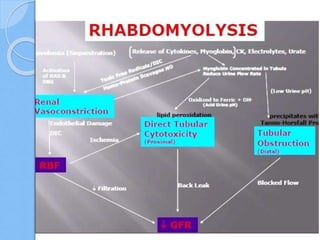
Patho-physiology
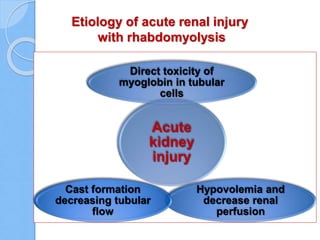
Etiology of acute renal injury
with rhabdomyolysis
Acute
kidney
injury
Direct toxicity of
myoglobin in tubular
cells
Hypovolemia and
decrease renal
perfusion
Cast formation
decreasing tubular
flow
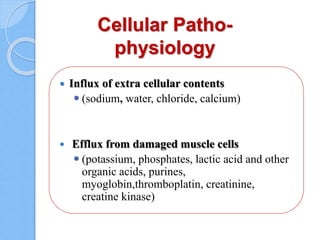
Cellular Patho-
physiology
 Influx of extra cellular contents
 (sodium, water, chloride, calcium)
 Efflux from damaged muscle cells
 (potassium, phosphates, lactic acid and other
organic acids, purines,
myoglobin,thromboplatin, creatinine,
creatine kinase)
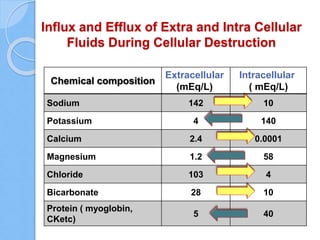
Influx and Efflux of Extra and Intra Cellular
Fluids During Cellular Destruction
Chemical composition
Extracellular
(mEq/L)
Intracellular
( mEq/L)
Sodium 142 10
Potassium 4 140
Calcium 2.4 0.0001
Magnesium 1.2 58
Chloride 103 4
Bicarbonate 28 10
Protein ( myoglobin,
CKetc)
5 40
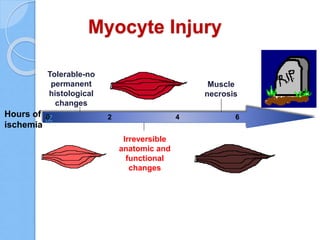
Myocyte Injury
Hours of
ischemia
0 2 4 6
Tolerable-no
permanent
histological
changes
Irreversible
anatomic and
functional
changes
Muscle
necrosis
When to Suspect Rhabdo
 Occurs in up to 85% of patients with traumatic injuries.
 Those with severe injury who develop rhabdomyolysis-
induced renal failure have a 20% mortality rate
 Multiple orthopedic injuries
 Crush injury to any part of the body (eg: hand)
 Laying on limb for long period of time –patient “found
down”
 Long surgery
 Brown urine
AXIOM
Sudden collapse during physical exertion carried
out under warm climatic conditions should be
primarily diagnosed as
rhabdomyolysis
(unless and until proven otherwise)
What to Watch for if you suspect Rhabdo:
 Clinical: Ms pain, weakness, dark urine
 Hypovolemia, shock
 Electrolyte abnormalities : ↑K+, ↓ Ca++
(sequestered in injured tissues)
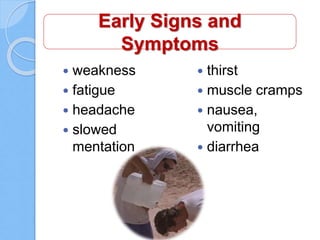
Early Signs and
Symptoms
 weakness
 fatigue
 headache
 slowed
mentation
 thirst
 muscle cramps
 nausea,
vomiting
 diarrhea
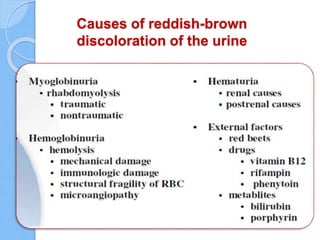
Causes of reddish-brown
discoloration of the urine
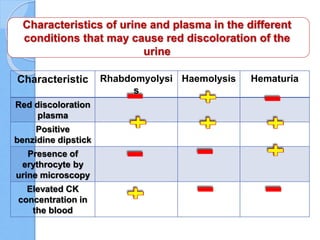
Characteristics of urine and plasma in the different
conditions that may cause red discoloration of the
urine
Characteristic Rhabdomyolysi
s
Haemolysis Hematuria
Red discoloration
plasma
Positive
benzidine dipstick
Presence of
erythrocyte by
urine microscopy
Elevated CK
concentration in
the blood
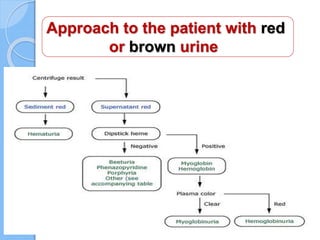
Approach to the patient with red
or brown urine
Diagnosis
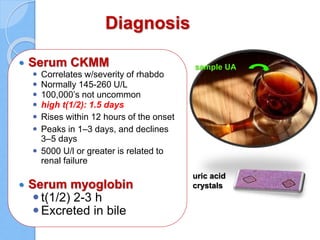
 Serum CKMM
 Correlates w/severity of rhabdo
 Normally 145-260 U/L
 100,000’s not uncommon
 high t(1/2): 1.5 days
 Rises within 12 hours of the onset
 Peaks in 1–3 days, and declines
3–5 days
 5000 U/l or greater is related to
renal failure
 Serum myoglobin
t(1/2) 2-3 h
Excreted in bile
sample UA
uric acid
crystals
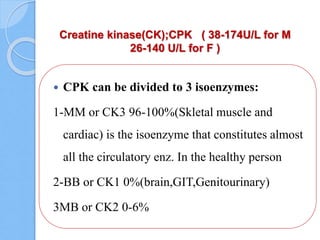
Creatine kinase(CK);CPK ( 38-174U/L for M
26-140 U/L for F )
 CPK can be divided to 3 isoenzymes:
1-MM or CK3 96-100%(Skletal muscle and
cardiac) is the isoenzyme that constitutes almost
all the circulatory enz. In the healthy person
2-BB or CK1 0%(brain,GIT,Genitourinary)
3MB or CK2 0-6%
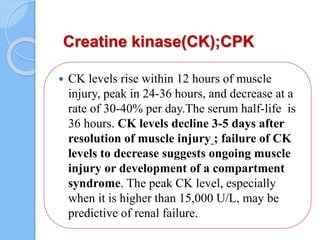
Creatine kinase(CK);CPK
 CK levels rise within 12 hours of muscle
injury, peak in 24-36 hours, and decrease at a
rate of 30-40% per day.The serum half-life is
36 hours. CK levels decline 3-5 days after
resolution of muscle injury ; failure of CK
levels to decrease suggests ongoing muscle
injury or development of a compartment
syndrome. The peak CK level, especially
when it is higher than 15,000 U/L, may be
predictive of renal failure.
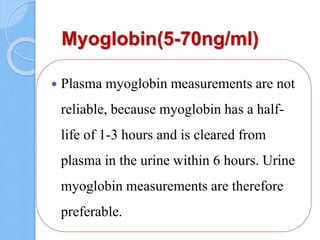
Myoglobin(5-70ng/ml)
 Plasma myoglobin measurements are not
reliable, because myoglobin has a half-
life of 1-3 hours and is cleared from
plasma in the urine within 6 hours. Urine
myoglobin measurements are therefore
preferable.
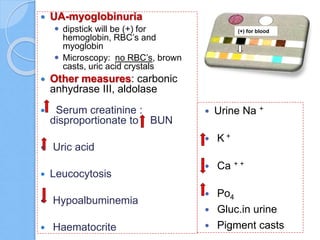
 UA-myoglobinuria
 dipstick will be (+) for
hemoglobin, RBC’s and
myoglobin
 Microscopy: no RBC’s, brown
casts, uric acid crystals
 Other measures: carbonic
anhydrase III, aldolase
 Serum creatinine :
disproportionate to BUN
 Uric acid
 Leucocytosis
 Hypoalbuminemia
 Haematocrite
 Urine Na +
 K +
 Ca + +
 Po4
 Gluc.in urine
 Pigment casts
(+) for blood
Clinical Manifestations &
Complications
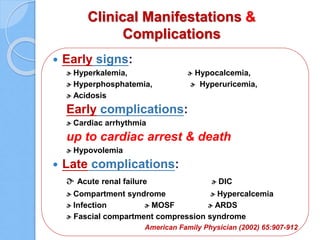
 Early signs:
ɚ Hyperkalemia, ɚ Hypocalcemia,
ɚ Hyperphosphatemia, ɚ Hyperuricemia,
ɚ Acidosis
Early complications:
ɚ Cardiac arrhythmia
up to cardiac arrest & death
ɚ Hypovolemia
 Late complications:
ɚ Acute renal failure ɚ DIC
ɚ Compartment syndrome ɚ Hypercalcemia
ɚ Infection ɚ MOSF ɚ ARDS
ɚ Fascial compartment compression syndrome
American Family Physician (2002) 65:907-912
TREATMENT
 Fluid Resuscitation
Is the cornerstone of treatment and must
be initiated as soon as possible. No
randomized trials of fluid repletion
regimens in any age group have been
done.
Patients with a CK elevation in excess of 2-3
times the reference range, appropriate clinical
history, and risk factors should be suspected of
having rhabdomyolysis. For adults, administer
isotonic fluids at a rate of approximately 400
mL/h (may be up to 1000 mL/h based on type
of condition and severity) and then titrate to
maintain a urine output of at least 200 mL/h
or 3 ml per kilogram
 Because injured myocytes can
sequester large volumes of ECF,
crystalloid requirements may be
surprisingly large. Consider central
venous pressure measurement or Swan-
Ganz catheterization in patients with
cardiac or renal disease. Repeat the CK
assay every 6-12 hours to determine the
peak CK level.
 The composition of repletion fluid is
controversial and may also include
sodium bicarbonate, esp. in NS is used.
 To prevent renal failure, many
authorities advocate urinary alkalization,
mannitol, and loop diuretics. Check
urine pH. If it is less than 6.5, alternate
each liter of normal saline with 1 liter of
5% dextrose plus 100 mmol of
bicarbonate.
 Alkalinization of urine benefits:-
1-Decrease precipitationof the Tamm–Horsfall
protein–myoglobin complex
2- Inhibits reduction–oxidation (redox)cycling
of myoglobin and lipid peroxidation , thus
ameliorating tubule injury.
3- Counteract VC
Dirutics
 Remains controversial, but it is clear that it should
be restricted to patients in whom the fluid repletion
has been achieved.Mannitol may have several
benefits: as an osmotic diuretic, it increases urinary
flow and the flushing of nephrotoxic agents through
the renal tubules; as an osmotic agent, it creates a
gradient that extracts fluid that has accumulated in
injured muscles and thus improves hypovolemia;
finally,it is a free-radical scavenger
 During the time mannitol is being
administered, plasma osmolality and the
osmolal gap (i.e., the difference between
the measured and calculated serum
osmolality) should be monitored
frequently and therapy discontinued if
adequate diuresis is not achieved or if
the osmolal gap rises above 55 mOsm
per kilogram
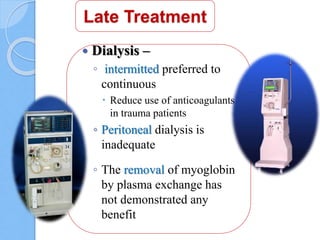
Late Treatment
 Dialysis –
◦ intermitted preferred to
continuous
 Reduce use of anticoagulants
in trauma patients
◦ Peritoneal dialysis is
inadequate
◦ The removal of myoglobin
by plasma exchange has
not demonstrated any
benefit
Take Home Message
 Impairment of the production or use of ATP is the basic
cause.
 Most useful laboratory findings are elevated CK(>
5000U/L related to ARF), initial detection of myglobolin.
 Management: Aggressive hydration, diuresis, urine
alkalinzation, free-radical scavengers, dialysis.
 Do not treat hypocalcemia unless symptom developed.
 Conditioning by regular exercise to prevent ″white-collar
rhabdomyolysis ″ .
‫الرحيم‬‫الرحمن‬‫هللا‬ ‫بسم‬
*‹‫حى‬ ‫شئ‬ ‫كل‬ ‫الماء‬ ‫من‬ ‫وجعلنا‬›*
‫األنبياء‬(30)
Rhabdomyolysis .-dr.-osama-2017

Rhabdomyolysis .-dr.-osama-2017

  • 1.
    Rhabdomyolysis Dr. Osama El-Shahat Headof Nephrology Department New Mansoura General Hospital (international) ISN Educational Ambassador
  • 2.
    WEEKLY SCIENTIFIC MEETING Nephrology Department NewMansoura General Hospital (international)
  • 3.
    Definition  Destruction ordisintegration of striated muscle resulting in the leakage of the intracellular muscle constituents into the circulation and extracellular fluid
  • 4.
    Cause s Exertional & Traumatic Inherited metabolic MiscellaneousAcquired metabolic Hypoxia / Ischemia Drugs
  • 5.
    Etiology of rhabdomyolysis Physical Causes  Trauma& Compression • Traffic or working accidents • Disasters • Torture • Abuse • Long term confinement to the same position  Occlusion or hypo perfusion of muscular Vs • Thrombosis • Embolism • Vs clamping • Shock  Electric current • High voltage electric injury • Lightening • Cadioversion  Straining muscular exercise • Exercise • Epilepsy • Psychiatric agitation • Delirium tremens • Tetanus • Amphetamine overdose • Ecstasy • Status asthmatics  Temperature related • Exercise • High ambient temperature • Sepsis • Narcoleptic malignant syndrome • Malignant hyperthermia Critical care 2005 – 9,158-169
  • 6.
    Non physical causes  Metabolicmyopathies • McArdle disease • Mitochondrial respiratory chain enzyme deficiencies • Carnitine palmitoyl transferas deficiency • Myoadenlyate deaminase deficiency • Phosphofructokinase deficiency •  Drug & toxins • Regular & illegal drugs • Toxins • Snake & insect venom  Polymyositis/dermatomyositis  Infections • Local and metastatic infections  Endocrinolgic cause • Hyper/hypothyrodism  Systemic effect • Toxic shock syndrome • Influenza • HIV • Herpes viruses • Coxsackie virus  Electrolyte abnormalities • Hypokalemia • Hypocalcaemia • Hyponatremia & hypernatremia • Hypophosphatemia • Hyper osmotic conditions Critical care 2005 – 9,158-169
  • 7.
  • 8.
    Statin related rhabdomyolysis  Directlyor indirectly impairs the production or use of ATP by skeletal muscle  Increases energy requirements that exceed the rate of ATP production  Interfere with ATP production by reducing levels of coenzyme Q, chronic myositis syndrome  Risk factors: high dosages, increasing age, female, renal and hepatic insufficiency, DM and concomitant therapy with drugs such as fibrates
  • 9.
    Exertional Rhabdomyolysis  Exercisebeyond physical capabilities  ATP demand outweighs supply resulting in cellular membrane breakdown  Intense exercise in normal individuals  Grand mal seizure  Delirium tremens  Physical abuse  Contact sports  Crush injury  Compression
  • 10.
    Factors in thedevelopment of Exertional Rhabdomyolysis  Fitness level  Experience with the type of exercise being Performed  Intensity of exercise  Type of exercise (eccentric vs concentric)  Ambient temperature  Hydration level  Fasting  Associated illness
  • 11.
    Causes of CellularDestruction in Rhabdomyolysis  Direct injury to cell membrane (ex. crushing, tearing, burning..)  Severe electrolyte disturbance disrupting sodium-potassium pump  Muscle cell hypoxia leading to depletion of ATP
  • 13.
    Physical injury Compression Ischemia Excessive contractions Electricinjury Hyperthermia Non physical injury •Metabolic myopathies •Drug & toxins •Infection •Electrolyte •Endocrine disorder Decrease intracellular ATP Sarcoplasmic Ca++ influx Reperfusion injury Compartment syndrome •Increase phospholipase A2 •Increase Ca++ dependent phosphorylases •Increase nucleases •Increase proteases •Increase free radicals •Increase local BMN cells R h a b d o m y o l y s i s Primary cellular injury inrcease intracellular Ca++ secondary injury Activation Goldman: Cecil Medicine 23rd ed Patho-physiology
  • 15.
    Etiology of acuterenal injury with rhabdomyolysis Acute kidney injury Direct toxicity of myoglobin in tubular cells Hypovolemia and decrease renal perfusion Cast formation decreasing tubular flow
  • 16.
    Cellular Patho- physiology  Influxof extra cellular contents  (sodium, water, chloride, calcium)  Efflux from damaged muscle cells  (potassium, phosphates, lactic acid and other organic acids, purines, myoglobin,thromboplatin, creatinine, creatine kinase)
  • 17.
    Influx and Effluxof Extra and Intra Cellular Fluids During Cellular Destruction Chemical composition Extracellular (mEq/L) Intracellular ( mEq/L) Sodium 142 10 Potassium 4 140 Calcium 2.4 0.0001 Magnesium 1.2 58 Chloride 103 4 Bicarbonate 28 10 Protein ( myoglobin, CKetc) 5 40
  • 18.
    Myocyte Injury Hours of ischemia 02 4 6 Tolerable-no permanent histological changes Irreversible anatomic and functional changes Muscle necrosis
  • 19.
    When to SuspectRhabdo  Occurs in up to 85% of patients with traumatic injuries.  Those with severe injury who develop rhabdomyolysis- induced renal failure have a 20% mortality rate  Multiple orthopedic injuries  Crush injury to any part of the body (eg: hand)  Laying on limb for long period of time –patient “found down”  Long surgery  Brown urine
  • 20.
    AXIOM Sudden collapse duringphysical exertion carried out under warm climatic conditions should be primarily diagnosed as rhabdomyolysis (unless and until proven otherwise)
  • 21.
    What to Watchfor if you suspect Rhabdo:  Clinical: Ms pain, weakness, dark urine  Hypovolemia, shock  Electrolyte abnormalities : ↑K+, ↓ Ca++ (sequestered in injured tissues)
  • 22.
    Early Signs and Symptoms weakness  fatigue  headache  slowed mentation  thirst  muscle cramps  nausea, vomiting  diarrhea
  • 23.
  • 24.
    Characteristics of urineand plasma in the different conditions that may cause red discoloration of the urine Characteristic Rhabdomyolysi s Haemolysis Hematuria Red discoloration plasma Positive benzidine dipstick Presence of erythrocyte by urine microscopy Elevated CK concentration in the blood
  • 25.
    Approach to thepatient with red or brown urine
  • 26.
    Diagnosis  Serum CKMM Correlates w/severity of rhabdo  Normally 145-260 U/L  100,000’s not uncommon  high t(1/2): 1.5 days  Rises within 12 hours of the onset  Peaks in 1–3 days, and declines 3–5 days  5000 U/l or greater is related to renal failure  Serum myoglobin t(1/2) 2-3 h Excreted in bile sample UA uric acid crystals
  • 27.
    Creatine kinase(CK);CPK (38-174U/L for M 26-140 U/L for F )  CPK can be divided to 3 isoenzymes: 1-MM or CK3 96-100%(Skletal muscle and cardiac) is the isoenzyme that constitutes almost all the circulatory enz. In the healthy person 2-BB or CK1 0%(brain,GIT,Genitourinary) 3MB or CK2 0-6%
  • 28.
    Creatine kinase(CK);CPK  CKlevels rise within 12 hours of muscle injury, peak in 24-36 hours, and decrease at a rate of 30-40% per day.The serum half-life is 36 hours. CK levels decline 3-5 days after resolution of muscle injury ; failure of CK levels to decrease suggests ongoing muscle injury or development of a compartment syndrome. The peak CK level, especially when it is higher than 15,000 U/L, may be predictive of renal failure.
  • 29.
    Myoglobin(5-70ng/ml)  Plasma myoglobinmeasurements are not reliable, because myoglobin has a half- life of 1-3 hours and is cleared from plasma in the urine within 6 hours. Urine myoglobin measurements are therefore preferable.
  • 30.
     UA-myoglobinuria  dipstickwill be (+) for hemoglobin, RBC’s and myoglobin  Microscopy: no RBC’s, brown casts, uric acid crystals  Other measures: carbonic anhydrase III, aldolase  Serum creatinine : disproportionate to BUN  Uric acid  Leucocytosis  Hypoalbuminemia  Haematocrite  Urine Na +  K +  Ca + +  Po4  Gluc.in urine  Pigment casts (+) for blood
  • 31.
    Clinical Manifestations & Complications Early signs: ɚ Hyperkalemia, ɚ Hypocalcemia, ɚ Hyperphosphatemia, ɚ Hyperuricemia, ɚ Acidosis Early complications: ɚ Cardiac arrhythmia up to cardiac arrest & death ɚ Hypovolemia  Late complications: ɚ Acute renal failure ɚ DIC ɚ Compartment syndrome ɚ Hypercalcemia ɚ Infection ɚ MOSF ɚ ARDS ɚ Fascial compartment compression syndrome American Family Physician (2002) 65:907-912
  • 32.
    TREATMENT  Fluid Resuscitation Isthe cornerstone of treatment and must be initiated as soon as possible. No randomized trials of fluid repletion regimens in any age group have been done.
  • 33.
    Patients with aCK elevation in excess of 2-3 times the reference range, appropriate clinical history, and risk factors should be suspected of having rhabdomyolysis. For adults, administer isotonic fluids at a rate of approximately 400 mL/h (may be up to 1000 mL/h based on type of condition and severity) and then titrate to maintain a urine output of at least 200 mL/h or 3 ml per kilogram
  • 34.
     Because injuredmyocytes can sequester large volumes of ECF, crystalloid requirements may be surprisingly large. Consider central venous pressure measurement or Swan- Ganz catheterization in patients with cardiac or renal disease. Repeat the CK assay every 6-12 hours to determine the peak CK level.
  • 35.
     The compositionof repletion fluid is controversial and may also include sodium bicarbonate, esp. in NS is used.
  • 36.
     To preventrenal failure, many authorities advocate urinary alkalization, mannitol, and loop diuretics. Check urine pH. If it is less than 6.5, alternate each liter of normal saline with 1 liter of 5% dextrose plus 100 mmol of bicarbonate.
  • 37.
     Alkalinization ofurine benefits:- 1-Decrease precipitationof the Tamm–Horsfall protein–myoglobin complex 2- Inhibits reduction–oxidation (redox)cycling of myoglobin and lipid peroxidation , thus ameliorating tubule injury. 3- Counteract VC
  • 38.
    Dirutics  Remains controversial,but it is clear that it should be restricted to patients in whom the fluid repletion has been achieved.Mannitol may have several benefits: as an osmotic diuretic, it increases urinary flow and the flushing of nephrotoxic agents through the renal tubules; as an osmotic agent, it creates a gradient that extracts fluid that has accumulated in injured muscles and thus improves hypovolemia; finally,it is a free-radical scavenger
  • 39.
     During thetime mannitol is being administered, plasma osmolality and the osmolal gap (i.e., the difference between the measured and calculated serum osmolality) should be monitored frequently and therapy discontinued if adequate diuresis is not achieved or if the osmolal gap rises above 55 mOsm per kilogram
  • 40.
    Late Treatment  Dialysis– ◦ intermitted preferred to continuous  Reduce use of anticoagulants in trauma patients ◦ Peritoneal dialysis is inadequate ◦ The removal of myoglobin by plasma exchange has not demonstrated any benefit
  • 41.
    Take Home Message Impairment of the production or use of ATP is the basic cause.  Most useful laboratory findings are elevated CK(> 5000U/L related to ARF), initial detection of myglobolin.  Management: Aggressive hydration, diuresis, urine alkalinzation, free-radical scavengers, dialysis.  Do not treat hypocalcemia unless symptom developed.  Conditioning by regular exercise to prevent ″white-collar rhabdomyolysis ″ .
  • 42.
  • 43.
    *‹‫حى‬ ‫شئ‬ ‫كل‬‫الماء‬ ‫من‬ ‫وجعلنا‬›* ‫األنبياء‬(30)