Restructuring the strip: Strategies for Transforming Underperforming Commercial Strip Corridors into Community-Serving AssetsCaitlyn Horose and Kristel SheesleyMuskie School of Public Service, University of Southern Maine  May 2011
Project backgroundImpetusTaskMethods
OutlineWhat is the strip?Why did it develop like it did?The strip’s declineStrategies for restructuringLand useRight of wayDeveloping the restructuring planCase studyApplication to Maine
What is the strip?
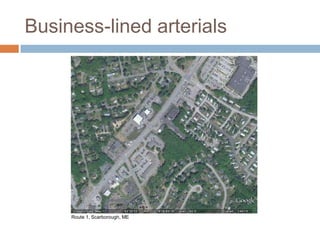
Business-lined arterialsRoute 1, Scarborough, ME
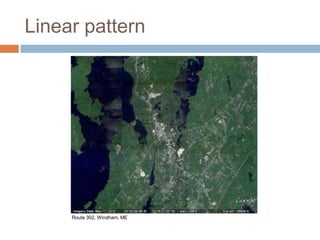
Linear patternRoute 302, Windham, ME
Designed for the car
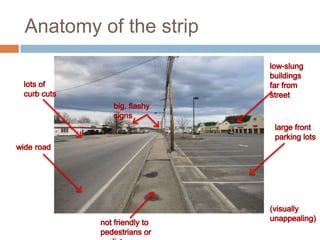
Anatomy of the striplow-slung buildings far from streetlots of curb cutsbig, flashy signslarge front parking lotswide road(visually unappealing)not friendly to pedestrians or cyclists
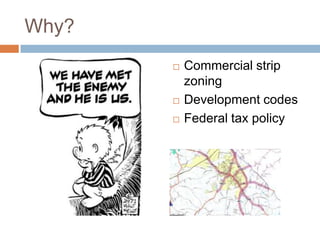
Why?Commercial strip zoningDevelopment codesFederal tax policy
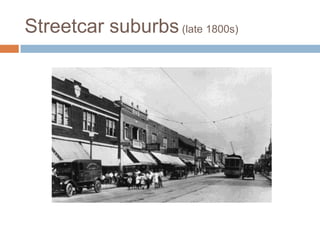
Streetcar suburbs (late 1800s)
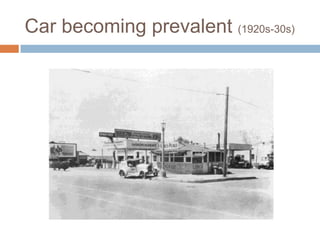
Car becoming prevalent (1920s-30s)
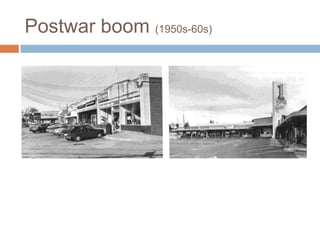
Postwar boom (1950s-60s)
DisinvestmentTraffic congestionChanging retail preferencesChanging consumer preferencesForces undermining the strip
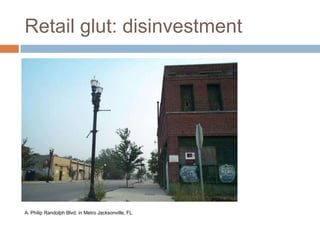
Retail glut: disinvestmentA. Philip Randolph Blvd. in Metro Jacksonville, FL
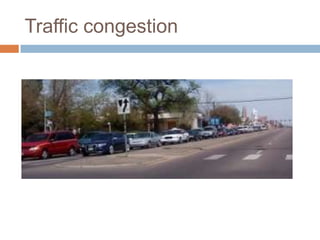
Traffic congestion
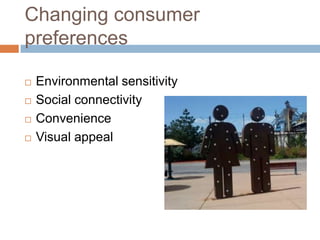
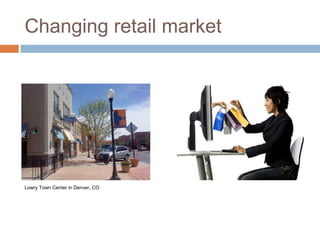
Changing consumer preferencesEnvironmental sensitivitySocial connectivityConvenienceVisual appeal
Changing retail marketLowry Town Center in Denver, CO
Restructuring strategies
Reconfigure development pattern
Redevelop strip centers & buildings
Alter parking lots
Use good design principlesLand use strategies
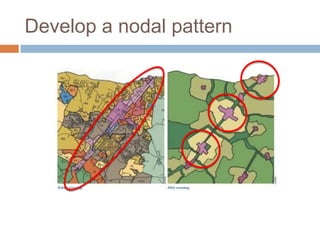
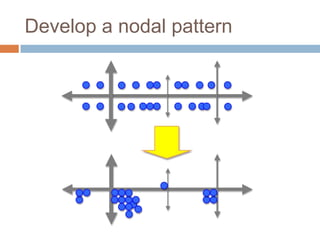
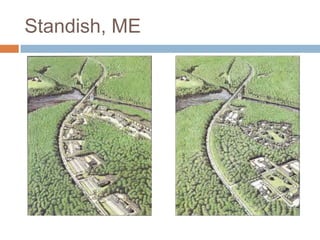
Develop a nodal pattern
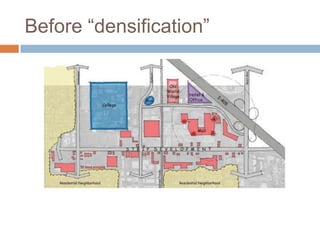
Before “densification”
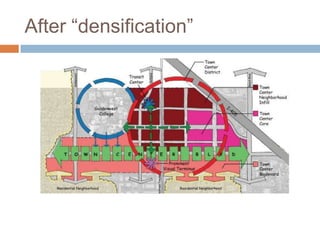
After “densification”
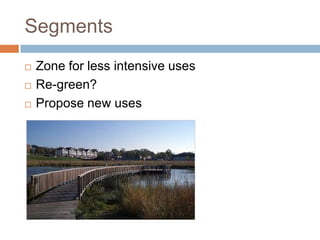
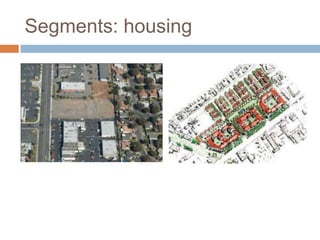
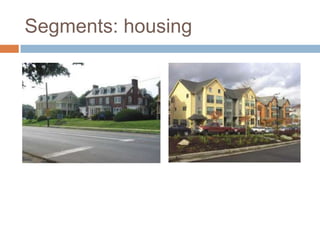
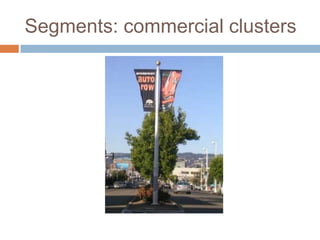
SegmentsZone for less intensive usesRe-green?Propose new uses
Segments: housing
Segments: housing
Segments: commercial clusters
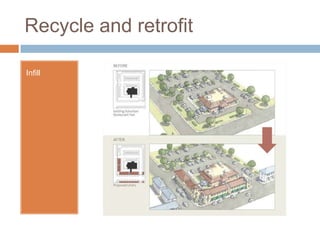
Recycle and retrofitInfill
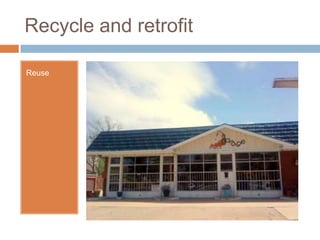
Recycle and retrofitReuse
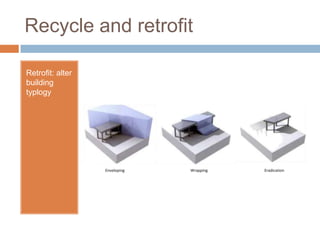
Recycle and retrofitRetrofit: alter building typlogy
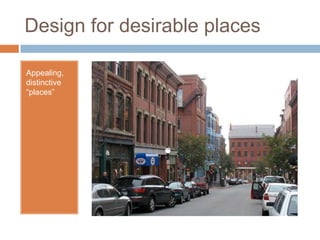
Design for desirable placesAppealing, distinctive “places”
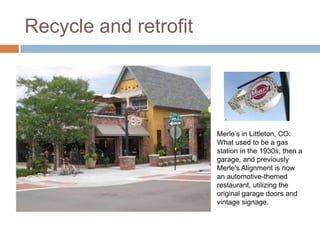
Recycle and retrofitMerle’s in Littleton, CO: What used to be a gas station in the 1930s, then a garage, and previously Merle's Alignment is now an automotive-themed restaurant, utilizing the original garage doors and vintage signage.
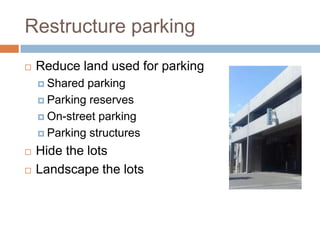
Restructure parkingReduce land used for parkingShared parkingParking reservesOn-street parkingParking structuresHide the lotsLandscape the lots
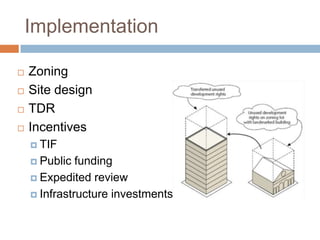
ImplementationZoningSite designTDRIncentivesTIFPublic fundingExpedited reviewInfrastructure investments
Improve mobility & accessDesign for desired land patternImprove the streetscapeRight of way strategies
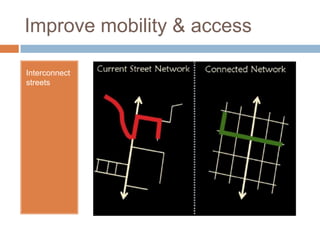
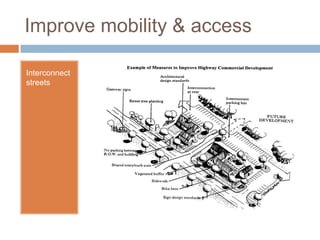
Improve mobility & accessInterconnect streets
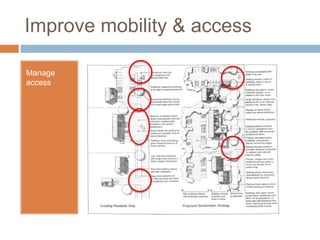
Improve mobility & accessManage access
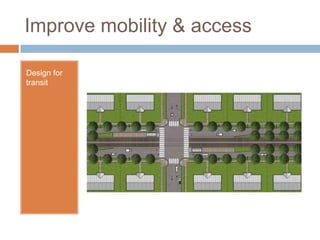
Improve mobility & accessDesign for transit
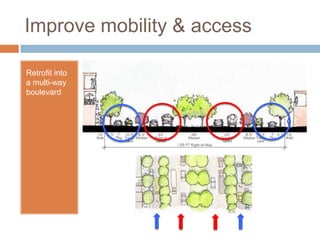
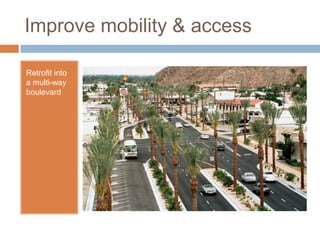
Improve mobility & accessRetrofit into a multi-way boulevard
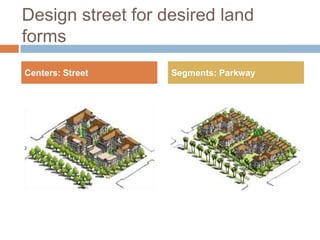
Design street for desired land formsCenters: StreetSegments: Parkway
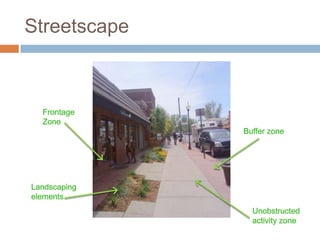
StreetscapeFrontage ZoneBuffer zoneLandscaping elementsUnobstructed activity zone
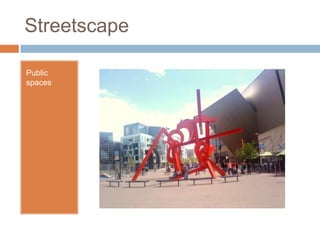
StreetscapePublic spaces
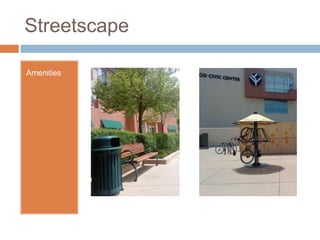
StreetscapeAmenities
ImplementationDesign guidelinesSign ordinancesStreet tree programsInfrastructure improvementsPartnership with DOT
Designing the restructuring planNot going to be easy or fastGuidelines:Design the process with careSecure partnerships to lead the effortUse public sector actions to leverage changeSelect the right package of strategies
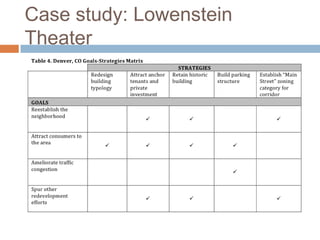
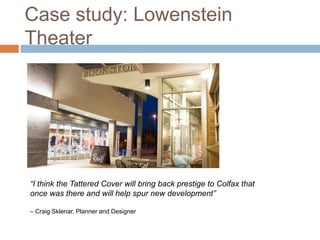
Case study: Lowenstein Theater
Case study: Lowenstein Theater“I think the Tattered Cover will bring back prestige to Colfax that once was there and will help spur new development”– Craig Sklenar, Planner and Designer
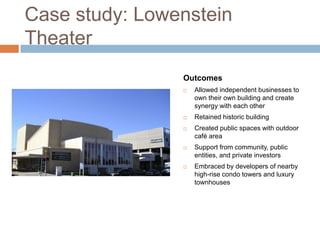
Case study: Lowenstein TheaterOutcomesAllowed independent businesses to own their own building and create synergy with each otherRetained historic buildingCreated public spaces with outdoor café areaSupport from community, public entities, and private investorsEmbraced by developers of nearby high-rise condo towers and luxury townhouses
Application to MaineStrategies applicableGood framework: corridor planning effortsMaine is not as metropolitan as many places undertaking strip repair:Lower level of build-out: “preemptive retrofitting”?Less robust land marketTransit likely to be bus, not railCenters will be smaller in scale
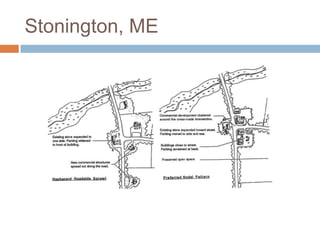
Stonington, ME

Restructuring the Strip

Editor's Notes

  • #15 Glut of land zoned for commercial purposes has led to gross disinvestment and building decay.
  • #18 New lifestyle centers and reinvigorated downtown areas are beginning to offer these elements, leaving commercial strips to marginal businesses or complete decay
  • #19 Need to retrofitMomentum is buildingStrategies: land use & right of way
  • #29 Benefits of Infill:Increases densityMore efficient use of landOption for developing underperforming lotsReinforces urban fabricSlows growth along the suburban fringeHow to encourage infill: Policy incentives such as lowering impact fees, streamlined permitting, and changes to zoning code
  • #30 Benefits of Reusing Existing BuildingsCan lower development costsOpportunity to take advantage of historic featuresPotential to reduce environmental impact of developmentAbility to provide social centers that are more connected and accessibleHow to encourage reuse:Policy incentives (as with infill), including historic preservation tax credits
  • #31 Valence capacity of buildings, look at how buildings relate to one another and how form can complement function and nearby uses and/or forms. Importance is to design for quality places that create vibrancy and stimulate activity.
  • #35 Range of tools available to implement these strategies-Revise zoning code & design standards to encourage new patterns and forms (consider making it optional, with incentives like density bonuses & expedited review)-Establish a TDR program to help concentrate density at nodes-Attract investors through-infrastructure investments-financial incentives like TIF and grants-drawing anchors to centers to induce add’l development
  • #46 Amenities such as street furniture, bicycle parking, public restrooms, trash receptacles, etc all can add to the feeling of convenience and safety of the strip making areas more desirable places to linger.
  • #50 How project was financed:Loans from the City of Denver’s Office of Economic Development Tax Increment Financing Historic tax credit syndication Conventional financingKey Features:Preservation of historic Lowenstein TheaterAttraction and involvement of key anchor tenants including the Tattered Cover Bookstore and Twist & Shout Records