RESPONSIBILITIES & FUNCTIONS
Of
RETAIL STORE MANAGER
RETAILING
Retailing is the set of all the activities
involved in selling goods or services
directly to the final consumers for their
personal, family or household use.
RETAIL MANAGEMENT
• Retail Management refers to all the processes
which help the customers to procure the
desired merchandise from the retail stores for
their end use.
• Retail management includes all the steps
required to bring the customers into the store
and fulfill their buying needs.
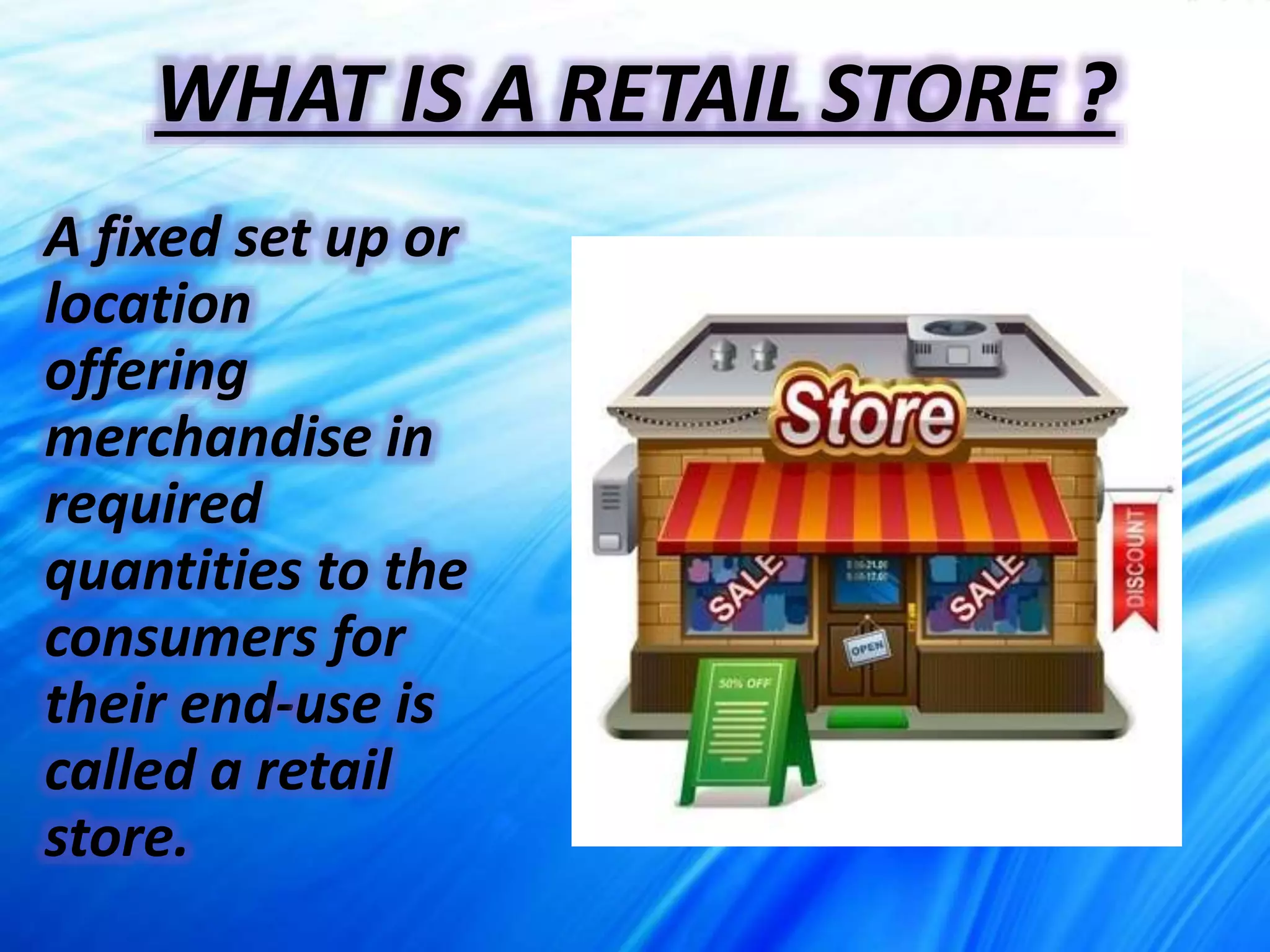
WHAT IS A RETAIL STORE ?
A fixed set up or
location
offering
merchandise in
required
quantities to the
consumers for
their end-use is
called a retail
store.
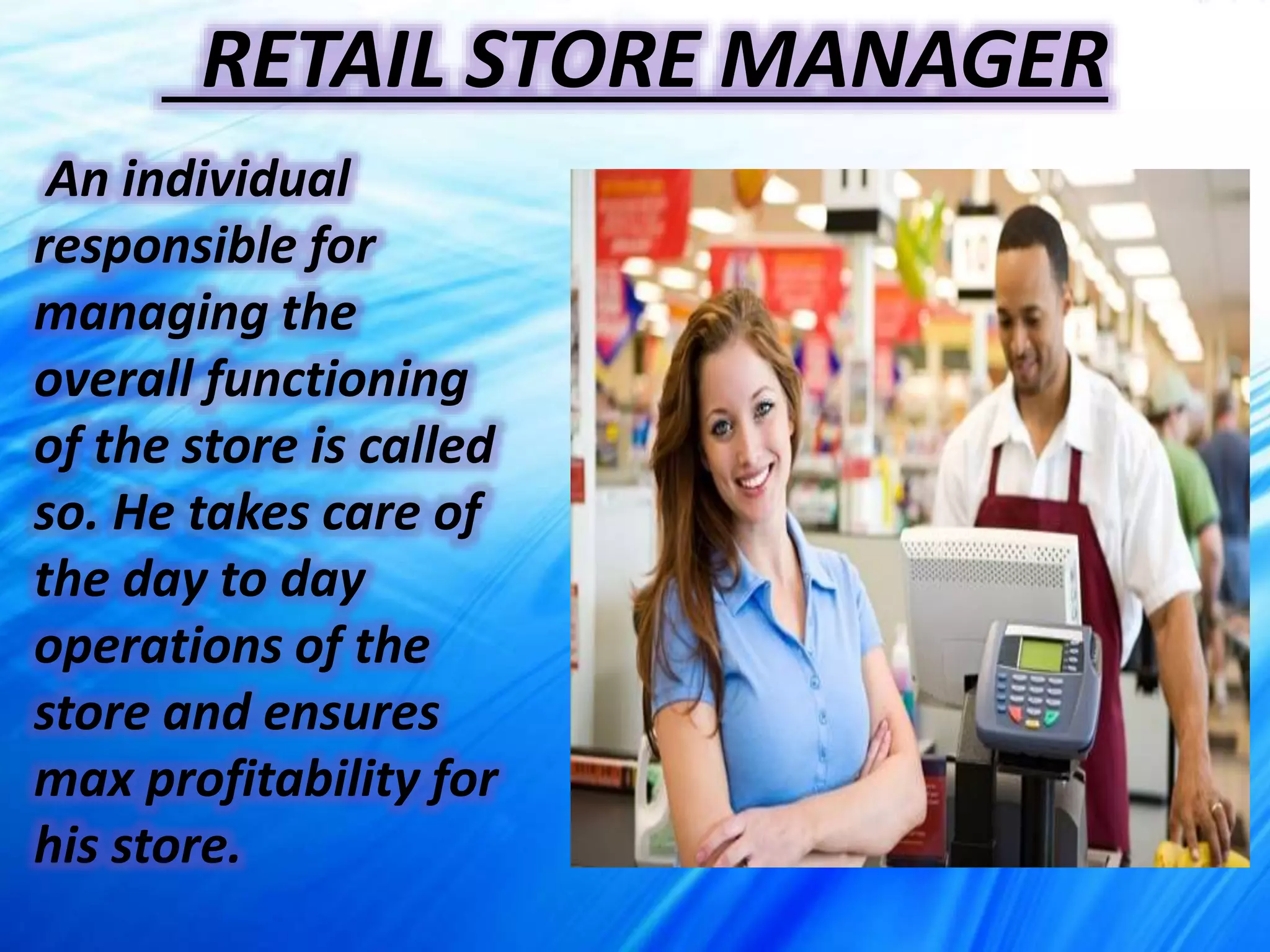
RETAIL STORE MANAGER
An individual
responsible for
managing the
overall functioning
of the store is called
so. He takes care of
the day to day
operations of the
store and ensures
max profitability for
his store.
• Procuring right kind of
merchandise for store &
protection of
merchandise
MANAGING
MERCHANDISE
• Managing the conduct
of store personnel and
train them a good skills
MANAGING
PERSONNEL
• The day to day
operations should be
maintained very well
HANDLING
RETAIL
ACTIVITIES
• Maintenance of good
customer service
standards is very
important
MAINTAINING
GOOD SERVICE
• The costs should be
reduced to ensure
maximum profitability
MINIMIZING
THE COSTS
• The retail store manager
should develop the
image of the store
IMAGE
DEVELOPMENT
FUNCTIONS OF A RETAIL
STORE MANAGER
 CUSTOMER PROFITING
( understanding customer )
The customer is the most
important facet of any business. Hence, as a retail
store manager need to ensure that the whole team
comprehends that the customer is their top-most
priority, that the customer should be satisfied with
the goods and service you provide, and that you
never challenge the customer! The customer is
ALWAYS right!
 MAKE CUSTOMER FEEL SPECIAL
Everyone likes feeling special.
So, when you are with a customer, give your exclusive
attention, listening closely to whatever they saying.
During that time don't let anything else interrupt you.
You may even go far as making a flattering comment.
If it is a clothes store, compliment the customer after
he tries on something; if it is a food store, give them
tips regarding which product is more healthy, etc. You
may also inquire about their work to be able to
suggest them suitable options from your store.
 DELIVER MORE THAN WHAT
. YOU PROMISE
The difference in "promise less but deliver more"
and "deliver more than you promise" is that of
attitude. If you promise less, you may come across
as playing a safe game. You may lose your customer
to someone who promises more. But if you promise
more and deliver even more, the customer is bound
to come back to you! It is the gesture that counts.
By giving more than whatever you promised, you
can build a strong customer rapport, both inside as
well as outside the store.
 APPEARANCES DO MATTER
Although you may dismiss it as a
superficial aspect of a superficial consumerist
society, there is no escaping the fact, that the first
impressions of your store is going to be the last
impression! So make sure you make a good first
impression. This includes a smiling, enthusiastic and
well dressed staff, a clean and easy to move around
store, and a positive and happy ambiance. Avoid
loud music, and complicated arrangement and/or
presentation of goods.
 VISUAL MERCHANDISING
A vital part of management to see that
the merchandise is displayed properly; i.e., in an
uncomplicated, easy-to-find & yet attractive manner. If
the items are not displayed or seen properly, they
won't be sold in the numbers that they ought to be.
Merchandise should look crisp and new at all times. If
the items are shop-worn, they should be put in the
bargain section. Items that are usually bought on
impulse should be placed on display close to the cash
out area (play on the psyche of your customers).
Appropriate sections should be made for merchandise,
& the items should be placed in the correct sections.
Items that are similar in nature should be placed in the
same area.
 ADEQUATE FLOOR SPACE
Make sure that your store has ample
floor space for customers to move about easily
without knocking something off a shelf! The shelves
in themselves too should be less cluttered. Definitely
a store with easy shopping areas will attract more
buyers and will hence make more sales rather than a
stuffed, cluttered store. Organize your store in such a
way that the customers will not have to hunt for what
they want. They should be able to walk in, walk up to
the shelf, pick their stuff off it, and walk to the billing
area, all on their own!
 TIMELY ORDERING OF INVENTORY
This is another important aspect of a
retail store manager's functions. The levels of
inventory should be monitored and kept in
adequate amounts at all times. If customers do not
find what they are looking for, they will just go to
another store . Your inventory should be such that a
customer should never leave your store empty-
handed. If at all it ever happens, the incident should
not repeat!
 HIRE RIGHT PEOPLE & TRAIN THEM
A retail manager's success is largely
dependent on the kind of people hired. The staff
hired has to have the ability of making a quantifiable
& meaningful contribution to the store's
performance. Hiring the right people & motivating
them is only a part of a manager's path to success.
The main part of a manager's job is to train the staff
so that they are aware of what is expected of them.
This will ensure that all the people involved in the
success of the store move in the same direction.
 RETAIL SOFTWARE & TECHNOLOGY
These days, there is a lot of retail
software available which provide scalability, data
integrity, stability, and speed, thus offering a complete
retail management solution, which can be adapted
according to each type of doing business. From
inventory management to Point Of Sale (POS) ticket
entry, customer tracking, integrated purchasing, and
monitoring the movement of merchandise, retail
software provides all the capabilities required to run a
retail store business more effectively and efficiently.
A REAL-TIME
APPROACH
IT’S A SPECIALITY RETAIL STORE
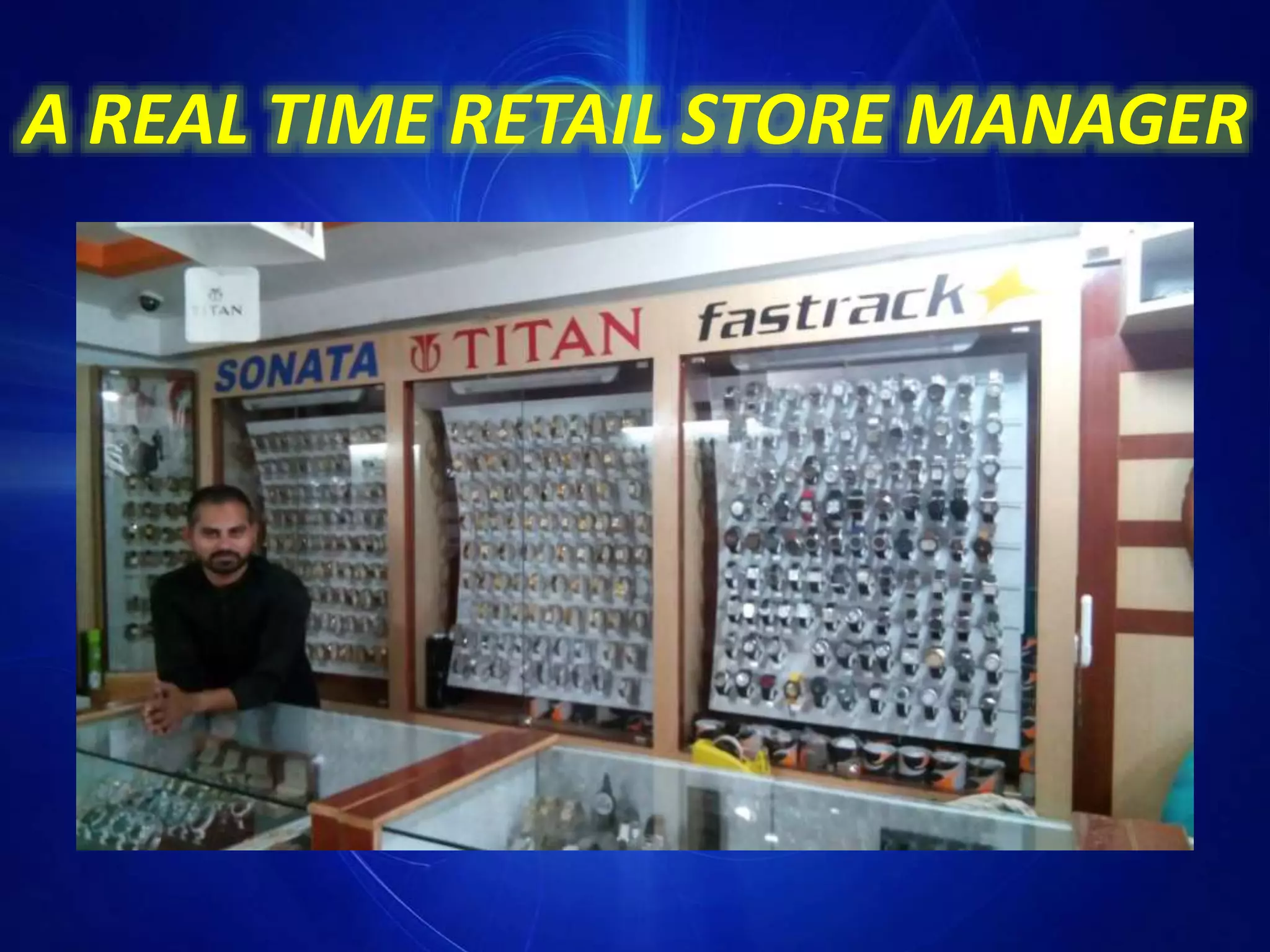
A REAL TIME RETAIL STORE MANAGER
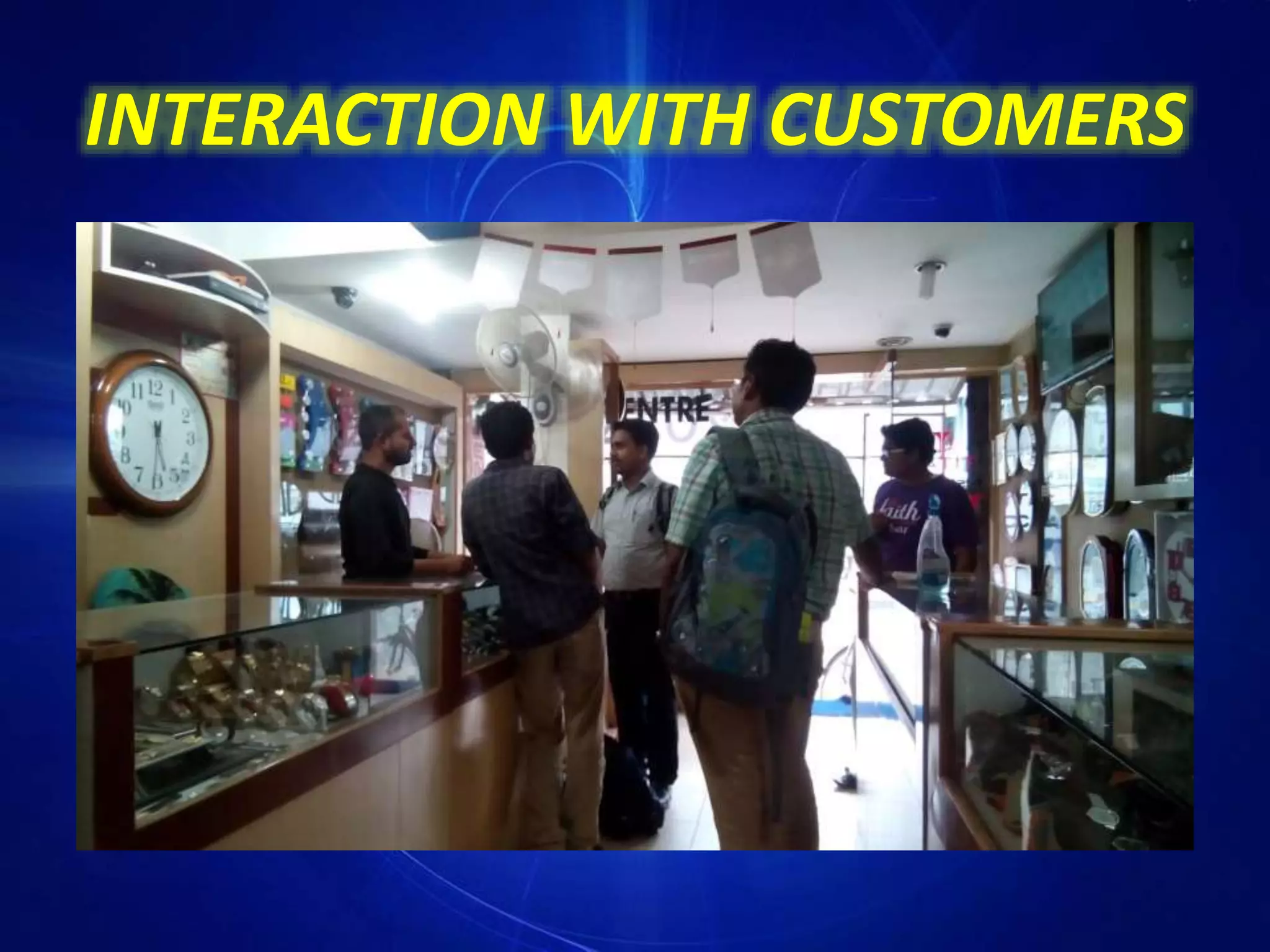
INTERACTION WITH CUSTOMERS
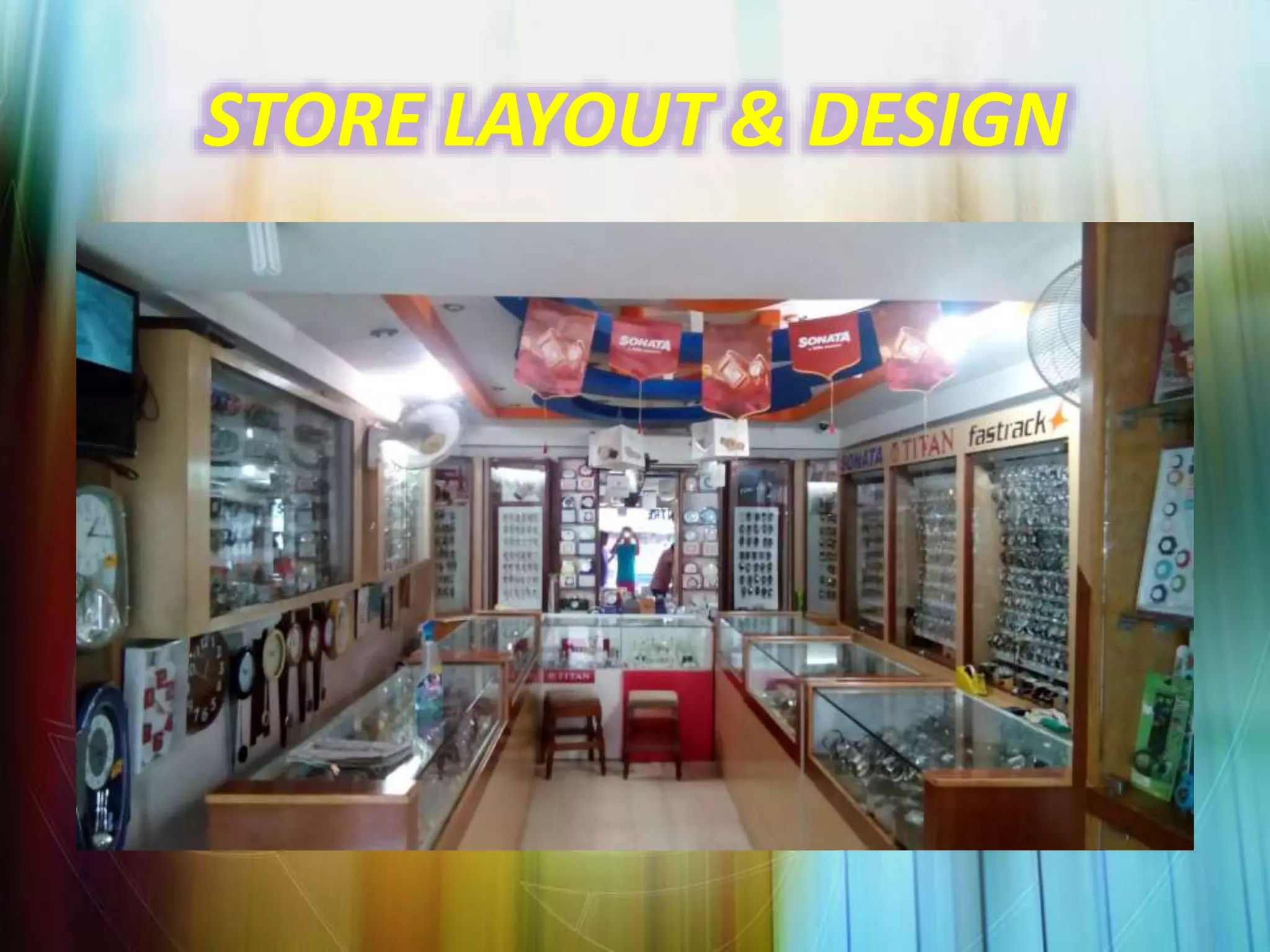
STORE LAYOUT & DESIGN
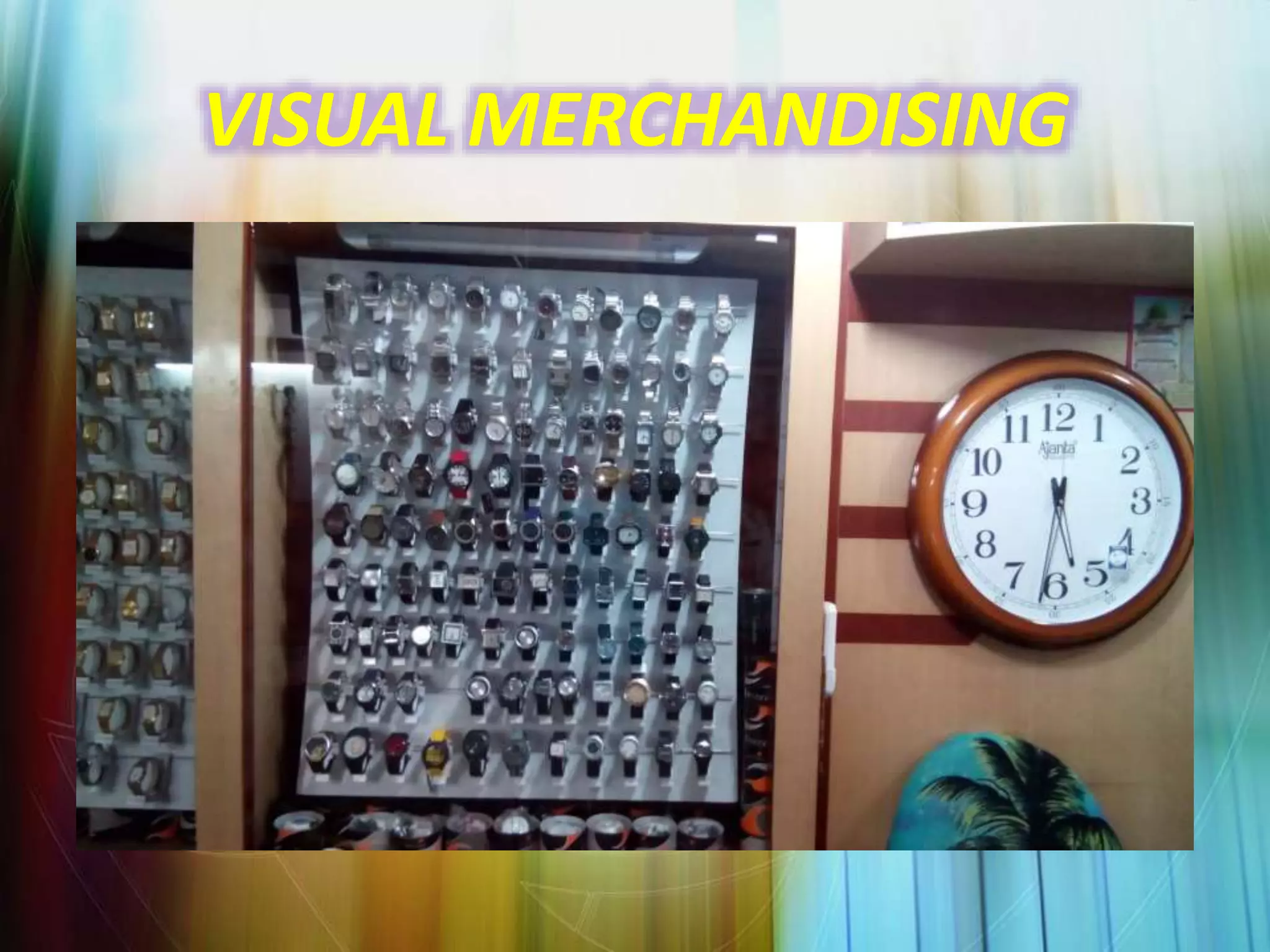
VISUAL MERCHANDISING
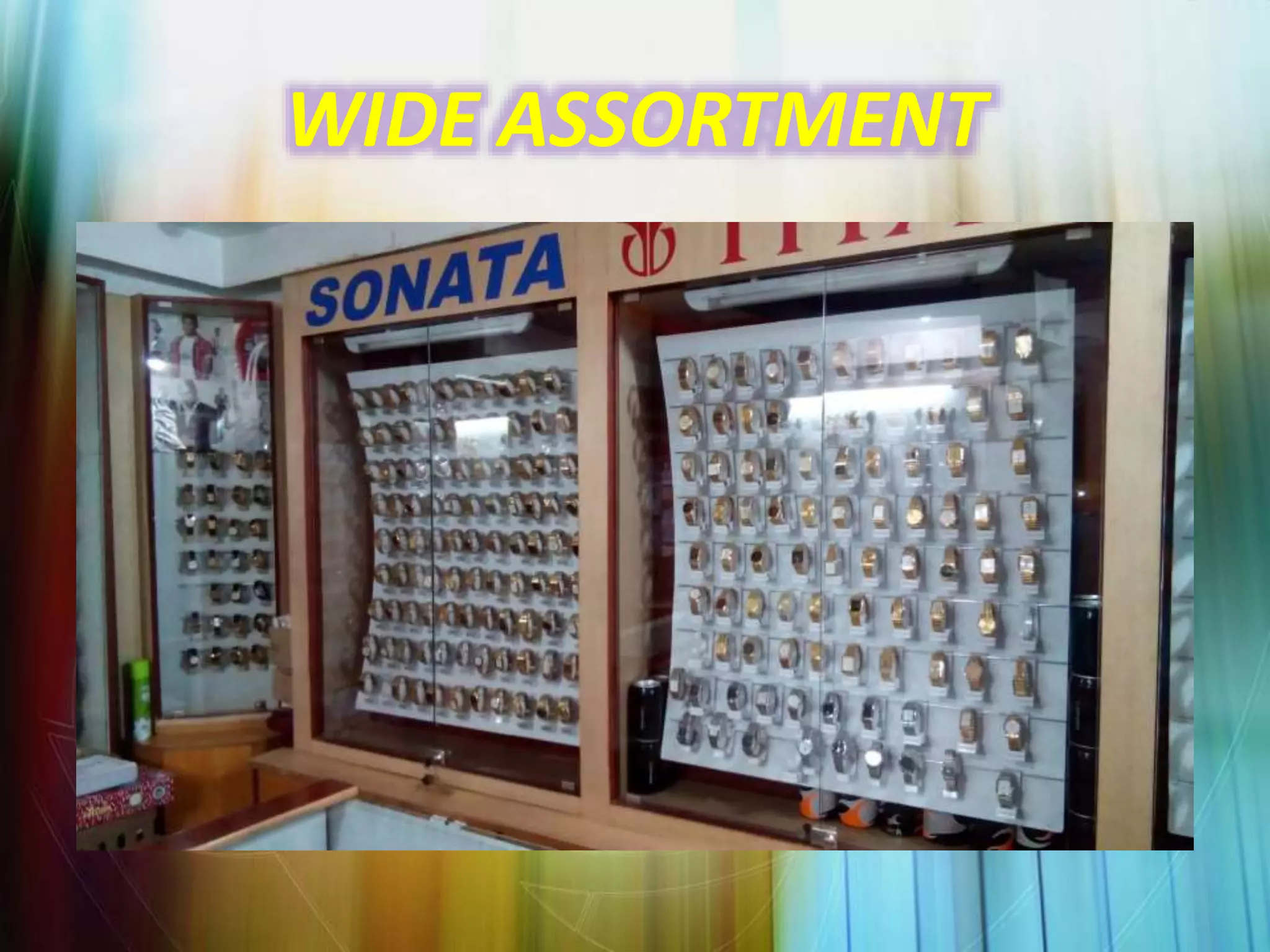
WIDE ASSORTMENT
USE OF TECHNOLOGY
PRESENTED BY NAGARJUNA.K

Responsibilities & functions of Retail Store Manager

  • 1.
  • 2.
    RETAILING Retailing is theset of all the activities involved in selling goods or services directly to the final consumers for their personal, family or household use.
  • 3.
    RETAIL MANAGEMENT • RetailManagement refers to all the processes which help the customers to procure the desired merchandise from the retail stores for their end use. • Retail management includes all the steps required to bring the customers into the store and fulfill their buying needs.
  • 4.
    WHAT IS ARETAIL STORE ? A fixed set up or location offering merchandise in required quantities to the consumers for their end-use is called a retail store.
  • 5.
    RETAIL STORE MANAGER Anindividual responsible for managing the overall functioning of the store is called so. He takes care of the day to day operations of the store and ensures max profitability for his store.
  • 7.
    • Procuring rightkind of merchandise for store & protection of merchandise MANAGING MERCHANDISE • Managing the conduct of store personnel and train them a good skills MANAGING PERSONNEL
  • 8.
    • The dayto day operations should be maintained very well HANDLING RETAIL ACTIVITIES • Maintenance of good customer service standards is very important MAINTAINING GOOD SERVICE
  • 9.
    • The costsshould be reduced to ensure maximum profitability MINIMIZING THE COSTS • The retail store manager should develop the image of the store IMAGE DEVELOPMENT
  • 10.
    FUNCTIONS OF ARETAIL STORE MANAGER
  • 11.
     CUSTOMER PROFITING (understanding customer ) The customer is the most important facet of any business. Hence, as a retail store manager need to ensure that the whole team comprehends that the customer is their top-most priority, that the customer should be satisfied with the goods and service you provide, and that you never challenge the customer! The customer is ALWAYS right!
  • 12.
     MAKE CUSTOMERFEEL SPECIAL Everyone likes feeling special. So, when you are with a customer, give your exclusive attention, listening closely to whatever they saying. During that time don't let anything else interrupt you. You may even go far as making a flattering comment. If it is a clothes store, compliment the customer after he tries on something; if it is a food store, give them tips regarding which product is more healthy, etc. You may also inquire about their work to be able to suggest them suitable options from your store.
  • 13.
     DELIVER MORETHAN WHAT . YOU PROMISE The difference in "promise less but deliver more" and "deliver more than you promise" is that of attitude. If you promise less, you may come across as playing a safe game. You may lose your customer to someone who promises more. But if you promise more and deliver even more, the customer is bound to come back to you! It is the gesture that counts. By giving more than whatever you promised, you can build a strong customer rapport, both inside as well as outside the store.
  • 14.
     APPEARANCES DOMATTER Although you may dismiss it as a superficial aspect of a superficial consumerist society, there is no escaping the fact, that the first impressions of your store is going to be the last impression! So make sure you make a good first impression. This includes a smiling, enthusiastic and well dressed staff, a clean and easy to move around store, and a positive and happy ambiance. Avoid loud music, and complicated arrangement and/or presentation of goods.
  • 15.
     VISUAL MERCHANDISING Avital part of management to see that the merchandise is displayed properly; i.e., in an uncomplicated, easy-to-find & yet attractive manner. If the items are not displayed or seen properly, they won't be sold in the numbers that they ought to be. Merchandise should look crisp and new at all times. If the items are shop-worn, they should be put in the bargain section. Items that are usually bought on impulse should be placed on display close to the cash out area (play on the psyche of your customers). Appropriate sections should be made for merchandise, & the items should be placed in the correct sections. Items that are similar in nature should be placed in the same area.
  • 16.
     ADEQUATE FLOORSPACE Make sure that your store has ample floor space for customers to move about easily without knocking something off a shelf! The shelves in themselves too should be less cluttered. Definitely a store with easy shopping areas will attract more buyers and will hence make more sales rather than a stuffed, cluttered store. Organize your store in such a way that the customers will not have to hunt for what they want. They should be able to walk in, walk up to the shelf, pick their stuff off it, and walk to the billing area, all on their own!
  • 17.
     TIMELY ORDERINGOF INVENTORY This is another important aspect of a retail store manager's functions. The levels of inventory should be monitored and kept in adequate amounts at all times. If customers do not find what they are looking for, they will just go to another store . Your inventory should be such that a customer should never leave your store empty- handed. If at all it ever happens, the incident should not repeat!
  • 18.
     HIRE RIGHTPEOPLE & TRAIN THEM A retail manager's success is largely dependent on the kind of people hired. The staff hired has to have the ability of making a quantifiable & meaningful contribution to the store's performance. Hiring the right people & motivating them is only a part of a manager's path to success. The main part of a manager's job is to train the staff so that they are aware of what is expected of them. This will ensure that all the people involved in the success of the store move in the same direction.
  • 19.
     RETAIL SOFTWARE& TECHNOLOGY These days, there is a lot of retail software available which provide scalability, data integrity, stability, and speed, thus offering a complete retail management solution, which can be adapted according to each type of doing business. From inventory management to Point Of Sale (POS) ticket entry, customer tracking, integrated purchasing, and monitoring the movement of merchandise, retail software provides all the capabilities required to run a retail store business more effectively and efficiently.
  • 20.
  • 21.
    IT’S A SPECIALITYRETAIL STORE
  • 22.
    A REAL TIMERETAIL STORE MANAGER
  • 23.
  • 24.
  • 25.
  • 26.
  • 27.
  • 28.