Hello everyone! I’m ,
Teacher Jessa’s bestfriend.
If ever I appear in your screen,
I have questions that you
need to answer that correspond
points together with your group.
No cheating please.
Let’s learn and have some fun!
Why do
we breathe?
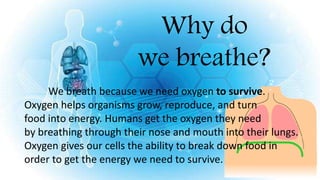
We breath because we need oxygen to survive.
Oxygen helps organisms grow, reproduce, and turn
food into energy. Humans get the oxygen they need
by breathing through their nose and mouth into their lungs.
Oxygen gives our cells the ability to break down food in
order to get the energy we need to survive.
Respiratory System
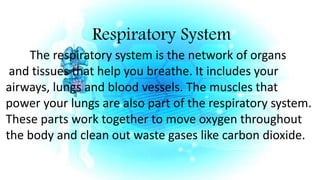
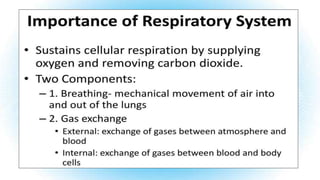
The respiratory system is the network of organs
and tissues that help you breathe. It includes your
airways, lungs and blood vessels. The muscles that
power your lungs are also part of the respiratory system.
These parts work together to move oxygen throughout
the body and clean out waste gases like carbon dioxide.
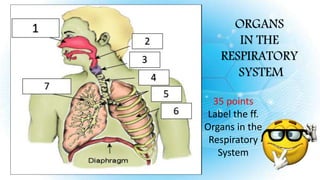
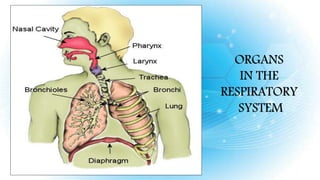
ORGANS
IN THE
RESPIRATORY
SYSTEM
35 points
Label the ff.
Organs in the
Respiratory
System
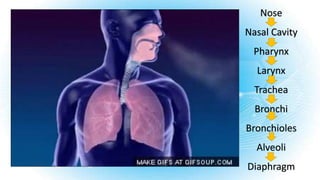
ORGANS
IN THE
RESPIRATORY
SYSTEM
Nose
Nasal Cavity
Pharynx
Larynx
Trachea
Bronchi
Bronchioles
Alveoli
Diaphragm
TRUE/FALSE
5 points
You don’t sneeze when
you sleep.
Answer: TRUE. You can't sneeze when
you're asleep because the trigeminal
nerves that help you sneeze are
at rest during this time, too.
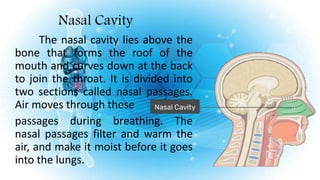
Nasal Cavity
The nasal cavity lies above the
bone that forms the roof of the
mouth and curves down at the back
to join the throat. It is divided into
two sections called nasal passages.
Air moves through these
passages during breathing. The
nasal passages filter and warm the
air, and make it moist before it goes
into the lungs.
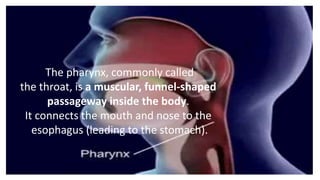
The pharynx, commonly called
the throat, is a muscular, funnel-shaped
passageway inside the body.
It connects the mouth and nose to the
esophagus (leading to the stomach).
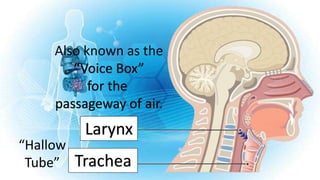
Larynx
Trachea
Also known as the
“Voice Box”
for the
passageway of air.
“Hallow
Tube”
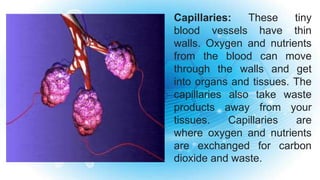
Capillaries: These tiny
blood vessels have thin
walls. Oxygen and nutrients
from the blood can move
through the walls and get
into organs and tissues. The
capillaries also take waste
products away from your
tissues. Capillaries are
where oxygen and nutrients
are exchanged for carbon
dioxide and waste.
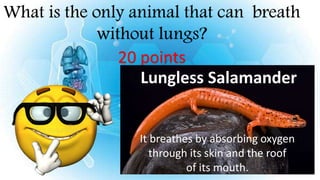
What is the only animal that can breath
without lungs?
20 points
Lungless Salamander
It breathes by absorbing oxygen
through its skin and the roof
of its mouth.
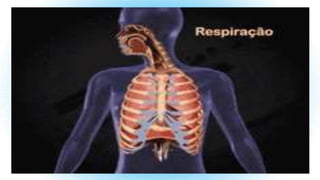
Mechanism of Breathing
INHALE EXHALE
Chest Cavity Moves
Upward
Moves
Downward
Diaphragm Moves
Downward
Moves
Upward
Lungs Expand Return to
Original Size
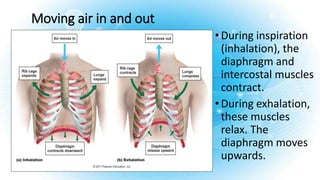
Moving air in and out
• During inspiration
(inhalation), the
diaphragm and
intercostal muscles
contract.
• During exhalation,
these muscles
relax. The
diaphragm moves
upwards.
What is the name of an animal
having the smallest lung?
10 points
Bumblebee Bat
Weighing around only 2 grams. It has the
smallest lungs ever found in a mammal.
Respiratory System Grade 9 Science.pptx

Respiratory System Grade 9 Science.pptx

  • 2.
    Hello everyone! I’m, Teacher Jessa’s bestfriend. If ever I appear in your screen, I have questions that you need to answer that correspond points together with your group. No cheating please. Let’s learn and have some fun!
  • 3.
    Why do we breathe? Webreath because we need oxygen to survive. Oxygen helps organisms grow, reproduce, and turn food into energy. Humans get the oxygen they need by breathing through their nose and mouth into their lungs. Oxygen gives our cells the ability to break down food in order to get the energy we need to survive.
  • 4.
    Respiratory System The respiratorysystem is the network of organs and tissues that help you breathe. It includes your airways, lungs and blood vessels. The muscles that power your lungs are also part of the respiratory system. These parts work together to move oxygen throughout the body and clean out waste gases like carbon dioxide.
  • 5.
    ORGANS IN THE RESPIRATORY SYSTEM 35 points Labelthe ff. Organs in the Respiratory System
  • 6.
  • 7.
  • 8.
    TRUE/FALSE 5 points You don’tsneeze when you sleep. Answer: TRUE. You can't sneeze when you're asleep because the trigeminal nerves that help you sneeze are at rest during this time, too.
  • 9.
    Nasal Cavity The nasalcavity lies above the bone that forms the roof of the mouth and curves down at the back to join the throat. It is divided into two sections called nasal passages. Air moves through these passages during breathing. The nasal passages filter and warm the air, and make it moist before it goes into the lungs.
  • 10.
    The pharynx, commonlycalled the throat, is a muscular, funnel-shaped passageway inside the body. It connects the mouth and nose to the esophagus (leading to the stomach).
  • 11.
    Larynx Trachea Also known asthe “Voice Box” for the passageway of air. “Hallow Tube”
  • 14.
    Capillaries: These tiny bloodvessels have thin walls. Oxygen and nutrients from the blood can move through the walls and get into organs and tissues. The capillaries also take waste products away from your tissues. Capillaries are where oxygen and nutrients are exchanged for carbon dioxide and waste.
  • 15.
    What is theonly animal that can breath without lungs? 20 points Lungless Salamander It breathes by absorbing oxygen through its skin and the roof of its mouth.
  • 16.
    Mechanism of Breathing INHALEEXHALE Chest Cavity Moves Upward Moves Downward Diaphragm Moves Downward Moves Upward Lungs Expand Return to Original Size
  • 17.
    Moving air inand out • During inspiration (inhalation), the diaphragm and intercostal muscles contract. • During exhalation, these muscles relax. The diaphragm moves upwards.
  • 19.
    What is thename of an animal having the smallest lung? 10 points Bumblebee Bat Weighing around only 2 grams. It has the smallest lungs ever found in a mammal.