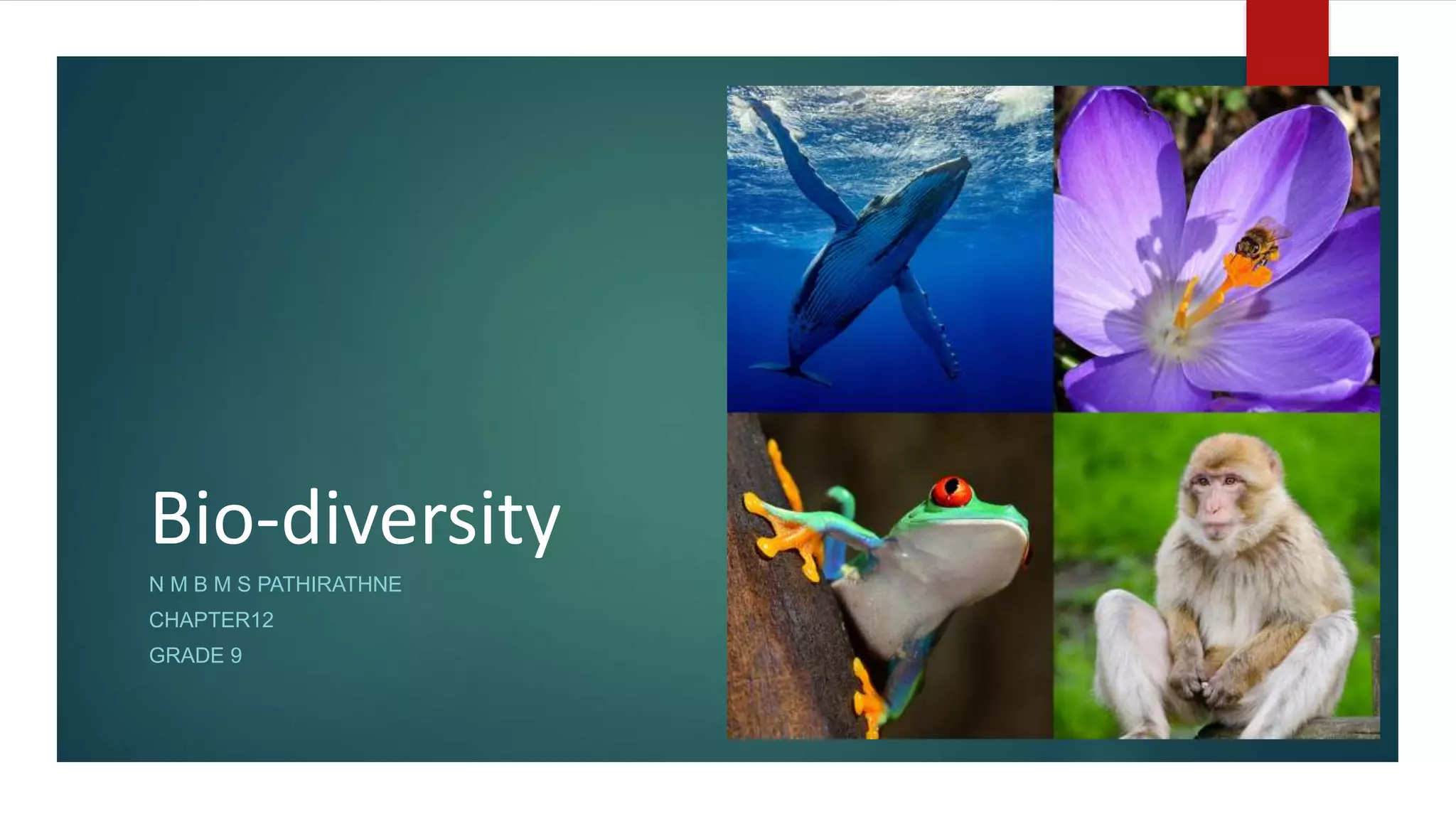
Bio-diversity
N M B M S PATHIRATHNE
CHAPTER12
GRADE 9
Introduction.
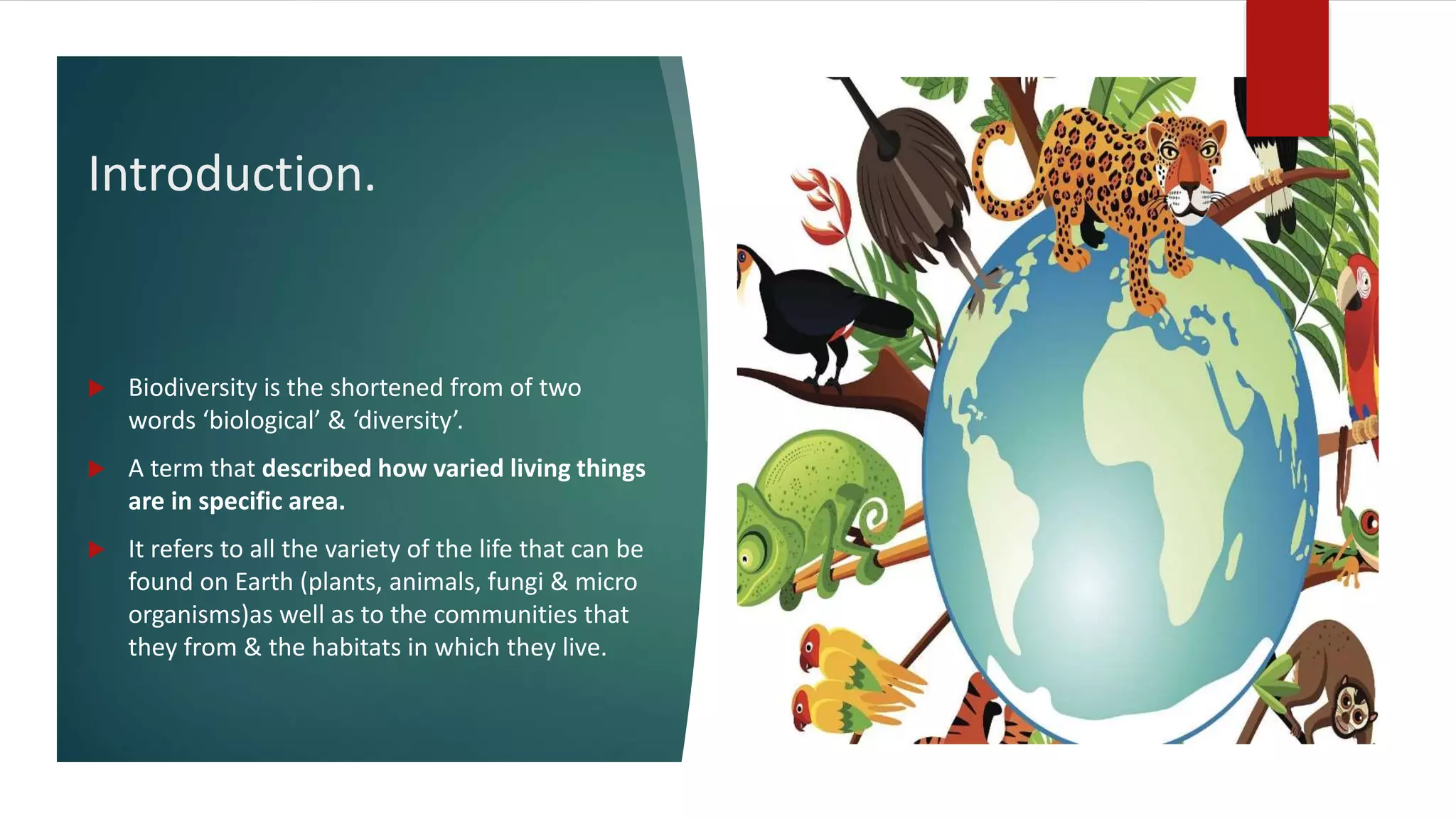
 Biodiversity is the shortened from of two
words ‘biological’ & ‘diversity’.
 A term that described how varied living things
are in specific area.
 It refers to all the variety of the life that can be
found on Earth (plants, animals, fungi & micro
organisms)as well as to the communities that
they from & the habitats in which they live.
 During those field visits you would have
experienced different types of environments.
 They can be beaches, mangrove
environments, forests, monsoon forests and
grasslands.
 A system that includes all living organisms
(biotic factors) in an area as well as its
physical environment (abiotic factors)
interacting with one another as a unit is known as
an ecosystem.
Ecosystem diversity.
 It deals with the variations in ecosystems with
in a geographical location & its overall impact
on human existence & the environment.
 Ecosystem diversity is type of biodiversity.
 The diversity among these ecosystems is
known as ecosystem diversity.
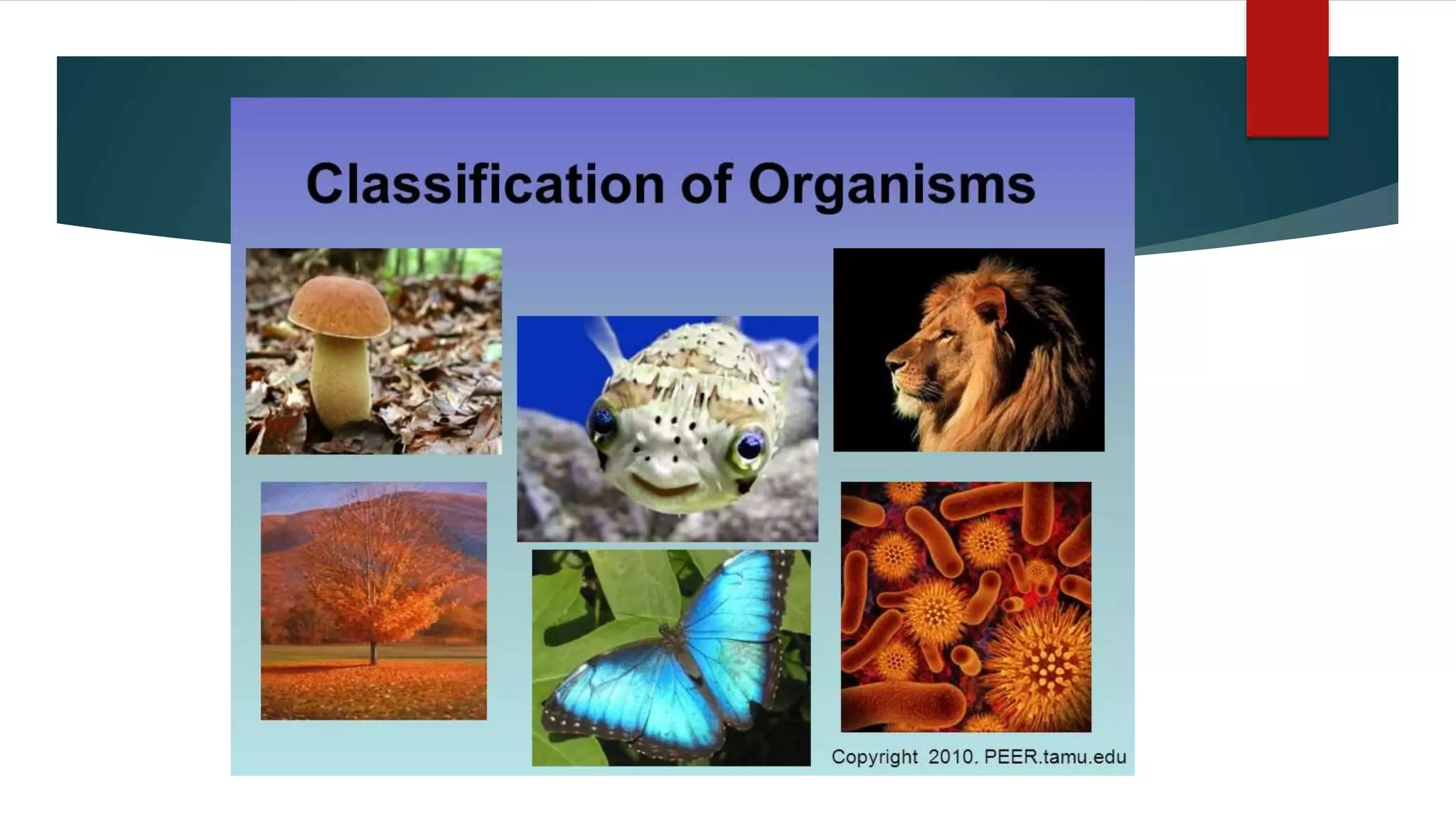
In ecosystems there are many species of animals and plants as well as
many species of micro-organisms.
With regard to these species, there is a great variety of characteristics
in the body shape, size, nutritional patterns and reproduction.
This is called species diversity.
It is the number of different species in a particular area weighed by
some measure of abundance such as number of individual or biomass.
 Homo sapiens species to which all
modern human beings belong.
 Genetic diversity is the total number
genetic characteristics in the genetic
of a species.
 Through the above activity you would
understood that even within the
there are differences among the
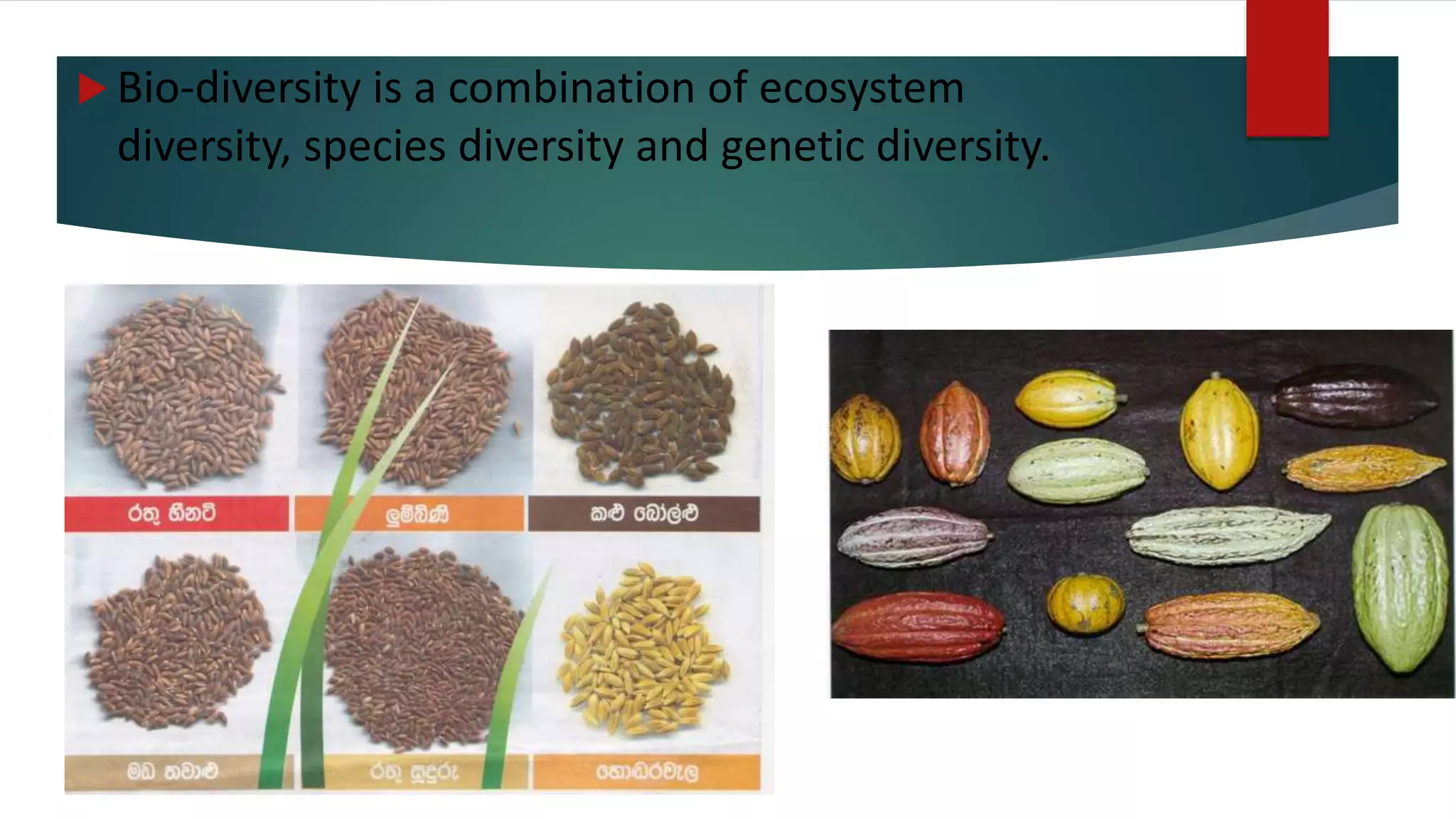
 Bio-diversity is a combination of ecosystem
diversity, species diversity and genetic diversity.
Importance of bio-
diversity.
 Biodiversity is importance to humans for many
reasons.
 Biodiversity is also considered by many to have
intrinsic value.
 Healthy ecosystems & rich biodiversity increase
ecosystem productivity.
 The beauty of the environment increases due to
bio-diversity.
ex : The beauty of Sri Lanka because of
rich bio-diversity. It is a strong reason for tourist
attraction.
 Bio-diversity has reduced the competition
between the species.
 Bio-diversity acts, trees to minimize the
competition for water.
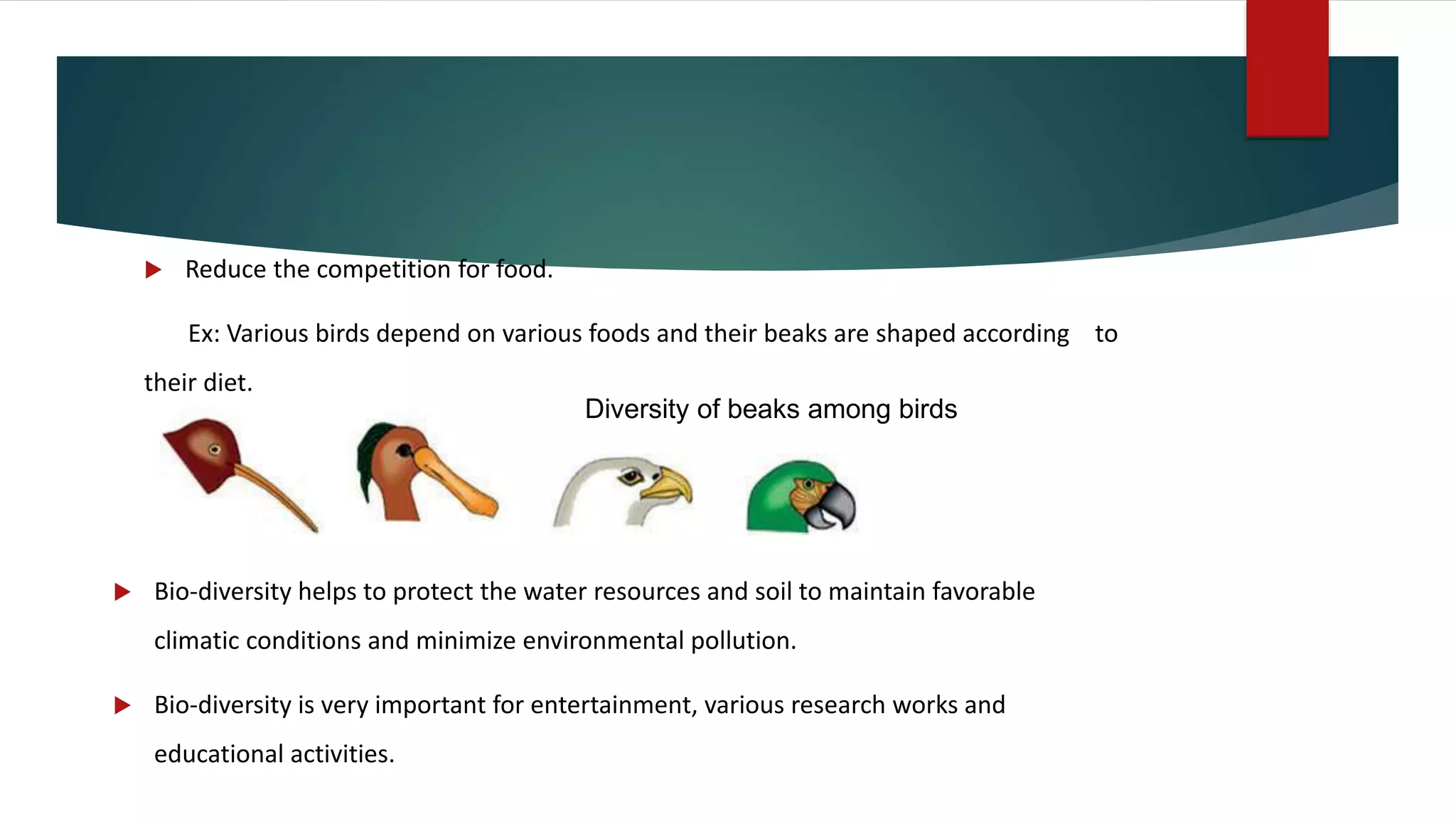
 Reduce the competition for food.
Ex: Various birds depend on various foods and their beaks are shaped according to
their diet.
Diversity of beaks among birds
 Bio-diversity helps to protect the water resources and soil to maintain favorable
climatic conditions and minimize environmental pollution.
 Bio-diversity is very important for entertainment, various research works and
educational activities.
Threats to bio-diversity.
 Natural reasons
 Floods, volcanic explosions,tsunami,earth slides, collapsing meteos
 Human Activities
Importance of ecosystems
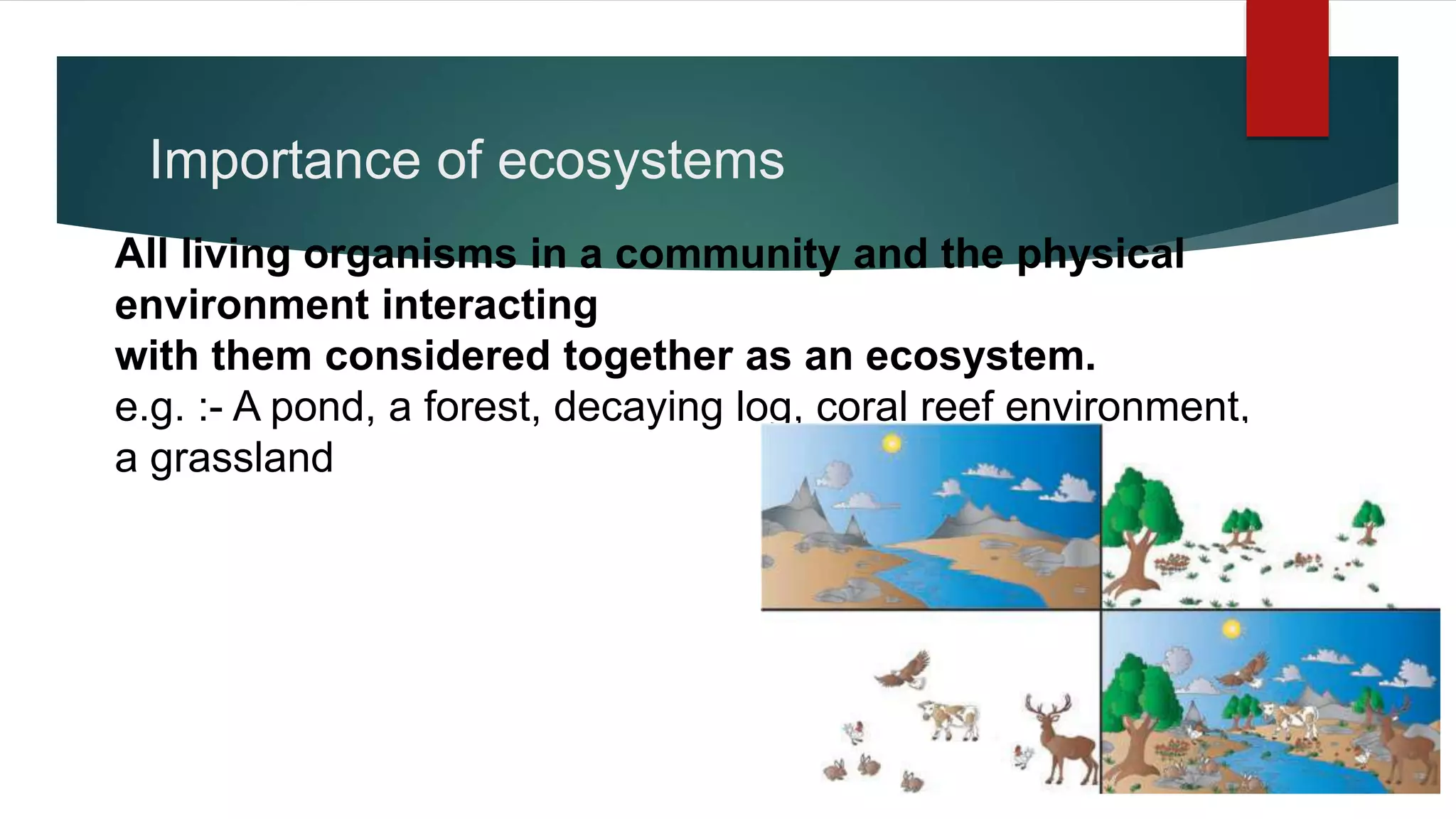
All living organisms in a community and the physical
environment interacting
with them considered together as an ecosystem.
e.g. :- A pond, a forest, decaying log, coral reef environment,
a grassland
Features of an ecosystem
Interaction occur between living components as well as between non-living
components.
Living - living relationships, Living - non living relationships,
Non living - non living relationships
2. The energy flows through one way stream
The solar energy which is used by green plants in photosynthesis, is stored in
the food produced during this process. The energy flows from lower consumer
levels to the higher consumer levels through food chains or food webs.
3. Recycling of materials
The materials that the organisms receive from the environment continue to be
back to the environment. The continuous exchange of materials between the
organisms and the environment is an important feature of an ecosystem.
4. An independent Unit
Since there are constant interactions within the ecosystem it has ensured the
existence in biosphere.
Living & Living organisms interactions
 Food - predators
 Reproduction – seed dispersal through animals
 Security – plants live on other plants ephipites
Living & non living interactions
 The plants use solar energy for photosynthesis
 Plants absorb water from soil
 Plants and animals use atmospheric oxygen for respiration
 Plants use atmospheric carbon dioxide for photosynthesis
 Plants release oxygen to the atmosphere as a result of photosynthesis
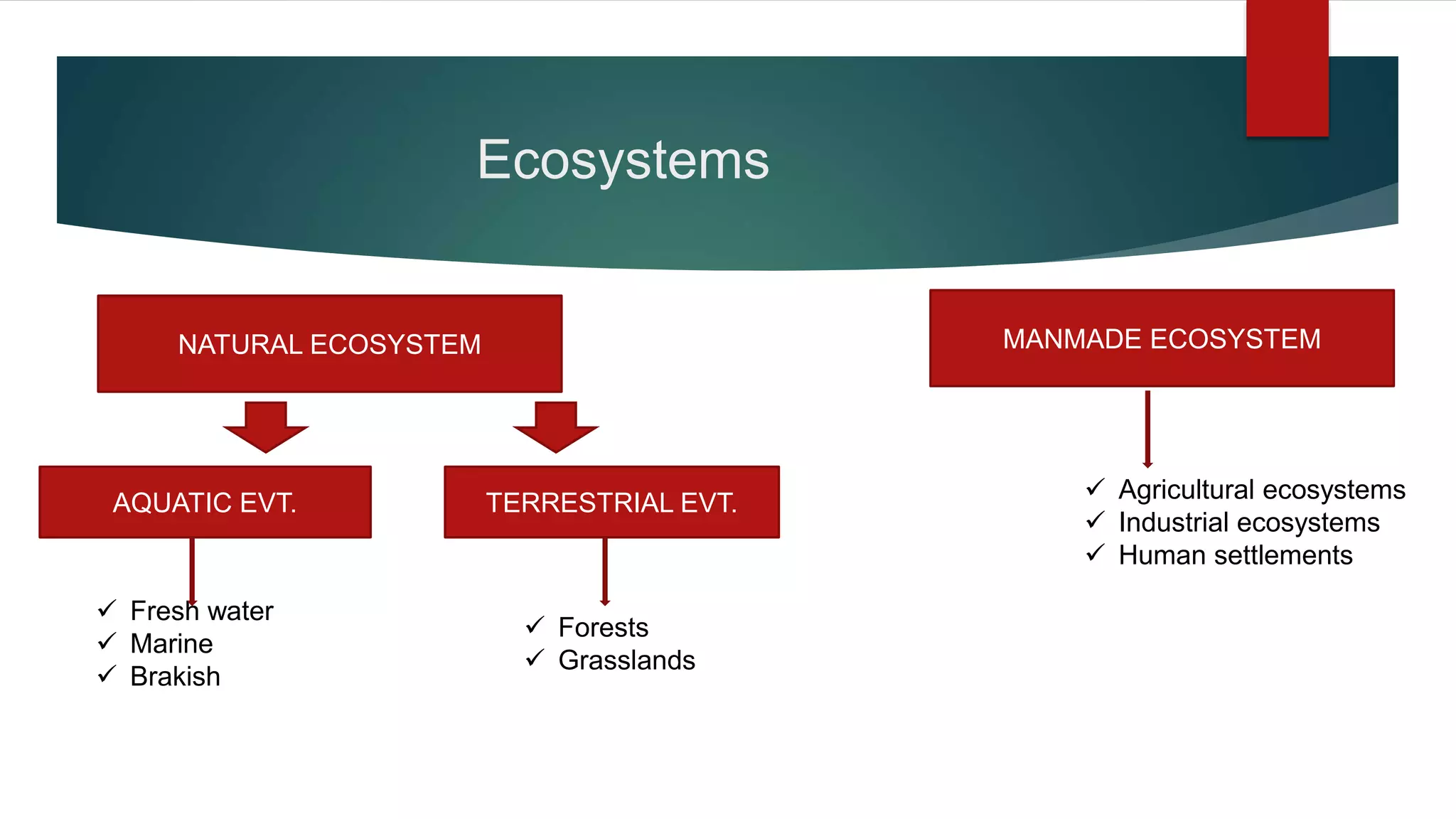
Ecosystems
NATURAL ECOSYSTEM MANMADE ECOSYSTEM
AQUATIC EVT. TERRESTRIAL EVT.
 Fresh water
 Marine
 Brakish
 Forests
 Grasslands
 Agricultural ecosystems
 Industrial ecosystems
 Human settlements
Natural Aquatic ecosystems
 Rivers
 Estuaries
 Lagoon
 Riverine environments
 Inland water reservoirs
 Oceans
 Wetlands
Natural terrestrial Environment
Forests - Rain forests
 Montane forests
 Dry mixed evergreen forests
 Monsoon forest
 Thorn bushes & scrubland
Grassland
 Dry Pathana
 Savana
 Damana
 Thalawa
Manmade ecosystems in srilanka
QUESTIONS
1. WRITE THREE IMPORTANCE OF EASH NATURAL ECOSYSTEM GIVEN ABOVE?
2. What are the disadvantages of human settlements?
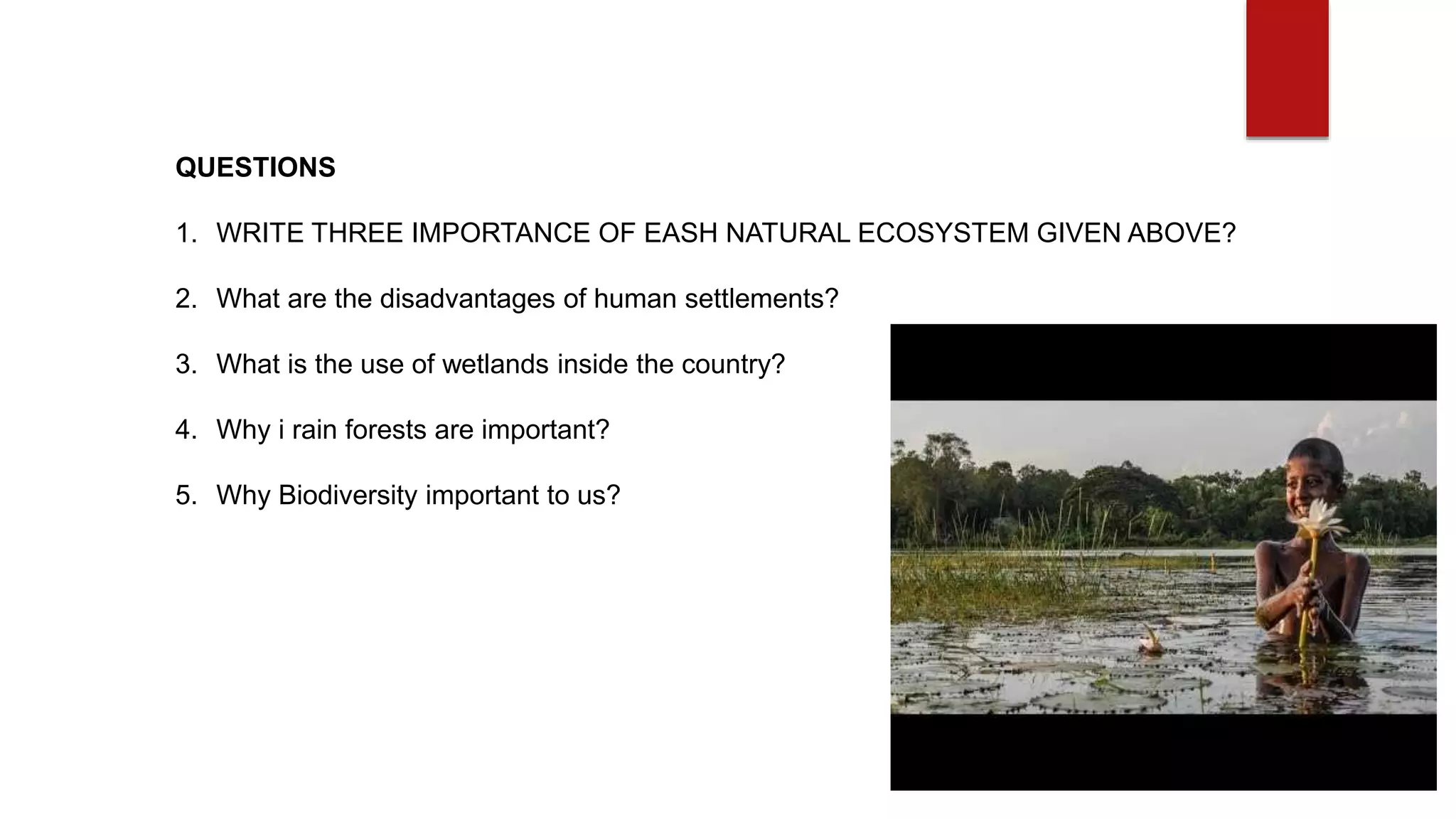
3. What is the use of wetlands inside the country?
4. Why i rain forests are important?
5. Why Biodiversity important to us?

Bio-diversity grade 9.pptx

  • 1.
    Bio-diversity N M BM S PATHIRATHNE CHAPTER12 GRADE 9
  • 2.
    Introduction.  Biodiversity isthe shortened from of two words ‘biological’ & ‘diversity’.  A term that described how varied living things are in specific area.  It refers to all the variety of the life that can be found on Earth (plants, animals, fungi & micro organisms)as well as to the communities that they from & the habitats in which they live.
  • 3.
     During thosefield visits you would have experienced different types of environments.  They can be beaches, mangrove environments, forests, monsoon forests and grasslands.  A system that includes all living organisms (biotic factors) in an area as well as its physical environment (abiotic factors) interacting with one another as a unit is known as an ecosystem.
  • 4.
    Ecosystem diversity.  Itdeals with the variations in ecosystems with in a geographical location & its overall impact on human existence & the environment.  Ecosystem diversity is type of biodiversity.  The diversity among these ecosystems is known as ecosystem diversity.
  • 5.
    In ecosystems thereare many species of animals and plants as well as many species of micro-organisms. With regard to these species, there is a great variety of characteristics in the body shape, size, nutritional patterns and reproduction. This is called species diversity. It is the number of different species in a particular area weighed by some measure of abundance such as number of individual or biomass.
  • 7.
     Homo sapiensspecies to which all modern human beings belong.  Genetic diversity is the total number genetic characteristics in the genetic of a species.  Through the above activity you would understood that even within the there are differences among the
  • 8.
     Bio-diversity isa combination of ecosystem diversity, species diversity and genetic diversity.
  • 10.
    Importance of bio- diversity. Biodiversity is importance to humans for many reasons.  Biodiversity is also considered by many to have intrinsic value.  Healthy ecosystems & rich biodiversity increase ecosystem productivity.  The beauty of the environment increases due to bio-diversity. ex : The beauty of Sri Lanka because of rich bio-diversity. It is a strong reason for tourist attraction.
  • 11.
     Bio-diversity hasreduced the competition between the species.  Bio-diversity acts, trees to minimize the competition for water.
  • 12.
     Reduce thecompetition for food. Ex: Various birds depend on various foods and their beaks are shaped according to their diet. Diversity of beaks among birds  Bio-diversity helps to protect the water resources and soil to maintain favorable climatic conditions and minimize environmental pollution.  Bio-diversity is very important for entertainment, various research works and educational activities.
  • 13.
    Threats to bio-diversity. Natural reasons  Floods, volcanic explosions,tsunami,earth slides, collapsing meteos  Human Activities
  • 14.
    Importance of ecosystems Allliving organisms in a community and the physical environment interacting with them considered together as an ecosystem. e.g. :- A pond, a forest, decaying log, coral reef environment, a grassland
  • 15.
    Features of anecosystem Interaction occur between living components as well as between non-living components. Living - living relationships, Living - non living relationships, Non living - non living relationships 2. The energy flows through one way stream The solar energy which is used by green plants in photosynthesis, is stored in the food produced during this process. The energy flows from lower consumer levels to the higher consumer levels through food chains or food webs. 3. Recycling of materials The materials that the organisms receive from the environment continue to be back to the environment. The continuous exchange of materials between the organisms and the environment is an important feature of an ecosystem. 4. An independent Unit Since there are constant interactions within the ecosystem it has ensured the existence in biosphere.
  • 16.
    Living & Livingorganisms interactions  Food - predators  Reproduction – seed dispersal through animals  Security – plants live on other plants ephipites Living & non living interactions  The plants use solar energy for photosynthesis  Plants absorb water from soil  Plants and animals use atmospheric oxygen for respiration  Plants use atmospheric carbon dioxide for photosynthesis  Plants release oxygen to the atmosphere as a result of photosynthesis
  • 17.
    Ecosystems NATURAL ECOSYSTEM MANMADEECOSYSTEM AQUATIC EVT. TERRESTRIAL EVT.  Fresh water  Marine  Brakish  Forests  Grasslands  Agricultural ecosystems  Industrial ecosystems  Human settlements
  • 18.
    Natural Aquatic ecosystems Rivers  Estuaries  Lagoon  Riverine environments  Inland water reservoirs  Oceans  Wetlands
  • 20.
    Natural terrestrial Environment Forests- Rain forests  Montane forests  Dry mixed evergreen forests  Monsoon forest  Thorn bushes & scrubland Grassland  Dry Pathana  Savana  Damana  Thalawa
  • 23.
  • 25.
    QUESTIONS 1. WRITE THREEIMPORTANCE OF EASH NATURAL ECOSYSTEM GIVEN ABOVE? 2. What are the disadvantages of human settlements? 3. What is the use of wetlands inside the country? 4. Why i rain forests are important? 5. Why Biodiversity important to us?