Mohammad Rezaei
Fellowship of Pediatric Pulmonology
Respiratory distress


Respiratory distress is a clinical
impression
Respiratory failure


inability of the lungs to provide sufficient
oxygen (hypoxic respiratory failure) or
remove carbon dioxide (ventilatory failure)
to meet metabolic demands.
Respiratory failure
Pao2 < 60 torr with breathing of room air
and
 Paco2 > 50 torr resulting in acidosis,




the patient's general state, respiratory
effort, and potential for impending
exhaustion are more important indicators
than blood gas values.


Respiratory distress can occur in
patients without respiratory disease,

and


respiratory failure can occur in patients
without respiratory distress.
Respiratory failure
Acute
 Chronic

The physiologic basis of respiratory failure
determines the clinical picture.
normal respiratory drive are breathless
and anxious
 decreased central drive are comfortable
or even somnolent.

The causes:


conditions that affect the respiratory
pump



conditions that interfere with the normal
function of the lung and airways
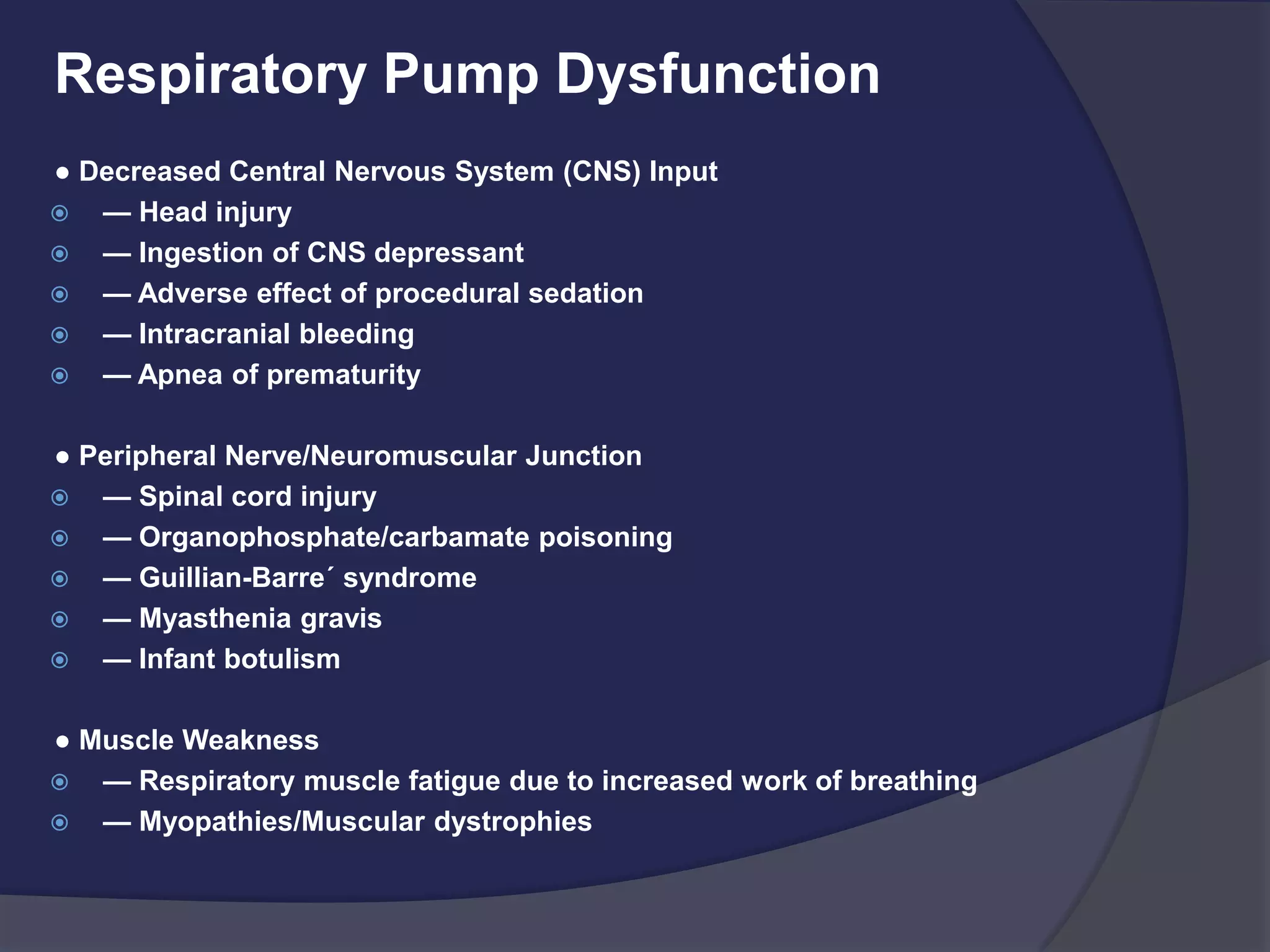
Respiratory Pump Dysfunction
● Decreased Central Nervous System (CNS) Input
 — Head injury
 — Ingestion of CNS depressant
 — Adverse effect of procedural sedation
 — Intracranial bleeding
 — Apnea of prematurity
● Peripheral Nerve/Neuromuscular Junction
 — Spinal cord injury
 — Organophosphate/carbamate poisoning
 — Guillian-Barre´ syndrome
 — Myasthenia gravis
 — Infant botulism
● Muscle Weakness
 — Respiratory muscle fatigue due to increased work of breathing
 — Myopathies/Muscular dystrophies
Airway/Lung Dysfunction
● Central Airway Obstruction
 — Croup
 — Foreign body
 — Anaphylaxis
 — Bacterial tracheitis
 — Epiglottitis
 — Retropharyngeal abscess
 — Bulbar muscle weakness/dysfunction
● Peripheral Airways/Parenchymal Lung Disease
 — Status asthmaticus
 — Bronchiolitis
 — Pneumonia
 — Acute respiratory distress syndrome
 — Pulmonary edema
 — Pulmonary contusion
 — Cystic fibrosis
 — Chronic lung disease (eg, bronchopulmonary dysplasia)
Arterial gas composition
depends on :

the gas composition of the atmosphere
 the effectiveness of alveolar ventilation
 pulmonary capillary perfusion
 diffusion across the alveolar capillary
membrane

Alveolar Gas Composition



PAO2 = PIO2 – (PCO2/R)

PIO2 = (BP – PH2O) . Fio2
 PAO2 = [(BP – PH2O) . Fio2] – (PCO2/R)

Hypoventilation


VA = VT . RR



low respiratory rate and shallow breathing
are both signs of hypoventilation.
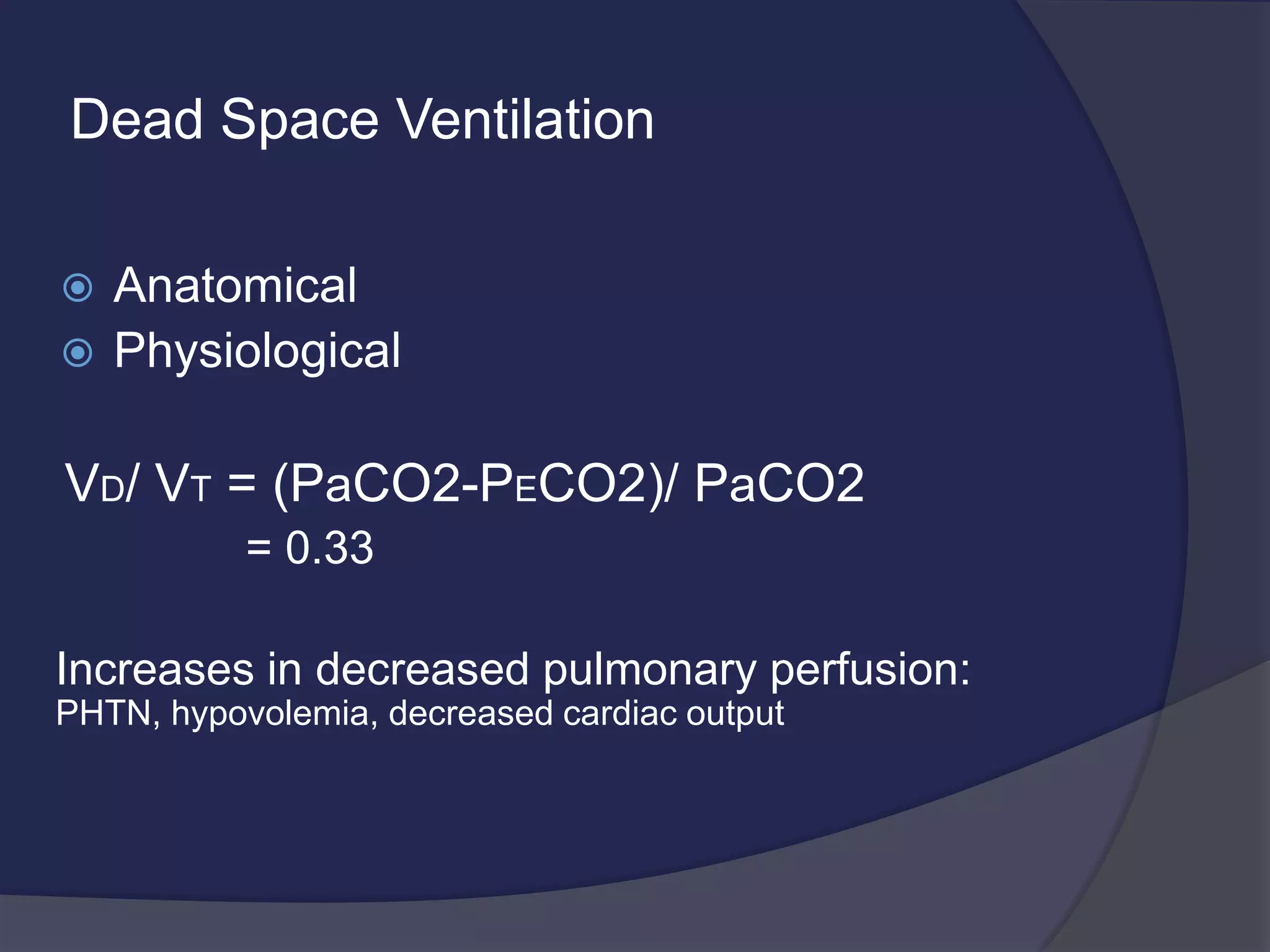
Dead Space Ventilation
Anatomical
 Physiological


VD/ VT = (PaCO2-PECO2)/ PaCO2
= 0.33
Increases in decreased pulmonary perfusion:
PHTN, hypovolemia, decreased cardiac output
Alveolar Ventilation

VA = (VT-VD). RR
Hypoventilation


The Paco2 increases in proportion to a
decrease in ventilation.



Pao2 falls approximately the same
amount as the Paco2 increases.
Hypoventilation


The relationship between oxygenation and
hypoventilation is complicated by the shape
of the Hb-dissociation curve



Because of the dissociation curve, a patient
who exhibits alarming CO2 retention might
have a near normal oxygen saturation.
When Paco2 increases from 40 to 70 mm Hg, a dangerous level
of hypoventilation, might have a Pao2 that has decreased from
100 to 60 mm Hg and, therefore, maintain an oxygen saturation
of 90%.

1. PO2 100 mm Hg= SpO2 of 97%

2. PO2 60mm Hg= SpO2 of90%
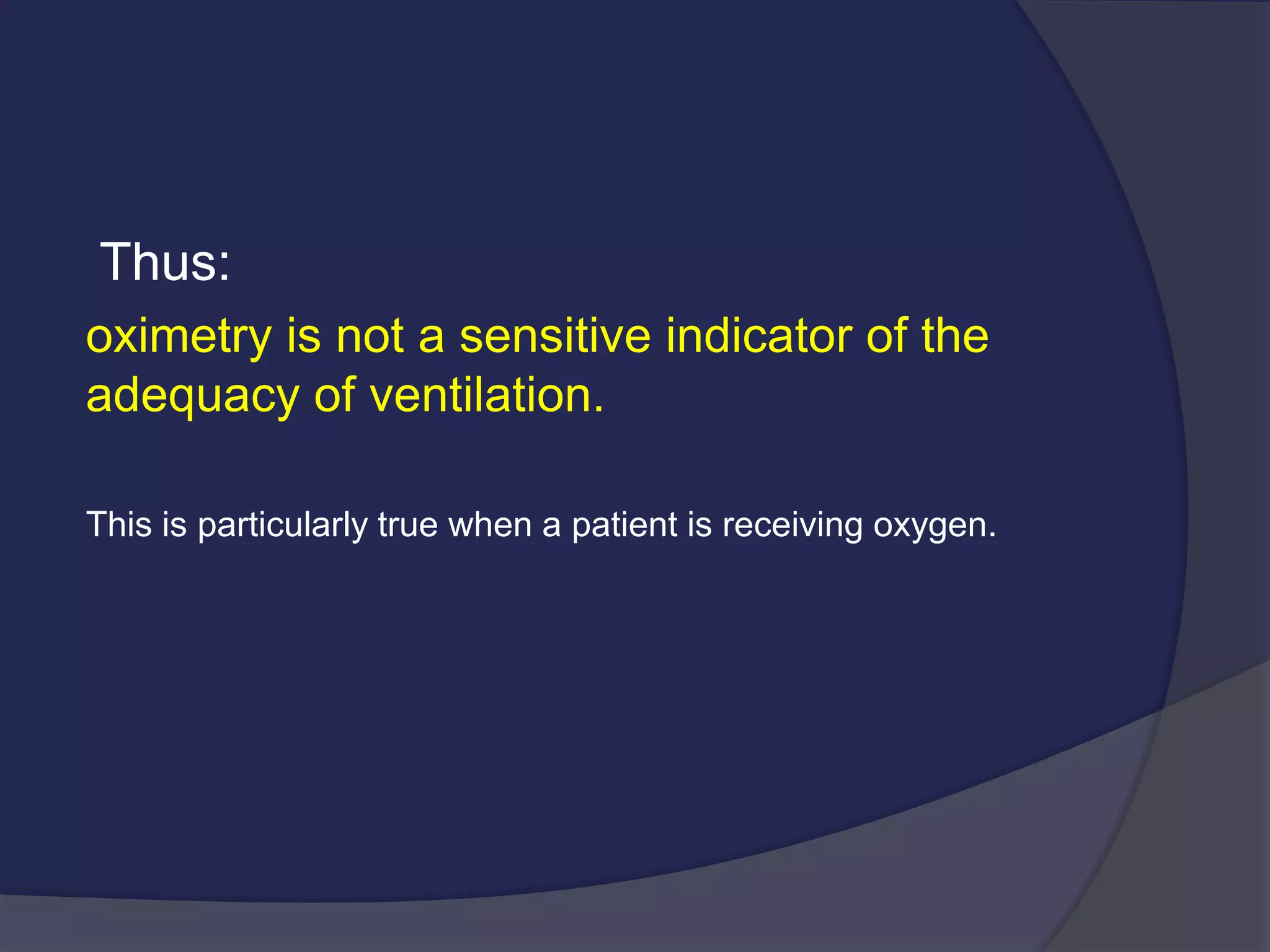
Thus:
oximetry is not a sensitive indicator of the
adequacy of ventilation.
This is particularly true when a patient is receiving oxygen.
Lung/Airway Disease


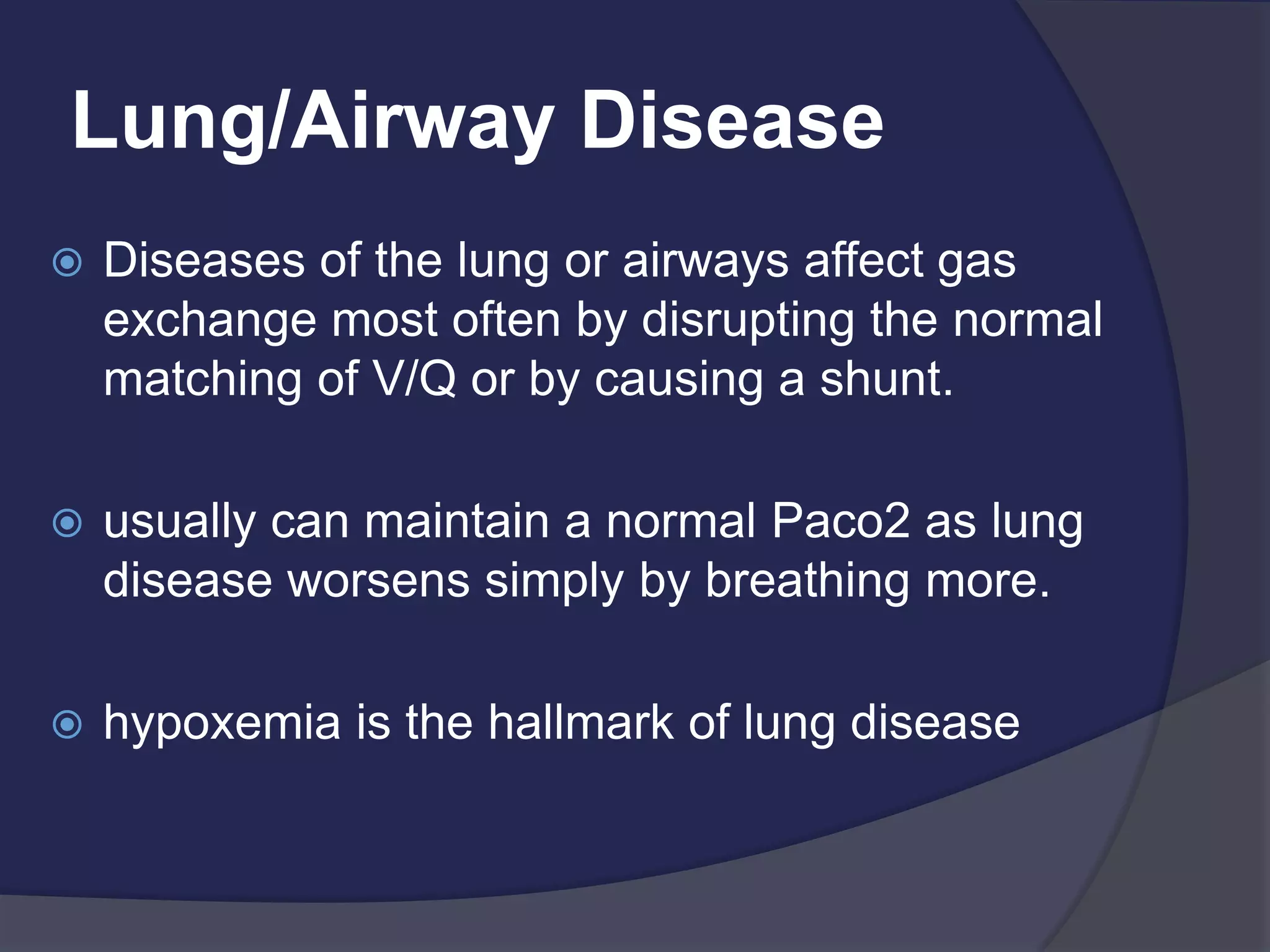
Diseases of the lung or airways affect gas
exchange most often by disrupting the normal
matching of V/Q or by causing a shunt.



usually can maintain a normal Paco2 as lung
disease worsens simply by breathing more.



hypoxemia is the hallmark of lung disease
Ventilation-Perfusion
Mismatch
hypoxemia due to V/Q mismatch
&
 hypoxemia due to shunt


administering Oxygen
Intrapulmonary Shunt
Diffusion


diffusion defects manifest as hypoxemia
rather than hypercarbia.

Examples :
interstitial
pneumonia, ARDS, Scleroderma, Pulmonar
y lymphangiectasia,…


Monitoring a Child in
Respiratory Distress and
Respiratory Failure
Clinical Examination


Clinical observation is the most
important component of monitoring.
ABG & Oximetry


ABG /CBG/ VBG



Oximetry

- Oximetry provides an invaluable and usually
accurate measurement of oxygenation.
- important to recognize its technical limitations
Condition

Limitation

Dark skin pigment
Anemia Causes inadequate signal
Bright external light
Motion

Decreased perfusion

Venous pulsations
— Severe right heart failure
— Tricuspid regurgitation
— Tourniquet or blood pressure
cuff above site

Results in low reading

Abnormal hemoglobin
concentration
— Methemoglobin

Unreliable reading (tends to read
80% to 85% saturation regardless of
actual saturation)

— SS hemoglobin Saturation

accurate, but hemoglobin
dissociation curve shifted to right

— Carboxyhemoglobin

Spuriously high saturation readings
Acute
Respiratory Failure
ARF


most common cause of cardiac arrest in children.

When presented with a child who has:
 a decreased level of consciousness,
 slow/shallow breathing, or increased
 respiratory drive, the possibility of
ARF should be considered
First:
 to assure adequate gas exchange and
circulation (the ABCs).
Oxygen Administration to maintain ….
 If Ventilation is or appears to be inadequate …..
 Intubation ?


Need ICU
Chronic
Respiratory Failure
CRF
is seen most commonly in children who have:
Respiratory muscle weakness (muscular
dystrophy, anterior horn cell disease) or
 severe chronic lung diseases (BPD, endstage cystic fibrosis)

usually has an insidious onset
 Most children do not have dyspnea.
 PH normal or near normal , unless…..




Recognizing need careful monitoring
of children at risk for CRF








Disordered sleep
Daytime hypersomnolence
Morning headaches
Altered mental status
Increased respiratory symptoms
Cardiomegaly
Decreased baseline oxygenation

CRF often presents first during sleep
 Develops an intercurrent illness , Fever


Respiratory failure in children

  • 1.
    Mohammad Rezaei Fellowship ofPediatric Pulmonology
  • 2.
  • 3.
    Respiratory failure  inability ofthe lungs to provide sufficient oxygen (hypoxic respiratory failure) or remove carbon dioxide (ventilatory failure) to meet metabolic demands.
  • 4.
    Respiratory failure Pao2 <60 torr with breathing of room air and  Paco2 > 50 torr resulting in acidosis,   the patient's general state, respiratory effort, and potential for impending exhaustion are more important indicators than blood gas values.
  • 5.
     Respiratory distress canoccur in patients without respiratory disease, and  respiratory failure can occur in patients without respiratory distress.
  • 6.
  • 7.
    The physiologic basisof respiratory failure determines the clinical picture. normal respiratory drive are breathless and anxious  decreased central drive are comfortable or even somnolent. 
  • 8.
    The causes:  conditions thataffect the respiratory pump  conditions that interfere with the normal function of the lung and airways
  • 9.
    Respiratory Pump Dysfunction ●Decreased Central Nervous System (CNS) Input  — Head injury  — Ingestion of CNS depressant  — Adverse effect of procedural sedation  — Intracranial bleeding  — Apnea of prematurity ● Peripheral Nerve/Neuromuscular Junction  — Spinal cord injury  — Organophosphate/carbamate poisoning  — Guillian-Barre´ syndrome  — Myasthenia gravis  — Infant botulism ● Muscle Weakness  — Respiratory muscle fatigue due to increased work of breathing  — Myopathies/Muscular dystrophies
  • 10.
    Airway/Lung Dysfunction ● CentralAirway Obstruction  — Croup  — Foreign body  — Anaphylaxis  — Bacterial tracheitis  — Epiglottitis  — Retropharyngeal abscess  — Bulbar muscle weakness/dysfunction ● Peripheral Airways/Parenchymal Lung Disease  — Status asthmaticus  — Bronchiolitis  — Pneumonia  — Acute respiratory distress syndrome  — Pulmonary edema  — Pulmonary contusion  — Cystic fibrosis  — Chronic lung disease (eg, bronchopulmonary dysplasia)
  • 11.
    Arterial gas composition dependson : the gas composition of the atmosphere  the effectiveness of alveolar ventilation  pulmonary capillary perfusion  diffusion across the alveolar capillary membrane 
  • 12.
    Alveolar Gas Composition  PAO2= PIO2 – (PCO2/R) PIO2 = (BP – PH2O) . Fio2  PAO2 = [(BP – PH2O) . Fio2] – (PCO2/R) 
  • 13.
    Hypoventilation  VA = VT. RR  low respiratory rate and shallow breathing are both signs of hypoventilation.
  • 14.
    Dead Space Ventilation Anatomical Physiological  VD/ VT = (PaCO2-PECO2)/ PaCO2 = 0.33 Increases in decreased pulmonary perfusion: PHTN, hypovolemia, decreased cardiac output
  • 15.
  • 16.
    Hypoventilation  The Paco2 increasesin proportion to a decrease in ventilation.  Pao2 falls approximately the same amount as the Paco2 increases.
  • 17.
    Hypoventilation  The relationship betweenoxygenation and hypoventilation is complicated by the shape of the Hb-dissociation curve  Because of the dissociation curve, a patient who exhibits alarming CO2 retention might have a near normal oxygen saturation.
  • 18.
    When Paco2 increasesfrom 40 to 70 mm Hg, a dangerous level of hypoventilation, might have a Pao2 that has decreased from 100 to 60 mm Hg and, therefore, maintain an oxygen saturation of 90%. 1. PO2 100 mm Hg= SpO2 of 97% 2. PO2 60mm Hg= SpO2 of90%
  • 19.
    Thus: oximetry is nota sensitive indicator of the adequacy of ventilation. This is particularly true when a patient is receiving oxygen.
  • 20.
    Lung/Airway Disease  Diseases ofthe lung or airways affect gas exchange most often by disrupting the normal matching of V/Q or by causing a shunt.  usually can maintain a normal Paco2 as lung disease worsens simply by breathing more.  hypoxemia is the hallmark of lung disease
  • 21.
  • 22.
    hypoxemia due toV/Q mismatch &  hypoxemia due to shunt  administering Oxygen
  • 23.
  • 24.
    Diffusion  diffusion defects manifestas hypoxemia rather than hypercarbia. Examples : interstitial pneumonia, ARDS, Scleroderma, Pulmonar y lymphangiectasia,… 
  • 25.
    Monitoring a Childin Respiratory Distress and Respiratory Failure
  • 26.
    Clinical Examination  Clinical observationis the most important component of monitoring.
  • 27.
    ABG & Oximetry  ABG/CBG/ VBG  Oximetry - Oximetry provides an invaluable and usually accurate measurement of oxygenation. - important to recognize its technical limitations
  • 28.
    Condition Limitation Dark skin pigment AnemiaCauses inadequate signal Bright external light Motion Decreased perfusion Venous pulsations — Severe right heart failure — Tricuspid regurgitation — Tourniquet or blood pressure cuff above site Results in low reading Abnormal hemoglobin concentration — Methemoglobin Unreliable reading (tends to read 80% to 85% saturation regardless of actual saturation) — SS hemoglobin Saturation accurate, but hemoglobin dissociation curve shifted to right — Carboxyhemoglobin Spuriously high saturation readings
  • 29.
  • 30.
    ARF  most common causeof cardiac arrest in children. When presented with a child who has:  a decreased level of consciousness,  slow/shallow breathing, or increased  respiratory drive, the possibility of ARF should be considered
  • 31.
    First:  to assureadequate gas exchange and circulation (the ABCs). Oxygen Administration to maintain ….  If Ventilation is or appears to be inadequate …..  Intubation ?  Need ICU
  • 32.
  • 33.
    CRF is seen mostcommonly in children who have: Respiratory muscle weakness (muscular dystrophy, anterior horn cell disease) or  severe chronic lung diseases (BPD, endstage cystic fibrosis) 
  • 34.
    usually has aninsidious onset  Most children do not have dyspnea.  PH normal or near normal , unless…..   Recognizing need careful monitoring of children at risk for CRF
  • 35.
           Disordered sleep Daytime hypersomnolence Morningheadaches Altered mental status Increased respiratory symptoms Cardiomegaly Decreased baseline oxygenation CRF often presents first during sleep  Develops an intercurrent illness , Fever 