Downloaded 51 times

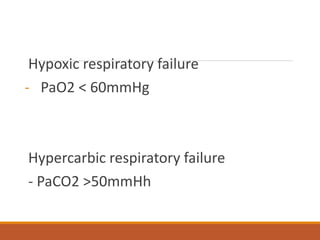


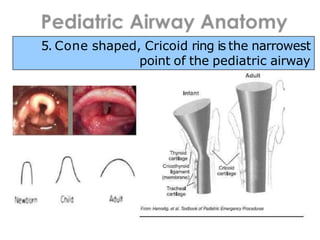
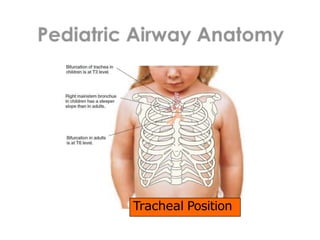


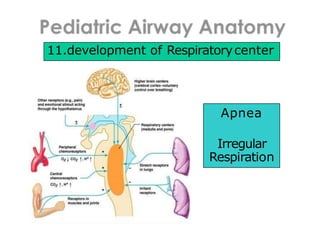


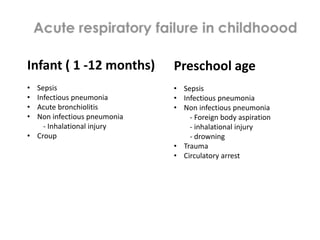

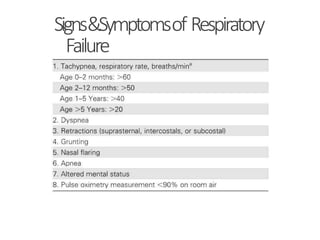
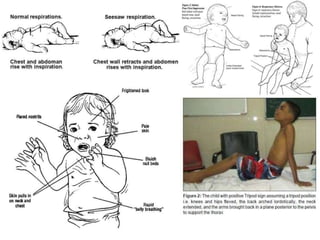


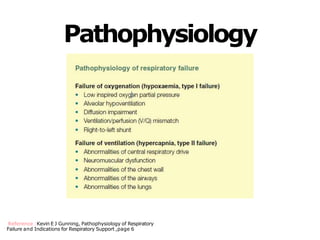
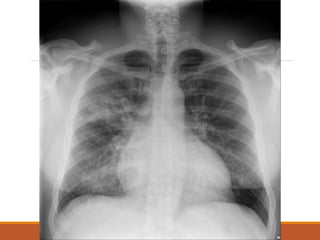
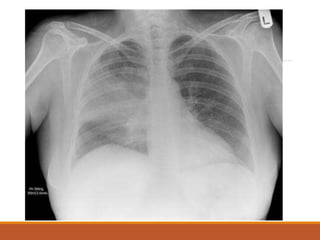



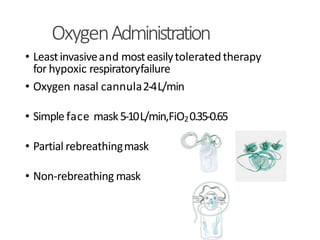
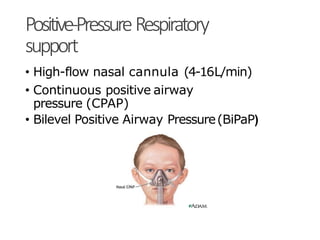





Respiratory failure in pediatrics can occur due to various intrinsic and acquired lung diseases, airway disorders, or neuromuscular dysfunction that cause insufficient oxygenation and ventilation. It is more common in children due to anatomical features such as an obligate nose breathing, small airways, and developing lung architecture. Diagnosis involves blood gas analysis showing hypoxemia and/or hypercapnia as well as imaging and microbiological testing. Management treats the underlying cause and aims to improve oxygenation initially through supplemental oxygen, airway clearance techniques, and non-invasive respiratory support like CPAP. Intubation and mechanical ventilation may be needed in severe cases.


