Human Anatomy and Physiology
The Respiratory System
Functional anatomy of the respiratory system:
Conducting Zone
Rigid conduits for air
to reach site of gas
exchange
-nose
-nasal cavity
-pharynx
-larynx
-trachea
-bronchi
Respiratory Zone
site of gas exchange
-respiratory bronchioles
-alveolar ducts
Human Anatomy and Physiology
The conducting zone
Conducting Zone:
Nose
-airway
-moistens and warms air
-filters inspired air
-resonating chamber for
speech
-olfaction
-paranasal sinuses
-frontal, sphenoid,
ethmoid and maxillary
bones
-warm and moisten air
Human Anatomy and Physiology
The conducting zone
Conducting Zone:
Pharynx
-connects the nasal
cavity and mouth to the
larynx and esophagus
-common pathway for
food and air (throat)
-nasopharynx
-oropharynx
-laryngopharynx
Human Anatomy and Physiology
The conducting zone
Conducting Zone:
Laryngopharynx – common passage way for food and air
Larynx – voice box
Human Anatomy and Physiology
The conducting zone
Conducting Zone:
Trachea
-windpipe
-larynx at division forming
two primary bronchi at
midthorax
-mucosa – pseudostratified
epithelium (goblet cells)
-submucosa – connective tissue
seromucous glands – mucous
-advantitia – CT hyaline cartilage
Human Anatomy and Physiology
The conducting zone
Conducting Zone:
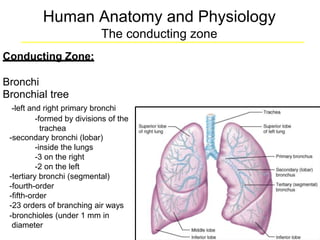
Bronchi
Bronchial tree
-left and right primary bronchi
-formed by divisions of the
trachea
-secondary bronchi (lobar)
-inside the lungs
-3 on the right
-2 on the left
-tertiary bronchi (segmental)
-fourth-order
-fifth-order
-23 orders of branching air ways
-bronchioles (under 1 mm in
diameter
Human Anatomy and Physiology
The conducting zone
Conducting Zone:
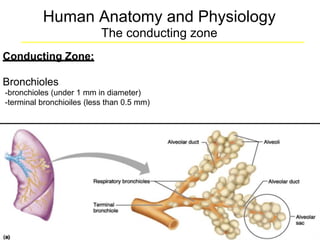
Bronchioles
-bronchioles (under 1 mm in diameter)
-terminal bronchioiles (less than 0.5 mm)
Human Anatomy and Physiology
The conducting zone
Conducting Zone:
Cartilage:
-rings
-irregular plates
-no cartilage in bronchioles
-replaced by elastic fibers
Epithelium:
-pseudostratified (ciliated)
-columnar (ciliated)
-cuboidal in terminal bronchioles (no cilia)
Smooth Muscle:
-increases as tubes get smaller
Human Anatomy and Physiology
The respiratory zone
Respiratory Zone:
Respiratory bronchioiles
Alveoli (300 million)
Alveolar ducts
Alveolar sacs
Gas Exchange:
respiratory membrane
Human Anatomy and Physiology
The respiratory zone
Respiratory Zone:
Respiratory membrane (air-blood barrier) or
(Alveolar-capillary membrane) is composed of:
-simple squamous epithelial cells (Type I cells)
-cobweb of pulmonary capillaries
Primary function is gas exchange
-Type II cells (cuboidal)
surfactant
-elastic fibers
-alveolar pores allow for
pressure equalization
between alveoli
-alveolar macrophages
(dust cells)
Human Anatomy and Physiology
Lungs and Pleural Coverings
Pleural Coverings:
-double layered serosa
-parietal pleura lines the thoracic wall
-pulmonary or visceral pleura which covers the
lung surface
-pleural cavity is the space between
the two layers
-pleural fluid fills the cavity

Respiratory anaotomy(1)

  • 1.
    Human Anatomy andPhysiology The Respiratory System Functional anatomy of the respiratory system: Conducting Zone Rigid conduits for air to reach site of gas exchange -nose -nasal cavity -pharynx -larynx -trachea -bronchi Respiratory Zone site of gas exchange -respiratory bronchioles -alveolar ducts
  • 2.
    Human Anatomy andPhysiology The conducting zone Conducting Zone: Nose -airway -moistens and warms air -filters inspired air -resonating chamber for speech -olfaction -paranasal sinuses -frontal, sphenoid, ethmoid and maxillary bones -warm and moisten air
  • 3.
    Human Anatomy andPhysiology The conducting zone Conducting Zone: Pharynx -connects the nasal cavity and mouth to the larynx and esophagus -common pathway for food and air (throat) -nasopharynx -oropharynx -laryngopharynx
  • 4.
    Human Anatomy andPhysiology The conducting zone Conducting Zone: Laryngopharynx – common passage way for food and air Larynx – voice box
  • 5.
    Human Anatomy andPhysiology The conducting zone Conducting Zone: Trachea -windpipe -larynx at division forming two primary bronchi at midthorax -mucosa – pseudostratified epithelium (goblet cells) -submucosa – connective tissue seromucous glands – mucous -advantitia – CT hyaline cartilage
  • 6.
    Human Anatomy andPhysiology The conducting zone Conducting Zone: Bronchi Bronchial tree -left and right primary bronchi -formed by divisions of the trachea -secondary bronchi (lobar) -inside the lungs -3 on the right -2 on the left -tertiary bronchi (segmental) -fourth-order -fifth-order -23 orders of branching air ways -bronchioles (under 1 mm in diameter
  • 7.
    Human Anatomy andPhysiology The conducting zone Conducting Zone: Bronchioles -bronchioles (under 1 mm in diameter) -terminal bronchioiles (less than 0.5 mm)
  • 8.
    Human Anatomy andPhysiology The conducting zone Conducting Zone: Cartilage: -rings -irregular plates -no cartilage in bronchioles -replaced by elastic fibers Epithelium: -pseudostratified (ciliated) -columnar (ciliated) -cuboidal in terminal bronchioles (no cilia) Smooth Muscle: -increases as tubes get smaller
  • 9.
    Human Anatomy andPhysiology The respiratory zone Respiratory Zone: Respiratory bronchioiles Alveoli (300 million) Alveolar ducts Alveolar sacs Gas Exchange: respiratory membrane
  • 10.
    Human Anatomy andPhysiology The respiratory zone Respiratory Zone: Respiratory membrane (air-blood barrier) or (Alveolar-capillary membrane) is composed of: -simple squamous epithelial cells (Type I cells) -cobweb of pulmonary capillaries Primary function is gas exchange -Type II cells (cuboidal) surfactant -elastic fibers -alveolar pores allow for pressure equalization between alveoli -alveolar macrophages (dust cells)
  • 11.
    Human Anatomy andPhysiology Lungs and Pleural Coverings Pleural Coverings: -double layered serosa -parietal pleura lines the thoracic wall -pulmonary or visceral pleura which covers the lung surface -pleural cavity is the space between the two layers -pleural fluid fills the cavity