
RESPIRATION IN ORGANISMS-1
CLASS-VII CBSE
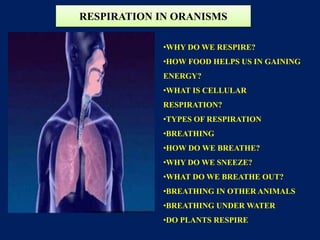
•WHY DO WE RESPIRE?
•HOW FOOD HELPS US IN GAINING
ENERGY?
•WHAT IS CELLULAR
RESPIRATION?
•TYPES OF RESPIRATION
•BREATHING
•HOW DO WE BREATHE?
•WHY DO WE SNEEZE?
•WHAT DO WE BREATHE OUT?
•BREATHING IN OTHER ANIMALS
•BREATHING UNDER WATER
•DO PLANTS RESPIRE
RESPIRATION IN ORANISMS
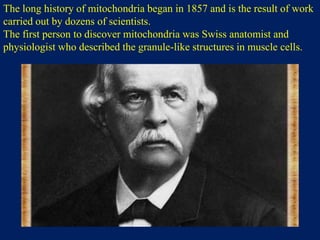
The long history of mitochondria began in 1857 and is the result of work
carried out by dozens of scientists.
The first person to discover mitochondria was Swiss anatomist and
physiologist who described the granule-like structures in muscle cells.
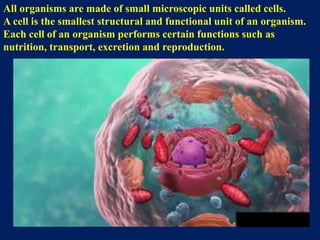
All organisms are made of small microscopic units called cells.
A cell is the smallest structural and functional unit of an organism.
Each cell of an organism performs certain functions such as
nutrition, transport, excretion and reproduction.
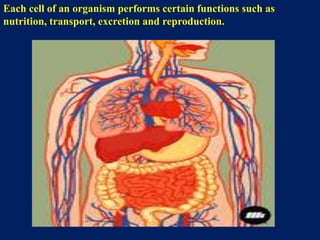
Each cell of an organism performs certain functions such as
nutrition, transport, excretion and reproduction.
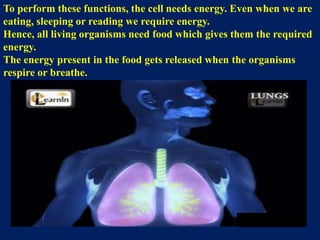
To perform these functions, the cell needs energy. Even when we are
eating, sleeping or reading we require energy.
Hence, all living organisms need food which gives them the required
energy.
The energy present in the food gets released when the organisms
respire or breathe.
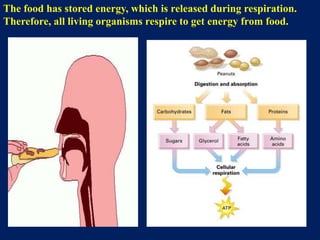
The food has stored energy, which is released during respiration.
Therefore, all living organisms respire to get energy from food.
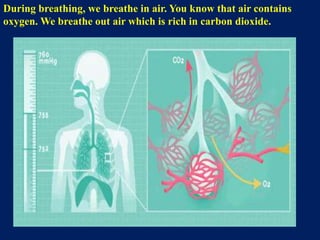
During breathing, we breathe in air. You know that air contains
oxygen. We breathe out air which is rich in carbon dioxide.
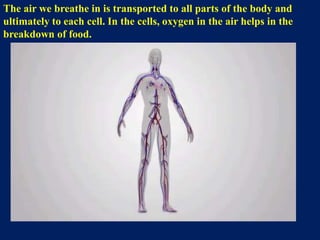
The air we breathe in is transported to all parts of the body and
ultimately to each cell. In the cells, oxygen in the air helps in the
breakdown of food.
The process of breakdown of food in the cell with the release of
energy is called cellular respiration. Cellular respiration takes place
in the cells of all organisms.
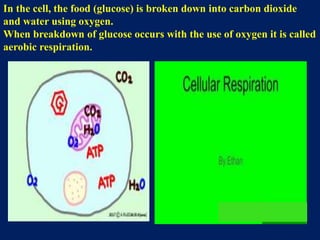
In the cell, the food (glucose) is broken down into carbon dioxide
and water using oxygen.
When breakdown of glucose occurs with the use of oxygen it is called
aerobic respiration.
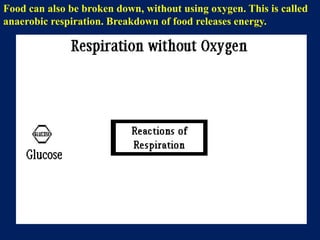
Food can also be broken down, without using oxygen. This is called
anaerobic respiration. Breakdown of food releases energy.
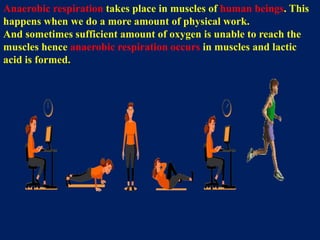
Anaerobic respiration takes place in muscles of human beings. This
happens when we do a more amount of physical work.
And sometimes sufficient amount of oxygen is unable to reach the
muscles hence anaerobic respiration occurs in muscles and lactic
acid is formed.
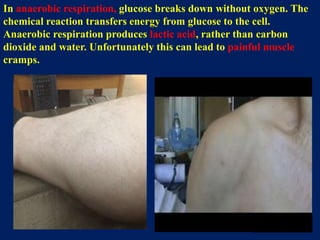
In anaerobic respiration, glucose breaks down without oxygen. The
chemical reaction transfers energy from glucose to the cell.
Anaerobic respiration produces lactic acid, rather than carbon
dioxide and water. Unfortunately this can lead to painful muscle
cramps.
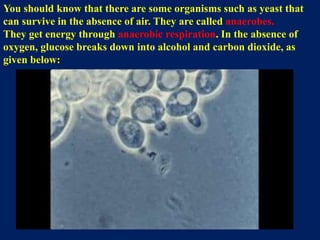
You should know that there are some organisms such as yeast that
can survive in the absence of air. They are called anaerobes.
They get energy through anaerobic respiration. In the absence of
oxygen, glucose breaks down into alcohol and carbon dioxide, as
given below:
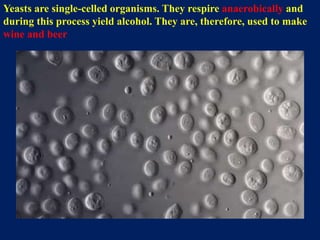
Yeasts are single-celled organisms. They respire anaerobically and
during this process yield alcohol. They are, therefore, used to make
wine and beer
RESPIRATION IN ORGANISMS-1 CLASS-VII CBSE

RESPIRATION IN ORGANISMS-1 CLASS-VII CBSE

  • 1.
  • 2.
    •WHY DO WERESPIRE? •HOW FOOD HELPS US IN GAINING ENERGY? •WHAT IS CELLULAR RESPIRATION? •TYPES OF RESPIRATION •BREATHING •HOW DO WE BREATHE? •WHY DO WE SNEEZE? •WHAT DO WE BREATHE OUT? •BREATHING IN OTHER ANIMALS •BREATHING UNDER WATER •DO PLANTS RESPIRE RESPIRATION IN ORANISMS
  • 3.
    The long historyof mitochondria began in 1857 and is the result of work carried out by dozens of scientists. The first person to discover mitochondria was Swiss anatomist and physiologist who described the granule-like structures in muscle cells.
  • 4.
    All organisms aremade of small microscopic units called cells. A cell is the smallest structural and functional unit of an organism. Each cell of an organism performs certain functions such as nutrition, transport, excretion and reproduction.
  • 5.
    Each cell ofan organism performs certain functions such as nutrition, transport, excretion and reproduction.
  • 6.
    To perform thesefunctions, the cell needs energy. Even when we are eating, sleeping or reading we require energy. Hence, all living organisms need food which gives them the required energy. The energy present in the food gets released when the organisms respire or breathe.
  • 7.
    The food hasstored energy, which is released during respiration. Therefore, all living organisms respire to get energy from food.
  • 8.
    During breathing, webreathe in air. You know that air contains oxygen. We breathe out air which is rich in carbon dioxide.
  • 9.
    The air webreathe in is transported to all parts of the body and ultimately to each cell. In the cells, oxygen in the air helps in the breakdown of food.
  • 10.
    The process ofbreakdown of food in the cell with the release of energy is called cellular respiration. Cellular respiration takes place in the cells of all organisms.
  • 11.
    In the cell,the food (glucose) is broken down into carbon dioxide and water using oxygen. When breakdown of glucose occurs with the use of oxygen it is called aerobic respiration.
  • 12.
    Food can alsobe broken down, without using oxygen. This is called anaerobic respiration. Breakdown of food releases energy.
  • 13.
    Anaerobic respiration takesplace in muscles of human beings. This happens when we do a more amount of physical work. And sometimes sufficient amount of oxygen is unable to reach the muscles hence anaerobic respiration occurs in muscles and lactic acid is formed.
  • 14.
    In anaerobic respiration,glucose breaks down without oxygen. The chemical reaction transfers energy from glucose to the cell. Anaerobic respiration produces lactic acid, rather than carbon dioxide and water. Unfortunately this can lead to painful muscle cramps.
  • 15.
    You should knowthat there are some organisms such as yeast that can survive in the absence of air. They are called anaerobes. They get energy through anaerobic respiration. In the absence of oxygen, glucose breaks down into alcohol and carbon dioxide, as given below:
  • 16.
    Yeasts are single-celledorganisms. They respire anaerobically and during this process yield alcohol. They are, therefore, used to make wine and beer