RESPIRATIO
N IN
ANIMALS
BIOLOGY
What is respiration?
 Respiration is the biochemical process in which the cells
of an organism obtain energy by combining oxygen and
glucose, resulting in the release of carbon dioxide, water,
and ATP (the currency of energy in cells).
 In simple words, The air we breathe in is transported to all
parts of the body and ultimately to each cell. In the cells,
oxygen in the air helps in the breakdown of food. The
process of breakdown of food in the cell with the release of
energy is called cellular respiration.
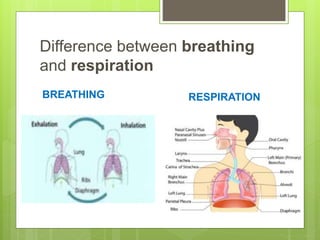
Difference between breathing
and respiration
BREATHING RESPIRATION
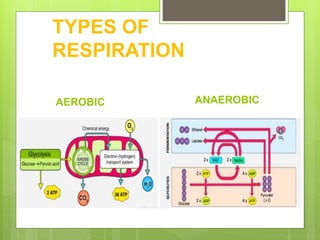
TYPES OF
RESPIRATION
AEROBIC ANAEROBIC
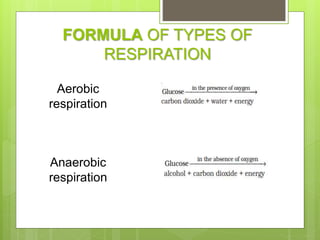
FORMULA OF TYPES OF
RESPIRATION
Aerobic
respiration
Anaerobic
respiration
There are some organisms such
as yeast that can survive in the
absence of air. They are called
anaerobes. They get energy
through anaerobic respiration.
Anaerobes
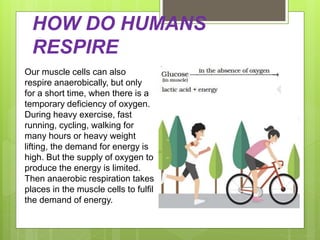
HOW DO HUMANS
RESPIRE
Our muscle cells can also
respire anaerobically, but only
for a short time, when there is a
temporary deficiency of oxygen.
During heavy exercise, fast
running, cycling, walking for
many hours or heavy weight
lifting, the demand for energy is
high. But the supply of oxygen to
produce the energy is limited.
Then anaerobic respiration takes
places in the muscle cells to fulfil
the demand of energy.
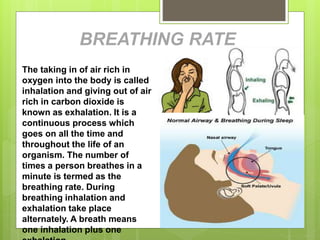
BREATHING RATE
The taking in of air rich in
oxygen into the body is called
inhalation and giving out of air
rich in carbon dioxide is
known as exhalation. It is a
continuous process which
goes on all the time and
throughout the life of an
organism. The number of
times a person breathes in a
minute is termed as the
breathing rate. During
breathing inhalation and
exhalation take place
alternately. A breath means
one inhalation plus one
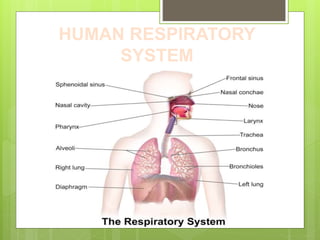
HUMAN RESPIRATORY
SYSTEM
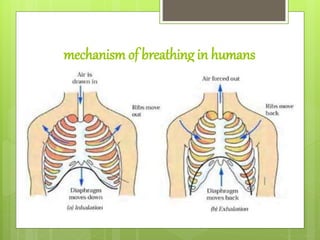
mechanism of breathing in humans
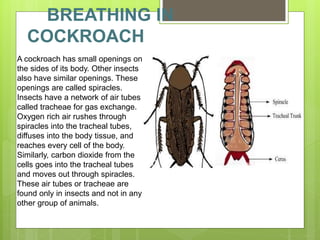
BREATHING IN
COCKROACH
A cockroach has small openings on
the sides of its body. Other insects
also have similar openings. These
openings are called spiracles.
Insects have a network of air tubes
called tracheae for gas exchange.
Oxygen rich air rushes through
spiracles into the tracheal tubes,
diffuses into the body tissue, and
reaches every cell of the body.
Similarly, carbon dioxide from the
cells goes into the tracheal tubes
and moves out through spiracles.
These air tubes or tracheae are
found only in insects and not in any
other group of animals.
BREATHING IN
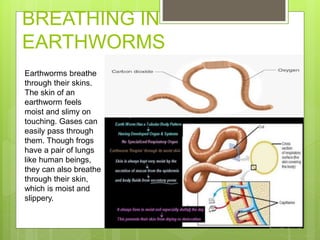
EARTHWORMS
Earthworms breathe
through their skins.
The skin of an
earthworm feels
moist and slimy on
touching. Gases can
easily pass through
them. Though frogs
have a pair of lungs
like human beings,
they can also breathe
through their skin,
which is moist and
slippery.
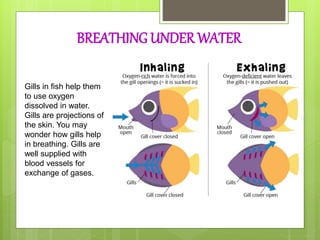
BREATHING UNDER WATER
Gills in fish help them
to use oxygen
dissolved in water.
Gills are projections of
the skin. You may
wonder how gills help
in breathing. Gills are
well supplied with
blood vessels for
exchange of gases.
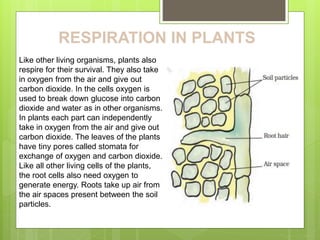
RESPIRATION IN PLANTS
Like other living organisms, plants also
respire for their survival. They also take
in oxygen from the air and give out
carbon dioxide. In the cells oxygen is
used to break down glucose into carbon
dioxide and water as in other organisms.
In plants each part can independently
take in oxygen from the air and give out
carbon dioxide. The leaves of the plants
have tiny pores called stomata for
exchange of oxygen and carbon dioxide.
Like all other living cells of the plants,
the root cells also need oxygen to
generate energy. Roots take up air from
the air spaces present between the soil
particles.
SUMMARY
1) Respiration is a vital biological process. All living organisms need to
respire to get the energy needed for their survival.
2) Respiration is essential for survival of living organisms. It releases energy
from the food.
3) The oxygen we inhale is used to breakdown glucose into carbon dioxide
and water. Energy is released in the process.
4) The breakdown of glucose occurs in the cells of an organism
(cellular respiration).
5) If the food is broken down with the use of oxygen, it is called aerobic
respiration. If the breakdown occurs without the use of oxygen, the
respiration is called anaerobic respiration.
6) During heavy exercise when the supply of oxygen to our muscle cells is
insufficient, food breakdown is by anaerobic respiration.
7) Breathing is a part of the process of respiration during which an
organism takes in the oxygen-rich air and gives out air rich in carbon
dioxide. The respiratory organs for the exchange of gases vary in
different organisms.
8) During inhalation, our lungs expand and then come back to the original state
as the air moves out during exhalation.
9) Increased physical activity enhances the rate of breathing.
10) In animals like cow, buffalo, dog and cat the respiratory organs and
the process of breathing are similar to those in humans.
11) In earthworm, the exchange of gases occurs through the moist skin. In
fishes it takes place through gills and in insects through the tracheae.
12) In a plant the roots take in air present in the soil. Leaves have tiny pores
called stomata through which they exchange gases. The breakdown of glucose
in the plant cells is similar to that in other living beings.
13) For us oxygen is essential, but for those organisms which do not use
it, oxygen is toxic. In fact, for humans and other organisms it may be
dangerous to breathe pure oxygen for long.
Thank you!!
Like my slide share!!!

Respiration in animals bio

  • 1.
  • 2.
    What is respiration? Respiration is the biochemical process in which the cells of an organism obtain energy by combining oxygen and glucose, resulting in the release of carbon dioxide, water, and ATP (the currency of energy in cells).  In simple words, The air we breathe in is transported to all parts of the body and ultimately to each cell. In the cells, oxygen in the air helps in the breakdown of food. The process of breakdown of food in the cell with the release of energy is called cellular respiration.
  • 3.
    Difference between breathing andrespiration BREATHING RESPIRATION
  • 4.
  • 5.
    FORMULA OF TYPESOF RESPIRATION Aerobic respiration Anaerobic respiration
  • 6.
    There are someorganisms such as yeast that can survive in the absence of air. They are called anaerobes. They get energy through anaerobic respiration. Anaerobes
  • 7.
    HOW DO HUMANS RESPIRE Ourmuscle cells can also respire anaerobically, but only for a short time, when there is a temporary deficiency of oxygen. During heavy exercise, fast running, cycling, walking for many hours or heavy weight lifting, the demand for energy is high. But the supply of oxygen to produce the energy is limited. Then anaerobic respiration takes places in the muscle cells to fulfil the demand of energy.
  • 8.
    BREATHING RATE The takingin of air rich in oxygen into the body is called inhalation and giving out of air rich in carbon dioxide is known as exhalation. It is a continuous process which goes on all the time and throughout the life of an organism. The number of times a person breathes in a minute is termed as the breathing rate. During breathing inhalation and exhalation take place alternately. A breath means one inhalation plus one
  • 9.
  • 10.
  • 11.
    BREATHING IN COCKROACH A cockroachhas small openings on the sides of its body. Other insects also have similar openings. These openings are called spiracles. Insects have a network of air tubes called tracheae for gas exchange. Oxygen rich air rushes through spiracles into the tracheal tubes, diffuses into the body tissue, and reaches every cell of the body. Similarly, carbon dioxide from the cells goes into the tracheal tubes and moves out through spiracles. These air tubes or tracheae are found only in insects and not in any other group of animals.
  • 12.
    BREATHING IN EARTHWORMS Earthworms breathe throughtheir skins. The skin of an earthworm feels moist and slimy on touching. Gases can easily pass through them. Though frogs have a pair of lungs like human beings, they can also breathe through their skin, which is moist and slippery.
  • 13.
    BREATHING UNDER WATER Gillsin fish help them to use oxygen dissolved in water. Gills are projections of the skin. You may wonder how gills help in breathing. Gills are well supplied with blood vessels for exchange of gases.
  • 14.
    RESPIRATION IN PLANTS Likeother living organisms, plants also respire for their survival. They also take in oxygen from the air and give out carbon dioxide. In the cells oxygen is used to break down glucose into carbon dioxide and water as in other organisms. In plants each part can independently take in oxygen from the air and give out carbon dioxide. The leaves of the plants have tiny pores called stomata for exchange of oxygen and carbon dioxide. Like all other living cells of the plants, the root cells also need oxygen to generate energy. Roots take up air from the air spaces present between the soil particles.
  • 15.
    SUMMARY 1) Respiration isa vital biological process. All living organisms need to respire to get the energy needed for their survival. 2) Respiration is essential for survival of living organisms. It releases energy from the food. 3) The oxygen we inhale is used to breakdown glucose into carbon dioxide and water. Energy is released in the process. 4) The breakdown of glucose occurs in the cells of an organism (cellular respiration). 5) If the food is broken down with the use of oxygen, it is called aerobic respiration. If the breakdown occurs without the use of oxygen, the respiration is called anaerobic respiration. 6) During heavy exercise when the supply of oxygen to our muscle cells is insufficient, food breakdown is by anaerobic respiration. 7) Breathing is a part of the process of respiration during which an organism takes in the oxygen-rich air and gives out air rich in carbon dioxide. The respiratory organs for the exchange of gases vary in different organisms.
  • 16.
    8) During inhalation,our lungs expand and then come back to the original state as the air moves out during exhalation. 9) Increased physical activity enhances the rate of breathing. 10) In animals like cow, buffalo, dog and cat the respiratory organs and the process of breathing are similar to those in humans. 11) In earthworm, the exchange of gases occurs through the moist skin. In fishes it takes place through gills and in insects through the tracheae. 12) In a plant the roots take in air present in the soil. Leaves have tiny pores called stomata through which they exchange gases. The breakdown of glucose in the plant cells is similar to that in other living beings. 13) For us oxygen is essential, but for those organisms which do not use it, oxygen is toxic. In fact, for humans and other organisms it may be dangerous to breathe pure oxygen for long.
  • 17.
    Thank you!! Like myslide share!!!