
Research 101: How to Read a Paper
Harold Gamero
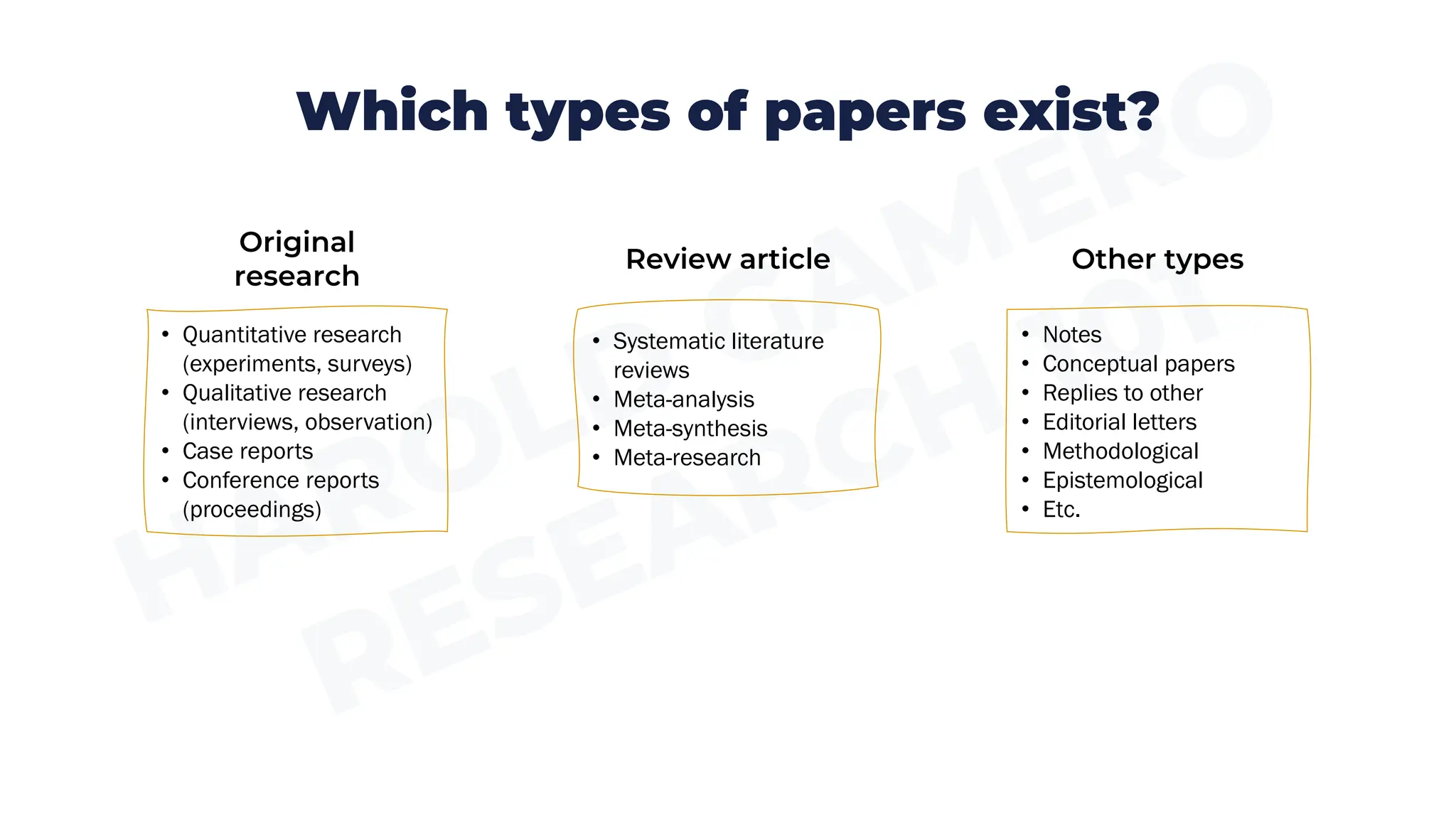
Which types of papers exist?
Original
research
Review article Other types
• Quantitative research
(experiments, surveys)
• Qualitative research
(interviews, observation)
• Case reports
• Conference reports
(proceedings)
• Systematic literature
reviews
• Meta-analysis
• Meta-synthesis
• Meta-research
• Notes
• Conceptual papers
• Replies to other
• Editorial letters
• Methodological
• Epistemological
• Etc.
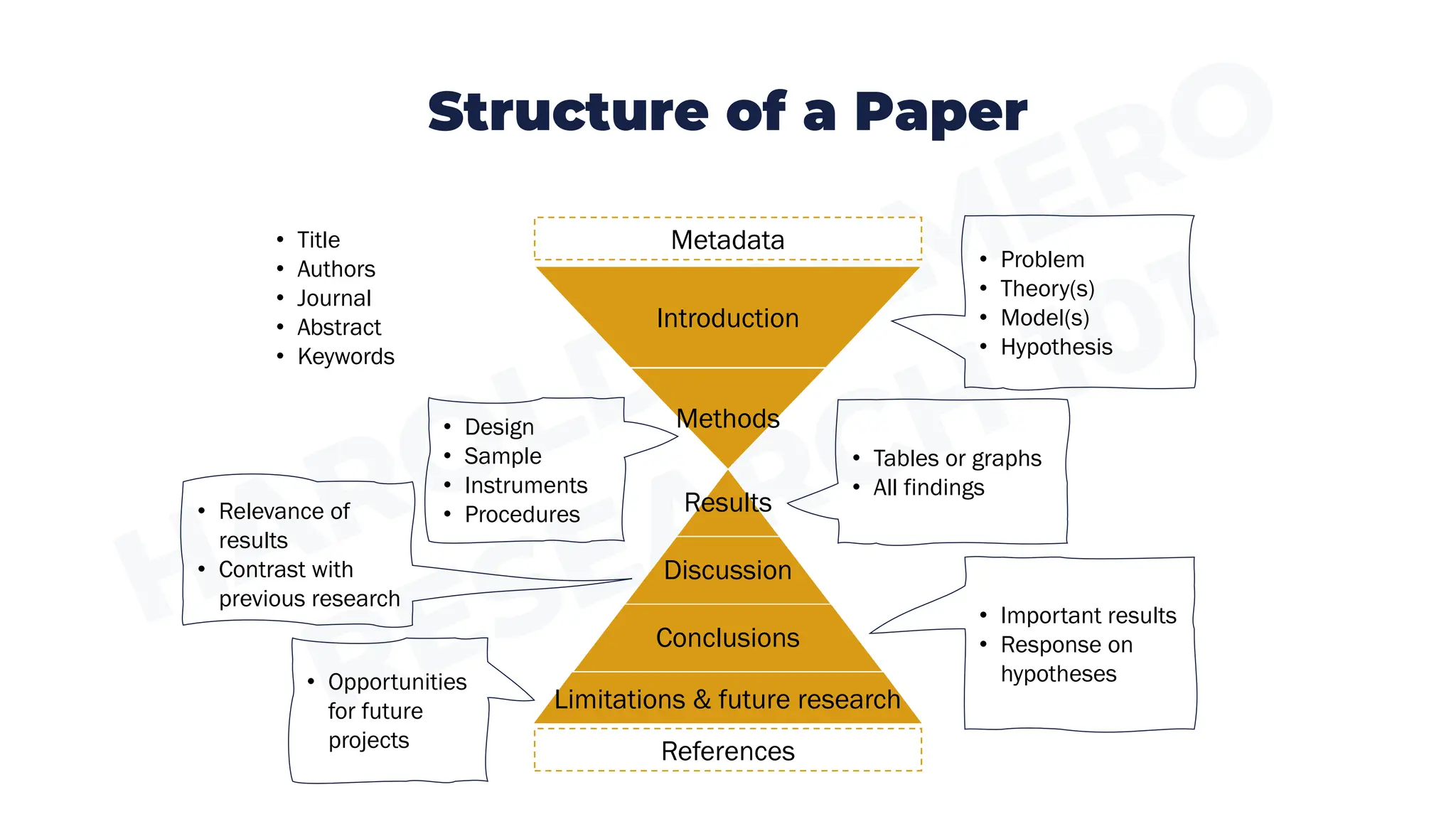
References
Metadata
Results
Discussion
Conclusions
Methods
Limitations & future research
Introduction
Structure of a Paper
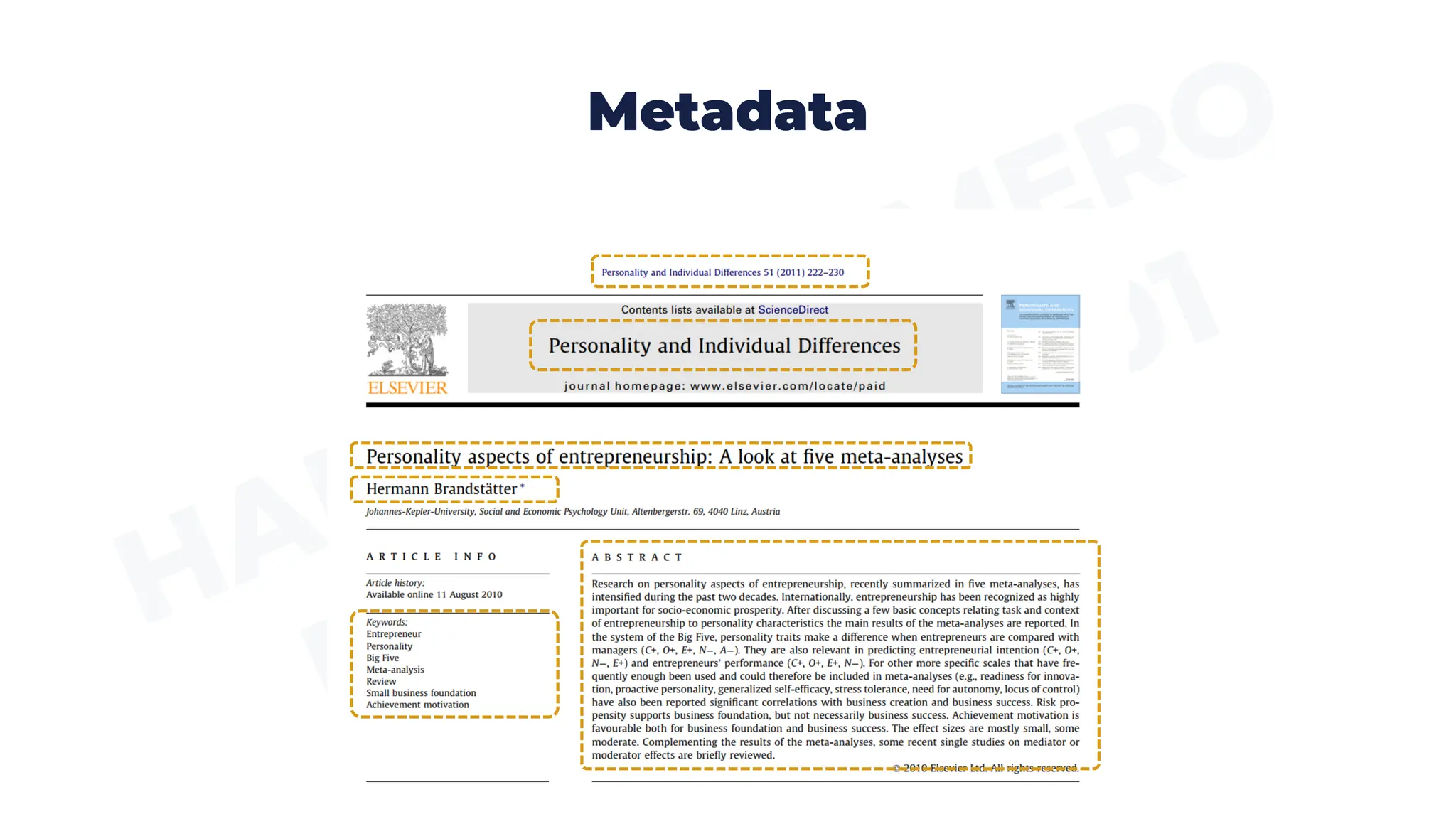
• Title
• Authors
• Journal
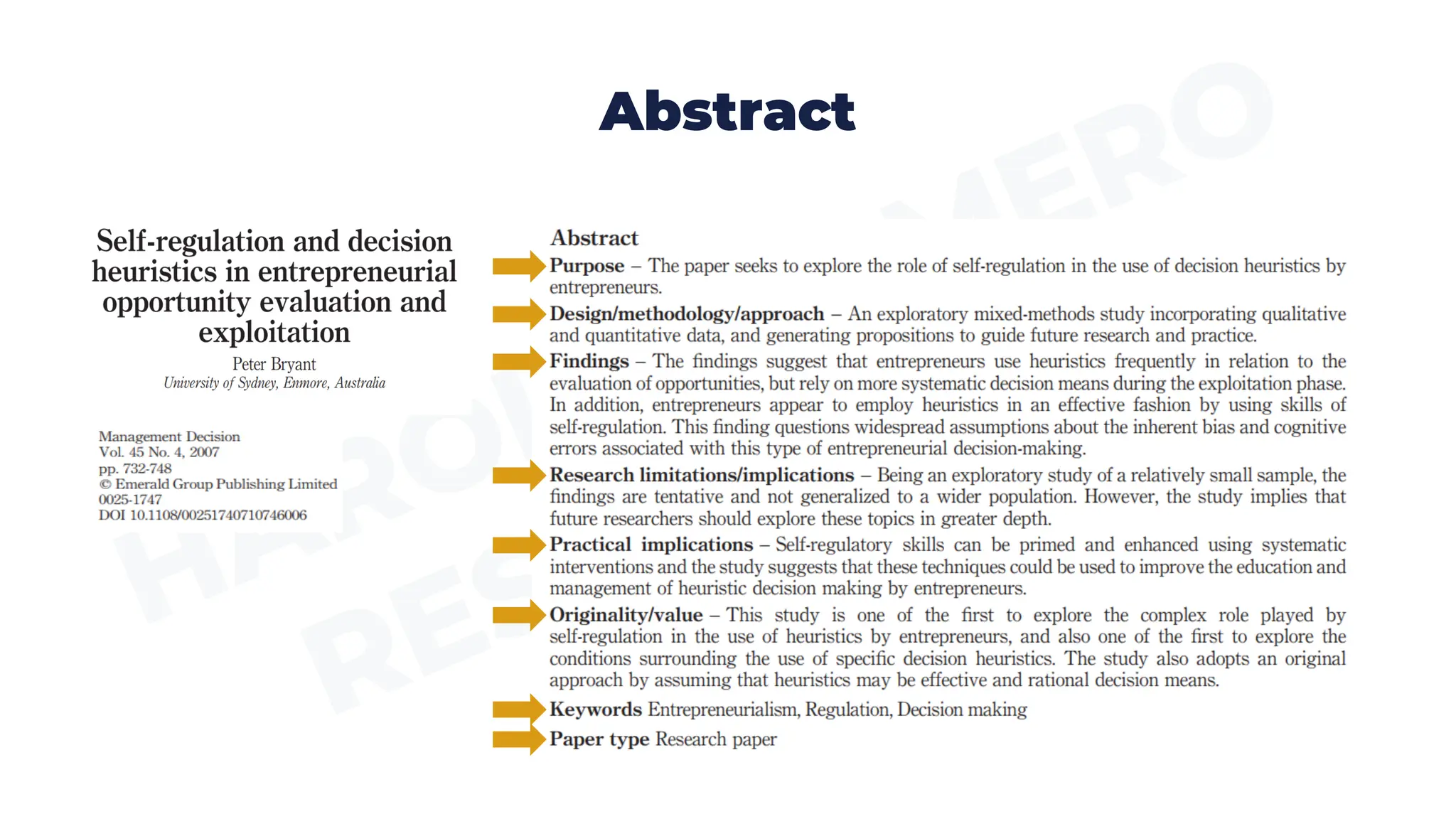
• Abstract
• Keywords
• Problem
• Theory(s)
• Model(s)
• Hypothesis
• Design
• Sample
• Instruments
• Procedures
• Tables or graphs
• All findings
• Relevance of
results
• Contrast with
previous research
• Important results
• Response on
hypotheses
• Opportunities
for future
projects
References
Metadata
Results
Discussion
Conclusions
Methods
Limitations & future research
Introduction
Original
research
Literature
review
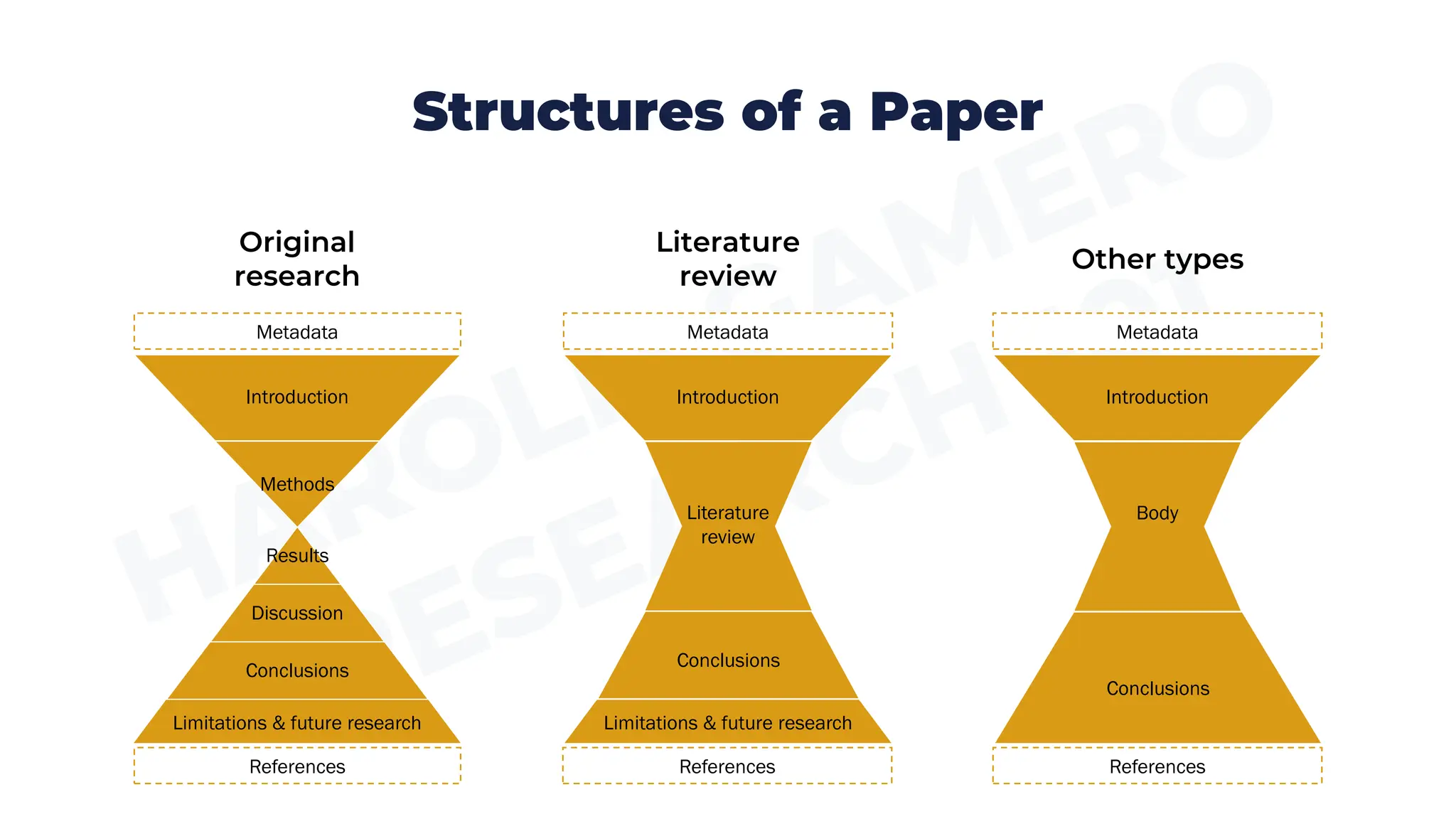
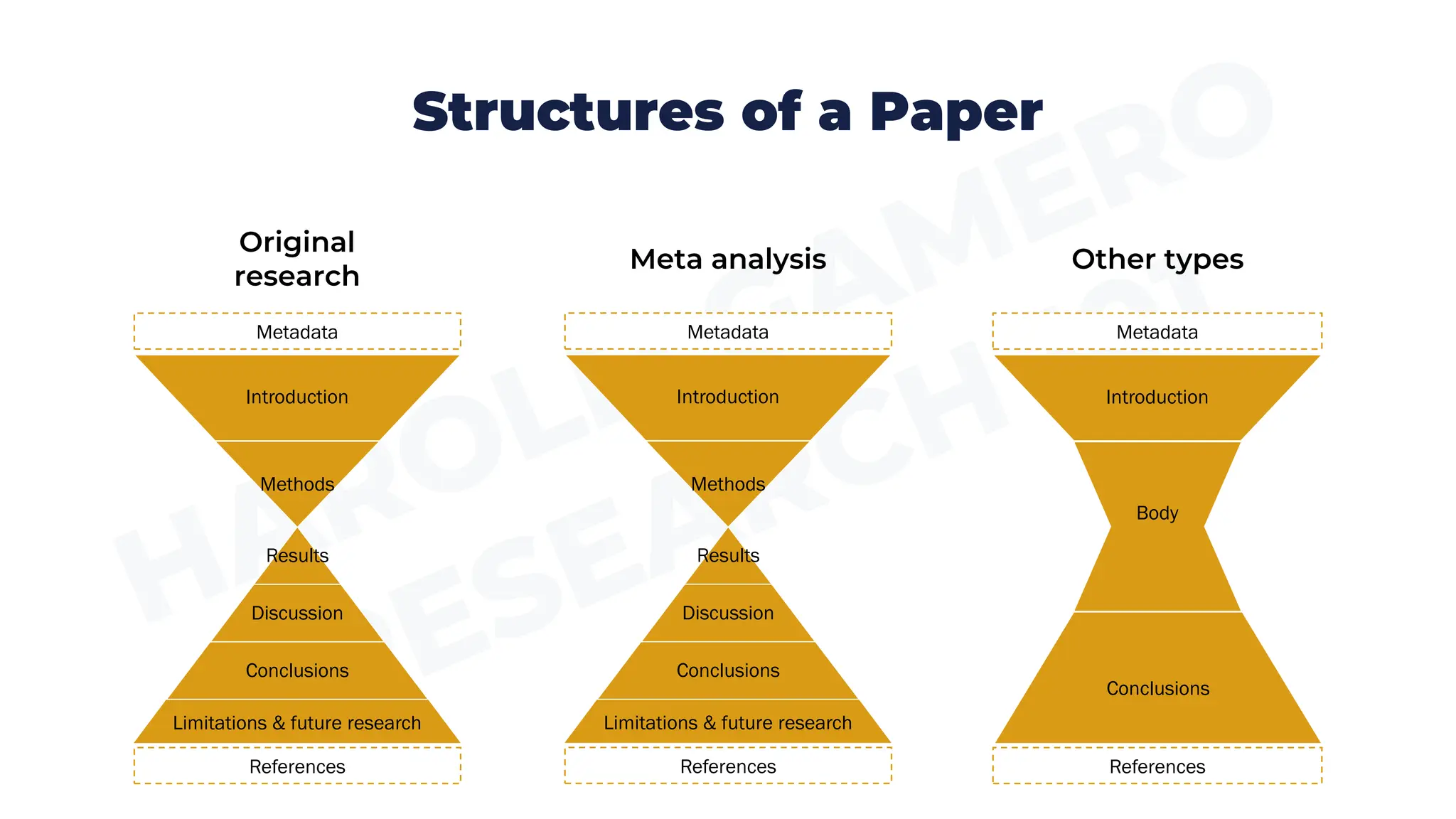
Structures of a Paper
Metadata
Introduction
Literature
review
Conclusions
References
Conclusions
Limitations & future research
Other types
References
Metadata
Introduction
Body
Conclusions
References
Metadata
Results
Discussion
Conclusions
Methods
Limitations & future research
Introduction
References
Metadata
Results
Discussion
Conclusions
Methods
Limitations & future research
Introduction
Original
research
Meta analysis
Structures of a Paper
Other types
References
Metadata
Introduction
Body
Conclusions
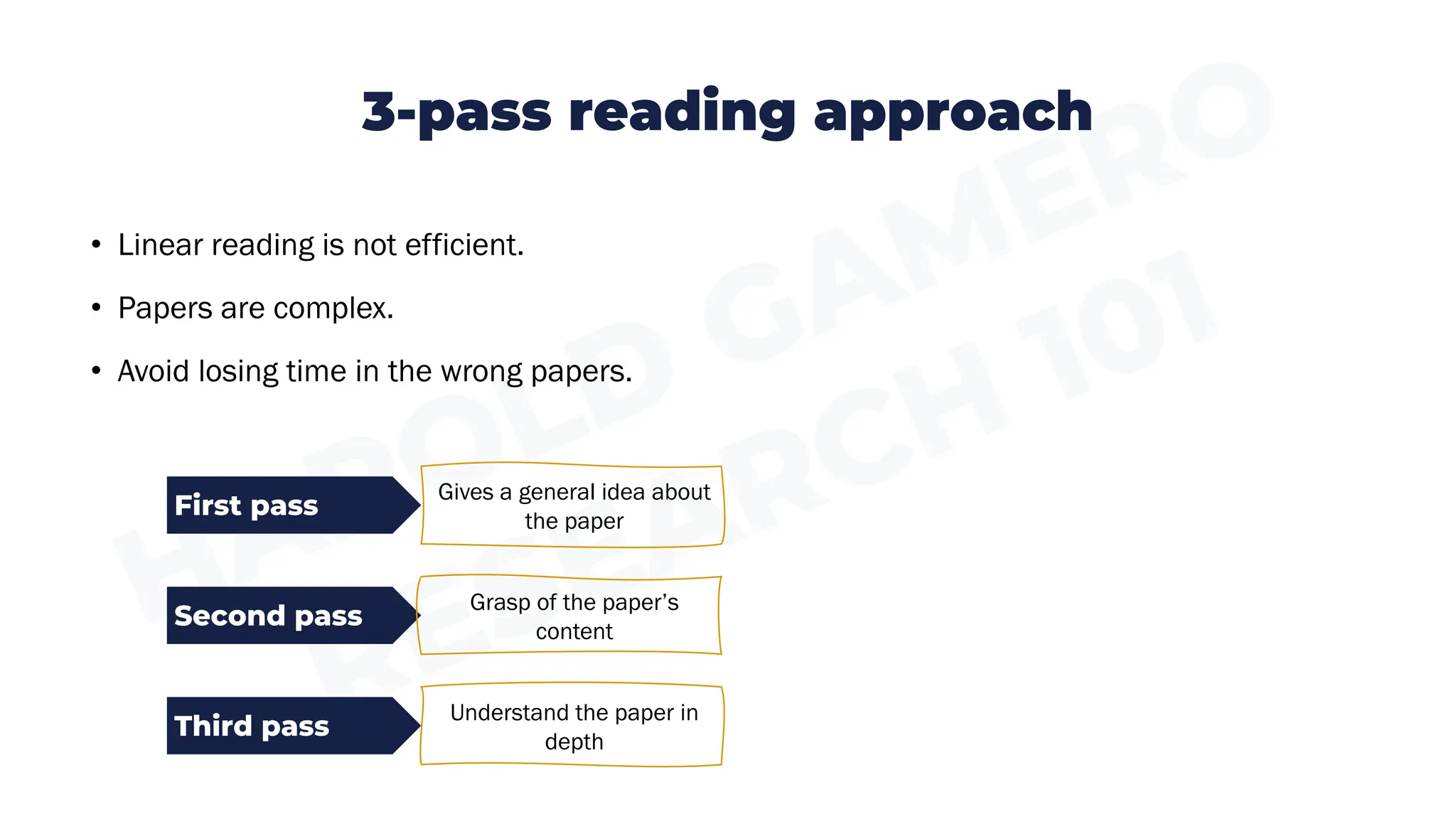
• Linear reading is not efficient.
• Papers are complex.
• Avoid losing time in the wrong papers.
Gives a general idea about
the paper
3-pass reading approach
First pass
Second pass
Third pass
Grasp of the paper’s
content
Understand the paper in
depth
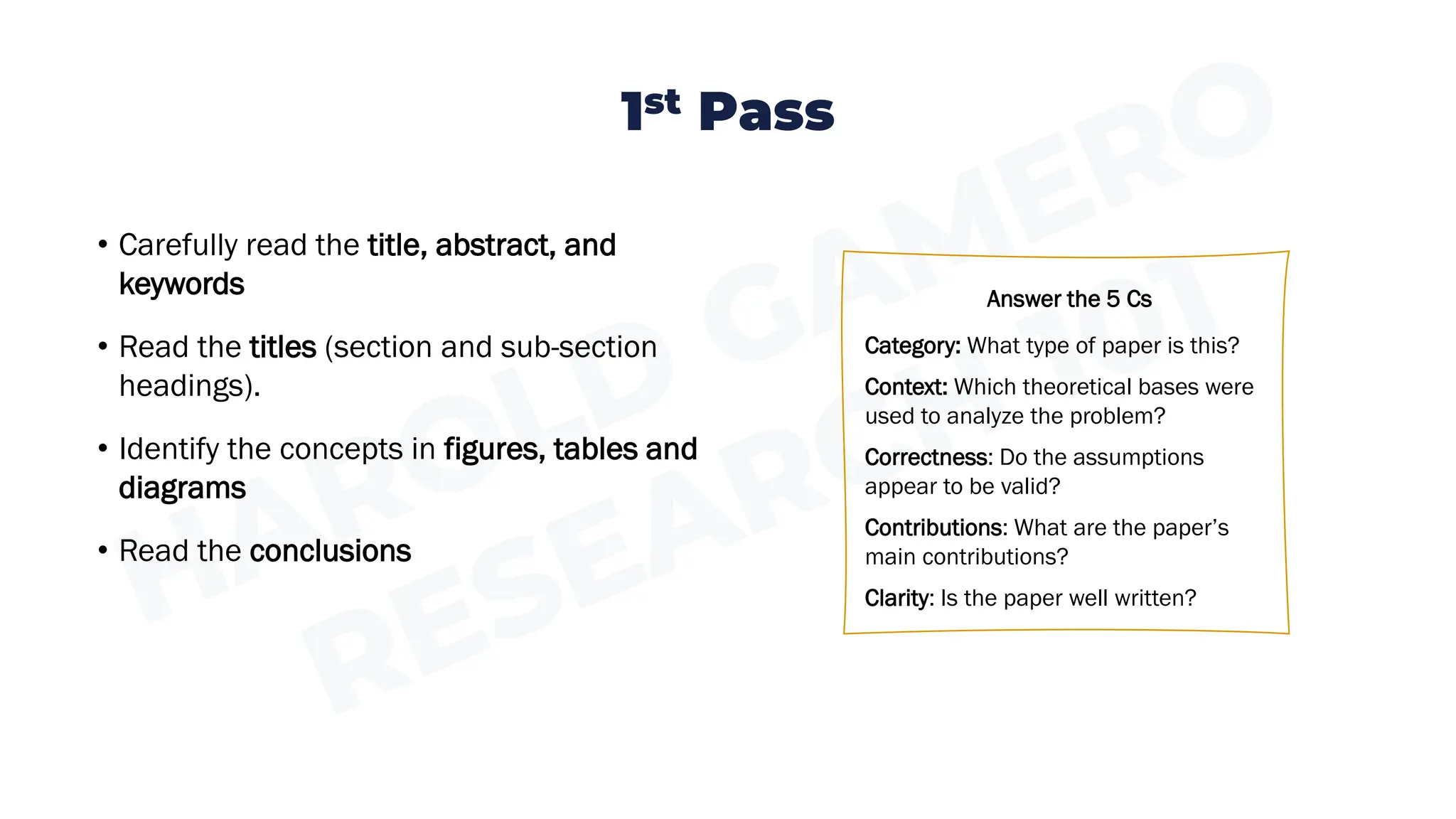
• Carefully read the title, abstract, and
keywords
• Read the titles (section and sub-section
headings).
• Identify the concepts in figures, tables and
diagrams
• Read the conclusions
1st Pass
Answer the 5 Cs
Category: What type of paper is this?
Context: Which theoretical bases were
used to analyze the problem?
Correctness: Do the assumptions
appear to be valid?
Contributions: What are the paper’s
main contributions?
Clarity: Is the paper well written?
Metadata
Abstract
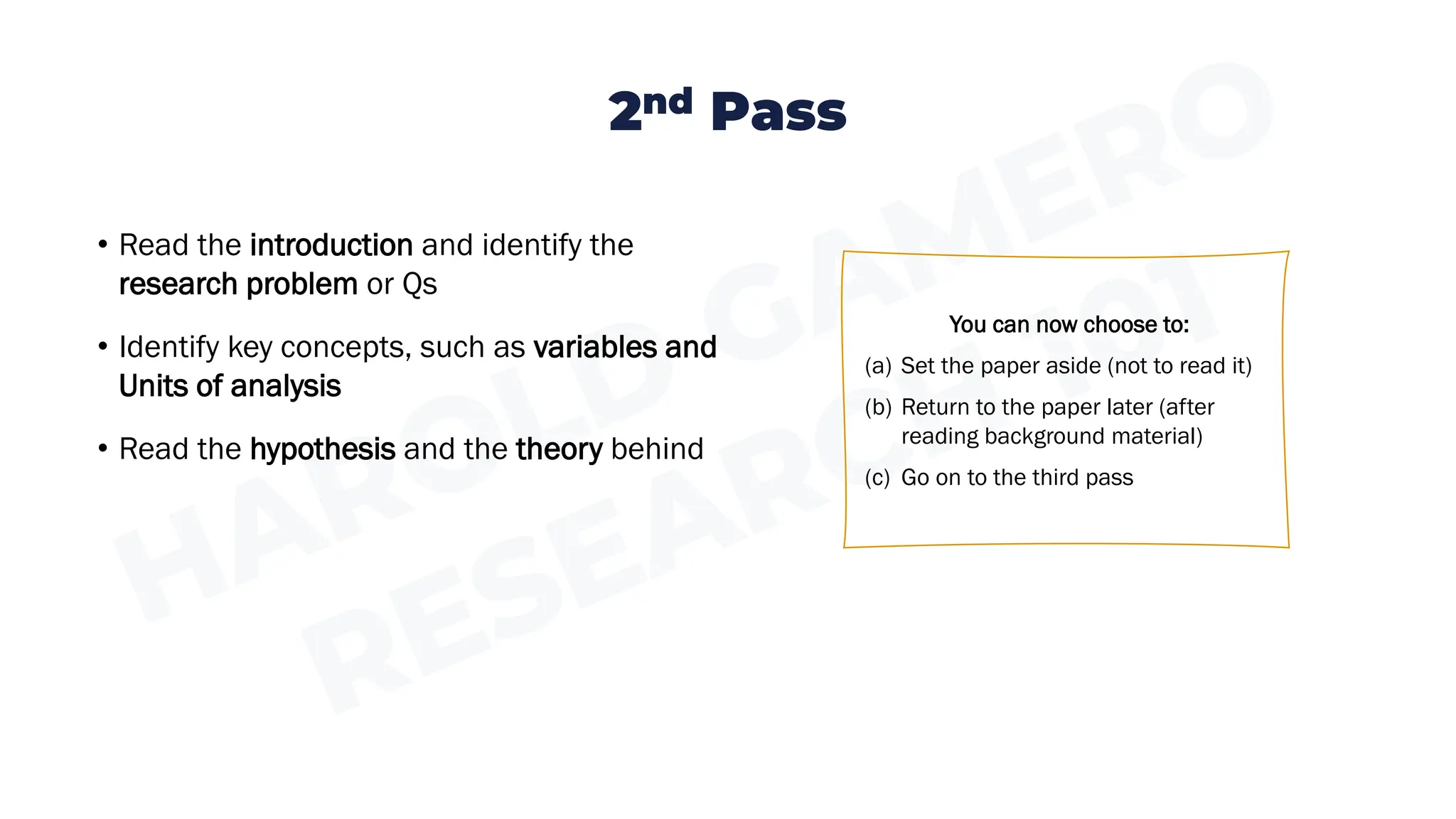
You can now choose to:
(a) Set the paper aside (not to read it)
(b) Return to the paper later (after
reading background material)
(c) Go on to the third pass
• Read the introduction and identify the
research problem or Qs
• Identify key concepts, such as variables and
Units of analysis
• Read the hypothesis and the theory behind
2nd Pass
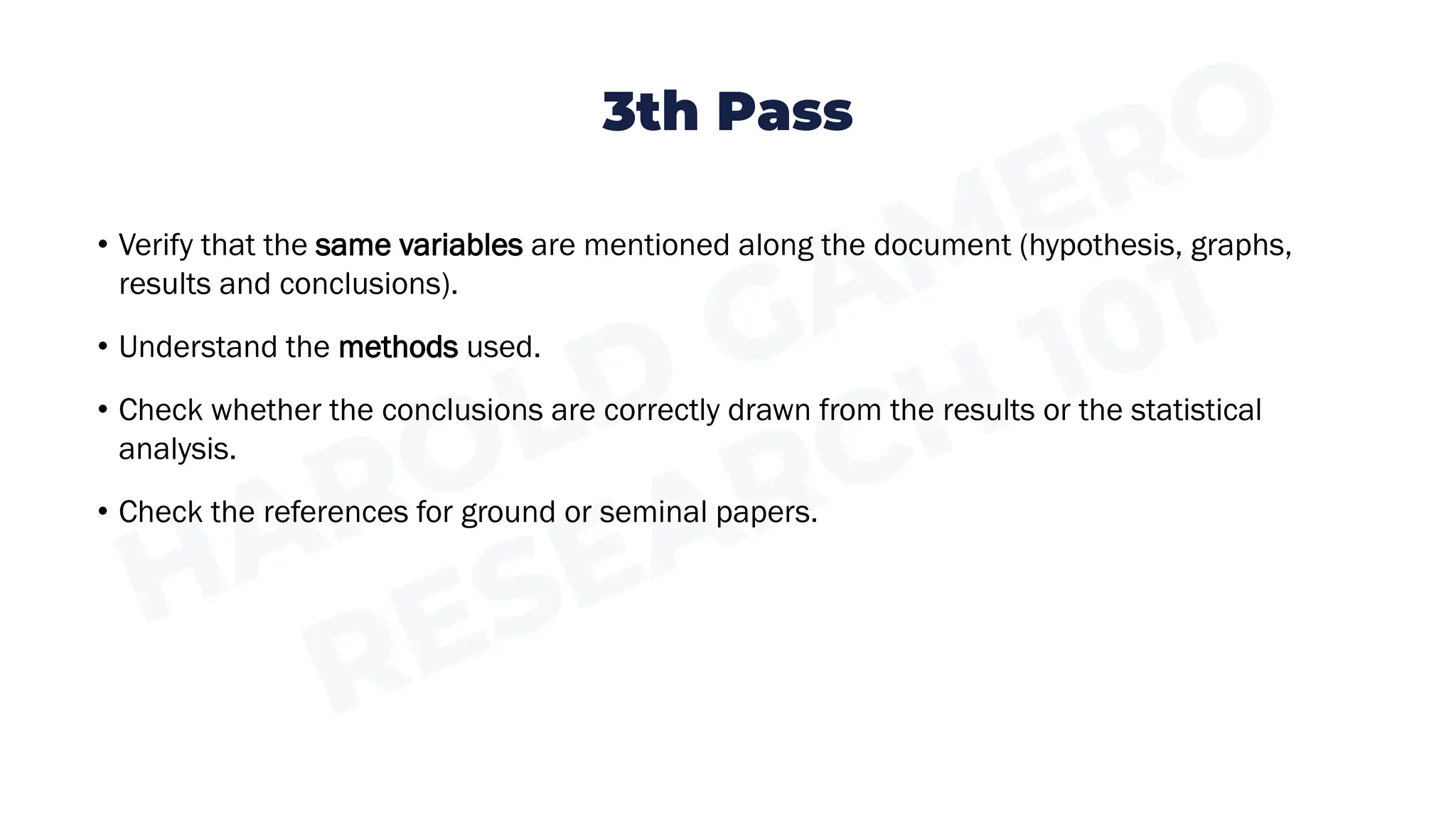
3th Pass
• Verify that the same variables are mentioned along the document (hypothesis, graphs,
results and conclusions).
• Understand the methods used.
• Check whether the conclusions are correctly drawn from the results or the statistical
analysis.
• Check the references for ground or seminal papers.
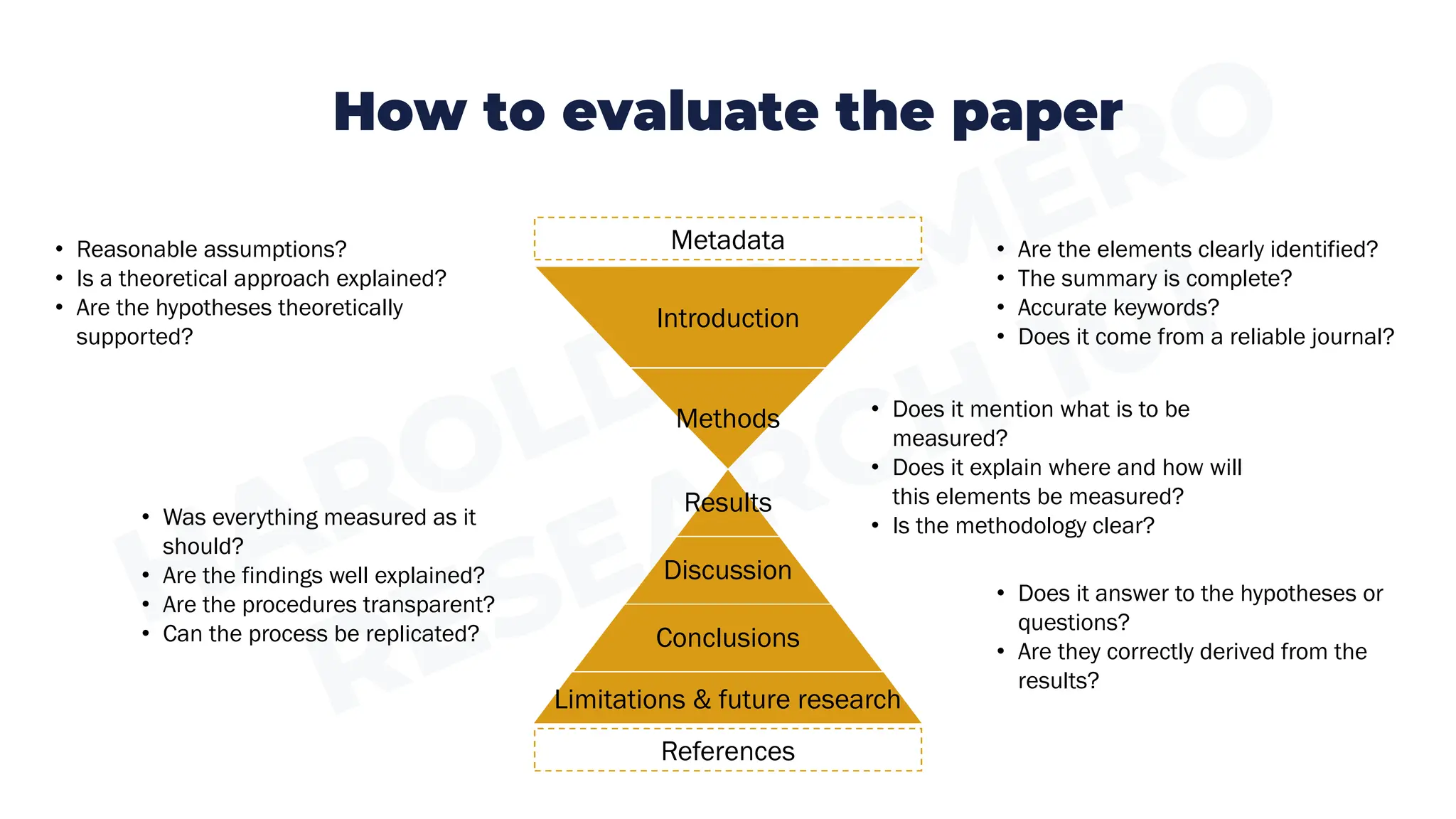
References
Metadata
Results
Discussion
Conclusions
Methods
Limitations & future research
Introduction
How to evaluate the paper
• Are the elements clearly identified?
• The summary is complete?
• Accurate keywords?
• Does it come from a reliable journal?
• Reasonable assumptions?
• Is a theoretical approach explained?
• Are the hypotheses theoretically
supported?
• Was everything measured as it
should?
• Are the findings well explained?
• Are the procedures transparent?
• Can the process be replicated?
• Does it mention what is to be
measured?
• Does it explain where and how will
this elements be measured?
• Is the methodology clear?
• Does it answer to the hypotheses or
questions?
• Are they correctly derived from the
results?
Thank you.
Harold Gamero

Research 101: How to Read a Scientific Paper

  • 1.
    Research 101: Howto Read a Paper Harold Gamero
  • 2.
    Which types ofpapers exist? Original research Review article Other types • Quantitative research (experiments, surveys) • Qualitative research (interviews, observation) • Case reports • Conference reports (proceedings) • Systematic literature reviews • Meta-analysis • Meta-synthesis • Meta-research • Notes • Conceptual papers • Replies to other • Editorial letters • Methodological • Epistemological • Etc.
  • 3.
    References Metadata Results Discussion Conclusions Methods Limitations & futureresearch Introduction Structure of a Paper • Title • Authors • Journal • Abstract • Keywords • Problem • Theory(s) • Model(s) • Hypothesis • Design • Sample • Instruments • Procedures • Tables or graphs • All findings • Relevance of results • Contrast with previous research • Important results • Response on hypotheses • Opportunities for future projects
  • 4.
    References Metadata Results Discussion Conclusions Methods Limitations & futureresearch Introduction Original research Literature review Structures of a Paper Metadata Introduction Literature review Conclusions References Conclusions Limitations & future research Other types References Metadata Introduction Body Conclusions
  • 5.
    References Metadata Results Discussion Conclusions Methods Limitations & futureresearch Introduction References Metadata Results Discussion Conclusions Methods Limitations & future research Introduction Original research Meta analysis Structures of a Paper Other types References Metadata Introduction Body Conclusions
  • 6.
    • Linear readingis not efficient. • Papers are complex. • Avoid losing time in the wrong papers. Gives a general idea about the paper 3-pass reading approach First pass Second pass Third pass Grasp of the paper’s content Understand the paper in depth
  • 7.
    • Carefully readthe title, abstract, and keywords • Read the titles (section and sub-section headings). • Identify the concepts in figures, tables and diagrams • Read the conclusions 1st Pass Answer the 5 Cs Category: What type of paper is this? Context: Which theoretical bases were used to analyze the problem? Correctness: Do the assumptions appear to be valid? Contributions: What are the paper’s main contributions? Clarity: Is the paper well written?
  • 8.
  • 9.
  • 10.
    You can nowchoose to: (a) Set the paper aside (not to read it) (b) Return to the paper later (after reading background material) (c) Go on to the third pass • Read the introduction and identify the research problem or Qs • Identify key concepts, such as variables and Units of analysis • Read the hypothesis and the theory behind 2nd Pass
  • 11.
    3th Pass • Verifythat the same variables are mentioned along the document (hypothesis, graphs, results and conclusions). • Understand the methods used. • Check whether the conclusions are correctly drawn from the results or the statistical analysis. • Check the references for ground or seminal papers.
  • 12.
    References Metadata Results Discussion Conclusions Methods Limitations & futureresearch Introduction How to evaluate the paper • Are the elements clearly identified? • The summary is complete? • Accurate keywords? • Does it come from a reliable journal? • Reasonable assumptions? • Is a theoretical approach explained? • Are the hypotheses theoretically supported? • Was everything measured as it should? • Are the findings well explained? • Are the procedures transparent? • Can the process be replicated? • Does it mention what is to be measured? • Does it explain where and how will this elements be measured? • Is the methodology clear? • Does it answer to the hypotheses or questions? • Are they correctly derived from the results?
  • 13.