Being a PhD Student:
Experiences and Challenges
Faegheh Hasibi
March 16, 2016
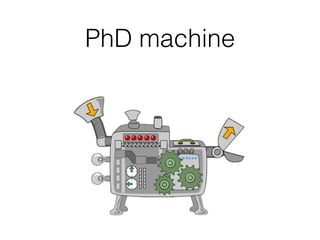
PhD machine
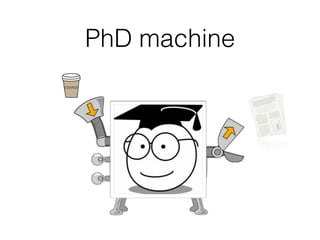
PhD machine
You are the engine
Take the responsibility and
carry on
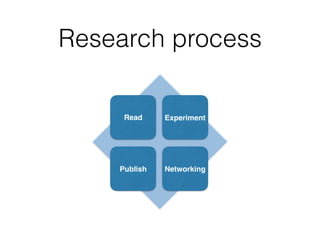
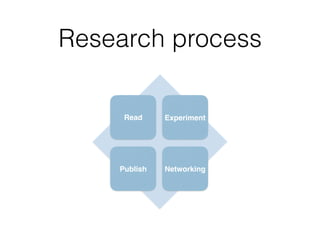
Research process
Read Experiment
Publish Networking
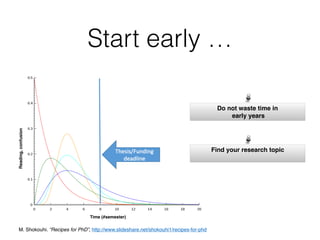
Time (#semester)
Reading,confusion
Start early …
Do not waste time in

early years
Find your research topic

M. Shokouhi. “Recipes for PhD”, http://www.slideshare.net/shokouhi1/recipes-for-phd
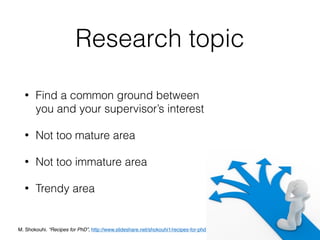
Research topic
• Find a common ground between 

you and your supervisor’s interest
• Not too mature area
• Not too immature area
• Trendy area
M. Shokouhi. “Recipes for PhD”, http://www.slideshare.net/shokouhi1/recipes-for-phd
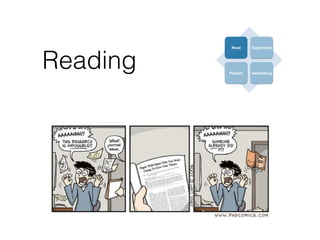
Reading
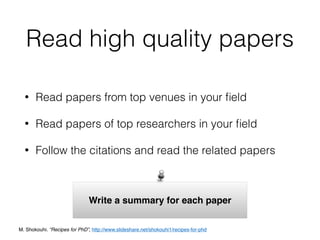
Read high quality papers
• Read papers from top venues in your field
• Read papers of top researchers in your field
• Follow the citations and read the related papers
Write a summary for each paper
M. Shokouhi. “Recipes for PhD”, http://www.slideshare.net/shokouhi1/recipes-for-phd
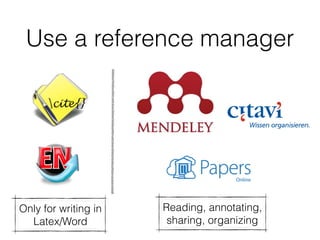
Use a reference manager
Only for writing in

Latex/Word
Reading, annotating,

sharing, organizing
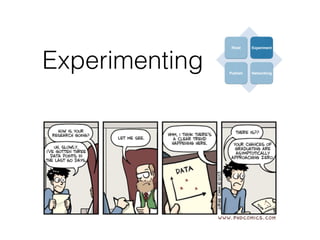
Experimenting
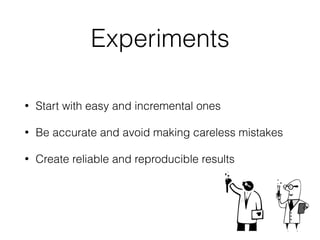
Experiments
• Start with easy and incremental ones
• Be accurate and avoid making careless mistakes
• Create reliable and reproducible results
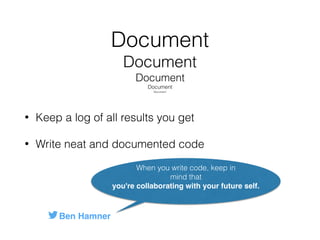
Document
Document
Document
Document
Document
• Keep a log of all results you get
• Write neat and documented code
Ben Hamner
When you write code, keep in
mind that 

you're collaborating with your future self.
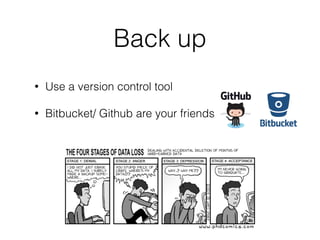
Back up
• Use a version control tool
• Bitbucket/ Github are your friends
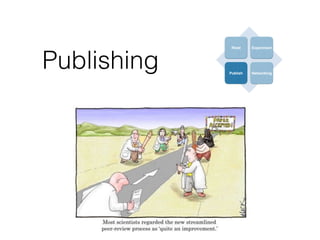
Publishing
Publishing
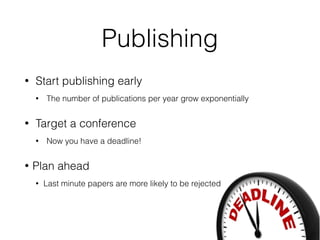
• Start publishing early
• Target a conference
• Now you have a deadline!
• Plan ahead
• Last minute papers are more likely to be rejected
Writing style
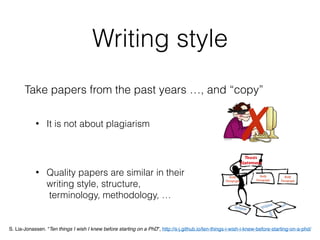
Take papers from the past years …, and “copy”
• It is not about plagiarism
• Quality papers are similar in their 

writing style, structure,

terminology, methodology, …
✗
S. Lia-Jonassen. “Ten things I wish I knew before starting on a PhD”, http://s-j.github.io/ten-things-i-wish-i-knew-before-starting-on-a-phd/
Be persistent and keep pushing!
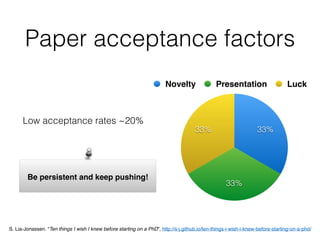
Paper acceptance factors
Low acceptance rates ~20%
33%
33%
33%
Novelty Presentation Luck
S. Lia-Jonassen. “Ten things I wish I knew before starting on a PhD”, http://s-j.github.io/ten-things-i-wish-i-knew-before-starting-on-a-phd/
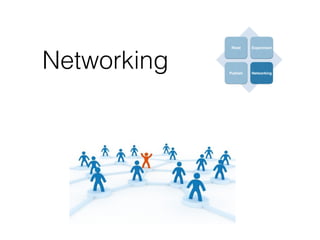
Networking
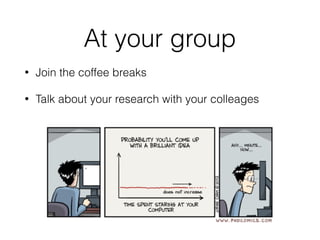
At your group
• Join the coffee breaks
• Talk about your research with your colleages
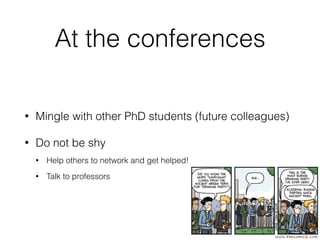
At the conferences
• Mingle with other PhD students (future colleagues)
• Do not be shy
• Help others to network and get helped!
• Talk to professors
Research visit
• Choose the right time to go abroad
• Early: Spending time on learning
• Late: Focus on publishing
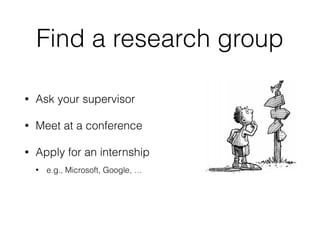
Find a research group
• Ask your supervisor
• Meet at a conference
• Apply for an internship
• e.g., Microsoft, Google, …
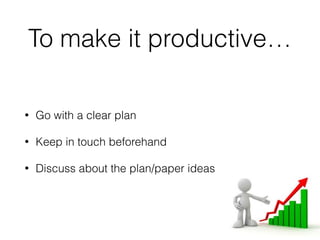
To make it productive…
• Go with a clear plan
• Keep in touch beforehand
• Discuss about the plan/paper ideas
Research process
Read Experiment
Publish Networking
General advices
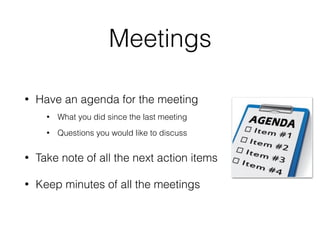
Meetings
• Have an agenda for the meeting
• What you did since the last meeting
• Questions you would like to discuss
• Take note of all the next action items
• Keep minutes of all the meetings
Research-related activities
• Become a reviewer
• Mentor master students
• If possible, do some teaching
Keep an eye out!
• Attend NTNU courses
• https://innsida.ntnu.no/kurs
• Attend summer schools
• Learning, networking, fun
• Find the news channel
• Twitter, Mailing list, …
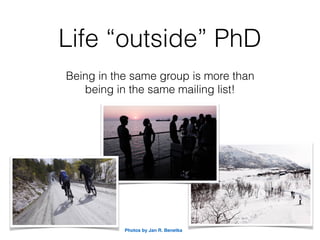
Life “outside” PhD
Being in the same group is more than 

being in the same mailing list!
Photos by Jan R. Benetka

Being a PhD student: Experiences and Challenges

  • 1.
    Being a PhDStudent: Experiences and Challenges Faegheh Hasibi March 16, 2016
  • 2.
  • 3.
  • 4.
    You are theengine Take the responsibility and carry on
  • 5.
  • 6.
    Time (#semester) Reading,confusion Start early… Do not waste time in
 early years Find your research topic
 M. Shokouhi. “Recipes for PhD”, http://www.slideshare.net/shokouhi1/recipes-for-phd
  • 7.
    Research topic • Finda common ground between 
 you and your supervisor’s interest • Not too mature area • Not too immature area • Trendy area M. Shokouhi. “Recipes for PhD”, http://www.slideshare.net/shokouhi1/recipes-for-phd
  • 8.
  • 9.
    Read high qualitypapers • Read papers from top venues in your field • Read papers of top researchers in your field • Follow the citations and read the related papers Write a summary for each paper M. Shokouhi. “Recipes for PhD”, http://www.slideshare.net/shokouhi1/recipes-for-phd
  • 10.
    Use a referencemanager Only for writing in
 Latex/Word Reading, annotating,
 sharing, organizing
  • 11.
  • 12.
    Experiments • Start witheasy and incremental ones • Be accurate and avoid making careless mistakes • Create reliable and reproducible results
  • 13.
    Document Document Document Document Document • Keep alog of all results you get • Write neat and documented code Ben Hamner When you write code, keep in mind that 
 you're collaborating with your future self.
  • 14.
    Back up • Usea version control tool • Bitbucket/ Github are your friends
  • 15.
  • 16.
    Publishing • Start publishingearly • Target a conference • Now you have a deadline! • Plan ahead • Last minute papers are more likely to be rejected
  • 17.
    Writing style Take papersfrom the past years …, and “copy” • It is not about plagiarism • Quality papers are similar in their 
 writing style, structure,
 terminology, methodology, … ✗ S. Lia-Jonassen. “Ten things I wish I knew before starting on a PhD”, http://s-j.github.io/ten-things-i-wish-i-knew-before-starting-on-a-phd/
  • 18.
    Be persistent andkeep pushing! Paper acceptance factors Low acceptance rates ~20% 33% 33% 33% Novelty Presentation Luck S. Lia-Jonassen. “Ten things I wish I knew before starting on a PhD”, http://s-j.github.io/ten-things-i-wish-i-knew-before-starting-on-a-phd/
  • 19.
  • 20.
    At your group •Join the coffee breaks • Talk about your research with your colleages
  • 21.
    At the conferences •Mingle with other PhD students (future colleagues) • Do not be shy • Help others to network and get helped! • Talk to professors
  • 22.
    Research visit • Choosethe right time to go abroad • Early: Spending time on learning • Late: Focus on publishing
  • 23.
    Find a researchgroup • Ask your supervisor • Meet at a conference • Apply for an internship • e.g., Microsoft, Google, …
  • 24.
    To make itproductive… • Go with a clear plan • Keep in touch beforehand • Discuss about the plan/paper ideas
  • 25.
  • 27.
  • 28.
    Meetings • Have anagenda for the meeting • What you did since the last meeting • Questions you would like to discuss • Take note of all the next action items • Keep minutes of all the meetings
  • 29.
    Research-related activities • Becomea reviewer • Mentor master students • If possible, do some teaching
  • 30.
    Keep an eyeout! • Attend NTNU courses • https://innsida.ntnu.no/kurs • Attend summer schools • Learning, networking, fun • Find the news channel • Twitter, Mailing list, …
  • 31.
    Life “outside” PhD Beingin the same group is more than 
 being in the same mailing list! Photos by Jan R. Benetka