
Research 101: Theories in Social Science
Harold Gamero
Theories
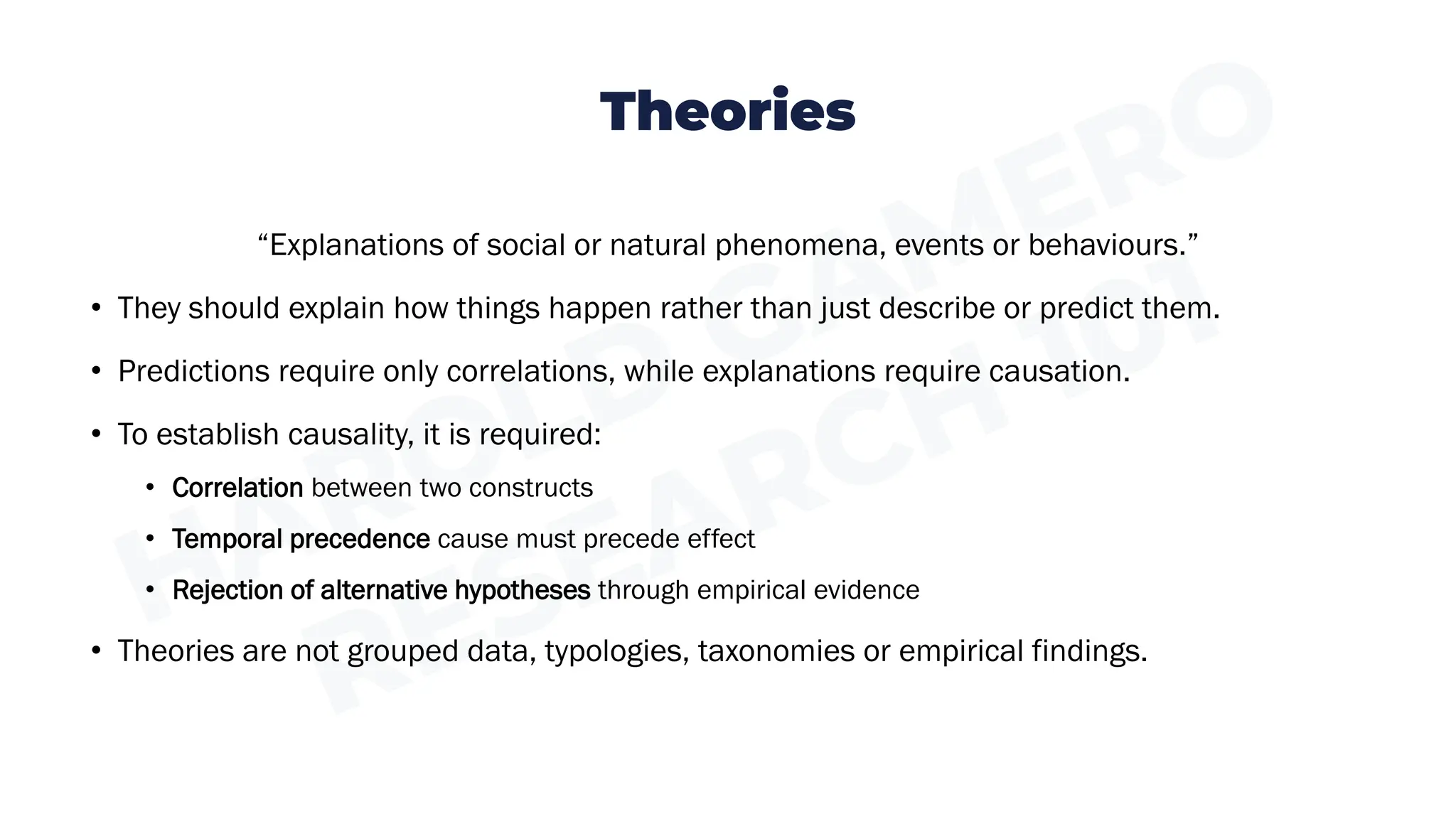
“Explanations of social or natural phenomena, events or behaviours.”
• They should explain how things happen rather than just describe or predict them.
• Predictions require only correlations, while explanations require causation.
• To establish causality, it is required:
• Correlation between two constructs
• Temporal precedence cause must precede effect
• Rejection of alternative hypotheses through empirical evidence
• Theories are not grouped data, typologies, taxonomies or empirical findings.
Theories
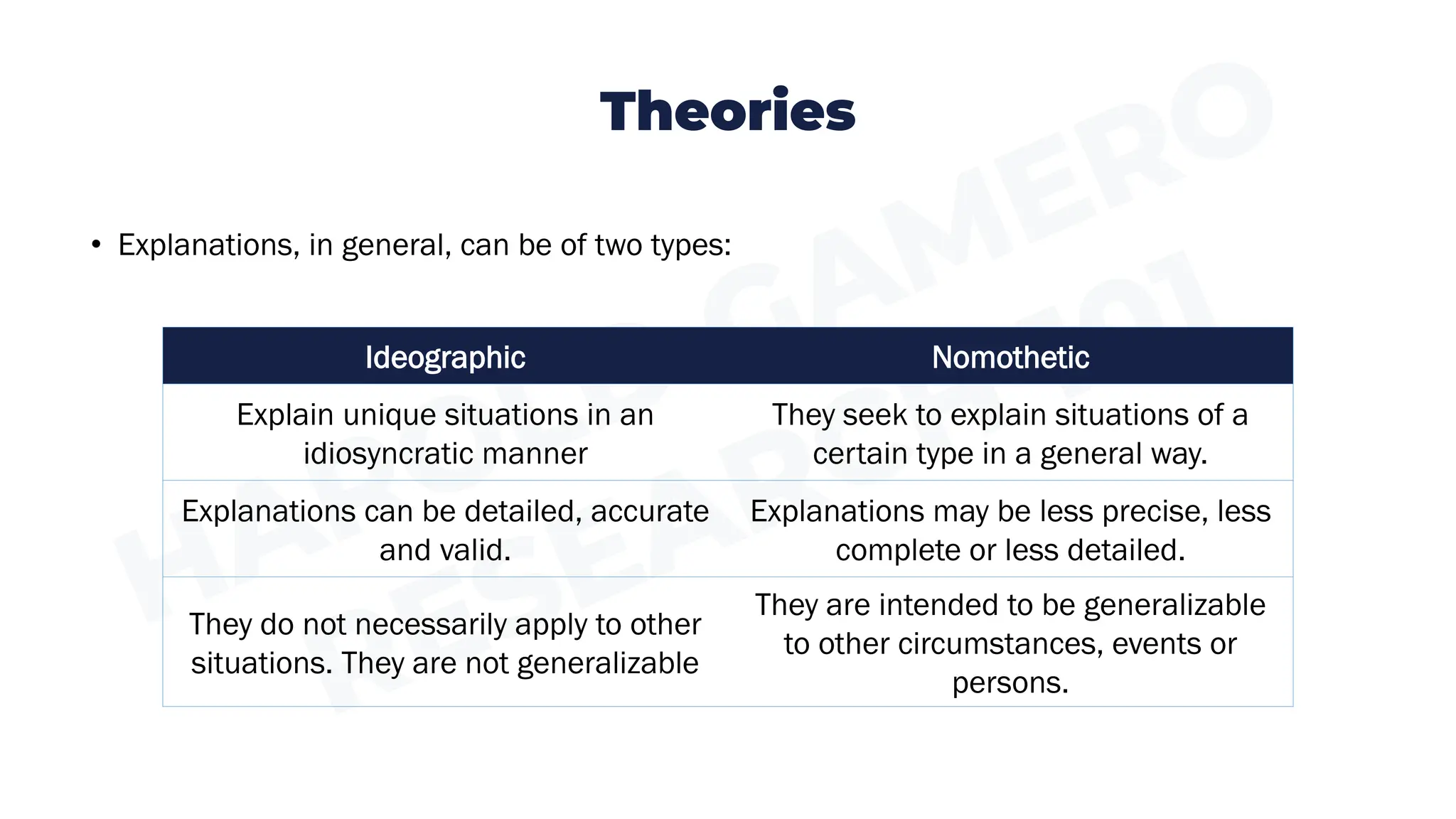
• Explanations, in general, can be of two types:
Ideographic Nomothetic
Explain unique situations in an
idiosyncratic manner
They seek to explain situations of a
certain type in a general way.
Explanations can be detailed, accurate
and valid.
Explanations may be less precise, less
complete or less detailed.
They do not necessarily apply to other
situations. They are not generalizable
They are intended to be generalizable
to other circumstances, events or
persons.
Theories
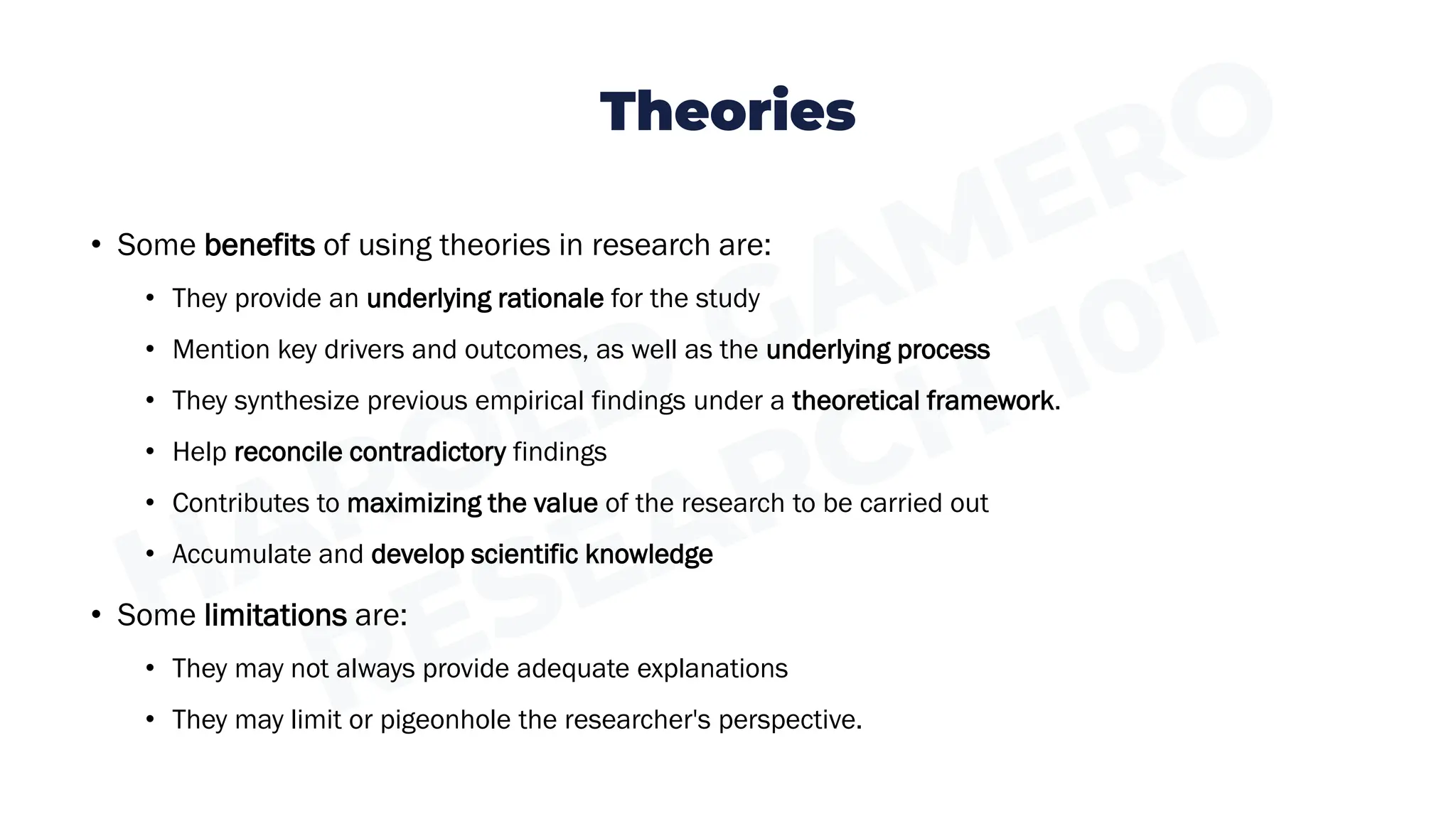
• Some benefits of using theories in research are:
• They provide an underlying rationale for the study
• Mention key drivers and outcomes, as well as the underlying process
• They synthesize previous empirical findings under a theoretical framework.
• Help reconcile contradictory findings
• Contributes to maximizing the value of the research to be carried out
• Accumulate and develop scientific knowledge
• Some limitations are:
• They may not always provide adequate explanations
• They may limit or pigeonhole the researcher's perspective.
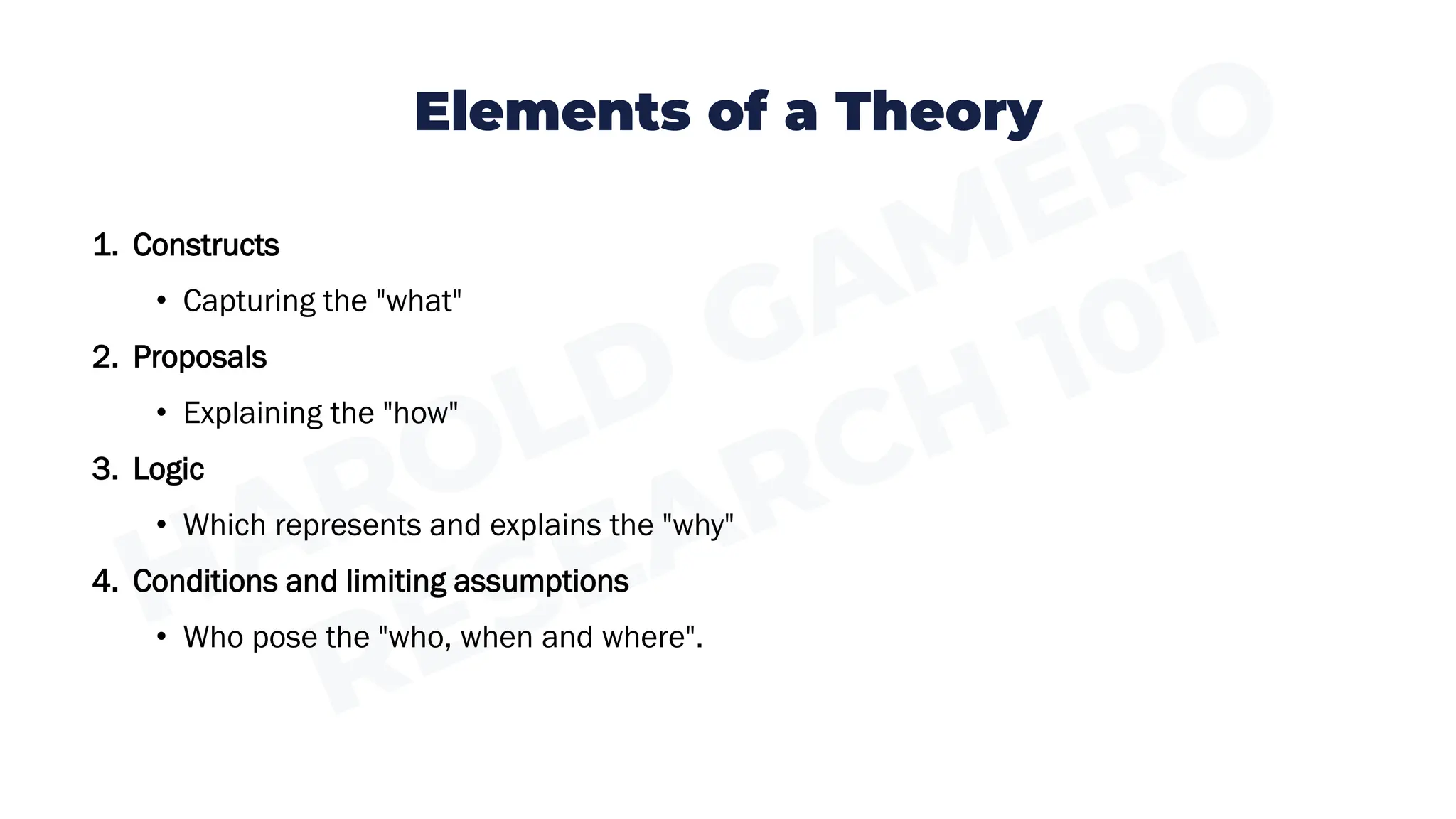
Elements of a Theory
1. Constructs
• Capturing the "what"
2. Proposals
• Explaining the "how"
3. Logic
• Which represents and explains the "why"
4. Conditions and limiting assumptions
• Who pose the "who, when and where".
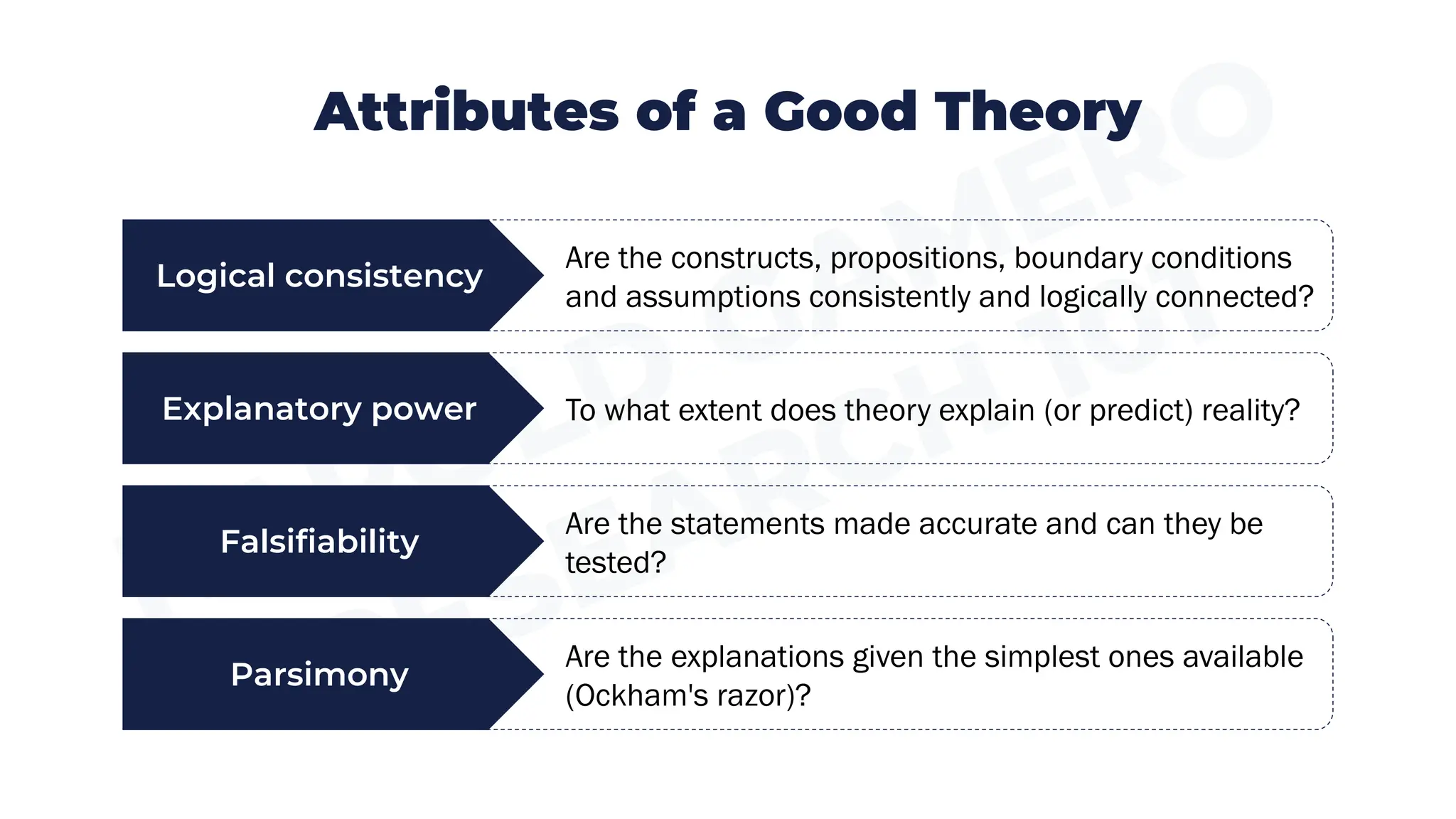
Attributes of a Good Theory
Are the constructs, propositions, boundary conditions
and assumptions consistently and logically connected?
Logical consistency
To what extent does theory explain (or predict) reality?
Explanatory power
Are the statements made accurate and can they be
tested?
Falsifiability
Are the explanations given the simplest ones available
(Ockham's razor)?
Parsimony
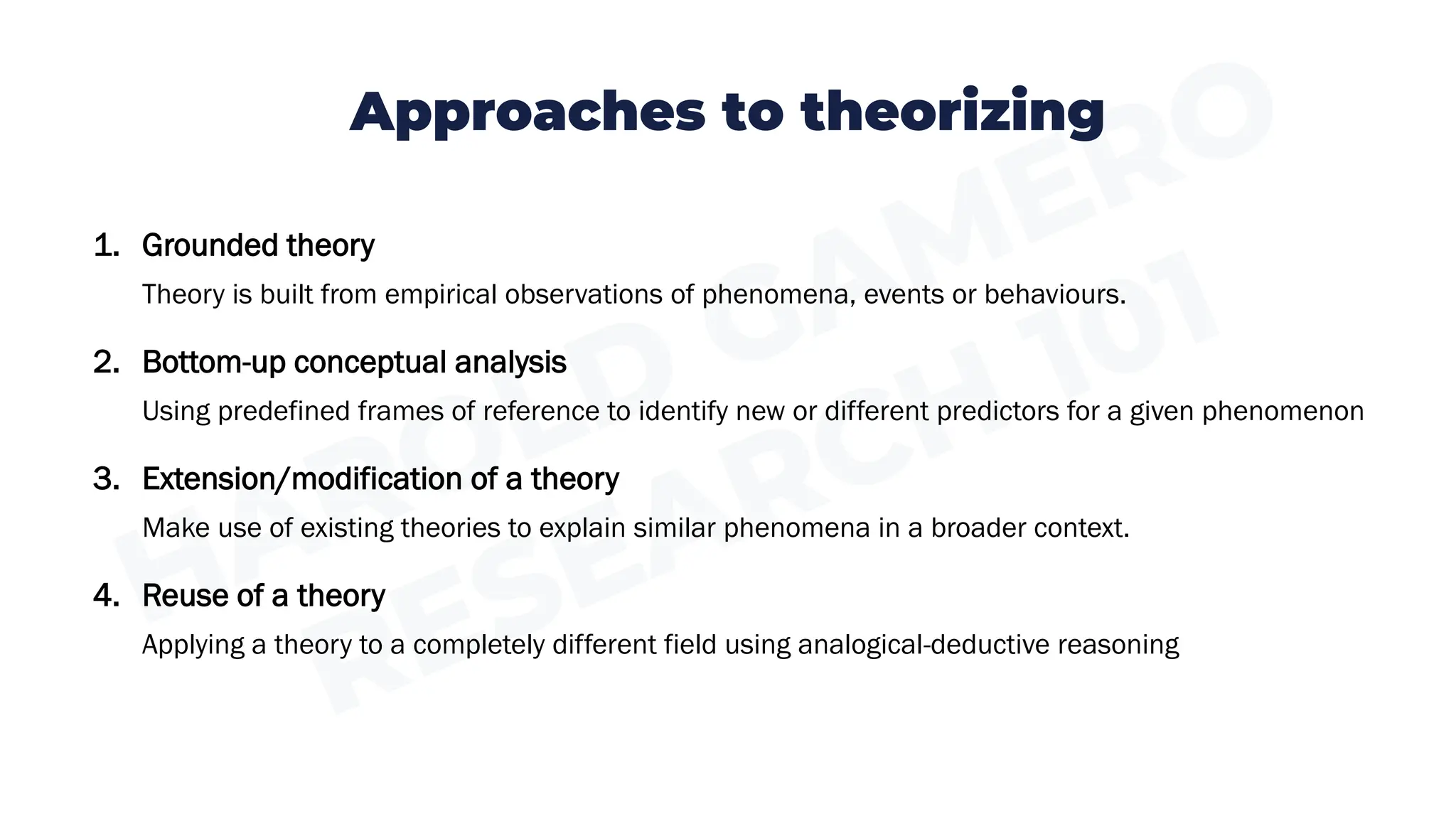
Approaches to theorizing
1. Grounded theory
Theory is built from empirical observations of phenomena, events or behaviours.
2. Bottom-up conceptual analysis
Using predefined frames of reference to identify new or different predictors for a given phenomenon
3. Extension/modification of a theory
Make use of existing theories to explain similar phenomena in a broader context.
4. Reuse of a theory
Applying a theory to a completely different field using analogical-deductive reasoning
Examples
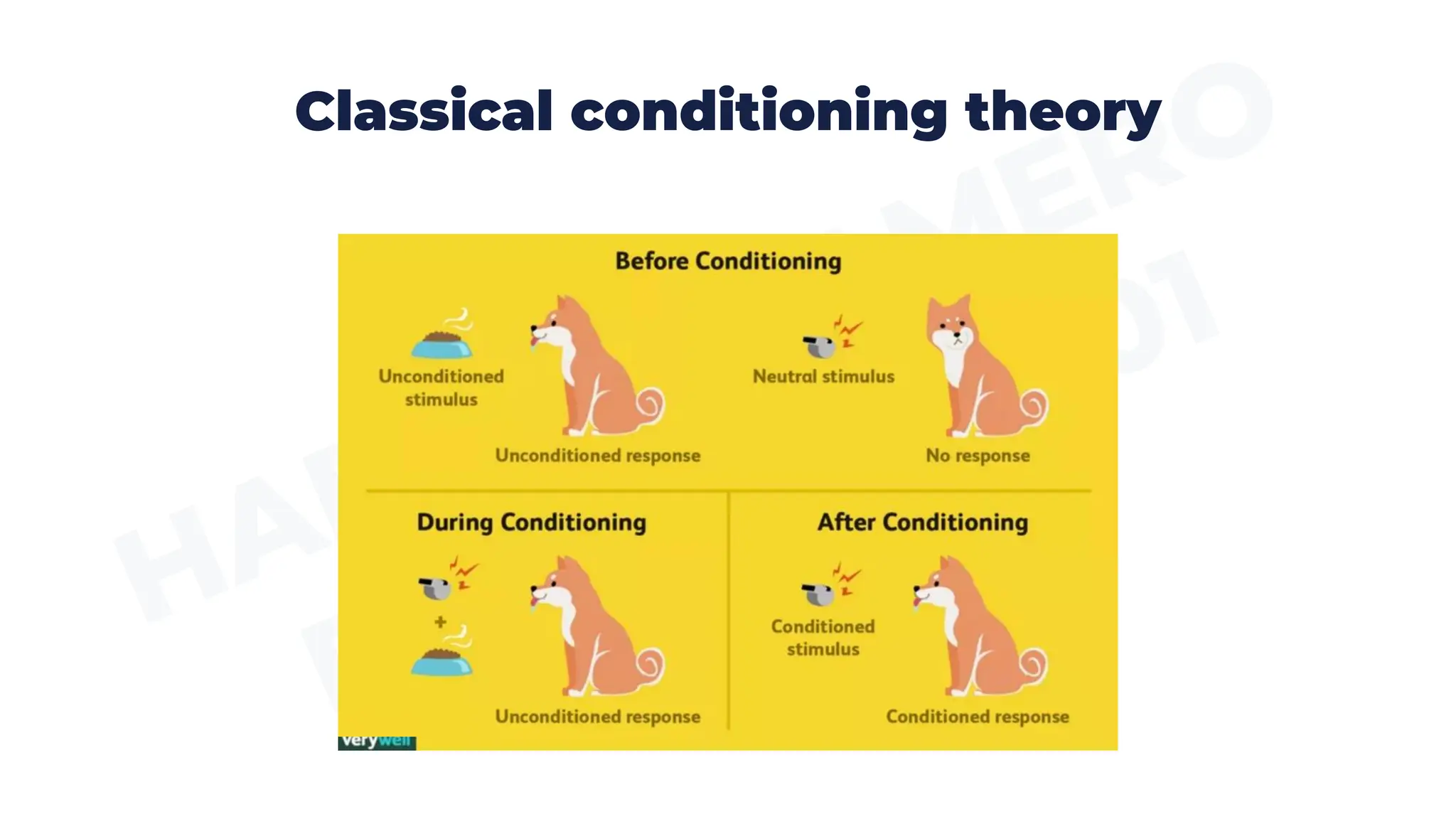
Classical conditioning theory
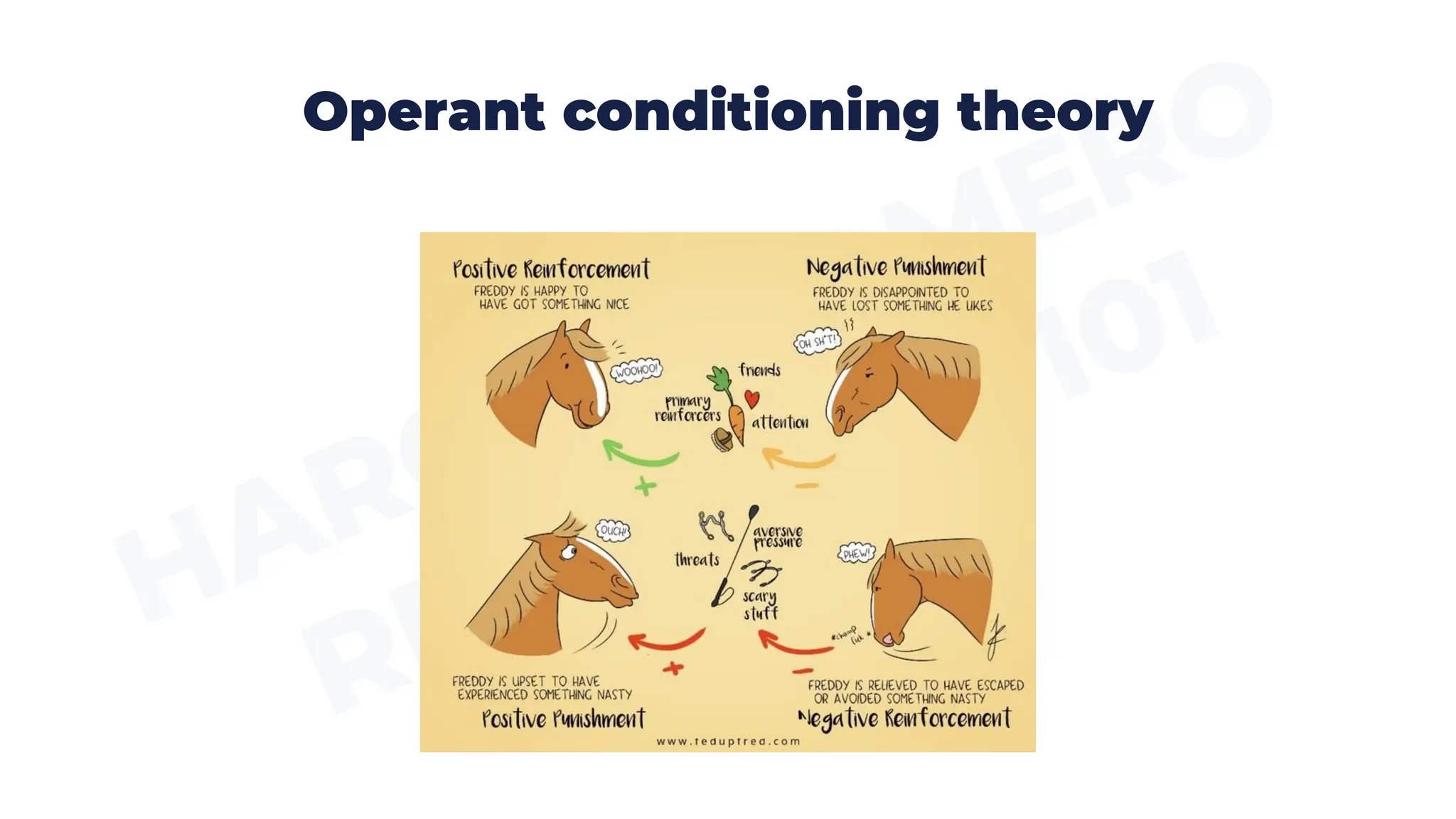
Operant conditioning theory
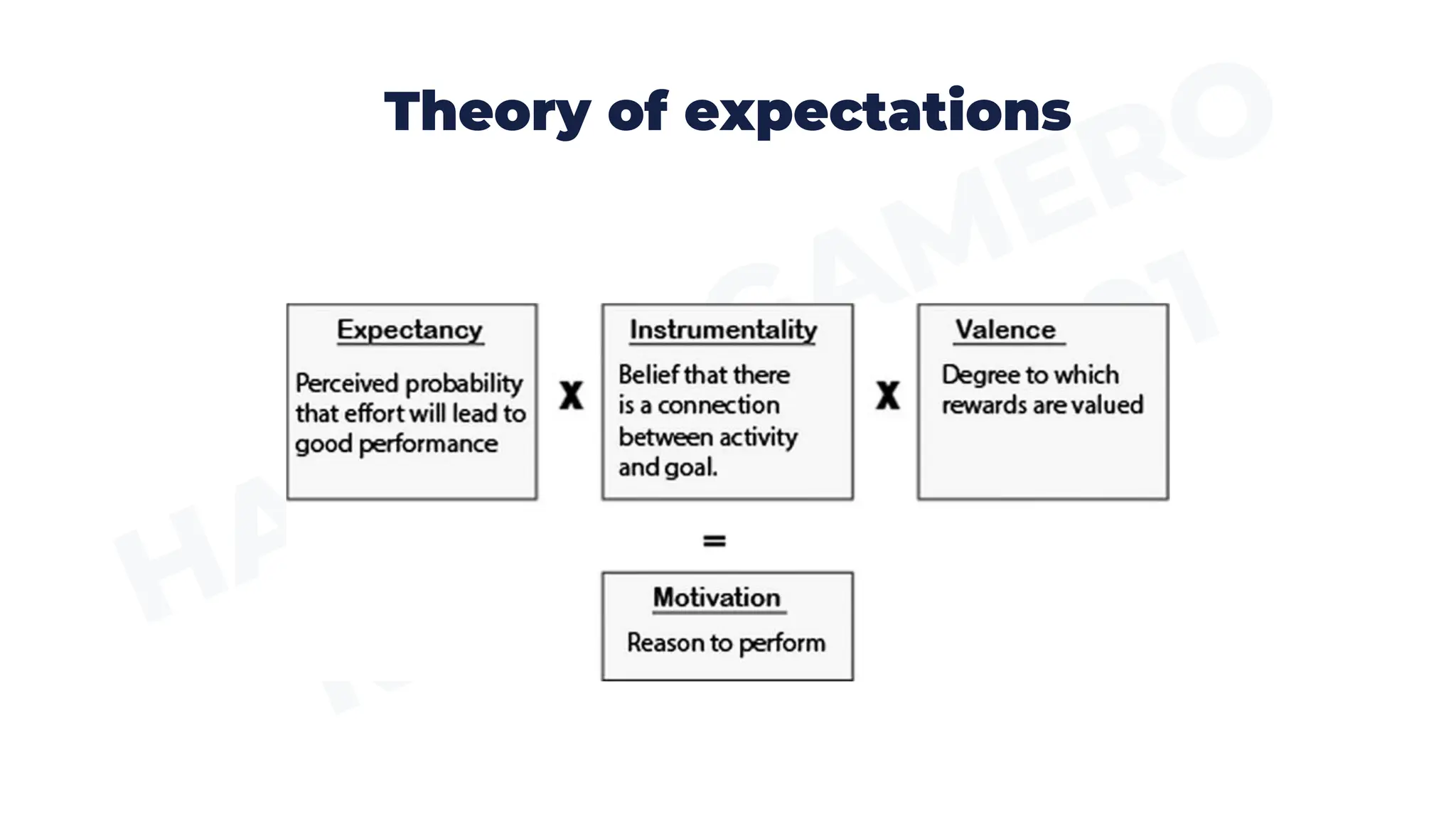
Theory of expectations
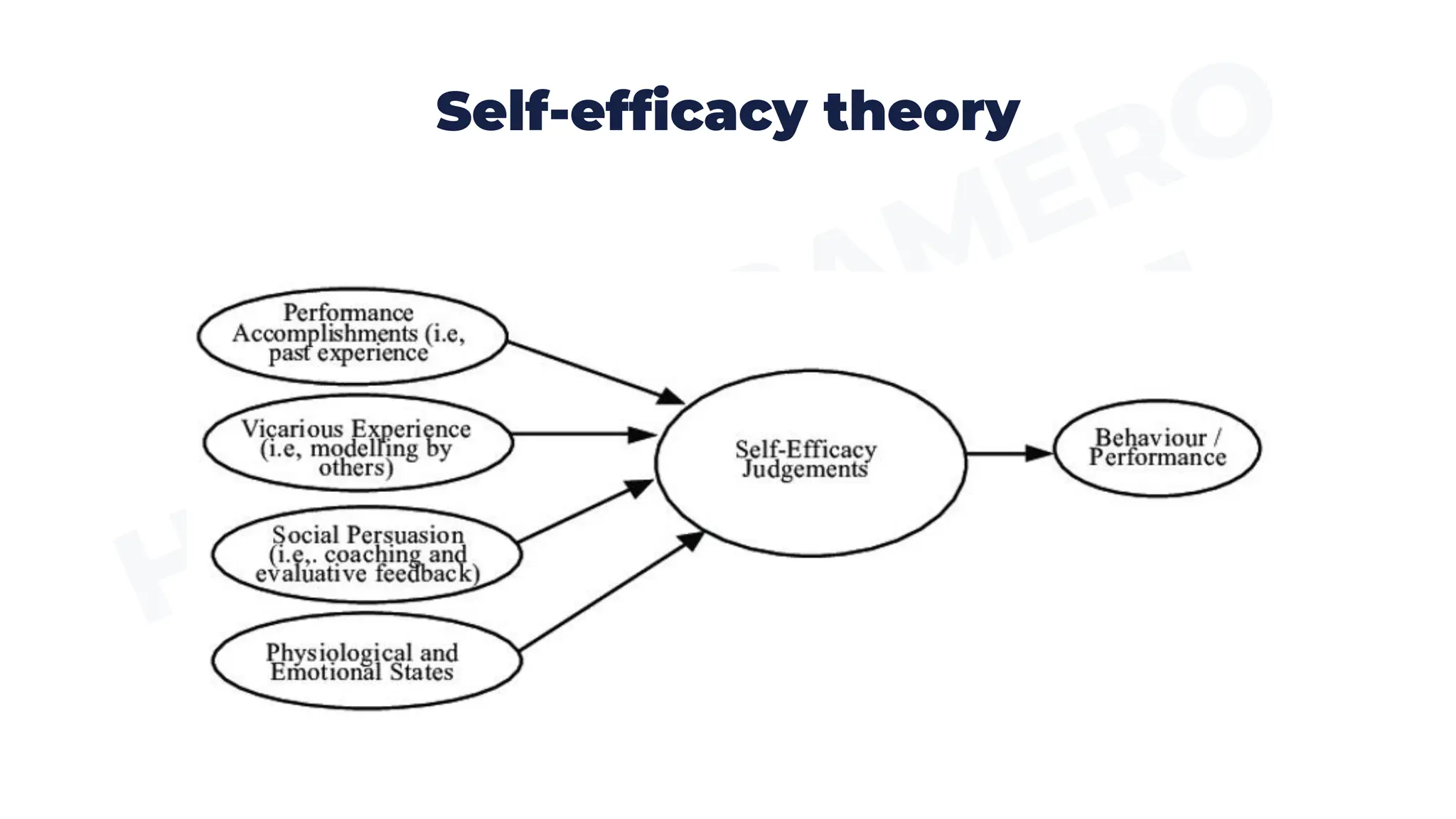
Self-efficacy theory
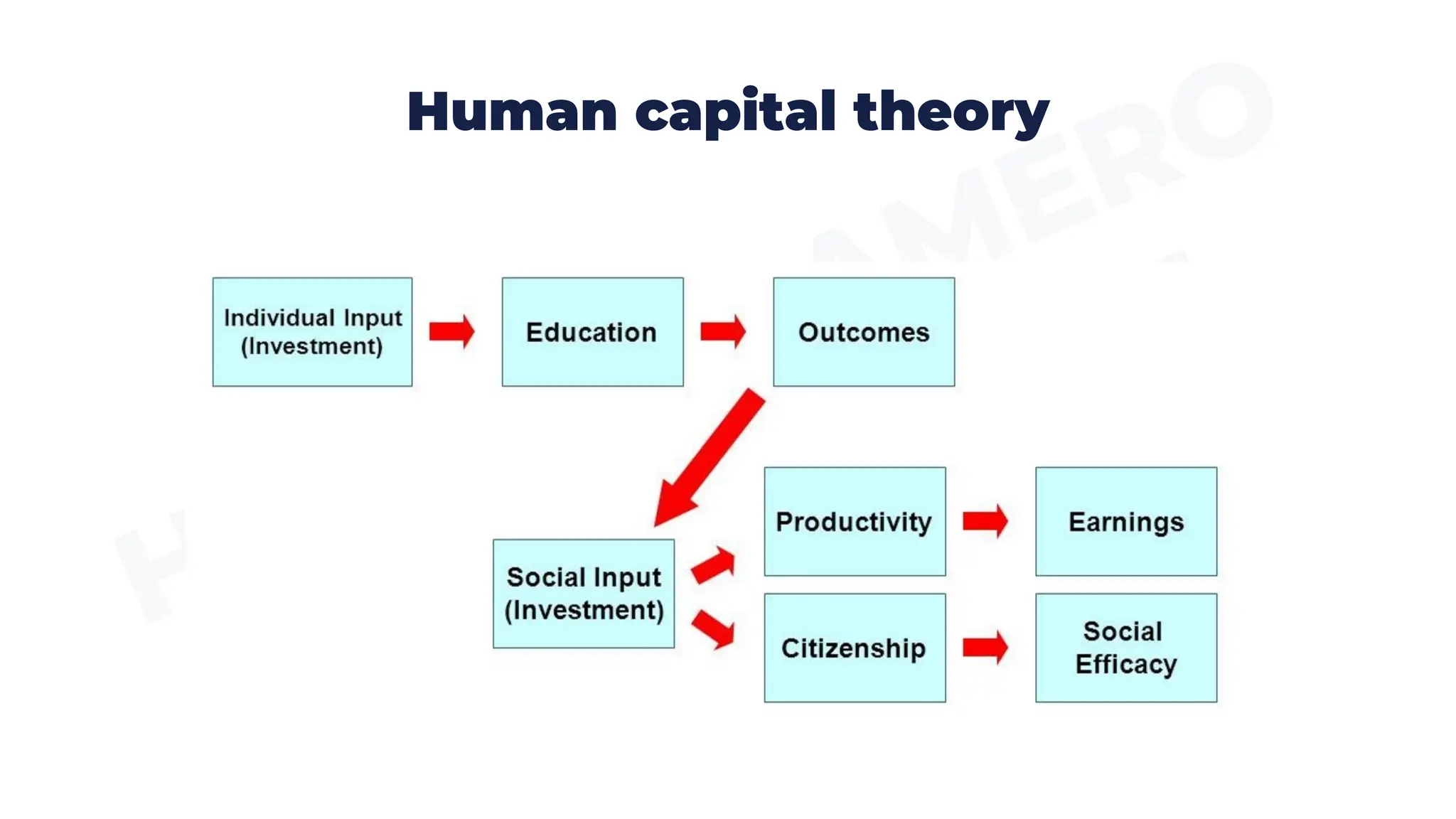
Human capital theory
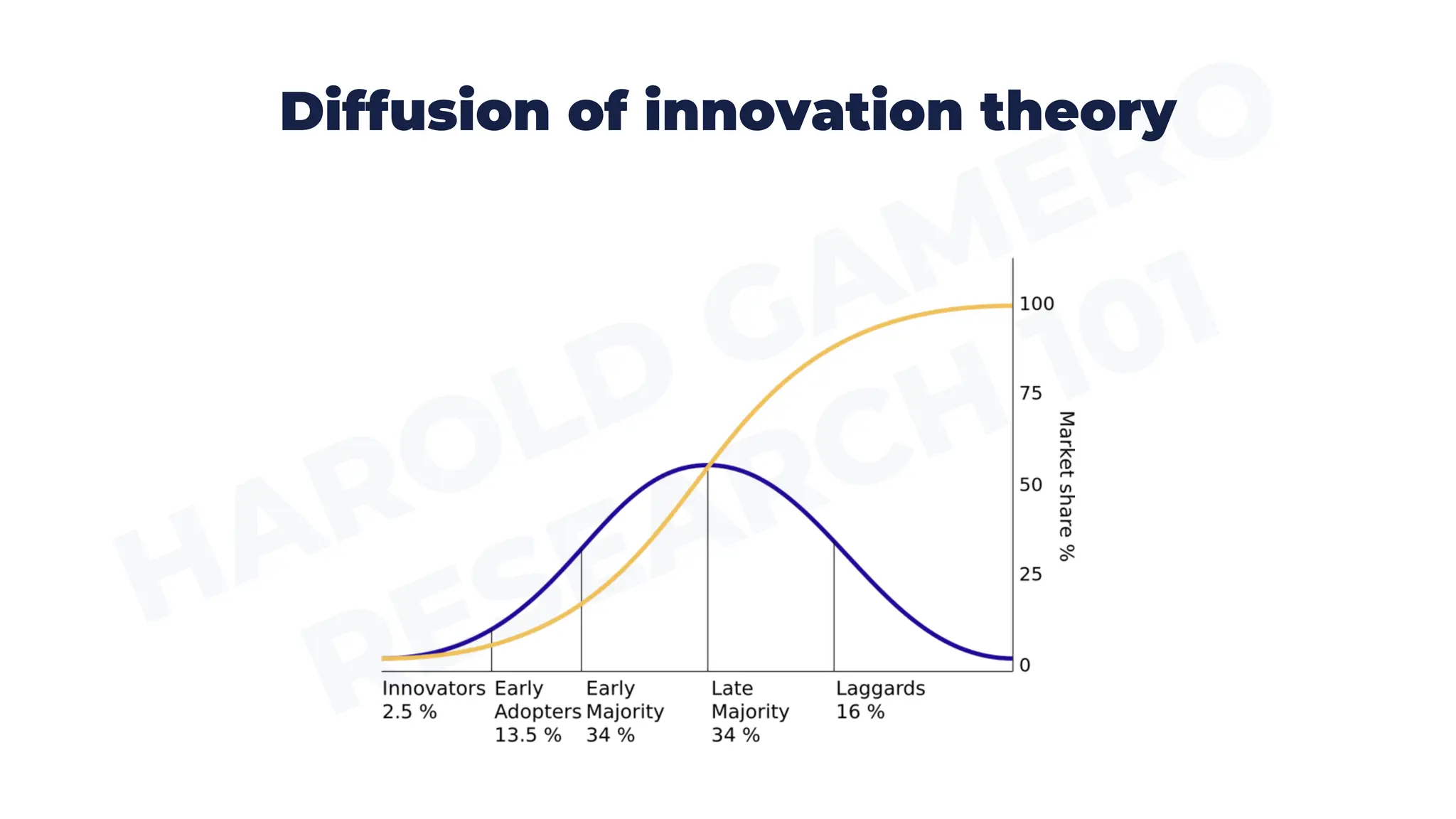
Diffusion of innovation theory
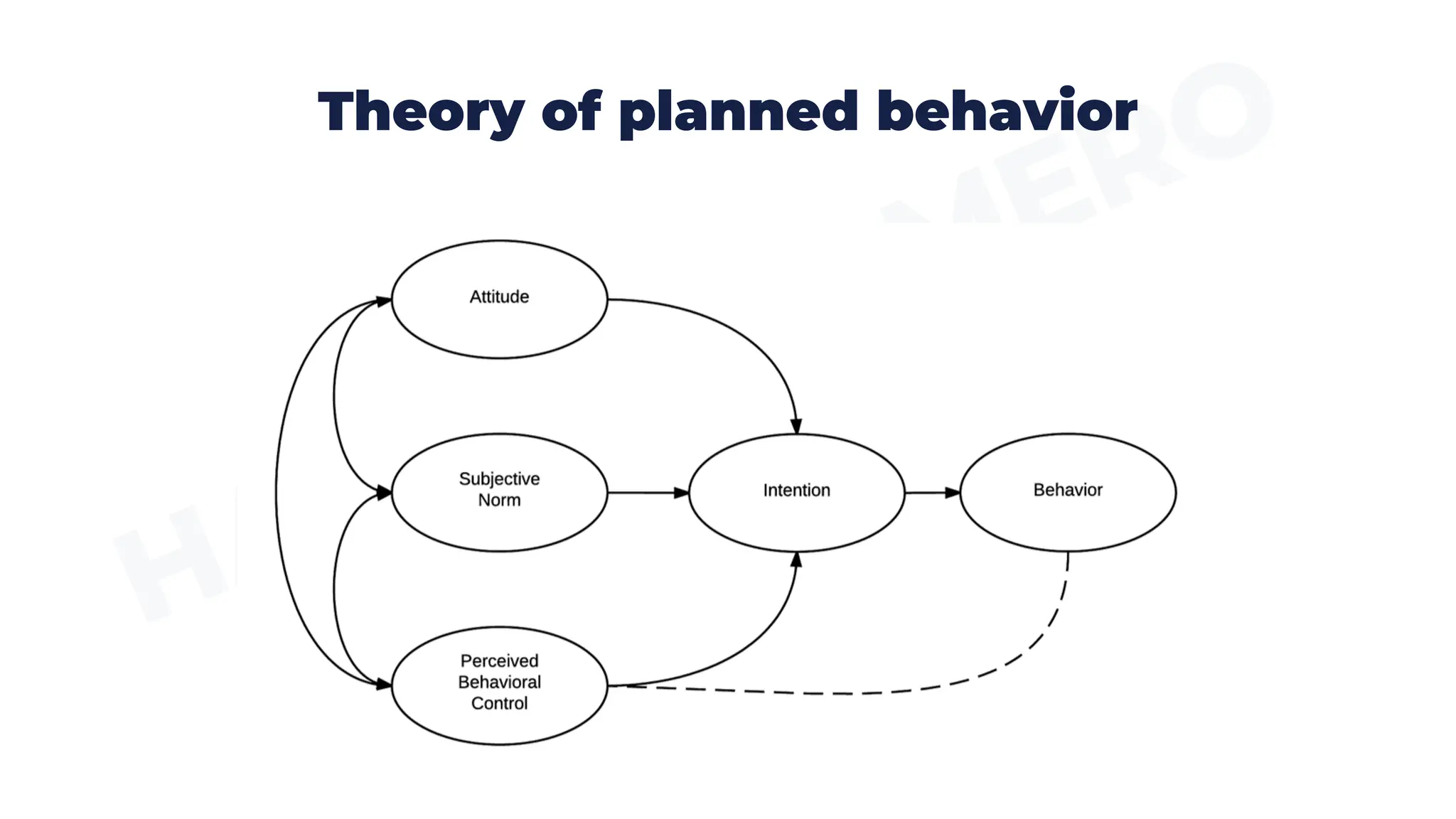
Theory of planned behavior
Theory of reasoned action
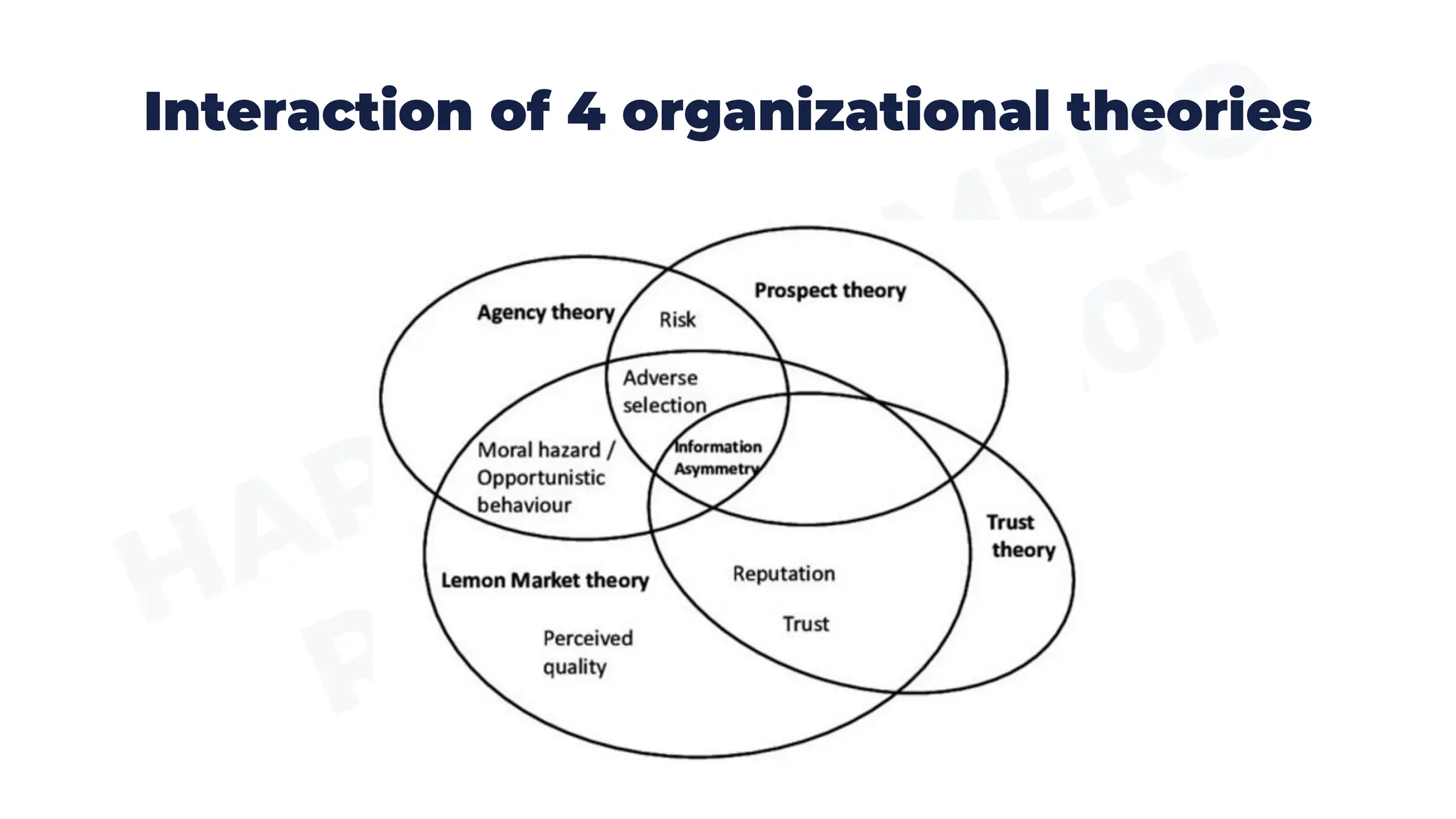
Interaction of 4 organizational theories
Agency theory
Prospective theory
Information asymmetry theory
Thank you.
Harold Gamero

Research 101: Theories in Social Science

  • 1.
    Research 101: Theoriesin Social Science Harold Gamero
  • 2.
    Theories “Explanations of socialor natural phenomena, events or behaviours.” • They should explain how things happen rather than just describe or predict them. • Predictions require only correlations, while explanations require causation. • To establish causality, it is required: • Correlation between two constructs • Temporal precedence cause must precede effect • Rejection of alternative hypotheses through empirical evidence • Theories are not grouped data, typologies, taxonomies or empirical findings.
  • 3.
    Theories • Explanations, ingeneral, can be of two types: Ideographic Nomothetic Explain unique situations in an idiosyncratic manner They seek to explain situations of a certain type in a general way. Explanations can be detailed, accurate and valid. Explanations may be less precise, less complete or less detailed. They do not necessarily apply to other situations. They are not generalizable They are intended to be generalizable to other circumstances, events or persons.
  • 4.
    Theories • Some benefitsof using theories in research are: • They provide an underlying rationale for the study • Mention key drivers and outcomes, as well as the underlying process • They synthesize previous empirical findings under a theoretical framework. • Help reconcile contradictory findings • Contributes to maximizing the value of the research to be carried out • Accumulate and develop scientific knowledge • Some limitations are: • They may not always provide adequate explanations • They may limit or pigeonhole the researcher's perspective.
  • 5.
    Elements of aTheory 1. Constructs • Capturing the "what" 2. Proposals • Explaining the "how" 3. Logic • Which represents and explains the "why" 4. Conditions and limiting assumptions • Who pose the "who, when and where".
  • 6.
    Attributes of aGood Theory Are the constructs, propositions, boundary conditions and assumptions consistently and logically connected? Logical consistency To what extent does theory explain (or predict) reality? Explanatory power Are the statements made accurate and can they be tested? Falsifiability Are the explanations given the simplest ones available (Ockham's razor)? Parsimony
  • 7.
    Approaches to theorizing 1.Grounded theory Theory is built from empirical observations of phenomena, events or behaviours. 2. Bottom-up conceptual analysis Using predefined frames of reference to identify new or different predictors for a given phenomenon 3. Extension/modification of a theory Make use of existing theories to explain similar phenomena in a broader context. 4. Reuse of a theory Applying a theory to a completely different field using analogical-deductive reasoning
  • 8.
  • 9.
  • 10.
  • 11.
  • 12.
  • 13.
  • 14.
  • 15.
  • 16.
  • 17.
    Interaction of 4organizational theories
  • 18.
  • 19.
  • 20.
  • 21.