CAN, COULD, BE ABLE TO
English File Upper-Intermediate 6B
Ability, possibility, permission
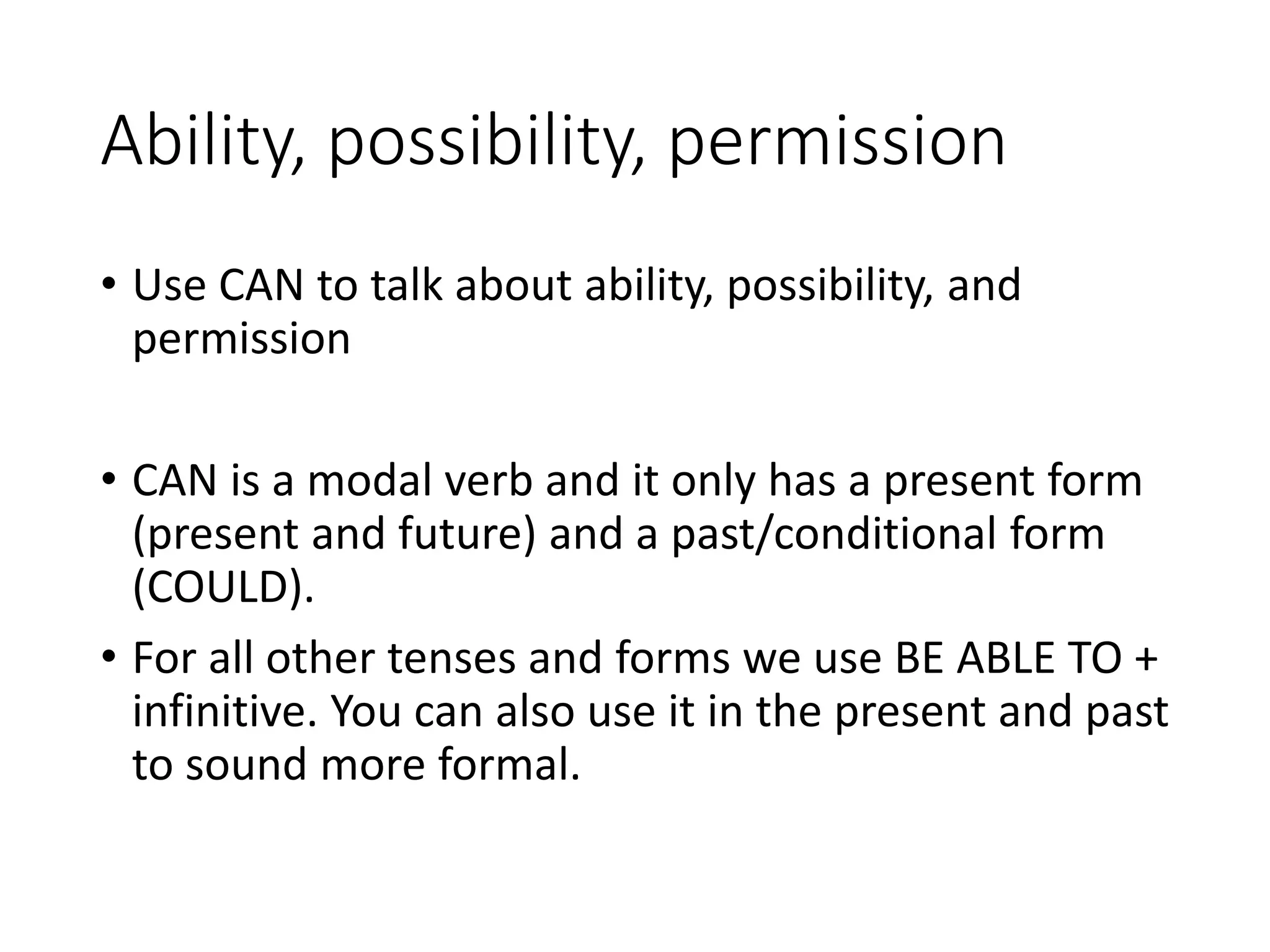
• Use CAN to talk about ability, possibility, and
permission
• CAN is a modal verb and it only has a present form
(present and future) and a past/conditional form
(COULD).
• For all other tenses and forms we use BE ABLE TO +
infinitive. You can also use it in the present and past
to sound more formal.
Ability, possibility, permission
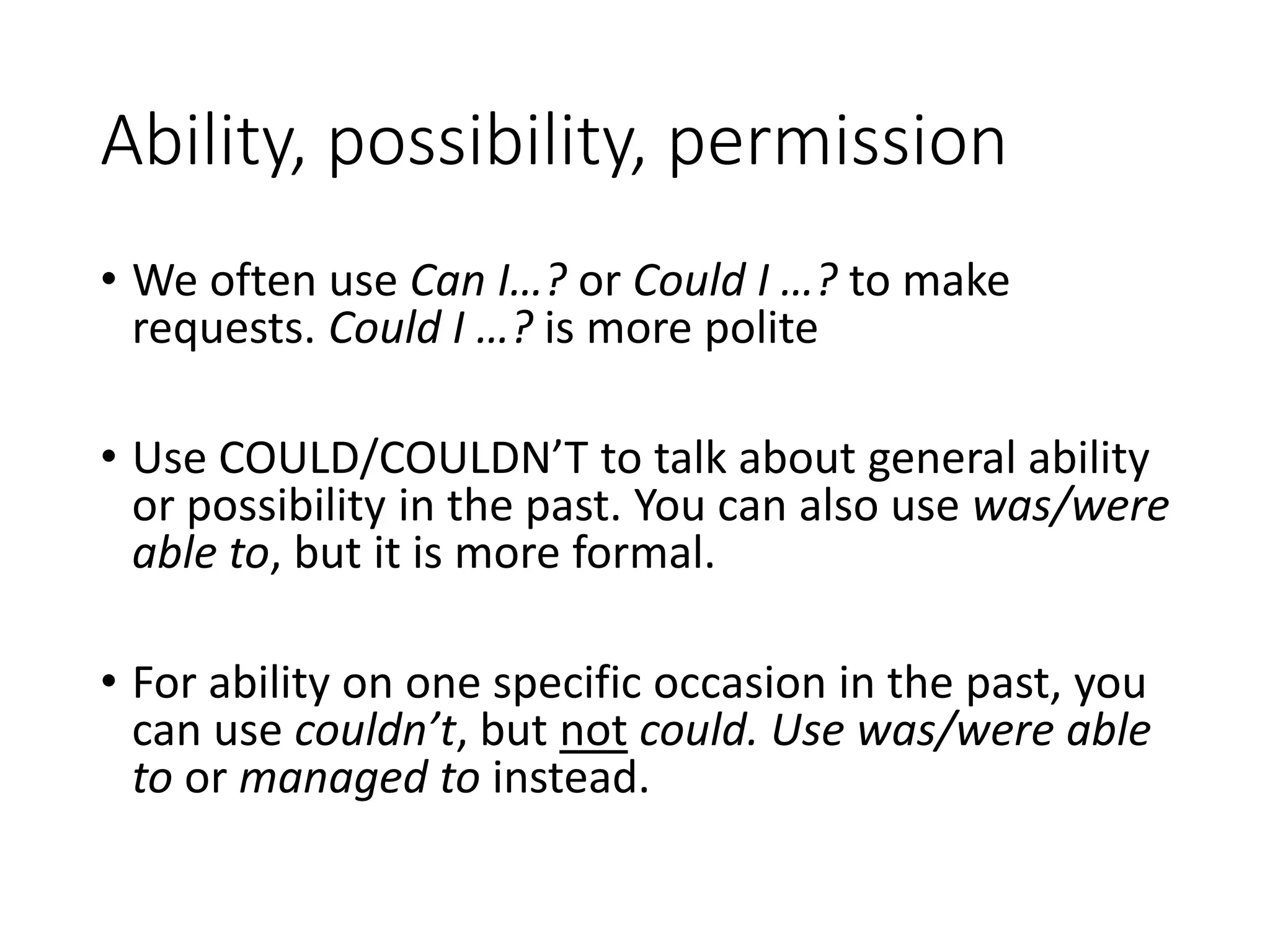
• We often use Can I…? or Could I …? to make
requests. Could I …? is more polite
• Use COULD/COULDN’T to talk about general ability
or possibility in the past. You can also use was/were
able to, but it is more formal.
• For ability on one specific occasion in the past, you
can use couldn’t, but not could. Use was/were able
to or managed to instead.
Deduction
• We use CAN’T to say we are sure that something is
impossible/not true.
The supermarket can’t be closed – it’s only 16:00!
They can’t be back yet. They said they were coming
home on Sunday
• The opposite of CAN’T in this sense is MUST
She can’t be at work now. It’s only 7:30 (I’m sure it’s not true)
She must be at work now. It’s 9.30 (I’m sure it is true)

Can, could, be able to

  • 1.
    CAN, COULD, BEABLE TO English File Upper-Intermediate 6B
  • 2.
    Ability, possibility, permission •Use CAN to talk about ability, possibility, and permission • CAN is a modal verb and it only has a present form (present and future) and a past/conditional form (COULD). • For all other tenses and forms we use BE ABLE TO + infinitive. You can also use it in the present and past to sound more formal.
  • 3.
    Ability, possibility, permission •We often use Can I…? or Could I …? to make requests. Could I …? is more polite • Use COULD/COULDN’T to talk about general ability or possibility in the past. You can also use was/were able to, but it is more formal. • For ability on one specific occasion in the past, you can use couldn’t, but not could. Use was/were able to or managed to instead.
  • 4.
    Deduction • We useCAN’T to say we are sure that something is impossible/not true. The supermarket can’t be closed – it’s only 16:00! They can’t be back yet. They said they were coming home on Sunday • The opposite of CAN’T in this sense is MUST She can’t be at work now. It’s only 7:30 (I’m sure it’s not true) She must be at work now. It’s 9.30 (I’m sure it is true)