1 of 8 Chapter 9: Reporting Information
The Norton Field Guide to Writing, 3e,
© 2013, W. W. Norton & Company
Reporting Information
Chapter 9
2 of 8 Chapter 9: Reporting InformationPart 2: Genres
Key Features of Reports
• Tightly focused topic
• Accurate, well-researched information
• Various writing strategies
• Clear definitions
• Appropriate designs
3 of 8 Chapter 9: Reporting InformationPart 2: Genres
Guide to Writing Reports
• Choose a topic
• Consider the rhetorical situation
• Generate ideas and text
• Explore what you already know about the
topic
• Narrow the topic
• Develop a tentative thesis
• Research and revise your thesis
4 of 8 Chapter 9: Reporting InformationPart 2: Genres
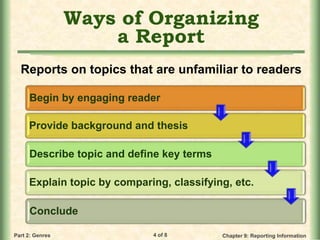
Ways of Organizing
a Report
Begin by engaging reader
Provide background and thesis
Describe topic and define key terms
Explain topic by comparing, classifying, etc.
Conclude
Reports on topics that are unfamiliar to readers
5 of 8 Chapter 9: Reporting InformationPart 2: Genres
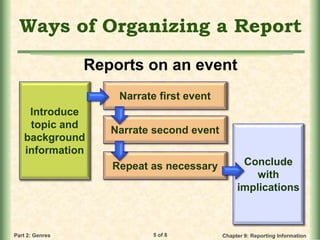
Ways of Organizing a Report
Reports on an event
Introduce
topic and
background
information
Narrate first event
Narrate second event
Repeat as necessary Conclude
with
implications
6 of 8 Chapter 9: Reporting InformationPart 2: Genres
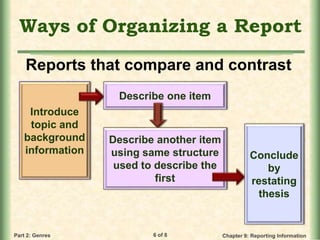
Ways of Organizing a Report
Reports that compare and contrast
Introduce
topic and
background
information
Describe one item
Describe another item
using same structure
used to describe the
first
Conclude
by
restating
thesis
7 of 8 Chapter 9: Reporting InformationPart 2: Genres
Writing a Draft
• Draft a beginning
• State thesis
• Start with something that will pique interest
• Begin with an illustrative example
• Draft an ending
• Summarize main points
• Point out implications of report
• Frame report by referring to the introduction
• Tell what happened
• Come up with a title
8 of 8 Chapter 9: Reporting InformationPart 2: Genres
Finishing Your Report
• Consider matters of design
• Get response and revise
• Edit and proofread
• Take stock of your work

Report pdf

  • 1.
    1 of 8Chapter 9: Reporting Information The Norton Field Guide to Writing, 3e, © 2013, W. W. Norton & Company Reporting Information Chapter 9
  • 2.
    2 of 8Chapter 9: Reporting InformationPart 2: Genres Key Features of Reports • Tightly focused topic • Accurate, well-researched information • Various writing strategies • Clear definitions • Appropriate designs
  • 3.
    3 of 8Chapter 9: Reporting InformationPart 2: Genres Guide to Writing Reports • Choose a topic • Consider the rhetorical situation • Generate ideas and text • Explore what you already know about the topic • Narrow the topic • Develop a tentative thesis • Research and revise your thesis
  • 4.
    4 of 8Chapter 9: Reporting InformationPart 2: Genres Ways of Organizing a Report Begin by engaging reader Provide background and thesis Describe topic and define key terms Explain topic by comparing, classifying, etc. Conclude Reports on topics that are unfamiliar to readers
  • 5.
    5 of 8Chapter 9: Reporting InformationPart 2: Genres Ways of Organizing a Report Reports on an event Introduce topic and background information Narrate first event Narrate second event Repeat as necessary Conclude with implications
  • 6.
    6 of 8Chapter 9: Reporting InformationPart 2: Genres Ways of Organizing a Report Reports that compare and contrast Introduce topic and background information Describe one item Describe another item using same structure used to describe the first Conclude by restating thesis
  • 7.
    7 of 8Chapter 9: Reporting InformationPart 2: Genres Writing a Draft • Draft a beginning • State thesis • Start with something that will pique interest • Begin with an illustrative example • Draft an ending • Summarize main points • Point out implications of report • Frame report by referring to the introduction • Tell what happened • Come up with a title
  • 8.
    8 of 8Chapter 9: Reporting InformationPart 2: Genres Finishing Your Report • Consider matters of design • Get response and revise • Edit and proofread • Take stock of your work

Editor's Notes

  • #4 Explain to students that the same story will look very different in a report than in an essay. Pick an event (like the bombing of the World Trade Center or any of the school shootings). Show examples of a newspaper report and academic writing describing this same event. Point out the similarities and differences.
  • #7  Reports on events often compare more than contrast, or vice versa. Show students specific examples, using the readings in the textbook.
  • #9 Some reports require specific formatting and are edited by many people.