NATIONAL CONFERENCE ON
KNOWLEDGE ,INNOVATION
IN TECHNOLOGY &
ENGINEERING (NCKITE-2015)
APRIL 10th & 11th 2015
A ABHISHEK SHASTRI & BIPUL KUMAR GUPTA
(6th sem, DEPT OF ET&T, R.C.E.T. Raipur)
- SAURABH BHATTACHARYA
(Asst. Prof, Dept. of CSE R.E.C. Raipur)
RESTRAINMENT OF RENEWABLE ENERGY
SYSTEMS AND SMART GRIDS
INTRODUCTION
 The usage of renewable energy systems has greatly
increased after the big oil crises in the late seventies
 Energy harvesting is one of the main challenges for
us.
 To fill up this gap we can invest in alternative energy
resources.
 Future energy sustainability and controllability is
hugely dependent on how it is being addressed in
future decades.
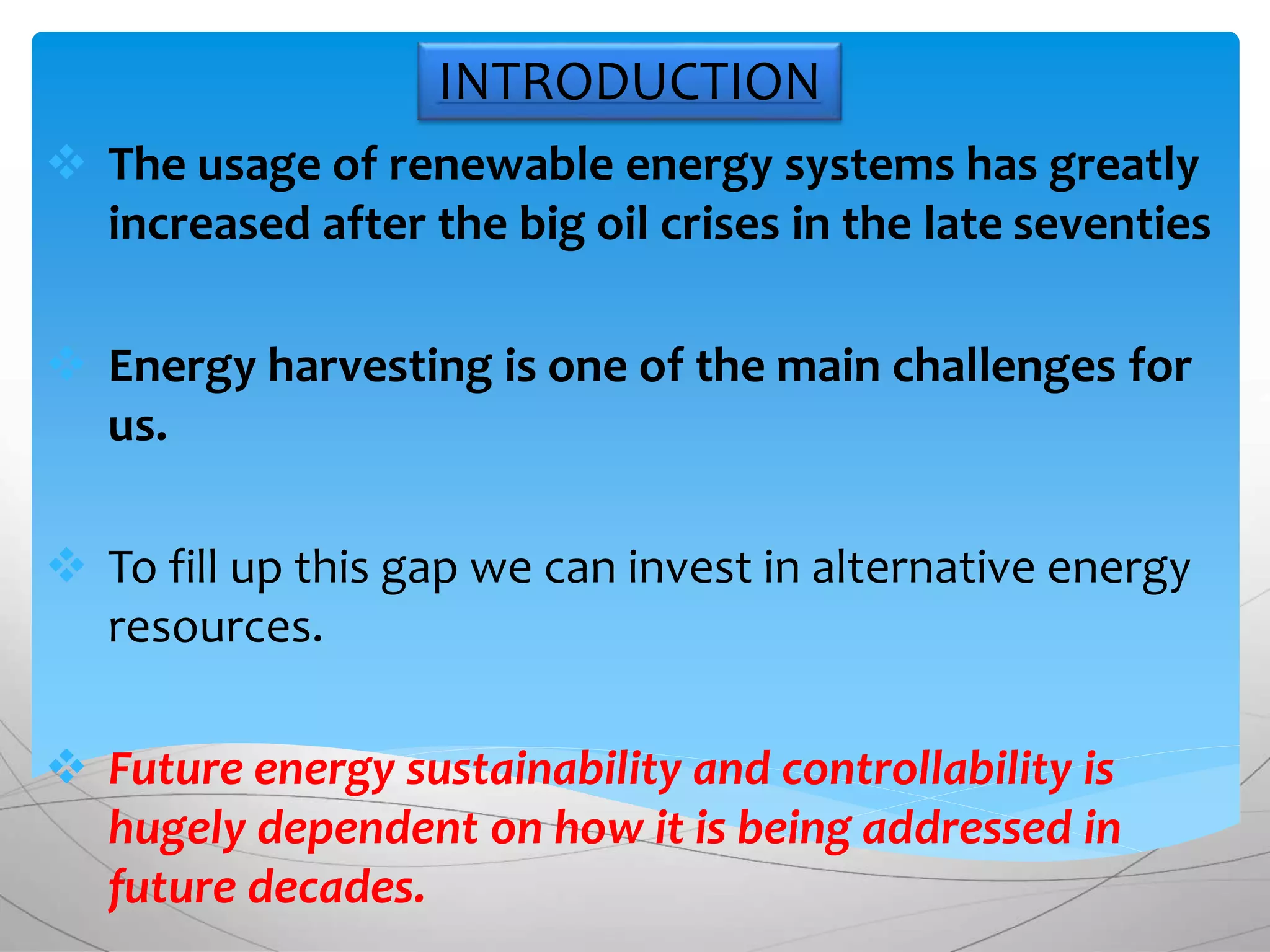
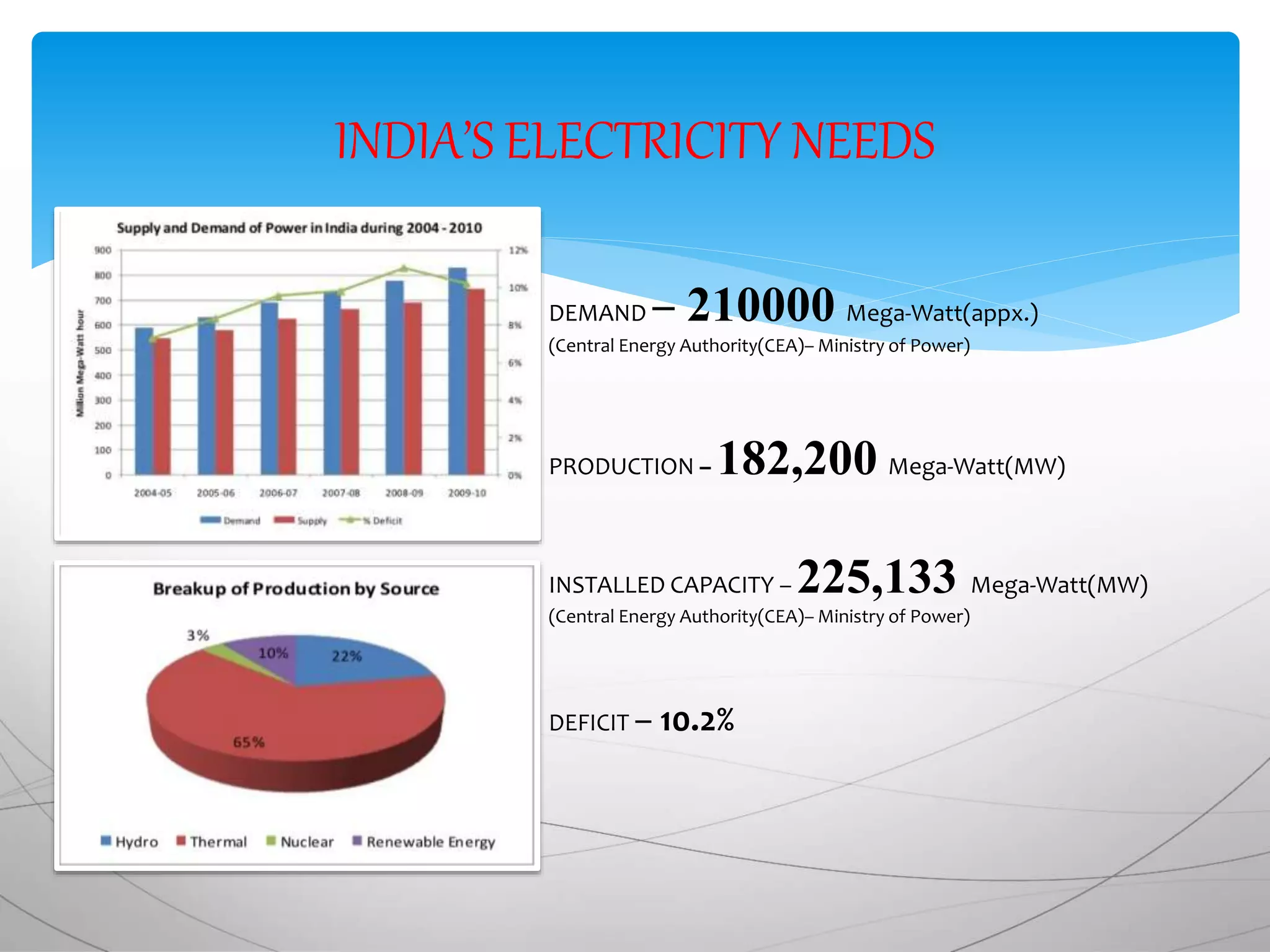
INDIA’S ELECTRICITY NEEDS
DEMAND – 210000 Mega-Watt(appx.)
(Central Energy Authority(CEA)– Ministry of Power)
PRODUCTION – 182,200 Mega-Watt(MW)
INSTALLED CAPACITY – 225,133 Mega-Watt(MW)
(Central Energy Authority(CEA)– Ministry of Power)
DEFICIT – 10.2%
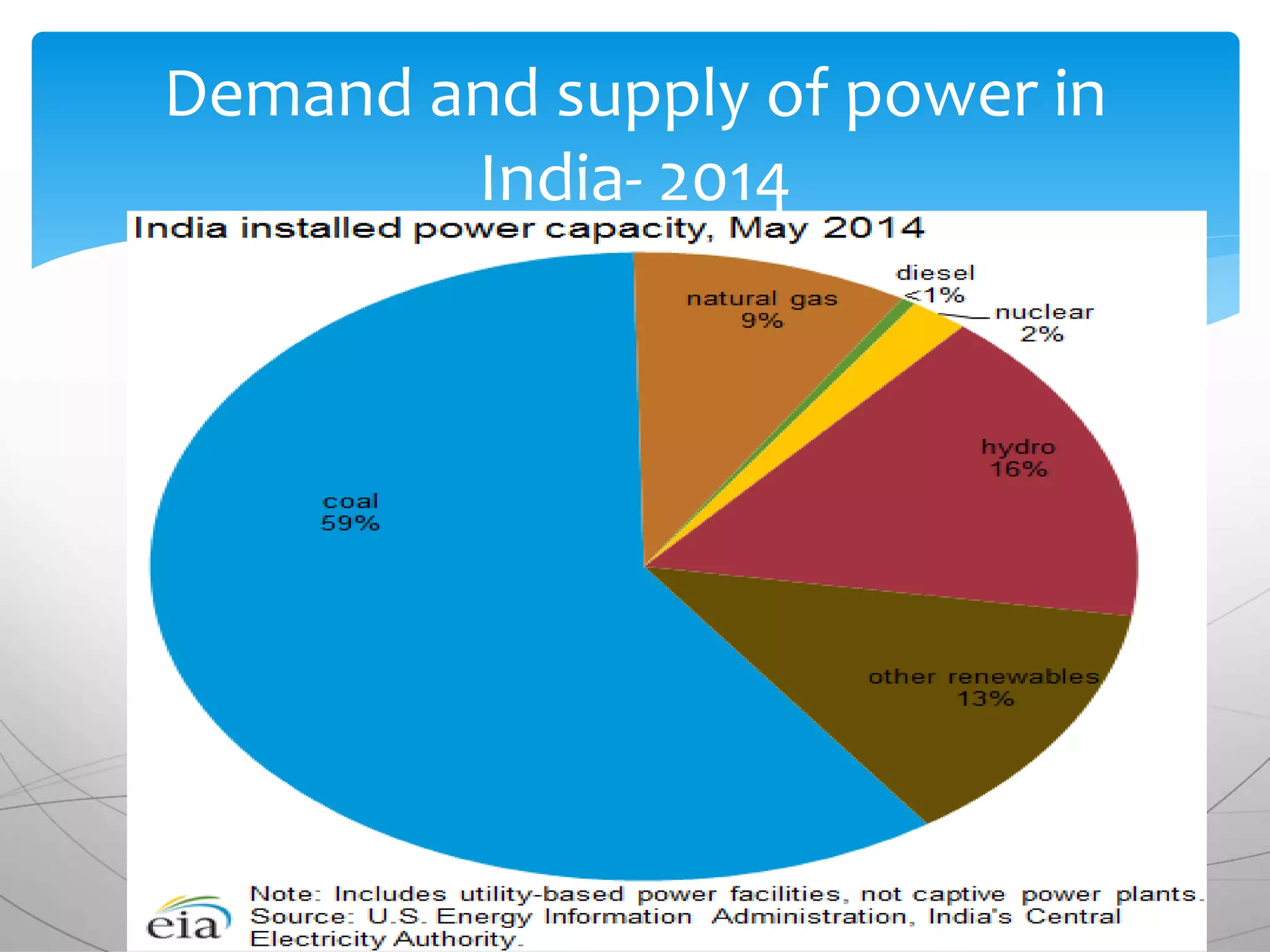
Demand and supply of power in
India- 2014
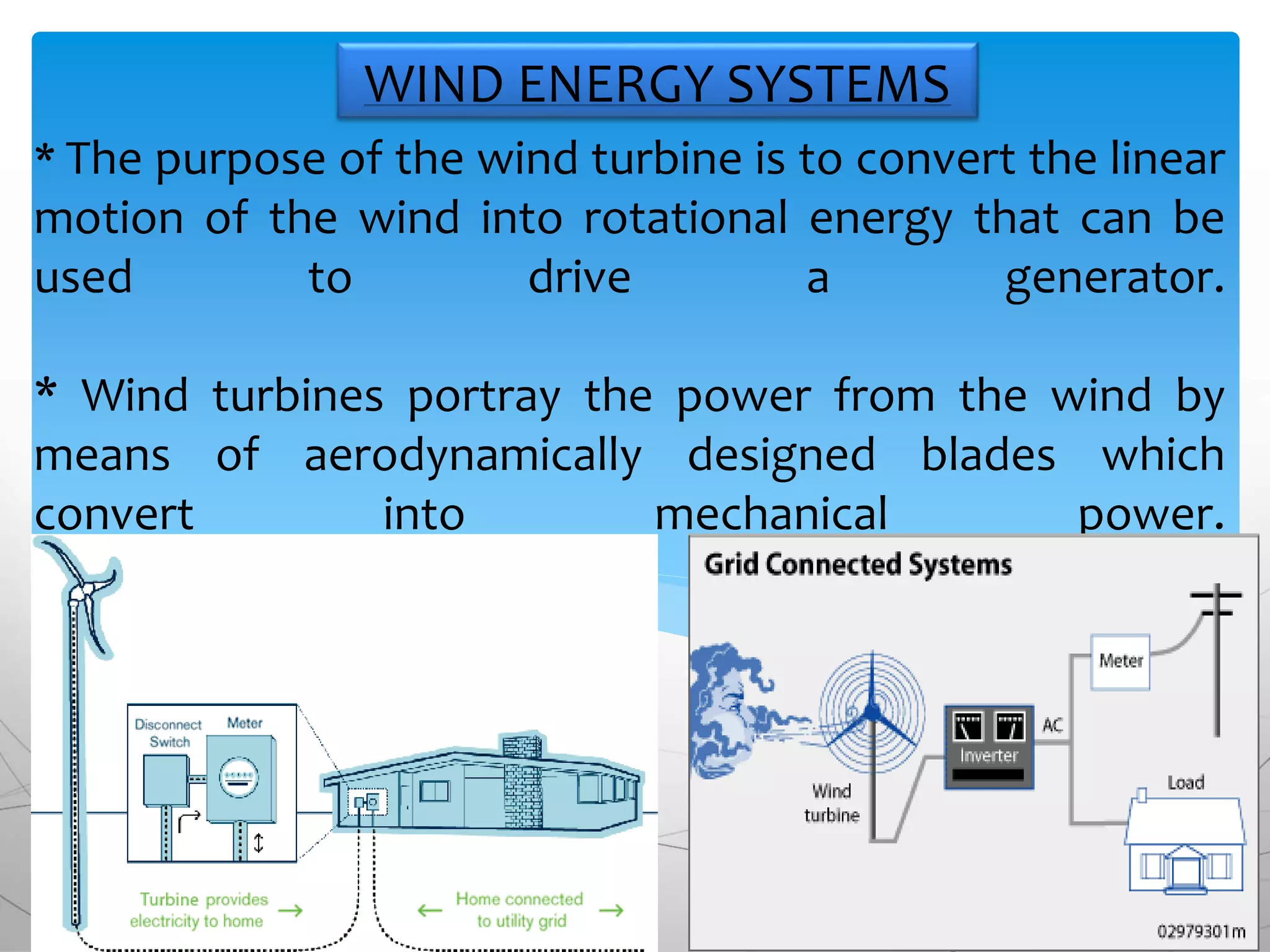
* The purpose of the wind turbine is to convert the linear
motion of the wind into rotational energy that can be
used to drive a generator.
* Wind turbines portray the power from the wind by
means of aerodynamically designed blades which
convert into mechanical power.
WIND ENERGY SYSTEMS
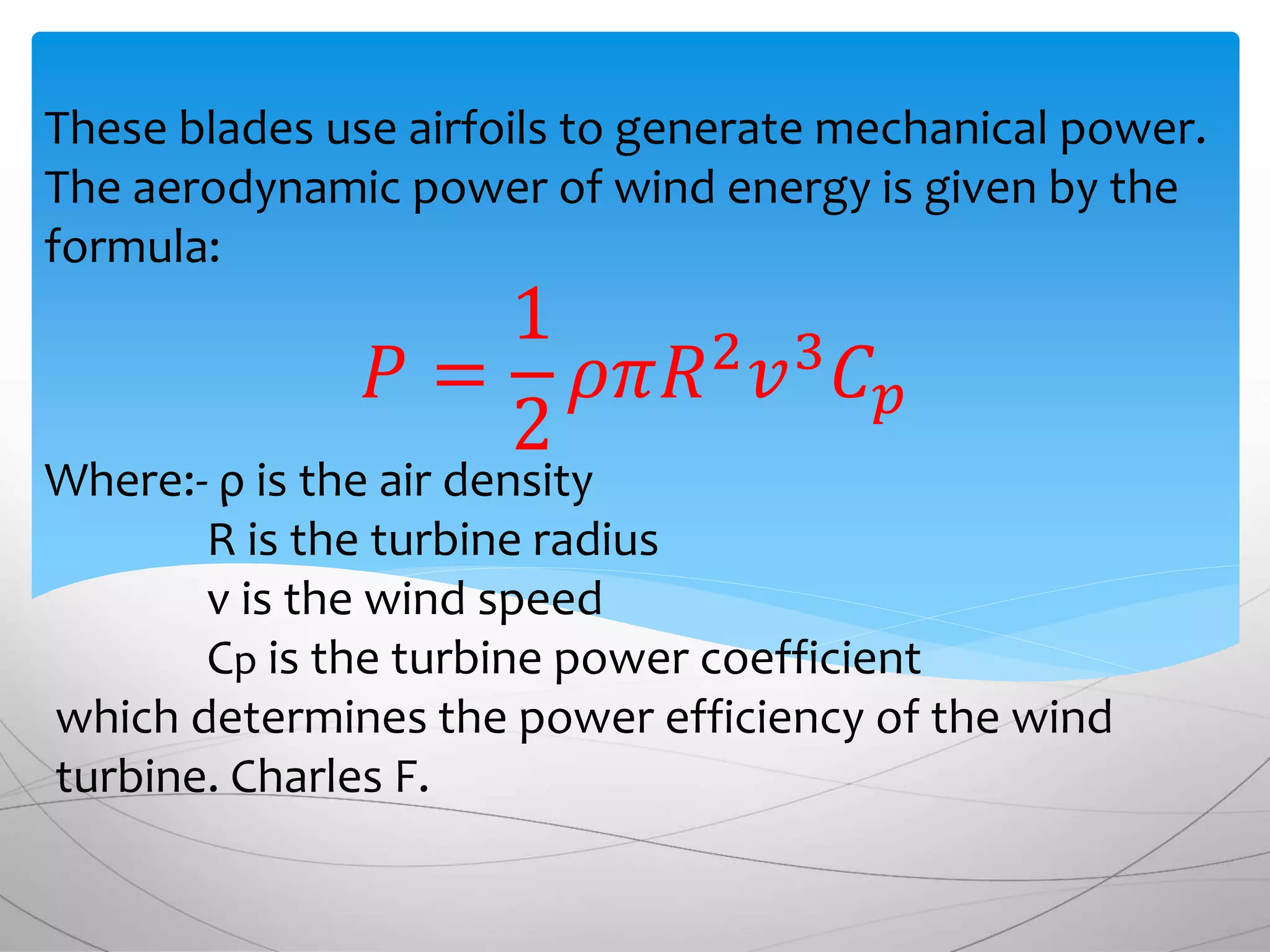
These blades use airfoils to generate mechanical power.
The aerodynamic power of wind energy is given by the
formula:
𝑃 =
1
2
𝜌𝜋𝑅2
𝑣3
𝐶 𝑝
Where:- ρ is the air density
R is the turbine radius
v is the wind speed
Cp is the turbine power coefficient
which determines the power efficiency of the wind
turbine. Charles F.
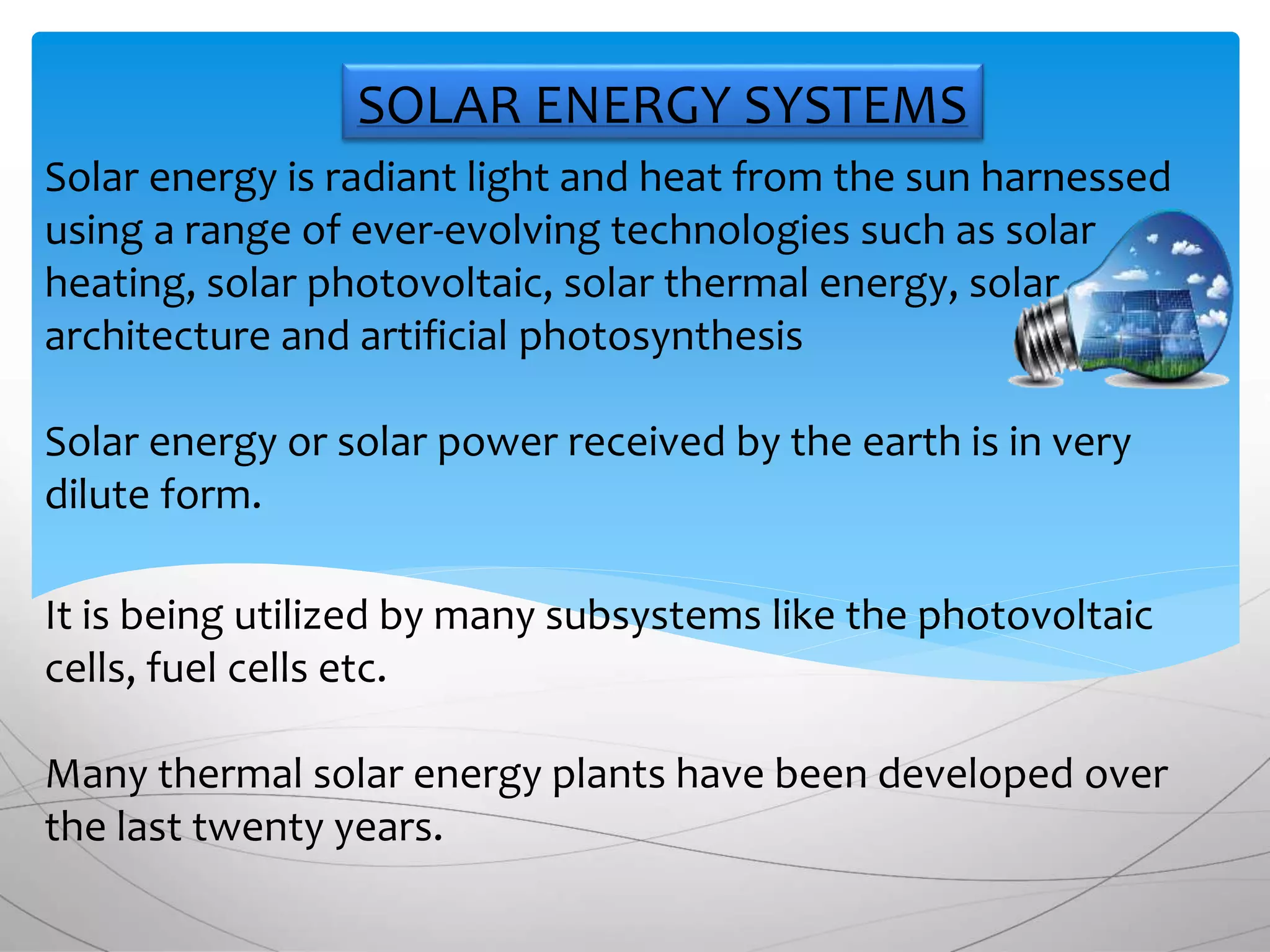
Solar energy is radiant light and heat from the sun harnessed
using a range of ever-evolving technologies such as solar
heating, solar photovoltaic, solar thermal energy, solar
architecture and artificial photosynthesis
Solar energy or solar power received by the earth is in very
dilute form.
It is being utilized by many subsystems like the photovoltaic
cells, fuel cells etc.
Many thermal solar energy plants have been developed over
the last twenty years.
SOLAR ENERGY SYSTEMS
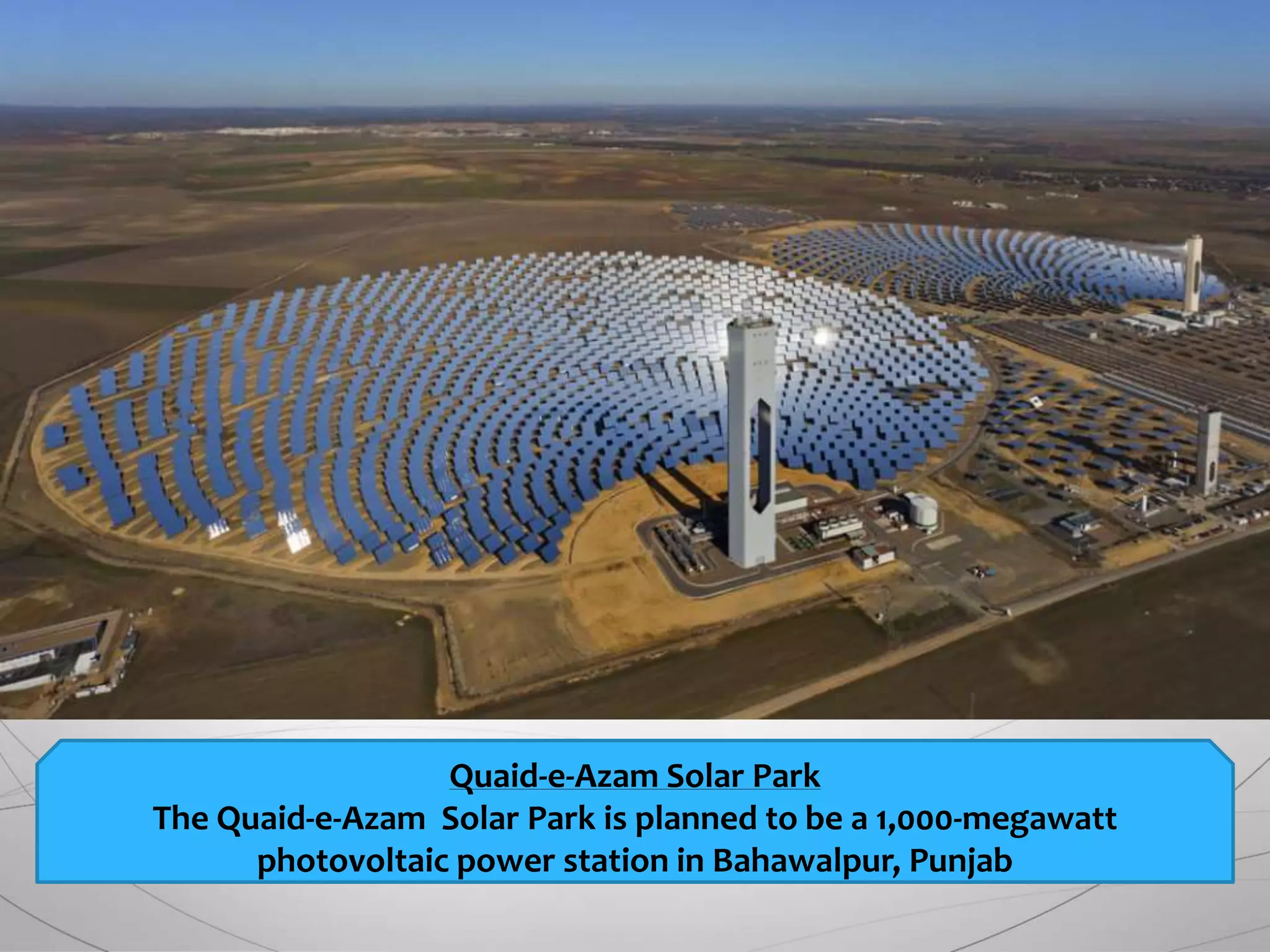
Quaid-e-Azam Solar Park
The Quaid-e-Azam Solar Park is planned to be a 1,000-megawatt
photovoltaic power station in Bahawalpur, Punjab
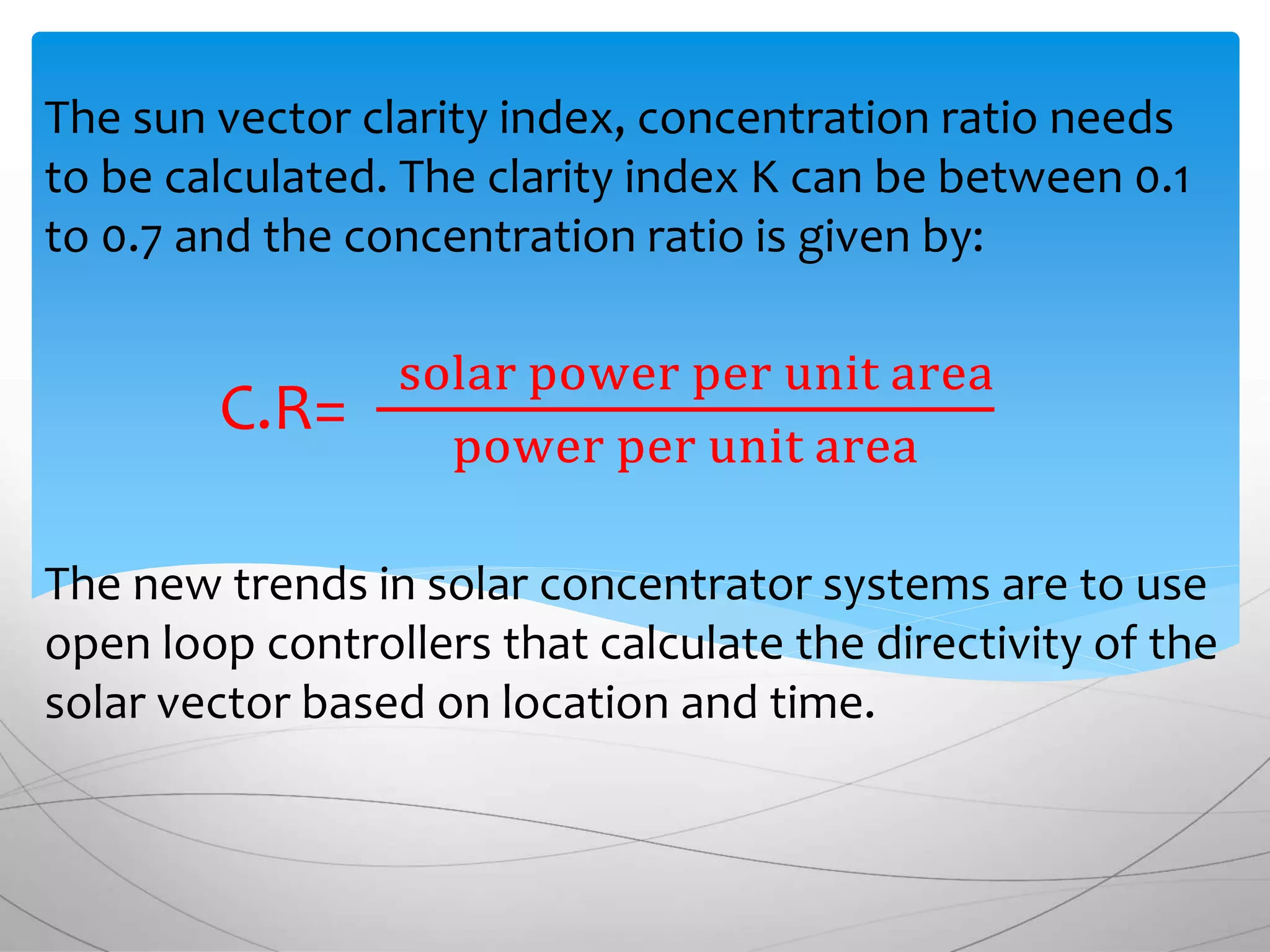
The sun vector clarity index, concentration ratio needs
to be calculated. The clarity index K can be between 0.1
to 0.7 and the concentration ratio is given by:
C.R=
solar power per unit area
power per unit area
The new trends in solar concentrator systems are to use
open loop controllers that calculate the directivity of the
solar vector based on location and time.
“A smart grid is a modernized electrical grid.”
That uses analog or digital information technology to gather and
act on information - such as information about the behaviors of
suppliers and consumers - in an automated fashion to improve the
efficiency, reliability, economics, and sustainability of the
production and distribution of electricity.
Power systems are fundamentally reliant on control,
communications, and computation for ensuring stable, reliable,
efficient operations.
SMART GRIDS
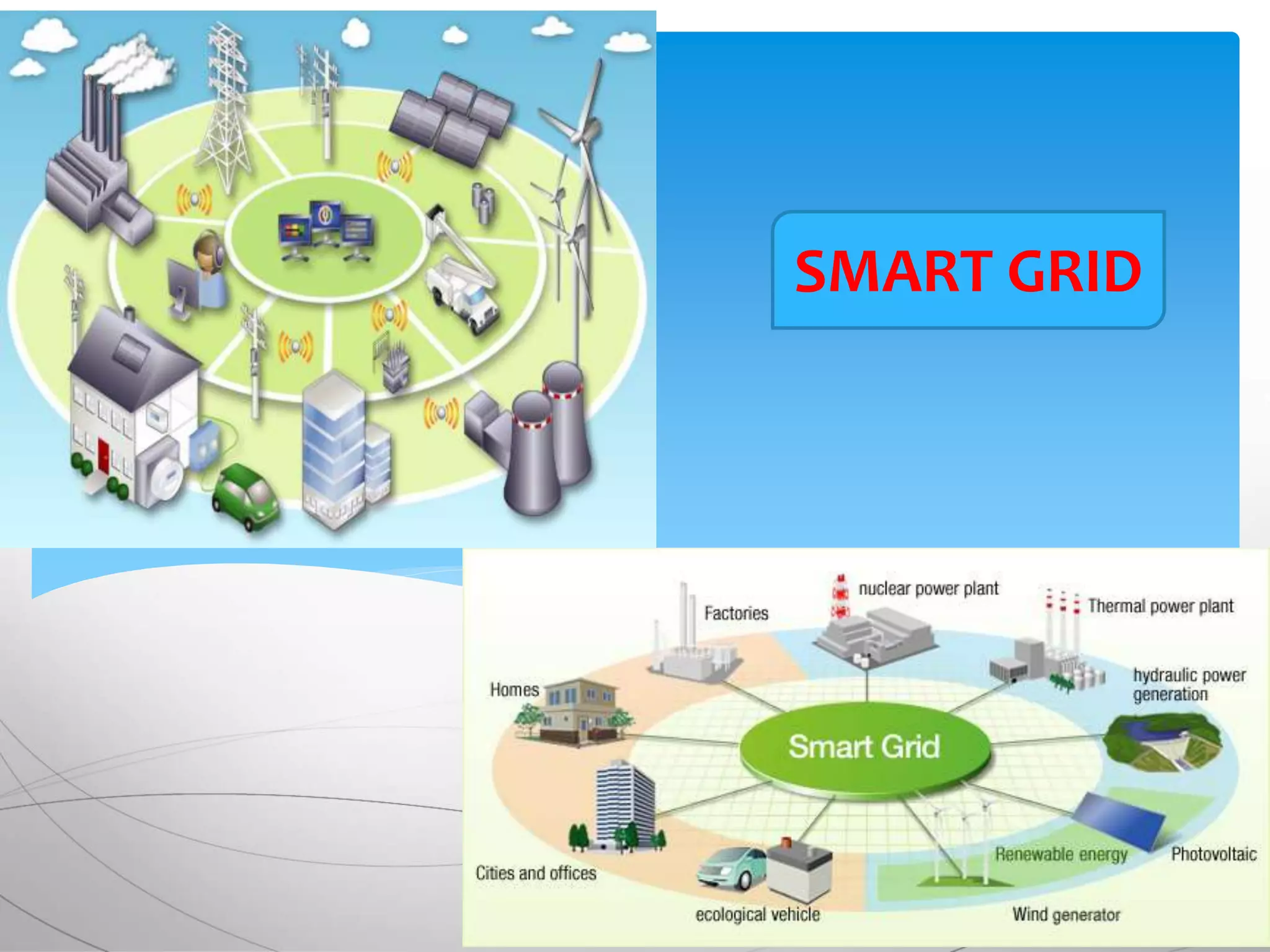
SMART GRID
The present grid model reflects considered trades
between cost and reliability.
New types of load, such as plug-in electric vehicles with
their associated vehicle to grid potential will give new
challenges and opportunities.
The smart grid technology platform briefly explains the
advantages of smart grids which are as follows:-
1. It allows the consumers to play a vital part in
determining the operation of the system.
2. It provides with great information and options
for choosing the supply.
3. Indicatively reduce the environmental impact on
the whole electrical supply system.
4. It improves and maintains the existing upper
levels of system quality and security supply.
5. Maintain and improve the existing services and
fostering the market on a large scale.
1.Wind energy systems are used for obtaining mechanical energy
for grinding, pumping purposes.
2.It has its biggest impact on agricultural and rural fields in the form
of windmills
3.Wind energy systems are basically used for energy conservation.
4. Large solar central receiver thermal power plants in MW range.
5. Solar to electrical energy direct conversion with the help of
photovoltaic cells.
6.It can be used in preparing solar filter designing.
APPLICATIONS
The renewable energy systems are a vital source for the human
beings.
Their usage, advantages and disadvantages are a matter of concern.
The energy systems are used in abundance in many applications,
therefore control over them is necessary and smart grids use
practical and technical techniques to provide control over these
energy systems and try to put a limit over them so that they can
be used in a limit for future purposes.
CONCLUSION
Restrainment of renewable energy systems and  smart grids ppt

Restrainment of renewable energy systems and smart grids ppt

  • 1.
    NATIONAL CONFERENCE ON KNOWLEDGE,INNOVATION IN TECHNOLOGY & ENGINEERING (NCKITE-2015) APRIL 10th & 11th 2015
  • 2.
    A ABHISHEK SHASTRI& BIPUL KUMAR GUPTA (6th sem, DEPT OF ET&T, R.C.E.T. Raipur) - SAURABH BHATTACHARYA (Asst. Prof, Dept. of CSE R.E.C. Raipur) RESTRAINMENT OF RENEWABLE ENERGY SYSTEMS AND SMART GRIDS
  • 3.
    INTRODUCTION  The usageof renewable energy systems has greatly increased after the big oil crises in the late seventies  Energy harvesting is one of the main challenges for us.  To fill up this gap we can invest in alternative energy resources.  Future energy sustainability and controllability is hugely dependent on how it is being addressed in future decades.
  • 4.
    INDIA’S ELECTRICITY NEEDS DEMAND– 210000 Mega-Watt(appx.) (Central Energy Authority(CEA)– Ministry of Power) PRODUCTION – 182,200 Mega-Watt(MW) INSTALLED CAPACITY – 225,133 Mega-Watt(MW) (Central Energy Authority(CEA)– Ministry of Power) DEFICIT – 10.2%
  • 5.
    Demand and supplyof power in India- 2014
  • 6.
    * The purposeof the wind turbine is to convert the linear motion of the wind into rotational energy that can be used to drive a generator. * Wind turbines portray the power from the wind by means of aerodynamically designed blades which convert into mechanical power. WIND ENERGY SYSTEMS
  • 7.
    These blades useairfoils to generate mechanical power. The aerodynamic power of wind energy is given by the formula: 𝑃 = 1 2 𝜌𝜋𝑅2 𝑣3 𝐶 𝑝 Where:- ρ is the air density R is the turbine radius v is the wind speed Cp is the turbine power coefficient which determines the power efficiency of the wind turbine. Charles F.
  • 8.
    Solar energy isradiant light and heat from the sun harnessed using a range of ever-evolving technologies such as solar heating, solar photovoltaic, solar thermal energy, solar architecture and artificial photosynthesis Solar energy or solar power received by the earth is in very dilute form. It is being utilized by many subsystems like the photovoltaic cells, fuel cells etc. Many thermal solar energy plants have been developed over the last twenty years. SOLAR ENERGY SYSTEMS
  • 9.
    Quaid-e-Azam Solar Park TheQuaid-e-Azam Solar Park is planned to be a 1,000-megawatt photovoltaic power station in Bahawalpur, Punjab
  • 10.
    The sun vectorclarity index, concentration ratio needs to be calculated. The clarity index K can be between 0.1 to 0.7 and the concentration ratio is given by: C.R= solar power per unit area power per unit area The new trends in solar concentrator systems are to use open loop controllers that calculate the directivity of the solar vector based on location and time.
  • 11.
    “A smart gridis a modernized electrical grid.” That uses analog or digital information technology to gather and act on information - such as information about the behaviors of suppliers and consumers - in an automated fashion to improve the efficiency, reliability, economics, and sustainability of the production and distribution of electricity. Power systems are fundamentally reliant on control, communications, and computation for ensuring stable, reliable, efficient operations. SMART GRIDS
  • 12.
  • 13.
    The present gridmodel reflects considered trades between cost and reliability. New types of load, such as plug-in electric vehicles with their associated vehicle to grid potential will give new challenges and opportunities. The smart grid technology platform briefly explains the advantages of smart grids which are as follows:- 1. It allows the consumers to play a vital part in determining the operation of the system.
  • 14.
    2. It provideswith great information and options for choosing the supply. 3. Indicatively reduce the environmental impact on the whole electrical supply system. 4. It improves and maintains the existing upper levels of system quality and security supply. 5. Maintain and improve the existing services and fostering the market on a large scale.
  • 15.
    1.Wind energy systemsare used for obtaining mechanical energy for grinding, pumping purposes. 2.It has its biggest impact on agricultural and rural fields in the form of windmills 3.Wind energy systems are basically used for energy conservation. 4. Large solar central receiver thermal power plants in MW range. 5. Solar to electrical energy direct conversion with the help of photovoltaic cells. 6.It can be used in preparing solar filter designing. APPLICATIONS
  • 16.
    The renewable energysystems are a vital source for the human beings. Their usage, advantages and disadvantages are a matter of concern. The energy systems are used in abundance in many applications, therefore control over them is necessary and smart grids use practical and technical techniques to provide control over these energy systems and try to put a limit over them so that they can be used in a limit for future purposes. CONCLUSION