1 of 7 Chapter 8: Analyzing Texts
The Norton Field Guide to Writing, 3e,
© 2013, W. W. Norton & Company
Analyzing Texts and
Sources
2 of 7 Chapter 8: Analyzing TextsPart 2: Genres
Guide to Writing
Textual Analyses
• Choose a source to analyze
• Consider the rhetorical situation
• Generate ideas and text
• Read to see what the source suggests
• Decide what you want to analyze
• Think about the larger context
3 of 7 Chapter 8: Analyzing TextsPart 2: Genres
Guide to Writing Source
Analyses
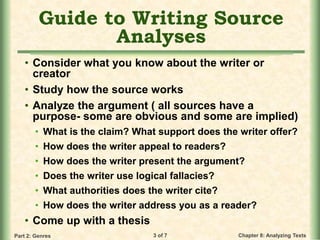
• Consider what you know about the writer or
creator
• Study how the source works
• Analyze the argument ( all sources have a
purpose- some are obvious and some are implied)
• What is the claim? What support does the writer offer?
• How does the writer appeal to readers?
• How does the writer present the argument?
• Does the writer use logical fallacies?
• What authorities does the writer cite?
• How does the writer address you as a reader?
• Come up with a thesis
4 of 7 Chapter 8: Analyzing TextsPart 2: Genres
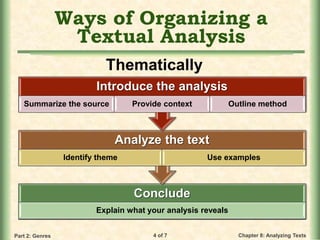
Ways of Organizing a
Textual Analysis
Thematically
Conclude
Explain what your analysis reveals
Analyze the text
Identify theme Use examples
Introduce the analysis
Summarize the source Provide context Outline method
5 of 7 Chapter 8: Analyzing TextsPart 2: Genres
Writing a Draft
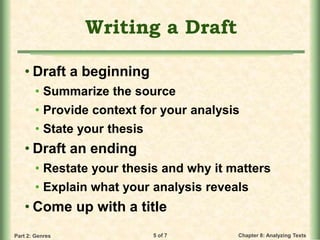
• Draft a beginning
• Summarize the source
• Provide context for your analysis
• State your thesis
• Draft an ending
• Restate your thesis and why it matters
• Explain what your analysis reveals
• Come up with a title
6 of 7 Chapter 8: Analyzing TextsPart 2: Genres
Finishing Your Analysis
• Consider matters of design
• Get response and revise
• Edit and proofread
• Take stock of your work
7 of 7 Chapter 8: Analyzing TextsPart 2: Genres
Key Features of
Analysis
• An arguable thesis
• Careful attention to the language of the
text source
• Attention to patterns or themes
• Clear interpretation of evidence

Analyzing texts and sources

  • 1.
    1 of 7Chapter 8: Analyzing Texts The Norton Field Guide to Writing, 3e, © 2013, W. W. Norton & Company Analyzing Texts and Sources
  • 2.
    2 of 7Chapter 8: Analyzing TextsPart 2: Genres Guide to Writing Textual Analyses • Choose a source to analyze • Consider the rhetorical situation • Generate ideas and text • Read to see what the source suggests • Decide what you want to analyze • Think about the larger context
  • 3.
    3 of 7Chapter 8: Analyzing TextsPart 2: Genres Guide to Writing Source Analyses • Consider what you know about the writer or creator • Study how the source works • Analyze the argument ( all sources have a purpose- some are obvious and some are implied) • What is the claim? What support does the writer offer? • How does the writer appeal to readers? • How does the writer present the argument? • Does the writer use logical fallacies? • What authorities does the writer cite? • How does the writer address you as a reader? • Come up with a thesis
  • 4.
    4 of 7Chapter 8: Analyzing TextsPart 2: Genres Ways of Organizing a Textual Analysis Thematically Conclude Explain what your analysis reveals Analyze the text Identify theme Use examples Introduce the analysis Summarize the source Provide context Outline method
  • 5.
    5 of 7Chapter 8: Analyzing TextsPart 2: Genres Writing a Draft • Draft a beginning • Summarize the source • Provide context for your analysis • State your thesis • Draft an ending • Restate your thesis and why it matters • Explain what your analysis reveals • Come up with a title
  • 6.
    6 of 7Chapter 8: Analyzing TextsPart 2: Genres Finishing Your Analysis • Consider matters of design • Get response and revise • Edit and proofread • Take stock of your work
  • 7.
    7 of 7Chapter 8: Analyzing TextsPart 2: Genres Key Features of Analysis • An arguable thesis • Careful attention to the language of the text source • Attention to patterns or themes • Clear interpretation of evidence

Editor's Notes

  • #3 Explain to students that most writing in the language or social sciences areas will be textual analysis, such as an analysis of a novel for a literature class or of a nonfiction essay comparing generals Lee and Grant of the American Civil War for a history class.
  • #6 One way to start students writing is to have them work collaboratively, with one student writing the beginning and another writing the ending, and both writing the body. Of course, group members must collaborate and edit each other’s writing for the resulting paper to flow smoothly.