Download to read offline
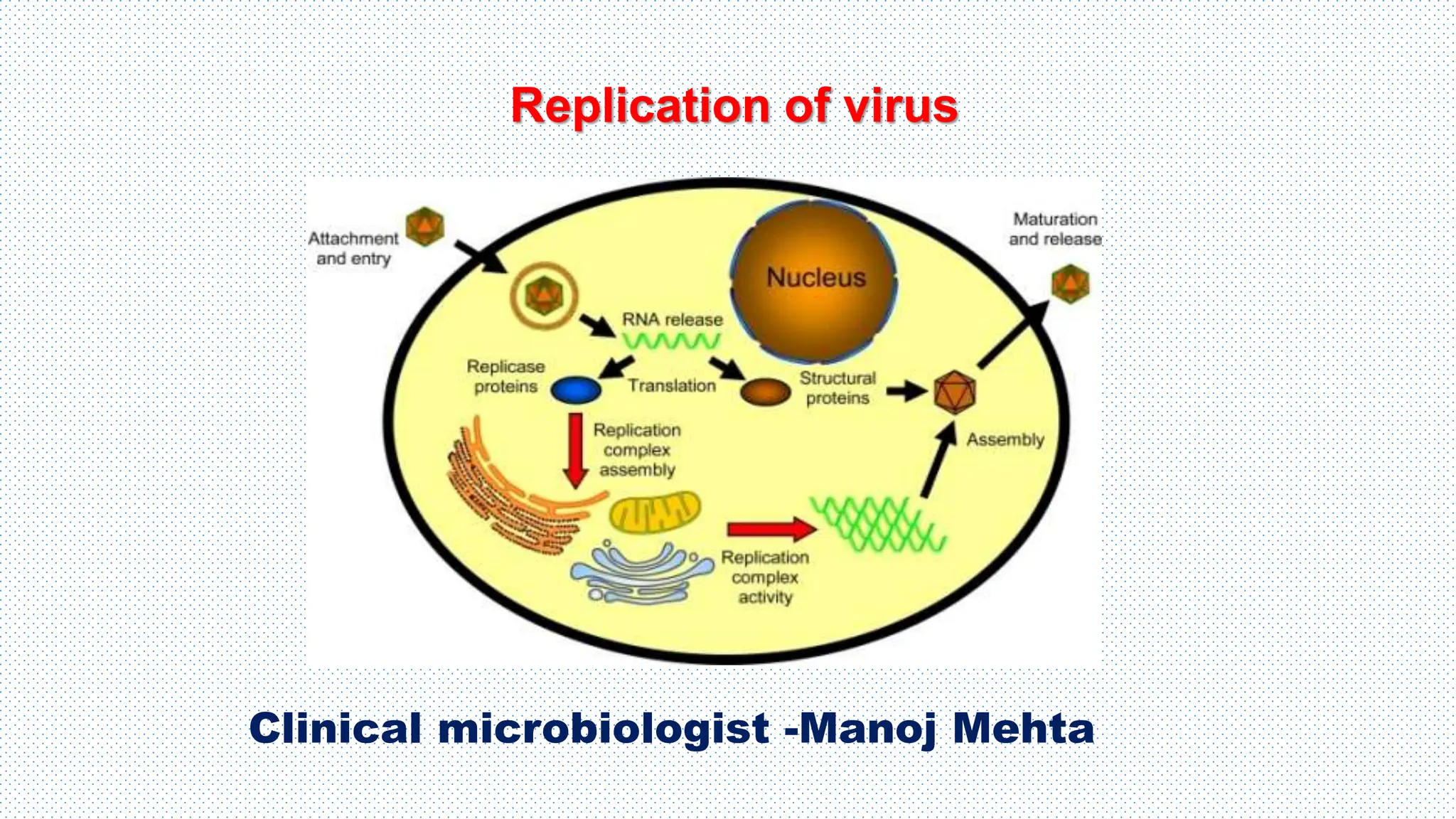
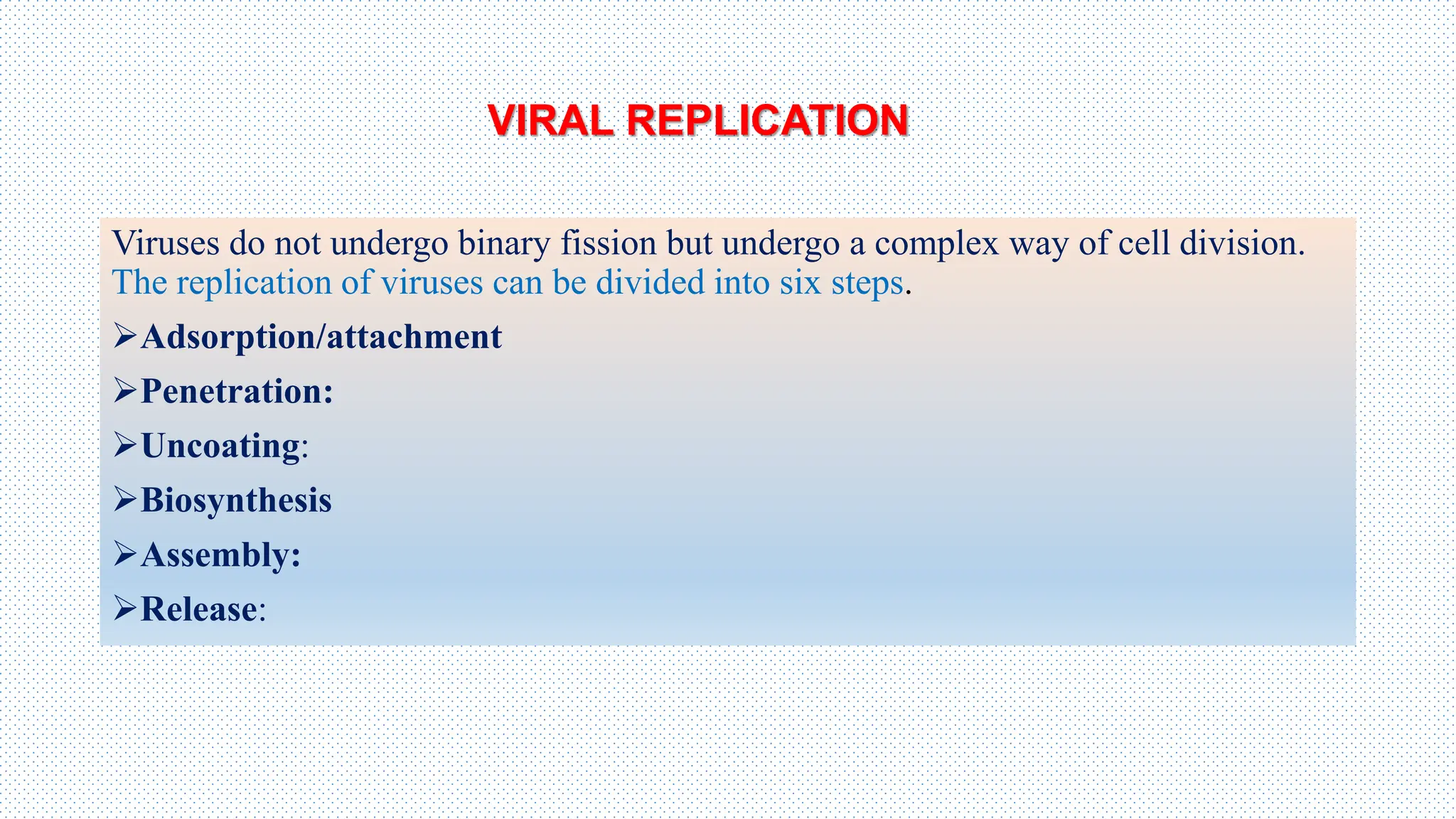
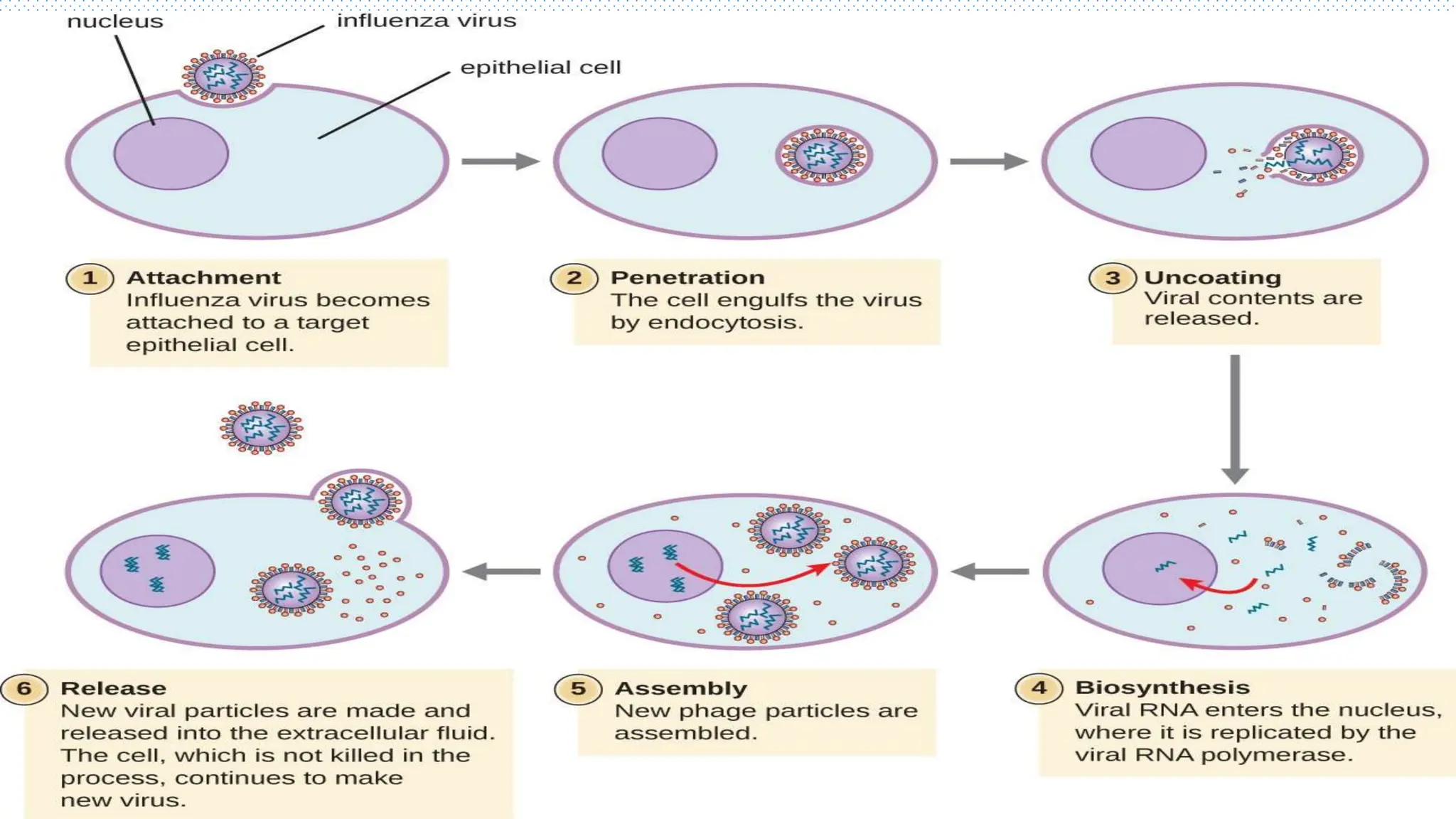
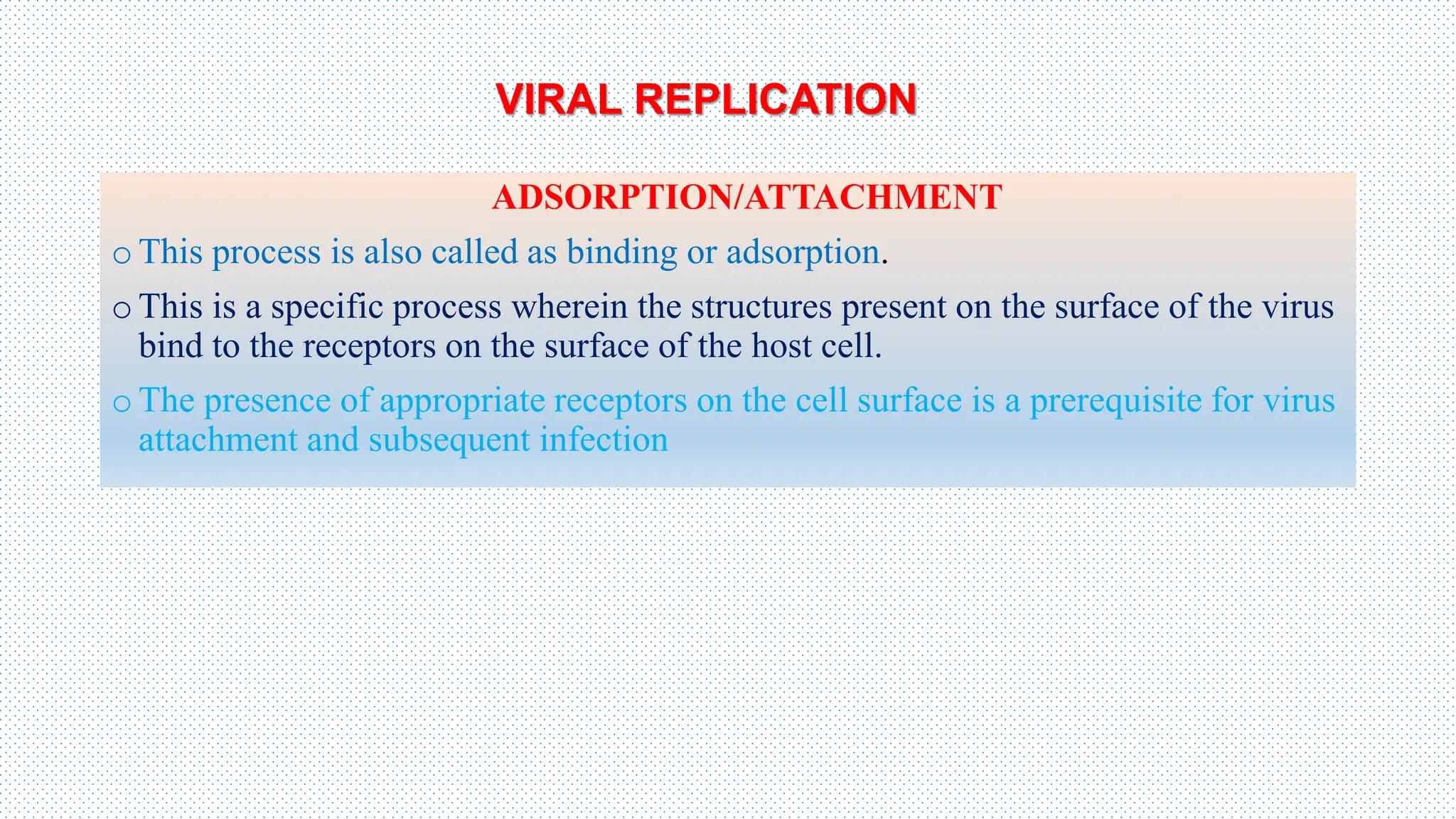


Viral replication is a complex process that involves six main steps: 1) adsorption/attachment where the virus binds to receptors on the host cell, 2) penetration of the virus into the cell, 3) uncoating to release the viral genome, 4) biosynthesis of new viral components, 5) assembly of new virus particles, and 6) release of progeny viruses from the host cell through lysis, degeneration, or budding. Each step involves specific mechanisms depending on whether the virus is enveloped or non-enveloped, DNA or RNA based.


