Medical Virology
Virus infectious cycle(replication of
RNA and DNA virus)
Replication Of viruses
 Different viral strategies
 General outline of the replication cycle is similar
 Nucleic acid -- necessary genetic information for
replication
 Depend on host cell enzymes for replication
 Six phases in replication
2
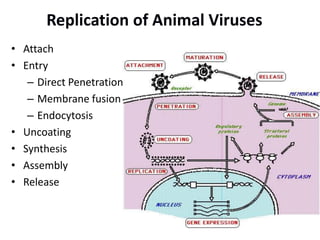
Replication of Animal Viruses
• Attach
• Entry
– Direct Penetration
– Membrane fusion
– Endocytosis
• Uncoating
• Synthesis
• Assembly
• Release
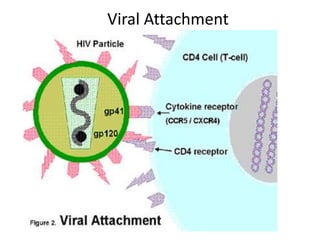
1. Adsorption or Attachment
 Reactive sites on viruses surface interact with specific
receptors on susceptible host cells
 Receptors on the virus capside or envelope irreversibly
binds to cellular receptors on the cell member
 Limit the host spp. & cells infected
 Receptor molecules differ for different viruses
 glycoproteins
 protein sequences
 Oligosaccharides
e.g. Influenza virus -- haemagglutinin  glycoprotein
receptor sites of host cell
HIV – gp120  CD4+ cell
Polio virus -- lipoprotein receptor of host cells
4
Viral Attachment
2. Penetration
 The virus particle is taken up inside the cell
Engulfment: Whole virus enter into host cell by intracellular
vacuoles Endocytosis ( viropexis)
 Directly penetration plasma membrane
Fusion: Viral envelope with plasma membrane, facilitates
entry of virus into host cell
 interaction of a viral fusion protein with a second
cellular receptor (e.g., chemokine receptors for HIV)
6
3. Uncoating
• Viral capsid is broken by viral or cellular enzyme;
• Viral NA is released;
 physical separation of the viral nucleic acid from the outer structural
components of the virion
 free nucleic acid (Picornaviruses)
 a nucleocapsid (Reoviruses)
• Viral NA transported to within the host cell
► Transcribed to form new progeny virions
7
4. Expression of viral genome and
synthesis of viral components
 Specific mRNAs must be transcribed from the
viral nucleic acid
 Viruses use cell components to translate the
mRNA
 Different pathways based on types and
configurations of the viral genome
8
DNA viruses
 The replication takes place in the cell nucleus
 Exception is Pox virus synthesizes DNA in host cell cytoplasm with their
own enzymes
 Viral mRNA transcripts produced by the host cell enzyme-DNA-dep-
RNA polymerase II
 RNA is processed (splicing, polyadenylation)
 Early and late viral mRNA are transcribed from DNA strand in the case
of dsDNA viruses and are translated to give early and late proteins
9
RNA viruses
 Eukaryotic cells possess no enzymes for RNA replication
 RNA virus supply the RNA-dependent RNA polymerase (replicase)
 Take place in the cytoplasm of the cell
ssRNA Positive sense
 +RNA used as mRNA directly
 utilize the cell’s ribosomes and enzymes to translate the information contained in
this +RNA to produce viral proteins
ssRNA Negative Sense
• First converted to a +RNA strand
• Then used as an mRNA template for translation or direct transcription to the
genomic RNA
• They therefore need to carry a viral-specific RNA-dependent RNA polymerase
10
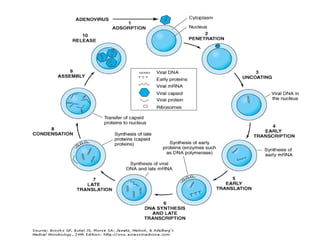
5. Assembly and Maturation
 Assembly of daughter virions into capsids -- in host cell
nucleus or cytoplasm
 Herpes and Adeno viruses -- host cell nucleus
 Picorna and Pox viruses assembly occur in cytoplasm of
host cell
 Enveloped viruses acquire envelope from host cell plasma
membrane, nuclear membrane etc.
11
12
6. Release
• Two ways assembled viruses leave host cell:
1. Budding: enveloped virus releases by Budding–
nucleocapsid binds to membrane which pinches off and
sheds the viruses gradually;
– cell is not immediately destroyed
2. Nonenveloped/naked virus and complex viruses released
when cell dies and ruptures
• Number of viruses released is variable
– 3,000-4,000 released by poxvirus
– >100,000 released by poliovirus.
Any questions ???

2.Virus life cycle (Replication)-PH 2022.pptx

  • 1.
    Medical Virology Virus infectiouscycle(replication of RNA and DNA virus)
  • 2.
    Replication Of viruses Different viral strategies  General outline of the replication cycle is similar  Nucleic acid -- necessary genetic information for replication  Depend on host cell enzymes for replication  Six phases in replication 2
  • 3.
    Replication of AnimalViruses • Attach • Entry – Direct Penetration – Membrane fusion – Endocytosis • Uncoating • Synthesis • Assembly • Release
  • 4.
    1. Adsorption orAttachment  Reactive sites on viruses surface interact with specific receptors on susceptible host cells  Receptors on the virus capside or envelope irreversibly binds to cellular receptors on the cell member  Limit the host spp. & cells infected  Receptor molecules differ for different viruses  glycoproteins  protein sequences  Oligosaccharides e.g. Influenza virus -- haemagglutinin  glycoprotein receptor sites of host cell HIV – gp120  CD4+ cell Polio virus -- lipoprotein receptor of host cells 4
  • 5.
  • 6.
    2. Penetration  Thevirus particle is taken up inside the cell Engulfment: Whole virus enter into host cell by intracellular vacuoles Endocytosis ( viropexis)  Directly penetration plasma membrane Fusion: Viral envelope with plasma membrane, facilitates entry of virus into host cell  interaction of a viral fusion protein with a second cellular receptor (e.g., chemokine receptors for HIV) 6
  • 7.
    3. Uncoating • Viralcapsid is broken by viral or cellular enzyme; • Viral NA is released;  physical separation of the viral nucleic acid from the outer structural components of the virion  free nucleic acid (Picornaviruses)  a nucleocapsid (Reoviruses) • Viral NA transported to within the host cell ► Transcribed to form new progeny virions 7
  • 8.
    4. Expression ofviral genome and synthesis of viral components  Specific mRNAs must be transcribed from the viral nucleic acid  Viruses use cell components to translate the mRNA  Different pathways based on types and configurations of the viral genome 8
  • 9.
    DNA viruses  Thereplication takes place in the cell nucleus  Exception is Pox virus synthesizes DNA in host cell cytoplasm with their own enzymes  Viral mRNA transcripts produced by the host cell enzyme-DNA-dep- RNA polymerase II  RNA is processed (splicing, polyadenylation)  Early and late viral mRNA are transcribed from DNA strand in the case of dsDNA viruses and are translated to give early and late proteins 9
  • 10.
    RNA viruses  Eukaryoticcells possess no enzymes for RNA replication  RNA virus supply the RNA-dependent RNA polymerase (replicase)  Take place in the cytoplasm of the cell ssRNA Positive sense  +RNA used as mRNA directly  utilize the cell’s ribosomes and enzymes to translate the information contained in this +RNA to produce viral proteins ssRNA Negative Sense • First converted to a +RNA strand • Then used as an mRNA template for translation or direct transcription to the genomic RNA • They therefore need to carry a viral-specific RNA-dependent RNA polymerase 10
  • 11.
    5. Assembly andMaturation  Assembly of daughter virions into capsids -- in host cell nucleus or cytoplasm  Herpes and Adeno viruses -- host cell nucleus  Picorna and Pox viruses assembly occur in cytoplasm of host cell  Enveloped viruses acquire envelope from host cell plasma membrane, nuclear membrane etc. 11
  • 12.
    12 6. Release • Twoways assembled viruses leave host cell: 1. Budding: enveloped virus releases by Budding– nucleocapsid binds to membrane which pinches off and sheds the viruses gradually; – cell is not immediately destroyed 2. Nonenveloped/naked virus and complex viruses released when cell dies and ruptures • Number of viruses released is variable – 3,000-4,000 released by poxvirus – >100,000 released by poliovirus.
  • 14.