VIRAL SPECIMEN COLLECTION AND
PRESERVATION
Mr. Manoj Mahato
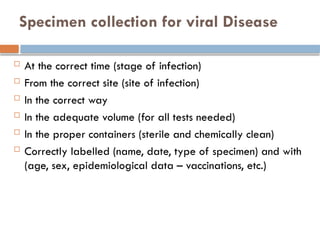
Specimen collection for viral Disease
 At the correct time (stage of infection)
 From the correct site (site of infection)
 In the correct way
 In the adequate volume (for all tests needed)
 In the proper containers (sterile and chemically clean)
 Correctly labelled (name, date, type of specimen) and with
(age, sex, epidemiological data – vaccinations, etc.)
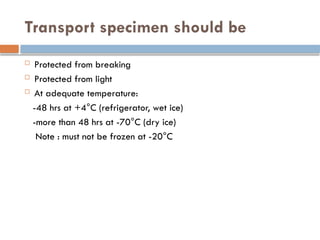
Transport specimen should be
 Protected from breaking
 Protected from light
 At adequate temperature:
-48 hrs at +4°C (refrigerator, wet ice)
-more than 48 hrs at -70°C (dry ice)
Note : must not be frozen at -20°C
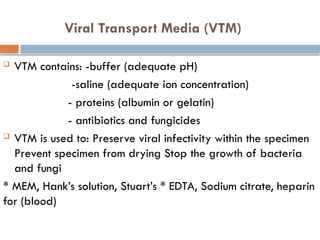
Viral Transport Media (VTM)
 VTM contains: -buffer (adequate pH)
-saline (adequate ion concentration)
- proteins (albumin or gelatin)
- antibiotics and fungicides
 VTM is used to: Preserve viral infectivity within the specimen
Prevent specimen from drying Stop the growth of bacteria
and fungi
* MEM, Hank’s solution, Stuart’s * EDTA, Sodium citrate, heparin
for (blood)
Common types of
Specimen
 Swab
 Cerebrospinal fluid
 Nasopharyngeal secretions
 Faeces
 Blood
 Tissue Biopsy
 Skin and ulcer specimens
SWAB
 Pernasal swab e required to diagnose respiratory
syncytial virus infection, and when necessary to investigate
infections caused by influenza and parainfluenza viruses,
measles, rubella virus, adenoviruses, and enteroviruses
 Preserved in VTM
Cerebrospinal fluid
 Collect ml of fluid in a dry, sterile, leak-proof container.
 Refrigerated immediately at 4 OC.
 Transport in an insolated cold box.
 Cerebrospinal fluid is required to investigate some
arbovirus infections.
 When meninges are infected, the CSF will contain
lymphocytes and the CSF total protein will be raised
Skin and ulcer specimens
 Collect skin scrapings in a dry sterile container.
 Refrigerate immediately at 4OC,
 Transport in a cold box.
 If measles or rubella is suspected, the virus is more
likely to be isolated from a per nasal swab.
 Skin specimens are required to investigate infections
caused by herpes simplex viruses, rabies viruses
Blood For Serological Tests
 Collect the sample within 5 days of the onset of the symptoms
 Second sample 5-10 days later.
 Blood sample is required for investigating newborn infant with
congenital defects, determining immunity to rubella or other
viruses.
 Blood sample is required when testing for hepatitis B surface
Antigen (HBsAg) and HIV-1 and HIV-2.
 After the blood collected, collect in leak-prove container,
refrigerate at 4C
 Transport it in ice box to the virology lab.
Anticogulated Blood For Culture
 Collect 7-10 ml of blood into a sterile tube or bottle
which contains heparin, gently mix the blood with the
anticoagulant.
 Viruses which can be cultured from blood include dengue
viruses and some arboviruses.
Faeces
 Place about 4-8 g of faeces (small spoon) in a clean, dry, leak-
proof container (not a waxed carton)
 Deliver to the laboratory as soon as possible.
 If there is likely to be a one gram of faeces in 9 ml of
phosphate buffered saline.
 Label and keep at -20 OC.
 Send to the virology laboratory in a cold box
 Faeces specimens are required to diagnose viralgastroenteritis
specially that caused by rotaviruses, and to investigate
poliomyelitis and other diseases caused by enteroviruses
Nasopharyngeal secretions
 Collect a specimen by passing a sterile cotton wool swab,
attached to a pent piece of thin wire, through the floor
of the nasal cavity as far as the nasopharynx.
 After few seconds, slowly withdraw the swab and
immerse the swab in a container of sterile VTM, cutting
off swab wire to allow the bottle cap to be replaced
tightly
 Used for the isolation of influenza viruses, measles virus,
and respiratory syncytial viruses.
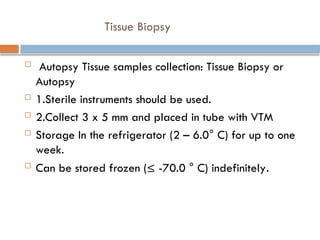
Tissue Biopsy
 Autopsy Tissue samples collection: Tissue Biopsy or
Autopsy
 1.Sterile instruments should be used.
 2.Collect 3 x 5 mm and placed in tube with VTM
 Storage In the refrigerator (2 – 6.0° C) for up to one
week.
 Can be stored frozen (≤ -70.0 ° C) indefinitely.
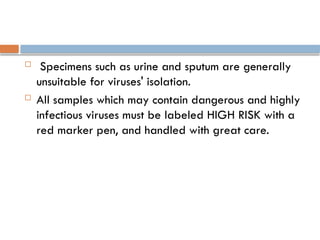
 Specimens such as urine and sputum are generally
unsuitable for viruses' isolation.
 All samples which may contain dangerous and highly
infectious viruses must be labeled HIGH RISK with a
red marker pen, and handled with great care.
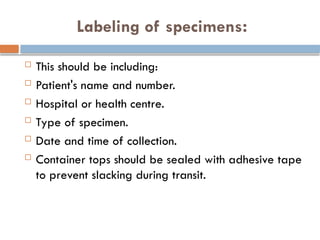
Labeling of specimens:
 This should be including:
 Patient's name and number.
 Hospital or health centre.
 Type of specimen.
 Date and time of collection.
 Container tops should be sealed with adhesive tape
to prevent slacking during transit.
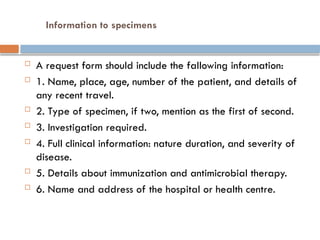
Information to specimens
 A request form should include the fallowing information:
 1. Name, place, age, number of the patient, and details of
any recent travel.
 2. Type of specimen, if two, mention as the first of second.
 3. Investigation required.
 4. Full clinical information: nature duration, and severity of
disease.
 5. Details about immunization and antimicrobial therapy.
 6. Name and address of the hospital or health centre.
THANK YOU

sample col. and trans.pptx Manoj Mahato micro

  • 1.
    VIRAL SPECIMEN COLLECTIONAND PRESERVATION Mr. Manoj Mahato
  • 2.
    Specimen collection forviral Disease  At the correct time (stage of infection)  From the correct site (site of infection)  In the correct way  In the adequate volume (for all tests needed)  In the proper containers (sterile and chemically clean)  Correctly labelled (name, date, type of specimen) and with (age, sex, epidemiological data – vaccinations, etc.)
  • 3.
    Transport specimen shouldbe  Protected from breaking  Protected from light  At adequate temperature: -48 hrs at +4°C (refrigerator, wet ice) -more than 48 hrs at -70°C (dry ice) Note : must not be frozen at -20°C
  • 4.
    Viral Transport Media(VTM)  VTM contains: -buffer (adequate pH) -saline (adequate ion concentration) - proteins (albumin or gelatin) - antibiotics and fungicides  VTM is used to: Preserve viral infectivity within the specimen Prevent specimen from drying Stop the growth of bacteria and fungi * MEM, Hank’s solution, Stuart’s * EDTA, Sodium citrate, heparin for (blood)
  • 5.
    Common types of Specimen Swab  Cerebrospinal fluid  Nasopharyngeal secretions  Faeces  Blood  Tissue Biopsy  Skin and ulcer specimens
  • 6.
    SWAB  Pernasal swabe required to diagnose respiratory syncytial virus infection, and when necessary to investigate infections caused by influenza and parainfluenza viruses, measles, rubella virus, adenoviruses, and enteroviruses  Preserved in VTM
  • 7.
    Cerebrospinal fluid  Collectml of fluid in a dry, sterile, leak-proof container.  Refrigerated immediately at 4 OC.  Transport in an insolated cold box.  Cerebrospinal fluid is required to investigate some arbovirus infections.  When meninges are infected, the CSF will contain lymphocytes and the CSF total protein will be raised
  • 8.
    Skin and ulcerspecimens  Collect skin scrapings in a dry sterile container.  Refrigerate immediately at 4OC,  Transport in a cold box.  If measles or rubella is suspected, the virus is more likely to be isolated from a per nasal swab.  Skin specimens are required to investigate infections caused by herpes simplex viruses, rabies viruses
  • 9.
    Blood For SerologicalTests  Collect the sample within 5 days of the onset of the symptoms  Second sample 5-10 days later.  Blood sample is required for investigating newborn infant with congenital defects, determining immunity to rubella or other viruses.  Blood sample is required when testing for hepatitis B surface Antigen (HBsAg) and HIV-1 and HIV-2.  After the blood collected, collect in leak-prove container, refrigerate at 4C  Transport it in ice box to the virology lab.
  • 10.
    Anticogulated Blood ForCulture  Collect 7-10 ml of blood into a sterile tube or bottle which contains heparin, gently mix the blood with the anticoagulant.  Viruses which can be cultured from blood include dengue viruses and some arboviruses.
  • 11.
    Faeces  Place about4-8 g of faeces (small spoon) in a clean, dry, leak- proof container (not a waxed carton)  Deliver to the laboratory as soon as possible.  If there is likely to be a one gram of faeces in 9 ml of phosphate buffered saline.  Label and keep at -20 OC.  Send to the virology laboratory in a cold box  Faeces specimens are required to diagnose viralgastroenteritis specially that caused by rotaviruses, and to investigate poliomyelitis and other diseases caused by enteroviruses
  • 12.
    Nasopharyngeal secretions  Collecta specimen by passing a sterile cotton wool swab, attached to a pent piece of thin wire, through the floor of the nasal cavity as far as the nasopharynx.  After few seconds, slowly withdraw the swab and immerse the swab in a container of sterile VTM, cutting off swab wire to allow the bottle cap to be replaced tightly  Used for the isolation of influenza viruses, measles virus, and respiratory syncytial viruses.
  • 13.
    Tissue Biopsy  AutopsyTissue samples collection: Tissue Biopsy or Autopsy  1.Sterile instruments should be used.  2.Collect 3 x 5 mm and placed in tube with VTM  Storage In the refrigerator (2 – 6.0° C) for up to one week.  Can be stored frozen (≤ -70.0 ° C) indefinitely.
  • 14.
     Specimens suchas urine and sputum are generally unsuitable for viruses' isolation.  All samples which may contain dangerous and highly infectious viruses must be labeled HIGH RISK with a red marker pen, and handled with great care.
  • 15.
    Labeling of specimens: This should be including:  Patient's name and number.  Hospital or health centre.  Type of specimen.  Date and time of collection.  Container tops should be sealed with adhesive tape to prevent slacking during transit.
  • 16.
    Information to specimens A request form should include the fallowing information:  1. Name, place, age, number of the patient, and details of any recent travel.  2. Type of specimen, if two, mention as the first of second.  3. Investigation required.  4. Full clinical information: nature duration, and severity of disease.  5. Details about immunization and antimicrobial therapy.  6. Name and address of the hospital or health centre.
  • 17.