VIRAL REPLICATION
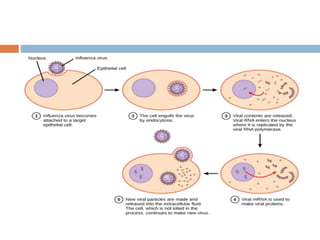
 Viruses multiply in living cells, and the host
cells provide energy and helps in the synthesis
of viral proteins and nucleic acids.

 The viral replication can be divided into six
sequential phases:-
1. Adsorption or attachment
 Attachment is a specific binding between viral
capsid proteins and specific receptors on the
host cell surface.
2. Penetration
 Penetration is after attachment. Virions enter
the host cell through endocytosis or membrane
fusion.
 This is often called viral entry.
3. Uncoating
 Uncoating is a process in which the viral
capsid is removed.
 The end-result is the release of viral genomic
nucleic acid.
4. Biosynthesis
The following components are manufactured by
the virus through the host’s existing organells:-
 Virus mRNA is translated on cell ribosomes.
 The proteins which make up the virus particle
are manufactured and assembled.
 New virus genome are synthesized.
5. Assembly
 In this stage, newly synthesized genome
(nucleic acid) and proteins are assembled to
form new virus particles.
6. Release
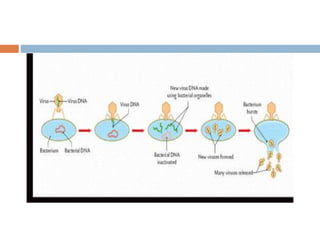
 Viruses can be released from the host cell by
lysis, a process that kills the cell by bursting its
membrane and cell wall if present.
 The new viruses may invade or attack other
cells.
6/17/2020
11

Viral replication

  • 1.
  • 2.
     Viruses multiplyin living cells, and the host cells provide energy and helps in the synthesis of viral proteins and nucleic acids.  The viral replication can be divided into six sequential phases:-
  • 4.
    1. Adsorption orattachment  Attachment is a specific binding between viral capsid proteins and specific receptors on the host cell surface.
  • 5.
    2. Penetration  Penetrationis after attachment. Virions enter the host cell through endocytosis or membrane fusion.  This is often called viral entry.
  • 6.
    3. Uncoating  Uncoatingis a process in which the viral capsid is removed.  The end-result is the release of viral genomic nucleic acid.
  • 7.
    4. Biosynthesis The followingcomponents are manufactured by the virus through the host’s existing organells:-  Virus mRNA is translated on cell ribosomes.  The proteins which make up the virus particle are manufactured and assembled.  New virus genome are synthesized.
  • 8.
    5. Assembly  Inthis stage, newly synthesized genome (nucleic acid) and proteins are assembled to form new virus particles.
  • 9.
    6. Release  Virusescan be released from the host cell by lysis, a process that kills the cell by bursting its membrane and cell wall if present.  The new viruses may invade or attack other cells.
  • 11.