Identifying the signs for
Implantation Failure and Miscarriage
By
Roy Farquharson
Liverpool Women's Hospital
UK
Contact: rgfarquharson@yahoo.com
1
Declaration of Interests
• Executive Committee member, European Society of
Human Reproduction and Embryology (2011 - 2015)

• NICE Guideline Development Group for ectopic
pregnancy and miscarriage (CG 154; 2010-2013)
• Chair, Association of Early Pregnancy Units
(2006-2011)
• Co-ordinator, ESHRE Special Interest Group for Early
Pregnancy (2007-2010)
• Associate Editor, Human Reproduction Update (20102014)
2
Educational Objectives
• Learning Objectives
•
• At the conclusion of this presentation, participants
should be able to:
• Describe the assessment for the diagnosis of
implantation failure, ectopic pregnancy and
miscarriage
• Acknowledge the limitations of available diagnostic
methods
• Develop a practical approach to using relevant tests
and management protocols.
3
4
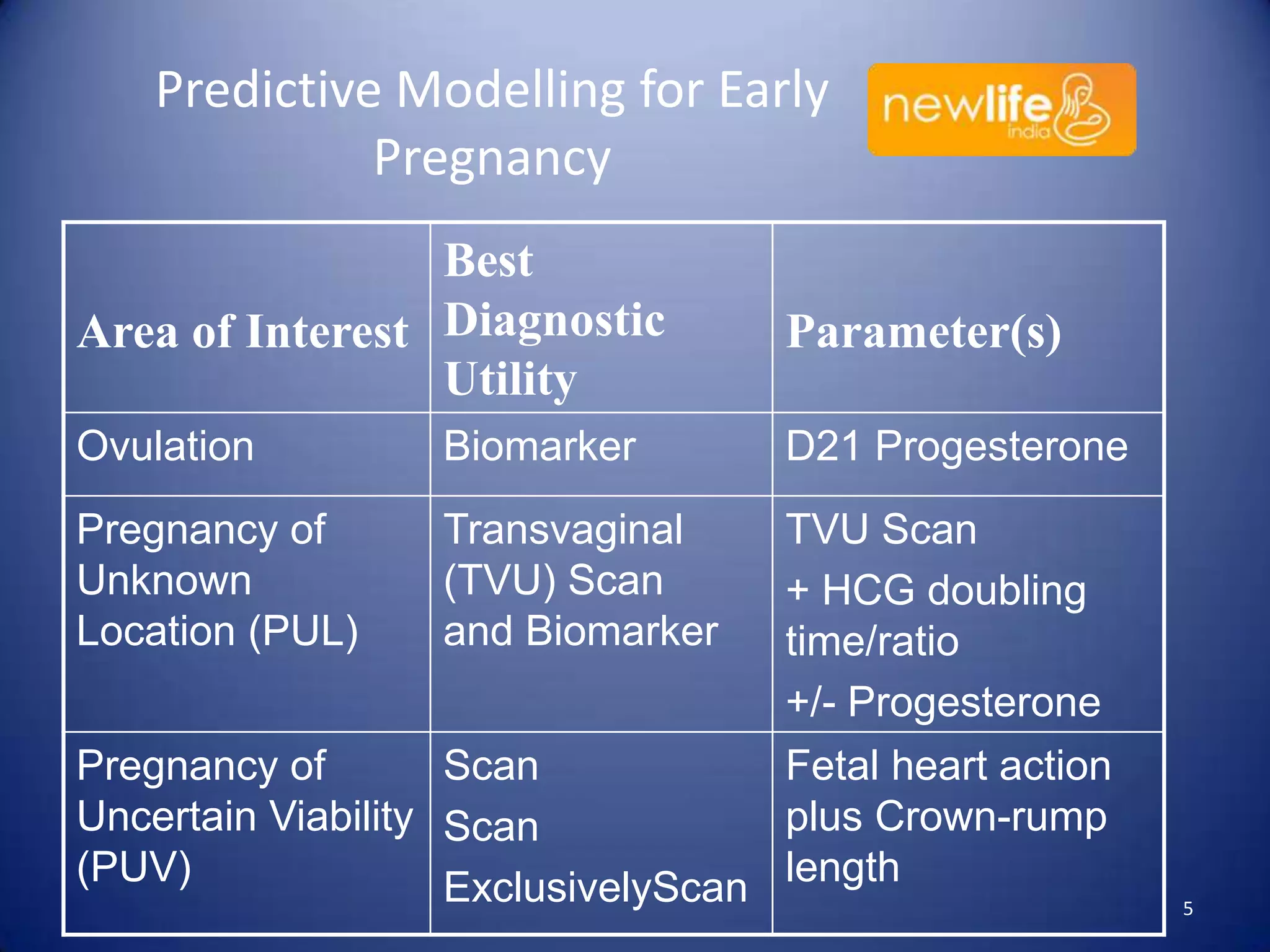
Predictive Modelling for Early
Pregnancy
Best
Area of Interest Diagnostic
Utility

Parameter(s)

Ovulation

Biomarker

D21 Progesterone

Pregnancy of
Unknown
Location (PUL)

Transvaginal
(TVU) Scan
and Biomarker

TVU Scan
+ HCG doubling
time/ratio
+/- Progesterone
Pregnancy of
Scan
Fetal heart action
Uncertain Viability Scan
plus Crown-rump
(PUV)
ExclusivelyScan length

5
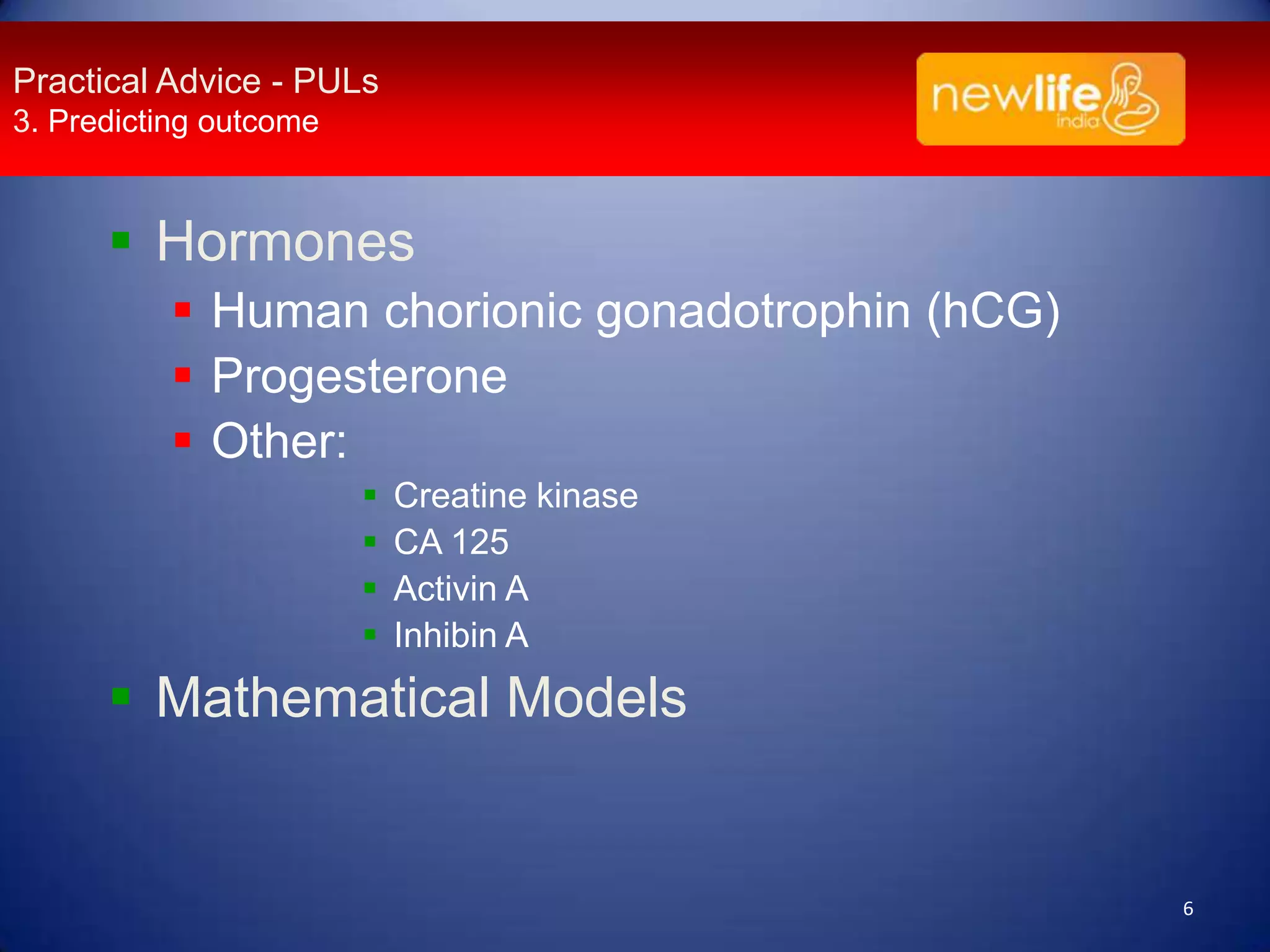
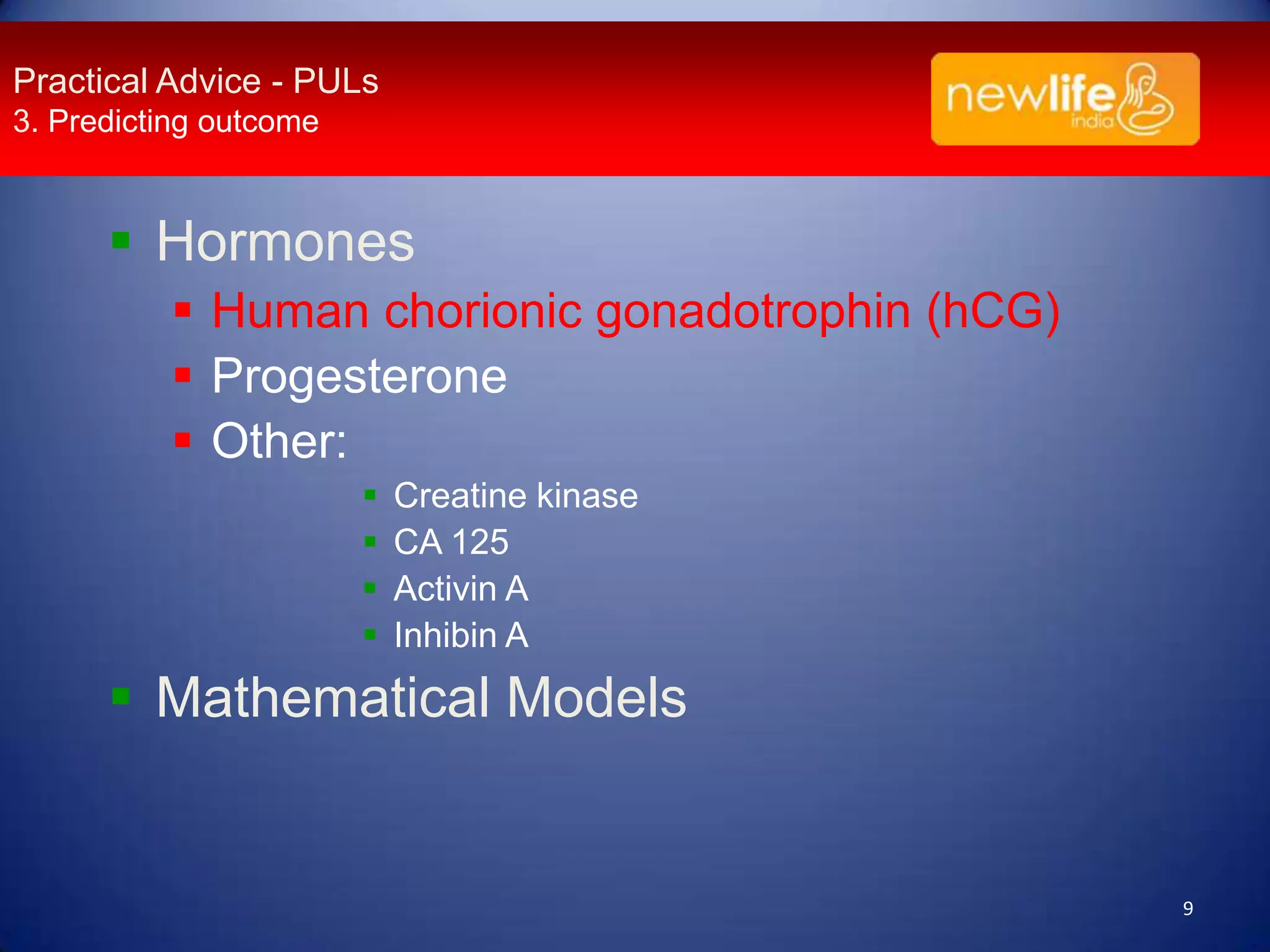
Practical Advice - PULs
3. Predicting outcome

 Hormones
 Human chorionic gonadotrophin (hCG)
 Progesterone
 Other:





Creatine kinase
CA 125
Activin A
Inhibin A

 Mathematical Models

6
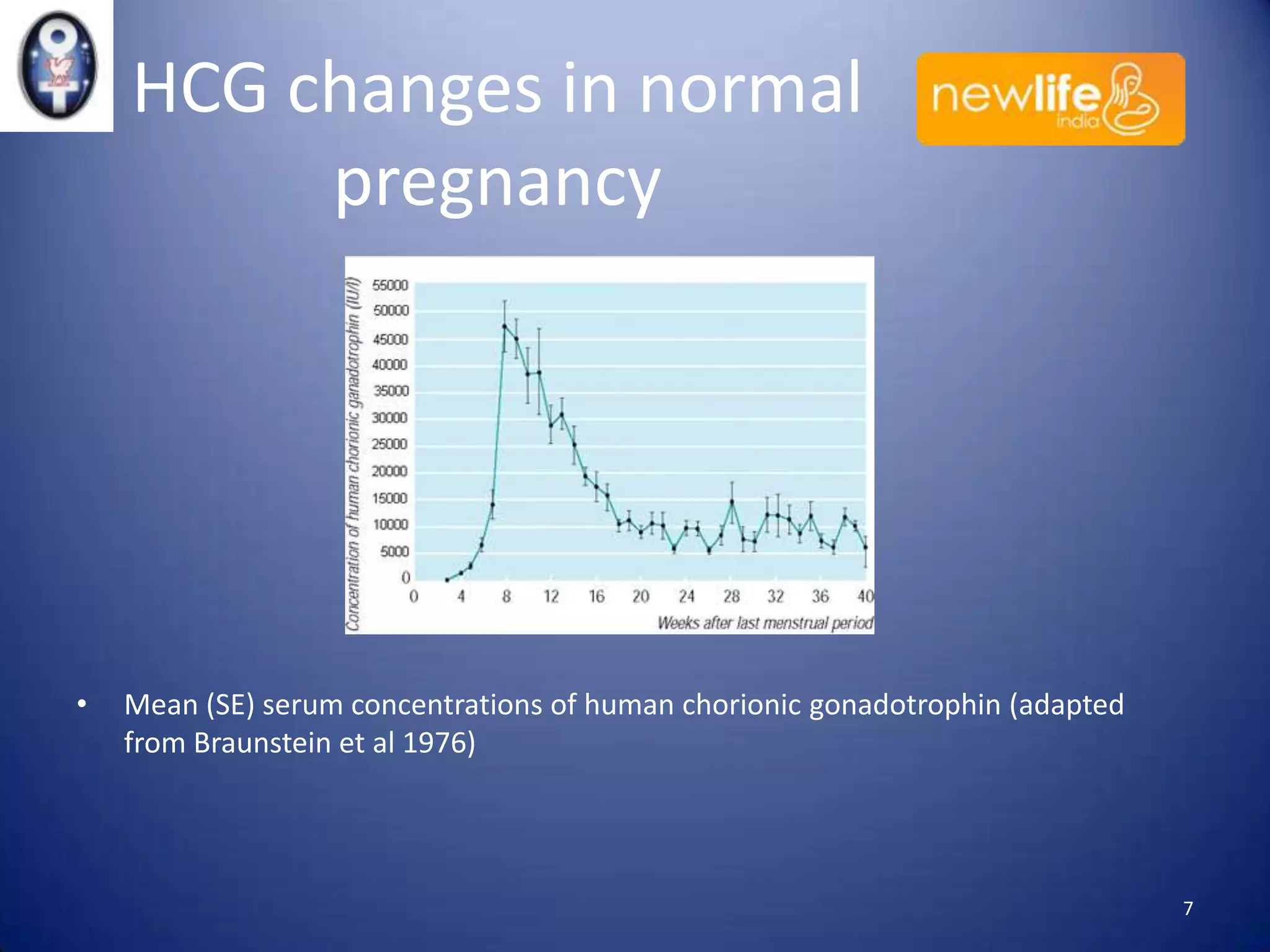
HCG changes in normal
pregnancy

•

Mean (SE) serum concentrations of human chorionic gonadotrophin (adapted
from Braunstein et al 1976)

7
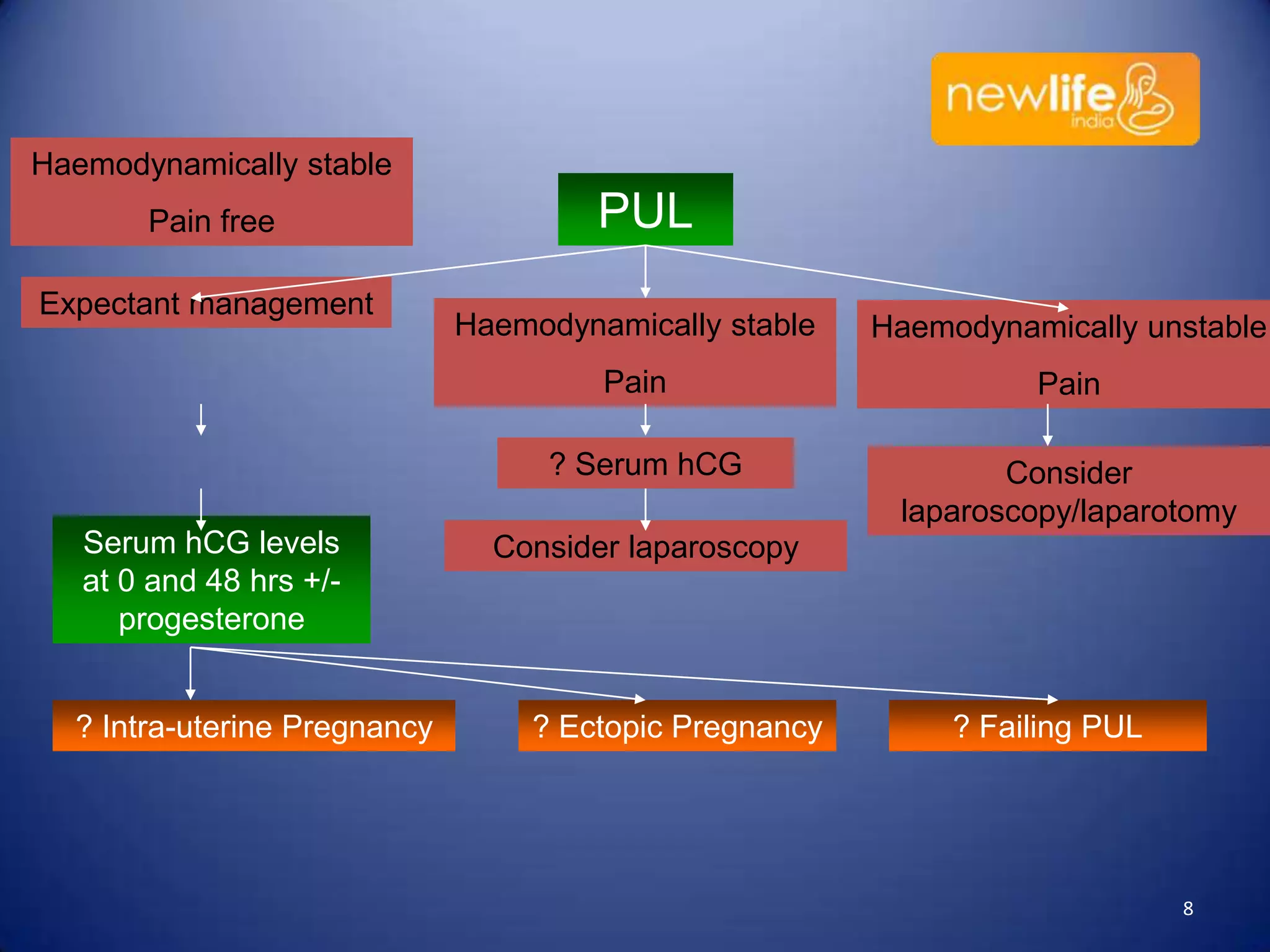
Haemodynamically stable
Pain free
Expectant management

PUL
Haemodynamically stable

Haemodynamically unstable

Pain

Pain

? Serum hCG
Serum hCG levels
at 0 and 48 hrs +/progesterone
? Intra-uterine Pregnancy

Consider
laparoscopy/laparotomy

Consider laparoscopy

? Ectopic Pregnancy

? Failing PUL

8
Practical Advice - PULs
3. Predicting outcome

 Hormones
 Human chorionic gonadotrophin (hCG)
 Progesterone
 Other:





Creatine kinase
CA 125
Activin A
Inhibin A

 Mathematical Models

9
Serum hCG Levels
Single Levels

Serial Levels

Discriminatory Zone

10
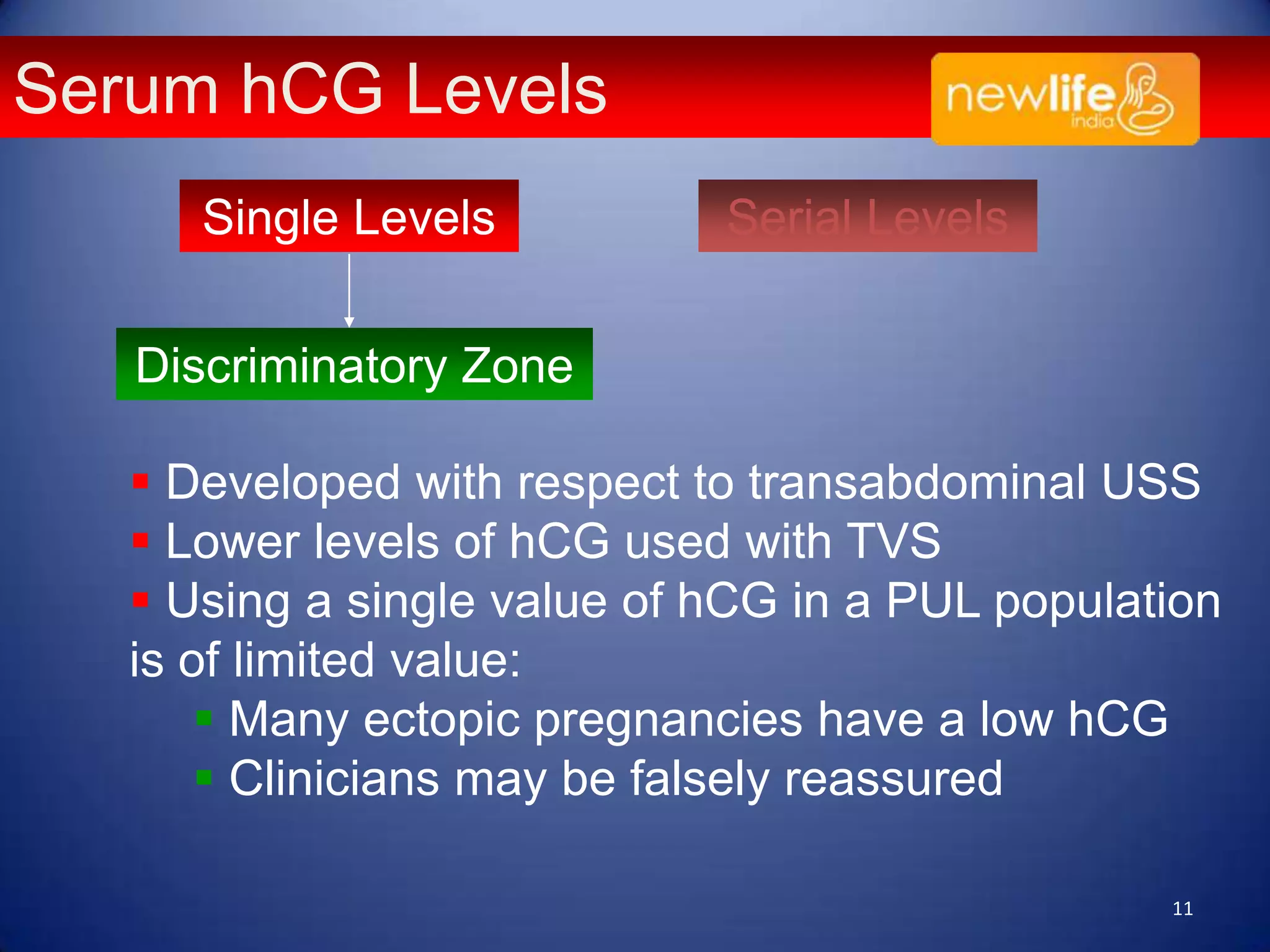
Serum hCG Levels
Single Levels

Serial Levels

Discriminatory Zone
 Developed with respect to transabdominal USS
 Lower levels of hCG used with TVS
 Using a single value of hCG in a PUL population
is of limited value:
 Many ectopic pregnancies have a low hCG
 Clinicians may be falsely reassured
11
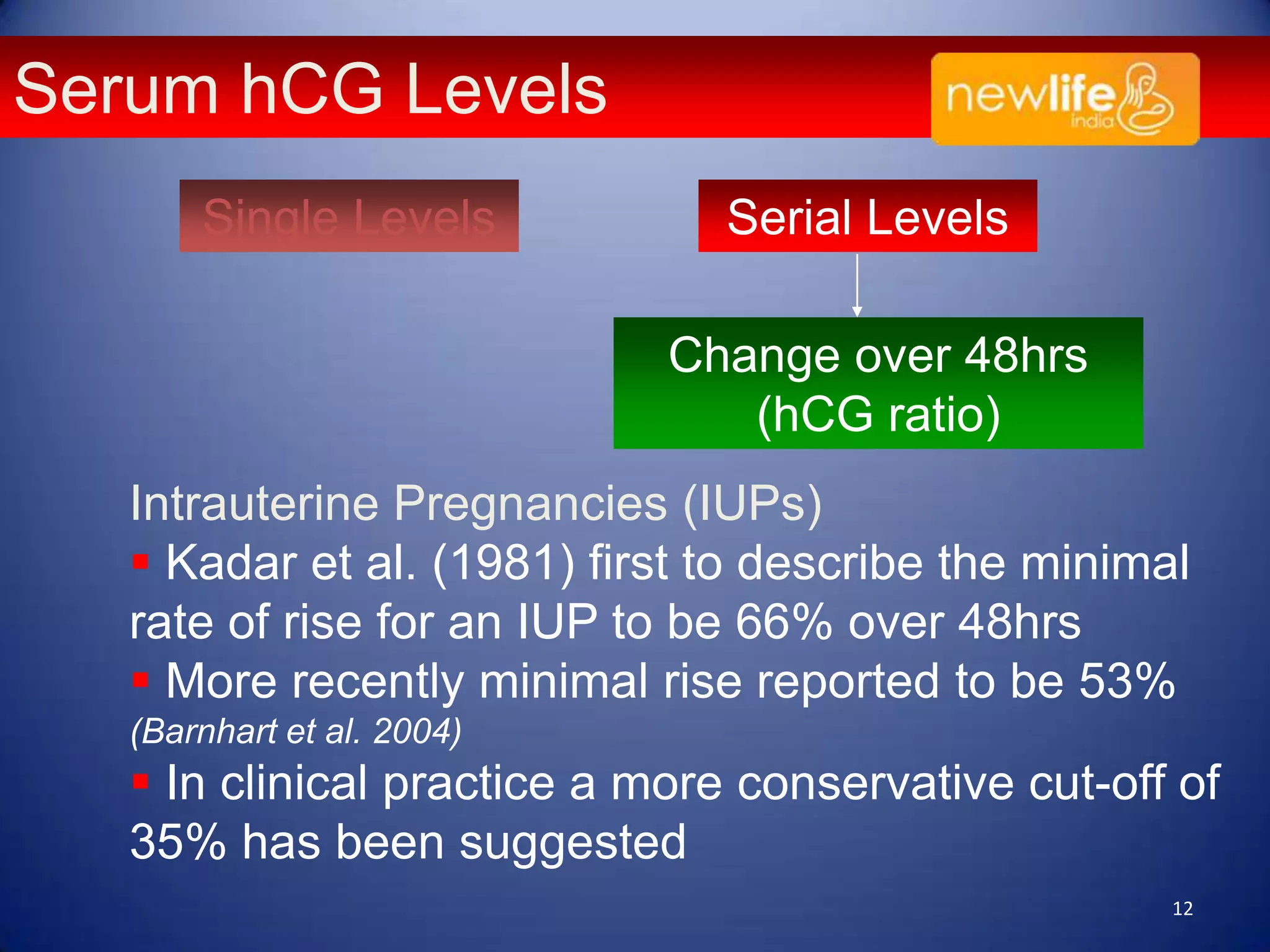
Serum hCG Levels
Single Levels

Serial Levels
Change over 48hrs
(hCG ratio)

Intrauterine Pregnancies (IUPs)
 Kadar et al. (1981) first to describe the minimal
rate of rise for an IUP to be 66% over 48hrs
 More recently minimal rise reported to be 53%
(Barnhart et al. 2004)

 In clinical practice a more conservative cut-off of
35% has been suggested
12
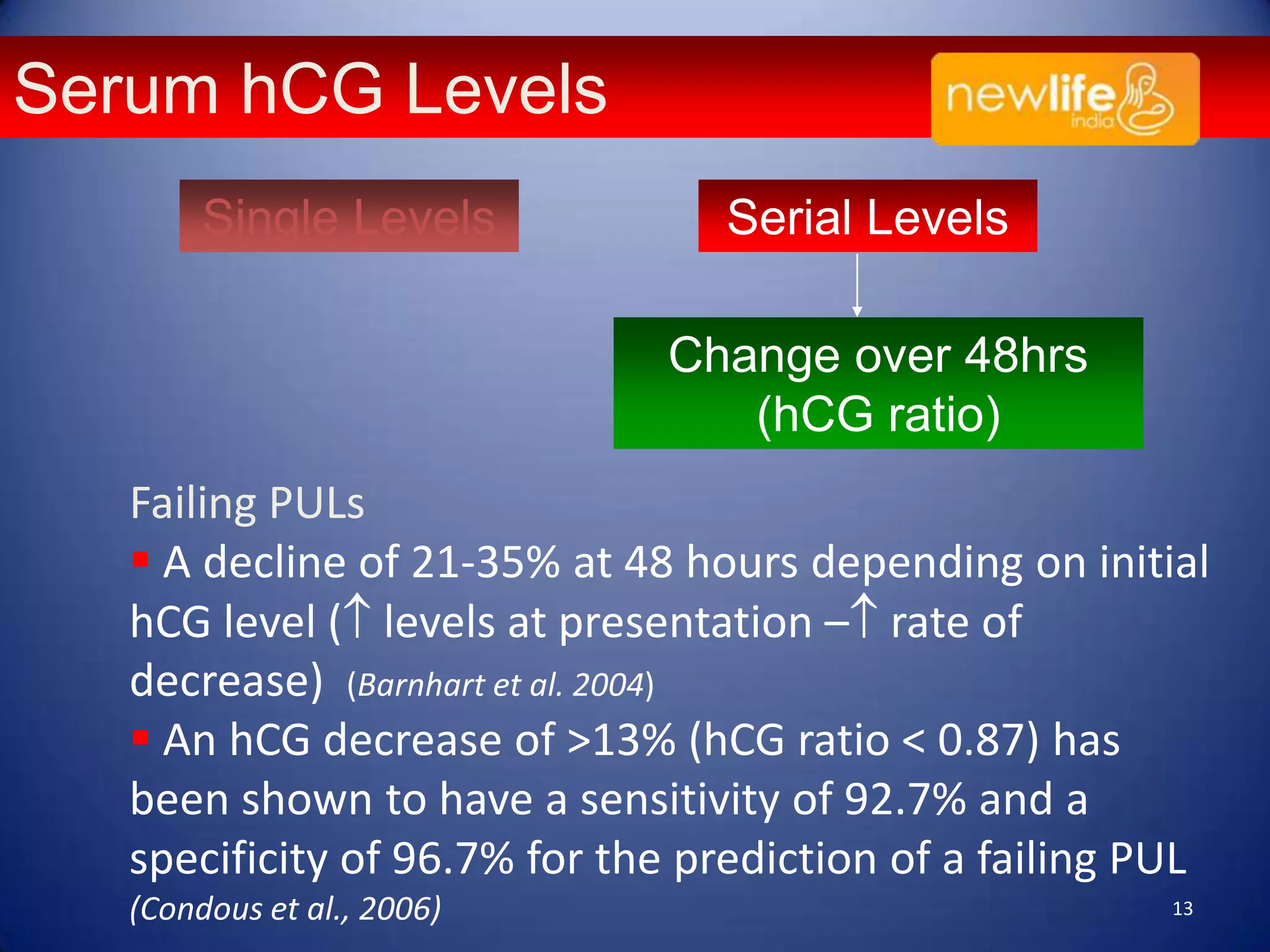
Serum hCG Levels
Single Levels

Serial Levels
Change over 48hrs
(hCG ratio)

Failing PULs
 A decline of 21-35% at 48 hours depending on initial
hCG level ( levels at presentation – rate of
decrease) (Barnhart et al. 2004)
 An hCG decrease of >13% (hCG ratio < 0.87) has
been shown to have a sensitivity of 92.7% and a
specificity of 96.7% for the prediction of a failing PUL
(Condous et al., 2006)

13
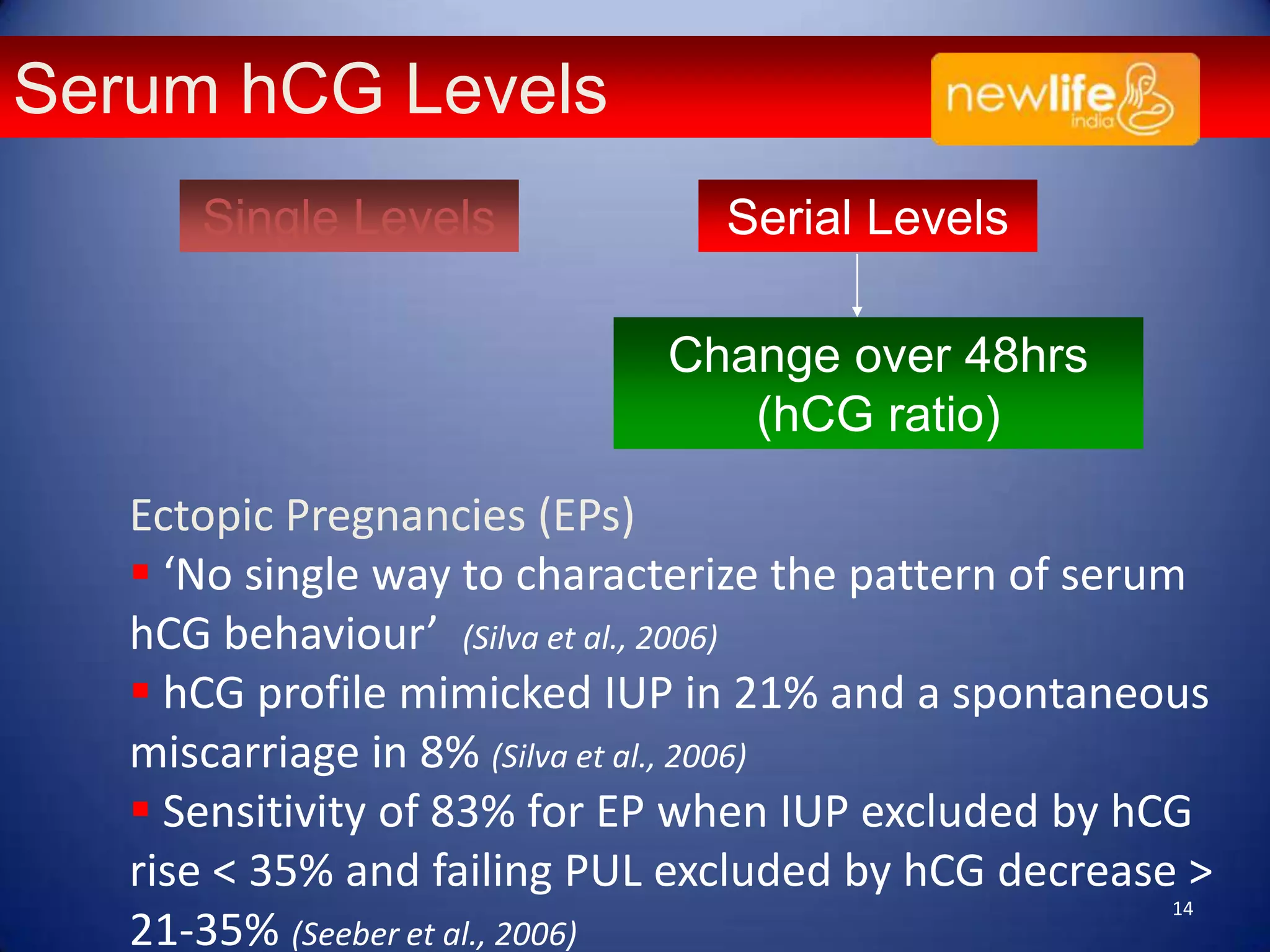
Serum hCG Levels
Single Levels

Serial Levels
Change over 48hrs
(hCG ratio)

Ectopic Pregnancies (EPs)
 ‘No single way to characterize the pattern of serum
hCG behaviour’ (Silva et al., 2006)
 hCG profile mimicked IUP in 21% and a spontaneous
miscarriage in 8% (Silva et al., 2006)
 Sensitivity of 83% for EP when IUP excluded by hCG
rise < 35% and failing PUL excluded by hCG decrease >
14
21-35% (Seeber et al., 2006)
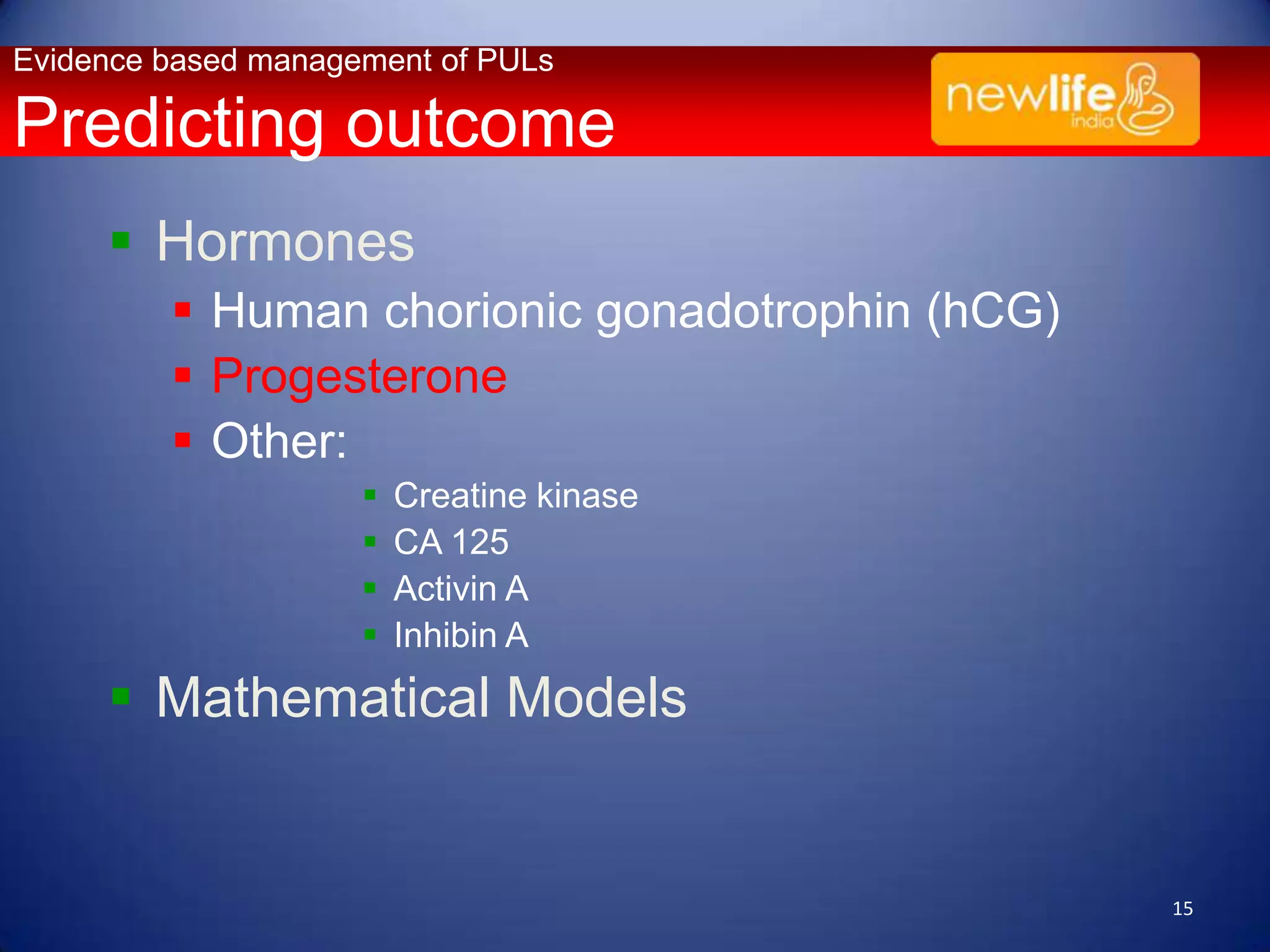
Evidence based management of PULs

Predicting outcome
 Hormones
 Human chorionic gonadotrophin (hCG)
 Progesterone
 Other:





Creatine kinase
CA 125
Activin A
Inhibin A

 Mathematical Models

15
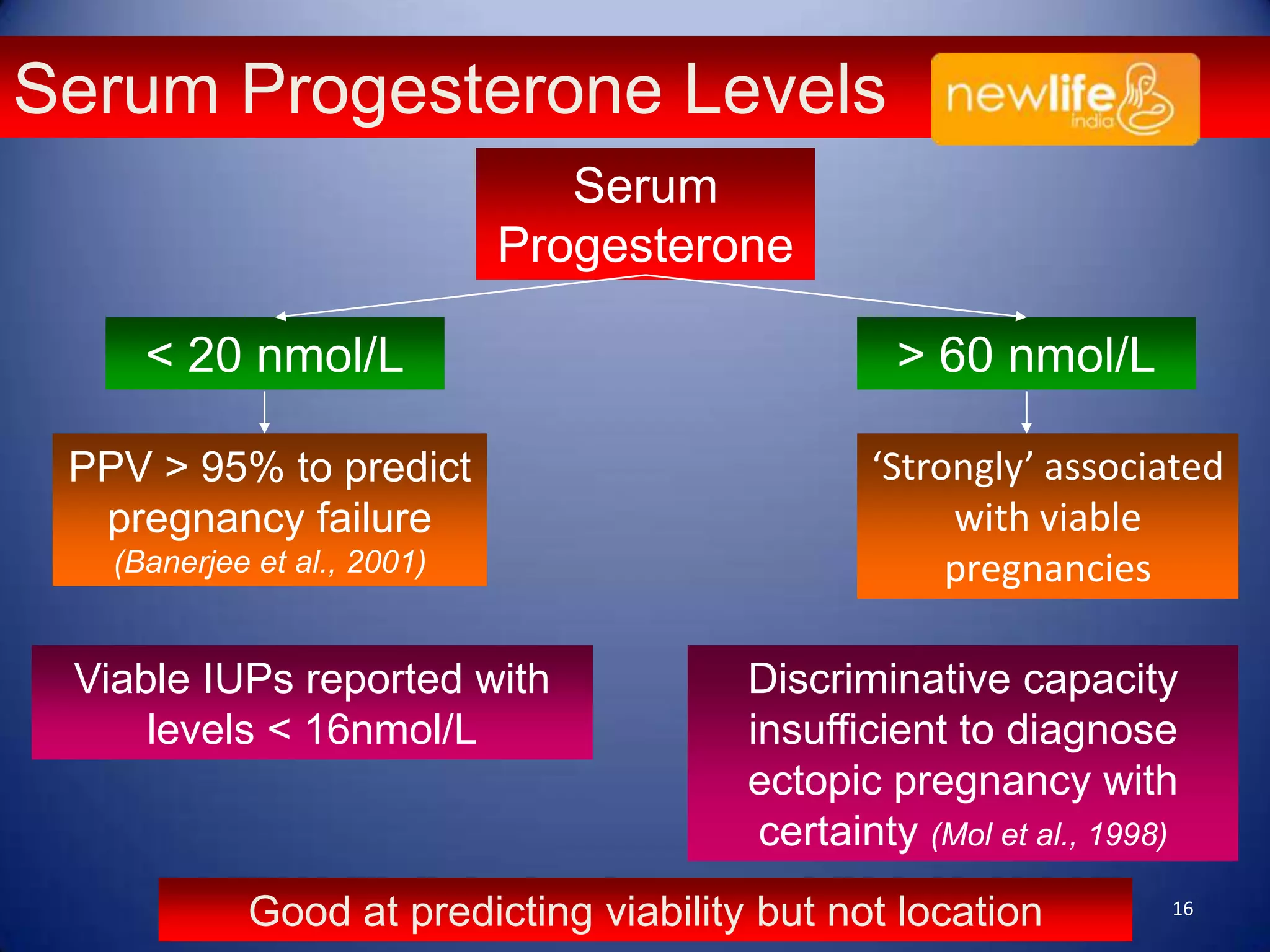
Serum Progesterone Levels
Serum
Progesterone
< 20 nmol/L
PPV > 95% to predict
pregnancy failure
(Banerjee et al., 2001)

Viable IUPs reported with
levels < 16nmol/L

> 60 nmol/L
‘Strongly’ associated
with viable
pregnancies
Discriminative capacity
insufficient to diagnose
ectopic pregnancy with
certainty (Mol et al., 1998)

Good at predicting viability but not location

16
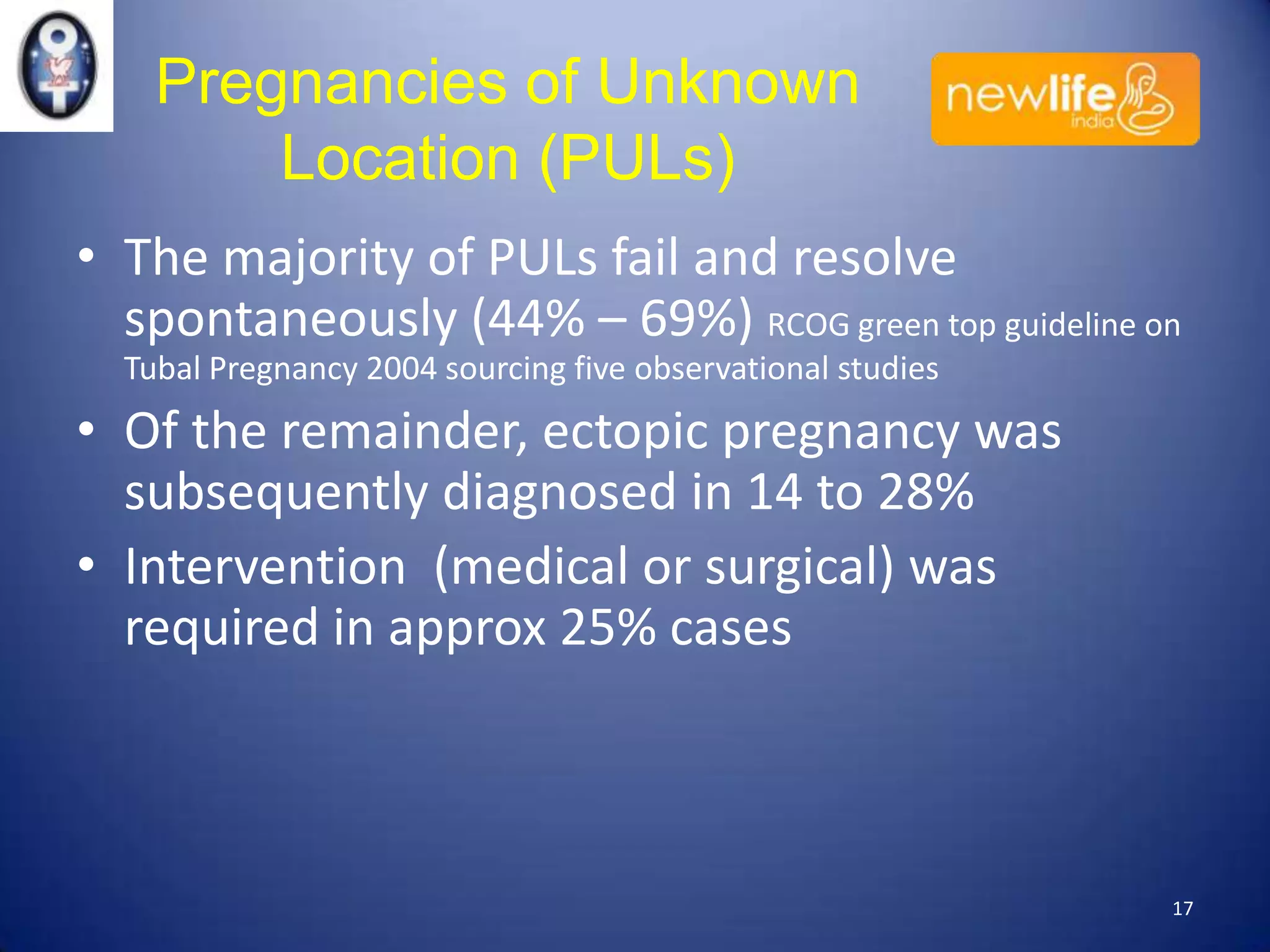
Pregnancies of Unknown
Location (PULs)
• The majority of PULs fail and resolve
spontaneously (44% – 69%) RCOG green top guideline on
Tubal Pregnancy 2004 sourcing five observational studies

• Of the remainder, ectopic pregnancy was
subsequently diagnosed in 14 to 28%
• Intervention (medical or surgical) was
required in approx 25% cases

17
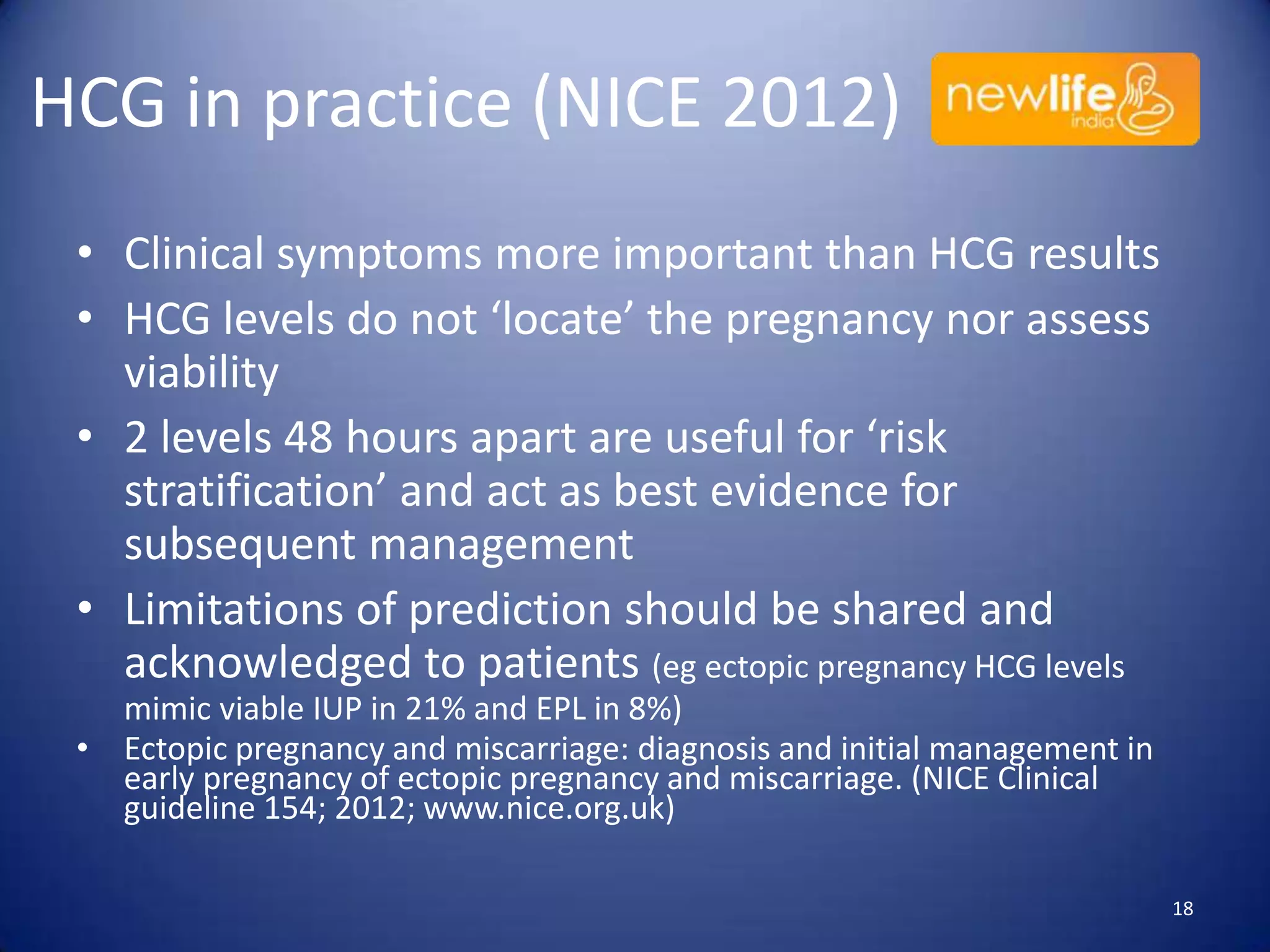
HCG in practice (NICE 2012)
• Clinical symptoms more important than HCG results
• HCG levels do not ‘locate’ the pregnancy nor assess
viability
• 2 levels 48 hours apart are useful for ‘risk
stratification’ and act as best evidence for
subsequent management
• Limitations of prediction should be shared and
acknowledged to patients (eg ectopic pregnancy HCG levels
mimic viable IUP in 21% and EPL in 8%)
• Ectopic pregnancy and miscarriage: diagnosis and initial management in
early pregnancy of ectopic pregnancy and miscarriage. (NICE Clinical
guideline 154; 2012; www.nice.org.uk)
18
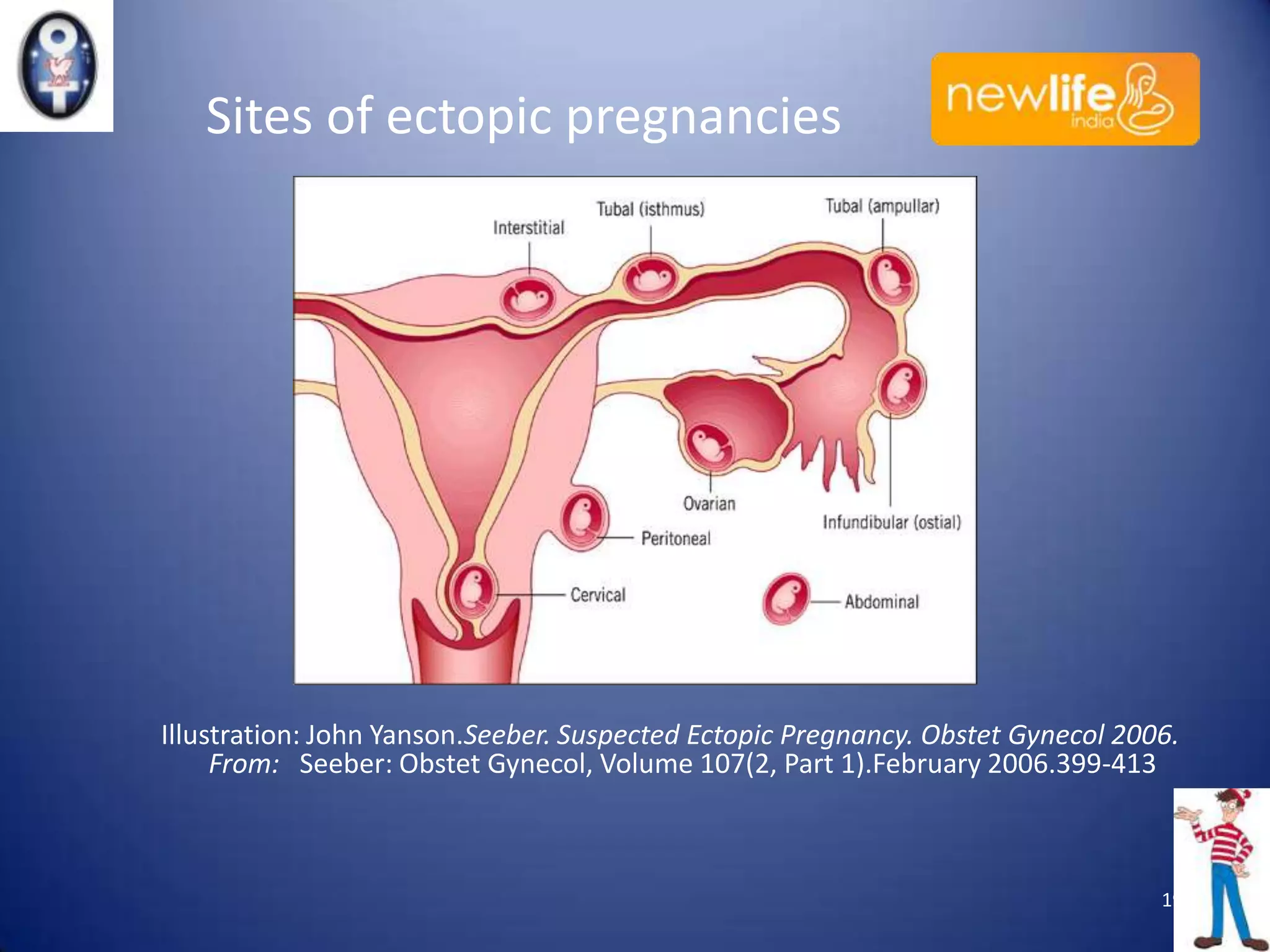
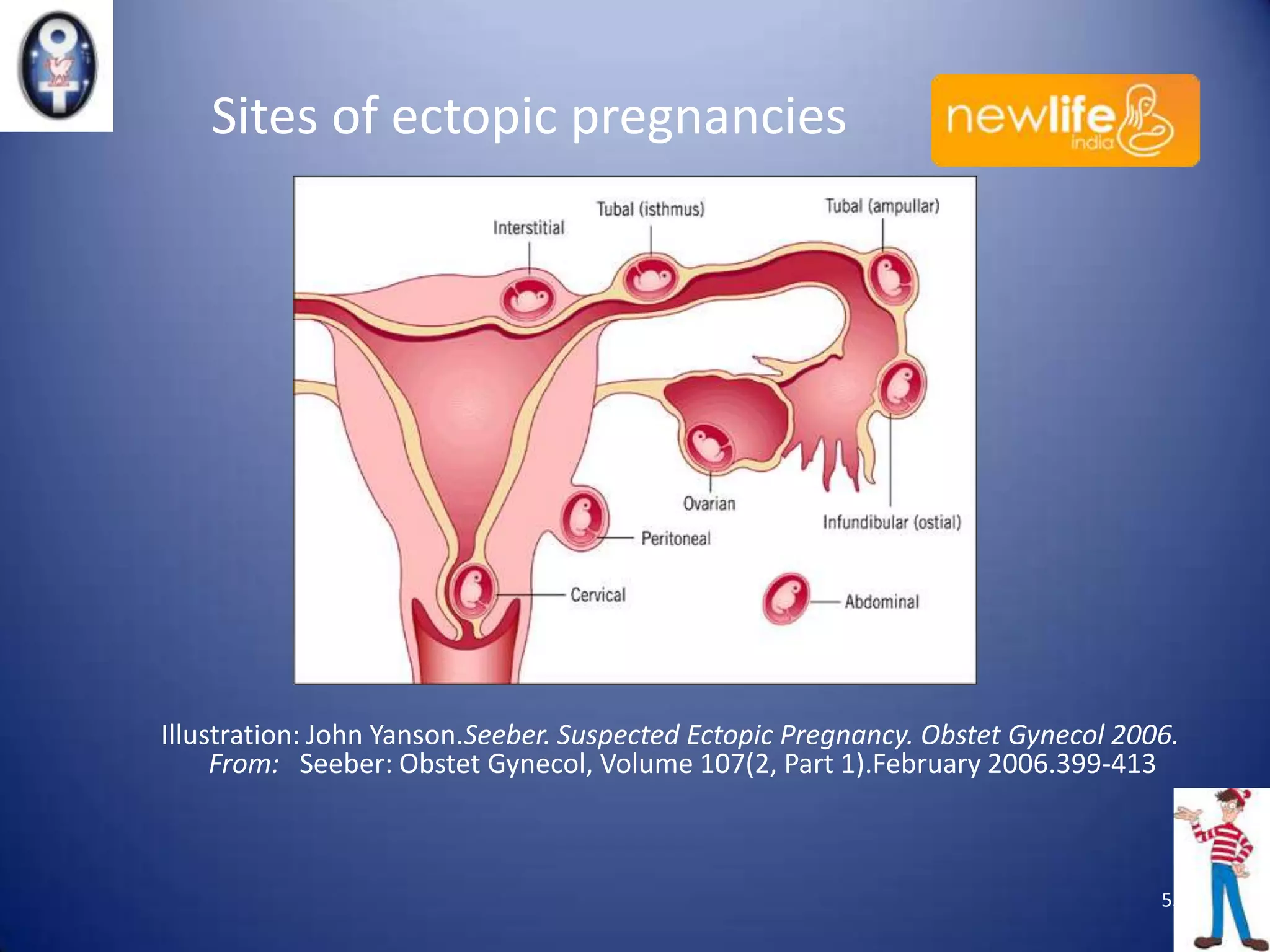
Sites of ectopic pregnancies

Illustration: John Yanson.Seeber. Suspected Ectopic Pregnancy. Obstet Gynecol 2006.
From: Seeber: Obstet Gynecol, Volume 107(2, Part 1).February 2006.399-413

19
Ectopic Pregnancy
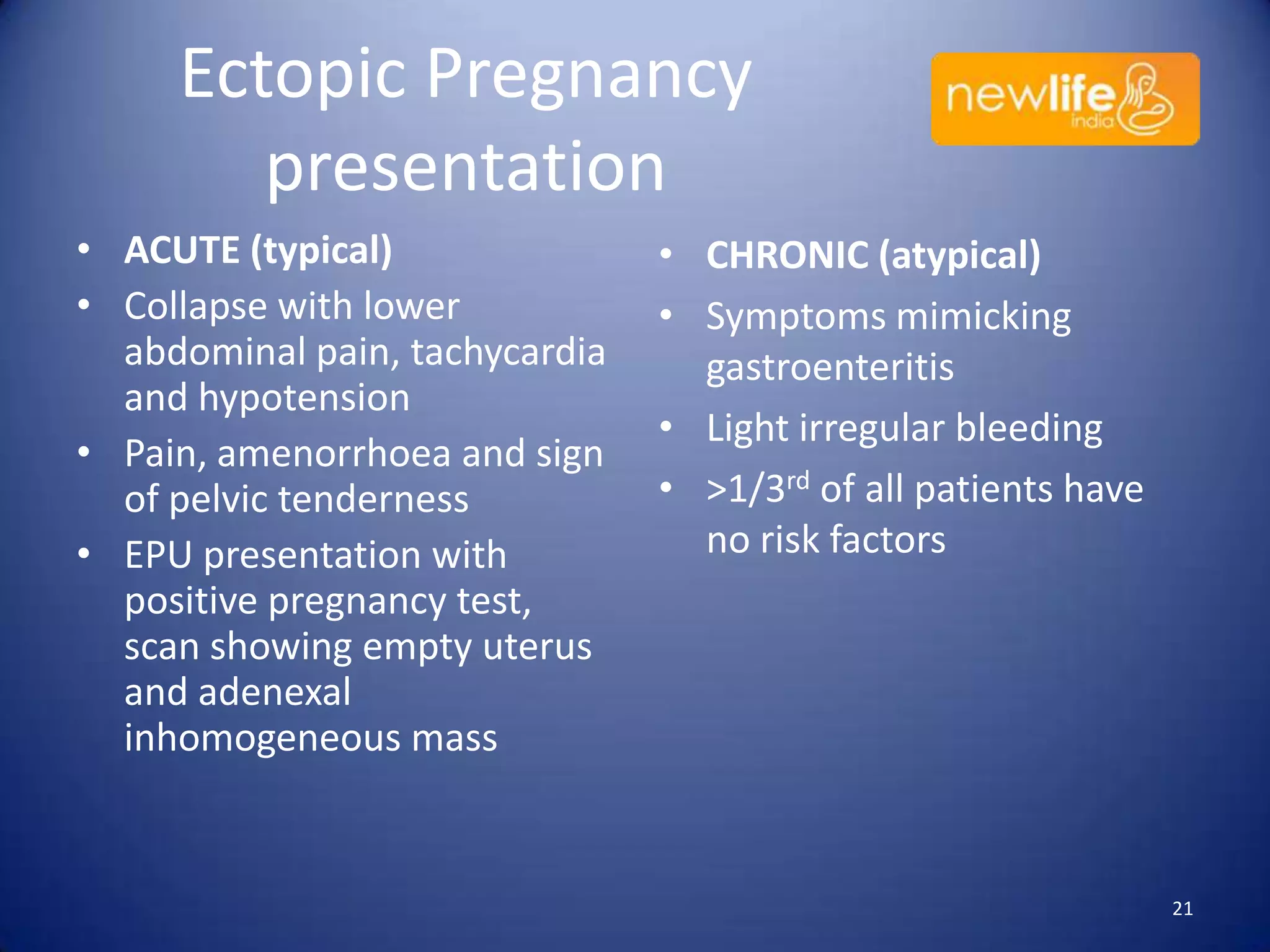
• Variable mode of presentation
• ‘Mask of invisibility’
• High index of suspicion and vigilance
eg against diagnosis of complete early
pregnancy loss
• All areas of emergency care provision will
receive cases of undiagnosed ectopic
pregnancy
20
Ectopic Pregnancy
presentation
• ACUTE (typical)
• Collapse with lower
abdominal pain, tachycardia
and hypotension
• Pain, amenorrhoea and sign
of pelvic tenderness
• EPU presentation with
positive pregnancy test,
scan showing empty uterus
and adenexal
inhomogeneous mass

• CHRONIC (atypical)
• Symptoms mimicking
gastroenteritis
• Light irregular bleeding
• >1/3rd of all patients have
no risk factors

21
HCG studies
•
•
•
•
•
•
•

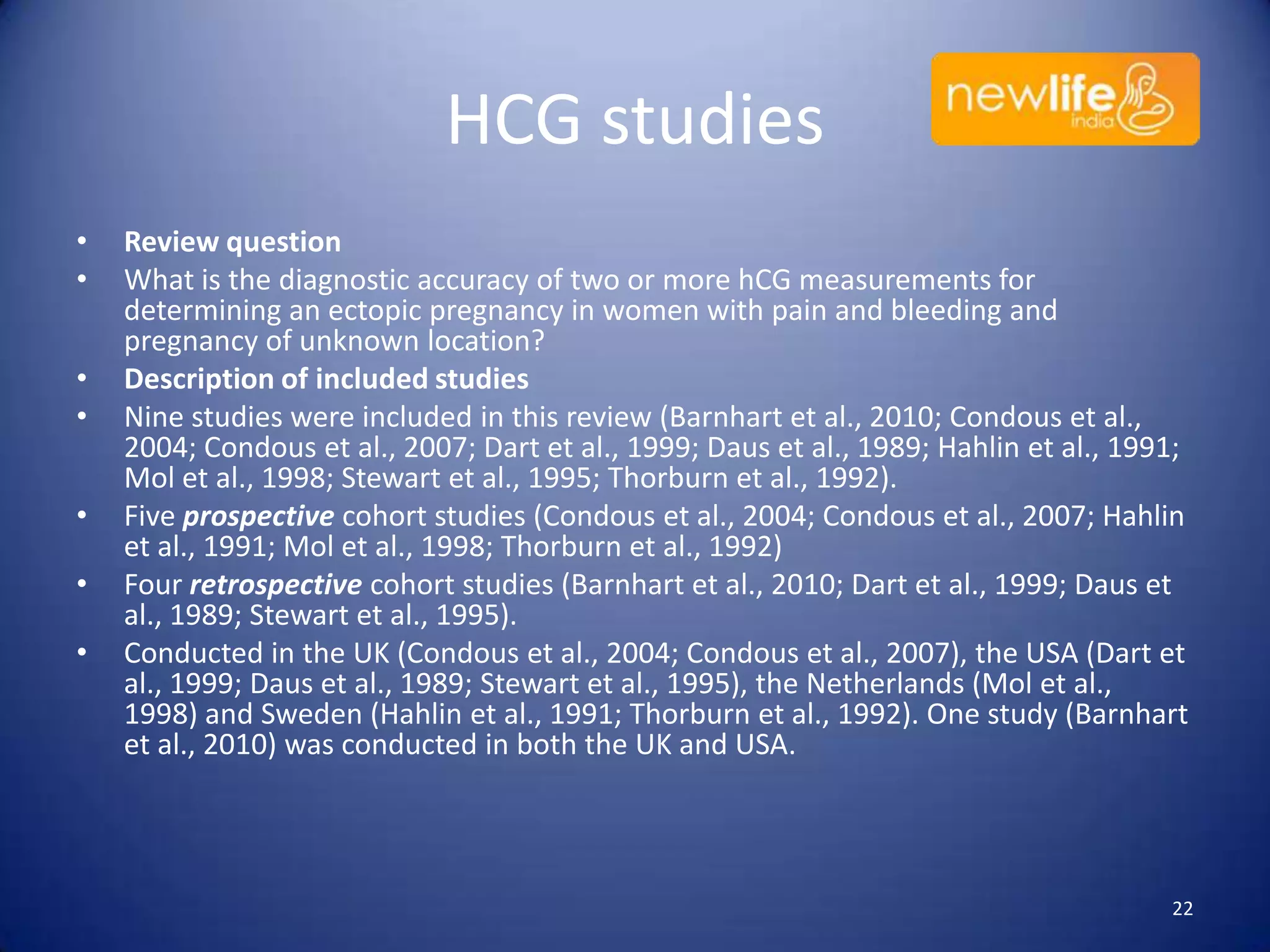
Review question
What is the diagnostic accuracy of two or more hCG measurements for
determining an ectopic pregnancy in women with pain and bleeding and
pregnancy of unknown location?
Description of included studies
Nine studies were included in this review (Barnhart et al., 2010; Condous et al.,
2004; Condous et al., 2007; Dart et al., 1999; Daus et al., 1989; Hahlin et al., 1991;
Mol et al., 1998; Stewart et al., 1995; Thorburn et al., 1992).
Five prospective cohort studies (Condous et al., 2004; Condous et al., 2007; Hahlin
et al., 1991; Mol et al., 1998; Thorburn et al., 1992)
Four retrospective cohort studies (Barnhart et al., 2010; Dart et al., 1999; Daus et
al., 1989; Stewart et al., 1995).
Conducted in the UK (Condous et al., 2004; Condous et al., 2007), the USA (Dart et
al., 1999; Daus et al., 1989; Stewart et al., 1995), the Netherlands (Mol et al.,
1998) and Sweden (Hahlin et al., 1991; Thorburn et al., 1992). One study (Barnhart
et al., 2010) was conducted in both the UK and USA.

22
GRADE system
•

•

GRADE (Grading of Recommendations
Assessment,Development and Evaluation) assesses
evidence on an outcome-by-outcome basis
Quality can vary within a study and is based on 5
factors:
–

Study design

–

Limitations
Inconsistency
Indirectness
Imprecision

–
–
–

23
23

23
Summary of findings

Quality assessment

No. of
studies

Design

Limitati
ons

Incon
siste
ncy

Indirect
ness

Imprec
ision

Other
consider
ations

Nu
m
be
r
of
w
o
m
en

Measure of diagnostic accuracy
Sensiti
vity %
(95%
CI)

Specifi
city %
(95%
CI)

Positi
ve
predic
tive
value
%
(95%
CI)

Negative
predictiv
e value
% (95%
CI)

Positiv
e
likelih
ood
ratio
%
(95%
CI)

Negati
ve
likelih
ood
ratio
%
(95%
CI)

Qualit
y%
(95%
CI)

GRADE findings for the diagnosis of ectopic pregnancy using two or more hCG measurements
Model M4
1 study
Condous
et al.,
2007

prospec
tive
study

1 study
Barnhart
et
al.,
2010

retrospe
ctive
study
(2
included
cohorts:
UK and
adjuste
d USA)

serious1,
6

serious4,
6

serious4,
6

no
seriou
s
incons
istenc
y

serious2,

no
seriou
s
incons
istenc
y

serious2,

no
seriou
s
incons
istenc
y

serious1

12

12

no
serious
impreci
sion

none

no
serious
impreci
sion

none

173

431

80.0
(59.8,
100)

80.8
(65.6,
95.9)

88.6
(83.7,
93.6)

88.9
(85.8,
92.0)

40.0
(22.5,
57.5)

31.8
(20.6,
43.1)

97.9
(95.6,
100)

98.6
(97.4,
99.8)

7.02
(4.25,
11.61)

7.27
(5.21,
10.14)

0.23
(0.08
,
0.62)

0.22
(0.10
,
0.48)

LOW

V.
LOW

3

no
serious
impreci
sion

none

544

54.8
(45.2,
64.4)

87.7
(84.7,
90.8)

51.4
(42.1,
60.7)

89.2
(86.2,
92.1)

4.47
(3.29,
6.06)

0.52
(0.46
,
0.64)

V.
LOW

24
Treatment Options for EcP and PUL
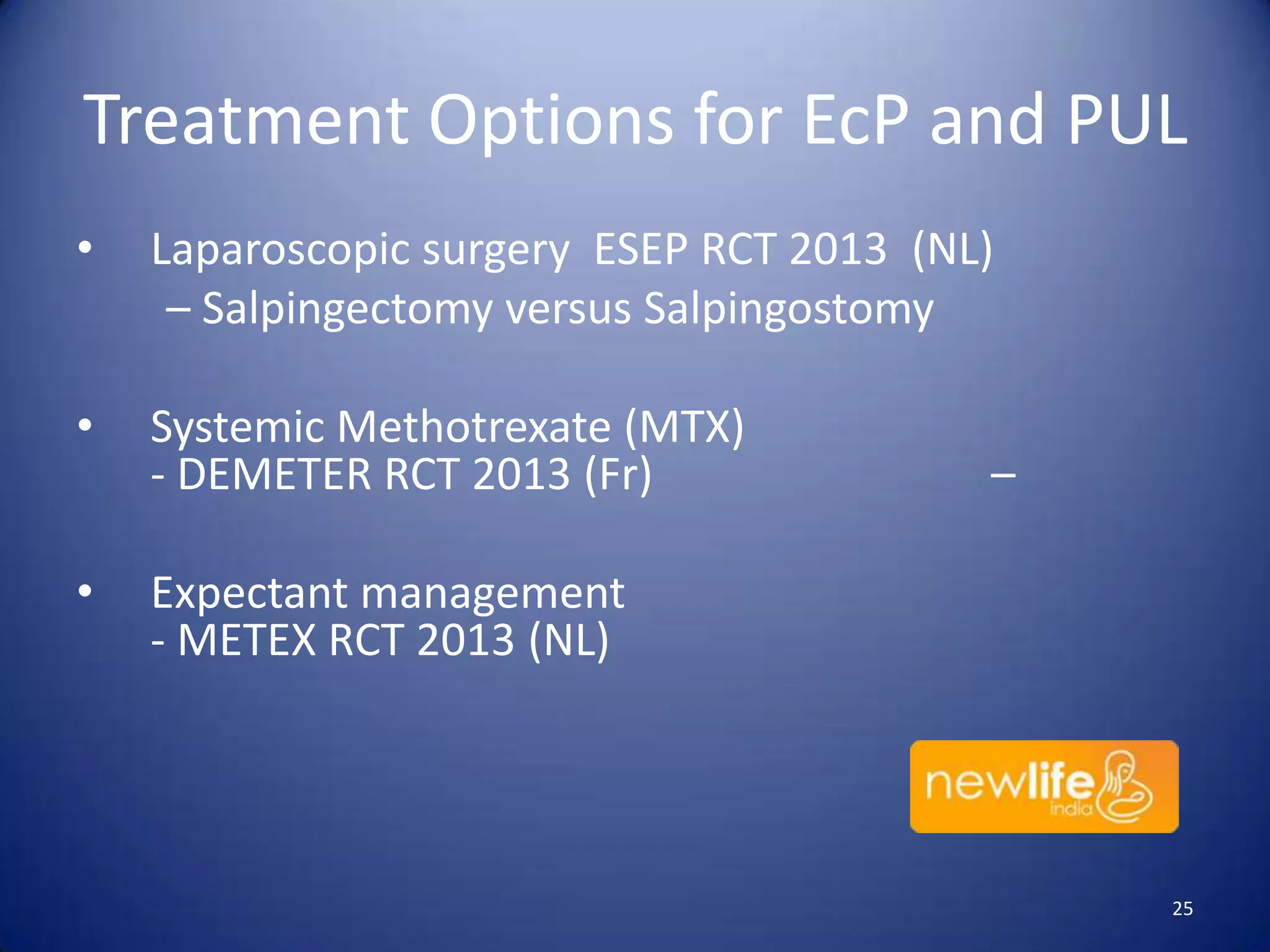
•

Laparoscopic surgery ESEP RCT 2013 (NL)
– Salpingectomy versus Salpingostomy

•

Systemic Methotrexate (MTX)
- DEMETER RCT 2013 (Fr)

•

–

Expectant management
- METEX RCT 2013 (NL)

25
When can expectant management be
employed?
•
•
•
•
•
•
•

Clinically stable
Minimal symptoms
Discriminatory HCG zone: 1000-2000iu/l
Weekly USS
Twice weekly HCG until <20 iu/l
Compliance with follow up
Immediate access to hospital

26
Take home messages
• Laparoscopic surgery is cornerstone of
treatment intervention with ectopic
pregnancy
• Results of RCT’s (DEMETER) improve evidence
level and inform practice eg less MTX use
• Advantages of centralisation of care in EPU
• CMACH report on awareness of failed medical
management
27
It’s all about Quality of Care

28
The signs of Miscarriage
• Exclusively ultrasound based
• Updated CRL measurements
• Revised crown rump length criteria for
confirmed diagnosis of early pregnancy loss
(>7mm; NICE GDG & RCOG 2012)
• Acknowledgement of inherent, wide biological
variation of embryo growth velocities
• Specificity of viability assessment is 99.9%
29
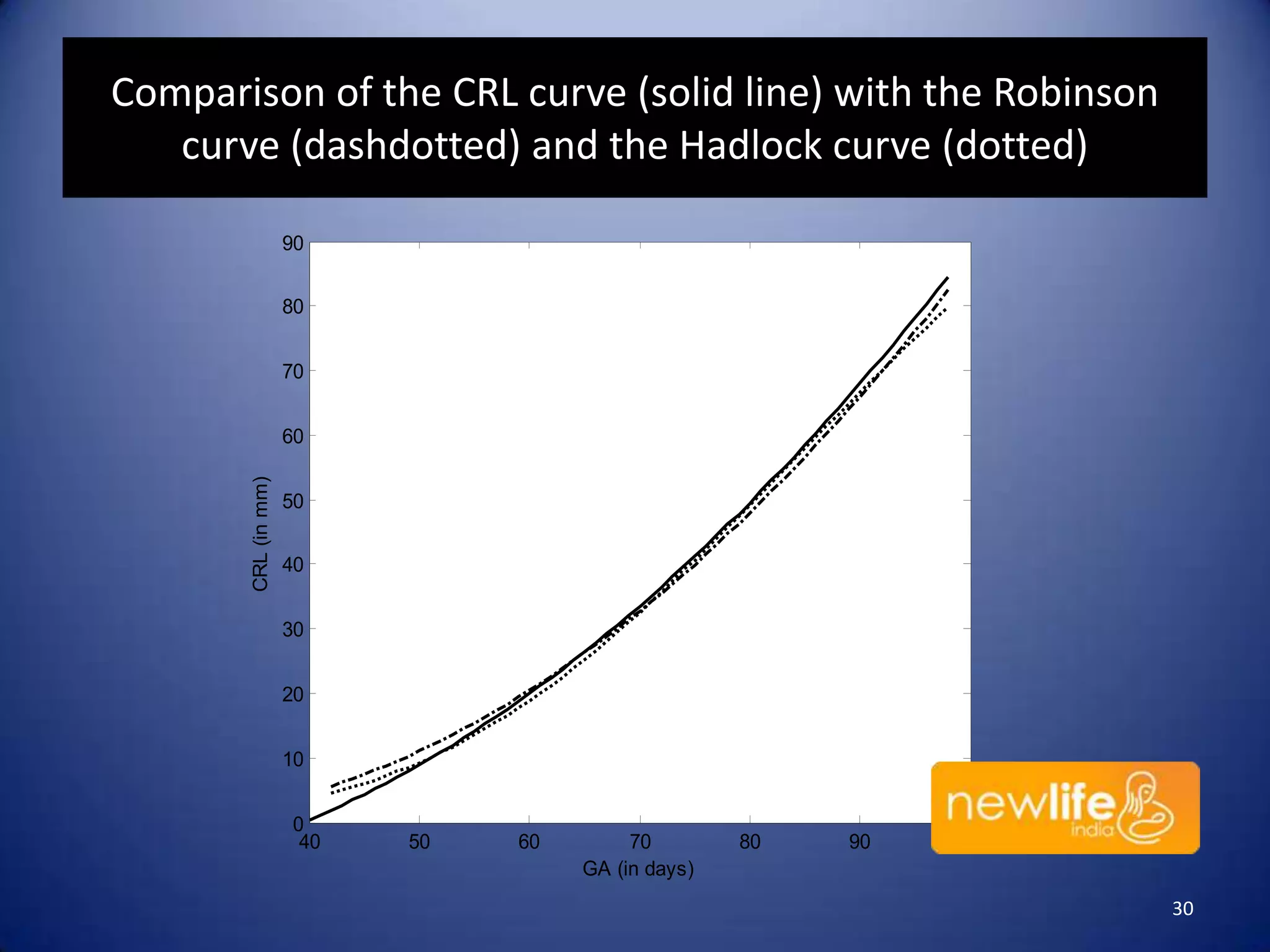
Comparison of the CRL curve (solid line) with the Robinson
curve (dashdotted) and the Hadlock curve (dotted)
90
80
70

CRL (in mm)

60
50
40
30
20
10
0
40

50

60

70
GA (in days)

80

90

100

30
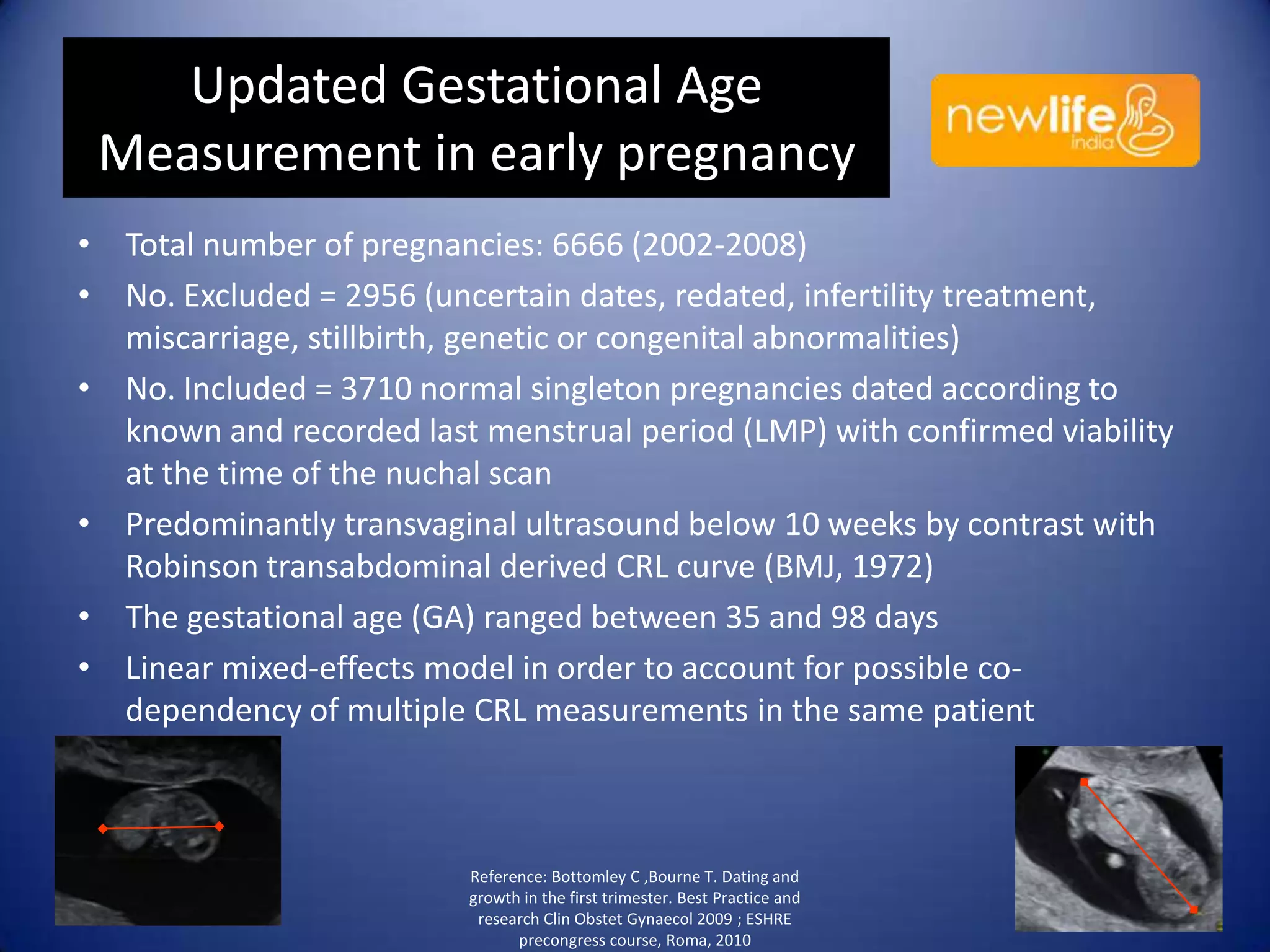
Updated Gestational Age
Measurement in early pregnancy
• Total number of pregnancies: 6666 (2002-2008)
• No. Excluded = 2956 (uncertain dates, redated, infertility treatment,
miscarriage, stillbirth, genetic or congenital abnormalities)
• No. Included = 3710 normal singleton pregnancies dated according to
known and recorded last menstrual period (LMP) with confirmed viability
at the time of the nuchal scan
• Predominantly transvaginal ultrasound below 10 weeks by contrast with
Robinson transabdominal derived CRL curve (BMJ, 1972)
• The gestational age (GA) ranged between 35 and 98 days
• Linear mixed-effects model in order to account for possible codependency of multiple CRL measurements in the same patient

Reference: Bottomley C ,Bourne T. Dating and
growth in the first trimester. Best Practice and
research Clin Obstet Gynaecol 2009 ; ESHRE
precongress course, Roma, 2010

31
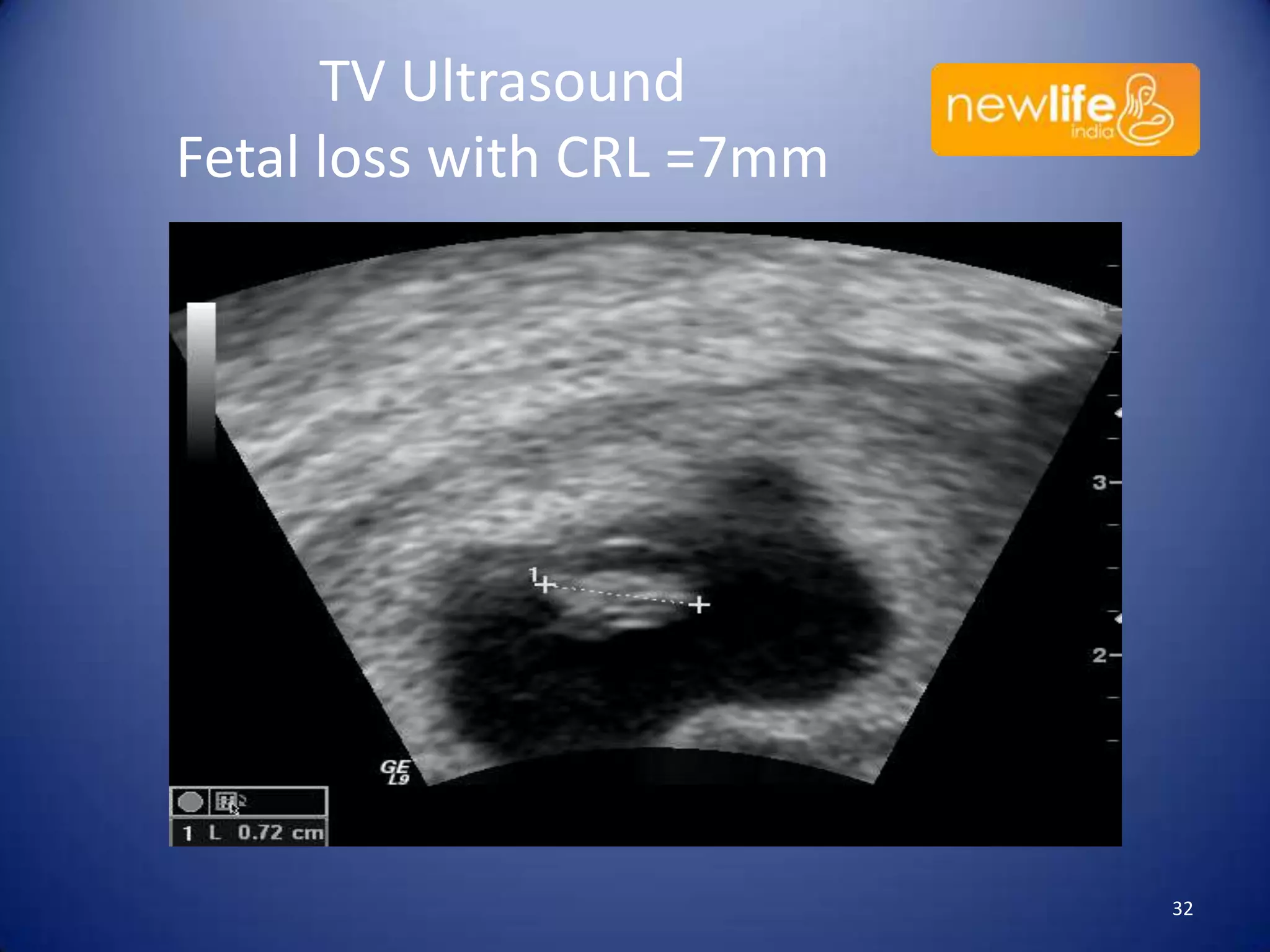
TV Ultrasound
Fetal loss with CRL =7mm

32
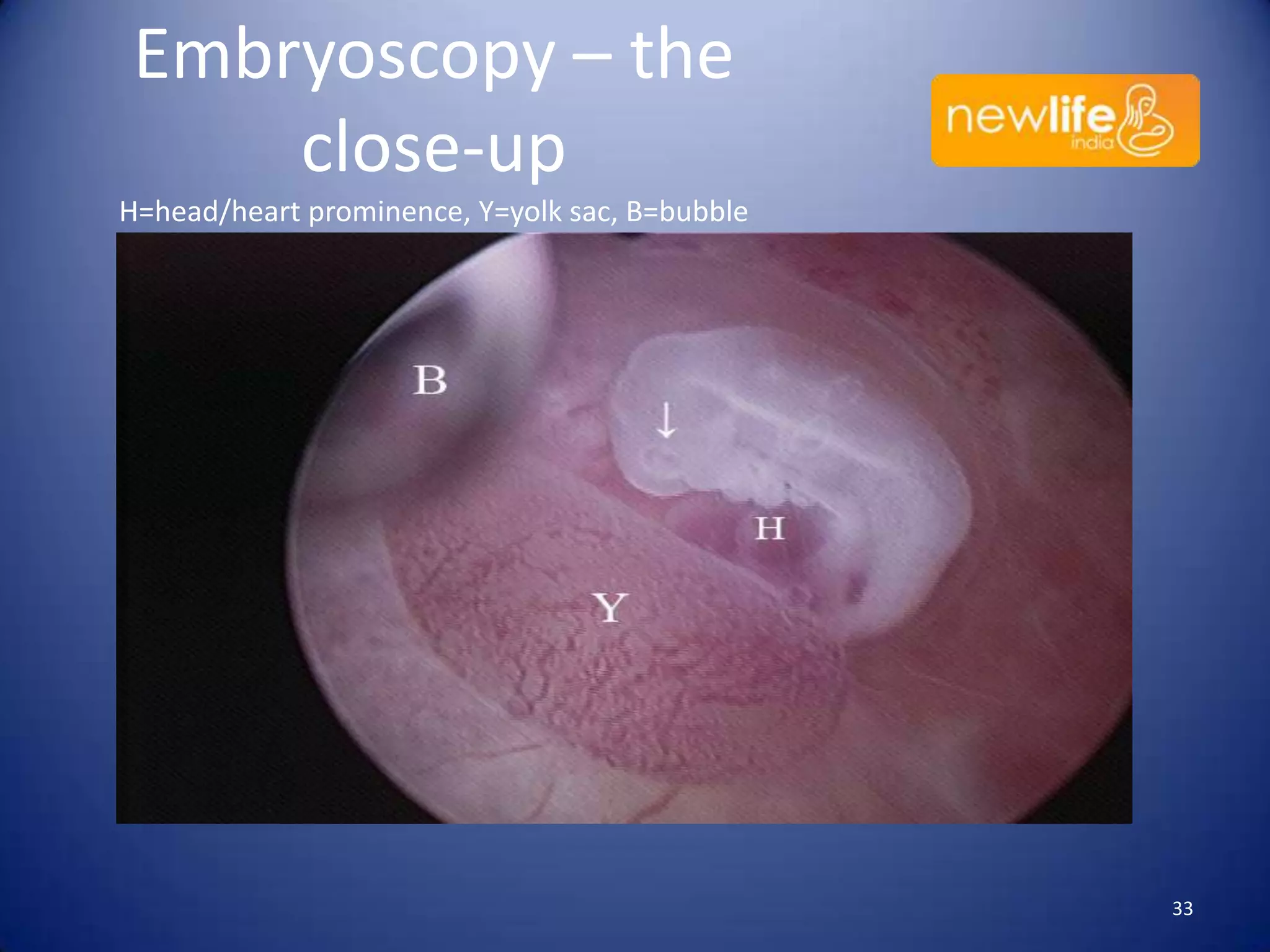
Embryoscopy – the
close-up
H=head/heart prominence, Y=yolk sac, B=bubble

33
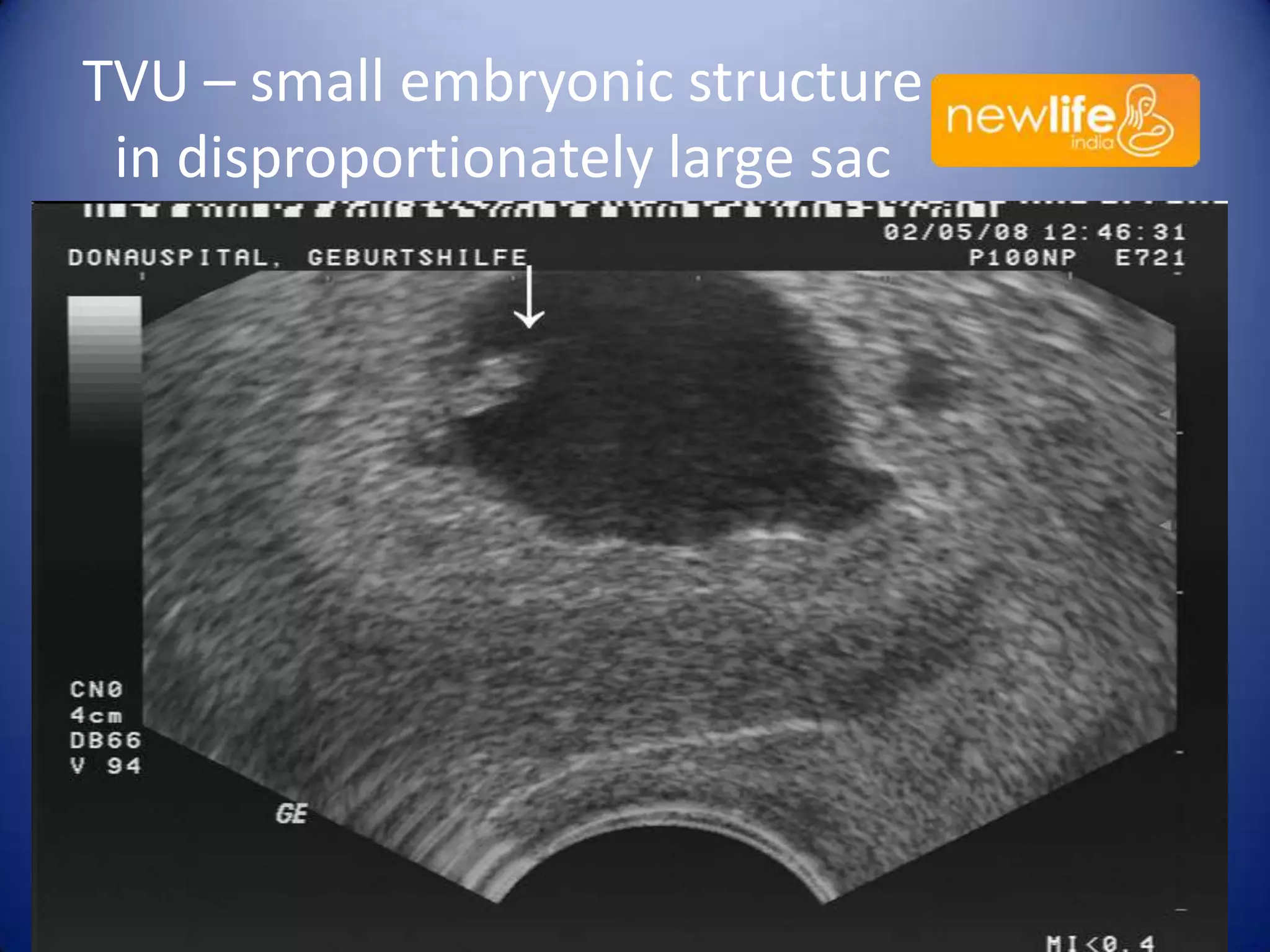
TVU – small embryonic structure
in disproportionately large sac

34
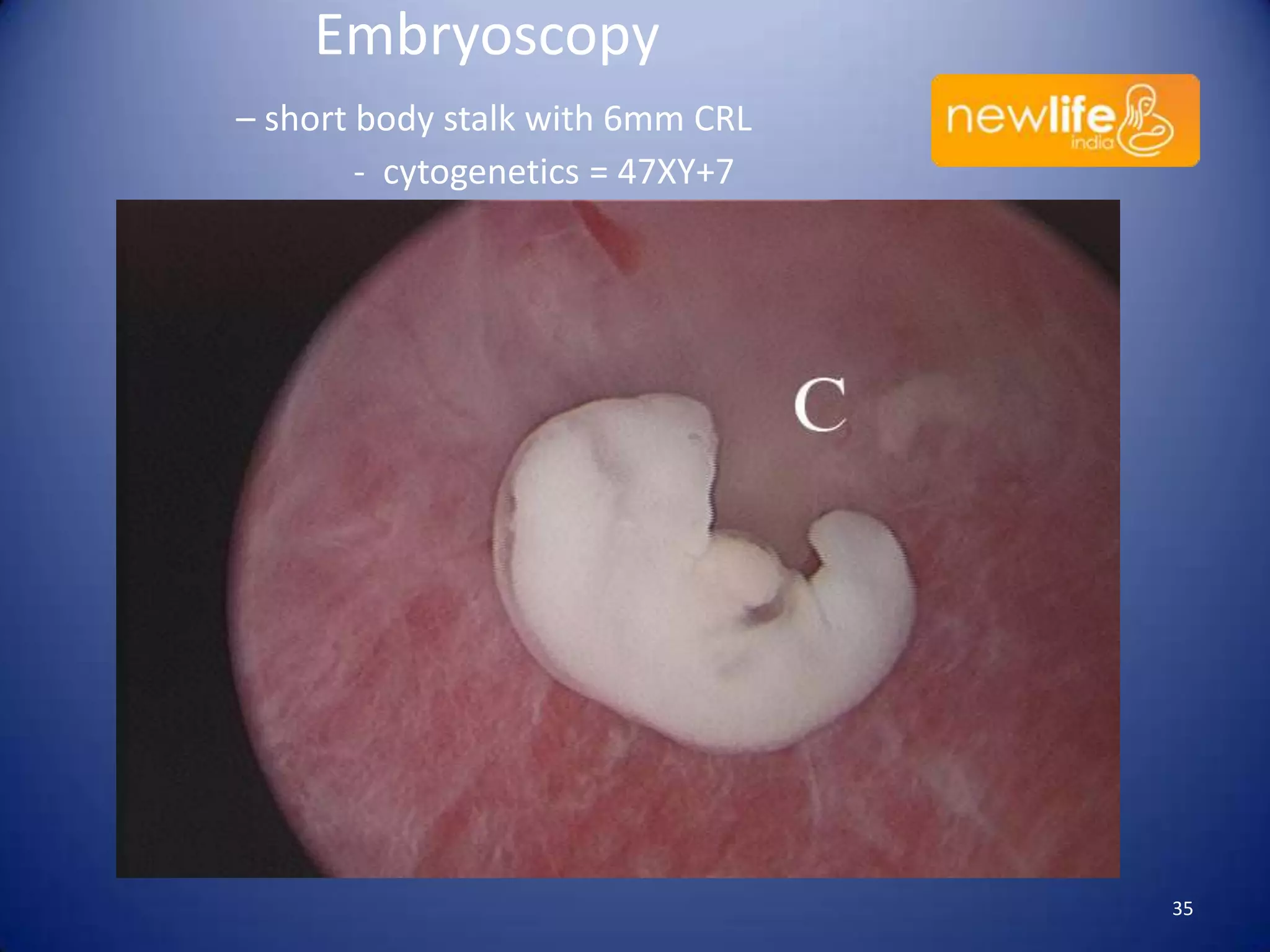
Embryoscopy
– short body stalk with 6mm CRL
- cytogenetics = 47XY+7

35
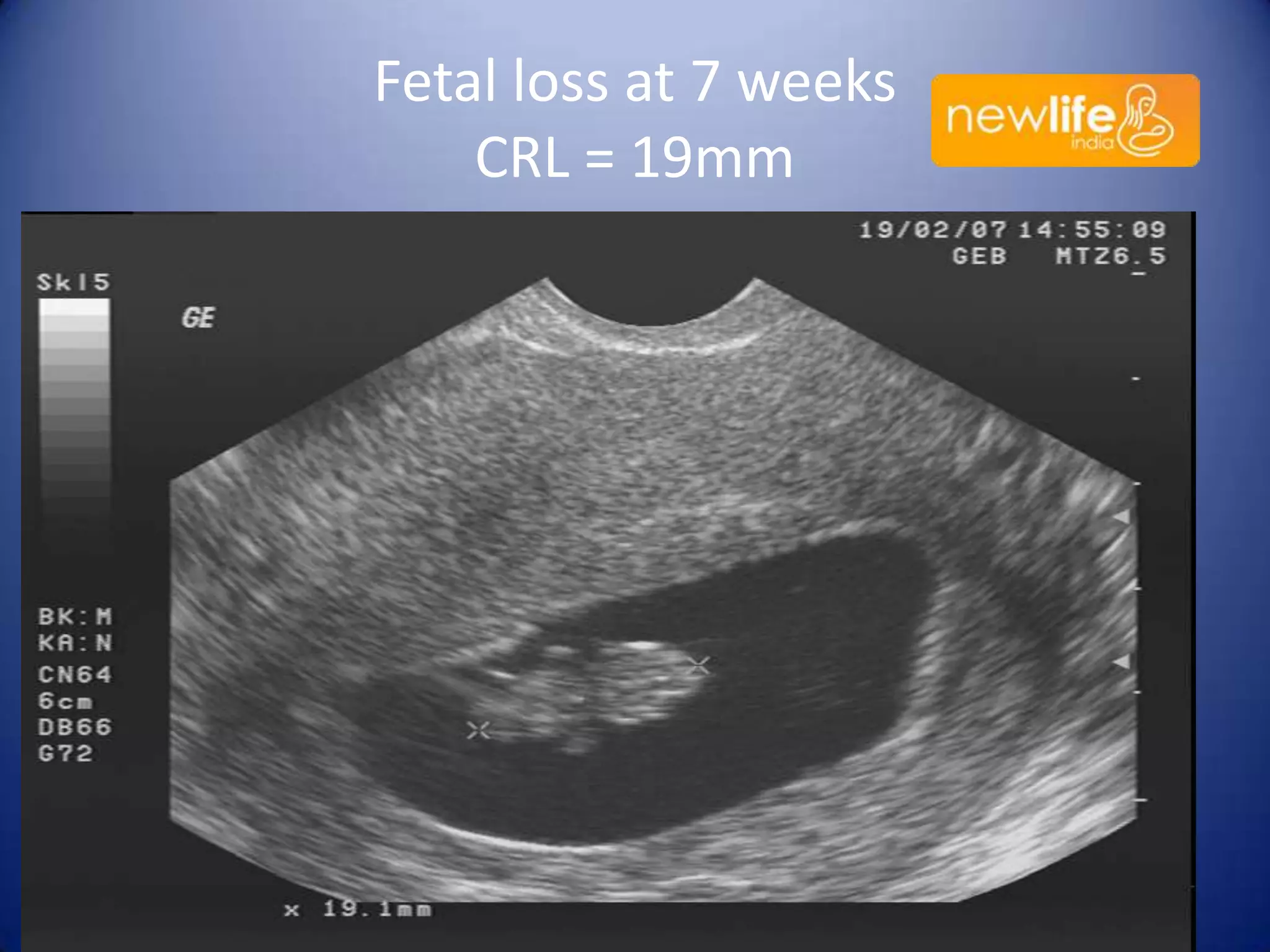
Fetal loss at 7 weeks
CRL = 19mm

36
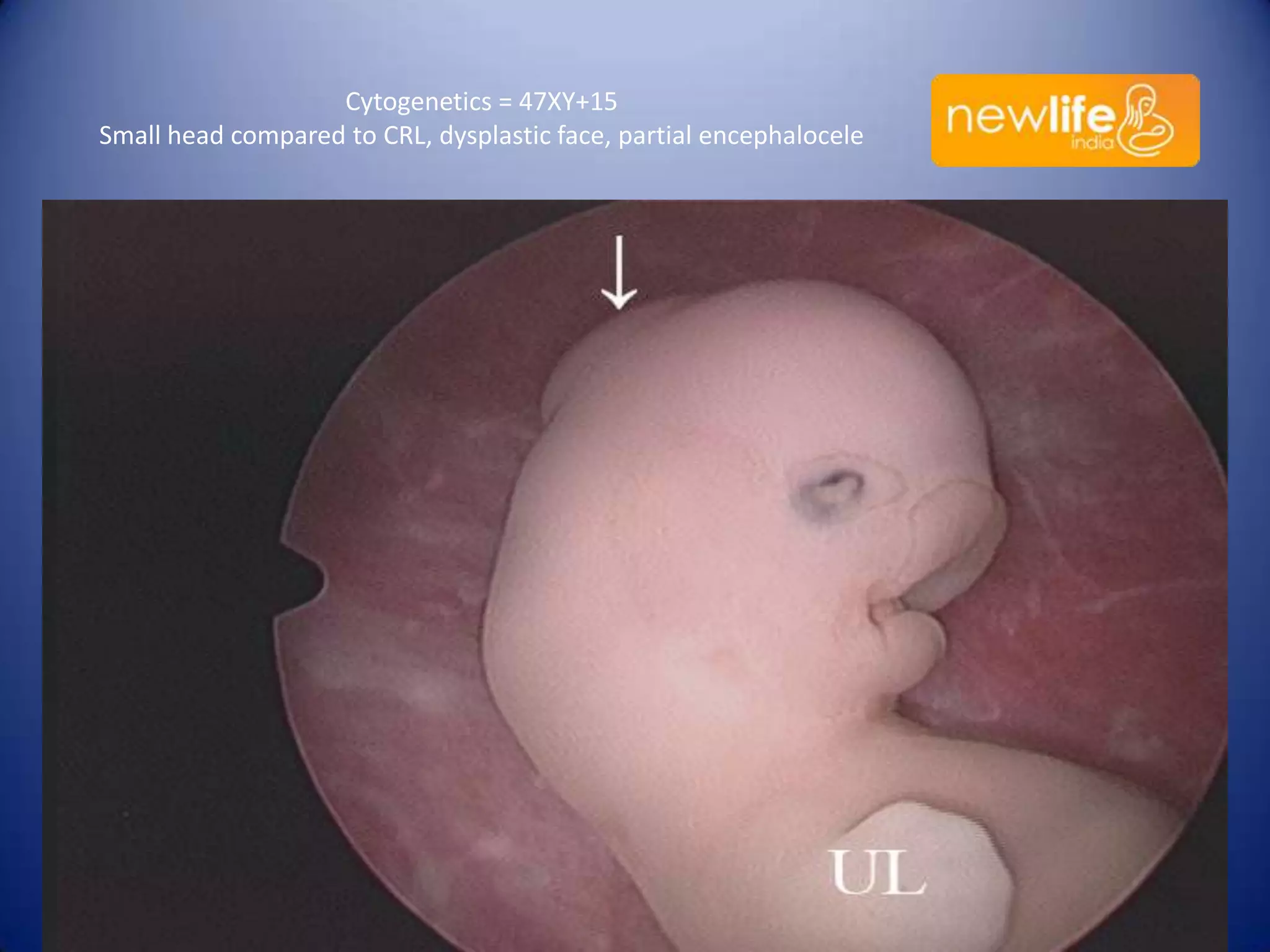
Cytogenetics = 47XY+15
Small head compared to CRL, dysplastic face, partial encephalocele

37
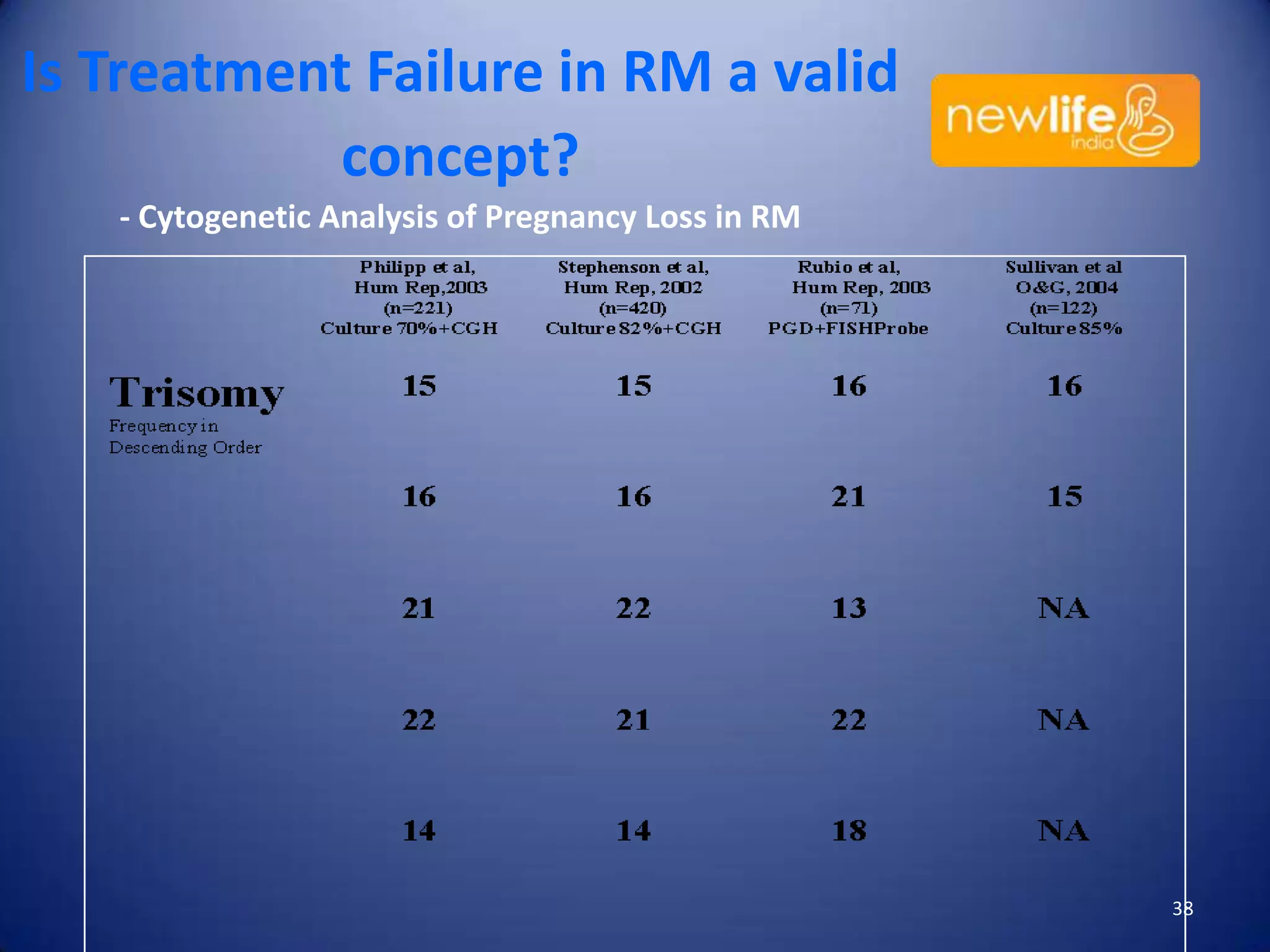
Is Treatment Failure in RM a valid
concept?
- Cytogenetic Analysis of Pregnancy Loss in RM

38
Opportunityisnowhere

39
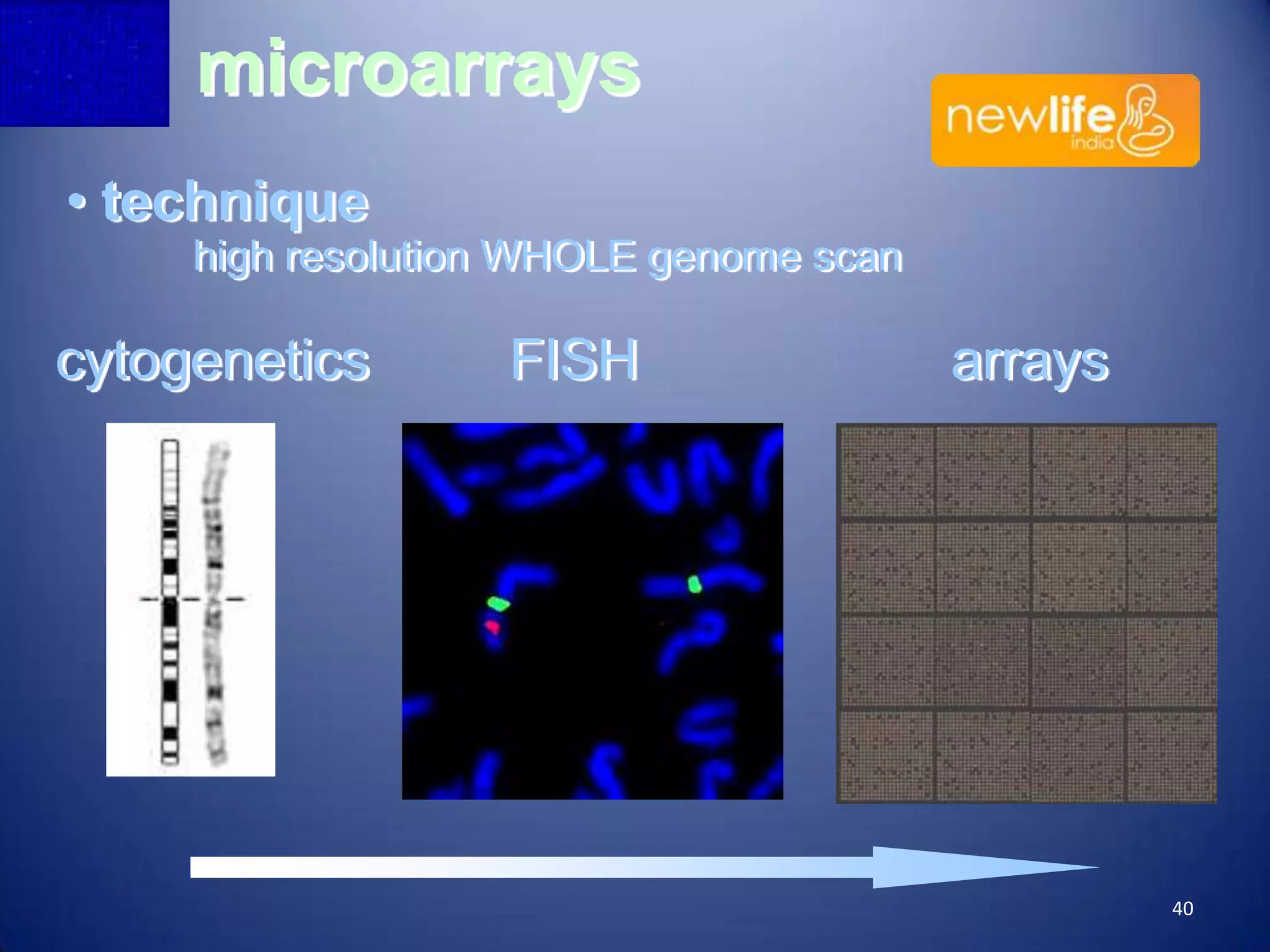
microarrays
• technique
high resolution WHOLE genome scan

cytogenetics

FISH

arrays

40
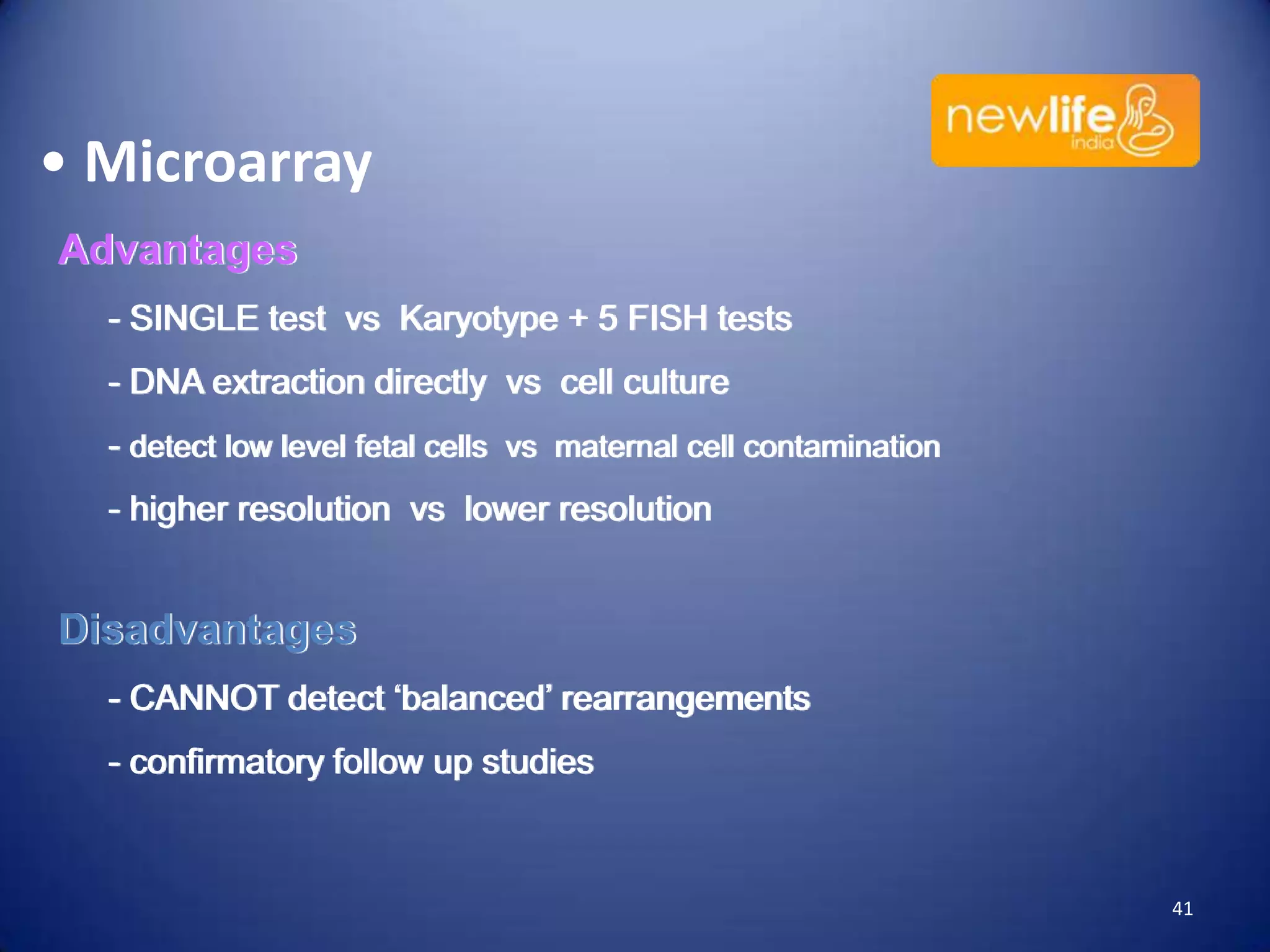
• Microarray
Advantages
- SINGLE test vs Karyotype + 5 FISH tests
- DNA extraction directly vs cell culture
- detect low level fetal cells vs maternal cell contamination
- higher resolution vs lower resolution

Disadvantages
- CANNOT detect ‘balanced’ rearrangements

- confirmatory follow up studies

41
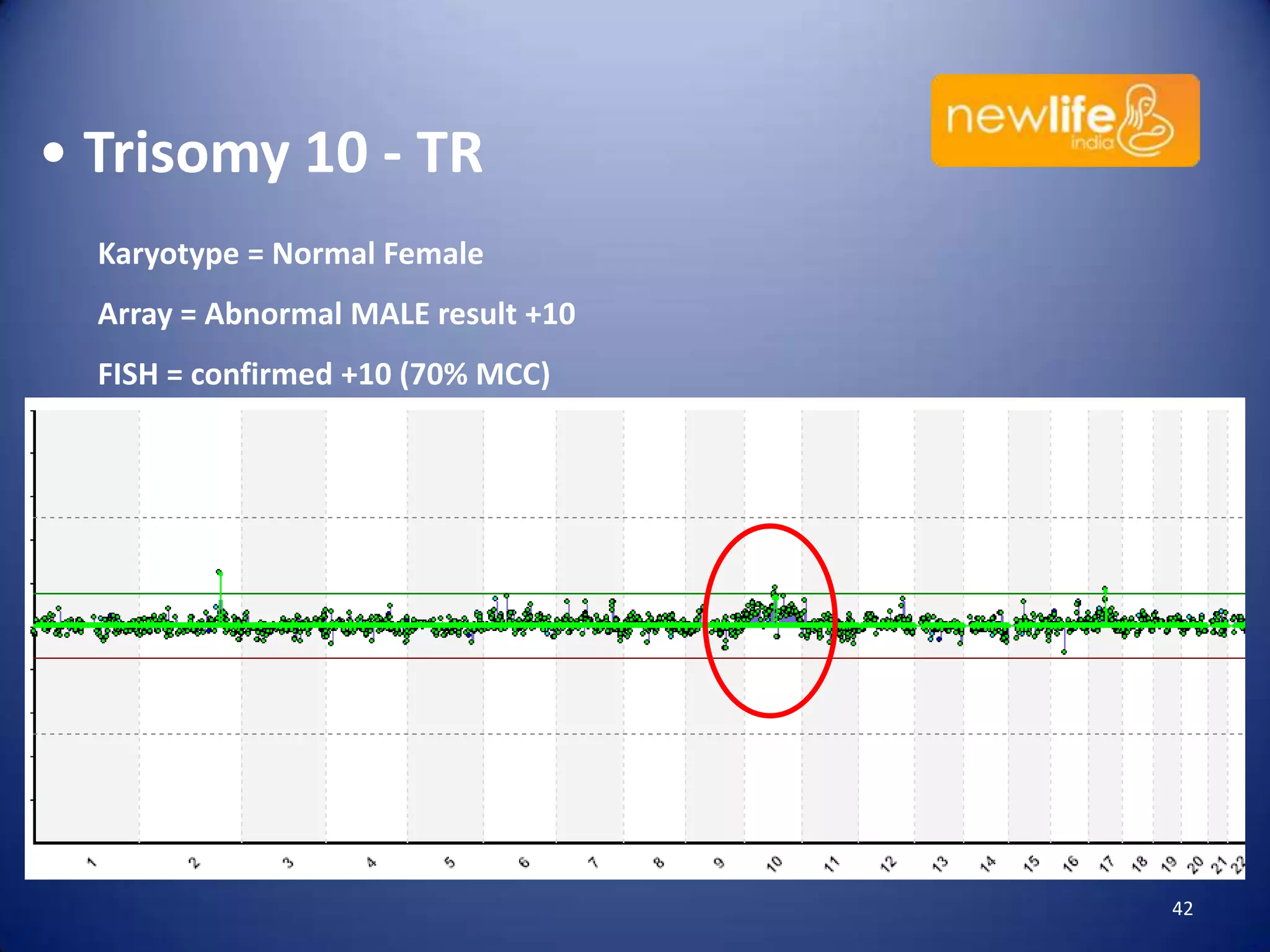
• Trisomy 10 - TR
Karyotype = Normal Female
Array = Abnormal MALE result +10
FISH = confirmed +10 (70% MCC)

42
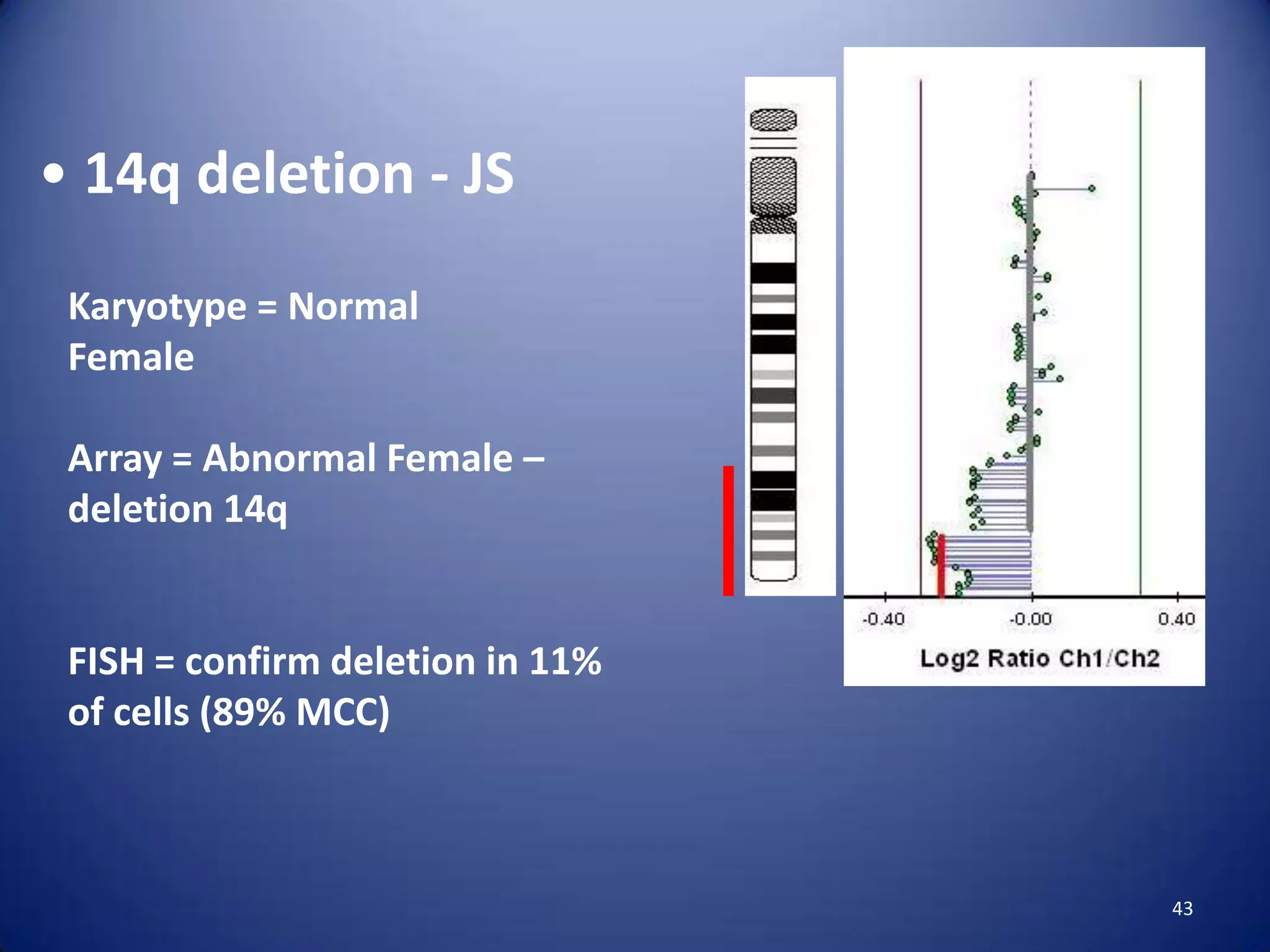
• 14q deletion - JS
Karyotype = Normal
Female
Array = Abnormal Female –
deletion 14q

FISH = confirm deletion in 11%
of cells (89% MCC)

43
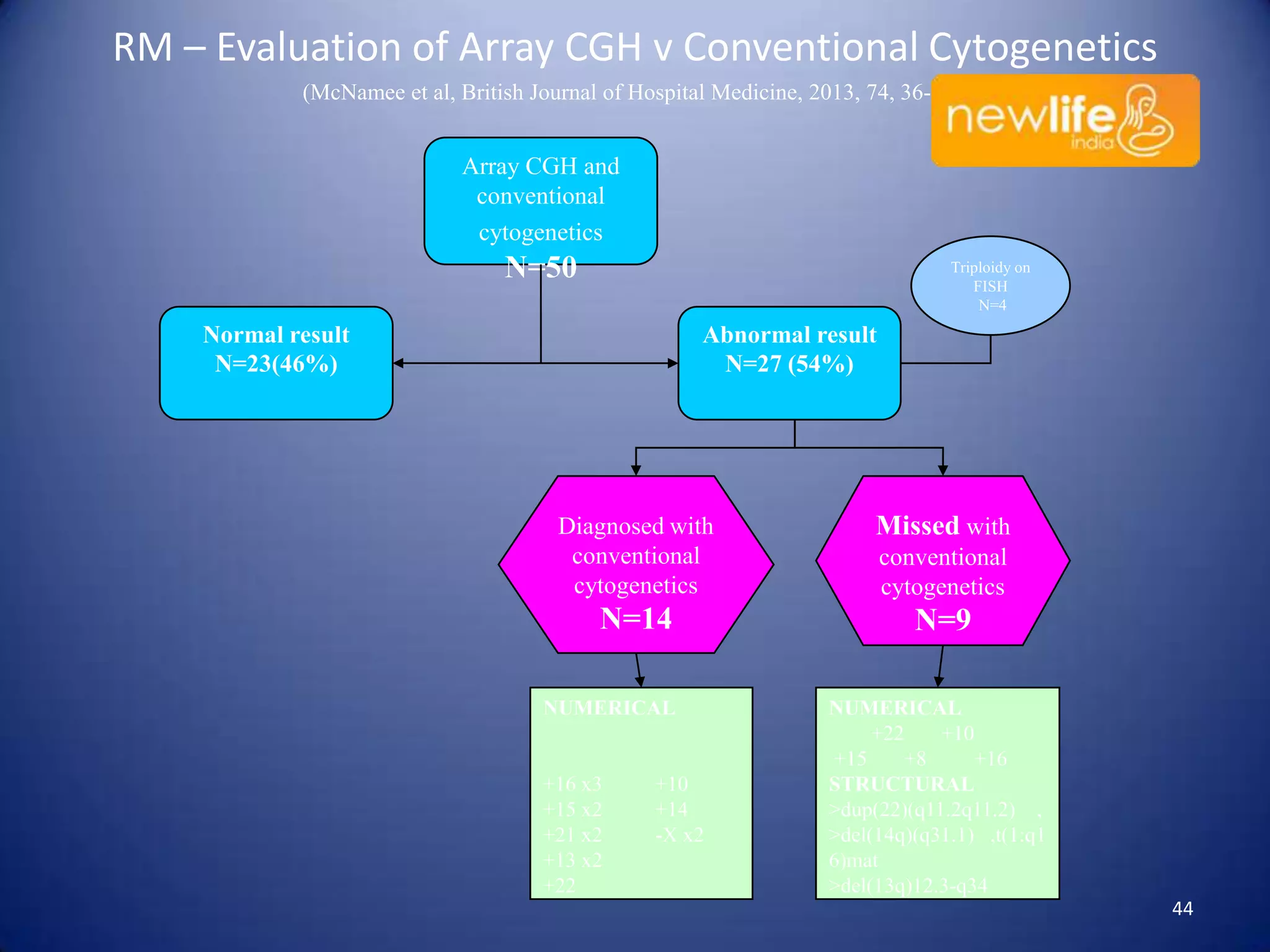
RM – Evaluation of Array CGH v Conventional Cytogenetics
(McNamee et al, British Journal of Hospital Medicine, 2013, 74, 36-40 )

Array CGH and
conventional
cytogenetics

N=50

Triploidy on
FISH
N=4

Normal result
N=23(46%)

Abnormal result
N=27 (54%)

Diagnosed with
conventional
cytogenetics

Missed with

N=14

N=9

NUMERICAL

+16 x3
+15 x2
+21 x2
+13 x2
+22

+10
+14
-X x2

conventional
cytogenetics

NUMERICAL
+22
+10
+15
+8
+16
STRUCTURAL
>dup(22)(q11.2q11.2) ,
>del(14q)(q31.1) ,t(1:q1
6)mat
>del(13q)12.3-q34
44
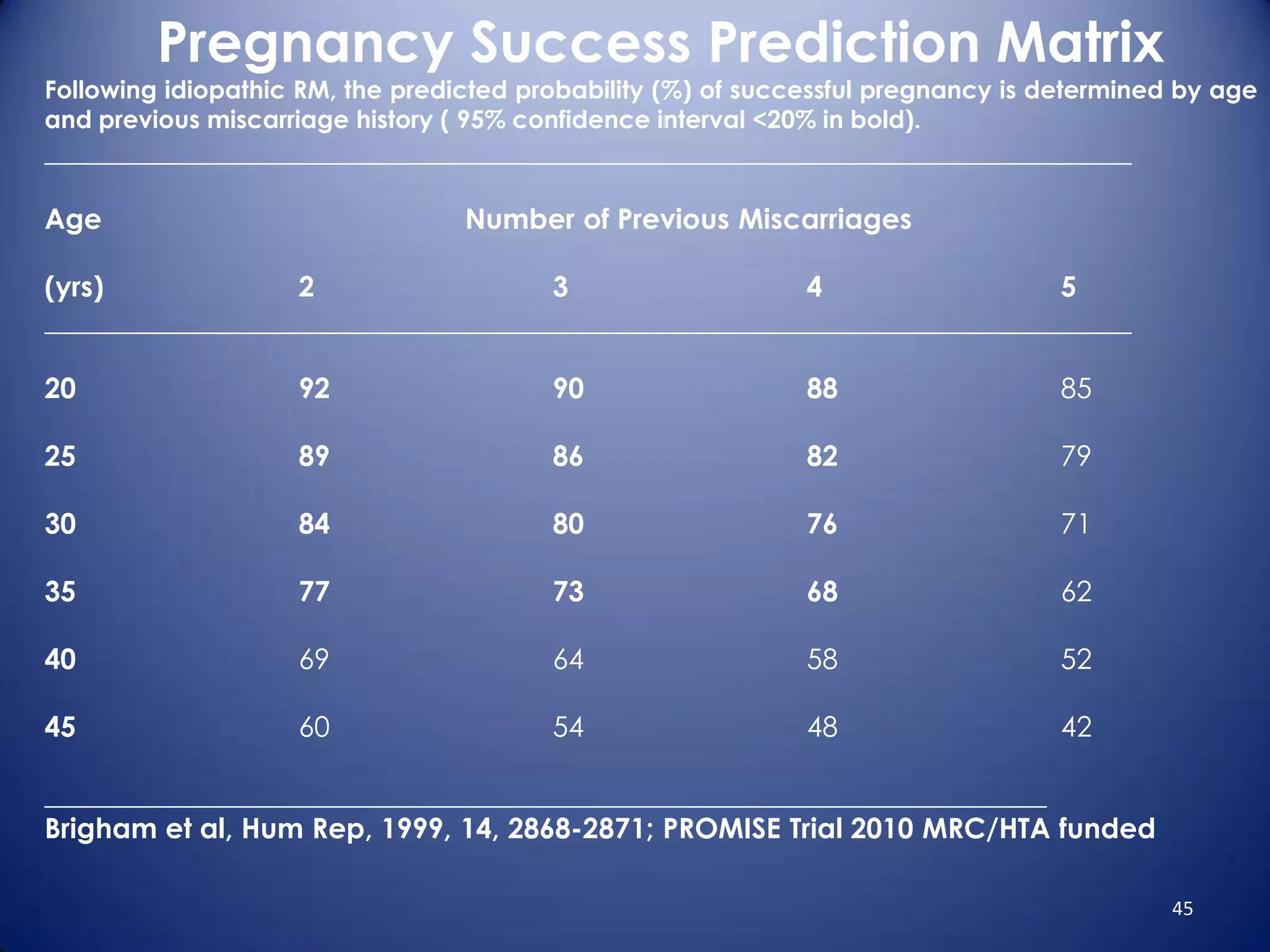
Pregnancy Success Prediction Matrix

Following idiopathic RM, the predicted probability (%) of successful pregnancy is determined by age
and previous miscarriage history ( 95% confidence interval <20% in bold).

_____________________________________________________________________________
Age

Number of Previous Miscarriages

(yrs)
2
3
4
5
_____________________________________________________________________________
20

92

90

88

85

25

89

86

82

79

30

84

80

76

71

35

77

73

68

62

40

69

64

58

52

45

60

54

48

42

_______________________________________________________________________
Brigham et al, Hum Rep, 1999, 14, 2868-2871; PROMISE Trial 2010 MRC/HTA funded
45
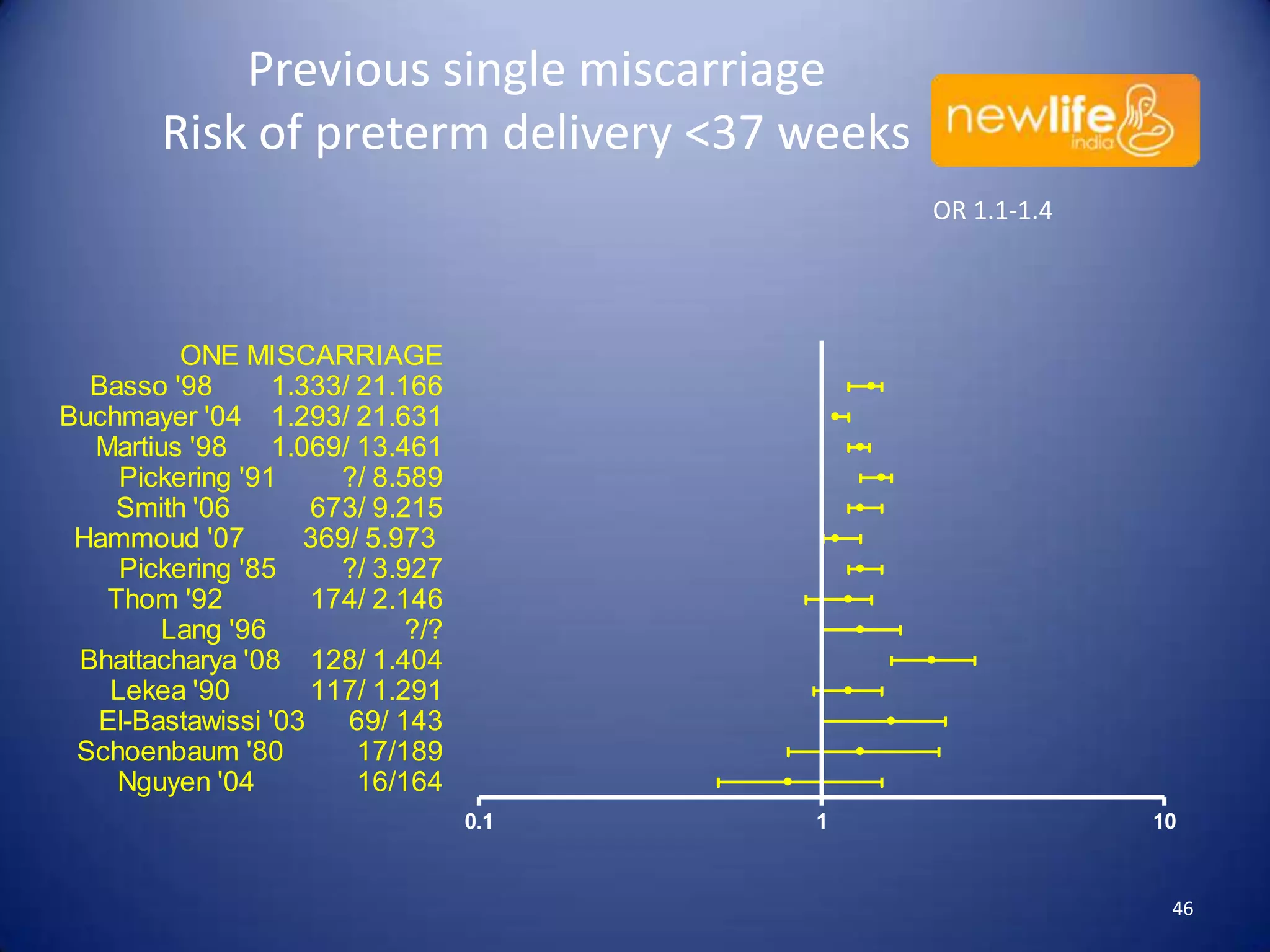
Previous single miscarriage
Risk of preterm delivery <37 weeks
OR 1.1-1.4

ONE MISCARRIAGE
Basso '98
1.333/ 21.166
Buchmayer '04 1.293/ 21.631
Martius '98
1.069/ 13.461
Pickering '91
?/ 8.589
Smith '06
673/ 9.215
Hammoud '07
369/ 5.973
Pickering '85
?/ 3.927
Thom '92
174/ 2.146
Lang '96
?/?
Bhattacharya '08 128/ 1.404
Lekea '90
117/ 1.291
El-Bastawissi '03
69/ 143
Schoenbaum '80
17/189
Nguyen '04
16/164
0.1

1

10

46
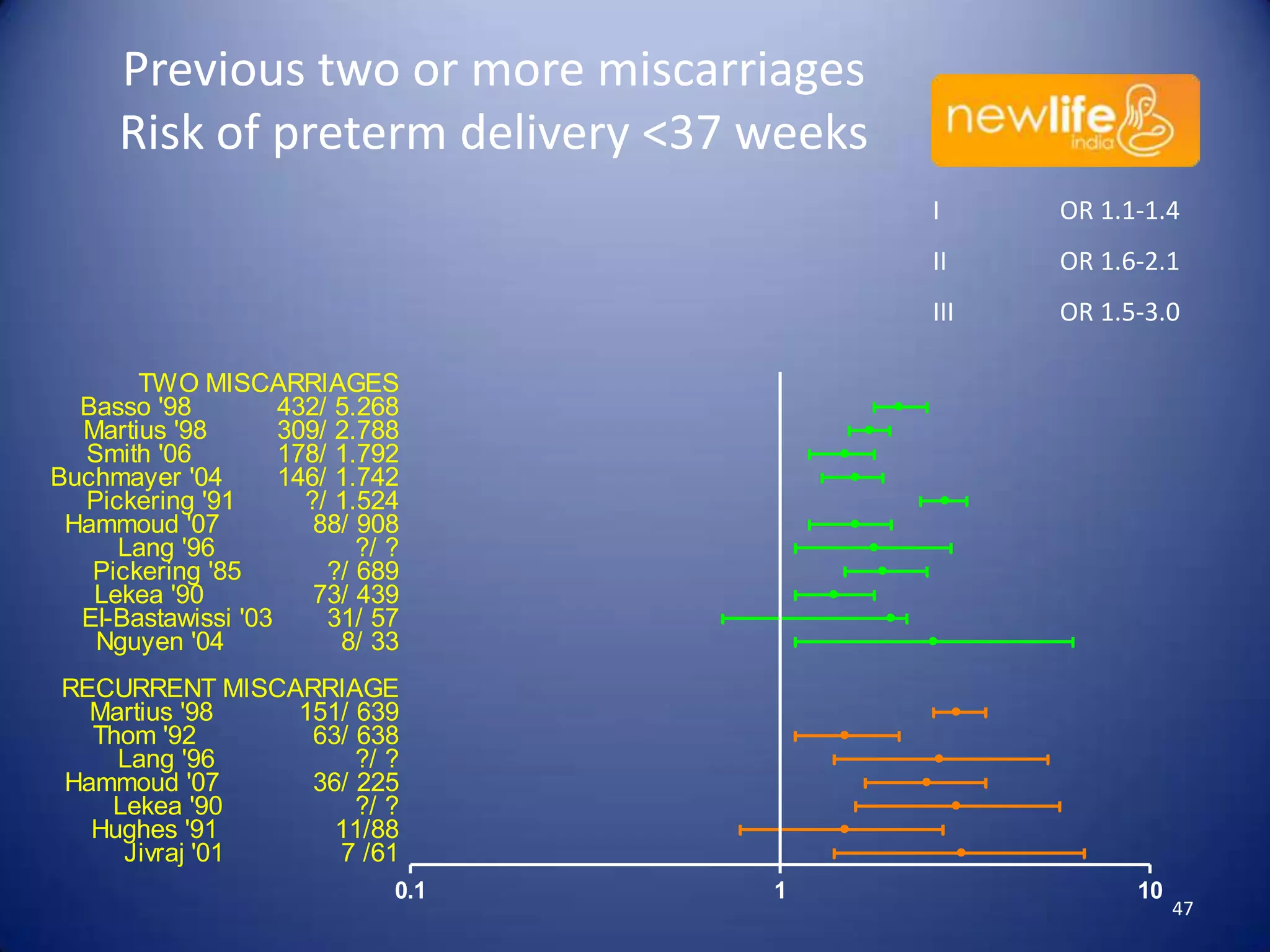
Previous two or more miscarriages
Risk of preterm delivery <37 weeks
I

OR 1.1-1.4

II

OR 1.6-2.1

III

OR 1.5-3.0

TWO MISCARRIAGES
Basso '98
432/ 5.268
Martius '98
309/ 2.788
Smith '06
178/ 1.792
Buchmayer '04
146/ 1.742
Pickering '91
?/ 1.524
Hammoud '07
88/ 908
Lang '96
?/ ?
Pickering '85
?/ 689
Lekea '90
73/ 439
El-Bastawissi '03
31/ 57
Nguyen '04
8/ 33
RECURRENT MISCARRIAGE
Martius '98
151/ 639
Thom '92
63/ 638
Lang '96
?/ ?
Hammoud '07
36/ 225
Lekea '90
?/ ?
Hughes '91
11/88
Jivraj '01
7 /61
0.1

1

10

47
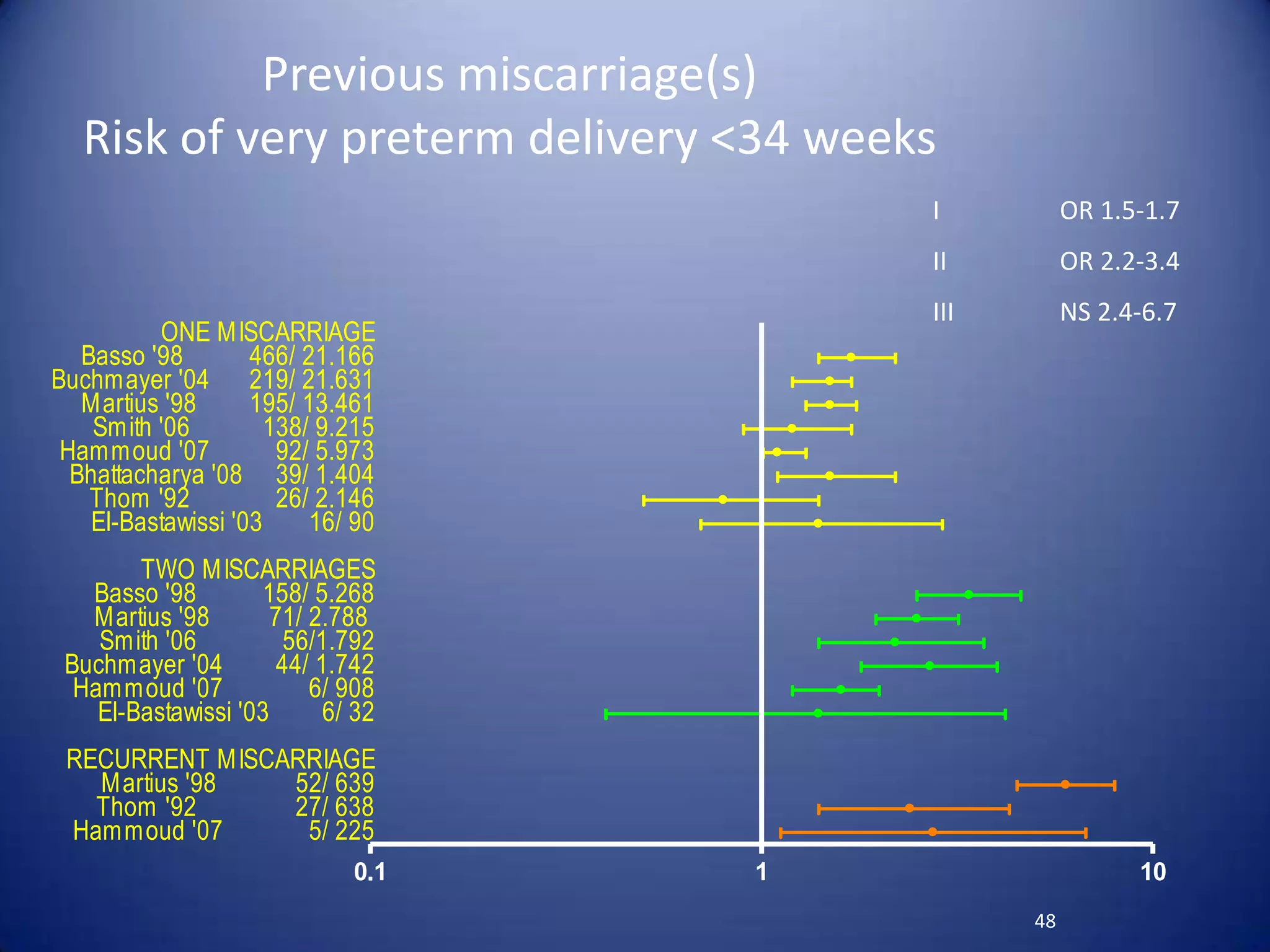
Previous miscarriage(s)
Risk of very preterm delivery <34 weeks
I
II

OR 2.2-3.4

III

ONE MISCARRIAGE
Basso '98
466/ 21.166
Buchmayer '04 219/ 21.631
Martius '98
195/ 13.461
Smith '06
138/ 9.215
Hammoud '07
92/ 5.973
Bhattacharya '08 39/ 1.404
Thom '92
26/ 2.146
El-Bastawissi '03
16/ 90

OR 1.5-1.7

NS 2.4-6.7

TWO MISCARRIAGES
Basso '98
158/ 5.268
Martius '98
71/ 2.788
Smith '06
56/1.792
Buchmayer '04
44/ 1.742
Hammoud '07
6/ 908
El-Bastawissi '03
6/ 32
RECURRENT MISCARRIAGE
Martius '98
52/ 639
Thom '92
27/ 638
Hammoud '07
5/ 225
0.1

1

10
48
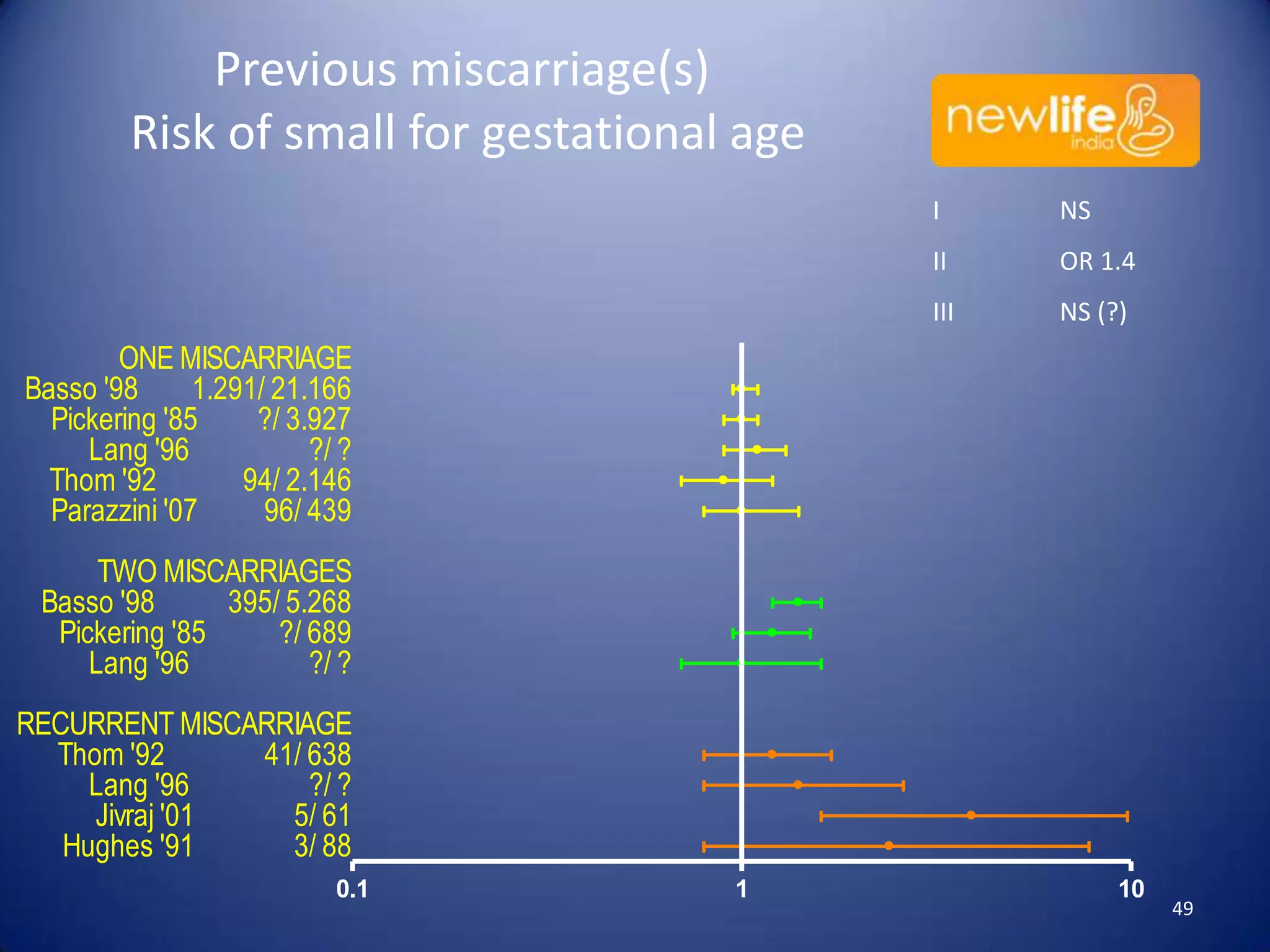
Previous miscarriage(s)
Risk of small for gestational age
I

NS

II

OR 1.4

III

NS (?)

ONE MISCARRIAGE
Basso '98
1.291/ 21.166
Pickering '85
?/ 3.927
Lang '96
?/ ?
Thom '92
94/ 2.146
Parazzini '07
96/ 439
TWO MISCARRIAGES
Basso '98
395/ 5.268
Pickering '85
?/ 689
Lang '96
?/ ?
RECURRENT MISCARRIAGE
Thom '92
41/ 638
Lang '96
?/ ?
Jivraj '01
5/ 61
Hughes '91
3/ 88
0.1

1

10

49
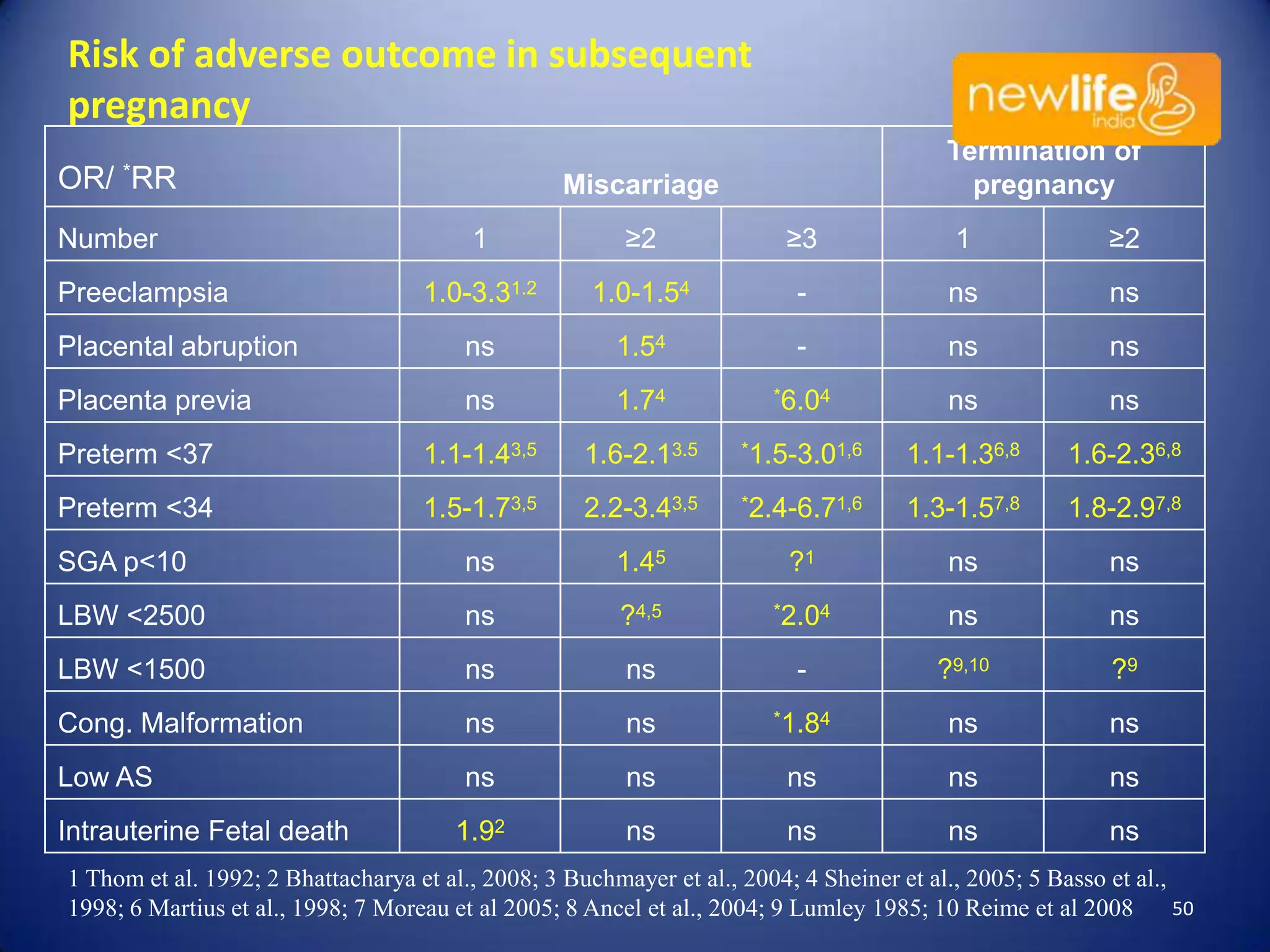
Risk of adverse outcome in subsequent
pregnancy
OR/

*RR

Termination of
pregnancy

Miscarriage
1

≥2

≥3

1

≥2

1.0-3.31.2

1.0-1.54

-

ns

ns

Placental abruption

ns

1.54

-

ns

ns

Placenta previa

ns

1.74

*6.04

ns

ns

Preterm <37

1.1-1.43,5

1.6-2.13.5

*1.5-3.01,6

1.1-1.36,8

1.6-2.36,8

Preterm <34

1.5-1.73,5

2.2-3.43,5

*2.4-6.71,6

1.3-1.57,8

1.8-2.97,8

SGA p<10

ns

1.45

?1

ns

ns

LBW <2500

ns

?4,5

*2.04

ns

ns

LBW <1500

ns

ns

-

?9,10

?9

Cong. Malformation

ns

ns

*1.84

ns

ns

Low AS

ns

ns

ns

ns

ns

1.92

ns

ns

ns

ns

Number
Preeclampsia

Intrauterine Fetal death

1 Thom et al. 1992; 2 Bhattacharya et al., 2008; 3 Buchmayer et al., 2004; 4 Sheiner et al., 2005; 5 Basso et al.,
50
1998; 6 Martius et al., 1998; 7 Moreau et al 2005; 8 Ancel et al., 2004; 9 Lumley 1985; 10 Reime et al 2008
Vanishing Twin phenomenon
• Spontaneous reduction of a multiple pregnancy
• IVF-population (~5%)
• Incidence 10-30%1-3
• Studies: IVF population
• Vanishing twin IVF pregnancies, which were
spontaneous reduced from twin to single
pregnancies, were compared to single IVF
pregnancies

1 Dickey et al., 2002; 2 Landy and Keith 1998; 3 Pinborg et al., 2005

51
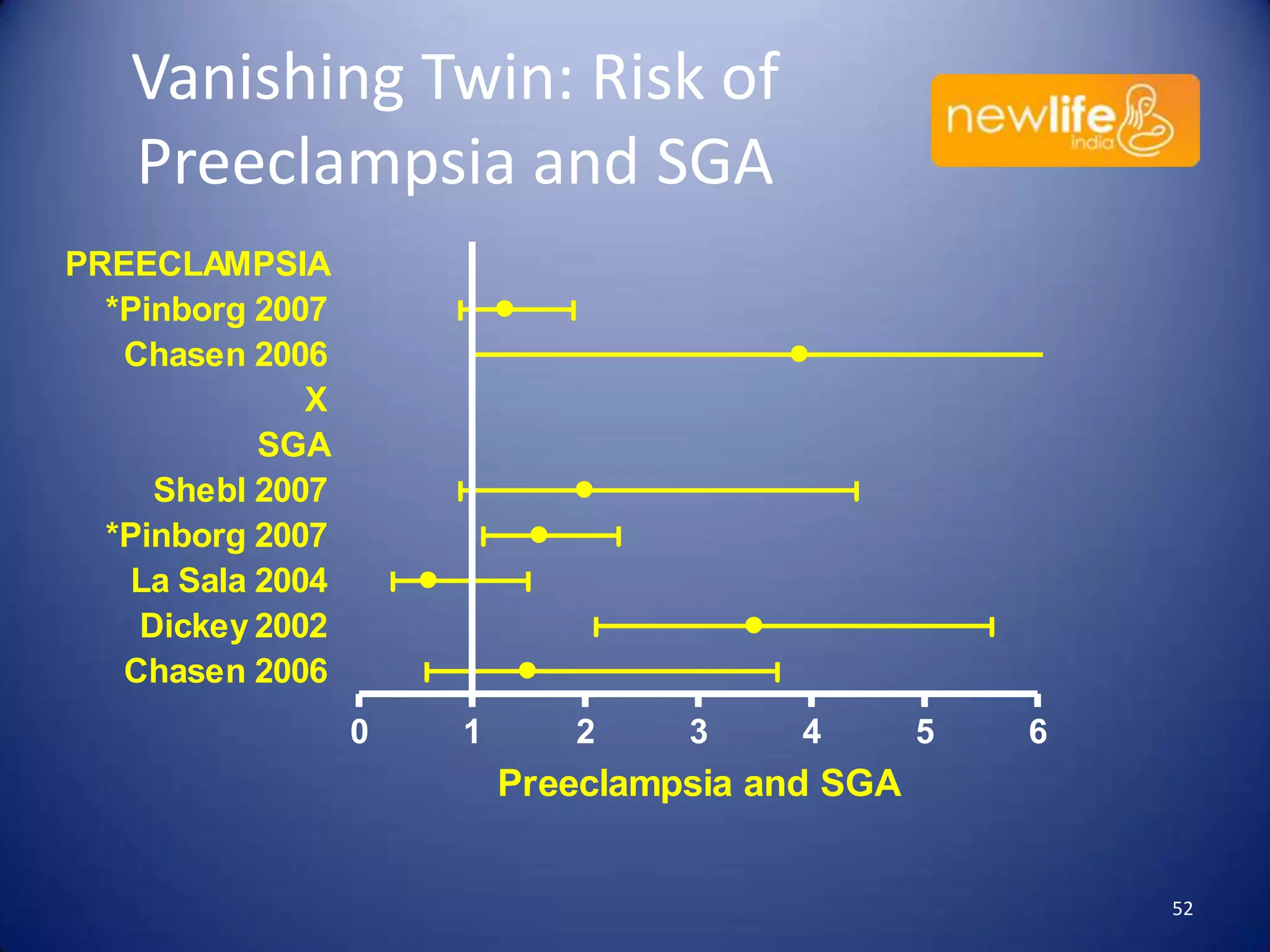
Vanishing Twin: Risk of
Preeclampsia and SGA
PREECLAMPSIA
*Pinborg 2007
Chasen 2006
X
SGA
Shebl 2007
*Pinborg 2007
La Sala 2004
Dickey 2002
Chasen 2006
0

1

2

3

4

5

6

Preeclampsia and SGA

52
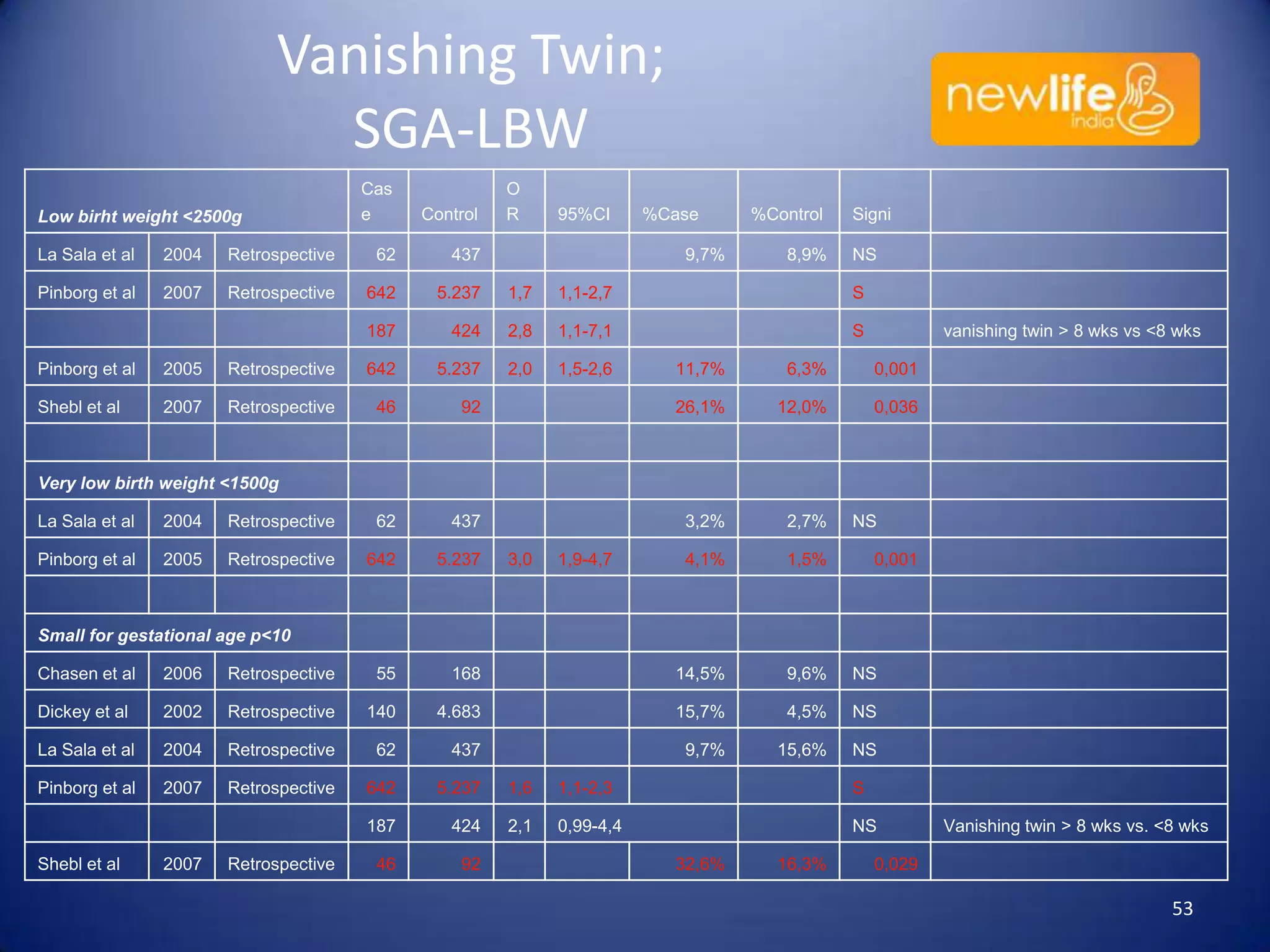
Vanishing Twin;
SGA-LBW
Low birht weight <2500g

Cas
e

Control

O
R

95%CI

%Case

2004

Retrospective

62

437

Pinborg et al

2007

Retrospective

642

5.237

1,7

1,1-2,7

S

187

424

2,8

1,1-7,1

S

2,0

1,5-2,6

2005

Retrospective

642

5.237

Shebl et al

2007

Retrospective

46

8,9%

Signi

La Sala et al

Pinborg et al

9,7%

%Control

NS

vanishing twin > 8 wks vs <8 wks

11,7%

6,3%

0,001

92

26,1%

12,0%

0,036

3,2%

2,7%

4,1%

1,5%

Very low birth weight <1500g
La Sala et al

2004

Retrospective

62

437

Pinborg et al

2005

Retrospective

642

5.237

3,0

1,9-4,7

NS
0,001

Small for gestational age p<10
Chasen et al

2006

Retrospective

55

168

14,5%

9,6%

NS

Dickey et al

2002

Retrospective

140

4.683

15,7%

4,5%

NS

La Sala et al

2004

Retrospective

62

437

9,7%

15,6%

NS

Pinborg et al

2007

Retrospective

642

5.237

1,6

1,1-2,3

S

187

424

2,1

0,99-4,4

NS

46

92

Shebl et al

2007

Retrospective

32,6%

16,3%

Vanishing twin > 8 wks vs. <8 wks

0,029

53
The Sound of Life - Greetings
From Liverpool!!

54
Sites of ectopic pregnancies

Illustration: John Yanson.Seeber. Suspected Ectopic Pregnancy. Obstet Gynecol 2006.
From: Seeber: Obstet Gynecol, Volume 107(2, Part 1).February 2006.399-413

55

Identifying the Signs for Implantation Failure and Miscarriage

  • 1.
    Identifying the signsfor Implantation Failure and Miscarriage By Roy Farquharson Liverpool Women's Hospital UK Contact: rgfarquharson@yahoo.com 1
  • 2.
    Declaration of Interests •Executive Committee member, European Society of Human Reproduction and Embryology (2011 - 2015) • NICE Guideline Development Group for ectopic pregnancy and miscarriage (CG 154; 2010-2013) • Chair, Association of Early Pregnancy Units (2006-2011) • Co-ordinator, ESHRE Special Interest Group for Early Pregnancy (2007-2010) • Associate Editor, Human Reproduction Update (20102014) 2
  • 3.
    Educational Objectives • LearningObjectives • • At the conclusion of this presentation, participants should be able to: • Describe the assessment for the diagnosis of implantation failure, ectopic pregnancy and miscarriage • Acknowledge the limitations of available diagnostic methods • Develop a practical approach to using relevant tests and management protocols. 3
  • 4.
  • 5.
    Predictive Modelling forEarly Pregnancy Best Area of Interest Diagnostic Utility Parameter(s) Ovulation Biomarker D21 Progesterone Pregnancy of Unknown Location (PUL) Transvaginal (TVU) Scan and Biomarker TVU Scan + HCG doubling time/ratio +/- Progesterone Pregnancy of Scan Fetal heart action Uncertain Viability Scan plus Crown-rump (PUV) ExclusivelyScan length 5
  • 6.
    Practical Advice -PULs 3. Predicting outcome  Hormones  Human chorionic gonadotrophin (hCG)  Progesterone  Other:     Creatine kinase CA 125 Activin A Inhibin A  Mathematical Models 6
  • 7.
    HCG changes innormal pregnancy • Mean (SE) serum concentrations of human chorionic gonadotrophin (adapted from Braunstein et al 1976) 7
  • 8.
    Haemodynamically stable Pain free Expectantmanagement PUL Haemodynamically stable Haemodynamically unstable Pain Pain ? Serum hCG Serum hCG levels at 0 and 48 hrs +/progesterone ? Intra-uterine Pregnancy Consider laparoscopy/laparotomy Consider laparoscopy ? Ectopic Pregnancy ? Failing PUL 8
  • 9.
    Practical Advice -PULs 3. Predicting outcome  Hormones  Human chorionic gonadotrophin (hCG)  Progesterone  Other:     Creatine kinase CA 125 Activin A Inhibin A  Mathematical Models 9
  • 10.
    Serum hCG Levels SingleLevels Serial Levels Discriminatory Zone 10
  • 11.
    Serum hCG Levels SingleLevels Serial Levels Discriminatory Zone  Developed with respect to transabdominal USS  Lower levels of hCG used with TVS  Using a single value of hCG in a PUL population is of limited value:  Many ectopic pregnancies have a low hCG  Clinicians may be falsely reassured 11
  • 12.
    Serum hCG Levels SingleLevels Serial Levels Change over 48hrs (hCG ratio) Intrauterine Pregnancies (IUPs)  Kadar et al. (1981) first to describe the minimal rate of rise for an IUP to be 66% over 48hrs  More recently minimal rise reported to be 53% (Barnhart et al. 2004)  In clinical practice a more conservative cut-off of 35% has been suggested 12
  • 13.
    Serum hCG Levels SingleLevels Serial Levels Change over 48hrs (hCG ratio) Failing PULs  A decline of 21-35% at 48 hours depending on initial hCG level ( levels at presentation – rate of decrease) (Barnhart et al. 2004)  An hCG decrease of >13% (hCG ratio < 0.87) has been shown to have a sensitivity of 92.7% and a specificity of 96.7% for the prediction of a failing PUL (Condous et al., 2006) 13
  • 14.
    Serum hCG Levels SingleLevels Serial Levels Change over 48hrs (hCG ratio) Ectopic Pregnancies (EPs)  ‘No single way to characterize the pattern of serum hCG behaviour’ (Silva et al., 2006)  hCG profile mimicked IUP in 21% and a spontaneous miscarriage in 8% (Silva et al., 2006)  Sensitivity of 83% for EP when IUP excluded by hCG rise < 35% and failing PUL excluded by hCG decrease > 14 21-35% (Seeber et al., 2006)
  • 15.
    Evidence based managementof PULs Predicting outcome  Hormones  Human chorionic gonadotrophin (hCG)  Progesterone  Other:     Creatine kinase CA 125 Activin A Inhibin A  Mathematical Models 15
  • 16.
    Serum Progesterone Levels Serum Progesterone <20 nmol/L PPV > 95% to predict pregnancy failure (Banerjee et al., 2001) Viable IUPs reported with levels < 16nmol/L > 60 nmol/L ‘Strongly’ associated with viable pregnancies Discriminative capacity insufficient to diagnose ectopic pregnancy with certainty (Mol et al., 1998) Good at predicting viability but not location 16
  • 17.
    Pregnancies of Unknown Location(PULs) • The majority of PULs fail and resolve spontaneously (44% – 69%) RCOG green top guideline on Tubal Pregnancy 2004 sourcing five observational studies • Of the remainder, ectopic pregnancy was subsequently diagnosed in 14 to 28% • Intervention (medical or surgical) was required in approx 25% cases 17
  • 18.
    HCG in practice(NICE 2012) • Clinical symptoms more important than HCG results • HCG levels do not ‘locate’ the pregnancy nor assess viability • 2 levels 48 hours apart are useful for ‘risk stratification’ and act as best evidence for subsequent management • Limitations of prediction should be shared and acknowledged to patients (eg ectopic pregnancy HCG levels mimic viable IUP in 21% and EPL in 8%) • Ectopic pregnancy and miscarriage: diagnosis and initial management in early pregnancy of ectopic pregnancy and miscarriage. (NICE Clinical guideline 154; 2012; www.nice.org.uk) 18
  • 19.
    Sites of ectopicpregnancies Illustration: John Yanson.Seeber. Suspected Ectopic Pregnancy. Obstet Gynecol 2006. From: Seeber: Obstet Gynecol, Volume 107(2, Part 1).February 2006.399-413 19
  • 20.
    Ectopic Pregnancy • Variablemode of presentation • ‘Mask of invisibility’ • High index of suspicion and vigilance eg against diagnosis of complete early pregnancy loss • All areas of emergency care provision will receive cases of undiagnosed ectopic pregnancy 20
  • 21.
    Ectopic Pregnancy presentation • ACUTE(typical) • Collapse with lower abdominal pain, tachycardia and hypotension • Pain, amenorrhoea and sign of pelvic tenderness • EPU presentation with positive pregnancy test, scan showing empty uterus and adenexal inhomogeneous mass • CHRONIC (atypical) • Symptoms mimicking gastroenteritis • Light irregular bleeding • >1/3rd of all patients have no risk factors 21
  • 22.
    HCG studies • • • • • • • Review question Whatis the diagnostic accuracy of two or more hCG measurements for determining an ectopic pregnancy in women with pain and bleeding and pregnancy of unknown location? Description of included studies Nine studies were included in this review (Barnhart et al., 2010; Condous et al., 2004; Condous et al., 2007; Dart et al., 1999; Daus et al., 1989; Hahlin et al., 1991; Mol et al., 1998; Stewart et al., 1995; Thorburn et al., 1992). Five prospective cohort studies (Condous et al., 2004; Condous et al., 2007; Hahlin et al., 1991; Mol et al., 1998; Thorburn et al., 1992) Four retrospective cohort studies (Barnhart et al., 2010; Dart et al., 1999; Daus et al., 1989; Stewart et al., 1995). Conducted in the UK (Condous et al., 2004; Condous et al., 2007), the USA (Dart et al., 1999; Daus et al., 1989; Stewart et al., 1995), the Netherlands (Mol et al., 1998) and Sweden (Hahlin et al., 1991; Thorburn et al., 1992). One study (Barnhart et al., 2010) was conducted in both the UK and USA. 22
  • 23.
    GRADE system • • GRADE (Gradingof Recommendations Assessment,Development and Evaluation) assesses evidence on an outcome-by-outcome basis Quality can vary within a study and is based on 5 factors: – Study design – Limitations Inconsistency Indirectness Imprecision – – – 23 23 23
  • 24.
    Summary of findings Qualityassessment No. of studies Design Limitati ons Incon siste ncy Indirect ness Imprec ision Other consider ations Nu m be r of w o m en Measure of diagnostic accuracy Sensiti vity % (95% CI) Specifi city % (95% CI) Positi ve predic tive value % (95% CI) Negative predictiv e value % (95% CI) Positiv e likelih ood ratio % (95% CI) Negati ve likelih ood ratio % (95% CI) Qualit y% (95% CI) GRADE findings for the diagnosis of ectopic pregnancy using two or more hCG measurements Model M4 1 study Condous et al., 2007 prospec tive study 1 study Barnhart et al., 2010 retrospe ctive study (2 included cohorts: UK and adjuste d USA) serious1, 6 serious4, 6 serious4, 6 no seriou s incons istenc y serious2, no seriou s incons istenc y serious2, no seriou s incons istenc y serious1 12 12 no serious impreci sion none no serious impreci sion none 173 431 80.0 (59.8, 100) 80.8 (65.6, 95.9) 88.6 (83.7, 93.6) 88.9 (85.8, 92.0) 40.0 (22.5, 57.5) 31.8 (20.6, 43.1) 97.9 (95.6, 100) 98.6 (97.4, 99.8) 7.02 (4.25, 11.61) 7.27 (5.21, 10.14) 0.23 (0.08 , 0.62) 0.22 (0.10 , 0.48) LOW V. LOW 3 no serious impreci sion none 544 54.8 (45.2, 64.4) 87.7 (84.7, 90.8) 51.4 (42.1, 60.7) 89.2 (86.2, 92.1) 4.47 (3.29, 6.06) 0.52 (0.46 , 0.64) V. LOW 24
  • 25.
    Treatment Options forEcP and PUL • Laparoscopic surgery ESEP RCT 2013 (NL) – Salpingectomy versus Salpingostomy • Systemic Methotrexate (MTX) - DEMETER RCT 2013 (Fr) • – Expectant management - METEX RCT 2013 (NL) 25
  • 26.
    When can expectantmanagement be employed? • • • • • • • Clinically stable Minimal symptoms Discriminatory HCG zone: 1000-2000iu/l Weekly USS Twice weekly HCG until <20 iu/l Compliance with follow up Immediate access to hospital 26
  • 27.
    Take home messages •Laparoscopic surgery is cornerstone of treatment intervention with ectopic pregnancy • Results of RCT’s (DEMETER) improve evidence level and inform practice eg less MTX use • Advantages of centralisation of care in EPU • CMACH report on awareness of failed medical management 27
  • 28.
    It’s all aboutQuality of Care 28
  • 29.
    The signs ofMiscarriage • Exclusively ultrasound based • Updated CRL measurements • Revised crown rump length criteria for confirmed diagnosis of early pregnancy loss (>7mm; NICE GDG & RCOG 2012) • Acknowledgement of inherent, wide biological variation of embryo growth velocities • Specificity of viability assessment is 99.9% 29
  • 30.
    Comparison of theCRL curve (solid line) with the Robinson curve (dashdotted) and the Hadlock curve (dotted) 90 80 70 CRL (in mm) 60 50 40 30 20 10 0 40 50 60 70 GA (in days) 80 90 100 30
  • 31.
    Updated Gestational Age Measurementin early pregnancy • Total number of pregnancies: 6666 (2002-2008) • No. Excluded = 2956 (uncertain dates, redated, infertility treatment, miscarriage, stillbirth, genetic or congenital abnormalities) • No. Included = 3710 normal singleton pregnancies dated according to known and recorded last menstrual period (LMP) with confirmed viability at the time of the nuchal scan • Predominantly transvaginal ultrasound below 10 weeks by contrast with Robinson transabdominal derived CRL curve (BMJ, 1972) • The gestational age (GA) ranged between 35 and 98 days • Linear mixed-effects model in order to account for possible codependency of multiple CRL measurements in the same patient Reference: Bottomley C ,Bourne T. Dating and growth in the first trimester. Best Practice and research Clin Obstet Gynaecol 2009 ; ESHRE precongress course, Roma, 2010 31
  • 32.
    TV Ultrasound Fetal losswith CRL =7mm 32
  • 33.
    Embryoscopy – the close-up H=head/heartprominence, Y=yolk sac, B=bubble 33
  • 34.
    TVU – smallembryonic structure in disproportionately large sac 34
  • 35.
    Embryoscopy – short bodystalk with 6mm CRL - cytogenetics = 47XY+7 35
  • 36.
    Fetal loss at7 weeks CRL = 19mm 36
  • 37.
    Cytogenetics = 47XY+15 Smallhead compared to CRL, dysplastic face, partial encephalocele 37
  • 38.
    Is Treatment Failurein RM a valid concept? - Cytogenetic Analysis of Pregnancy Loss in RM 38
  • 39.
  • 40.
    microarrays • technique high resolutionWHOLE genome scan cytogenetics FISH arrays 40
  • 41.
    • Microarray Advantages - SINGLEtest vs Karyotype + 5 FISH tests - DNA extraction directly vs cell culture - detect low level fetal cells vs maternal cell contamination - higher resolution vs lower resolution Disadvantages - CANNOT detect ‘balanced’ rearrangements - confirmatory follow up studies 41
  • 42.
    • Trisomy 10- TR Karyotype = Normal Female Array = Abnormal MALE result +10 FISH = confirmed +10 (70% MCC) 42
  • 43.
    • 14q deletion- JS Karyotype = Normal Female Array = Abnormal Female – deletion 14q FISH = confirm deletion in 11% of cells (89% MCC) 43
  • 44.
    RM – Evaluationof Array CGH v Conventional Cytogenetics (McNamee et al, British Journal of Hospital Medicine, 2013, 74, 36-40 ) Array CGH and conventional cytogenetics N=50 Triploidy on FISH N=4 Normal result N=23(46%) Abnormal result N=27 (54%) Diagnosed with conventional cytogenetics Missed with N=14 N=9 NUMERICAL +16 x3 +15 x2 +21 x2 +13 x2 +22 +10 +14 -X x2 conventional cytogenetics NUMERICAL +22 +10 +15 +8 +16 STRUCTURAL >dup(22)(q11.2q11.2) , >del(14q)(q31.1) ,t(1:q1 6)mat >del(13q)12.3-q34 44
  • 45.
    Pregnancy Success PredictionMatrix Following idiopathic RM, the predicted probability (%) of successful pregnancy is determined by age and previous miscarriage history ( 95% confidence interval <20% in bold). _____________________________________________________________________________ Age Number of Previous Miscarriages (yrs) 2 3 4 5 _____________________________________________________________________________ 20 92 90 88 85 25 89 86 82 79 30 84 80 76 71 35 77 73 68 62 40 69 64 58 52 45 60 54 48 42 _______________________________________________________________________ Brigham et al, Hum Rep, 1999, 14, 2868-2871; PROMISE Trial 2010 MRC/HTA funded 45
  • 46.
    Previous single miscarriage Riskof preterm delivery <37 weeks OR 1.1-1.4 ONE MISCARRIAGE Basso '98 1.333/ 21.166 Buchmayer '04 1.293/ 21.631 Martius '98 1.069/ 13.461 Pickering '91 ?/ 8.589 Smith '06 673/ 9.215 Hammoud '07 369/ 5.973 Pickering '85 ?/ 3.927 Thom '92 174/ 2.146 Lang '96 ?/? Bhattacharya '08 128/ 1.404 Lekea '90 117/ 1.291 El-Bastawissi '03 69/ 143 Schoenbaum '80 17/189 Nguyen '04 16/164 0.1 1 10 46
  • 47.
    Previous two ormore miscarriages Risk of preterm delivery <37 weeks I OR 1.1-1.4 II OR 1.6-2.1 III OR 1.5-3.0 TWO MISCARRIAGES Basso '98 432/ 5.268 Martius '98 309/ 2.788 Smith '06 178/ 1.792 Buchmayer '04 146/ 1.742 Pickering '91 ?/ 1.524 Hammoud '07 88/ 908 Lang '96 ?/ ? Pickering '85 ?/ 689 Lekea '90 73/ 439 El-Bastawissi '03 31/ 57 Nguyen '04 8/ 33 RECURRENT MISCARRIAGE Martius '98 151/ 639 Thom '92 63/ 638 Lang '96 ?/ ? Hammoud '07 36/ 225 Lekea '90 ?/ ? Hughes '91 11/88 Jivraj '01 7 /61 0.1 1 10 47
  • 48.
    Previous miscarriage(s) Risk ofvery preterm delivery <34 weeks I II OR 2.2-3.4 III ONE MISCARRIAGE Basso '98 466/ 21.166 Buchmayer '04 219/ 21.631 Martius '98 195/ 13.461 Smith '06 138/ 9.215 Hammoud '07 92/ 5.973 Bhattacharya '08 39/ 1.404 Thom '92 26/ 2.146 El-Bastawissi '03 16/ 90 OR 1.5-1.7 NS 2.4-6.7 TWO MISCARRIAGES Basso '98 158/ 5.268 Martius '98 71/ 2.788 Smith '06 56/1.792 Buchmayer '04 44/ 1.742 Hammoud '07 6/ 908 El-Bastawissi '03 6/ 32 RECURRENT MISCARRIAGE Martius '98 52/ 639 Thom '92 27/ 638 Hammoud '07 5/ 225 0.1 1 10 48
  • 49.
    Previous miscarriage(s) Risk ofsmall for gestational age I NS II OR 1.4 III NS (?) ONE MISCARRIAGE Basso '98 1.291/ 21.166 Pickering '85 ?/ 3.927 Lang '96 ?/ ? Thom '92 94/ 2.146 Parazzini '07 96/ 439 TWO MISCARRIAGES Basso '98 395/ 5.268 Pickering '85 ?/ 689 Lang '96 ?/ ? RECURRENT MISCARRIAGE Thom '92 41/ 638 Lang '96 ?/ ? Jivraj '01 5/ 61 Hughes '91 3/ 88 0.1 1 10 49
  • 50.
    Risk of adverseoutcome in subsequent pregnancy OR/ *RR Termination of pregnancy Miscarriage 1 ≥2 ≥3 1 ≥2 1.0-3.31.2 1.0-1.54 - ns ns Placental abruption ns 1.54 - ns ns Placenta previa ns 1.74 *6.04 ns ns Preterm <37 1.1-1.43,5 1.6-2.13.5 *1.5-3.01,6 1.1-1.36,8 1.6-2.36,8 Preterm <34 1.5-1.73,5 2.2-3.43,5 *2.4-6.71,6 1.3-1.57,8 1.8-2.97,8 SGA p<10 ns 1.45 ?1 ns ns LBW <2500 ns ?4,5 *2.04 ns ns LBW <1500 ns ns - ?9,10 ?9 Cong. Malformation ns ns *1.84 ns ns Low AS ns ns ns ns ns 1.92 ns ns ns ns Number Preeclampsia Intrauterine Fetal death 1 Thom et al. 1992; 2 Bhattacharya et al., 2008; 3 Buchmayer et al., 2004; 4 Sheiner et al., 2005; 5 Basso et al., 50 1998; 6 Martius et al., 1998; 7 Moreau et al 2005; 8 Ancel et al., 2004; 9 Lumley 1985; 10 Reime et al 2008
  • 51.
    Vanishing Twin phenomenon •Spontaneous reduction of a multiple pregnancy • IVF-population (~5%) • Incidence 10-30%1-3 • Studies: IVF population • Vanishing twin IVF pregnancies, which were spontaneous reduced from twin to single pregnancies, were compared to single IVF pregnancies 1 Dickey et al., 2002; 2 Landy and Keith 1998; 3 Pinborg et al., 2005 51
  • 52.
    Vanishing Twin: Riskof Preeclampsia and SGA PREECLAMPSIA *Pinborg 2007 Chasen 2006 X SGA Shebl 2007 *Pinborg 2007 La Sala 2004 Dickey 2002 Chasen 2006 0 1 2 3 4 5 6 Preeclampsia and SGA 52
  • 53.
    Vanishing Twin; SGA-LBW Low birhtweight <2500g Cas e Control O R 95%CI %Case 2004 Retrospective 62 437 Pinborg et al 2007 Retrospective 642 5.237 1,7 1,1-2,7 S 187 424 2,8 1,1-7,1 S 2,0 1,5-2,6 2005 Retrospective 642 5.237 Shebl et al 2007 Retrospective 46 8,9% Signi La Sala et al Pinborg et al 9,7% %Control NS vanishing twin > 8 wks vs <8 wks 11,7% 6,3% 0,001 92 26,1% 12,0% 0,036 3,2% 2,7% 4,1% 1,5% Very low birth weight <1500g La Sala et al 2004 Retrospective 62 437 Pinborg et al 2005 Retrospective 642 5.237 3,0 1,9-4,7 NS 0,001 Small for gestational age p<10 Chasen et al 2006 Retrospective 55 168 14,5% 9,6% NS Dickey et al 2002 Retrospective 140 4.683 15,7% 4,5% NS La Sala et al 2004 Retrospective 62 437 9,7% 15,6% NS Pinborg et al 2007 Retrospective 642 5.237 1,6 1,1-2,3 S 187 424 2,1 0,99-4,4 NS 46 92 Shebl et al 2007 Retrospective 32,6% 16,3% Vanishing twin > 8 wks vs. <8 wks 0,029 53
  • 54.
    The Sound ofLife - Greetings From Liverpool!! 54
  • 55.
    Sites of ectopicpregnancies Illustration: John Yanson.Seeber. Suspected Ectopic Pregnancy. Obstet Gynecol 2006. From: Seeber: Obstet Gynecol, Volume 107(2, Part 1).February 2006.399-413 55