IVF &
Recurrent
Implantation Failure
Dr Kaberi Banerjee
Medical Director
Advance Fertility and Gynaecology Centre
New Delhi
Definition
 Failure to achieve a clinical pregnancy after transfer of at least 4 good-
quality embryos in a minimum of 3 fresh or frozen cycles in a woman
under the age of 40 years
 Failure of implantation after transfer of at least 4 good-quality embryos
or 2 blastocysts after transfer in 2 cycles.
 Failure could be caused by many different factors such
as
 inappropriate ovarian stimulation,
 suboptimal laboratory culture conditions and
 faults in embryo transfer techniques.
 These would usually result in a low pregnancy rate (PR)
for the whole unit.
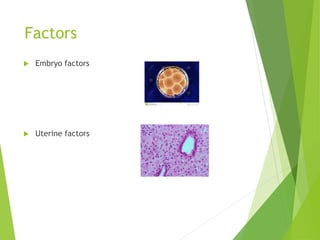
Factors
 Embryo factors
 Uterine factors
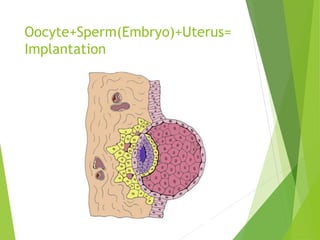
Oocyte+Sperm(Embryo)+Uterus=
Implantation
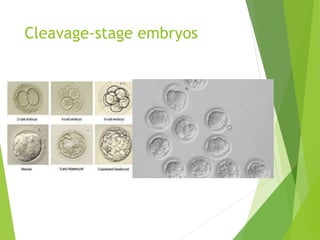
Cleavage-stage embryos
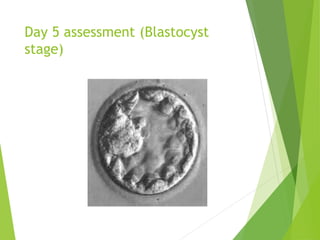
Day 5 assessment (Blastocyst
stage)
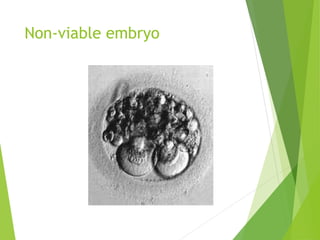
Non-viable embryo
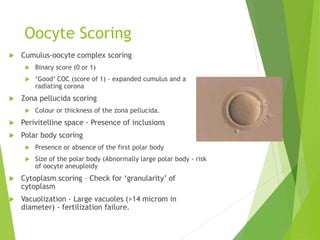
Oocyte Scoring
 Cumulus-oocyte complex scoring
 Binary score (0 or 1)
 ‘Good’ COC (score of 1) - expanded cumulus and a
radiating corona
 Zona pellucida scoring
 Colour or thickness of the zona pellucida.
 Perivitelline space - Presence of inclusions
 Polar body scoring
 Presence or absence of the first polar body
 Size of the polar body (Abnormally large polar body - risk
of oocyte aneuploidy
 Cytoplasm scoring – Check for ‘granularity’ of
cytoplasm
 Vacuolization - Large vacuoles (>14 microm in
diameter) - fertilization failure.
Poor Oocyte Quality
 Factors
 Higher age group
 Increased chromosomal
nondysjunction
 Aneuploid embryos
 Decrease in mitochondrial
membrane potential and increase
of mitochondrial DNA damage
 High FSH , low AMH and low AFC
 Aggressive ovarian stimulation
protocols
 Indicated by
 Poor response to
ovarian stimulation
 Retrieval of few
oocytes
 High proportion of
immature oocytes
 Reduced fertilization
rate
 Low embryo utilization
rate
Sperm
 Structure
 DNA Fragmentation
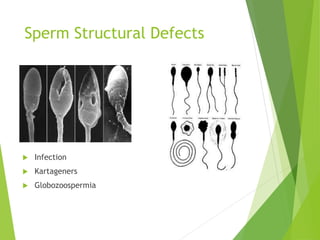
Sperm Structural Defects
 Infection
 Kartageners
 Globozoospermia
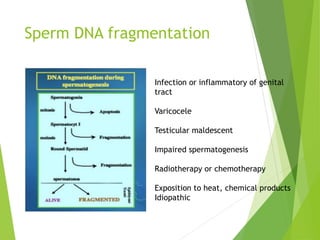
Sperm DNA fragmentation
Infection or inflammatory of genital
tract
Varicocele
Testicular maldescent
Impaired spermatogenesis
Radiotherapy or chemotherapy
Exposition to heat, chemical products
Idiopathic
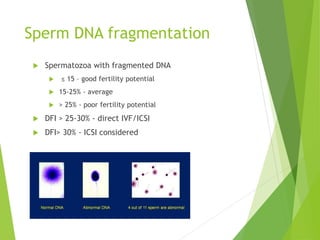
Sperm DNA fragmentation
 Spermatozoa with fragmented DNA
 ≤ 15 – good fertility potential
 15-25% - average
 > 25% - poor fertility potential
 DFI > 25-30% - direct IVF/ICSI
 DFI> 30% - ICSI considered
Treatment
 Life style changes
 Quit smoking
 Stop alcohol consumption
 Weight loss (In case of body mass index >29 kg/m2)
Treatment for Embryonic Factor
(To Improve Egg quality)
 Age
 Good stimulation drugs and protocols
 DHEA
 Arginine
Treatment for Embryonic Factor
(To Improve Egg quality)
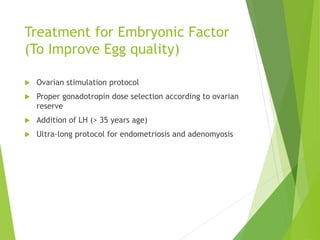
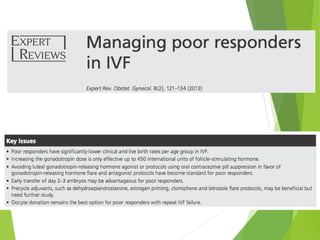
 Ovarian stimulation protocol
 Proper gonadotropin dose selection according to ovarian
reserve
 Addition of LH (> 35 years age)
 Ultra-long protocol for endometriosis and adenomyosis
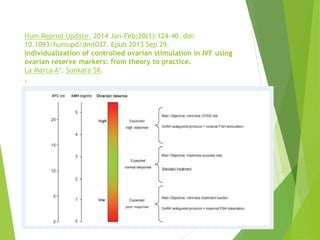
Hum Reprod Update. 2014 Jan-Feb;20(1):124-40. doi:
10.1093/humupd/dmt037. Epub 2013 Sep 29.
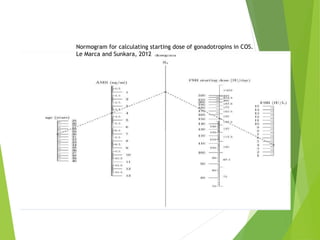
Individualization of controlled ovarian stimulation in IVF using
ovarian reserve markers: from theory to practice.
La Marca A1, Sunkara SK.
,
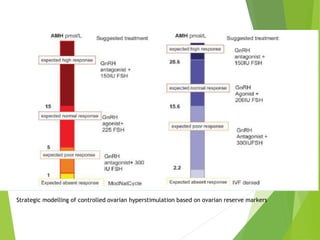
Strategic modelling of controlled ovarian hyperstimulation based on ovarian reserve markers
Normogram for calculating starting dose of gonadotropins in COS.
Le Marca and Sunkara, 2012
Treatment for Embryonic Factor
(To Improve Sperm quality)
 Antibiotic treatment
 Anti oxidants
 Varicocele Surgery
 ICSI
 IMSI
 PGS
Treatment for Embryonic
Factor
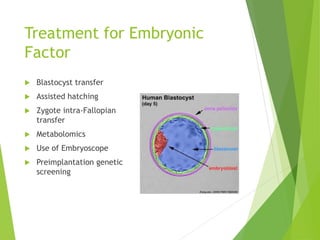
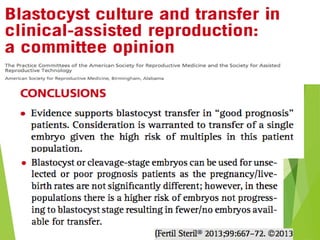
 Blastocyst transfer
 Assisted hatching
 Zygote intra-Fallopian
transfer
 Metabolomics
 Use of Embryoscope
 Preimplantation genetic
screening
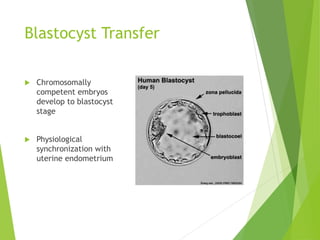
Blastocyst Transfer
 Chromosomally
competent embryos
develop to blastocyst
stage
 Physiological
synchronization with
uterine endometrium
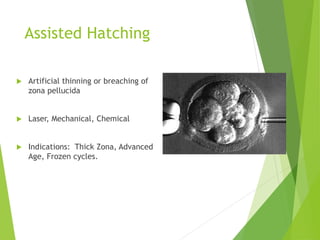
Assisted Hatching
 Artificial thinning or breaching of
zona pellucida
 Laser, Mechanical, Chemical
 Indications: Thick Zona, Advanced
Age, Frozen cycles.
Zygote intra-Fallopian transfer
(ZIFT)
 Advantage
 Zygotes comes in contact with numerous growth factors
and cytokines in tubal fluid & attain to the uterus with
greater synchronization
 Disadvantages
 Need for GA, laparoscopy, theatre time and surgical
equipment
 Expensive procedure
 Increased risk of ectopic gestation
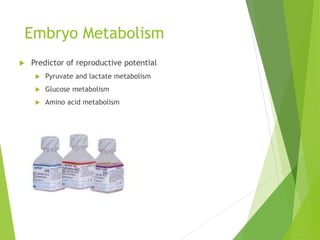
Embryo Metabolism
 Predictor of reproductive potential
 Pyruvate and lactate metabolism
 Glucose metabolism
 Amino acid metabolism
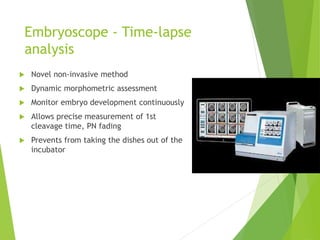
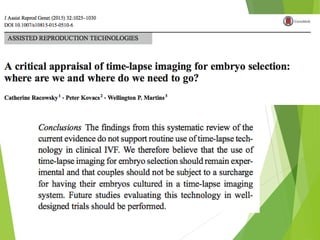
Embryoscope - Time-lapse
analysis
 Novel non-invasive method
 Dynamic morphometric assessment
 Monitor embryo development continuously
 Allows precise measurement of 1st
cleavage time, PN fading
 Prevents from taking the dishes out of the
incubator
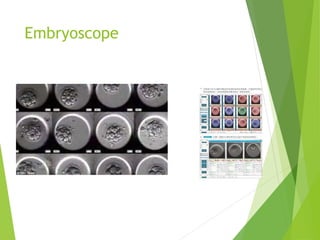
Embryoscope
Pre-implantation genetic
diagnosis (PGS)
 Genetic analysis of a
single cell from an
embryo done in
conjunction with in vitro
fertilization (IVF)
 Genetic counselling
before procedure
 To detect Chromosomal
normalcy
PGS indications
 Recurrent miscarriages
 Maternal age older than 38
 Prior failure with IVF
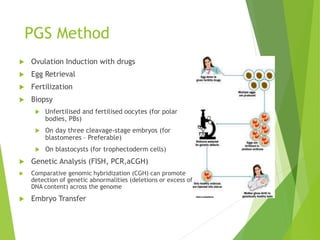
PGS Method
 Ovulation Induction with drugs
 Egg Retrieval
 Fertilization
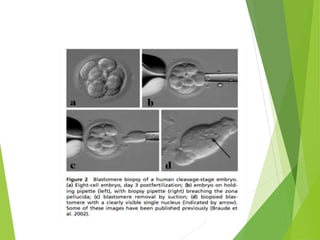
 Biopsy
 Unfertilised and fertilised oocytes (for polar
bodies, PBs)
 On day three cleavage-stage embryos (for
blastomeres – Preferable)
 On blastocysts (for trophectoderm cells)
 Genetic Analysis (FISH, PCR,aCGH)
 Comparative genomic hybridization (CGH) can promote
detection of genetic abnormalities (deletions or excess of
DNA content) across the genome
 Embryo Transfer
Challenges of PGS
 Still evolving
 Results conflicting
 Need advanced culture systems
 Need high skill
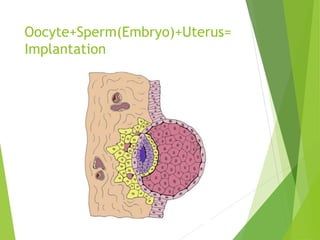
Oocyte+Sperm(Embryo)+Uterus=
Implantation
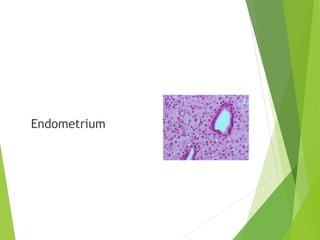
Endometrium
Endometrial Receptivity
 Depends upon
 Uterine cavity
abnormalities/patholog
ies
 Endometrial thickness
 Altered expression of
adhesive molecules
 Immunological factors
Uterine
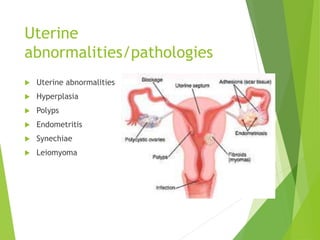
abnormalities/pathologies
 Uterine abnormalities
 Hyperplasia
 Polyps
 Endometritis
 Synechiae
 Leiomyoma
Investigations
(Uterine & Other factors)
 USG pelvis – 2 D, 3 D
 HSG, SSG
 Endoscopy
 Hysteroscopy
 Laparoscopy
 Endometrial biopsy – Uterine NK cells, TNF α
 Endometrial Receptivity Array (ERA)
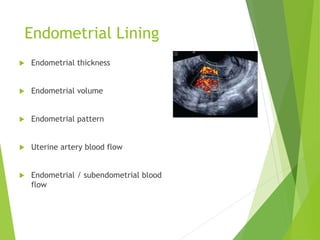
Endometrial Lining
 Endometrial thickness
 Endometrial volume
 Endometrial pattern
 Uterine artery blood flow
 Endometrial / subendometrial blood
flow
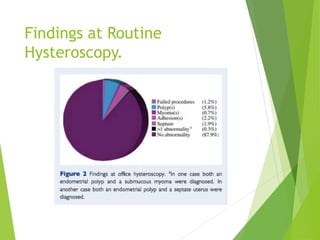
Findings at Routine
Hysteroscopy.
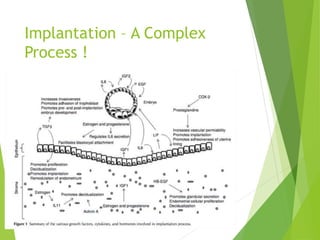
Implantation – A Complex
Process !
Immunological factors
 Natural Killer (NK) Cells – Uterine
 Cytotoxic Lymphocytes (CTLs)
 Antithyroid Antibodies (ATA)
 Alloimmune Implantation Dysfunction:
HLA compatibility; HLA‐G and DQ‐alpha
 Antiphospholipid antibodies (lupus
anticoagulant and the anticardiolipin
antibodies)
 Autoimmune Response to Sperm
Antigen
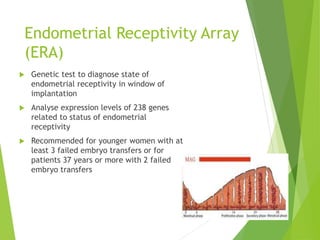
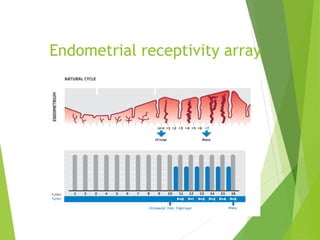
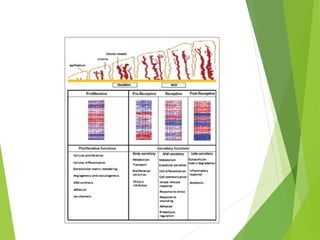
Endometrial Receptivity Array
(ERA)
 Genetic test to diagnose state of
endometrial receptivity in window of
implantation
 Analyse expression levels of 238 genes
related to status of endometrial
receptivity
 Recommended for younger women with at
least 3 failed embryo transfers or for
patients 37 years or more with 2 failed
embryo transfers
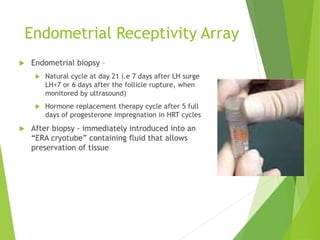
Endometrial Receptivity Array
 Endometrial biopsy –
 Natural cycle at day 21 i.e 7 days after LH surge
LH+7 or 6 days after the follicle rupture, when
monitored by ultrasound)
 Hormone replacement therapy cycle after 5 full
days of progesterone impregnation in HRT cycles
 After biopsy - immediately introduced into an
“ERA cryotube” containing fluid that allows
preservation of tissue
Endometrial receptivity array
Interpretation of results
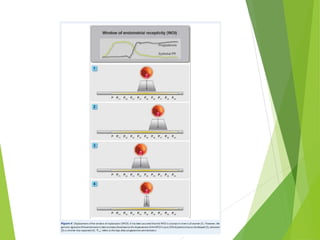
 (R) Receptive :
 Advised to proceed with ET in same conditions, type of
cycle and day when EB has been done
 (NR) Non Receptive :
 New EB to be taken to validate implantation window
displacement and guide ET
Conclusion
 ERA can be helpful in patients with RIF
 Requirement of non invasive method of testing
 Individualizes ET timing
 Small numbers/ Retrospective
 Further research required
 Cost : benefit requires work
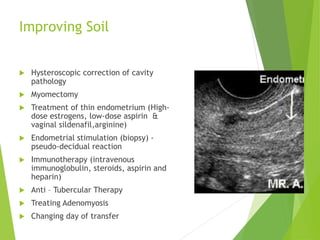
Improving Soil
 Hysteroscopic correction of cavity
pathology
 Myomectomy
 Treatment of thin endometrium (High-
dose estrogens, low-dose aspirin &
vaginal sildenafil,arginine)
 Endometrial stimulation (biopsy) -
pseudo-decidual reaction
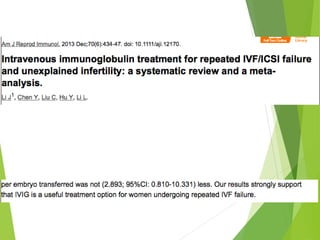
 Immunotherapy (intravenous
immunoglobulin, steroids, aspirin and
heparin)
 Anti – Tubercular Therapy
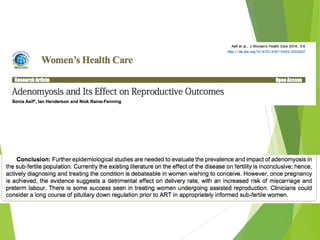
 Treating Adenomyosis
 Changing day of transfer
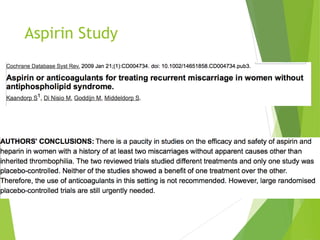
Aspirin Study
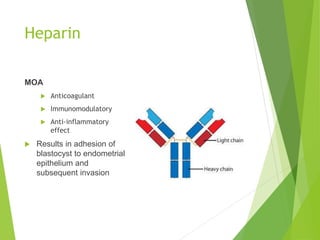
Heparin
MOA
 Anticoagulant
 Immunomodulatory
 Anti-inflammatory
effect
 Results in adhesion of
blastocyst to endometrial
epithelium and
subsequent invasion
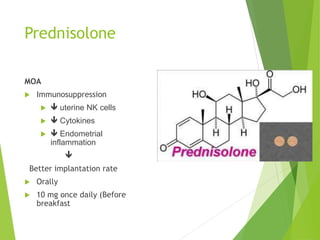
Prednisolone
MOA
 Immunosuppression
  uterine NK cells
  Cytokines
  Endometrial
inflammation

Better implantation rate
 Orally
 10 mg once daily (Before
breakfast
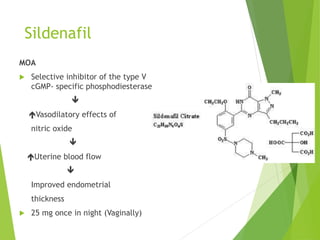
Sildenafil
MOA
 Selective inhibitor of the type V
cGMP- specific phosphodiesterase

Vasodilatory effects of
nitric oxide

Uterine blood flow

Improved endometrial
thickness
 25 mg once in night (Vaginally)
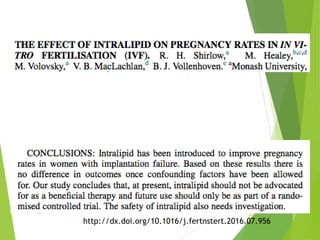
http://dx.doi.org/10.1016/j.fertnstert.2016.07.956
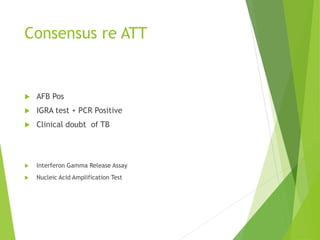
Consensus re ATT
 AFB Pos
 IGRA test + PCR Positive
 Clinical doubt of TB
 Interferon Gamma Release Assay
 Nucleic Acid Amplification Test
Other Factors
 Hydrosalpinges
 Embryo transfer techniques
 Adjunctive treatment
(Metformin, Bromocriptine,
Thyroxine)
 Alternative treatment
Embryo ---------- Uterus
The Missing Link
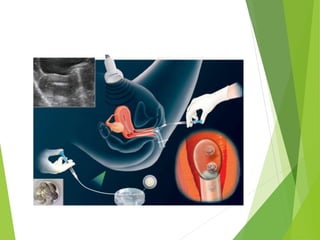
Embryo Transfer
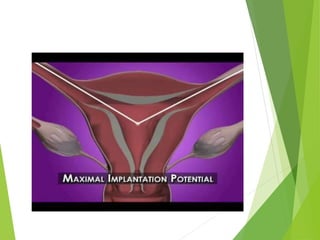
Improving ET technique
 USG guided
 Mock ET
 Full bladder
 Use of Stylet
 Irrigation and aspiration of cervical mucus
 Maximal Implantation Point
Sequential Transfer
 D2/D3 and D5
 Same Cycle
 RIF
 Freezing not option
 Multiple Pregnancy
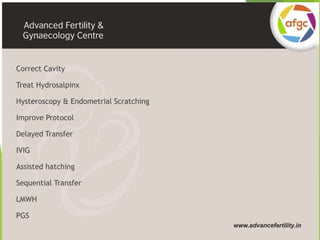
Correct Cavity
Treat Hydrosalpinx
Hysteroscopy & Endometrial Scratching
Improve Protocol
Delayed Transfer
IVIG
Assisted hatching
Sequential Transfer
LMWH
PGS
Human Reproduction Vol.21, No.12 pp. 3036–3043, 2006 doi:10.1093/humrep/del305
Advance Access publication August 12, 2006.
Mini Review—Developments in Reproductive Medicine
Investigation and treatment of repeated implantation failure following
IVF-ET
E.J.Margalioth1
, A.Ben-Chetrit, M.Gal and T.Eldar-Geva
IVF Unit, Shaare-Zedek Medical Center, Ben Gurion University of the Negev, Jerusalem, Israel
1
To whom correspondence should be addressed at: IVF Unit, Shaare-Zedek Medical Center, PO Box 3235, Jerusalem 91031, Israel.
E-mail: ehudmd@hotmail.com
Pregnancy rate following one cycle of IVF and ET can be as high as 60%. But even in the very successful units, some
couples fail repeatedly. The causes for repeated implantation failure (RIF) may be because of reduced endometrial
receptivity, embryonic defects or multifactorial causes. Various uterine pathologies, such as thin endometrium,
altered expression of adhesive molecules and immunological factors, may decrease endometrial receptivity, whereas
genetic abnormalities of the male or female, sperm defects, embryonic aneuploidy or zona hardening are among the
embryonic reasons for failure of implantation. Endometriosis and hydrosalpinges may adversely influence both. In
Thank you
Recurrant Implantation Failure in IVF

Recurrant Implantation Failure in IVF

  • 2.
    IVF & Recurrent Implantation Failure DrKaberi Banerjee Medical Director Advance Fertility and Gynaecology Centre New Delhi
  • 3.
    Definition  Failure toachieve a clinical pregnancy after transfer of at least 4 good- quality embryos in a minimum of 3 fresh or frozen cycles in a woman under the age of 40 years  Failure of implantation after transfer of at least 4 good-quality embryos or 2 blastocysts after transfer in 2 cycles.
  • 4.
     Failure couldbe caused by many different factors such as  inappropriate ovarian stimulation,  suboptimal laboratory culture conditions and  faults in embryo transfer techniques.  These would usually result in a low pregnancy rate (PR) for the whole unit.
  • 5.
  • 6.
  • 7.
  • 8.
    Day 5 assessment(Blastocyst stage)
  • 9.
  • 10.
    Oocyte Scoring  Cumulus-oocytecomplex scoring  Binary score (0 or 1)  ‘Good’ COC (score of 1) - expanded cumulus and a radiating corona  Zona pellucida scoring  Colour or thickness of the zona pellucida.  Perivitelline space - Presence of inclusions  Polar body scoring  Presence or absence of the first polar body  Size of the polar body (Abnormally large polar body - risk of oocyte aneuploidy  Cytoplasm scoring – Check for ‘granularity’ of cytoplasm  Vacuolization - Large vacuoles (>14 microm in diameter) - fertilization failure.
  • 11.
    Poor Oocyte Quality Factors  Higher age group  Increased chromosomal nondysjunction  Aneuploid embryos  Decrease in mitochondrial membrane potential and increase of mitochondrial DNA damage  High FSH , low AMH and low AFC  Aggressive ovarian stimulation protocols  Indicated by  Poor response to ovarian stimulation  Retrieval of few oocytes  High proportion of immature oocytes  Reduced fertilization rate  Low embryo utilization rate
  • 12.
  • 13.
    Sperm Structural Defects Infection  Kartageners  Globozoospermia
  • 14.
    Sperm DNA fragmentation Infectionor inflammatory of genital tract Varicocele Testicular maldescent Impaired spermatogenesis Radiotherapy or chemotherapy Exposition to heat, chemical products Idiopathic
  • 15.
    Sperm DNA fragmentation Spermatozoa with fragmented DNA  ≤ 15 – good fertility potential  15-25% - average  > 25% - poor fertility potential  DFI > 25-30% - direct IVF/ICSI  DFI> 30% - ICSI considered
  • 16.
    Treatment  Life stylechanges  Quit smoking  Stop alcohol consumption  Weight loss (In case of body mass index >29 kg/m2)
  • 17.
    Treatment for EmbryonicFactor (To Improve Egg quality)  Age  Good stimulation drugs and protocols  DHEA  Arginine
  • 18.
    Treatment for EmbryonicFactor (To Improve Egg quality)  Ovarian stimulation protocol  Proper gonadotropin dose selection according to ovarian reserve  Addition of LH (> 35 years age)  Ultra-long protocol for endometriosis and adenomyosis
  • 20.
    Hum Reprod Update.2014 Jan-Feb;20(1):124-40. doi: 10.1093/humupd/dmt037. Epub 2013 Sep 29. Individualization of controlled ovarian stimulation in IVF using ovarian reserve markers: from theory to practice. La Marca A1, Sunkara SK. ,
  • 21.
    Strategic modelling ofcontrolled ovarian hyperstimulation based on ovarian reserve markers
  • 22.
    Normogram for calculatingstarting dose of gonadotropins in COS. Le Marca and Sunkara, 2012
  • 23.
    Treatment for EmbryonicFactor (To Improve Sperm quality)  Antibiotic treatment  Anti oxidants  Varicocele Surgery  ICSI  IMSI  PGS
  • 24.
    Treatment for Embryonic Factor Blastocyst transfer  Assisted hatching  Zygote intra-Fallopian transfer  Metabolomics  Use of Embryoscope  Preimplantation genetic screening
  • 25.
    Blastocyst Transfer  Chromosomally competentembryos develop to blastocyst stage  Physiological synchronization with uterine endometrium
  • 27.
    Assisted Hatching  Artificialthinning or breaching of zona pellucida  Laser, Mechanical, Chemical  Indications: Thick Zona, Advanced Age, Frozen cycles.
  • 28.
    Zygote intra-Fallopian transfer (ZIFT) Advantage  Zygotes comes in contact with numerous growth factors and cytokines in tubal fluid & attain to the uterus with greater synchronization  Disadvantages  Need for GA, laparoscopy, theatre time and surgical equipment  Expensive procedure  Increased risk of ectopic gestation
  • 29.
    Embryo Metabolism  Predictorof reproductive potential  Pyruvate and lactate metabolism  Glucose metabolism  Amino acid metabolism
  • 30.
    Embryoscope - Time-lapse analysis Novel non-invasive method  Dynamic morphometric assessment  Monitor embryo development continuously  Allows precise measurement of 1st cleavage time, PN fading  Prevents from taking the dishes out of the incubator
  • 31.
  • 33.
    Pre-implantation genetic diagnosis (PGS) Genetic analysis of a single cell from an embryo done in conjunction with in vitro fertilization (IVF)  Genetic counselling before procedure  To detect Chromosomal normalcy
  • 34.
    PGS indications  Recurrentmiscarriages  Maternal age older than 38  Prior failure with IVF
  • 35.
    PGS Method  OvulationInduction with drugs  Egg Retrieval  Fertilization  Biopsy  Unfertilised and fertilised oocytes (for polar bodies, PBs)  On day three cleavage-stage embryos (for blastomeres – Preferable)  On blastocysts (for trophectoderm cells)  Genetic Analysis (FISH, PCR,aCGH)  Comparative genomic hybridization (CGH) can promote detection of genetic abnormalities (deletions or excess of DNA content) across the genome  Embryo Transfer
  • 37.
    Challenges of PGS Still evolving  Results conflicting  Need advanced culture systems  Need high skill
  • 38.
  • 39.
  • 40.
    Endometrial Receptivity  Dependsupon  Uterine cavity abnormalities/patholog ies  Endometrial thickness  Altered expression of adhesive molecules  Immunological factors
  • 41.
    Uterine abnormalities/pathologies  Uterine abnormalities Hyperplasia  Polyps  Endometritis  Synechiae  Leiomyoma
  • 42.
    Investigations (Uterine & Otherfactors)  USG pelvis – 2 D, 3 D  HSG, SSG  Endoscopy  Hysteroscopy  Laparoscopy  Endometrial biopsy – Uterine NK cells, TNF α  Endometrial Receptivity Array (ERA)
  • 43.
    Endometrial Lining  Endometrialthickness  Endometrial volume  Endometrial pattern  Uterine artery blood flow  Endometrial / subendometrial blood flow
  • 44.
  • 45.
    Implantation – AComplex Process !
  • 46.
    Immunological factors  NaturalKiller (NK) Cells – Uterine  Cytotoxic Lymphocytes (CTLs)  Antithyroid Antibodies (ATA)  Alloimmune Implantation Dysfunction: HLA compatibility; HLA‐G and DQ‐alpha  Antiphospholipid antibodies (lupus anticoagulant and the anticardiolipin antibodies)  Autoimmune Response to Sperm Antigen
  • 47.
    Endometrial Receptivity Array (ERA) Genetic test to diagnose state of endometrial receptivity in window of implantation  Analyse expression levels of 238 genes related to status of endometrial receptivity  Recommended for younger women with at least 3 failed embryo transfers or for patients 37 years or more with 2 failed embryo transfers
  • 48.
    Endometrial Receptivity Array Endometrial biopsy –  Natural cycle at day 21 i.e 7 days after LH surge LH+7 or 6 days after the follicle rupture, when monitored by ultrasound)  Hormone replacement therapy cycle after 5 full days of progesterone impregnation in HRT cycles  After biopsy - immediately introduced into an “ERA cryotube” containing fluid that allows preservation of tissue
  • 49.
  • 51.
    Interpretation of results (R) Receptive :  Advised to proceed with ET in same conditions, type of cycle and day when EB has been done  (NR) Non Receptive :  New EB to be taken to validate implantation window displacement and guide ET
  • 53.
    Conclusion  ERA canbe helpful in patients with RIF  Requirement of non invasive method of testing  Individualizes ET timing  Small numbers/ Retrospective  Further research required  Cost : benefit requires work
  • 54.
    Improving Soil  Hysteroscopiccorrection of cavity pathology  Myomectomy  Treatment of thin endometrium (High- dose estrogens, low-dose aspirin & vaginal sildenafil,arginine)  Endometrial stimulation (biopsy) - pseudo-decidual reaction  Immunotherapy (intravenous immunoglobulin, steroids, aspirin and heparin)  Anti – Tubercular Therapy  Treating Adenomyosis  Changing day of transfer
  • 55.
  • 56.
    Heparin MOA  Anticoagulant  Immunomodulatory Anti-inflammatory effect  Results in adhesion of blastocyst to endometrial epithelium and subsequent invasion
  • 57.
    Prednisolone MOA  Immunosuppression  uterine NK cells   Cytokines   Endometrial inflammation  Better implantation rate  Orally  10 mg once daily (Before breakfast
  • 58.
    Sildenafil MOA  Selective inhibitorof the type V cGMP- specific phosphodiesterase  Vasodilatory effects of nitric oxide  Uterine blood flow  Improved endometrial thickness  25 mg once in night (Vaginally)
  • 60.
  • 61.
    Consensus re ATT AFB Pos  IGRA test + PCR Positive  Clinical doubt of TB  Interferon Gamma Release Assay  Nucleic Acid Amplification Test
  • 63.
    Other Factors  Hydrosalpinges Embryo transfer techniques  Adjunctive treatment (Metformin, Bromocriptine, Thyroxine)  Alternative treatment
  • 64.
    Embryo ---------- Uterus TheMissing Link Embryo Transfer
  • 67.
    Improving ET technique USG guided  Mock ET  Full bladder  Use of Stylet  Irrigation and aspiration of cervical mucus  Maximal Implantation Point
  • 68.
    Sequential Transfer  D2/D3and D5  Same Cycle  RIF  Freezing not option  Multiple Pregnancy
  • 69.
    Correct Cavity Treat Hydrosalpinx Hysteroscopy& Endometrial Scratching Improve Protocol Delayed Transfer IVIG Assisted hatching Sequential Transfer LMWH PGS
  • 72.
    Human Reproduction Vol.21,No.12 pp. 3036–3043, 2006 doi:10.1093/humrep/del305 Advance Access publication August 12, 2006. Mini Review—Developments in Reproductive Medicine Investigation and treatment of repeated implantation failure following IVF-ET E.J.Margalioth1 , A.Ben-Chetrit, M.Gal and T.Eldar-Geva IVF Unit, Shaare-Zedek Medical Center, Ben Gurion University of the Negev, Jerusalem, Israel 1 To whom correspondence should be addressed at: IVF Unit, Shaare-Zedek Medical Center, PO Box 3235, Jerusalem 91031, Israel. E-mail: ehudmd@hotmail.com Pregnancy rate following one cycle of IVF and ET can be as high as 60%. But even in the very successful units, some couples fail repeatedly. The causes for repeated implantation failure (RIF) may be because of reduced endometrial receptivity, embryonic defects or multifactorial causes. Various uterine pathologies, such as thin endometrium, altered expression of adhesive molecules and immunological factors, may decrease endometrial receptivity, whereas genetic abnormalities of the male or female, sperm defects, embryonic aneuploidy or zona hardening are among the embryonic reasons for failure of implantation. Endometriosis and hydrosalpinges may adversely influence both. In
  • 73.