Sujoy Dasgupta
MBBS (Gold Medalist, Hons)
MS (OBGY- Gold Medalist)
DNB (New Delhi)
MRCOG (London)
Advanced ART Course for Clinicians (NUHS, Singapore)
Consultant: Reproductive Medicine, Genome Fertility Centre,
Kolkata
• Managing Committee Member, Bengal Obstetric &
Gynaecological Society (BOGS)- 2019-20
• Secretary, Subfertility and Reproductive Endocrinology
Committee, BOGS- 2019-20
• Winner, Prof Geoffrey Chamberlain Award, RCOG World
Congress, London, 2019
Thin Endometrium
Do we understand ???
IVF Success Rate- 40%
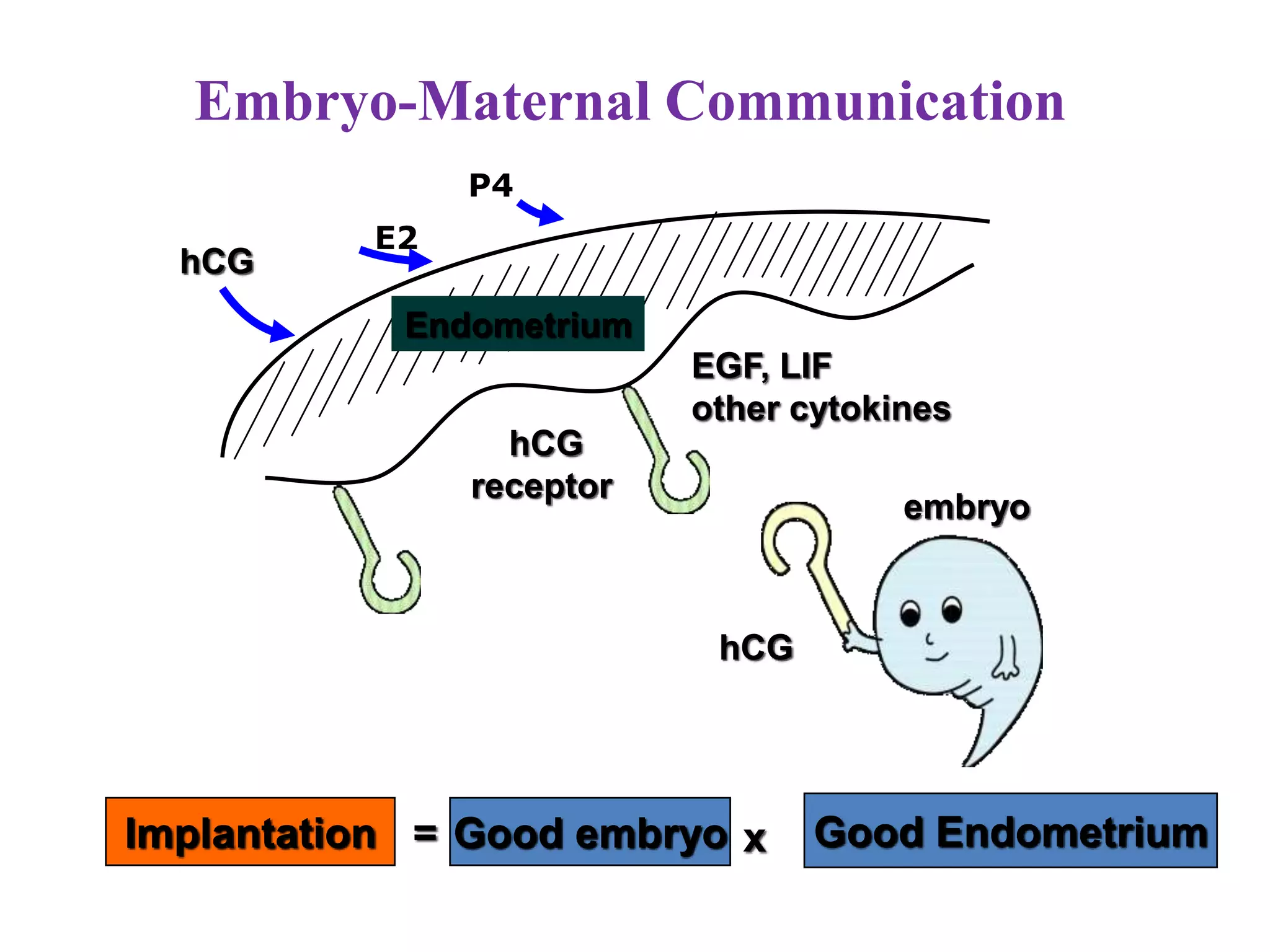
Embryo-Maternal Communication
=
embryo
hCG
hCG
receptor
Endometrium
EGF, LIF
other cytokines
hCG
Implantation Good embryo Good Endometriumx
E2
P4
Receptive Endometrium requires
1. Estrogen priming-
needed for endometrial
proliferation and
development of P4
receptors
2. Time-related
progesterone induced
secretory changes in
the endometrium
• Other molecules
• IGFBP-1
• Prolactin
• Laminin, type IV
Collagen, Fibronectin,
Heparin sulphate
• Integrin, Cadherin,
Adheren, Secretin
• LIF, IL-6, IL-11, VEGF,
CSF, TGF-β, TNF-α
Ideal way to measure the
endometrial receptivity
• Sensitive and specific
• Accurate
• Noninvasive
• Cheap
• Acceptable to the patients
• Easily available
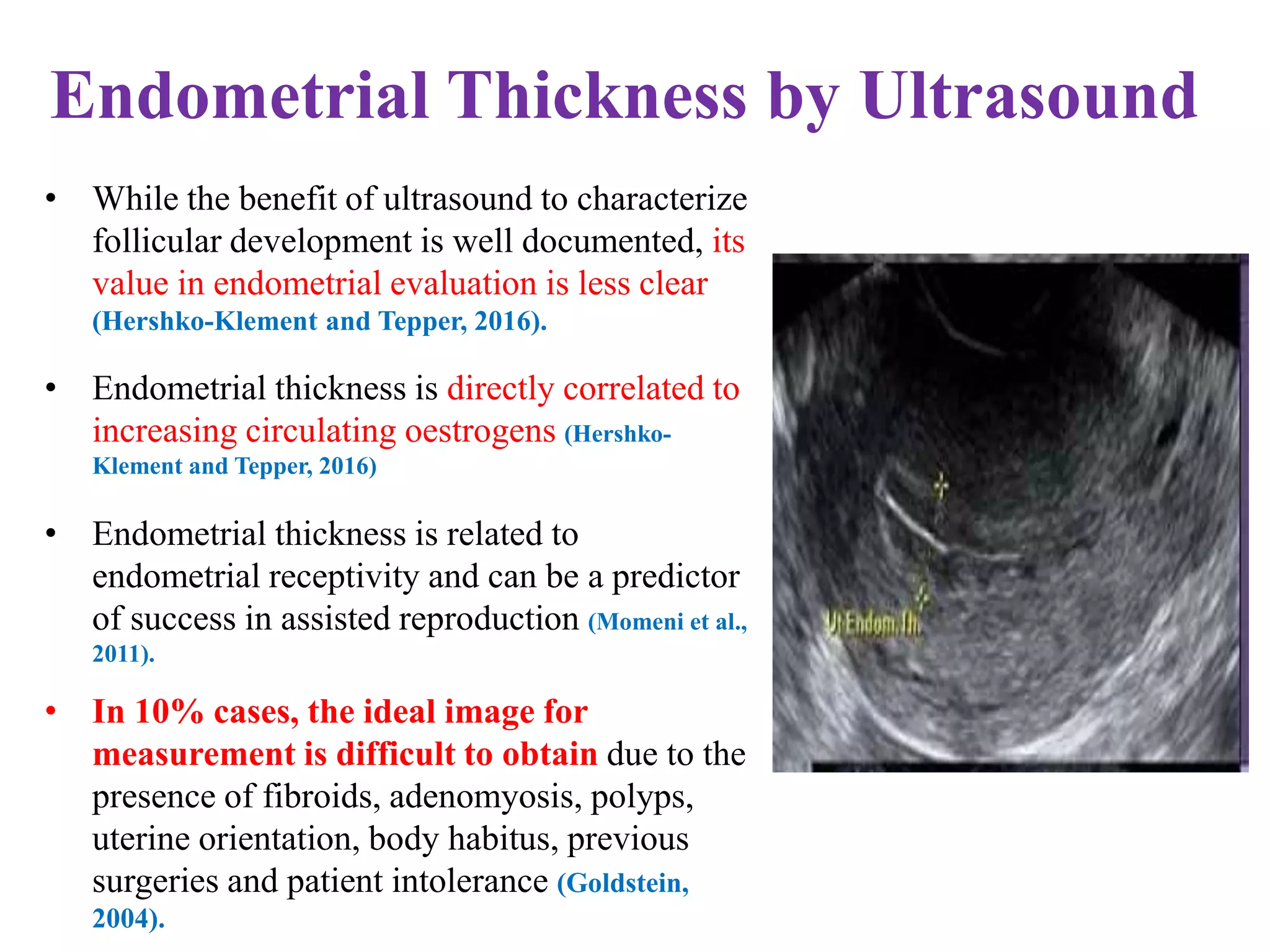
Endometrial Thickness by Ultrasound
• While the benefit of ultrasound to characterize
follicular development is well documented, its
value in endometrial evaluation is less clear
(Hershko-Klement and Tepper, 2016).
• Endometrial thickness is directly correlated to
increasing circulating oestrogens (Hershko-
Klement and Tepper, 2016)
• Endometrial thickness is related to
endometrial receptivity and can be a predictor
of success in assisted reproduction (Momeni et al.,
2011).
• In 10% cases, the ideal image for
measurement is difficult to obtain due to the
presence of fibroids, adenomyosis, polyps,
uterine orientation, body habitus, previous
surgeries and patient intolerance (Goldstein,
2004).
An endometrial thickness of 9-14 mm is associated with higher
implantation & pregnancy rates as compared to endometrial thickening
of < 7mm
12%
18%
16%
14%
19%
27%
25%
30%
0%
5%
10%
15%
20%
25%
30%
35%
Implantation rate Clinical pregnancy
rate
Ongoing
pregnancy rate
Live birth rates
ET (<7mm) ET (9-14 mm)
Fertil Steril, 2008
Ideal Endometrial Thickness
What is thin endometrium?
• Considerable controversy (Chen et al., 2010; De Geyter et
al., 2000; Detti et al., 2008; Zhao et al., 2012, 2014).
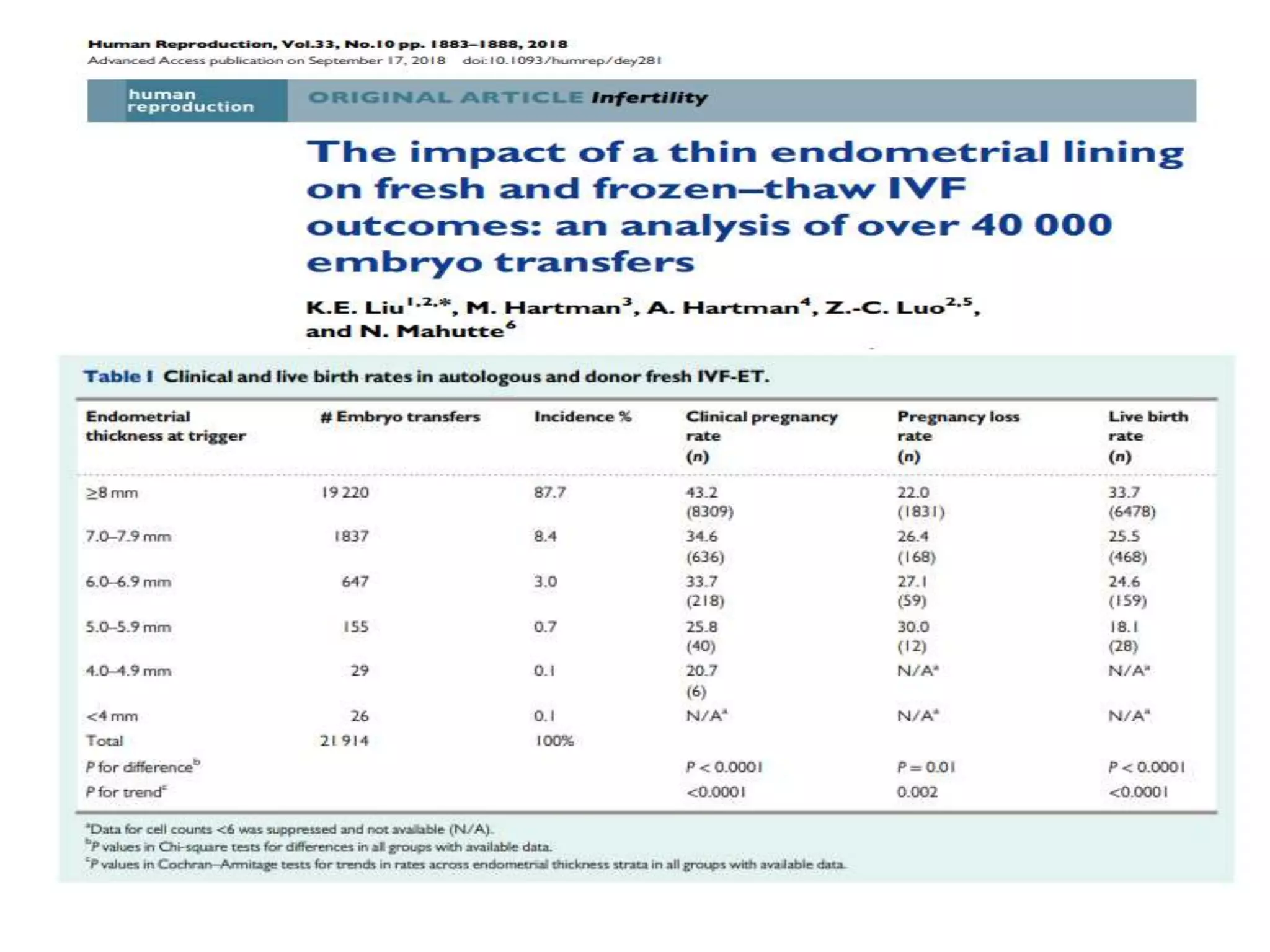
• Clinical pregnancy and live birth rates
decrease for each millimeter of endometrial
thickness below 8 mm in fresh IVF cycles and
below 7 mm for frozen–thaw IVF cycles.
• In fresh IVF-embryo transfer cycles, patients
should be counselled that endometrial thickness
<8 mm may have a negative impact on
pregnancy and live birth rates
• In frozen IVF-embryo transfer cycles, patients
should be counselled that endometrial thickness
<7 mm may have a negative impact on
pregnancy and live birth rates.
Incidence of “thin endometrium”
• In ovarian stimulation cycles- 38–66%; in IVF
is 1-2.5%. (Asante et al., 2013; Chen et al., 2012; Wolff et al., 2013;
Jeon et al., 2013).
• Based on retrospective and prospective
observational studies.
• Ovarian stimulation cycles are more likely to
proceed despite the thin endometrium whilst
IVF cycles are more likely to be cancelled.
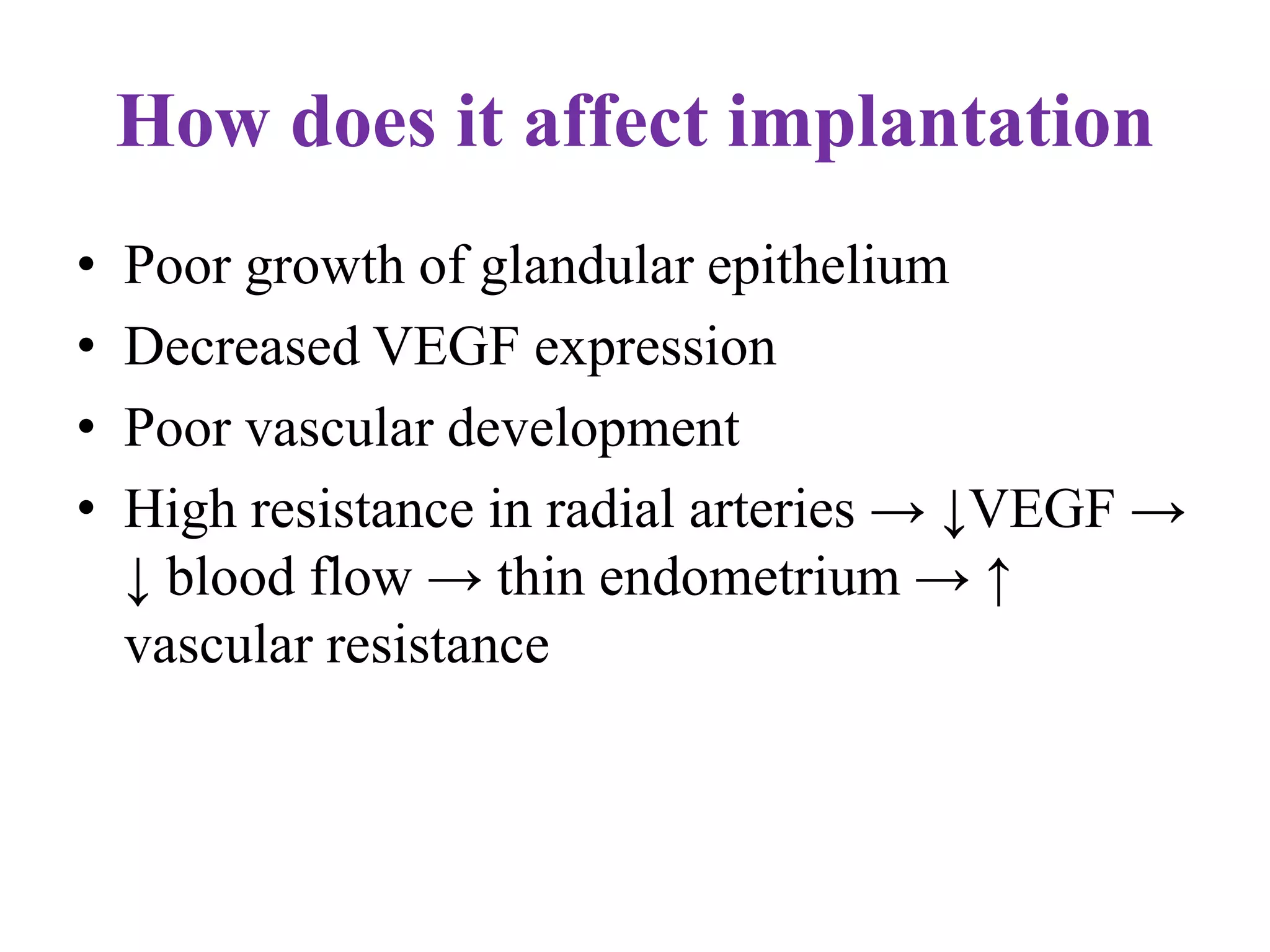
How does it affect implantation
• Poor growth of glandular epithelium
• Decreased VEGF expression
• Poor vascular development
• High resistance in radial arteries → ↓VEGF →
↓ blood flow → thin endometrium → ↑
vascular resistance
Does it really matter?
• The likelihood of achieving an endometrial
thickness ≥8 mm decreased with age (89.7,
87.8 and 83.9% in women <35, 35–39 and ≥40,
respectively) (P < 0.0001).
• Nevertheless, viable pregnancy rates remain
reasonably acceptable in patients with an
endometrial thickness between 4 and 6 mm
How thin is the “thin endometrium”?
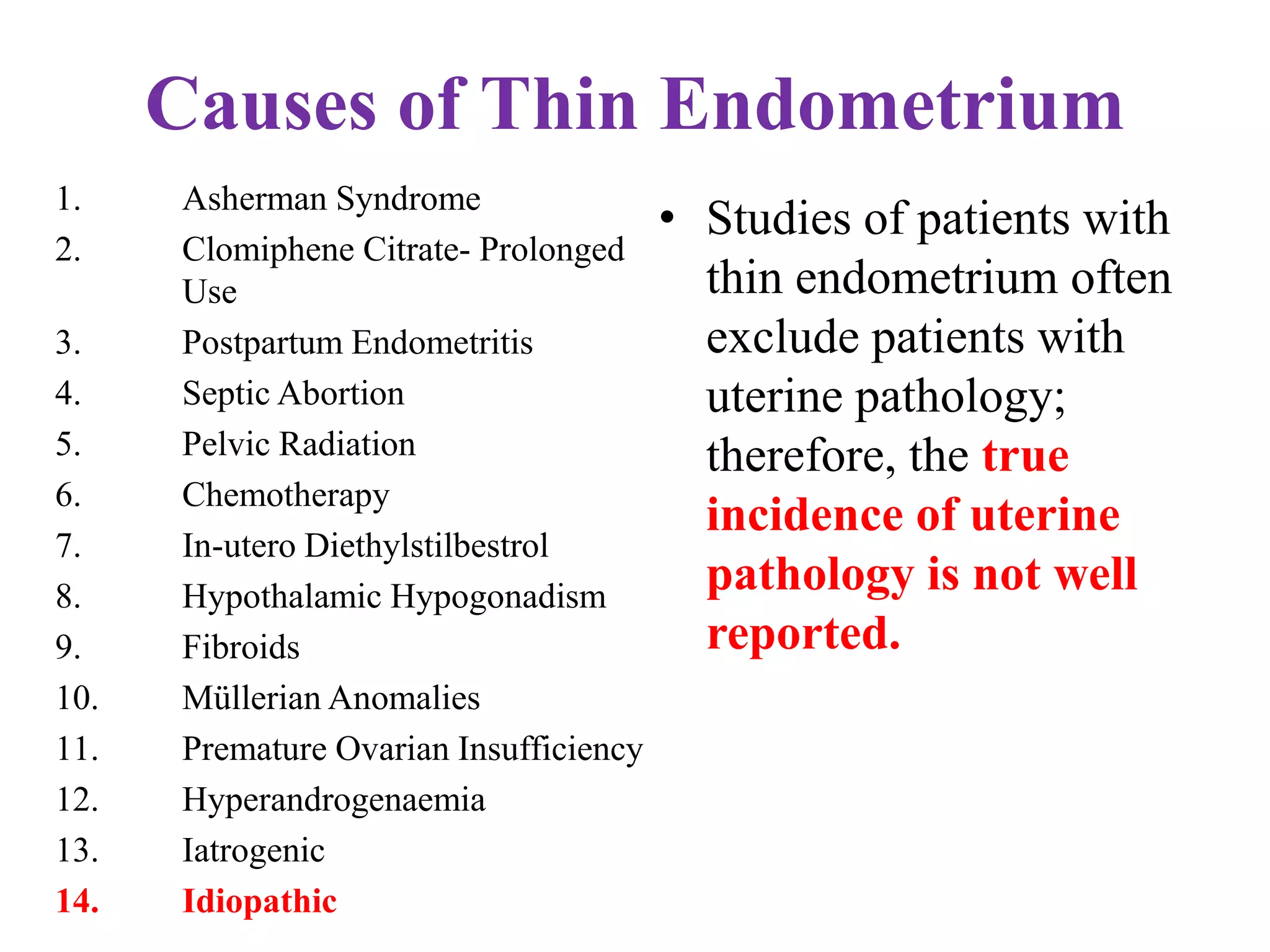
Causes of Thin Endometrium
1. Asherman Syndrome
2. Clomiphene Citrate- Prolonged
Use
3. Postpartum Endometritis
4. Septic Abortion
5. Pelvic Radiation
6. Chemotherapy
7. In-utero Diethylstilbestrol
8. Hypothalamic Hypogonadism
9. Fibroids
10. Müllerian Anomalies
11. Premature Ovarian Insufficiency
12. Hyperandrogenaemia
13. Iatrogenic
14. Idiopathic
• Studies of patients with
thin endometrium often
exclude patients with
uterine pathology;
therefore, the true
incidence of uterine
pathology is not well
reported.
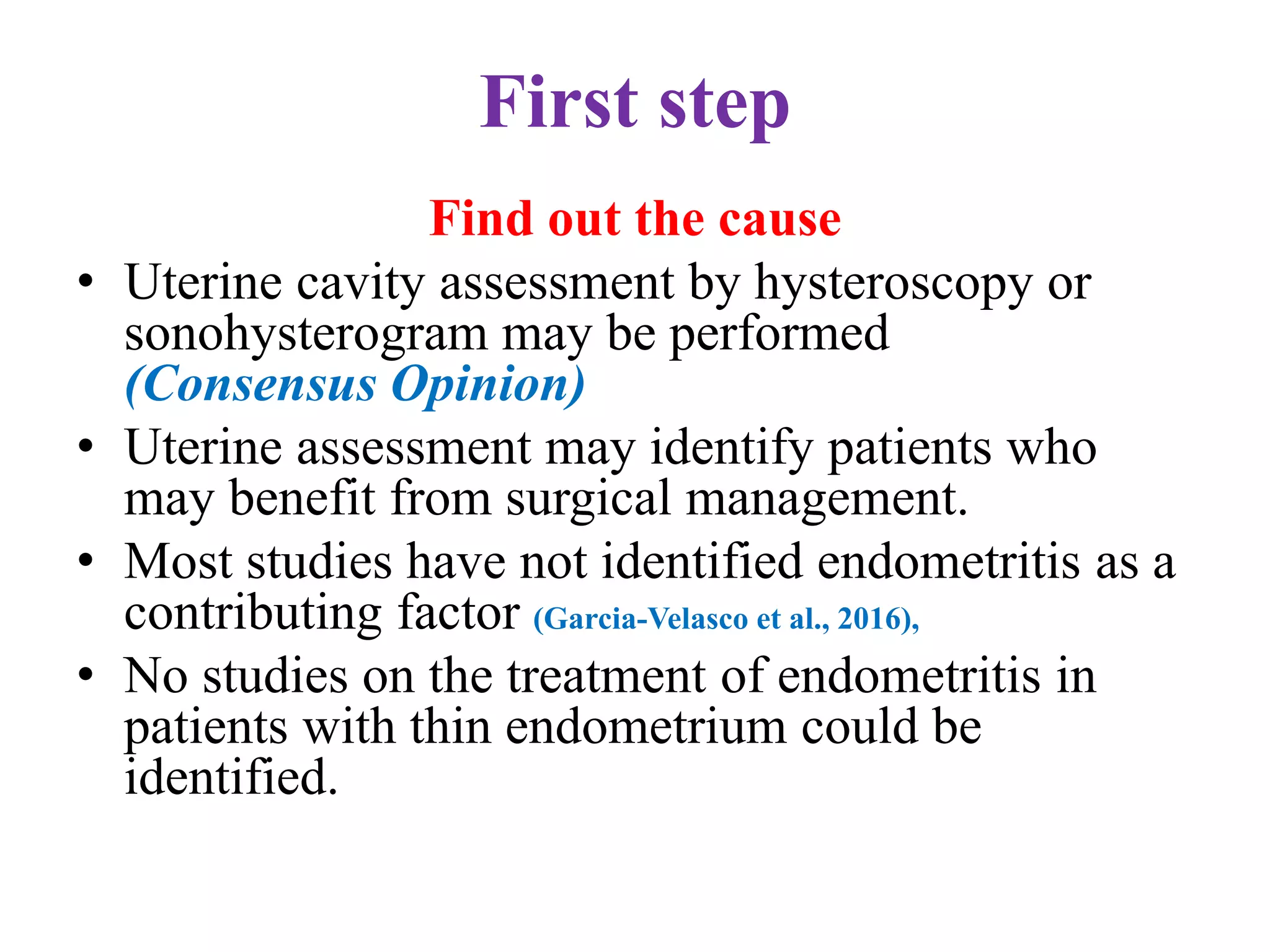
First step
Find out the cause
• Uterine cavity assessment by hysteroscopy or
sonohysterogram may be performed
(Consensus Opinion)
• Uterine assessment may identify patients who
may benefit from surgical management.
• Most studies have not identified endometritis as a
contributing factor (Garcia-Velasco et al., 2016),
• No studies on the treatment of endometritis in
patients with thin endometrium could be
identified.
Treat the cause
• May have more detrimental effect than the thin
endometrium itself
1. Endometritis
2. Intrauterine Adhesion
3. Endometriosis
4. Hydrosalpinx
Thin ET in Fresh Cycle
• Change Stimulation protocol
• Add Estradiol
• Add adjuvants
• Freeze all
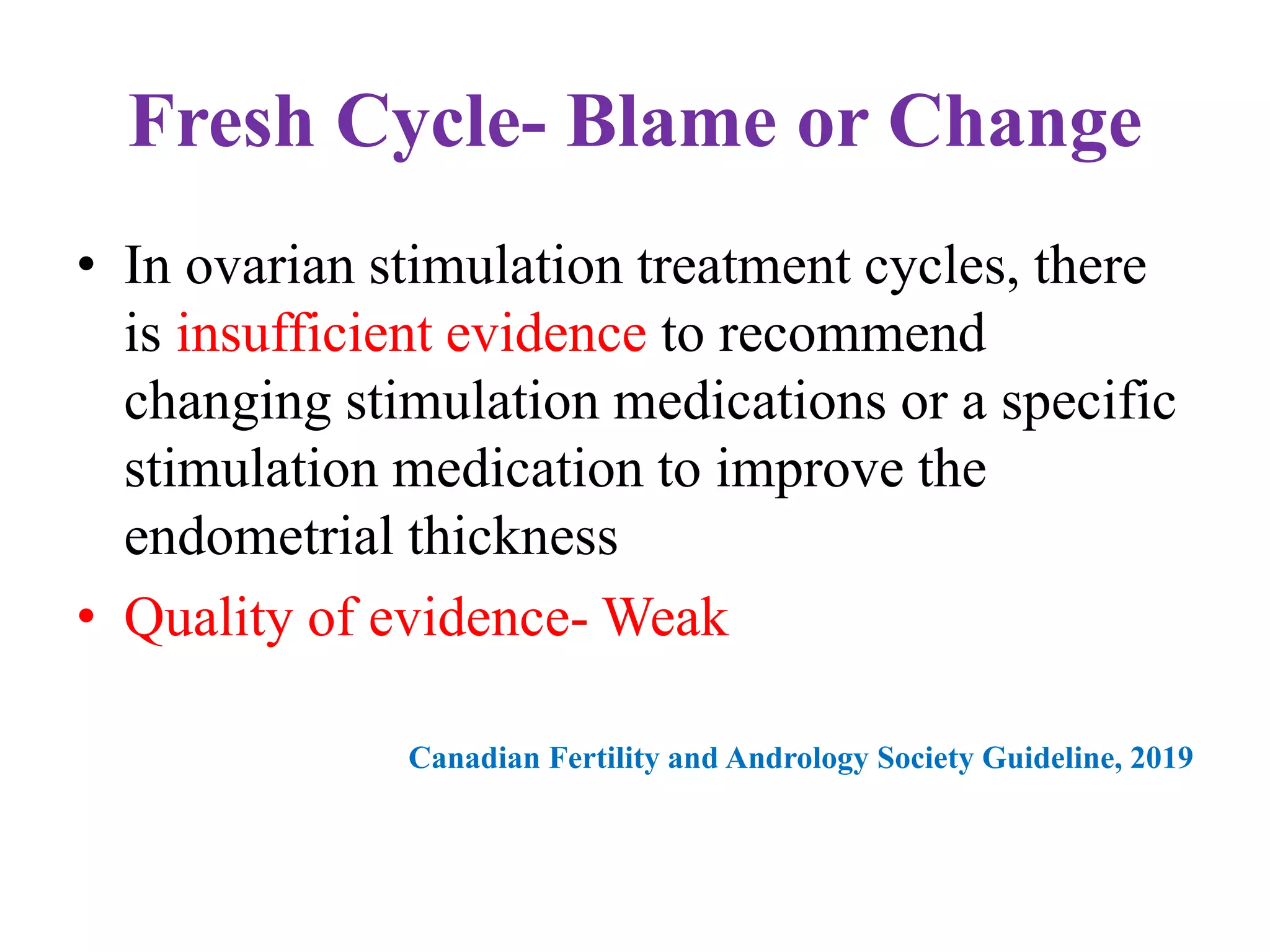
Fresh Cycle- Blame or Change
• In ovarian stimulation treatment cycles, there
is insufficient evidence to recommend
changing stimulation medications or a specific
stimulation medication to improve the
endometrial thickness
• Quality of evidence- Weak
Canadian Fertility and Andrology Society Guideline, 2019
Addition of luteal estrogen supplementation in stimulated cycles improves the pregnancy
rates & hence improves IVF embryo transfer rates **
** Fertil Steril. 2005 May;83(5):1372-6
0.00% 10.00% 20.00% 30.00% 40.00% 50.00% 60.00%
P4
P4+2mg E2
P4+6mg E2
Fresh Cycle- Add Estrogen
• Progesterone vs progesterone with oestrogen
• 16 RCTs, 2577 women
• There was no evidence of a difference between the
groups in rates of live birth or ongoing pregnancy (OR
1.12, 95% CI 0.91 to 1.38, nine RCTs, 1651 women, I2
= 0%, low-quality evidence) or OHSS (OR 0.56, 95%
CI 0.2 to 1.63, two RCTs, 461 women, I2 = 0%, low-
quality evidence)
Pregnancyrates,%
Significantly higher IR and PR were found in patients who received
low dose E2 (2 mg) compared with no E2, but the best outcomes
were found significantly in the group with high dose E2 (6 mg)
supplementation.
Lukaszuk et al, 2005
Estrogen in Agonist Cycle
• Any benefit of oestradiol supplementation for
luteal phase support appears to correlate with the
serum oestradiol level on the day of hCG trigger.
• Oestradiol supplementation is beneficial for
improving live birth rate in cycles with oestradiol
levels less than 5000 pmol/L, but is not
recommended in cycles with oestradiol levels
over 10 000 pmol/L.
Thin Endometrium in Fresh Cycle
• In patients with thin endometrium undergoing
fresh IVF-embryo transfer cycles, we suggest
against the use of luteal oestradiol to improve
pregnancy rates. *
• In fresh IVF-embryo transfer cycles, patients with
thin endometrium can be offered elective
cryopreservation of embryos and transfer in a
subsequent cycle.*
*Canadian fertility and Andrology Society Guideline, 2019
Fresh Cycle- Adjuvants
• In ovarian stimulation treatment cycles, there
is insufficient evidence to recommend the use
of adjuvants to improve endometrial thickness
or pregnancy rates.
Canadian Fertility and Andrology Society Guideline, 2019
Which Endometrial Preparation for FET?
Natural Cycle (NC)
Pure natural cycle
Modified Natural
Cycle (MNC)
Hormone
Replacement Cycle
(HRT)
HRT without DR
Down-regulated HRT
(DR-HRT)
Stimulated Cycle
Which Endometrial Preparation is the best?
• The number of high quality randomized controlled
trials (RCTs) is scarce and, hence, the evidence for the
best protocol for FET is poor.
• In terms of embryo transfer timing, we propose to start
progesterone intake on the theoretical day of oocyte
retrieval in HRT and to perform blastocyst transfer at
hCG + 7 or LH + 6 in modified or true NC, respectively.
• For patients with a history of thin
endometrium in ART treatment undergoing
endometrial preparation for embryo transfer,
there is insufficient evidence that any specific
protocol (natural cycle or hormone
replacement) for endometrial preparation
provides better pregnancy outcomes.
Canadian Fertility and Andrology
Society Guideline, 2019
Hormone Replacement Cycle
(Artificial Cycle)
• Exogenous supply of Estrogen & Progesterone that equals the
effects of ovarian hormones on the endometrial tissue is
required Gupta SA et al, 2018
D1 D2 D11 D12
E2 4 mg/day
(2 mg BD)
E2 8 mg/day
(4 mg BD)
E2 12 mg/day
(6 mg BD)
E2 6-12 mg/day
TVS
ET 7-14 mm
Adjust E2 dose
tOR
P4 gel/ injectable
D3 D5
ET ET
Superiority of Esradiol valerate over
other estrogens
Ethinyl Estradiol ↑ Triglyceride
↑PRA → Hypertension
↑ Factor VII → ↑ Coagulation
Conjugated Estrogen Inter-batch variability
Allergic reaction
↑PRA → Hypertension
↑ Factor VII → ↑ Coagulation
Estriol 1/6 estrogenic activity
↑ LDL
Estradiol Transdermal Patch Inconsistency between products
Skin reaction
Problem in humid atmosphere
Estradiol Transdermal Gel ↓Bioavailability
Skin reaction
Duration of Estrogen Therapy
• Endometrial receptivity (ER) is tolerant to a wide
duration of E2 treatment
• Uterine preparation consisting of 6 mg EV can be
extended as long as 5 weeks with no significant decrease
in ER
Journal of Assisted Reproduction & genetics ,vol 18 ,No 4,april 2001
Fertil steril 1995 jun ;63(6):1284-6
• Long duration of E2 therapy is not deleterious
• Vaginal micronized E2 achieves higher endometrial
concentration
Hum Reprod 2002
• Decreasing the length of E2 therapy is beneficial in terms
of cost and time to pregnancy
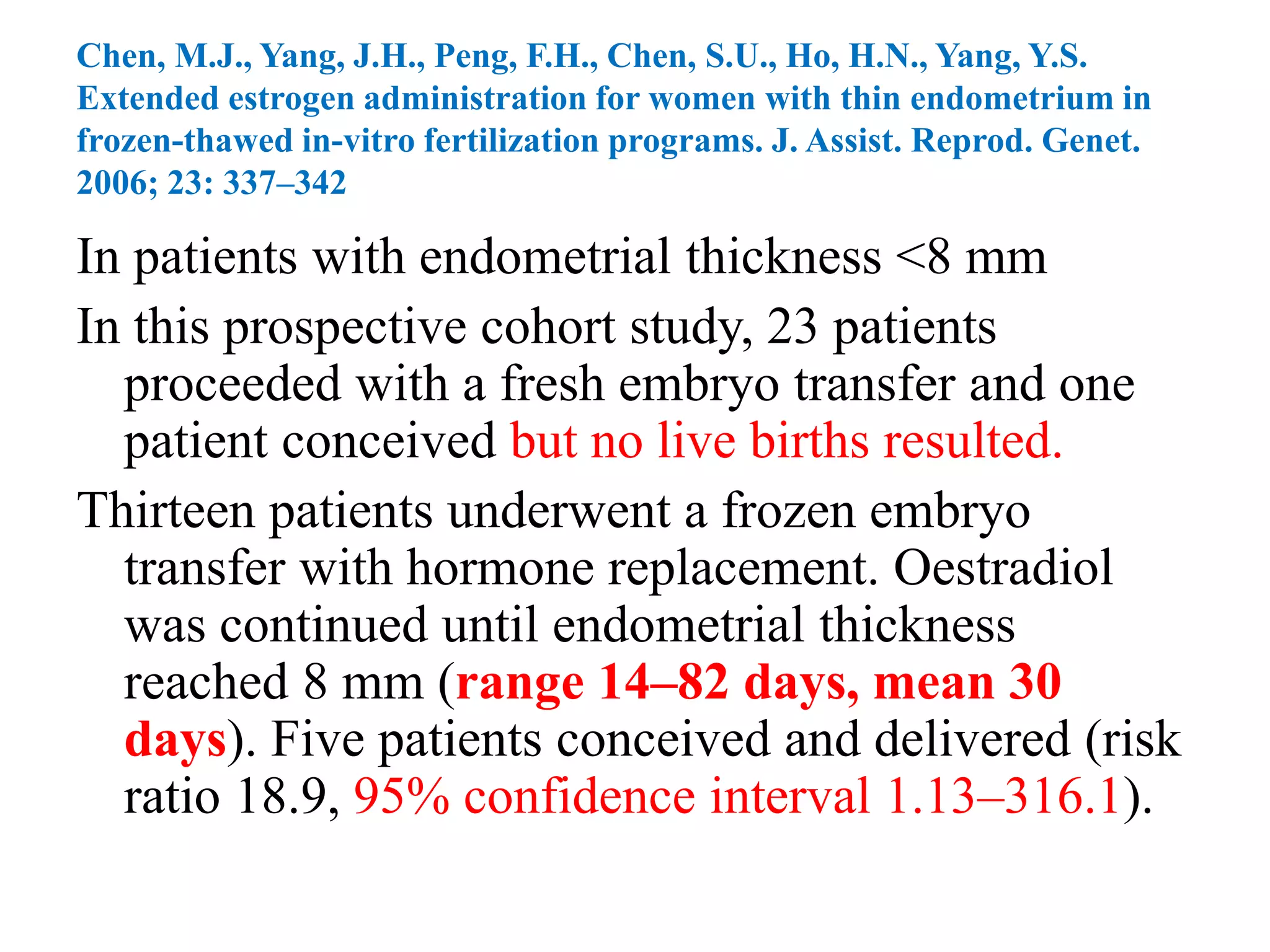
Chen, M.J., Yang, J.H., Peng, F.H., Chen, S.U., Ho, H.N., Yang, Y.S.
Extended estrogen administration for women with thin endometrium in
frozen-thawed in-vitro fertilization programs. J. Assist. Reprod. Genet.
2006; 23: 337–342
In patients with endometrial thickness <8 mm
In this prospective cohort study, 23 patients
proceeded with a fresh embryo transfer and one
patient conceived but no live births resulted.
Thirteen patients underwent a frozen embryo
transfer with hormone replacement. Oestradiol
was continued until endometrial thickness
reached 8 mm (range 14–82 days, mean 30
days). Five patients conceived and delivered (risk
ratio 18.9, 95% confidence interval 1.13–316.1).
Use of Adjuvants
• Sildenafil- oral/ vaginal
• Aspirin
• L-Arginine
• Vitamin E
• Pentoxifylline
• G-CSF
• Platelet rich plasma (PRP)
• Stem cells
Aspirin
Sildenafil
• Many case series reported the use of sildenafil for
patients with thin endometrium for fresh and frozen
IVF embryo transfers. (Sher and Fisch, 2000, 2002; Zinger et
al., 2006)
• One small observational study reported a benefit in
pregnancy rates (Takasaki et al., 2010)
• One RCT of 80 patients failed to detect a difference in
pregnancy rates in patients undergoing frozen embryo
transfers. However, the study did show an improvement
in endometrial thickness (9.8 mm versus 8 mm; P
<0.001) (Dehghani Firouzabadi et al., 2013).
Sildenafil in Thin ET
Pentoxifylline
• 400 mg/day
• Several case series (Acharya et al., 2009; Ledee-Bataille et al.,
2002; Letur-Konirsch et al., 2002; LeturKonirsch and Delanian, 2003).
• No controlled studies for pentoxifylline.
Tocopherol and L-Arginine
• Several papers have also evaluated
supplements such as vitamins C and E (500
IU/day), and L-arginine (6 g/day) (Kitaya et al., 2014;
Takasaki et al., 2010).
• These studies have been small and poorly
controlled.
G-CSF
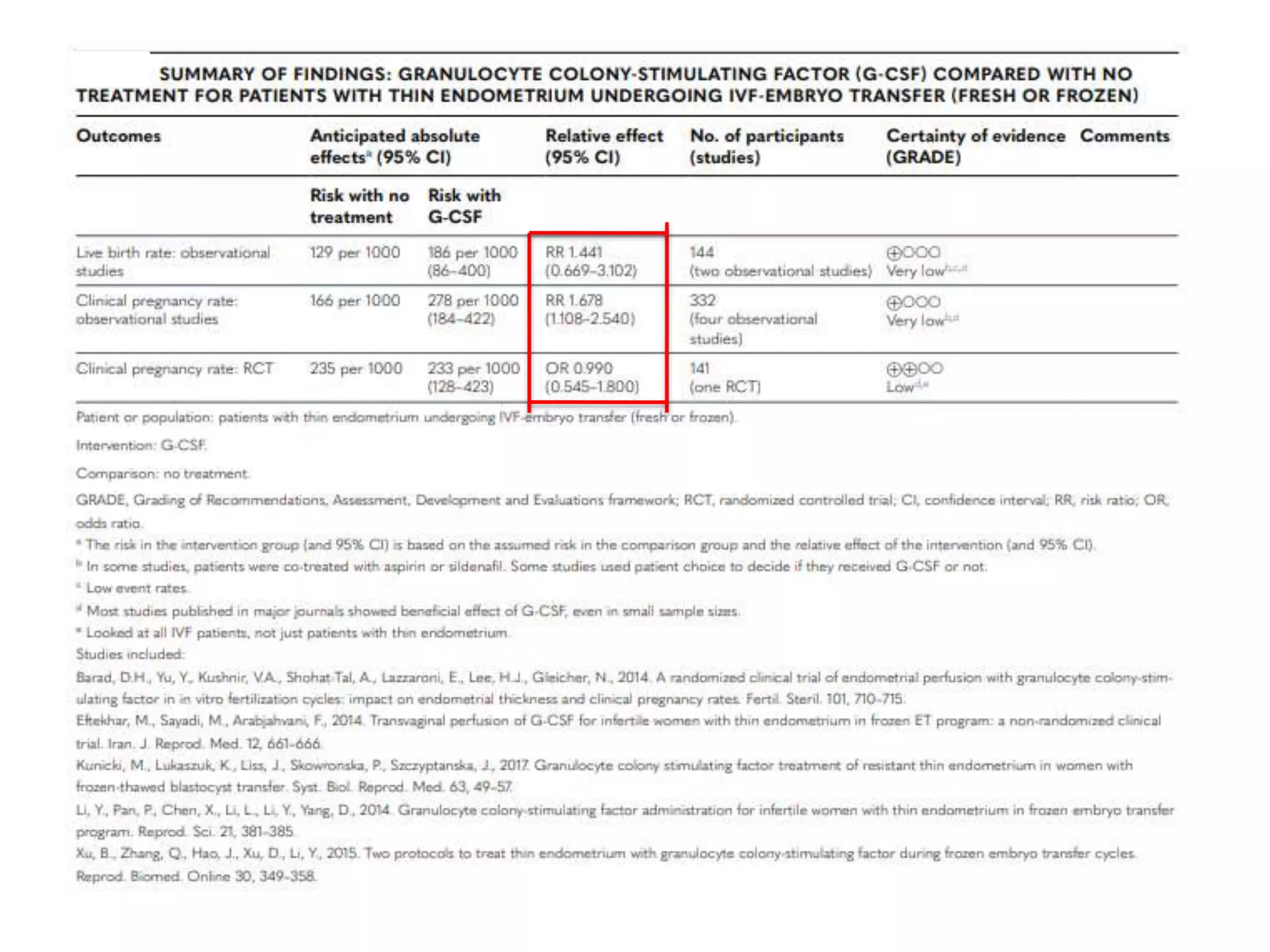
• Case series- Improved endometrial thickness and pregnancy rate (Gleicher et
al., 2011).
• Subsequent case series- conflicting results (Check et al., 2014; Kunicki et al.,
2014; Lee et al., 2016; Lucena and Moreno-Ortiz, 2013; Tehraninejad et al., 2015)
• Cohort studies- G-CSF intrauterine infusion had a thicker endometrium,
but no difference was seen in the pregnancy and live birth rates (Kunicki et
al., 2017; Eftekhar et al., 2014; Xu et al., 2015).
• Retrospective cohort study - an increase in pregnancy rate, but this was
not statistically significant (Li et al., 2014)
• Double-blinded placebo-controlled RCT- clinical pregnancy rate and
mean endometrial thickness were not significantly different in the G-CSF
group compared with the control group. However, this study looked at all
patients undergoing IVF, not just patients with thin endometrium. (Barad et
al., 2014)
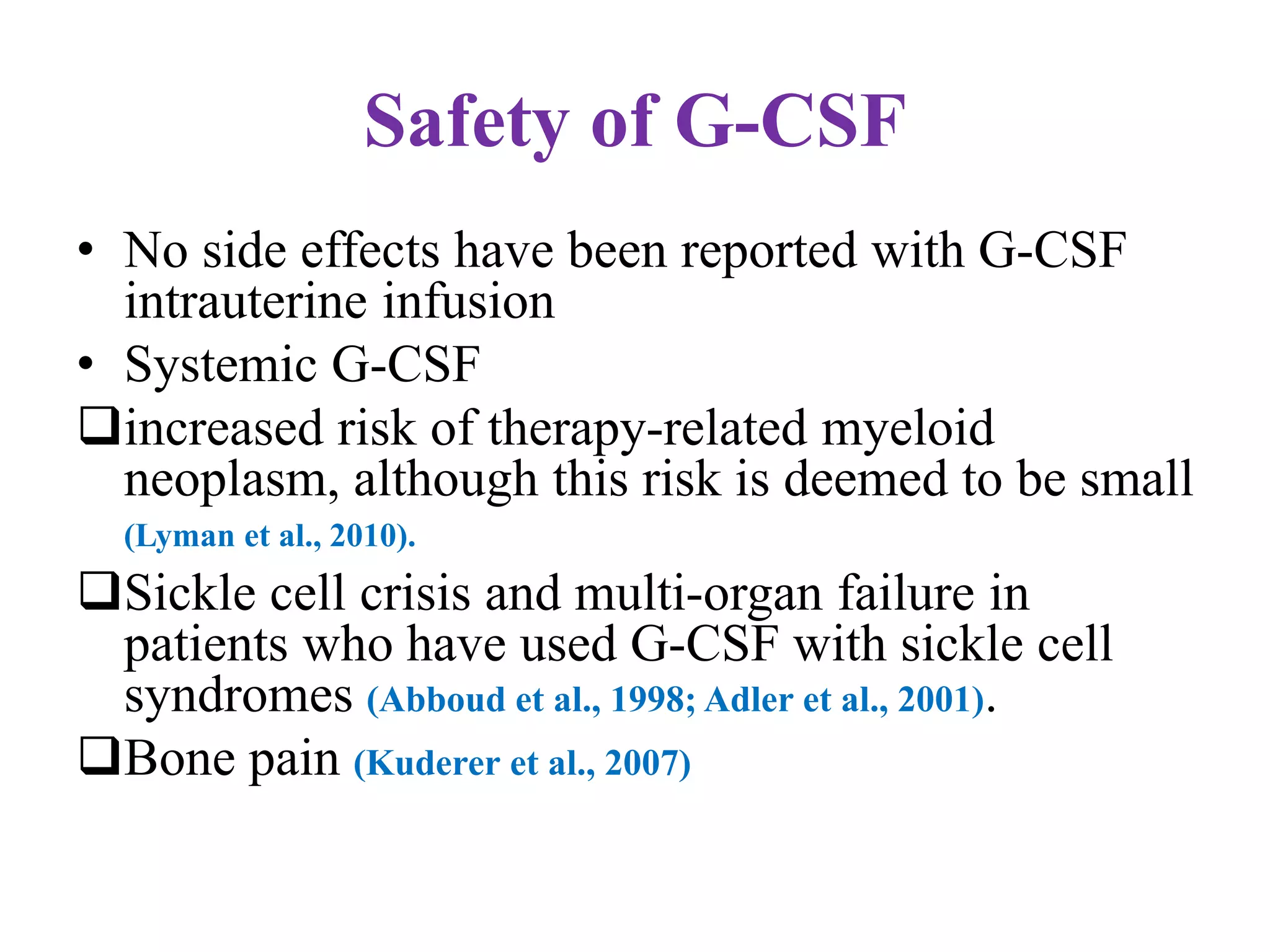
Safety of G-CSF
• No side effects have been reported with G-CSF
intrauterine infusion
• Systemic G-CSF
increased risk of therapy-related myeloid
neoplasm, although this risk is deemed to be small
(Lyman et al., 2010).
Sickle cell crisis and multi-organ failure in
patients who have used G-CSF with sickle cell
syndromes (Abboud et al., 1998; Adler et al., 2001).
Bone pain (Kuderer et al., 2007)
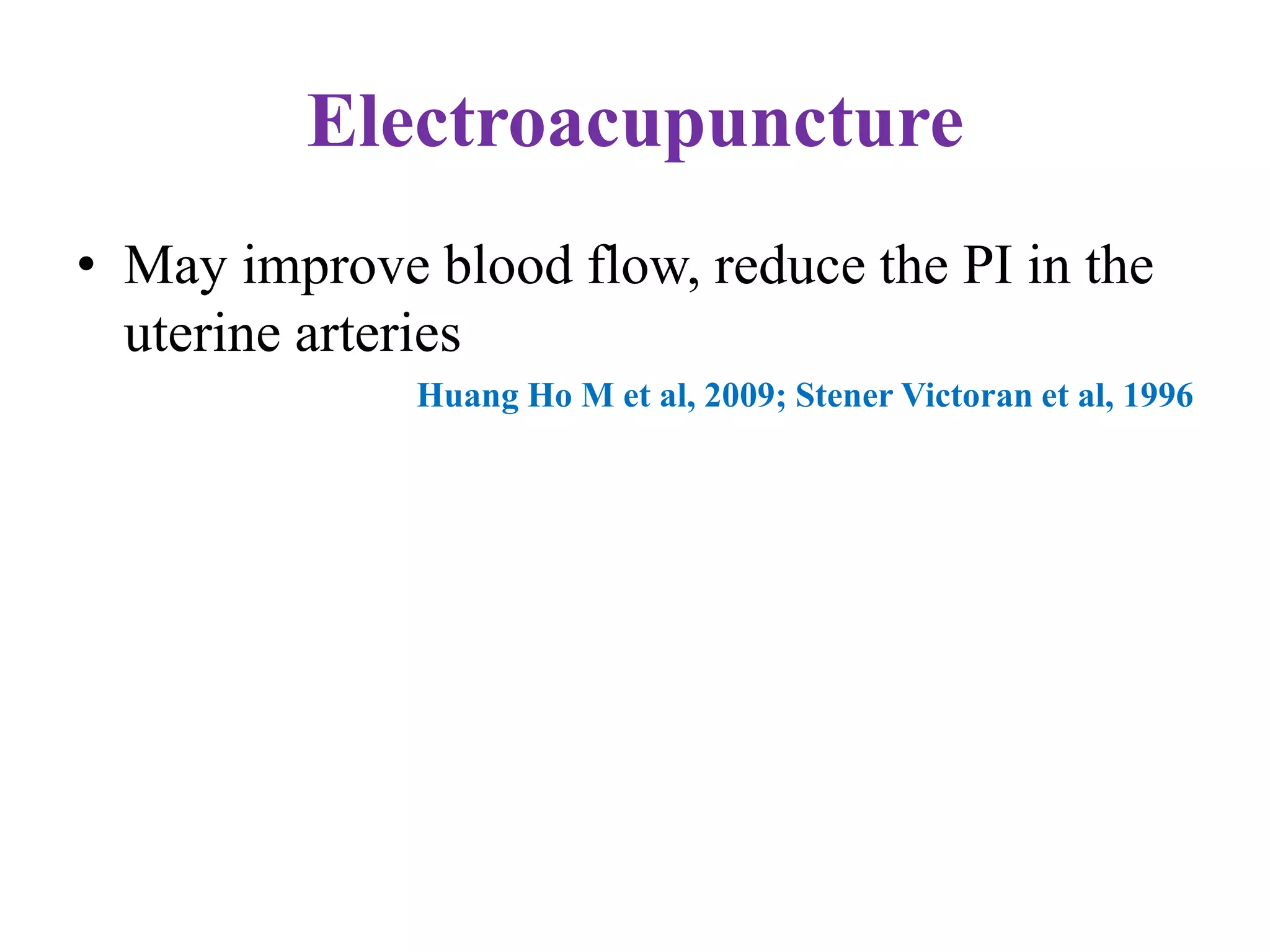
Electroacupuncture
• May improve blood flow, reduce the PI in the
uterine arteries
Huang Ho M et al, 2009; Stener Victoran et al, 1996
Platelet rich Plasma (PRP)
• Described in patients with thin endometrium
resulting from Asherman syndrome (Aghajanova et
al., 2016; Chang et al., 2015; Gargett and Healy, 2011; Nagori et al., 2011;
nazari et al., 2016; Santamaria et al., 2016; Singh et al., 2014; Zadehmodarres
et al., 2017).
• Preliminary studies are promising for a
population which has a poor prognosis and few
options for treatment
• Further research and controlled studies are
required
Stem Cell
• Case series (Gargett et al., 2012; Taylor HS, 2004)
• Invasive and expensive
hCG and GnRH Agonist
• Case series reported endometrial thickness, and
pregnancy and live birth rates with the use of HCG in
frozen embryo transfers in patients with a history of
thin endometrium (Davar et al., 2016; Papanikolaou et al., 2013).
• There have been no controlled studies on hCG.
• RCT on the use of adjuvant GnRH agonists at the time
of oocyte retrieval and embryo transfer for patients with
endometrial thickness- found a beneficial effect;
however, the biological plausibility is uncertain and the
results have not been replicated. (Qublan et al., 2008).
Scratching
• Systematic review of 5 RCTs
• No benefits (Santamaria et al., 2016)
Canadian Fertility and Andrology
Society Guideline, 2019
• In patients with thin endometrium undergoing
embryo transfer cycles, we suggest
AGAINST the use of aspirin, vaginal
sildenafil, G-CSF, pentoxifylline, HCG,
gonadotropin-releasing hormone agonists,
platelet-rich plasma or stem cells to
improve pregnancy rates
• Quality of evidence- weak
Thin Endometrium in Non IVF
• Most of these studies have been retrospective and small.
• Most studies have not shown an effect of thin endometrium on
outcomes (Chen et al., 2012; Kolibianakis et al., 2004; Weiss et al., 2017)
• Very low pregnancy rate with endometrial thickness ≤7 mm
(Jeon et al., 2013)
• Prospective study of 168 patients, comparable pregnancy rates
in clomiphene citrate cycles for endometrial thickness <6, 6-
7.9 and ≥8 mm (Kolibianakis et al., 2004)
• Absolute pregnancy and live birth rates are much lower with
ovarian stimulation/ IUI compared with IVF, which may
account for the lack of effect.
Counter the antiestrogenic effect of CC
J. Obstet. Gynaecol. Res 2014
• We retrieved 1718 articles of which 33 RCTs
• In women with WHO group II ovulatory disorders, ovulation
induction with CC might result in lower EMT than other
ovulation induction regimens. Whether the lower EMT caused the
lower pregnancy and live birth rates remains to be elucidated.
Letrozole seems to be beneficial for these women. However, our
findings should be interpreted with caution as the quality of
evidence was very low.
Weiss, N.S., van Vliet, M.N., Limpens, J., Hompes, P.G.A., Lambalk, C.B.,
Mochtar, M.H., van der Veen, F., Mol, B.W.J., van Wely, M. Endometrial thickness
in women undergoing IUI with ovarian stimulation. How thick is too thin? A
systematic review and meta-analysis. Hum. Reprod. 2017; 32: 1009–1018
• Meta-analysis included 1525 women in 7
studies [2 RCT and 5cohort studies]
Weiss, N.S., et al. Hum. Reprod. 2017; 32: 1009–1018
CC + Gonadotrophins vs Letrozole
CC+ Gn- Significantly thinner EMT
(MD: −0.79, 95% CI: −1.37 to
−0.20; I2: = 84%)
CC vs Gonadotrophins
CC- Significantly thinner
EMT (MD: −0.33, 95% CI:
−0.64 to −0.01; I2 = 0%).
Letrozole vs Gonadotrophins
Letrozole- Significantly thinner
EMT ( MD: −1.31, 95% CI:
−2.08 to −0.53; I2 = 0%)
CC vs Letrozole
CC- thinner EMT -no longer
statistically significant (MD:
−0.84, 95% CI: −1.97 to
0.28; I2 = 86%).
• Our results suggest that the differences in EMT between
women who get pregnant and those that do not are too
small to be useful as a tool to guide treatment for the
individual woman.
• Therefore, canceling IUI cycles with thin endometrial
lining because of the presumed negative effect of the thin
EMT—of which we have found no proof—may lead to the
very effect one tries to avoid, i.e. non-conception by the
simple and easy to understand mechanism of not
inseminating.
• Patients undergoing ovarian stimulation with thin
endometrium may be counselled that the effect on
pregnancy rates is unclear.
• In ovarian stimulation treatment cycles, there is insufficient
evidence to recommend changing stimulation medications
or a specific stimulation medication.
• In ovarian stimulation treatment cycles, there is insufficient
evidence to recommend the use of adjuvants to improve
endometrial thickness or pregnancy rates.
• Large, well-designed, randomized trials must
be conducted to evaluate the effectiveness and
safety of these interventions.
Take Home Message
• Thin endometrium is an infrequent but
challenging occurrence in assisted reproduction.
• Balance the prognosis for patients if they proceed
with treatment with a thin endometrium or
consider alternative treatments.
• Currently, there is minimal evidence to support
any specific protocols or adjuvants to
significantly improve pregnancy outcomes
Thin Endometrium

Thin Endometrium

  • 1.
    Sujoy Dasgupta MBBS (GoldMedalist, Hons) MS (OBGY- Gold Medalist) DNB (New Delhi) MRCOG (London) Advanced ART Course for Clinicians (NUHS, Singapore) Consultant: Reproductive Medicine, Genome Fertility Centre, Kolkata • Managing Committee Member, Bengal Obstetric & Gynaecological Society (BOGS)- 2019-20 • Secretary, Subfertility and Reproductive Endocrinology Committee, BOGS- 2019-20 • Winner, Prof Geoffrey Chamberlain Award, RCOG World Congress, London, 2019 Thin Endometrium
  • 2.
  • 3.
  • 4.
    Embryo-Maternal Communication = embryo hCG hCG receptor Endometrium EGF, LIF othercytokines hCG Implantation Good embryo Good Endometriumx E2 P4
  • 5.
    Receptive Endometrium requires 1.Estrogen priming- needed for endometrial proliferation and development of P4 receptors 2. Time-related progesterone induced secretory changes in the endometrium • Other molecules • IGFBP-1 • Prolactin • Laminin, type IV Collagen, Fibronectin, Heparin sulphate • Integrin, Cadherin, Adheren, Secretin • LIF, IL-6, IL-11, VEGF, CSF, TGF-β, TNF-α
  • 6.
    Ideal way tomeasure the endometrial receptivity • Sensitive and specific • Accurate • Noninvasive • Cheap • Acceptable to the patients • Easily available
  • 7.
    Endometrial Thickness byUltrasound • While the benefit of ultrasound to characterize follicular development is well documented, its value in endometrial evaluation is less clear (Hershko-Klement and Tepper, 2016). • Endometrial thickness is directly correlated to increasing circulating oestrogens (Hershko- Klement and Tepper, 2016) • Endometrial thickness is related to endometrial receptivity and can be a predictor of success in assisted reproduction (Momeni et al., 2011). • In 10% cases, the ideal image for measurement is difficult to obtain due to the presence of fibroids, adenomyosis, polyps, uterine orientation, body habitus, previous surgeries and patient intolerance (Goldstein, 2004).
  • 8.
    An endometrial thicknessof 9-14 mm is associated with higher implantation & pregnancy rates as compared to endometrial thickening of < 7mm 12% 18% 16% 14% 19% 27% 25% 30% 0% 5% 10% 15% 20% 25% 30% 35% Implantation rate Clinical pregnancy rate Ongoing pregnancy rate Live birth rates ET (<7mm) ET (9-14 mm) Fertil Steril, 2008 Ideal Endometrial Thickness
  • 9.
    What is thinendometrium? • Considerable controversy (Chen et al., 2010; De Geyter et al., 2000; Detti et al., 2008; Zhao et al., 2012, 2014).
  • 11.
    • Clinical pregnancyand live birth rates decrease for each millimeter of endometrial thickness below 8 mm in fresh IVF cycles and below 7 mm for frozen–thaw IVF cycles.
  • 12.
    • In freshIVF-embryo transfer cycles, patients should be counselled that endometrial thickness <8 mm may have a negative impact on pregnancy and live birth rates • In frozen IVF-embryo transfer cycles, patients should be counselled that endometrial thickness <7 mm may have a negative impact on pregnancy and live birth rates.
  • 13.
    Incidence of “thinendometrium” • In ovarian stimulation cycles- 38–66%; in IVF is 1-2.5%. (Asante et al., 2013; Chen et al., 2012; Wolff et al., 2013; Jeon et al., 2013). • Based on retrospective and prospective observational studies. • Ovarian stimulation cycles are more likely to proceed despite the thin endometrium whilst IVF cycles are more likely to be cancelled.
  • 14.
    How does itaffect implantation • Poor growth of glandular epithelium • Decreased VEGF expression • Poor vascular development • High resistance in radial arteries → ↓VEGF → ↓ blood flow → thin endometrium → ↑ vascular resistance
  • 15.
    Does it reallymatter? • The likelihood of achieving an endometrial thickness ≥8 mm decreased with age (89.7, 87.8 and 83.9% in women <35, 35–39 and ≥40, respectively) (P < 0.0001). • Nevertheless, viable pregnancy rates remain reasonably acceptable in patients with an endometrial thickness between 4 and 6 mm
  • 16.
    How thin isthe “thin endometrium”?
  • 17.
    Causes of ThinEndometrium 1. Asherman Syndrome 2. Clomiphene Citrate- Prolonged Use 3. Postpartum Endometritis 4. Septic Abortion 5. Pelvic Radiation 6. Chemotherapy 7. In-utero Diethylstilbestrol 8. Hypothalamic Hypogonadism 9. Fibroids 10. Müllerian Anomalies 11. Premature Ovarian Insufficiency 12. Hyperandrogenaemia 13. Iatrogenic 14. Idiopathic • Studies of patients with thin endometrium often exclude patients with uterine pathology; therefore, the true incidence of uterine pathology is not well reported.
  • 18.
    First step Find outthe cause • Uterine cavity assessment by hysteroscopy or sonohysterogram may be performed (Consensus Opinion) • Uterine assessment may identify patients who may benefit from surgical management. • Most studies have not identified endometritis as a contributing factor (Garcia-Velasco et al., 2016), • No studies on the treatment of endometritis in patients with thin endometrium could be identified.
  • 19.
    Treat the cause •May have more detrimental effect than the thin endometrium itself 1. Endometritis 2. Intrauterine Adhesion 3. Endometriosis 4. Hydrosalpinx
  • 20.
    Thin ET inFresh Cycle • Change Stimulation protocol • Add Estradiol • Add adjuvants • Freeze all
  • 21.
    Fresh Cycle- Blameor Change • In ovarian stimulation treatment cycles, there is insufficient evidence to recommend changing stimulation medications or a specific stimulation medication to improve the endometrial thickness • Quality of evidence- Weak Canadian Fertility and Andrology Society Guideline, 2019
  • 22.
    Addition of lutealestrogen supplementation in stimulated cycles improves the pregnancy rates & hence improves IVF embryo transfer rates ** ** Fertil Steril. 2005 May;83(5):1372-6 0.00% 10.00% 20.00% 30.00% 40.00% 50.00% 60.00% P4 P4+2mg E2 P4+6mg E2 Fresh Cycle- Add Estrogen
  • 23.
    • Progesterone vsprogesterone with oestrogen • 16 RCTs, 2577 women • There was no evidence of a difference between the groups in rates of live birth or ongoing pregnancy (OR 1.12, 95% CI 0.91 to 1.38, nine RCTs, 1651 women, I2 = 0%, low-quality evidence) or OHSS (OR 0.56, 95% CI 0.2 to 1.63, two RCTs, 461 women, I2 = 0%, low- quality evidence)
  • 24.
    Pregnancyrates,% Significantly higher IRand PR were found in patients who received low dose E2 (2 mg) compared with no E2, but the best outcomes were found significantly in the group with high dose E2 (6 mg) supplementation. Lukaszuk et al, 2005 Estrogen in Agonist Cycle
  • 25.
    • Any benefitof oestradiol supplementation for luteal phase support appears to correlate with the serum oestradiol level on the day of hCG trigger. • Oestradiol supplementation is beneficial for improving live birth rate in cycles with oestradiol levels less than 5000 pmol/L, but is not recommended in cycles with oestradiol levels over 10 000 pmol/L.
  • 27.
    Thin Endometrium inFresh Cycle • In patients with thin endometrium undergoing fresh IVF-embryo transfer cycles, we suggest against the use of luteal oestradiol to improve pregnancy rates. * • In fresh IVF-embryo transfer cycles, patients with thin endometrium can be offered elective cryopreservation of embryos and transfer in a subsequent cycle.* *Canadian fertility and Andrology Society Guideline, 2019
  • 28.
    Fresh Cycle- Adjuvants •In ovarian stimulation treatment cycles, there is insufficient evidence to recommend the use of adjuvants to improve endometrial thickness or pregnancy rates. Canadian Fertility and Andrology Society Guideline, 2019
  • 29.
    Which Endometrial Preparationfor FET? Natural Cycle (NC) Pure natural cycle Modified Natural Cycle (MNC) Hormone Replacement Cycle (HRT) HRT without DR Down-regulated HRT (DR-HRT) Stimulated Cycle
  • 30.
    Which Endometrial Preparationis the best? • The number of high quality randomized controlled trials (RCTs) is scarce and, hence, the evidence for the best protocol for FET is poor. • In terms of embryo transfer timing, we propose to start progesterone intake on the theoretical day of oocyte retrieval in HRT and to perform blastocyst transfer at hCG + 7 or LH + 6 in modified or true NC, respectively.
  • 31.
    • For patientswith a history of thin endometrium in ART treatment undergoing endometrial preparation for embryo transfer, there is insufficient evidence that any specific protocol (natural cycle or hormone replacement) for endometrial preparation provides better pregnancy outcomes. Canadian Fertility and Andrology Society Guideline, 2019
  • 32.
    Hormone Replacement Cycle (ArtificialCycle) • Exogenous supply of Estrogen & Progesterone that equals the effects of ovarian hormones on the endometrial tissue is required Gupta SA et al, 2018 D1 D2 D11 D12 E2 4 mg/day (2 mg BD) E2 8 mg/day (4 mg BD) E2 12 mg/day (6 mg BD) E2 6-12 mg/day TVS ET 7-14 mm Adjust E2 dose tOR P4 gel/ injectable D3 D5 ET ET
  • 33.
    Superiority of Esradiolvalerate over other estrogens Ethinyl Estradiol ↑ Triglyceride ↑PRA → Hypertension ↑ Factor VII → ↑ Coagulation Conjugated Estrogen Inter-batch variability Allergic reaction ↑PRA → Hypertension ↑ Factor VII → ↑ Coagulation Estriol 1/6 estrogenic activity ↑ LDL Estradiol Transdermal Patch Inconsistency between products Skin reaction Problem in humid atmosphere Estradiol Transdermal Gel ↓Bioavailability Skin reaction
  • 34.
    Duration of EstrogenTherapy • Endometrial receptivity (ER) is tolerant to a wide duration of E2 treatment • Uterine preparation consisting of 6 mg EV can be extended as long as 5 weeks with no significant decrease in ER Journal of Assisted Reproduction & genetics ,vol 18 ,No 4,april 2001 Fertil steril 1995 jun ;63(6):1284-6 • Long duration of E2 therapy is not deleterious • Vaginal micronized E2 achieves higher endometrial concentration Hum Reprod 2002 • Decreasing the length of E2 therapy is beneficial in terms of cost and time to pregnancy
  • 35.
    Chen, M.J., Yang,J.H., Peng, F.H., Chen, S.U., Ho, H.N., Yang, Y.S. Extended estrogen administration for women with thin endometrium in frozen-thawed in-vitro fertilization programs. J. Assist. Reprod. Genet. 2006; 23: 337–342 In patients with endometrial thickness <8 mm In this prospective cohort study, 23 patients proceeded with a fresh embryo transfer and one patient conceived but no live births resulted. Thirteen patients underwent a frozen embryo transfer with hormone replacement. Oestradiol was continued until endometrial thickness reached 8 mm (range 14–82 days, mean 30 days). Five patients conceived and delivered (risk ratio 18.9, 95% confidence interval 1.13–316.1).
  • 37.
    Use of Adjuvants •Sildenafil- oral/ vaginal • Aspirin • L-Arginine • Vitamin E • Pentoxifylline • G-CSF • Platelet rich plasma (PRP) • Stem cells
  • 38.
  • 39.
    Sildenafil • Many caseseries reported the use of sildenafil for patients with thin endometrium for fresh and frozen IVF embryo transfers. (Sher and Fisch, 2000, 2002; Zinger et al., 2006) • One small observational study reported a benefit in pregnancy rates (Takasaki et al., 2010) • One RCT of 80 patients failed to detect a difference in pregnancy rates in patients undergoing frozen embryo transfers. However, the study did show an improvement in endometrial thickness (9.8 mm versus 8 mm; P <0.001) (Dehghani Firouzabadi et al., 2013).
  • 40.
  • 41.
    Pentoxifylline • 400 mg/day •Several case series (Acharya et al., 2009; Ledee-Bataille et al., 2002; Letur-Konirsch et al., 2002; LeturKonirsch and Delanian, 2003). • No controlled studies for pentoxifylline.
  • 42.
    Tocopherol and L-Arginine •Several papers have also evaluated supplements such as vitamins C and E (500 IU/day), and L-arginine (6 g/day) (Kitaya et al., 2014; Takasaki et al., 2010). • These studies have been small and poorly controlled.
  • 43.
    G-CSF • Case series-Improved endometrial thickness and pregnancy rate (Gleicher et al., 2011). • Subsequent case series- conflicting results (Check et al., 2014; Kunicki et al., 2014; Lee et al., 2016; Lucena and Moreno-Ortiz, 2013; Tehraninejad et al., 2015) • Cohort studies- G-CSF intrauterine infusion had a thicker endometrium, but no difference was seen in the pregnancy and live birth rates (Kunicki et al., 2017; Eftekhar et al., 2014; Xu et al., 2015). • Retrospective cohort study - an increase in pregnancy rate, but this was not statistically significant (Li et al., 2014) • Double-blinded placebo-controlled RCT- clinical pregnancy rate and mean endometrial thickness were not significantly different in the G-CSF group compared with the control group. However, this study looked at all patients undergoing IVF, not just patients with thin endometrium. (Barad et al., 2014)
  • 45.
    Safety of G-CSF •No side effects have been reported with G-CSF intrauterine infusion • Systemic G-CSF increased risk of therapy-related myeloid neoplasm, although this risk is deemed to be small (Lyman et al., 2010). Sickle cell crisis and multi-organ failure in patients who have used G-CSF with sickle cell syndromes (Abboud et al., 1998; Adler et al., 2001). Bone pain (Kuderer et al., 2007)
  • 46.
    Electroacupuncture • May improveblood flow, reduce the PI in the uterine arteries Huang Ho M et al, 2009; Stener Victoran et al, 1996
  • 47.
    Platelet rich Plasma(PRP) • Described in patients with thin endometrium resulting from Asherman syndrome (Aghajanova et al., 2016; Chang et al., 2015; Gargett and Healy, 2011; Nagori et al., 2011; nazari et al., 2016; Santamaria et al., 2016; Singh et al., 2014; Zadehmodarres et al., 2017). • Preliminary studies are promising for a population which has a poor prognosis and few options for treatment • Further research and controlled studies are required
  • 48.
    Stem Cell • Caseseries (Gargett et al., 2012; Taylor HS, 2004) • Invasive and expensive
  • 49.
    hCG and GnRHAgonist • Case series reported endometrial thickness, and pregnancy and live birth rates with the use of HCG in frozen embryo transfers in patients with a history of thin endometrium (Davar et al., 2016; Papanikolaou et al., 2013). • There have been no controlled studies on hCG. • RCT on the use of adjuvant GnRH agonists at the time of oocyte retrieval and embryo transfer for patients with endometrial thickness- found a beneficial effect; however, the biological plausibility is uncertain and the results have not been replicated. (Qublan et al., 2008).
  • 50.
    Scratching • Systematic reviewof 5 RCTs • No benefits (Santamaria et al., 2016)
  • 51.
    Canadian Fertility andAndrology Society Guideline, 2019 • In patients with thin endometrium undergoing embryo transfer cycles, we suggest AGAINST the use of aspirin, vaginal sildenafil, G-CSF, pentoxifylline, HCG, gonadotropin-releasing hormone agonists, platelet-rich plasma or stem cells to improve pregnancy rates • Quality of evidence- weak
  • 53.
    Thin Endometrium inNon IVF • Most of these studies have been retrospective and small. • Most studies have not shown an effect of thin endometrium on outcomes (Chen et al., 2012; Kolibianakis et al., 2004; Weiss et al., 2017) • Very low pregnancy rate with endometrial thickness ≤7 mm (Jeon et al., 2013) • Prospective study of 168 patients, comparable pregnancy rates in clomiphene citrate cycles for endometrial thickness <6, 6- 7.9 and ≥8 mm (Kolibianakis et al., 2004) • Absolute pregnancy and live birth rates are much lower with ovarian stimulation/ IUI compared with IVF, which may account for the lack of effect.
  • 54.
    Counter the antiestrogeniceffect of CC J. Obstet. Gynaecol. Res 2014
  • 55.
    • We retrieved1718 articles of which 33 RCTs • In women with WHO group II ovulatory disorders, ovulation induction with CC might result in lower EMT than other ovulation induction regimens. Whether the lower EMT caused the lower pregnancy and live birth rates remains to be elucidated. Letrozole seems to be beneficial for these women. However, our findings should be interpreted with caution as the quality of evidence was very low.
  • 56.
    Weiss, N.S., vanVliet, M.N., Limpens, J., Hompes, P.G.A., Lambalk, C.B., Mochtar, M.H., van der Veen, F., Mol, B.W.J., van Wely, M. Endometrial thickness in women undergoing IUI with ovarian stimulation. How thick is too thin? A systematic review and meta-analysis. Hum. Reprod. 2017; 32: 1009–1018 • Meta-analysis included 1525 women in 7 studies [2 RCT and 5cohort studies]
  • 57.
    Weiss, N.S., etal. Hum. Reprod. 2017; 32: 1009–1018 CC + Gonadotrophins vs Letrozole CC+ Gn- Significantly thinner EMT (MD: −0.79, 95% CI: −1.37 to −0.20; I2: = 84%) CC vs Gonadotrophins CC- Significantly thinner EMT (MD: −0.33, 95% CI: −0.64 to −0.01; I2 = 0%). Letrozole vs Gonadotrophins Letrozole- Significantly thinner EMT ( MD: −1.31, 95% CI: −2.08 to −0.53; I2 = 0%) CC vs Letrozole CC- thinner EMT -no longer statistically significant (MD: −0.84, 95% CI: −1.97 to 0.28; I2 = 86%).
  • 58.
    • Our resultssuggest that the differences in EMT between women who get pregnant and those that do not are too small to be useful as a tool to guide treatment for the individual woman. • Therefore, canceling IUI cycles with thin endometrial lining because of the presumed negative effect of the thin EMT—of which we have found no proof—may lead to the very effect one tries to avoid, i.e. non-conception by the simple and easy to understand mechanism of not inseminating.
  • 59.
    • Patients undergoingovarian stimulation with thin endometrium may be counselled that the effect on pregnancy rates is unclear. • In ovarian stimulation treatment cycles, there is insufficient evidence to recommend changing stimulation medications or a specific stimulation medication. • In ovarian stimulation treatment cycles, there is insufficient evidence to recommend the use of adjuvants to improve endometrial thickness or pregnancy rates.
  • 60.
    • Large, well-designed,randomized trials must be conducted to evaluate the effectiveness and safety of these interventions.
  • 61.
    Take Home Message •Thin endometrium is an infrequent but challenging occurrence in assisted reproduction. • Balance the prognosis for patients if they proceed with treatment with a thin endometrium or consider alternative treatments. • Currently, there is minimal evidence to support any specific protocols or adjuvants to significantly improve pregnancy outcomes

Editor's Notes

  • #5 EGF; Epidermal growth factor ,LIF ( leukemia inhibitory factor )
  • #25 Lukaszuk K, Liss J, Lukaszuk M, Maj B. Optimization of estradiol supplementation during the luteal phase improves the pregnancy rate in women undergoing in vitro fertilization-embryo transfer cycles. Fertil Steril. 2005;83:1372–6.