





The Enigma of
Implantation
Dr. Priya Chittawar

Associate Professor and Head of Unit

Mohak Laparoscopy and Infertility Center

Sri Aurobindo Institute of Medical Sciences

Indore
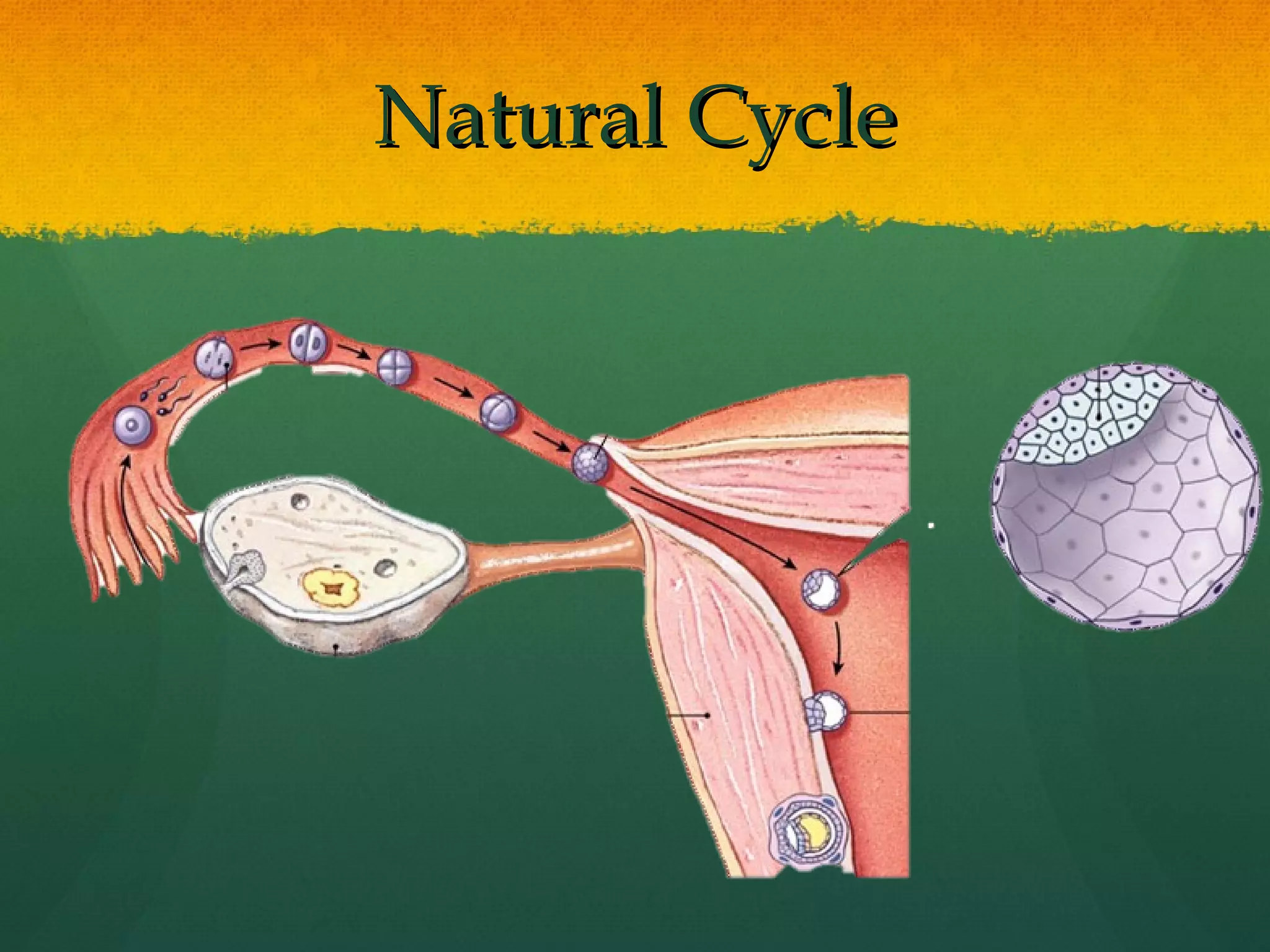
Natural Cycle
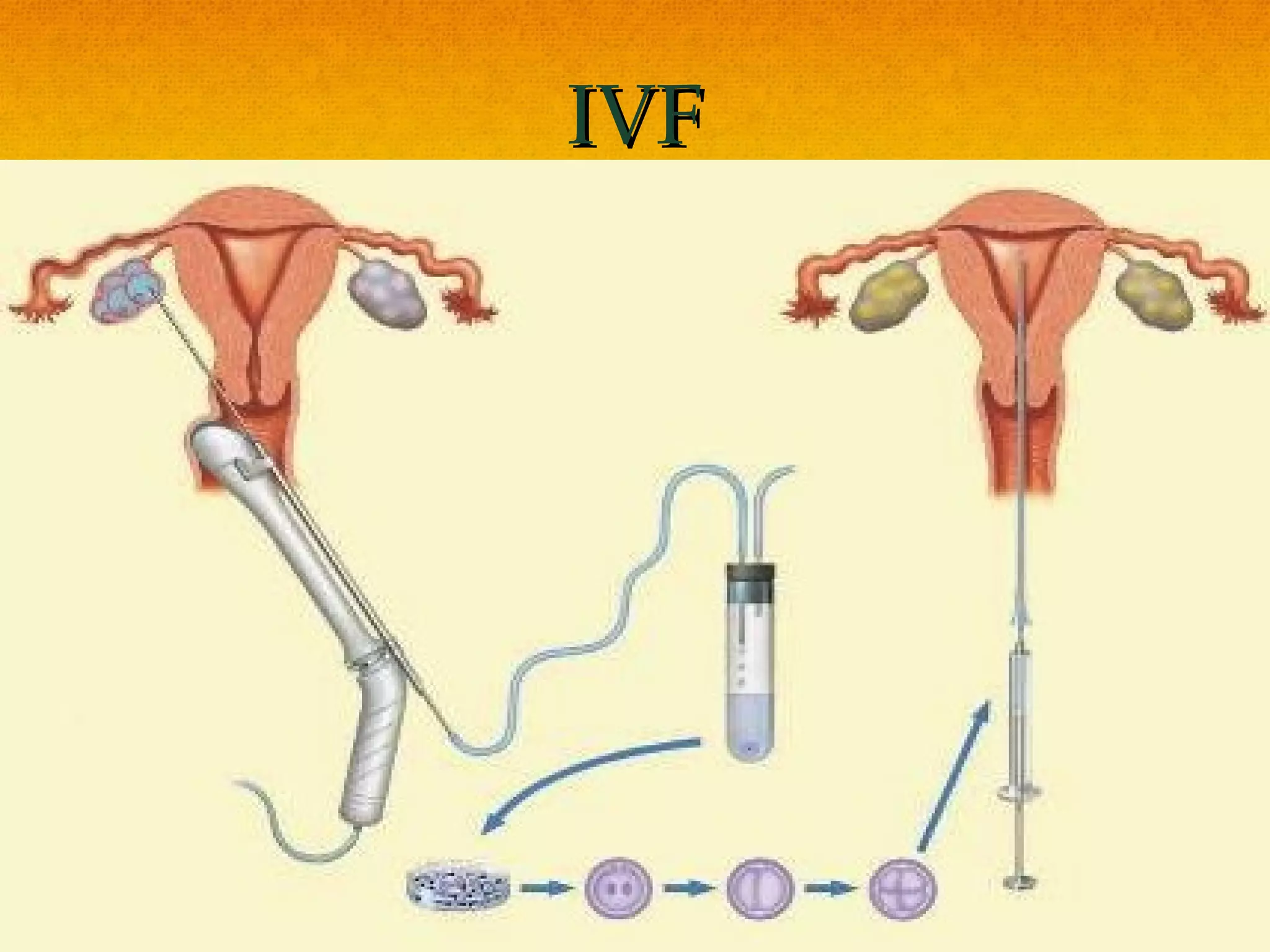
IVF
The Patients Perspective

 Egg+ Sperm= Baby

 Surprised to learn that 60% of the ivf cycles don’t
  end in a pregnancy
 What went wrong?
What Went Wrong?

 The follicles did not develop as expected?

 The oocyte|sperm quality was not so good?

 The fertilization rate was suboptimal?

 The embryo quality on morphology was not good?

 The embryo transfer was difficult?

 The endometrial development was suboptimal?
 Even after an ivf cycle in which everything
  apparently goes well, after transfer of apparently
  good quality 3 embryos the pregnancy rates are
  around 30 to 40 %
 Pregnancies are known after transfer of poor quality
  single embryo.
 Is the fertility and implantation in human beings
  naturally low ?
 Monthly fecundity rate in a normal couple is 20 to
  25%
 Is the low implantation rates in ART cycles due to
  an altered physiological state?
 Almost 30 to 70% of conceptus are lost before or at
  the time of implantation.
 We have improved almost all aspects of ivf: ovarian
  stimulation, embryo culture and transfer but
  pregnancy rates hover around 30 to 40%
 The bottleneck is the process of implantation.
The Bottleneck!
Average pregnancy rate of 50% cannot be further
increased by the improvement of embryo transfer and
culture conditions or by optimal selection of
blastocysts

 The endometrial function and endometrial receptivity
have been accepted to be major limiting factors in the
establishment of pregnancy.
Implantation

The process by which the embryo attaches to the
uterine wall and first penetrates the epithelium and
then the circulatory system of the mother to form the
placenta.

Most vital and the least understood part of
reproduction
 Implantation begins 2-3days after the fertilized egg
  enters the uterus on day 18-19 of the cycle, 5 to 7 days
  after fertilization.
 Hormone dependent changes in the four compartments
  of the endometrium
1. Glandular epithelium
2. Luminal epithelium
3. Stroma
4. Resident immune cells ( NK cells)
Successful implantation

 Embryo at the blastocyst stage

 Endometrium in the short spanned ‘implantation
  window’
 Successful cross talk between the two
Implantation

 Apposition

 Adhesion

 Invasion
Apposition

Progressively increasing contact between trophoblast
and uterine epithelium by

1.Decrease in uterine fluid volume

2.Edema of the endometrium

3.Enlargement of the embryo
The Implantation Window
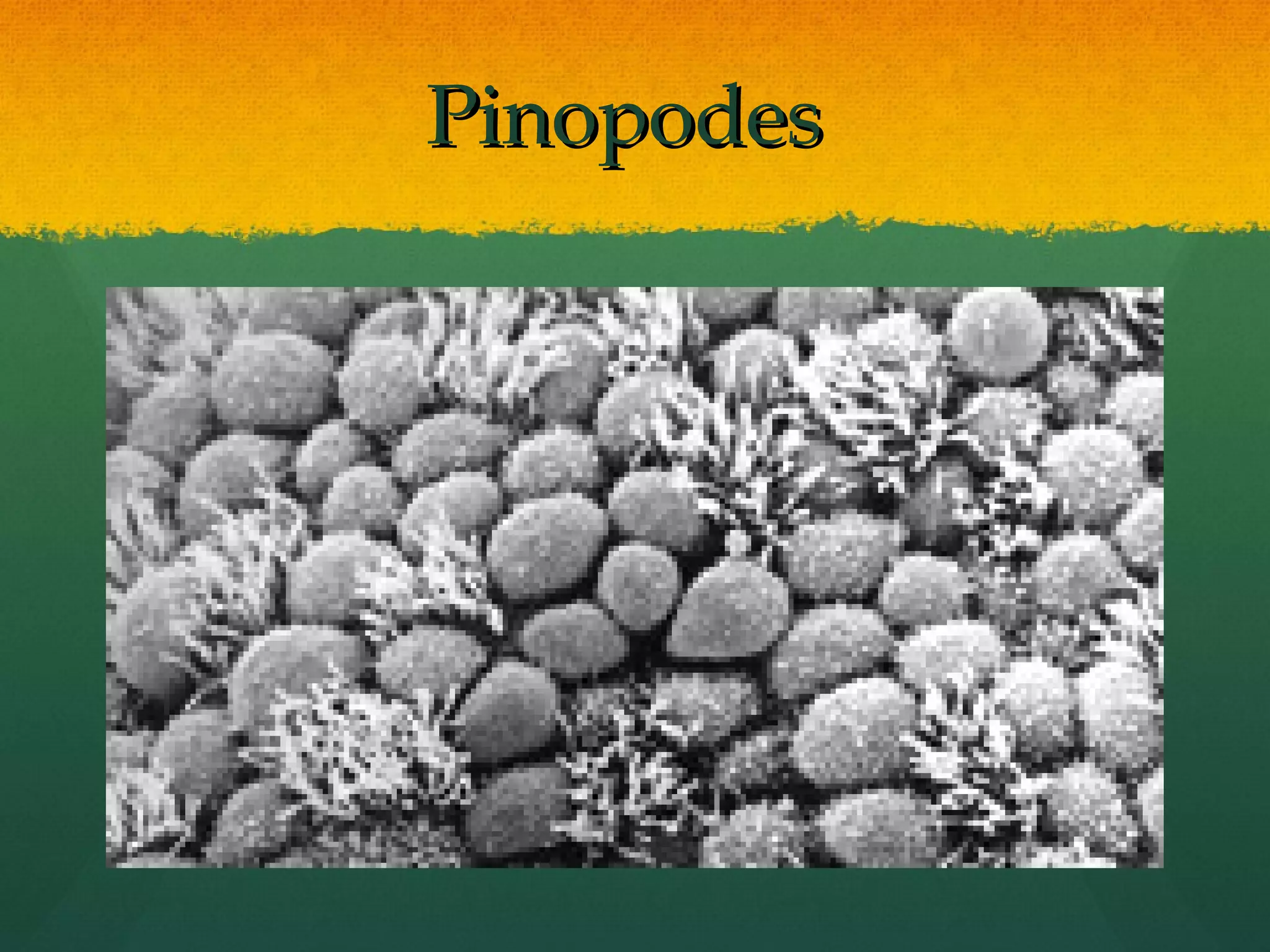
Pinopodes
 Pinopodes are surface epithelial microvilli that
  exhibit cystic changes
 They appear in normal cycles from day 20-22 and in
  stimulated cycle from 18-22
 They live for 48 hours

 Presumably reduce the uterine fluid volume and
  facilitate intimate contact between blastocyst and
  uterine epithelium
 Pinopods are visible on conventional histology as
  bulbous protrusions of the cell apices
 Histology is performed on tissue sections where
  only a small area of the surface can be examined
 Scanning Electron Microscopy is most appropriate
  to study pinopod formation
 Mirrors serum progesterone concentration.
 Because of the need for invasive biopsy, pinopod
  determination cannot be done in treatment cycles
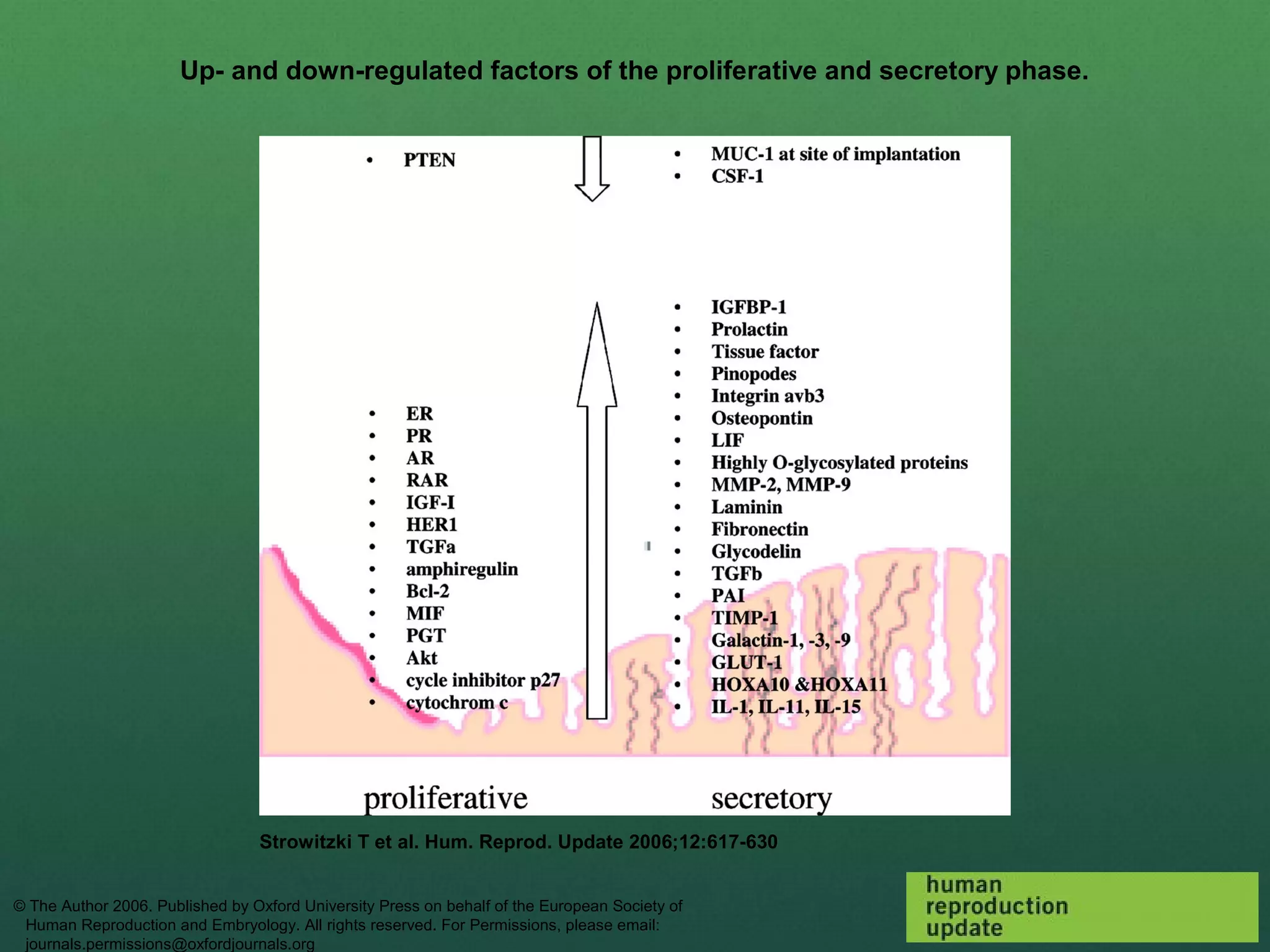
 The interactions between fertilized egg and the
  endometrium is determined by the interplay of
  hormones estrogen and progesterone
 There bind to intracellular receptors and the
  resulting proteins upregulate or downregulate
  genes which influence implantation
Up- and down-regulated factors of the proliferative and secretory phase.


                                 Strowitzki T et al. Hum. Reprod. Update 2006;12:617-630


© The Author 2006. Published by Oxford University Press on behalf of the European Society of
 Human Reproduction and Embryology. All rights reserved. For Permissions, please email:
 journals.permissions@oxfordjournals.org
 There is loosening of epithelial cell to cell contacts
  during pinopod formation which may facilitate
  invasion
 In endometrial epithelial cells growing on stromal
  cells in vitro, human blastocysts adhered only to
  areas bearing the pinopods
Adhesion

 Expression of extracellular matrix components
  occurs in the endometrium which helps adhesion of
  the blastocyst to the endometrium
 Alpha five beta four integrin , leukemia inhibiting
  factor and insulin like growth factor.
Invasion

1. Trobhoblastic cells invade between the uterine
   epithelial cells on their path to basment membrane

2. Epithelial cells lift off the basement membranes,
   allowing the trophoblast to insinuate underneath
   the epithelium

3. Fusion of trophoblast with uterine epithelial cells.
Implantation in IVF cycles

 Embryos transferred on day 2/day 3/day5

 The embryos are transferred transcervically with
  some amount of culture media
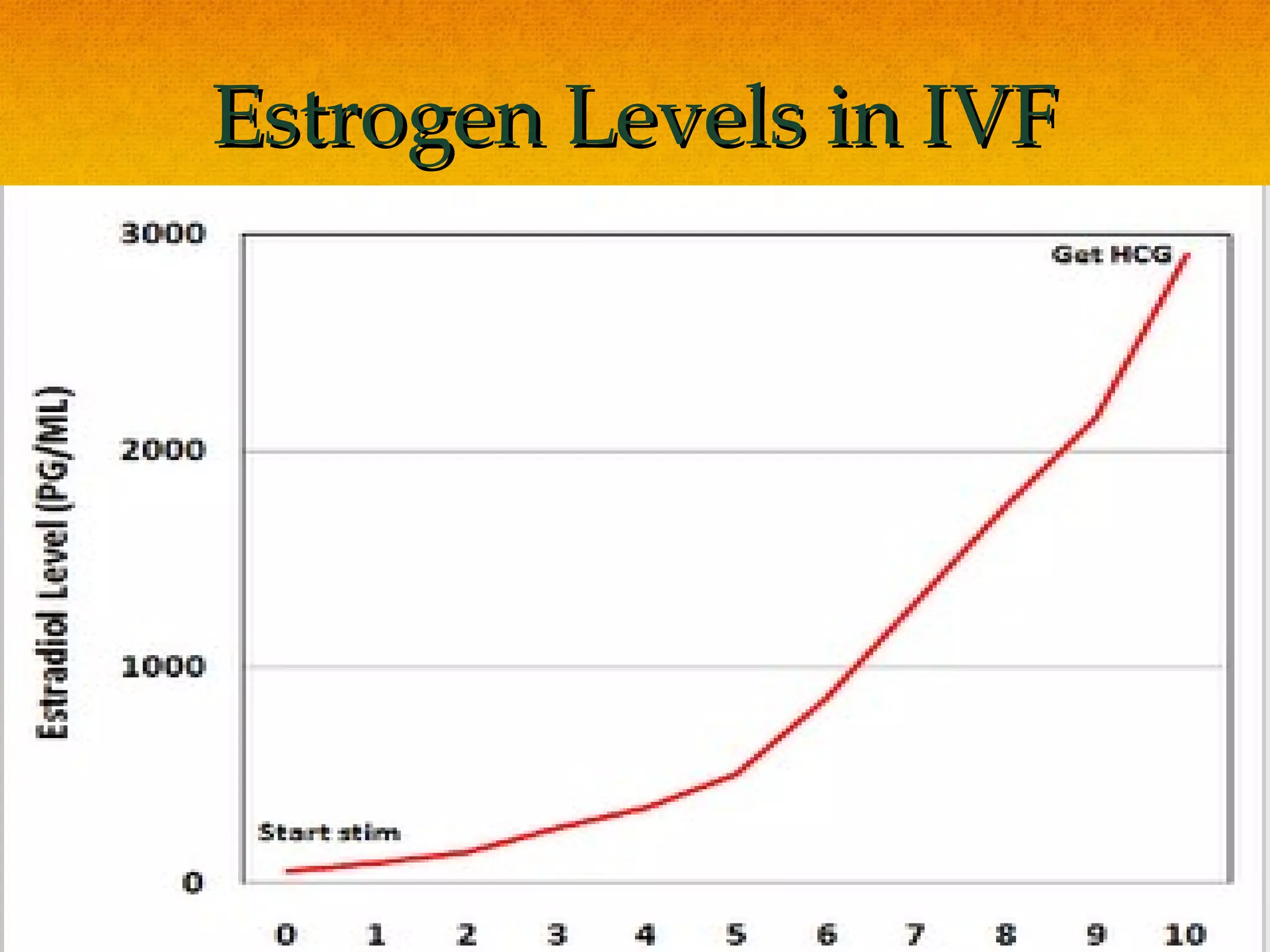
 Endometrial development is accelerated due to high
  concentrations of steroids
 Culture conditions may speed up or retard
  embryonic development
Estrogen Levels in IVF
Seed or Soil?
 Select the best ‘seed’

 Prepare the soil

 Plant at the appropriate time
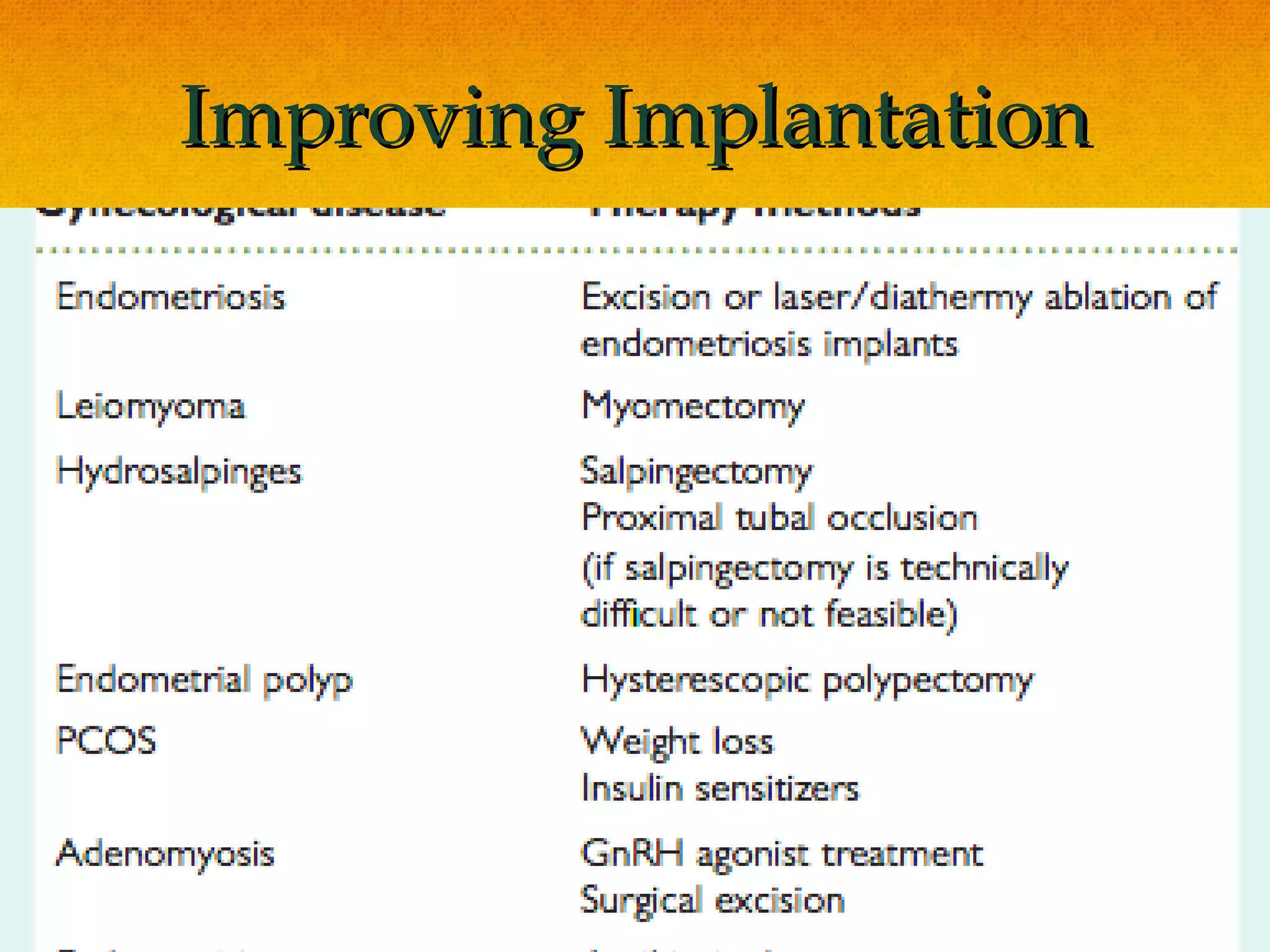
Improving implantation…

 Improving embryo quality

Better ovarian stimulation, good lab performance,
  extended culture
 Better way to choose the embryos for transfer

 Be wary of multiple pregnancies
BESST IVF OUTCOME

 BESST: Birth of a successful singleton at term

 Avoid multiple births in IVF

 Improving implantation is vital to achieving this
  goal.
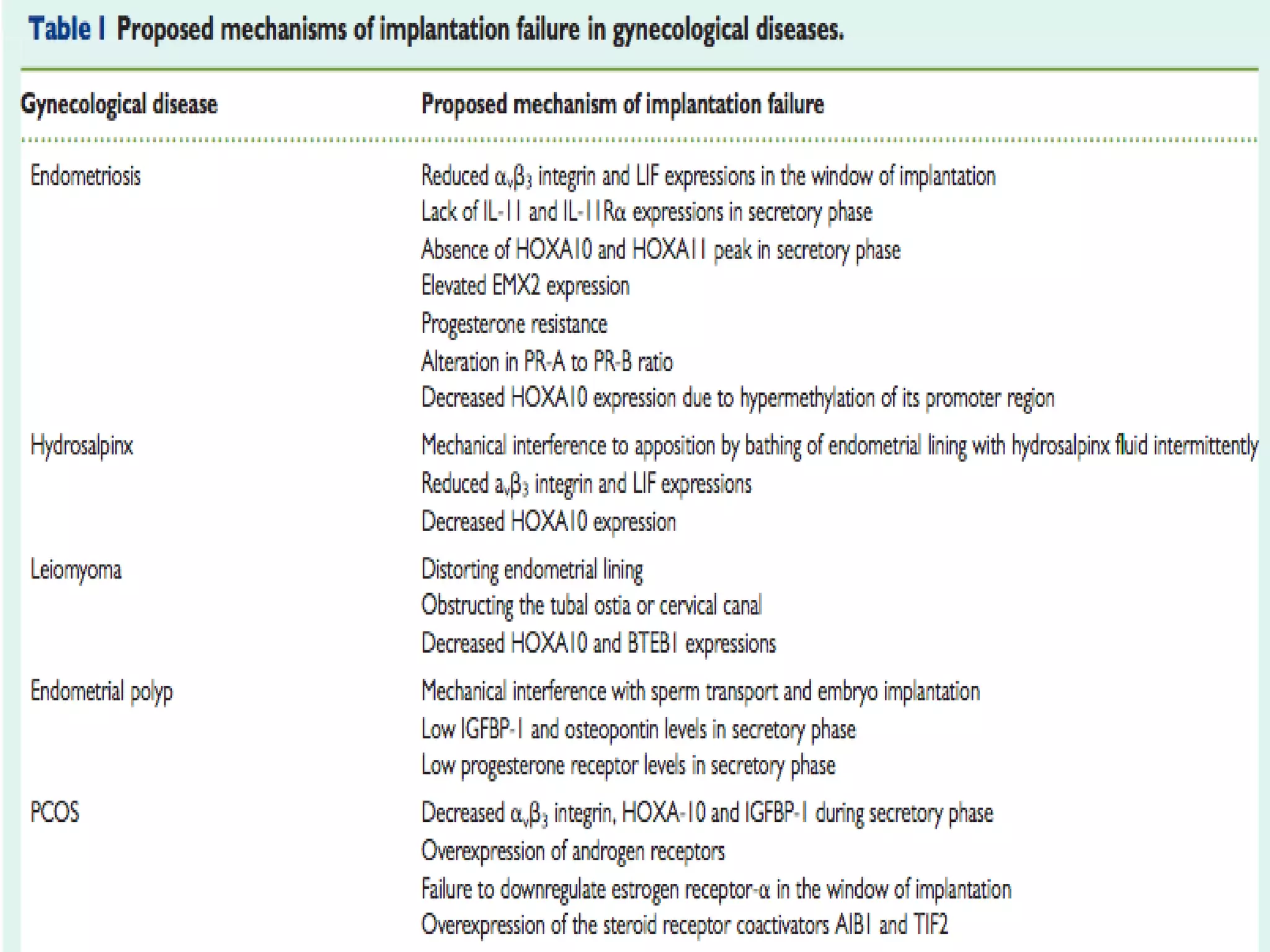
Improving Implantation
Problems in assessing
        Endometrium
 Complex interaction of biomarkers

 In vivo studies are done in non conception cycles as
  invasive sampling is needed
 Gene suppression experiments provide only indirect
  evidence about the role of the the resulting
  biomarker
What Tomorrow Holds

 Better assessment of endometrial receptivity using
  integrin and pinopode assessment
 Study of endometrial secretions by microdialysis for
  glycodelin and other biomarkers
 Assessment of endometrial gene expression and

 Therapeutic applications of HOX 10 gene by gene
  therapy to improve implantation
What Tomorrow Holds

 Optimizing implantation will increase pregnancy
  rates
 Evaluation of implantation biomarkers will help
  predict pregnancy outcome and detect occult
  implantation defects
 Gene therapy targeted at genes responsible for
  implantation will give a new therapeutic option
 Manipulating the expression of key implantaton
  genes by surgical medical or future gene therapy
  will help improve implantation rates
Thank You!

The Enigma of implantation

  • 1.
  • 2.
    Dr. Priya Chittawar AssociateProfessor and Head of Unit Mohak Laparoscopy and Infertility Center Sri Aurobindo Institute of Medical Sciences Indore
  • 3.
  • 4.
  • 5.
    The Patients Perspective Egg+ Sperm= Baby  Surprised to learn that 60% of the ivf cycles don’t end in a pregnancy  What went wrong?
  • 6.
    What Went Wrong? The follicles did not develop as expected?  The oocyte|sperm quality was not so good?  The fertilization rate was suboptimal?  The embryo quality on morphology was not good?  The embryo transfer was difficult?  The endometrial development was suboptimal?
  • 7.
     Even afteran ivf cycle in which everything apparently goes well, after transfer of apparently good quality 3 embryos the pregnancy rates are around 30 to 40 %  Pregnancies are known after transfer of poor quality single embryo.
  • 8.
     Is thefertility and implantation in human beings naturally low ?  Monthly fecundity rate in a normal couple is 20 to 25%  Is the low implantation rates in ART cycles due to an altered physiological state?
  • 9.
     Almost 30to 70% of conceptus are lost before or at the time of implantation.  We have improved almost all aspects of ivf: ovarian stimulation, embryo culture and transfer but pregnancy rates hover around 30 to 40%  The bottleneck is the process of implantation.
  • 10.
  • 11.
    Average pregnancy rateof 50% cannot be further increased by the improvement of embryo transfer and culture conditions or by optimal selection of blastocysts The endometrial function and endometrial receptivity have been accepted to be major limiting factors in the establishment of pregnancy.
  • 12.
    Implantation The process bywhich the embryo attaches to the uterine wall and first penetrates the epithelium and then the circulatory system of the mother to form the placenta. Most vital and the least understood part of reproduction
  • 13.
     Implantation begins2-3days after the fertilized egg enters the uterus on day 18-19 of the cycle, 5 to 7 days after fertilization.  Hormone dependent changes in the four compartments of the endometrium 1. Glandular epithelium 2. Luminal epithelium 3. Stroma 4. Resident immune cells ( NK cells)
  • 14.
    Successful implantation  Embryoat the blastocyst stage  Endometrium in the short spanned ‘implantation window’  Successful cross talk between the two
  • 15.
  • 16.
    Apposition Progressively increasing contactbetween trophoblast and uterine epithelium by 1.Decrease in uterine fluid volume 2.Edema of the endometrium 3.Enlargement of the embryo
  • 17.
  • 18.
  • 19.
     Pinopodes aresurface epithelial microvilli that exhibit cystic changes  They appear in normal cycles from day 20-22 and in stimulated cycle from 18-22  They live for 48 hours  Presumably reduce the uterine fluid volume and facilitate intimate contact between blastocyst and uterine epithelium
  • 20.
     Pinopods arevisible on conventional histology as bulbous protrusions of the cell apices  Histology is performed on tissue sections where only a small area of the surface can be examined  Scanning Electron Microscopy is most appropriate to study pinopod formation  Mirrors serum progesterone concentration.
  • 21.
     Because ofthe need for invasive biopsy, pinopod determination cannot be done in treatment cycles
  • 22.
     The interactionsbetween fertilized egg and the endometrium is determined by the interplay of hormones estrogen and progesterone  There bind to intracellular receptors and the resulting proteins upregulate or downregulate genes which influence implantation
  • 23.
    Up- and down-regulatedfactors of the proliferative and secretory phase. Strowitzki T et al. Hum. Reprod. Update 2006;12:617-630 © The Author 2006. Published by Oxford University Press on behalf of the European Society of Human Reproduction and Embryology. All rights reserved. For Permissions, please email: journals.permissions@oxfordjournals.org
  • 24.
     There isloosening of epithelial cell to cell contacts during pinopod formation which may facilitate invasion  In endometrial epithelial cells growing on stromal cells in vitro, human blastocysts adhered only to areas bearing the pinopods
  • 25.
    Adhesion  Expression ofextracellular matrix components occurs in the endometrium which helps adhesion of the blastocyst to the endometrium  Alpha five beta four integrin , leukemia inhibiting factor and insulin like growth factor.
  • 26.
    Invasion 1. Trobhoblastic cellsinvade between the uterine epithelial cells on their path to basment membrane 2. Epithelial cells lift off the basement membranes, allowing the trophoblast to insinuate underneath the epithelium 3. Fusion of trophoblast with uterine epithelial cells.
  • 27.
    Implantation in IVFcycles  Embryos transferred on day 2/day 3/day5  The embryos are transferred transcervically with some amount of culture media  Endometrial development is accelerated due to high concentrations of steroids  Culture conditions may speed up or retard embryonic development
  • 28.
  • 29.
  • 30.
     Select thebest ‘seed’  Prepare the soil  Plant at the appropriate time
  • 31.
    Improving implantation…  Improvingembryo quality Better ovarian stimulation, good lab performance, extended culture  Better way to choose the embryos for transfer  Be wary of multiple pregnancies
  • 33.
    BESST IVF OUTCOME BESST: Birth of a successful singleton at term  Avoid multiple births in IVF  Improving implantation is vital to achieving this goal.
  • 35.
  • 36.
    Problems in assessing Endometrium  Complex interaction of biomarkers  In vivo studies are done in non conception cycles as invasive sampling is needed  Gene suppression experiments provide only indirect evidence about the role of the the resulting biomarker
  • 37.
    What Tomorrow Holds Better assessment of endometrial receptivity using integrin and pinopode assessment  Study of endometrial secretions by microdialysis for glycodelin and other biomarkers  Assessment of endometrial gene expression and  Therapeutic applications of HOX 10 gene by gene therapy to improve implantation
  • 38.
    What Tomorrow Holds Optimizing implantation will increase pregnancy rates  Evaluation of implantation biomarkers will help predict pregnancy outcome and detect occult implantation defects  Gene therapy targeted at genes responsible for implantation will give a new therapeutic option  Manipulating the expression of key implantaton genes by surgical medical or future gene therapy will help improve implantation rates
  • 40.

Editor's Notes

  • #24 Up- and down-regulated factors of the proliferative and secretory phase.