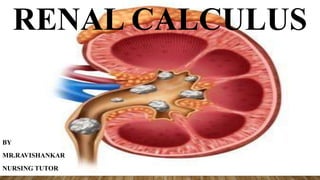
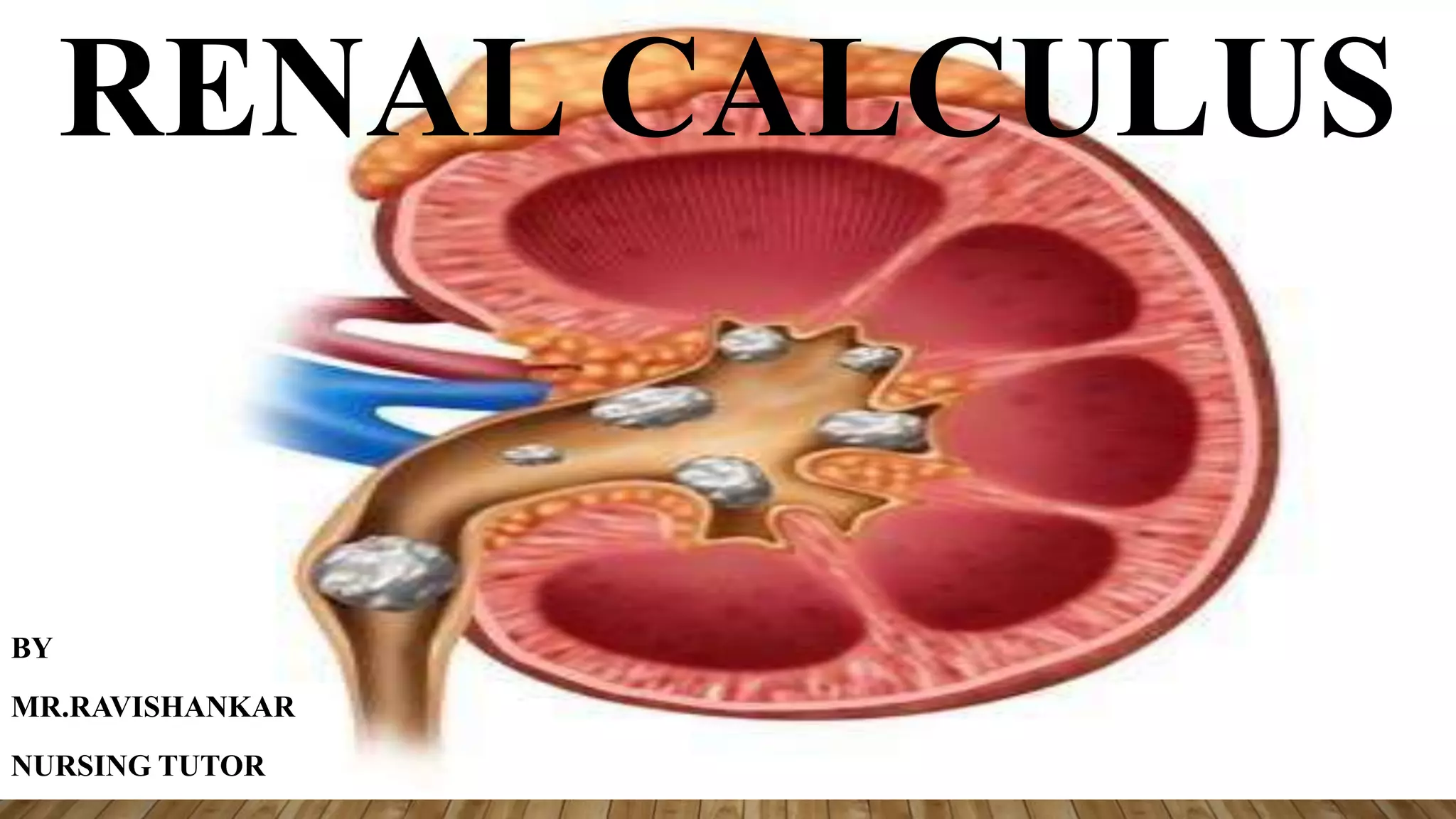
RENAL CALCULUS
BY
MR.RAVISHANKAR
NURSING TUTOR
INTRODUCTION:-
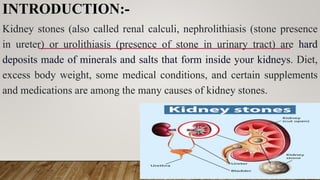
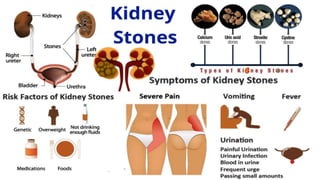
Kidney stones (also called renal calculi, nephrolithiasis (stone presence
in ureter) or urolithiasis (presence of stone in urinary tract) are hard
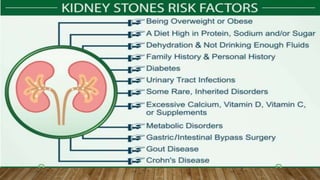
deposits made of minerals and salts that form inside your kidneys. Diet,
excess body weight, some medical conditions, and certain supplements
and medications are among the many causes of kidney stones.
DEFINITION:-
CAUSES:-
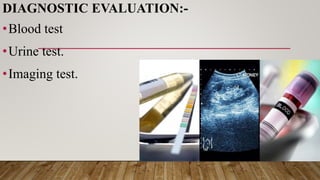
DIAGNOSTIC EVALUATION:-
•Blood test
•Urine test.
•Imaging test.
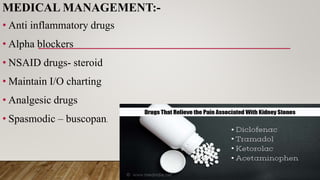
MEDICAL MANAGEMENT:-
• Anti inflammatory drugs
• Alpha blockers
• NSAID drugs- steroid
• Maintain I/O charting
• Analgesic drugs
• Spasmodic – buscopan.
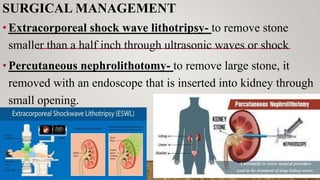
SURGICAL MANAGEMENT
•Extracorporeal shock wave lithotripsy- to remove stone
smaller than a half inch through ultrasonic waves or shock
•Percutaneous nephrolithotomy- to remove large stone, it
removed with an endoscope that is inserted into kidney through
small opening.
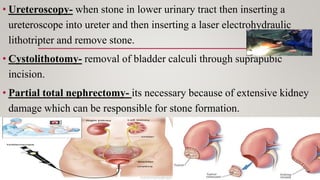
• Ureteroscopy- when stone in lower urinary tract then inserting a
ureteroscope into ureter and then inserting a laser electrohydraulic
lithotripter and remove stone.
• Cystolithotomy- removal of bladder calculi through suprapubic
incision.
• Partial total nephrectomy- its necessary because of extensive kidney
damage which can be responsible for stone formation.
NURSING MANAGEMENT-
• Assess the family history.
• Assess the pain location.
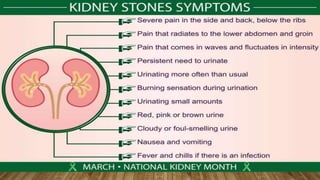
• Observe symptoms such as nausea, vomiting etc,
• Monitor vital sign.
• Maintain dietary pattern.
Renal calculus.pptx
Renal calculus.pptx
Renal calculus.pptx

Renal calculus.pptx

  • 1.
  • 2.
    INTRODUCTION:- Kidney stones (alsocalled renal calculi, nephrolithiasis (stone presence in ureter) or urolithiasis (presence of stone in urinary tract) are hard deposits made of minerals and salts that form inside your kidneys. Diet, excess body weight, some medical conditions, and certain supplements and medications are among the many causes of kidney stones.
  • 3.
  • 4.
  • 6.
  • 7.
    MEDICAL MANAGEMENT:- • Antiinflammatory drugs • Alpha blockers • NSAID drugs- steroid • Maintain I/O charting • Analgesic drugs • Spasmodic – buscopan.
  • 8.
    SURGICAL MANAGEMENT •Extracorporeal shockwave lithotripsy- to remove stone smaller than a half inch through ultrasonic waves or shock •Percutaneous nephrolithotomy- to remove large stone, it removed with an endoscope that is inserted into kidney through small opening.
  • 9.
    • Ureteroscopy- whenstone in lower urinary tract then inserting a ureteroscope into ureter and then inserting a laser electrohydraulic lithotripter and remove stone. • Cystolithotomy- removal of bladder calculi through suprapubic incision. • Partial total nephrectomy- its necessary because of extensive kidney damage which can be responsible for stone formation.
  • 10.
    NURSING MANAGEMENT- • Assessthe family history. • Assess the pain location. • Observe symptoms such as nausea, vomiting etc, • Monitor vital sign. • Maintain dietary pattern.