URINARY CALCULI (UROLITHIASIS)
OR//
NEPHROLITHIASIS (RENAL CALCULI)
PATEL ANKITA .M.
FIRST YEAR M.SC NURSING
C.M PATEL COLLEGE OF NURING
DEFINITIONS:
 Nephrolithiasis (renal calculi) means stone in kidney
that occur due to concentration of dissolved minerals
in the kidney.
 Urolithiasis (urinary calculi) means stone in urinary
tract that occur due to concentration of dissolved
minerals in urinary tract.
ETIOLOGY :-
 Hyperparathyroidism
 Increase calcium level
 Elevated uric acid(gout)
 Excessive intake of dietary calcium
 Infection of urinary tract
 Low fluid intake
 Medications lie diuretics
 Family history of stone
 Obstruction of urinary tract
 High minerals in drinking water
 High mineral and protein containing diet
 Previous history of urinary calculi
 Sedentary life style
 Neurogenic bladder
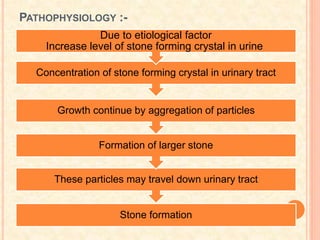
PATHOPHYSIOLOGY :-
Stone formation
These particles may travel down urinary tract
Formation of larger stone
Growth continue by aggregation of particles
Concentration of stone forming crystal in urinary tract
Due to etiological factor
Increase level of stone forming crystal in urine
CLINICAL MANIFESTATION:-
 Severe abdominal pain or low back pain
 Hematuria
 Dysuria
 Discomfort
 Nausea & vomiting
 Fever if infection is present
 Painful urination
 Oliguria
 Pyuria
 Local tenderness
DIAGNOSIS :-
 History & physical examination
 X-ray
 USG
 IVP
 Urine analysis
 Blood test- serum calcium level, serum uric acid
level
MANAGEMENT :-
 Management of urinary calculi depend size &
location of stone. If stone is less than 5mm it is
likely to pass through the ureter and spontaneously
come out with adequate hydration but if stone is
more than 5mm than surgical management is
indicated.
A. Medical & therapeutic management:
1. Pain management-
 Pain medications like NSAIDS or antispasmodic
 Antiemetic for nausea and vomiting.
2. Increase fluid intake-
 Increase fluid intake is most effective strategy for small
size stone.
 Advice patient to increase daily intake of fluid upto 3 to 4
liters per day.
 Maintain I/o chart.
3. Diet modification:
 Diet modification is necessary to prevent reoccurrence of
stone.
 Ask patient to limit calcium, sodium and protein in diet.
B. Surgical management:
1. Endourological procedure:
2. Lithotripsy:
- Laser lithotripsy:
- Extracorporeal shock wave lithotripsy(ESWL):
- PCNL(Percutaneous Nephrolithotomy):
3. Open surgical procedure:
4. Partial or total nephrectomy:
NURSING MANAGEMENT:
1. Relieve pain:
 Assess the characteristics of pain.
 Advice adequate rest.
 Advice patient to increase fluid intake.
 Use heat application for pain.
 Give antispasmodic and analgesics for pain as per
prescription.
 2. Maintain urinary elimination:
 Monitor patient for sign and symptoms of urinary obstruction
such as oliguria.
 Administer fluid orally or I.V to reduce concentration of
urine.
 Assist in adequate mobilization to help stone come out.
 Monitor for sign and symptoms of infection.
CONTINUE:
3. Health education:
 Patient is educated about adequate fluid intake, regular
emptying and proper perineal hygiene.
 Advice to reduce food high in protein and calcium.
 Limit milk and milk products.
 Advice patient to drink glass of warm water before bed.
 Advice patient to take medications as per doctor’s
prescription.
PRE & POST OPERATIVE CARE:
1. Pre operative care:-
 Collect history
 Perform detail assessment
 Perform laboratory data
 Obtain written concent
 Explain about surgery
 Keep patient NBM 6 hours prior surgery
 Administer pre medications.
 Transfer patient to operative room.
2. Post operative care:-
 Receive patient on operation bed.
 Perform immediate assessment that includes vital sign,
pain, urinary drainage etc.
 Keep patient NBM for two hours.
 Monitor I/O chart.
 Take proper catheter care that include aseptic technique
while handling it.
 Perform bladder irrigation to avoid UTIs.
 Perform urine analysis daily to check colour, volume,
odour, presence of blood etc.
 Advice patient to increase fluid intake.
 Takes adequate steps to prevent infection.
 Advice patient to implement diet modification as advised.
 Give antibiotics, analgesics as per doctors prescription.
Calculi

Calculi

  • 1.
    URINARY CALCULI (UROLITHIASIS) OR// NEPHROLITHIASIS(RENAL CALCULI) PATEL ANKITA .M. FIRST YEAR M.SC NURSING C.M PATEL COLLEGE OF NURING
  • 2.
    DEFINITIONS:  Nephrolithiasis (renalcalculi) means stone in kidney that occur due to concentration of dissolved minerals in the kidney.  Urolithiasis (urinary calculi) means stone in urinary tract that occur due to concentration of dissolved minerals in urinary tract.
  • 3.
    ETIOLOGY :-  Hyperparathyroidism Increase calcium level  Elevated uric acid(gout)  Excessive intake of dietary calcium  Infection of urinary tract  Low fluid intake  Medications lie diuretics  Family history of stone  Obstruction of urinary tract  High minerals in drinking water  High mineral and protein containing diet  Previous history of urinary calculi  Sedentary life style  Neurogenic bladder
  • 4.
    PATHOPHYSIOLOGY :- Stone formation Theseparticles may travel down urinary tract Formation of larger stone Growth continue by aggregation of particles Concentration of stone forming crystal in urinary tract Due to etiological factor Increase level of stone forming crystal in urine
  • 5.
    CLINICAL MANIFESTATION:-  Severeabdominal pain or low back pain  Hematuria  Dysuria  Discomfort  Nausea & vomiting  Fever if infection is present  Painful urination  Oliguria  Pyuria  Local tenderness
  • 6.
    DIAGNOSIS :-  History& physical examination  X-ray  USG  IVP  Urine analysis  Blood test- serum calcium level, serum uric acid level
  • 7.
    MANAGEMENT :-  Managementof urinary calculi depend size & location of stone. If stone is less than 5mm it is likely to pass through the ureter and spontaneously come out with adequate hydration but if stone is more than 5mm than surgical management is indicated.
  • 8.
    A. Medical &therapeutic management: 1. Pain management-  Pain medications like NSAIDS or antispasmodic  Antiemetic for nausea and vomiting. 2. Increase fluid intake-  Increase fluid intake is most effective strategy for small size stone.  Advice patient to increase daily intake of fluid upto 3 to 4 liters per day.  Maintain I/o chart. 3. Diet modification:  Diet modification is necessary to prevent reoccurrence of stone.  Ask patient to limit calcium, sodium and protein in diet.
  • 9.
    B. Surgical management: 1.Endourological procedure: 2. Lithotripsy: - Laser lithotripsy: - Extracorporeal shock wave lithotripsy(ESWL): - PCNL(Percutaneous Nephrolithotomy): 3. Open surgical procedure: 4. Partial or total nephrectomy:
  • 10.
    NURSING MANAGEMENT: 1. Relievepain:  Assess the characteristics of pain.  Advice adequate rest.  Advice patient to increase fluid intake.  Use heat application for pain.  Give antispasmodic and analgesics for pain as per prescription.  2. Maintain urinary elimination:  Monitor patient for sign and symptoms of urinary obstruction such as oliguria.  Administer fluid orally or I.V to reduce concentration of urine.  Assist in adequate mobilization to help stone come out.  Monitor for sign and symptoms of infection.
  • 11.
    CONTINUE: 3. Health education: Patient is educated about adequate fluid intake, regular emptying and proper perineal hygiene.  Advice to reduce food high in protein and calcium.  Limit milk and milk products.  Advice patient to drink glass of warm water before bed.  Advice patient to take medications as per doctor’s prescription.
  • 12.
    PRE & POSTOPERATIVE CARE: 1. Pre operative care:-  Collect history  Perform detail assessment  Perform laboratory data  Obtain written concent  Explain about surgery  Keep patient NBM 6 hours prior surgery  Administer pre medications.  Transfer patient to operative room.
  • 13.
    2. Post operativecare:-  Receive patient on operation bed.  Perform immediate assessment that includes vital sign, pain, urinary drainage etc.  Keep patient NBM for two hours.  Monitor I/O chart.  Take proper catheter care that include aseptic technique while handling it.  Perform bladder irrigation to avoid UTIs.  Perform urine analysis daily to check colour, volume, odour, presence of blood etc.  Advice patient to increase fluid intake.  Takes adequate steps to prevent infection.  Advice patient to implement diet modification as advised.  Give antibiotics, analgesics as per doctors prescription.