Renaissance
from the 15th to the 16th century
Historical context
• Before the Renaissance: Middle Ages
o
o
o
o
o
o
o
o
o

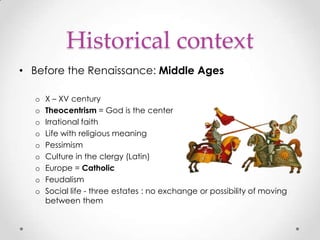
X – XV century
Theocentrism = God is the center
Irrational faith
Life with religious meaning
Pessimism
Culture in the clergy (Latin)
Europe = Catholic
Feudalism
Social life - three estates : no exchange or possibility of moving
between them
Renaissance - Overview
• Cultural movement

• The word „Renaissance‟ means „Rebirth‟
• Generally, from the 15th to the 16th century
o depends on the country

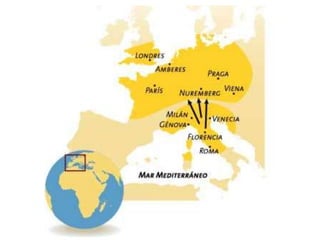
• Beginning in Florence (Italy) in the Late Middle
Ages (14th century)
o The Conquest of Constantinople at the hands of the Ottoman Turks
o Hellenistic culture influence

• Later spreading to the rest of Europe
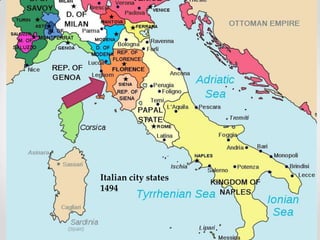
Italian city states
1494
Overview
• Learning based on classical sources
o Greco-Roman

• Historians often argue this intellectual transformation
was a bridge between the Middle Ages and
the Modern era
• Influence in literature, philosophy, art, music, politics,
science, religion, and other aspects of intellectual
inquiry.
The beginning
• While in Italy the Renaissance was developing
in the rest of Europe the Gothic remains
o to early 16th century

• Italy coexist with the Roman Antiquity and can
inspire on it.
• Florence (1400s)
o the starting point of the new style
o the first works from here will be extended to the rest of Italy
o the development of a rich bourgeoisie aid the deployment of the forces
of the Renaissance.
o the protection of the Medici
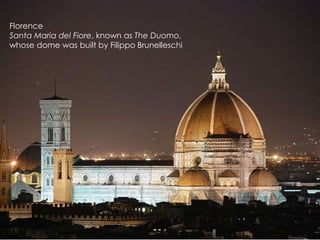
Florence
Santa Maria del Fiore, known as The Duomo,
whose dome was built by Filippo Brunelleschi
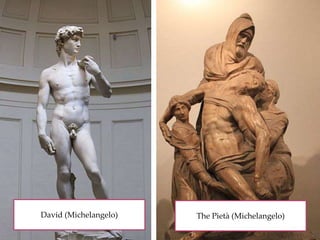
David (Michelangelo)

The Pietà (Michelangelo)
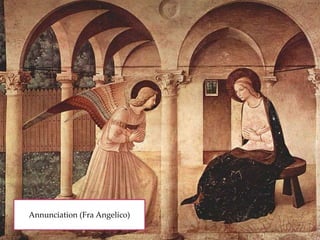
Annunciation (Fra Angelico)
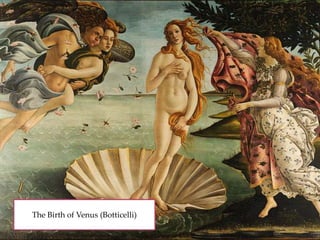
The Birth of Venus (Botticelli)
Characteristics
•
•
•
•
•
•

Research of Classical Antiquity
Humanism
Positivism
Modern spirit of individuality & Self-awareness
Anthropocentric trend
Realism in sculpture and painting
o New ideal of beauty

•
•
•
•

Scientific development
New relationship with Nature
Search for harmony, balance and serenity
Rational attitude to the world, but without
abandoning religious faith
Humanism
• European intellectual, philosophical and cultural
movement
• Revived the ideas of Greek and Roman thinkers

The purpose of humanism was to create a universal man whose
person combined intellectual and physical excellence and who
was capable of functioning honorably in virtually any situation
Hause, S. & Maltby, W. (2001)
Humanism
• In spite of formal allegiance to ascetic Christian
doctrine
• The return to favor of the pagan classics stimulated:
o
o
o
o
o

the philosophy of secularism
the appreciation of worldly pleasures
intensified the assertion of personal independence
individual expression
growing secular view of life

• Honest doubt began to replace unreasoning faith
o The importance of reasoning
Individualism
• Individualistic conception at all levels of life
• Potential of people to overcome
o Man is conscious of his own worth and intelligence.

• The human is the center
• “The moral worth of the individual”
• Belief in the human capacity to choose between good
and evil, and act accordingly
• Man is the protagonist of destination
Individualism
• Freedom of individual expression

• Works of art is signed
o Role/ protagonism of the artist
o Personal growth and dignity

• Expansion of Trade – Capitalism
o growth of prosperity and luxury
Spiritual movement
• The Renaissance had a profound effect in the way
people perceived the relationship between man
and God
Theocentrism  Anthropocentrism

• Many of the period's foremost theologians were
followers of the humanist method:
o
o
o
o
o

Erasmus
Zwingli
Thomas More
Martin Luther
John Calvin
Spiritual movement
• Humanism and the Individualism played a direct
role in sparking the Reformation

• Churchmen such as Erasmus and Luther proposed
reform to the Church, often based on humanist
textual criticism of the New Testament
Renaissance periods
1. Quattrocento  Florence
o
o
o
o

(15th century)

Lorenzo Ghiberti (1378 - 1458)
Donatello (1382 - 1466)
Fra Angelico (1387- 1455)
Sandro Botticelli (1445 ‐ 1510)

2. Cinquecento  Rome

(16th century)

Popes: Julius II, Leo X, Clement VII and Paul III and Medici Family
o
o
o
o

Donato Bramante (1444 –1514)
Michelangelo Buonarroti (1475 -1564)
Rafael Sanzio (1483 -1520)
Leonardo Da Vinci (1452 ‐ 1519)
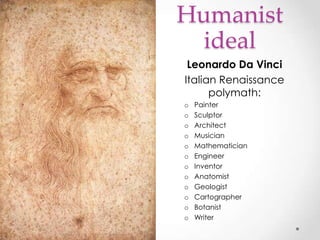
Humanist
ideal
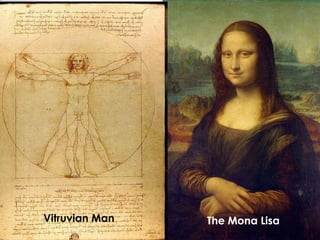
Leonardo Da Vinci
Italian Renaissance
polymath:
o
o
o
o
o
o
o
o
o
o
o
o

Painter
Sculptor
Architect
Musician
Mathematician
Engineer
Inventor
Anatomist
Geologist
Cartographer
Botanist
Writer
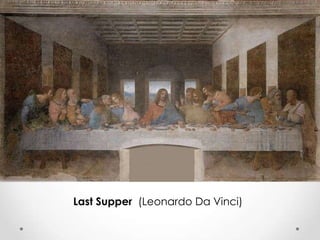
Last Supper (Leonardo Da Vinci)
Vitruvian Man

The Mona Lisa
The influence of the
Renaissance in Germany
• Architecture retained strong influences from
medieval Gothic.
• The artistic renaissance in Germany was not an
attempted resurrection of classical art. It was an
intense renewal of the Germanic spirit, motivated
by the Protestant Reformation.
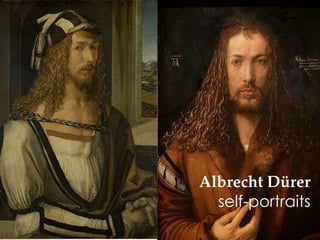
• The most famous German Renaissance artist:
Albrecht Dürer
(1471 - 1528)
Albrecht Dürer
self-portraits
The influence of the
Renaissance in Germany
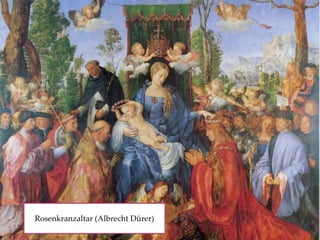
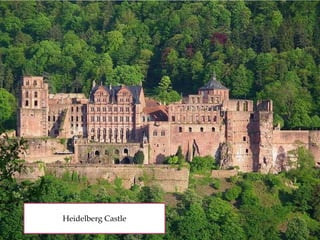
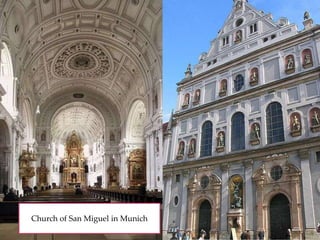
• After the Reformation, the patronage of the
German nobility focused primarily on architecture
o Ability of architecture to show the power and prestige of the rulers

• Most German princes preferred to keep the Gothic
works. Only decorated with Renaissance
ornamentation.
• Habsburg emperors and the Fugger family were the
most important patrons
Rosenkranzaltar (Albrecht Dürer)
Heidelberg Castle
Church of San Miguel in Munich
Author
Cristina
Domene Beviá

Renaissance

  • 1.
    Renaissance from the 15thto the 16th century
  • 2.
    Historical context • Beforethe Renaissance: Middle Ages o o o o o o o o o X – XV century Theocentrism = God is the center Irrational faith Life with religious meaning Pessimism Culture in the clergy (Latin) Europe = Catholic Feudalism Social life - three estates : no exchange or possibility of moving between them
  • 3.
    Renaissance - Overview •Cultural movement • The word „Renaissance‟ means „Rebirth‟ • Generally, from the 15th to the 16th century o depends on the country • Beginning in Florence (Italy) in the Late Middle Ages (14th century) o The Conquest of Constantinople at the hands of the Ottoman Turks o Hellenistic culture influence • Later spreading to the rest of Europe
  • 4.
  • 6.
    Overview • Learning basedon classical sources o Greco-Roman • Historians often argue this intellectual transformation was a bridge between the Middle Ages and the Modern era • Influence in literature, philosophy, art, music, politics, science, religion, and other aspects of intellectual inquiry.
  • 7.
    The beginning • Whilein Italy the Renaissance was developing in the rest of Europe the Gothic remains o to early 16th century • Italy coexist with the Roman Antiquity and can inspire on it. • Florence (1400s) o the starting point of the new style o the first works from here will be extended to the rest of Italy o the development of a rich bourgeoisie aid the deployment of the forces of the Renaissance. o the protection of the Medici
  • 8.
    Florence Santa Maria delFiore, known as The Duomo, whose dome was built by Filippo Brunelleschi
  • 9.
  • 10.
  • 11.
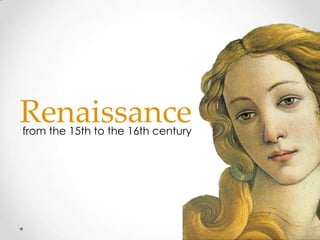
    The Birth ofVenus (Botticelli)
  • 12.
    Characteristics • • • • • • Research of ClassicalAntiquity Humanism Positivism Modern spirit of individuality & Self-awareness Anthropocentric trend Realism in sculpture and painting o New ideal of beauty • • • • Scientific development New relationship with Nature Search for harmony, balance and serenity Rational attitude to the world, but without abandoning religious faith
  • 13.
    Humanism • European intellectual,philosophical and cultural movement • Revived the ideas of Greek and Roman thinkers The purpose of humanism was to create a universal man whose person combined intellectual and physical excellence and who was capable of functioning honorably in virtually any situation Hause, S. & Maltby, W. (2001)
  • 14.
    Humanism • In spiteof formal allegiance to ascetic Christian doctrine • The return to favor of the pagan classics stimulated: o o o o o the philosophy of secularism the appreciation of worldly pleasures intensified the assertion of personal independence individual expression growing secular view of life • Honest doubt began to replace unreasoning faith o The importance of reasoning
  • 15.
    Individualism • Individualistic conceptionat all levels of life • Potential of people to overcome o Man is conscious of his own worth and intelligence. • The human is the center • “The moral worth of the individual” • Belief in the human capacity to choose between good and evil, and act accordingly • Man is the protagonist of destination
  • 16.
    Individualism • Freedom ofindividual expression • Works of art is signed o Role/ protagonism of the artist o Personal growth and dignity • Expansion of Trade – Capitalism o growth of prosperity and luxury
  • 17.
    Spiritual movement • TheRenaissance had a profound effect in the way people perceived the relationship between man and God Theocentrism  Anthropocentrism • Many of the period's foremost theologians were followers of the humanist method: o o o o o Erasmus Zwingli Thomas More Martin Luther John Calvin
  • 18.
    Spiritual movement • Humanismand the Individualism played a direct role in sparking the Reformation • Churchmen such as Erasmus and Luther proposed reform to the Church, often based on humanist textual criticism of the New Testament
  • 19.
    Renaissance periods 1. Quattrocento Florence o o o o (15th century) Lorenzo Ghiberti (1378 - 1458) Donatello (1382 - 1466) Fra Angelico (1387- 1455) Sandro Botticelli (1445 ‐ 1510) 2. Cinquecento  Rome (16th century) Popes: Julius II, Leo X, Clement VII and Paul III and Medici Family o o o o Donato Bramante (1444 –1514) Michelangelo Buonarroti (1475 -1564) Rafael Sanzio (1483 -1520) Leonardo Da Vinci (1452 ‐ 1519)
  • 20.
    Humanist ideal Leonardo Da Vinci ItalianRenaissance polymath: o o o o o o o o o o o o Painter Sculptor Architect Musician Mathematician Engineer Inventor Anatomist Geologist Cartographer Botanist Writer
  • 21.
  • 22.
  • 23.
    The influence ofthe Renaissance in Germany • Architecture retained strong influences from medieval Gothic. • The artistic renaissance in Germany was not an attempted resurrection of classical art. It was an intense renewal of the Germanic spirit, motivated by the Protestant Reformation. • The most famous German Renaissance artist: Albrecht Dürer (1471 - 1528)
  • 24.
  • 25.
    The influence ofthe Renaissance in Germany • After the Reformation, the patronage of the German nobility focused primarily on architecture o Ability of architecture to show the power and prestige of the rulers • Most German princes preferred to keep the Gothic works. Only decorated with Renaissance ornamentation. • Habsburg emperors and the Fugger family were the most important patrons
  • 26.
  • 27.
  • 28.
    Church of SanMiguel in Munich
  • 30.