Unit 3 - Classical Civilizations


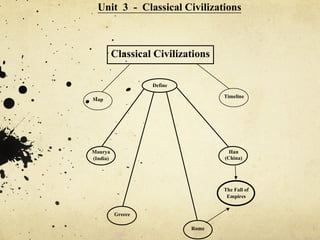
          Classical Civilizations

                   Define

                                    Timeline
Map


Maurya                                Han
(India)                             (China)


                                    The Fall of
                                     Empires


          Greece

                            Rome
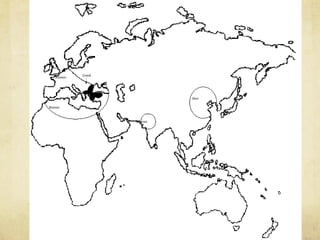
Greek
   Roman


                            Han

Roman


                   Maurya
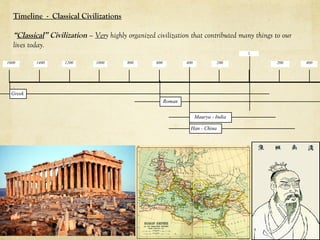
Timeline - Classical Civilizations
    
   “Classical” Civilization – Very highly organized civilization that contributed many things to our
   lives today. 
                                                                                         1

1600       1400      1200      1000       800       600           400             200         200      400


  Greek
                                                          Roman

                                                                        Maurya - India

                                                                    Han - China
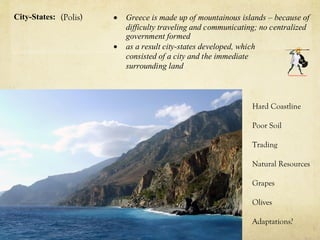
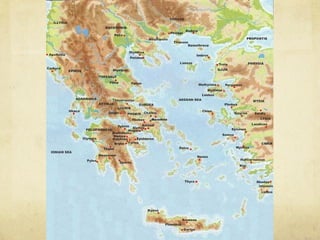
City-States: (Polis)   •   Greece is made up of mountainous islands – because of
                           difficulty traveling and communicating; no centralized
                           government formed
                       •   as a result city-states developed, which
                           consisted of a city and the immediate
                           surrounding land


                                                                Hard Coastline

                                                                Poor Soil

                                                                Trading

                                                                Natural Resources

                                                                Grapes

                                                                Olives

                                                                Adaptations?
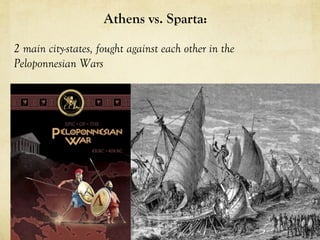
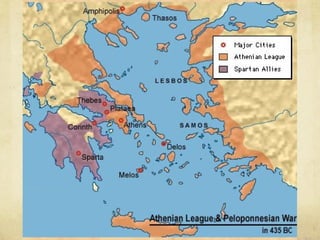
Athens vs. Sparta: 

2 main city-states, fought against each other in the
Peloponnesian Wars 
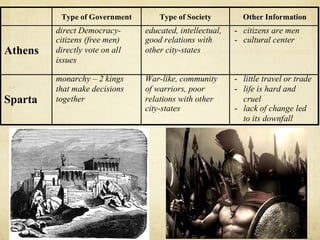
Type of Government        Type of Society         Other Information
         direct Democracy-      educated, intellectual,   - citizens are men
         citizens (free men)    good relations with       - cultural center
Athens   directly vote on all   other city-states
         issues

         monarchy – 2 kings     War-like, community       - little travel or trade
         that make decisions    of warriors, poor         - life is hard and
Sparta   together               relations with other        cruel
                                city-states               - lack of change led
                                                            to its downfall
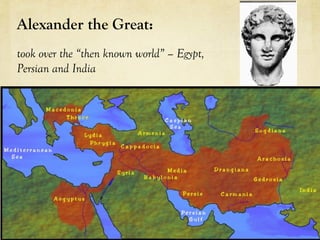
Alexander the Great: 
took over the “then known world” – Egypt,
Persian and India 
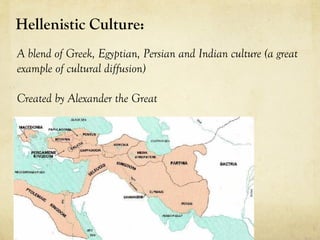
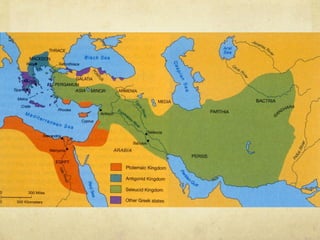
Hellenistic Culture: 
A blend of Greek, Egyptian, Persian and Indian culture (a great
example of cultural diffusion)

Created by Alexander the Great
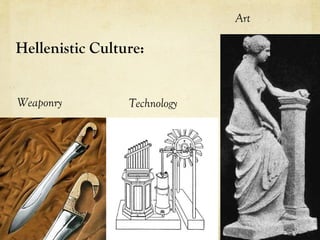
Art

Hellenistic Culture: 


Weaponry         Technology
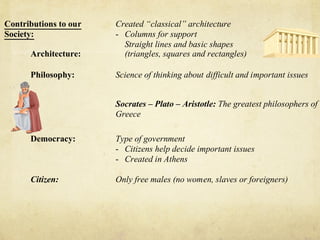
Contributions to our   Created “classical” architecture
Society:               - Columns for support
                         Straight lines and basic shapes
      Architecture:      (triangles, squares and rectangles)

      Philosophy:      Science of thinking about difficult and important issues


                       Socrates – Plato – Aristotle: The greatest philosophers of
                       Greece

      Democracy:       Type of government
                       - Citizens help decide important issues
                       - Created in Athens

      Citizen:         Only free males (no women, slaves or foreigners)

Classic civilizations

  • 1.
    Unit 3 -Classical Civilizations Classical Civilizations Define Timeline Map Maurya Han (India) (China) The Fall of Empires Greece Rome
  • 2.
    Greek Roman Han Roman Maurya
  • 3.
    Timeline - ClassicalCivilizations   “Classical” Civilization – Very highly organized civilization that contributed many things to our lives today.  1 1600 1400 1200 1000 800 600 400 200 200 400 Greek Roman Maurya - India Han - China
  • 4.
    City-States: (Polis) • Greece is made up of mountainous islands – because of difficulty traveling and communicating; no centralized government formed • as a result city-states developed, which consisted of a city and the immediate surrounding land Hard Coastline Poor Soil Trading Natural Resources Grapes Olives Adaptations?
  • 6.
    Athens vs. Sparta:  2main city-states, fought against each other in the Peloponnesian Wars 
  • 8.
    Type of Government Type of Society Other Information direct Democracy- educated, intellectual, - citizens are men citizens (free men) good relations with - cultural center Athens directly vote on all other city-states issues monarchy – 2 kings War-like, community - little travel or trade that make decisions of warriors, poor - life is hard and Sparta together relations with other cruel city-states - lack of change led to its downfall
  • 9.
    Alexander the Great:  tookover the “then known world” – Egypt, Persian and India 
  • 10.
    Hellenistic Culture:  A blendof Greek, Egyptian, Persian and Indian culture (a great example of cultural diffusion) Created by Alexander the Great
  • 12.
  • 13.
    Contributions to our Created “classical” architecture Society: - Columns for support Straight lines and basic shapes Architecture: (triangles, squares and rectangles) Philosophy: Science of thinking about difficult and important issues Socrates – Plato – Aristotle: The greatest philosophers of Greece Democracy: Type of government - Citizens help decide important issues - Created in Athens Citizen: Only free males (no women, slaves or foreigners)