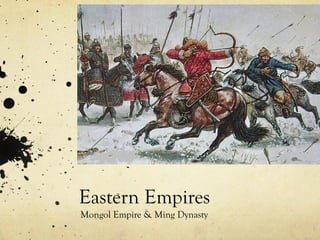
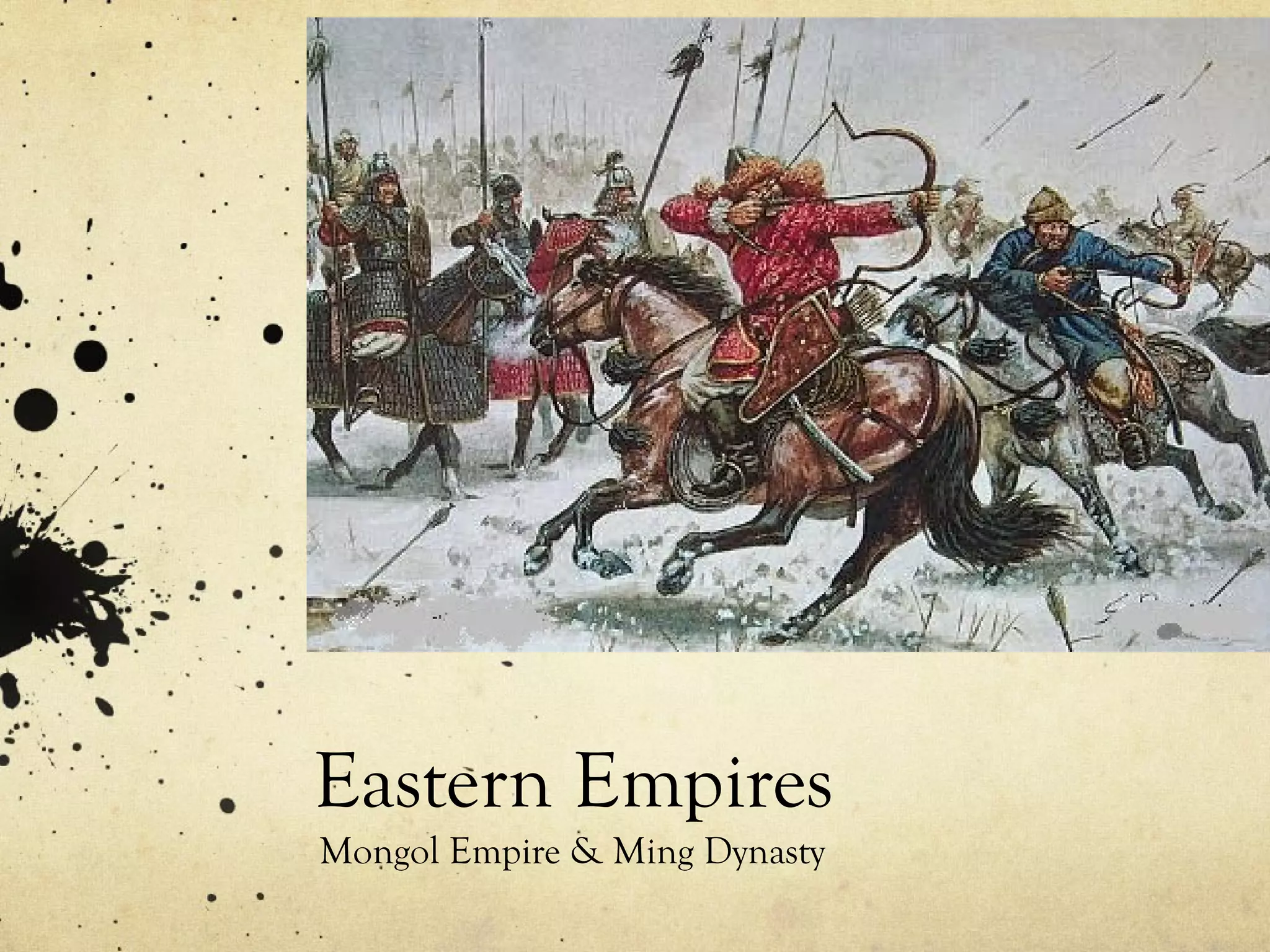
Eastern Empires
Mongol Empire & Ming Dynasty
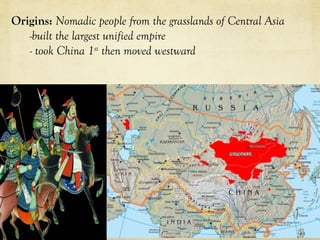
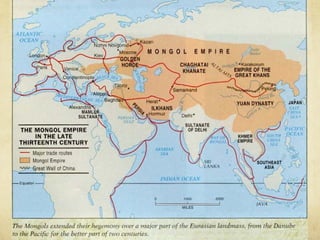
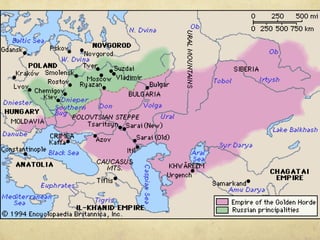
Origins: Nomadic people from the grasslands of Central Asia
-built the largest unified empire
- took China 1st
then moved westward
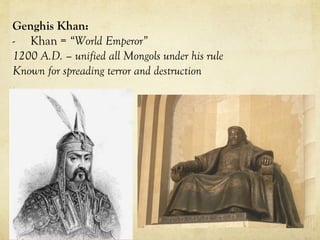
Genghis Khan:
- Khan = “World Emperor”
1200 A.D. – unified all Mongols under his rule
Known for spreading terror and destruction
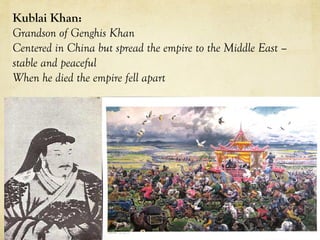
Kublai Khan:
Grandson of Genghis Khan
Centered in China but spread the empire to the Middle East –
stable and peaceful
When he died the empire fell apart
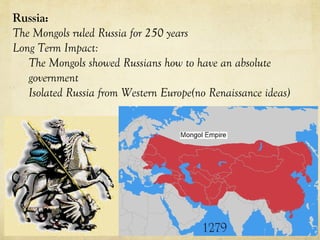
Russia:
The Mongols ruled Russia for 250 years
Long Term Impact:
The Mongols showed Russians how to have an absolute
government
Isolated Russia from Western Europe(no Renaissance ideas)
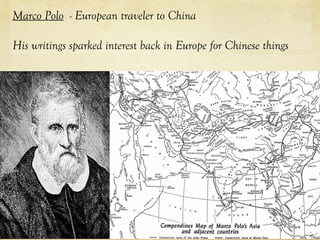
Marco Polo - European traveler to China
His writings sparked interest back in Europe for Chinese things
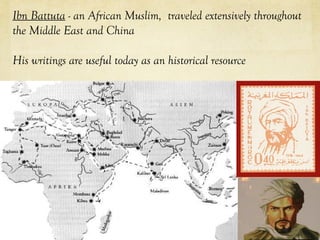
Ibn Battuta - an African Muslim, traveled extensively throughout
the Middle East and China
His writings are useful today as an historical resource
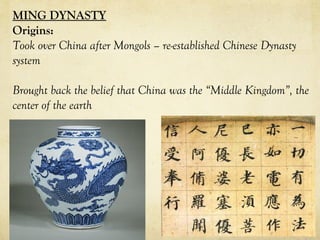
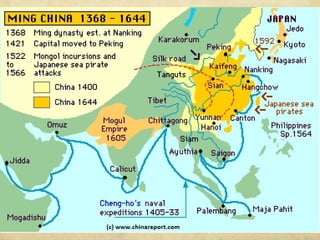
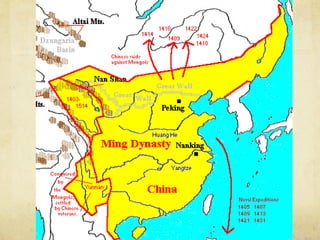
MING DYNASTY
Origins:
Took over China after Mongols – re-established Chinese Dynasty
system
Brought back the belief that China was the “Middle Kingdom”, the
center of the earth
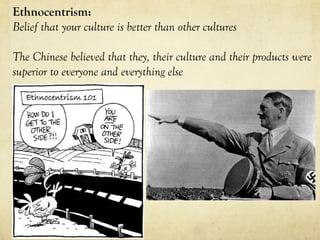
Ethnocentrism:
Belief that your culture is better than other cultures
The Chinese believed that they, their culture and their products were
superior to everyone and everything else  
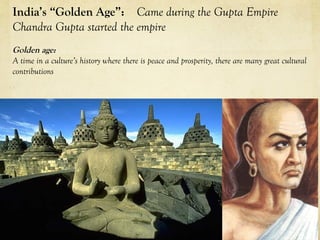
India’s “Golden Age”: Came during the Gupta Empire
Chandra Gupta started the empire
Golden age:
A time in a culture’s history where there is peace and prosperity, there are many great cultural
contributions
 
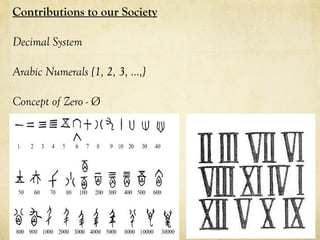
Contributions to our Society
Decimal System
Arabic Numerals {1, 2, 3, …,}
Concept of Zero - Ø
 
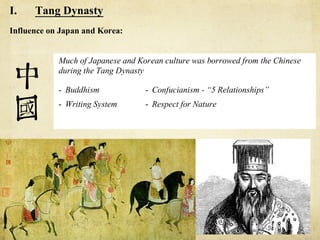
I. Tang Dynasty
Influence on Japan and Korea:
Much of Japanese and Korean culture was borrowed from the Chinese
during the Tang Dynasty
- Buddhism - Confucianism - “5 Relationships”
- Writing System - Respect for Nature
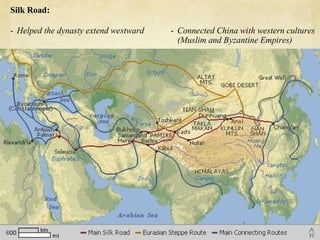
Silk Road:
- Helped the dynasty extend westward - Connected China with western cultures
(Muslim and Byzantine Empires)
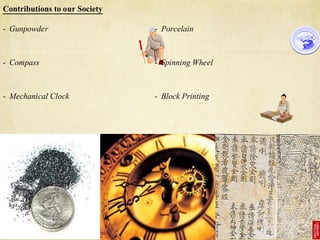
Contributions to our Society
- Gunpowder - Porcelain
- Compass - Spinning Wheel
- Mechanical Clock - Block Printing
Essential Questions: Political Parties:
How did Japan’s geographic location
relate to its policy of isolationism?
Essential Questions: Political Parties:
What are the similarities and
differences between Japanese and
European feudalism?
Essential Questions: Political Parties:
How did the Crusades help bring
about the end of feudalism and the
beginning of the Renaissance?
Essential Questions: Political Parties:
What are the most important
contributions of eastern cultures to
the societies of today?

Eastern empires

  • 1.
  • 2.
    Origins: Nomadic peoplefrom the grasslands of Central Asia -built the largest unified empire - took China 1st then moved westward
  • 4.
    Genghis Khan: - Khan= “World Emperor” 1200 A.D. – unified all Mongols under his rule Known for spreading terror and destruction
  • 5.
    Kublai Khan: Grandson ofGenghis Khan Centered in China but spread the empire to the Middle East – stable and peaceful When he died the empire fell apart
  • 6.
    Russia: The Mongols ruledRussia for 250 years Long Term Impact: The Mongols showed Russians how to have an absolute government Isolated Russia from Western Europe(no Renaissance ideas)
  • 8.
    Marco Polo -European traveler to China His writings sparked interest back in Europe for Chinese things
  • 9.
    Ibn Battuta -an African Muslim, traveled extensively throughout the Middle East and China His writings are useful today as an historical resource
  • 10.
    MING DYNASTY Origins: Took overChina after Mongols – re-established Chinese Dynasty system Brought back the belief that China was the “Middle Kingdom”, the center of the earth
  • 13.
    Ethnocentrism: Belief that yourculture is better than other cultures The Chinese believed that they, their culture and their products were superior to everyone and everything else  
  • 14.
    India’s “Golden Age”: Came duringthe Gupta Empire Chandra Gupta started the empire Golden age: A time in a culture’s history where there is peace and prosperity, there are many great cultural contributions  
  • 15.
  • 16.
    I. Tang Dynasty Influenceon Japan and Korea: Much of Japanese and Korean culture was borrowed from the Chinese during the Tang Dynasty - Buddhism - Confucianism - “5 Relationships” - Writing System - Respect for Nature
  • 17.
    Silk Road: - Helpedthe dynasty extend westward - Connected China with western cultures (Muslim and Byzantine Empires)
  • 18.
    Contributions to ourSociety - Gunpowder - Porcelain - Compass - Spinning Wheel - Mechanical Clock - Block Printing
  • 19.
    Essential Questions: PoliticalParties: How did Japan’s geographic location relate to its policy of isolationism?
  • 20.
    Essential Questions: PoliticalParties: What are the similarities and differences between Japanese and European feudalism?
  • 21.
    Essential Questions: PoliticalParties: How did the Crusades help bring about the end of feudalism and the beginning of the Renaissance?
  • 22.
    Essential Questions: PoliticalParties: What are the most important contributions of eastern cultures to the societies of today?