Software Quality Management
         Unit
         U – IV

                    Roy Antony Arnold G
                      y       y
                         Asst. Prof. / CSE
• Alth h reliability growth models are meant
  Although li bilit         th    d l          t
  for reliability assessment, they are also
  useful for quality management at the
  back end of the development process.
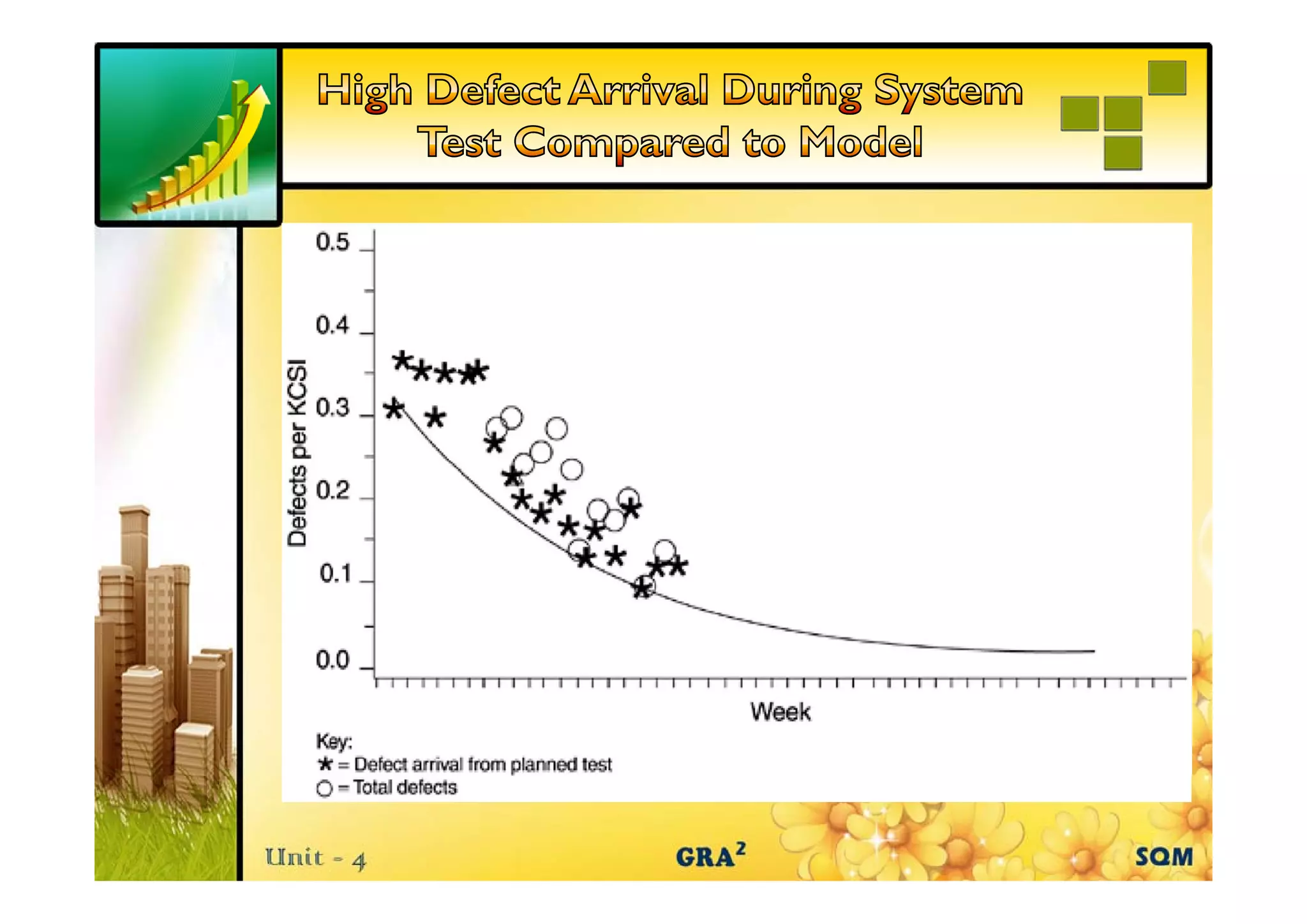
• Models developed from a previous product or
  a previous release of the same product can be
  used to track the testing defects of the
  current product.
                d
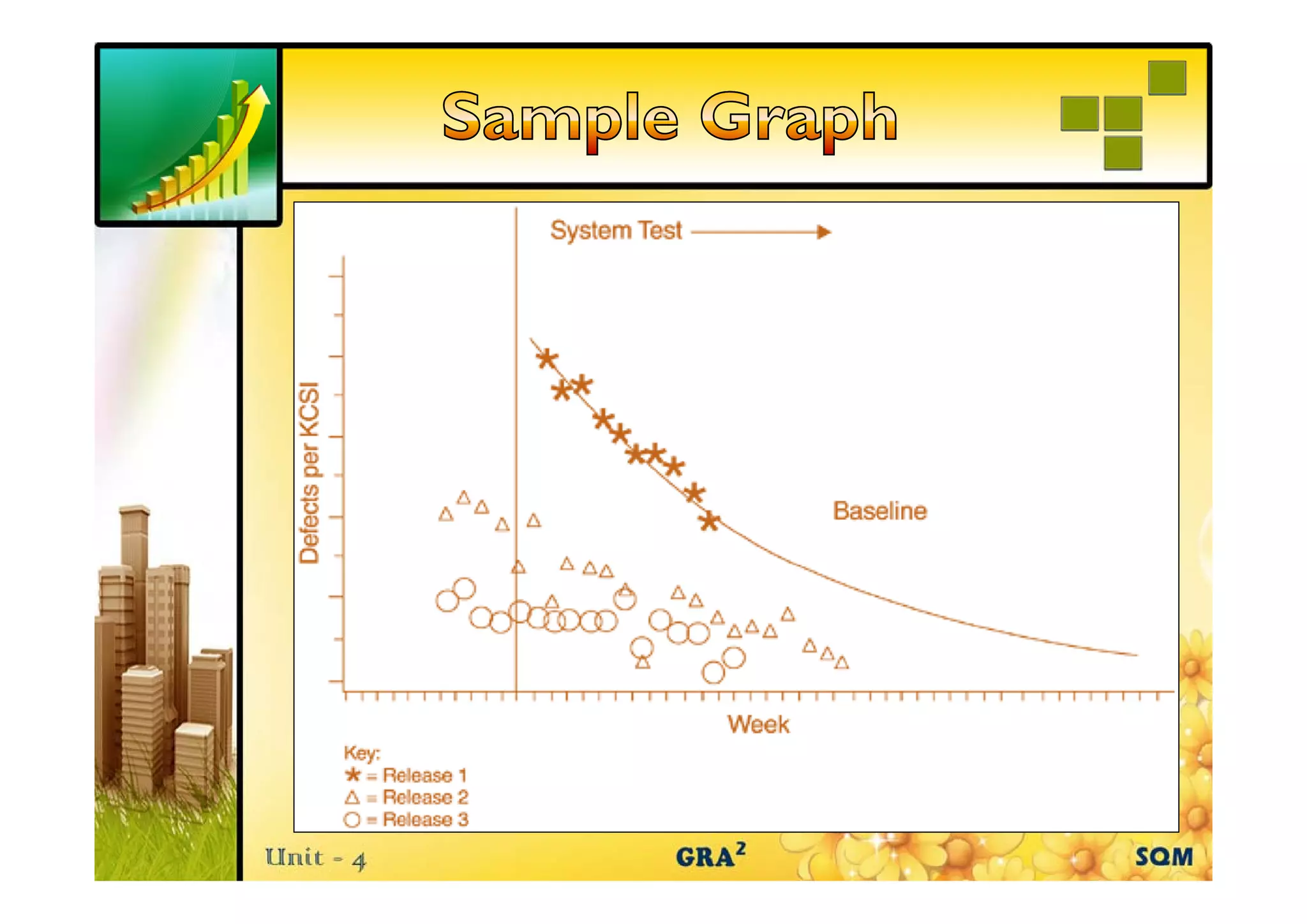
• To have significant improvement, the defect
  arrival rate ( f il
      i l t (or failure d i ) of the
                           density) f h
  current project must fall below the model
  curve.
  curve
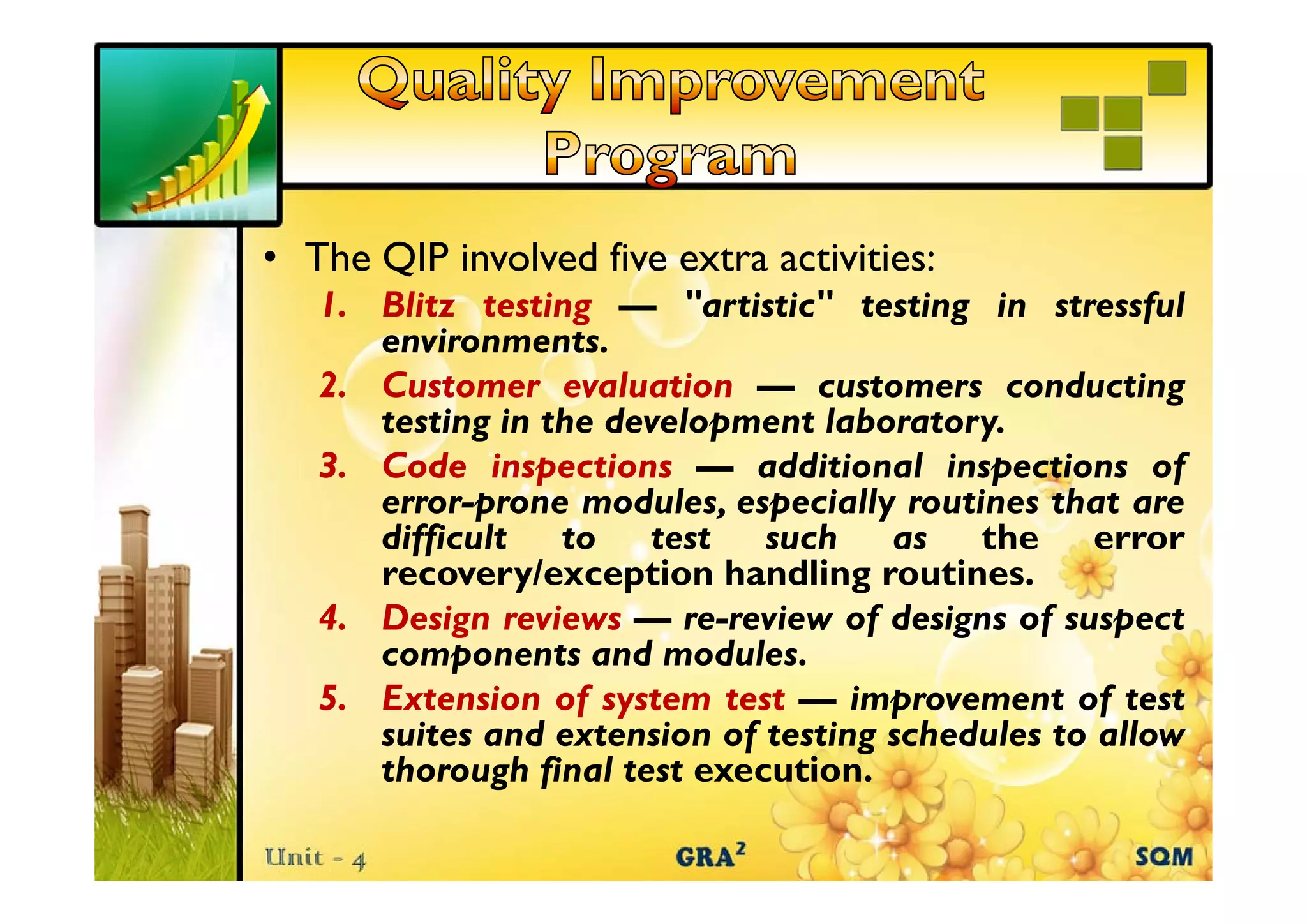
• The QIP involved five extra activities:
   1. Blitz testing — "artistic" testing in stressful
      environments.
   2. Customer evaluation — customers conducting
      testing in the development laboratory.
   3.
   3 Code inspections — additional inspections of
      error-prone modules, especially routines that are
      difficult to test such as the error
      recovery/exception h dli routines.
                /      ti handling       ti
   4. Design reviews — re-review of designs of suspect
      components and modules.
           p
   5. Extension of system test — improvement of test
      suites and extension of testing schedules to allow
      thorough final test execution.
• Because of the special QIP activities, the
  p
  product ship date was delayed one
                p                   y
  month.
• As a result more than 250 field defects
        result,
  were found and removed.
• The field quality of the product, evidenced
  by field defect arrivals reported in later
   y                             p
  years, improved significantly.
Reliability growth models for quality management

Reliability growth models for quality management

  • 1.
    Software Quality Management Unit U – IV Roy Antony Arnold G y y Asst. Prof. / CSE
  • 2.
    • Alth hreliability growth models are meant Although li bilit th d l t for reliability assessment, they are also useful for quality management at the back end of the development process. • Models developed from a previous product or a previous release of the same product can be used to track the testing defects of the current product. d • To have significant improvement, the defect arrival rate ( f il i l t (or failure d i ) of the density) f h current project must fall below the model curve. curve
  • 6.
    • The QIPinvolved five extra activities: 1. Blitz testing — "artistic" testing in stressful environments. 2. Customer evaluation — customers conducting testing in the development laboratory. 3. 3 Code inspections — additional inspections of error-prone modules, especially routines that are difficult to test such as the error recovery/exception h dli routines. / ti handling ti 4. Design reviews — re-review of designs of suspect components and modules. p 5. Extension of system test — improvement of test suites and extension of testing schedules to allow thorough final test execution.
  • 9.
    • Because ofthe special QIP activities, the p product ship date was delayed one p y month. • As a result more than 250 field defects result, were found and removed. • The field quality of the product, evidenced by field defect arrivals reported in later y p years, improved significantly.