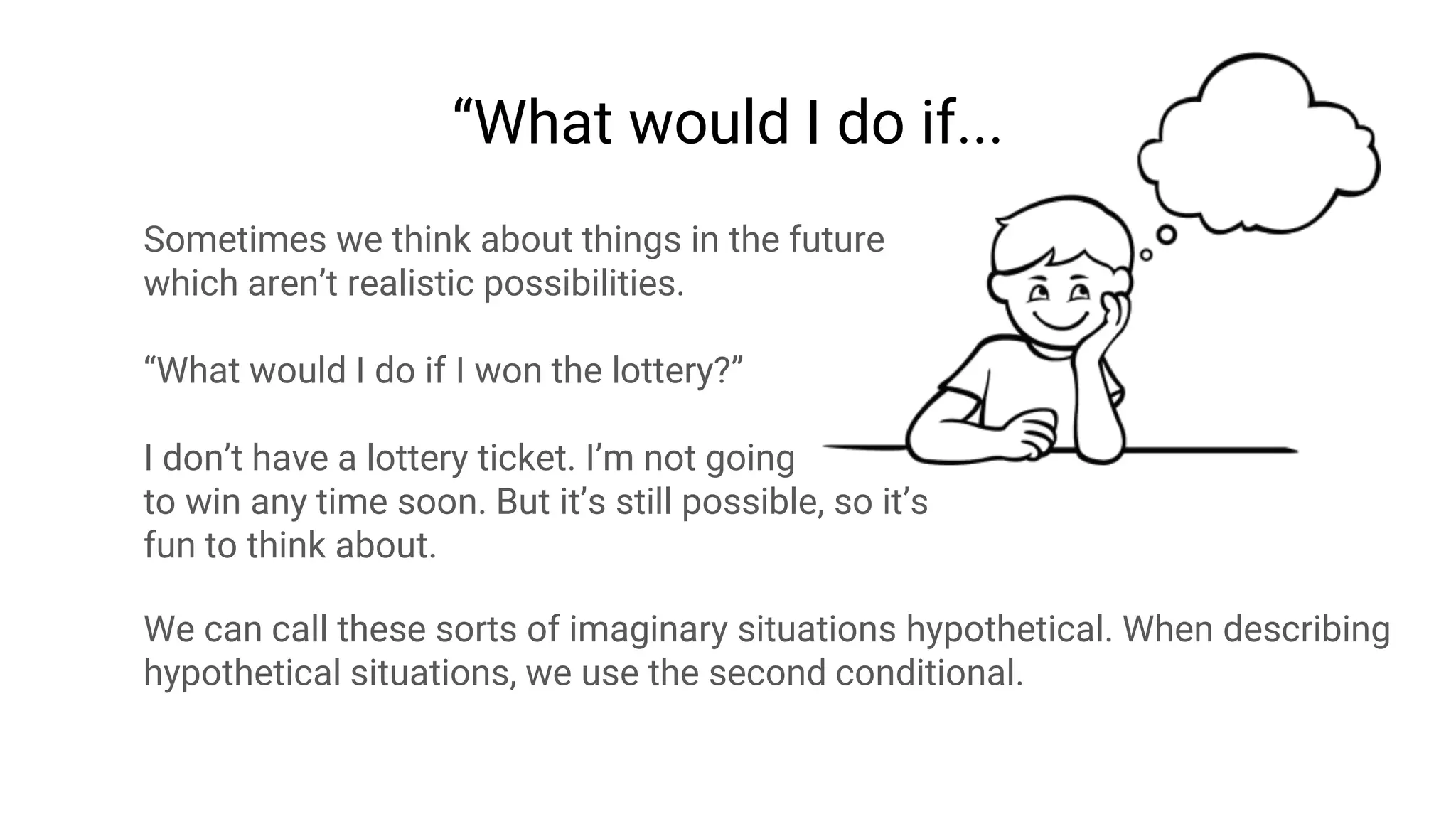
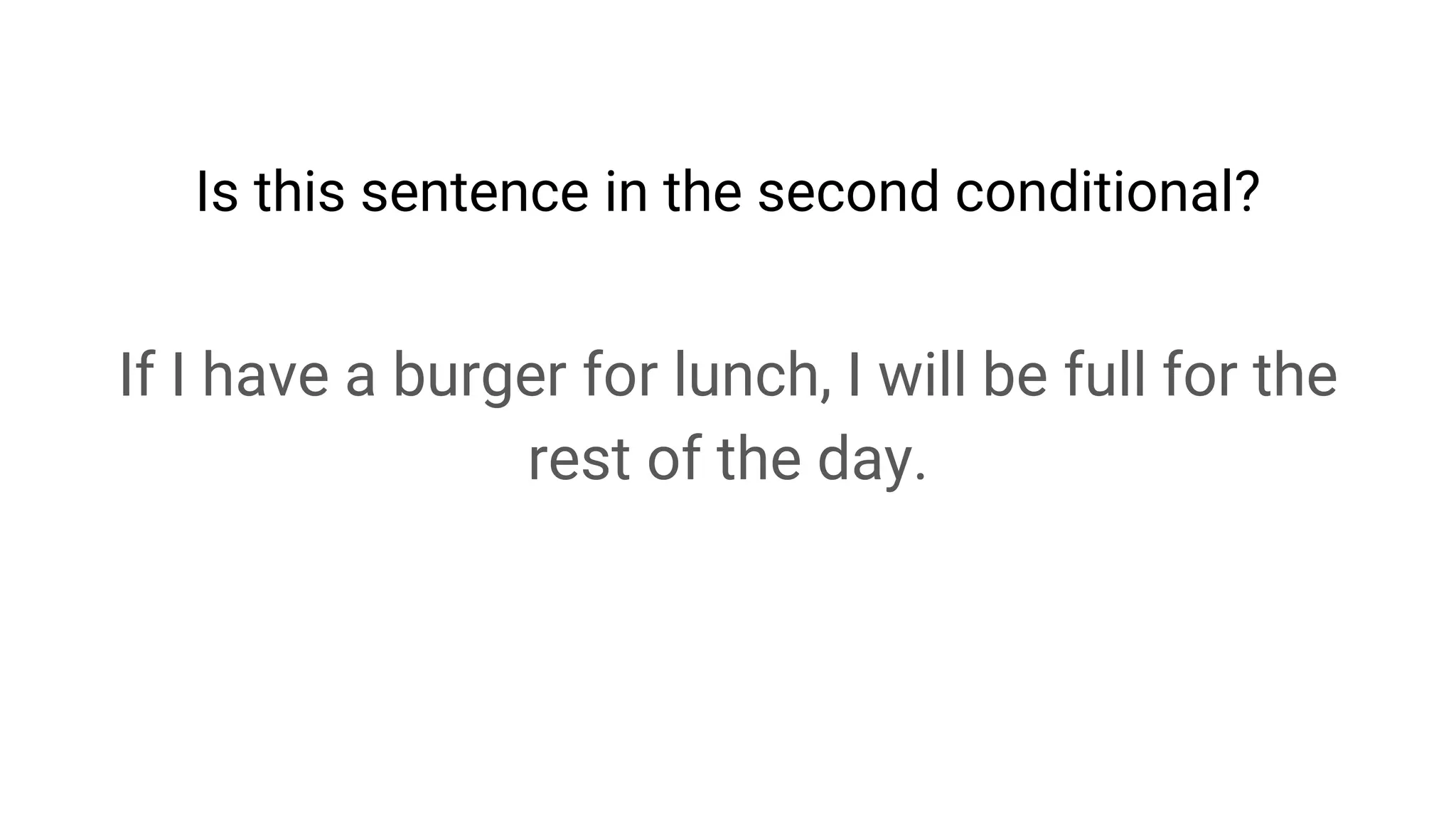
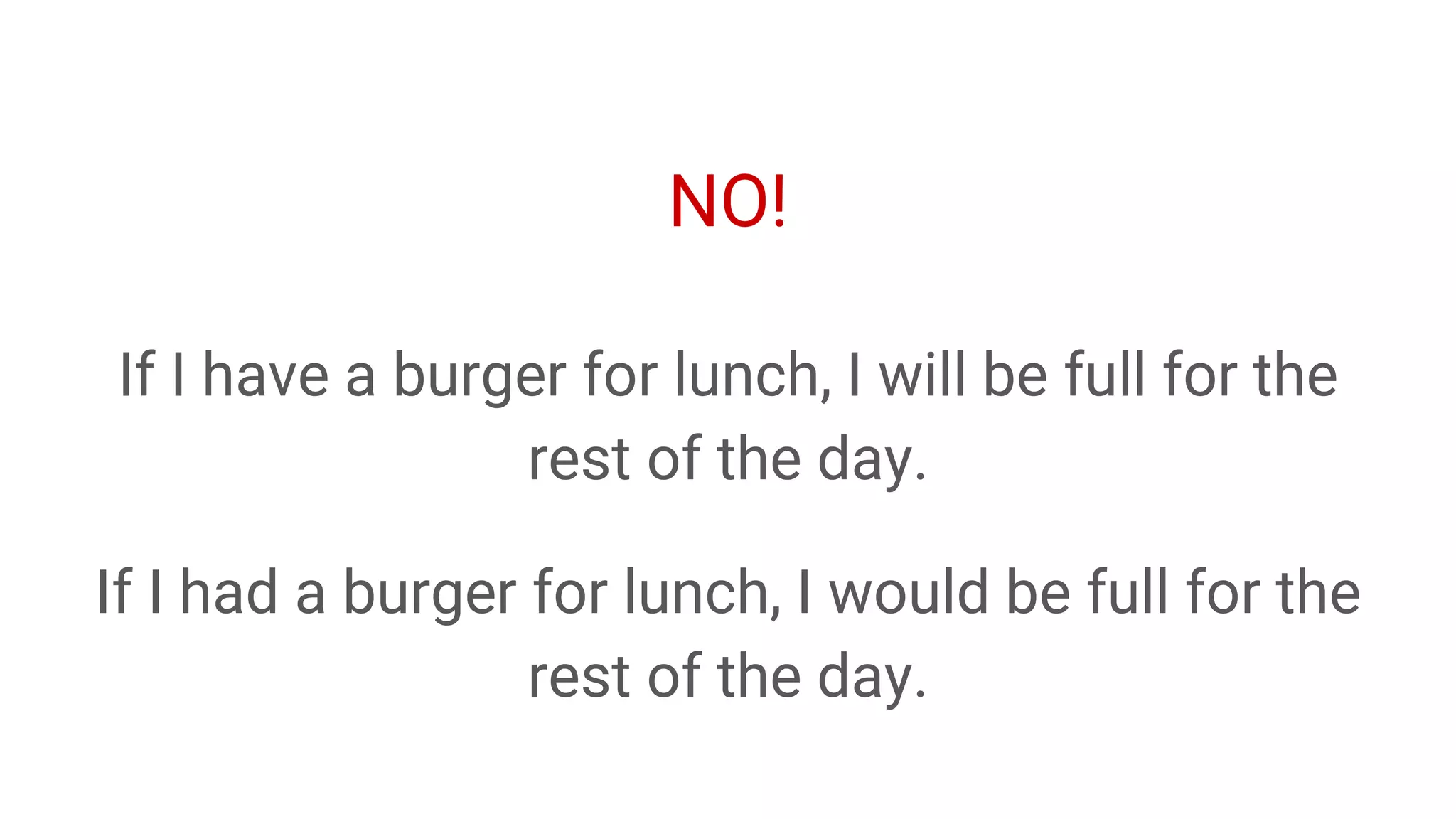
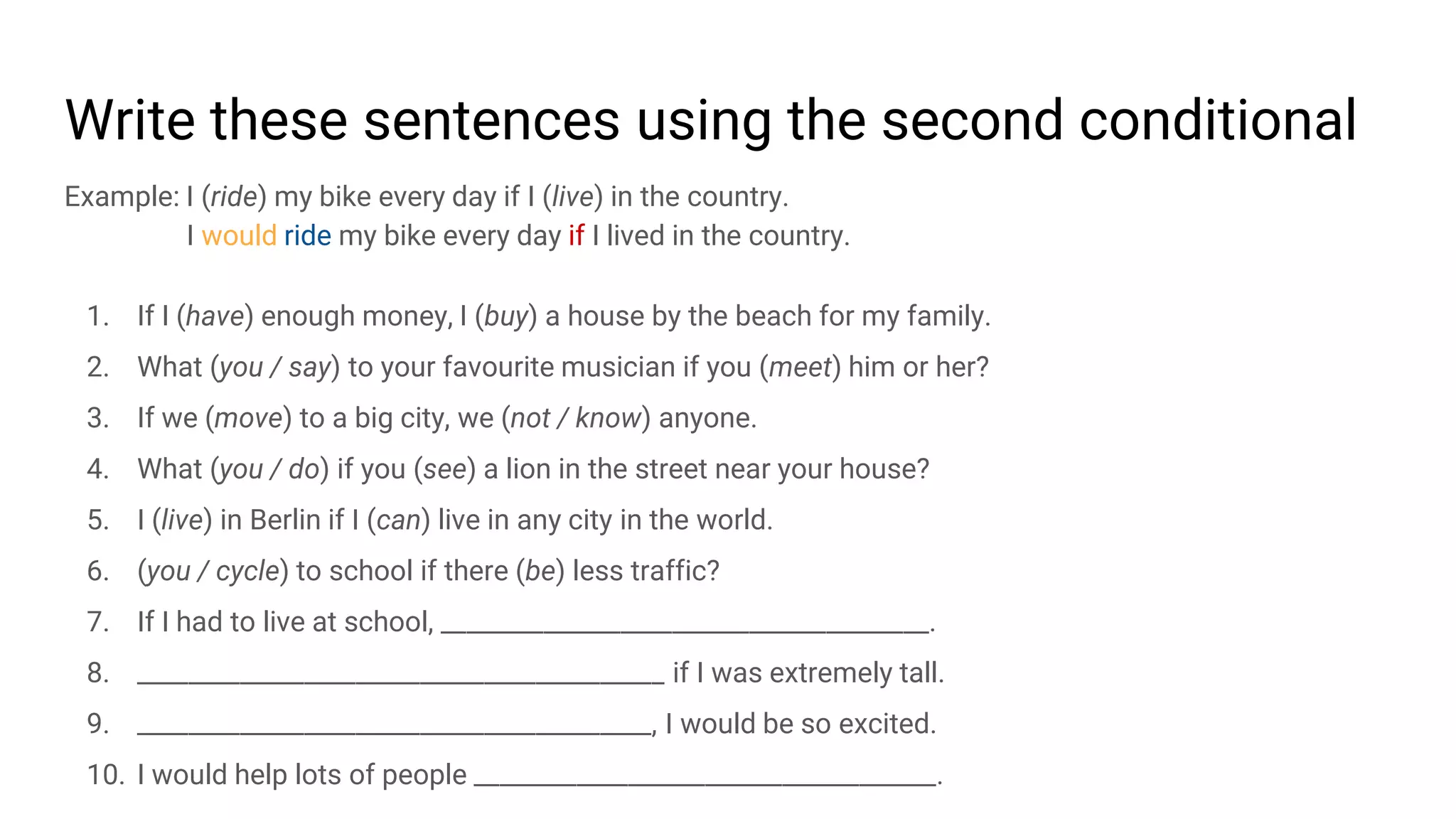
The document discusses the second conditional, which is used to describe hypothetical or imaginary situations that are unlikely or impossible. It provides examples of how to form the second conditional using "if" and "would." Some key points:
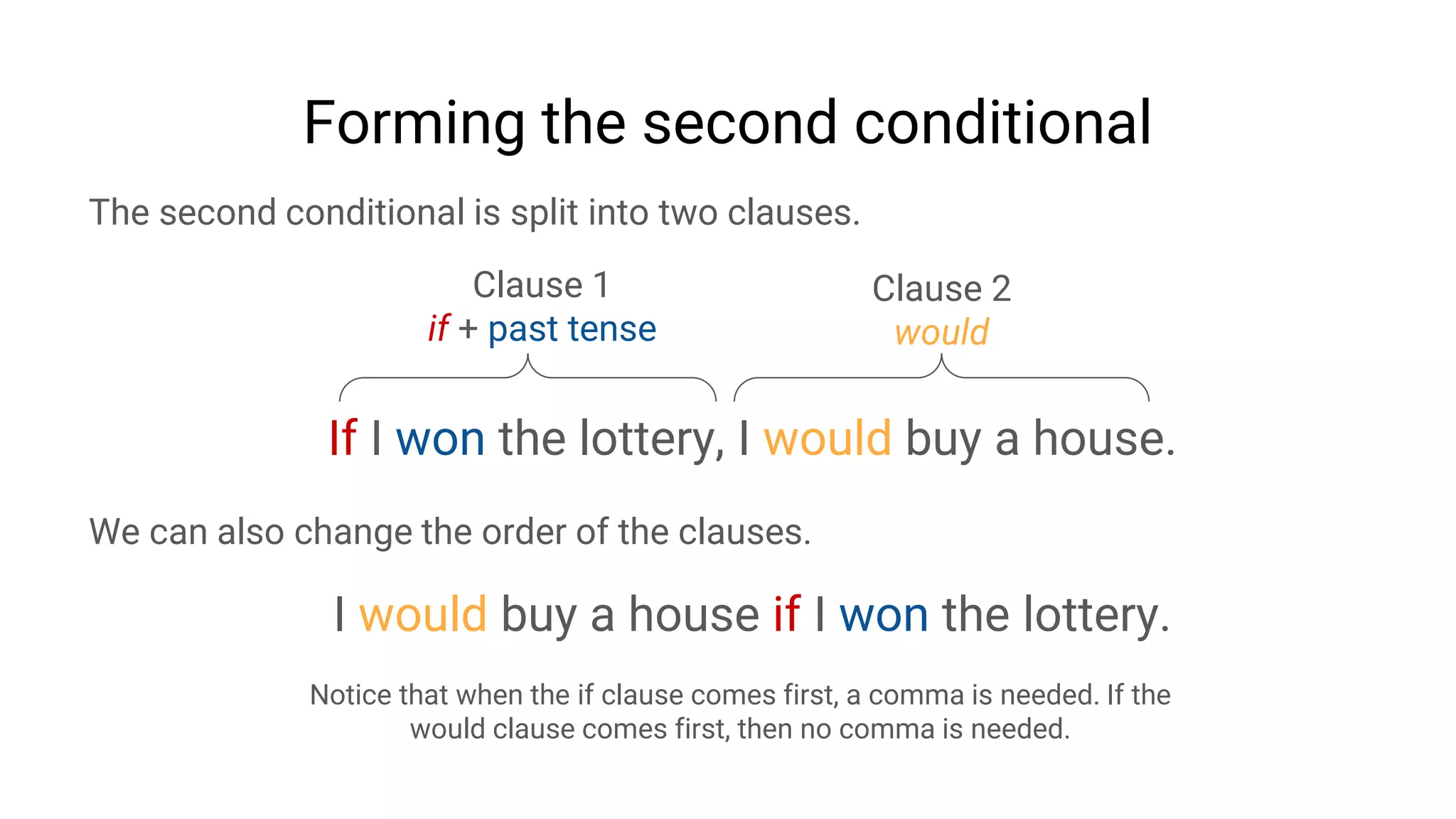
- The second conditional has two clauses, with "if" in the past tense followed by "would."
- The order of the clauses can be reversed, with a comma needed after "if" if it comes first.
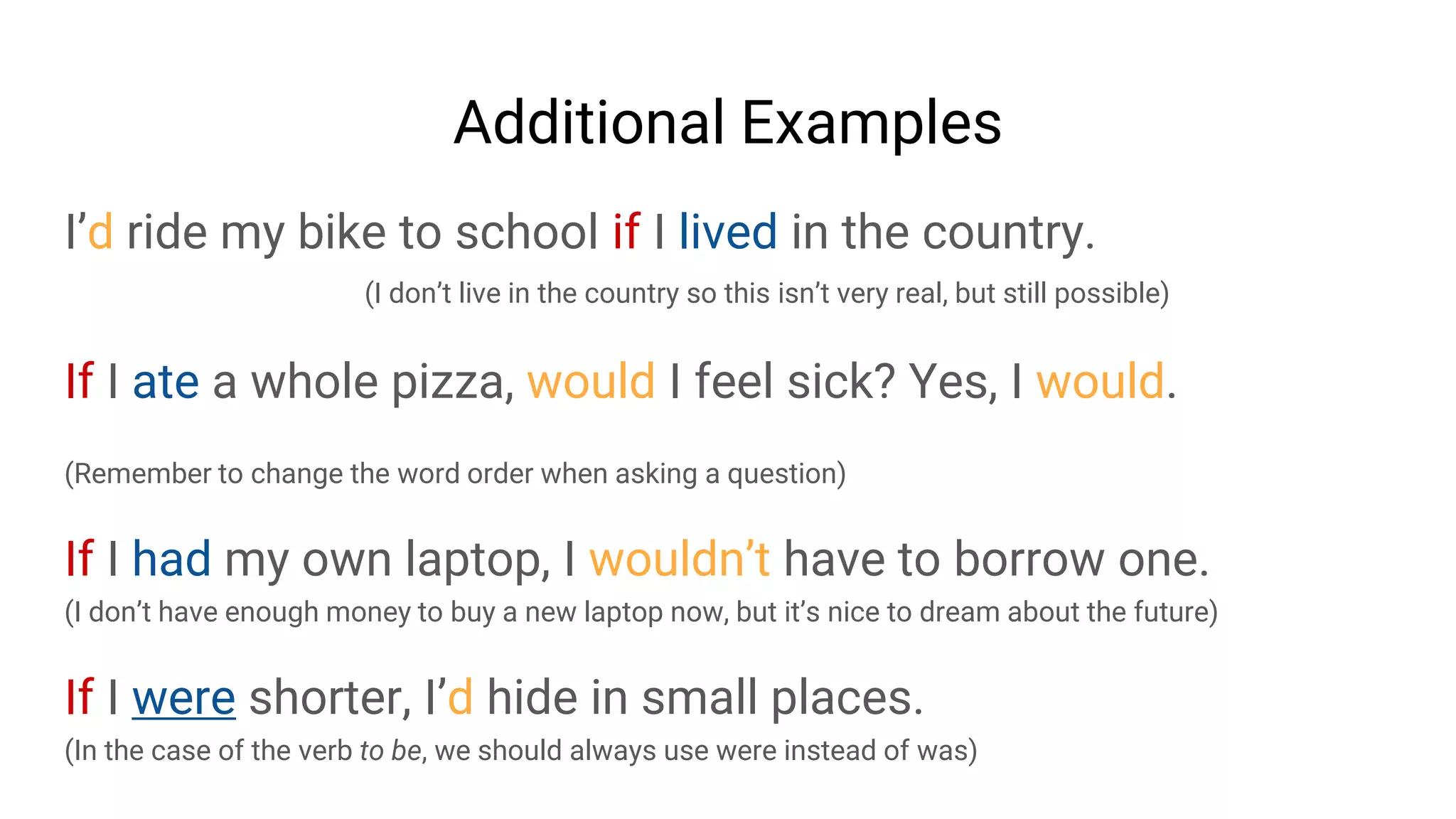
- Additional examples are provided to illustrate using the second conditional for unlikely hypothetical scenarios.