Reindustrialization Treble Track Policy
Kan Yuenyong

Wednesday, February 10, 2021
GSPA
NIDA DA8420: Development Policy in Global Era
Based on
Erik Reinert, How Rich Countries
Got Rich ... and Why Poor
Countries Stay Poor (2007),
London: Constable.

Chapter 8: “Get the economic
activities right”, or, the Lost Art of
Creating Middle-Income Countries
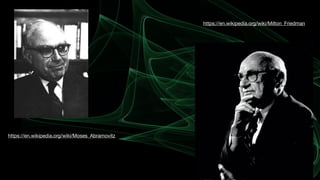
https://en.wikipedia.org/wiki/Moses_Abramovitz
https://en.wikipedia.org/wiki/Milton_Friedman
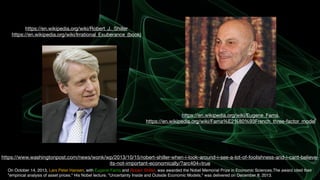
https://en.wikipedia.org/wiki/Eugene_Fama, 

https://en.wikipedia.org/wiki/Fama%E2%80%93French_three-factor_model
https://en.wikipedia.org/wiki/Robert_J._Shiller

https://en.wikipedia.org/wiki/Irrational_Exuberance_(book)
On October 14, 2013, Lars Peter Hansen, with Eugene Fama and Robert Shiller, was awarded the Nobel Memorial Prize in Economic Sciences.The award cited their
"empirical analysis of asset prices." His Nobel lecture, "Uncertainty Inside and Outside Economic Models," was delivered on December 8, 2013.
https://www.washingtonpost.com/news/wonk/wp/2013/10/15/robert-shiller-when-i-look-around-i-see-a-lot-of-foolishness-and-i-cant-believe-
its-not-important-economically/?arc404=true
• How rich countries were rich?

• How will poor countries rich? Can they?

• Market efficiency?
Schroeder, David, The role of market efficiency on implied cost of capital estimates: an international perspective (September 29, 2020). Annals
of Finance, forthcoming, Available at SSRN: https://ssrn.com/abstract=3123866 or http://dx.doi.org/10.2139/ssrn.3123866
• That Pinochet did not reprivatize Chile's biggest export earner, the copper
company CODELCO, but kept it in government hands, is another case
where reality does not correspond to the free market rhetoric. 

• Both Ireland and Finland had followed an import substitution policy similar
to that of Latin America 

• Subsidy, not FREE MARKET
• The government does exist to regulate the market, and to correct market
failure, i.e. to break monopoly.

• What if, a country “insists” a monopoly in its own market?

• Who will “regulate” the market over countries’ sovereignty? Global
Governance? (See debate between Neorealist vs Neoliberalist)

• Even if there is such international regulator, what if the country rejects that
regulator?
• What constitute(s) economic growth?

• Labor? Capital? TFP?

• Implication?
Thailand: 1991 - 2000

Capital-led growth + Very low TFP,
Plaza Accord, THB-USD Fixed +
BIBF -> Economic Crisis

Against Reinert’s?
• The whole process that explains the “residual” of 85 per cent is a systemic
one, what English economist Christopher Freeman would later name a
“national innovation system”. 

• Abramovitz himself emphasized the difference between what he called the
“immediate” sources of growth, and the causes at a deeper level. In his
view, the advance of physical and human capital, total factor productivity,
and the variables used in growth accounting were the “immediate”
sources of economic growth. The deeper question is what lies behind
these variables.
Sustained growth and a huge `residual' require diversity and increasing returns that feed the self-reinforcing mechanisms of economic growth
high-quality = rich ; low-quality = poor
What happen
if we have
pandemic
every two -
three years?
So far, 10 areas and zones across Japan have been designated, including the Tokyo area and the Kansai area. A zone straddling multiple
prefectures — Hiroshima Prefecture/Imabari City (Ehime Prefecture) — was designated in 2016. The zones offer relaxed regulations in 11
sectors including tourism and medicine, and have, for example, enabled private companies to acquire farmland. 

https://ja.wikipedia.org/wiki/%E5%9C%B0%E6%96%B9%E5%89%B5%E7%94%9F
• [the "residual" and growth in general are industry-specific]

• [Mogenthau Plan (deindustrialize) replaced by Marshall plan (deindustrialize)
-> reindustrialize]

• [middle-income nations, residual, regional champion, -> world-class]
• [productivity explosions & historical increasing returns]

• [zero-sum economic game -> poverty]

• [Follow Britain industrialization]
Building Middle-income countries:
Nationalism and “Good Protectionism”
Good Bad
Reindustrialization. Yes, but…
• China vs South Korea: Should Industrial Policy in Developing Countries Conform to
Comparative Advantage or Defy it ? A Debate Between Justin Lin and Ha-Joon Chang
(think about Malaysia vs Thailand auto industry also)

• Soviet vs democracy? think about China? Vietnam? What the difference with countries
like N Korea and Iran?

• IT does not bring back american economy? —> I think his assumption fails to see
Nasdaq scale + its resilience during Covid-19 crisis + see Apple’s supply chain. Role of
transportation, logistic and Geoeconomics

• Are these suggestions enough?

• Generally Reinert has talked about how to generate more middle-income country. But…
How can Thailand get out of
the Middle Income Trap?
And getting through developed economy status:

GDP per capita = USD 15,000 - 25,000 (current = USD 6,450)

Beware: “The Red Queen’s Race”
Different paradigm on development
• Development as growth: Believe in trickle down economics

• Development as equity: i.e Dudley Seers, believe in governmental intervention, progressive taxes
and redistribution policy (i.e. village fund, micro-finance, social welfare)

• Development as freedom: i.e. Amartya Sen, an increasing of the poor’s income is a short term
policy, it should focus more on expanding human capabilities and freedom to institute
sustainable and self-reliance policy rather than to depend on the governmental agencies. Provide
equal access to land + irrigation (affordable) and a participatory development to have more voice
in the development program

• Development as happiness: Michael Todaro to criticize Sen that it’s difficult to make a
measurement on intangible benefit. Empirical studies signify that increasing of income doesn’t
mean increasing of happiness. Focus more on job security, quality of life and environment quality,
or making a balance between economic, social, environmental aspects, i.e. UN’s 17 SDG

• However, how can we arrange priority (or to synchronize) developmental policy?
I. Unicorns (USD 1 billion businesses) & Exponential Growth; Focuses on MBNRIC
II. New S-Curve; EEC; Key Global Value Chain; Low Carbon Industry
III. Grassroot Economy: OTOP, Village Fund (FELDA in Malaysia), Universal Healthcare, Agritech. How to connect track II & III?
In the medium term, Thailand needs to address its double play, political reconciliation and infrastructure reform
such as a building of Dawai deep seaport project, Singapore-Kunming High speed rail link, a joint exploration and
development of the Overlapping Claim Area (OCA) to the untapped energy resources in the Thai gulf between
Thailand and Cambodia, and also a possibility of the Kra Canal project. With the well developed financial
institutes, Thailand can help CLMV countries develop their economic into the next level, as well as playing the
greater constructive role in the logistic link between both China and India (Chindia).
Prayuth = Grade C ☑
The sogo shosha are global Fortune 500 companies who in fact, in 1996, took 5 of the first 6 spots on the list. (Having shifted to international accounting standards
from Japanese accounting standards in recent years sales volumes have been revised downward, therefore the sogo shosha rank lower but are still in the top 300 or
so. If Japanese accounting standards were applied they would all be in the top 75 with two in the top 20.) However, if you were to ask a business executive from
another country if they have ever heard of any of these sogo shosha, you might get an answer like, the steel maker Sumitomo Metal (now merged with Japan Steel)
or the auto manufacturer Mitsubishi Motors (Mitsubishi Corporation has a less than 10% interest), neither of which are sogo shosha. The reason that most people
have not heard of the sogo shosha is simple, the sogo shosha are not manufacturers. They do not have their names attached to consumer or other products. You do
not see their name on any retail products, stores or outlets. This is because the sogo shosha are basically super suppliers, wholesalers and distributors that operate
in the supply chain, upstream from natural resources, all the way downstream to the consumer and at intermediary points in between.
https://www.gotoknow.org/posts/649486
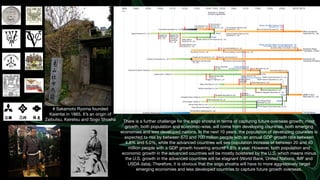
# Sakamoto Ryoma founded
Kaientai in 1865. It’s an origin of
Zaibutsu, Keiretsu and Sogo Shosha There is a further challenge for the sogo shosha in terms of capturing future overseas growth; most
growth, both population and economic-wise, will come from developing countries, both emerging
economies and less developed nations. In the next 10 years, the population of developing countries is
expected to rise by between 670 and 700 million people with an annual GDP growth rate between
4.8% and 5.0%, while the advanced countries will see population increase of between 20 and 40
million people with a GDP growth hovering around 1.8% a year. However, both population and
economic growth in the advanced countries will be mostly bolstered by the U.S, which means minus
the U.S. growth in the advanced countries will be stagnant (World Bank, United Nations, IMF and
USDA data). Therefore, it is obvious that the sogo shosha will have to more aggressively target
emerging economies and less developed countries to capture future growth overseas.
https://www.scribd.com/document/271830695/MCP-BKK-81413-Intermodal-Transport-V1, https://www.gotoknow.org/posts/592465 

Joined with the HSR economic impact study team in Yingluck’s administration
Yingluck’s government : HSR, Logistic and Infrastructure project (link + geopolitics + Fernand Braudel)

Prayuth’s government: Thailand 4.0, BCG, EEC, Logistic (link + node + influenced from Kanto - Kansai GVC linkage)
https://www.itochu.co.jp/en/news/press/
2019/190225.html
https://www.itochu.co.jp/en/business/
alliance/index.html
Magnolia Quality Development Corporation Ltd, the property developer owned by the Chearavanont family, plans to invest 7 billion baht to develop a super-luxury
riverfront condo at Iconsiam. The condo is to be branded and managed by Mandarin Oriental Hotel Group. 

https://www.bangkokpost.com/business/440372/magnolia-plans-posh-condo-in-iconsiam
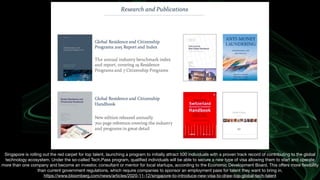
Singapore is rolling out the red carpet for top talent, launching a program to initially attract 500 individuals with a proven track record of contributing to the global
technology ecosystem. Under the so-called Tech.Pass program, qualified individuals will be able to secure a new type of visa allowing them to start and operate
more than one company and become an investor, consultant or mentor for local startups, according to the Economic Development Board. This offers more flexibility
than current government regulations, which require companies to sponsor an employment pass for talent they want to bring in. 

https://www.bloomberg.com/news/articles/2020-11-12/singapore-to-introduce-new-visa-to-draw-top-global-tech-talent
Mass Flourishing!
encouraging grassroot economy
Unlike in Piketty’s world, the modern denizens of Phelps’s world not only are not
consumed by envy but seem to be untouched by it. Also unlike for Piketty, for
Phelps capital (or prosperity) is not a glob of stuff that springs forth from forces
exogenous either to the kinds of human choices studied in basic microeconomics
classes or to the kinds of institutions analyzed there.
Phelps’s Mass Flourishing is one of a number recent works that documents the
truly astonishing improvement in the material standards of living of everyone
(and especially of the masses) in market economies over the past two centuries.
Also like many recent works—for example, Deirdre McCloskey’s Bourgeois
Dignity: Why Economics Can’t Explain the Modern World (Chicago: University of
Chicago Press, 2010) and Joel Mokyr’s The Enlightened Economy: An Economic
History of Britain 1700–1850 (New Haven, Conn.: Yale University Press, 2009)—
Phelps’s book emphasizes both the importance of innovation in creating modern
prosperity and the key role played by ideas in making widespread, economy-
changing innovation possible.
Phelps also explains that mass flourishing requires more than merely an
everincreasing access to cars and air-conditioning and smartphones and meals
at fusion restaurants—more even than the widespread availability of antibiotics
and other livesaving drugs and medical procedures. In addition to increased
consumption possibilities, mass flourishing requires challenging jobs that
stimulate workers’ creativity and make them feel vital.
http://www.independent.org/publications/tir/article.asp?id=1037
• The global activated carbon market demand was 1,684.3 kilo tons in 2015 and is expected to reach 5,092.2 kilo tons by
2024, growing at a CAGR of 13.3% from 2016 to 2024
• Powdered activated carbon emerged as the leading product segment with demand share estimated at 59.1% in 2015. It is
also expected to witness the highest growth of 14.2% over the forecast period.
• Air purification was the leading end-use segment and accounted for over 40% of total demand in 2015. Growing
awareness regarding health benefits of air filtration coupled with regulations such as Clean Air Act is expected to drive this
segment. It is also expected to witness the highest growth of 15.0% over the next eight years
• Water & wastewater treatment is also expected to brisk growth over the forecast period. The growth can be attributed to
increasing applications in municipal plants, ground water remediation, and beverage industry.
• Asia Pacific was the leading regional market with demand share exceeding 40% in 2015. Increasing usage in air & water
purification and emergence of novel applications such as pharmaceutical and food & beverage industry in the region is
expected to drive the product demand.
• Key market participants include Kureha Corporation, Carbon Activated Corporation, ADA-ES Inc., Haycarb PLC, Carbotech,
Carbon Resources LLC, Cabot Corporation, MeadWestvaco Corporation, and Calgon Carbon Corporation.
ประเด็นการ ลดรายจ่าย เพิ่มรายได้ เป็นปรับการสื่อสารให้ง่ายต่อการเข้าใจของชาวบ้าน, นโยบายกองทุนหมู่บ้าน (microfinancing), 30 บาทรักษาทุกโรค (universal healthcare), ค่าแรง 300 บาท (minimum wage/
limited universal basic income), ฯลฯ ยังมีปัญหาเรื่องความยั่งยืนทางการคลัง และเสถียรภาพระยะยาว รวมถึงความเป็นไปได้ของวาระรัฐสวัสดิการ เพราะอาจต้องเกี่ยวข้องกับการขึ้นภาษีในอัตราสูงเหมือนประเทศ
แถบสแกนดิเนเวียหรือยุโรป
ประเด็นที่เป็นหัวใจกว่า คือ นโยบาย OTOP ซึ่งรับมาจาก OVOP ของญี่ปุ่น หากทำได้ถูกต้อง จะสามารถสร้างเศรษฐกิจฐานราก ทวีคูณการหมุนเวียนรอบของเม็ดเงิน ขยายตลาดภายในประเทศ เป็นเบาะแรงกระแทก
ช่วยป้องกันความเสี่ยงจากเศรษฐกิจโลก และจะทำให้นโยบาย “สวัสดิการสังคม” สำหรับประชาชนรากหญ้า มีความยั่งยืนทางการคลังได้เอง ดีกว่าการสนับสนุนงบประมาณจากรัฐบาลกลาง
การทำนโยบายสำหรับประชาชนฐานรากให้ประสบความสำเร็จ จะต้องเชื่อมโยงกับห่วงโซ่มูลค่าโลกด้วย รัฐบาลจะเข้ามาช่วยเสริมระบบนิเวศเศรษฐกิจมูลค่าเพิ่มระดับบน รวมถึงไอเดียเรื่องการปฏิรูปที่ดินและการปลด
ปล่อยสินทรัพย์ที่ถูกล็อค / dead capital in informal sector (Hernando de Soto)
จำเป็นจะต้องคิดเรื่อง financing ให้ดี เช่นการทำ securitization & SWF ต้องคิดในระดับ GIC ของสิงคโปร์ในเรื่องโครงการที่พักอาศัย และการออมของประชาชน หรือดูไอเดียเรื่อง Khazanah Nasional Berhad
(SWF ของมาเลเซีย), KWAP และ Federal Land Development Authority (FELDA) ที่เชื่อมกับ MoF inc ของมาเลเซีย
ดูนโยบายครบวงจรเรื่องปาล์มน้ำมันของมาเลเซีย และการปรับใช้กับนโยบายตัวแบบ “ไผ่และถ่าน” ของไทย
When we talk about logistic, it’s about
Global Value Chain (GVC), freedom to
navigate, globalization (four economic
freedoms: free movement of goods,
services, labour and capital).
Existing leading GVC is Apple’s IPhone, i.e.
“Foxconn”
https://www.bloomberg.com/news/features/2021-02-09/
this-is-how-tim-cook-transformed-apple-aapl-after-
steve-jobs
https://voxeu.org/content/globalisation-10-and-20-helped-g7-
globalisation-30-helped-india-and-china-instead-what-will-
globalisation-40-do
“Thus globalization’s third unbundling is likely to involve workers in one nation providing services in another nation—including
services that today require physical presence. Or to use the unbundling theme, globalization’s third unbundling is likely to allow
labor services to be physically unbundled from laborers. - Richard Baldwin. Think about Fastjob, Freelancer, etc.
https://harvardpress.typepad.com/hup_publicity/2016/11/globalizations-three-unbundlings-richard-baldwin.html
Friction between politics and economics is indecisive, we need to study more #1
Decoupling vs Unbundling
https://www.reuters.com/article/us-foxconn-vietnam-
apple-exclusive-idUSKBN2860VN
https://worldview.stratfor.com/article/pc16-identifying-
chinas-successors
Friction between politics and economics is indecisive, we need to study more #2
Decoupling vs Unbundling
https://www.gotoknow.org/posts/648113
https://judiciary.house.gov/uploadedfiles/
competition_in_digital_markets.pdf
Thailand’s view: reversed cross strategy vs India’s view: Look east policy
Multiple layers of interest from logistic, to node, to distributed GVC & supply chain of multinational companies

An example of regional level GVC of auto industry in ASEAN, an interview with Khun Thanathorn Juengrungruangkij

https://www.gotoknow.org/posts/589809
https://www.chiyodacorp.com/en/service/spera-hydrogen/
https://asia.nikkei.com/
Spotlight/The-Big-Story/Be-
water-Japan-s-big-lonely-
bet-on-hydrogen
Age of Indo-Pacific: ASEAN, RCEP, TCPPP, BRI, APEC, ASEM, BIMSTEC, Asia Cooperation Dialog (ACD), etc.
y	=	1311.3e0.0129x
y	=	684.19e0.0594x
y	=	675.95e0.0445x
y	=	793.28e0.0587x
0
5000
10000
15000
20000
25000
30000
1950
1951
1952
1953
1954
1955
1956
1957
1958
1959
1960
1961
1962
1963
1964
1965
1966
1967
1968
1969
1970
1971
1972
1973
1974
1975
1976
1977
1978
1979
1980
1981
1982
1983
1984
1985
1986
1987
1988
1989
1990
1991
1992
1993
1994
1995
1996
1997
1998
1999
2000
2001
2002
2003
2004
2005
2006
2007
2008
2009
2010
PH SK TH TW Expon.		(PH) Expon.		(SK) Expon.		(TH) Expon.		(TW)
A B
C
D
E
F
G
y	=	340.51e0.0454x
R²	=	0.93843
0
1000
2000
3000
4000
5000
6000
7000
8000
9000
1950
1951
1952
1953
1954
1955
1956
1957
1958
1959
1960
1961
1962
1963
1964
1965
1966
1967
1968
1969
1970
1971
1972
1973
1974
1975
1976
1977
1978
1979
1980
1981
1982
1983
1984
1985
1986
1987
1988
1989
1990
1991
1992
1993
1994
1995
1996
1997
1998
1999
2000
2001
2002
2003
2004
2005
2006
2007
2008
2009
2010
WTO
Great Leap
Forward
Cultural Revolution Jiang Zemin
Deng Xiaoping
Mao Zedong
Hu Jintao
Tiananmen protest
Zao
Ziyang
Chen Yun
major
assembly
#3
p.
225
Alfred Marshall: today's migration is from areas with diminishing returns activities to areas with increasing returns activities.
https://atlas.developmentseed.org/, Infrastructure connects and defines us. The roads, pipelines and Internet cables that deliver our services also
shape our opportunities, our vulnerabilities and our identities. Political maps abound, yet there are few useful, elegant maps of the complex layering
of transportation, energy and communications infrastructures that unite us. This project represents a collaboration between DevelopmentSeed,
the University of Wisconsin-Madison Cartography Lab, and Dr. Parag Khanna, author of Connectography: Mapping the Future of Global Civilization
Friction between politics and economics is indecisive, we need to study more #3
Decoupling vs Unbundling
http://jasss.soc.surrey.ac.uk/16/2/1.html https://www.gotoknow.org/posts/688786
Complex Adaptive System (CAS) and Agent-Based Models (ABM) in International Trade
https://apps.carleton.edu/curricular/posc/assets/330f05.doc
https://www.amazon.com/Design-Control-Self-organizing-Systems-Self-organization/dp/3838335287
https://openpolicy.blog.gov.uk/2020/03/06/introducing-a-government-as-a-system-toolkit/
Engaging on Developmental Policy is like a war
“We shall fight on the beach”
GSPA
NIDA DA8420: Development Policy in Global Era
Q&A?
END

Reindustrialization

  • 1.
    Reindustrialization Treble TrackPolicy Kan Yuenyong Wednesday, February 10, 2021 GSPA NIDA DA8420: Development Policy in Global Era
  • 2.
    Based on Erik Reinert,How Rich Countries Got Rich ... and Why Poor Countries Stay Poor (2007), London: Constable. Chapter 8: “Get the economic activities right”, or, the Lost Art of Creating Middle-Income Countries
  • 3.
  • 4.
    https://en.wikipedia.org/wiki/Eugene_Fama, https://en.wikipedia.org/wiki/Fama%E2%80%93French_three-factor_model https://en.wikipedia.org/wiki/Robert_J._Shiller https://en.wikipedia.org/wiki/Irrational_Exuberance_(book) On October14, 2013, Lars Peter Hansen, with Eugene Fama and Robert Shiller, was awarded the Nobel Memorial Prize in Economic Sciences.The award cited their "empirical analysis of asset prices." His Nobel lecture, "Uncertainty Inside and Outside Economic Models," was delivered on December 8, 2013. https://www.washingtonpost.com/news/wonk/wp/2013/10/15/robert-shiller-when-i-look-around-i-see-a-lot-of-foolishness-and-i-cant-believe- its-not-important-economically/?arc404=true
  • 5.
    • How richcountries were rich? • How will poor countries rich? Can they? • Market efficiency?
  • 6.
    Schroeder, David, Therole of market efficiency on implied cost of capital estimates: an international perspective (September 29, 2020). Annals of Finance, forthcoming, Available at SSRN: https://ssrn.com/abstract=3123866 or http://dx.doi.org/10.2139/ssrn.3123866
  • 7.
    • That Pinochetdid not reprivatize Chile's biggest export earner, the copper company CODELCO, but kept it in government hands, is another case where reality does not correspond to the free market rhetoric. • Both Ireland and Finland had followed an import substitution policy similar to that of Latin America • Subsidy, not FREE MARKET
  • 8.
    • The governmentdoes exist to regulate the market, and to correct market failure, i.e. to break monopoly. • What if, a country “insists” a monopoly in its own market? • Who will “regulate” the market over countries’ sovereignty? Global Governance? (See debate between Neorealist vs Neoliberalist) • Even if there is such international regulator, what if the country rejects that regulator?
  • 9.
    • What constitute(s)economic growth? • Labor? Capital? TFP? • Implication?
  • 11.
    Thailand: 1991 -2000 Capital-led growth + Very low TFP, Plaza Accord, THB-USD Fixed + BIBF -> Economic Crisis Against Reinert’s?
  • 12.
    • The wholeprocess that explains the “residual” of 85 per cent is a systemic one, what English economist Christopher Freeman would later name a “national innovation system”. • Abramovitz himself emphasized the difference between what he called the “immediate” sources of growth, and the causes at a deeper level. In his view, the advance of physical and human capital, total factor productivity, and the variables used in growth accounting were the “immediate” sources of economic growth. The deeper question is what lies behind these variables.
  • 13.
    Sustained growth anda huge `residual' require diversity and increasing returns that feed the self-reinforcing mechanisms of economic growth
  • 14.
    high-quality = rich; low-quality = poor
  • 15.
    What happen if wehave pandemic every two - three years?
  • 19.
    So far, 10areas and zones across Japan have been designated, including the Tokyo area and the Kansai area. A zone straddling multiple prefectures — Hiroshima Prefecture/Imabari City (Ehime Prefecture) — was designated in 2016. The zones offer relaxed regulations in 11 sectors including tourism and medicine, and have, for example, enabled private companies to acquire farmland. https://ja.wikipedia.org/wiki/%E5%9C%B0%E6%96%B9%E5%89%B5%E7%94%9F
  • 20.
    • [the "residual"and growth in general are industry-specific] • [Mogenthau Plan (deindustrialize) replaced by Marshall plan (deindustrialize) -> reindustrialize] • [middle-income nations, residual, regional champion, -> world-class]
  • 23.
    • [productivity explosions& historical increasing returns] • [zero-sum economic game -> poverty] • [Follow Britain industrialization]
  • 24.
    Building Middle-income countries: Nationalismand “Good Protectionism” Good Bad
  • 25.
    Reindustrialization. Yes, but… •China vs South Korea: Should Industrial Policy in Developing Countries Conform to Comparative Advantage or Defy it ? A Debate Between Justin Lin and Ha-Joon Chang (think about Malaysia vs Thailand auto industry also) • Soviet vs democracy? think about China? Vietnam? What the difference with countries like N Korea and Iran? • IT does not bring back american economy? —> I think his assumption fails to see Nasdaq scale + its resilience during Covid-19 crisis + see Apple’s supply chain. Role of transportation, logistic and Geoeconomics • Are these suggestions enough? • Generally Reinert has talked about how to generate more middle-income country. But…
  • 27.
    How can Thailandget out of the Middle Income Trap? And getting through developed economy status: GDP per capita = USD 15,000 - 25,000 (current = USD 6,450) Beware: “The Red Queen’s Race”
  • 28.
    Different paradigm ondevelopment • Development as growth: Believe in trickle down economics • Development as equity: i.e Dudley Seers, believe in governmental intervention, progressive taxes and redistribution policy (i.e. village fund, micro-finance, social welfare) • Development as freedom: i.e. Amartya Sen, an increasing of the poor’s income is a short term policy, it should focus more on expanding human capabilities and freedom to institute sustainable and self-reliance policy rather than to depend on the governmental agencies. Provide equal access to land + irrigation (affordable) and a participatory development to have more voice in the development program • Development as happiness: Michael Todaro to criticize Sen that it’s difficult to make a measurement on intangible benefit. Empirical studies signify that increasing of income doesn’t mean increasing of happiness. Focus more on job security, quality of life and environment quality, or making a balance between economic, social, environmental aspects, i.e. UN’s 17 SDG • However, how can we arrange priority (or to synchronize) developmental policy?
  • 29.
    I. Unicorns (USD1 billion businesses) & Exponential Growth; Focuses on MBNRIC II. New S-Curve; EEC; Key Global Value Chain; Low Carbon Industry III. Grassroot Economy: OTOP, Village Fund (FELDA in Malaysia), Universal Healthcare, Agritech. How to connect track II & III?
  • 30.
    In the mediumterm, Thailand needs to address its double play, political reconciliation and infrastructure reform such as a building of Dawai deep seaport project, Singapore-Kunming High speed rail link, a joint exploration and development of the Overlapping Claim Area (OCA) to the untapped energy resources in the Thai gulf between Thailand and Cambodia, and also a possibility of the Kra Canal project. With the well developed financial institutes, Thailand can help CLMV countries develop their economic into the next level, as well as playing the greater constructive role in the logistic link between both China and India (Chindia). Prayuth = Grade C ☑
  • 31.
    The sogo shoshaare global Fortune 500 companies who in fact, in 1996, took 5 of the first 6 spots on the list. (Having shifted to international accounting standards from Japanese accounting standards in recent years sales volumes have been revised downward, therefore the sogo shosha rank lower but are still in the top 300 or so. If Japanese accounting standards were applied they would all be in the top 75 with two in the top 20.) However, if you were to ask a business executive from another country if they have ever heard of any of these sogo shosha, you might get an answer like, the steel maker Sumitomo Metal (now merged with Japan Steel) or the auto manufacturer Mitsubishi Motors (Mitsubishi Corporation has a less than 10% interest), neither of which are sogo shosha. The reason that most people have not heard of the sogo shosha is simple, the sogo shosha are not manufacturers. They do not have their names attached to consumer or other products. You do not see their name on any retail products, stores or outlets. This is because the sogo shosha are basically super suppliers, wholesalers and distributors that operate in the supply chain, upstream from natural resources, all the way downstream to the consumer and at intermediary points in between. https://www.gotoknow.org/posts/649486
  • 32.
    # Sakamoto Ryomafounded Kaientai in 1865. It’s an origin of Zaibutsu, Keiretsu and Sogo Shosha There is a further challenge for the sogo shosha in terms of capturing future overseas growth; most growth, both population and economic-wise, will come from developing countries, both emerging economies and less developed nations. In the next 10 years, the population of developing countries is expected to rise by between 670 and 700 million people with an annual GDP growth rate between 4.8% and 5.0%, while the advanced countries will see population increase of between 20 and 40 million people with a GDP growth hovering around 1.8% a year. However, both population and economic growth in the advanced countries will be mostly bolstered by the U.S, which means minus the U.S. growth in the advanced countries will be stagnant (World Bank, United Nations, IMF and USDA data). Therefore, it is obvious that the sogo shosha will have to more aggressively target emerging economies and less developed countries to capture future growth overseas.
  • 33.
  • 34.
    Yingluck’s government :HSR, Logistic and Infrastructure project (link + geopolitics + Fernand Braudel) Prayuth’s government: Thailand 4.0, BCG, EEC, Logistic (link + node + influenced from Kanto - Kansai GVC linkage) https://www.itochu.co.jp/en/news/press/ 2019/190225.html https://www.itochu.co.jp/en/business/ alliance/index.html
  • 35.
    Magnolia Quality DevelopmentCorporation Ltd, the property developer owned by the Chearavanont family, plans to invest 7 billion baht to develop a super-luxury riverfront condo at Iconsiam. The condo is to be branded and managed by Mandarin Oriental Hotel Group. https://www.bangkokpost.com/business/440372/magnolia-plans-posh-condo-in-iconsiam
  • 36.
    Singapore is rollingout the red carpet for top talent, launching a program to initially attract 500 individuals with a proven track record of contributing to the global technology ecosystem. Under the so-called Tech.Pass program, qualified individuals will be able to secure a new type of visa allowing them to start and operate more than one company and become an investor, consultant or mentor for local startups, according to the Economic Development Board. This offers more flexibility than current government regulations, which require companies to sponsor an employment pass for talent they want to bring in. https://www.bloomberg.com/news/articles/2020-11-12/singapore-to-introduce-new-visa-to-draw-top-global-tech-talent
  • 37.
  • 40.
    Unlike in Piketty’sworld, the modern denizens of Phelps’s world not only are not consumed by envy but seem to be untouched by it. Also unlike for Piketty, for Phelps capital (or prosperity) is not a glob of stuff that springs forth from forces exogenous either to the kinds of human choices studied in basic microeconomics classes or to the kinds of institutions analyzed there. Phelps’s Mass Flourishing is one of a number recent works that documents the truly astonishing improvement in the material standards of living of everyone (and especially of the masses) in market economies over the past two centuries. Also like many recent works—for example, Deirdre McCloskey’s Bourgeois Dignity: Why Economics Can’t Explain the Modern World (Chicago: University of Chicago Press, 2010) and Joel Mokyr’s The Enlightened Economy: An Economic History of Britain 1700–1850 (New Haven, Conn.: Yale University Press, 2009)— Phelps’s book emphasizes both the importance of innovation in creating modern prosperity and the key role played by ideas in making widespread, economy- changing innovation possible. Phelps also explains that mass flourishing requires more than merely an everincreasing access to cars and air-conditioning and smartphones and meals at fusion restaurants—more even than the widespread availability of antibiotics and other livesaving drugs and medical procedures. In addition to increased consumption possibilities, mass flourishing requires challenging jobs that stimulate workers’ creativity and make them feel vital. http://www.independent.org/publications/tir/article.asp?id=1037
  • 44.
    • The globalactivated carbon market demand was 1,684.3 kilo tons in 2015 and is expected to reach 5,092.2 kilo tons by 2024, growing at a CAGR of 13.3% from 2016 to 2024 • Powdered activated carbon emerged as the leading product segment with demand share estimated at 59.1% in 2015. It is also expected to witness the highest growth of 14.2% over the forecast period. • Air purification was the leading end-use segment and accounted for over 40% of total demand in 2015. Growing awareness regarding health benefits of air filtration coupled with regulations such as Clean Air Act is expected to drive this segment. It is also expected to witness the highest growth of 15.0% over the next eight years • Water & wastewater treatment is also expected to brisk growth over the forecast period. The growth can be attributed to increasing applications in municipal plants, ground water remediation, and beverage industry. • Asia Pacific was the leading regional market with demand share exceeding 40% in 2015. Increasing usage in air & water purification and emergence of novel applications such as pharmaceutical and food & beverage industry in the region is expected to drive the product demand. • Key market participants include Kureha Corporation, Carbon Activated Corporation, ADA-ES Inc., Haycarb PLC, Carbotech, Carbon Resources LLC, Cabot Corporation, MeadWestvaco Corporation, and Calgon Carbon Corporation.
  • 46.
    ประเด็นการ ลดรายจ่าย เพิ่มรายได้เป็นปรับการสื่อสารให้ง่ายต่อการเข้าใจของชาวบ้าน, นโยบายกองทุนหมู่บ้าน (microfinancing), 30 บาทรักษาทุกโรค (universal healthcare), ค่าแรง 300 บาท (minimum wage/ limited universal basic income), ฯลฯ ยังมีปัญหาเรื่องความยั่งยืนทางการคลัง และเสถียรภาพระยะยาว รวมถึงความเป็นไปได้ของวาระรัฐสวัสดิการ เพราะอาจต้องเกี่ยวข้องกับการขึ้นภาษีในอัตราสูงเหมือนประเทศ แถบสแกนดิเนเวียหรือยุโรป ประเด็นที่เป็นหัวใจกว่า คือ นโยบาย OTOP ซึ่งรับมาจาก OVOP ของญี่ปุ่น หากทำได้ถูกต้อง จะสามารถสร้างเศรษฐกิจฐานราก ทวีคูณการหมุนเวียนรอบของเม็ดเงิน ขยายตลาดภายในประเทศ เป็นเบาะแรงกระแทก ช่วยป้องกันความเสี่ยงจากเศรษฐกิจโลก และจะทำให้นโยบาย “สวัสดิการสังคม” สำหรับประชาชนรากหญ้า มีความยั่งยืนทางการคลังได้เอง ดีกว่าการสนับสนุนงบประมาณจากรัฐบาลกลาง การทำนโยบายสำหรับประชาชนฐานรากให้ประสบความสำเร็จ จะต้องเชื่อมโยงกับห่วงโซ่มูลค่าโลกด้วย รัฐบาลจะเข้ามาช่วยเสริมระบบนิเวศเศรษฐกิจมูลค่าเพิ่มระดับบน รวมถึงไอเดียเรื่องการปฏิรูปที่ดินและการปลด ปล่อยสินทรัพย์ที่ถูกล็อค / dead capital in informal sector (Hernando de Soto) จำเป็นจะต้องคิดเรื่อง financing ให้ดี เช่นการทำ securitization & SWF ต้องคิดในระดับ GIC ของสิงคโปร์ในเรื่องโครงการที่พักอาศัย และการออมของประชาชน หรือดูไอเดียเรื่อง Khazanah Nasional Berhad (SWF ของมาเลเซีย), KWAP และ Federal Land Development Authority (FELDA) ที่เชื่อมกับ MoF inc ของมาเลเซีย ดูนโยบายครบวงจรเรื่องปาล์มน้ำมันของมาเลเซีย และการปรับใช้กับนโยบายตัวแบบ “ไผ่และถ่าน” ของไทย
  • 47.
    When we talkabout logistic, it’s about Global Value Chain (GVC), freedom to navigate, globalization (four economic freedoms: free movement of goods, services, labour and capital). Existing leading GVC is Apple’s IPhone, i.e. “Foxconn”
  • 48.
    https://www.bloomberg.com/news/features/2021-02-09/ this-is-how-tim-cook-transformed-apple-aapl-after- steve-jobs https://voxeu.org/content/globalisation-10-and-20-helped-g7- globalisation-30-helped-india-and-china-instead-what-will- globalisation-40-do “Thus globalization’s thirdunbundling is likely to involve workers in one nation providing services in another nation—including services that today require physical presence. Or to use the unbundling theme, globalization’s third unbundling is likely to allow labor services to be physically unbundled from laborers. - Richard Baldwin. Think about Fastjob, Freelancer, etc. https://harvardpress.typepad.com/hup_publicity/2016/11/globalizations-three-unbundlings-richard-baldwin.html Friction between politics and economics is indecisive, we need to study more #1 Decoupling vs Unbundling
  • 49.
  • 50.
  • 57.
    Thailand’s view: reversedcross strategy vs India’s view: Look east policy
  • 59.
    Multiple layers ofinterest from logistic, to node, to distributed GVC & supply chain of multinational companies An example of regional level GVC of auto industry in ASEAN, an interview with Khun Thanathorn Juengrungruangkij https://www.gotoknow.org/posts/589809
  • 60.
  • 62.
    Age of Indo-Pacific:ASEAN, RCEP, TCPPP, BRI, APEC, ASEM, BIMSTEC, Asia Cooperation Dialog (ACD), etc.
  • 63.
  • 64.
  • 68.
    Alfred Marshall: today'smigration is from areas with diminishing returns activities to areas with increasing returns activities.
  • 70.
    https://atlas.developmentseed.org/, Infrastructure connectsand defines us. The roads, pipelines and Internet cables that deliver our services also shape our opportunities, our vulnerabilities and our identities. Political maps abound, yet there are few useful, elegant maps of the complex layering of transportation, energy and communications infrastructures that unite us. This project represents a collaboration between DevelopmentSeed, the University of Wisconsin-Madison Cartography Lab, and Dr. Parag Khanna, author of Connectography: Mapping the Future of Global Civilization Friction between politics and economics is indecisive, we need to study more #3 Decoupling vs Unbundling
  • 74.
    http://jasss.soc.surrey.ac.uk/16/2/1.html https://www.gotoknow.org/posts/688786 Complex AdaptiveSystem (CAS) and Agent-Based Models (ABM) in International Trade https://apps.carleton.edu/curricular/posc/assets/330f05.doc
  • 75.
  • 76.
  • 77.
    Engaging on DevelopmentalPolicy is like a war “We shall fight on the beach”
  • 78.
    GSPA NIDA DA8420: DevelopmentPolicy in Global Era Q&A? END