


Charles Reigeluth
• Reigeluth is an educational
   theorist who focuses on
   instructional design
   theories.

• He is a professor at the
   Instructional Systems
   Technology Department at
   Indiana University.
Reigeluth’s Elaboration Theory
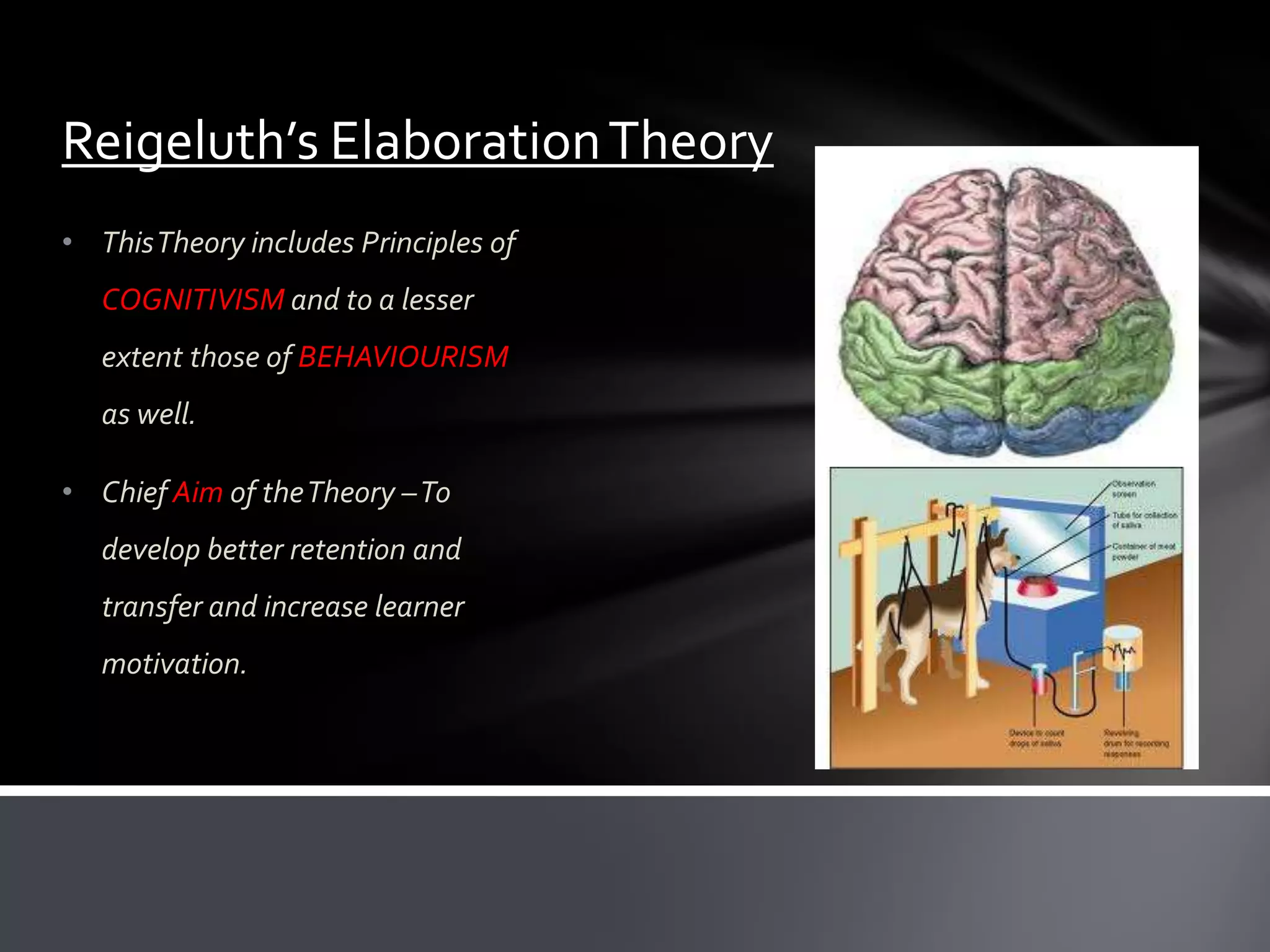
• This Theory includes Principles of
   COGNITIVISM and to a lesser
   extent those of BEHAVIOURISM
   as well.

• Chief Aim of the Theory –To
   develop better retention and
   transfer and increase learner
   motivation.
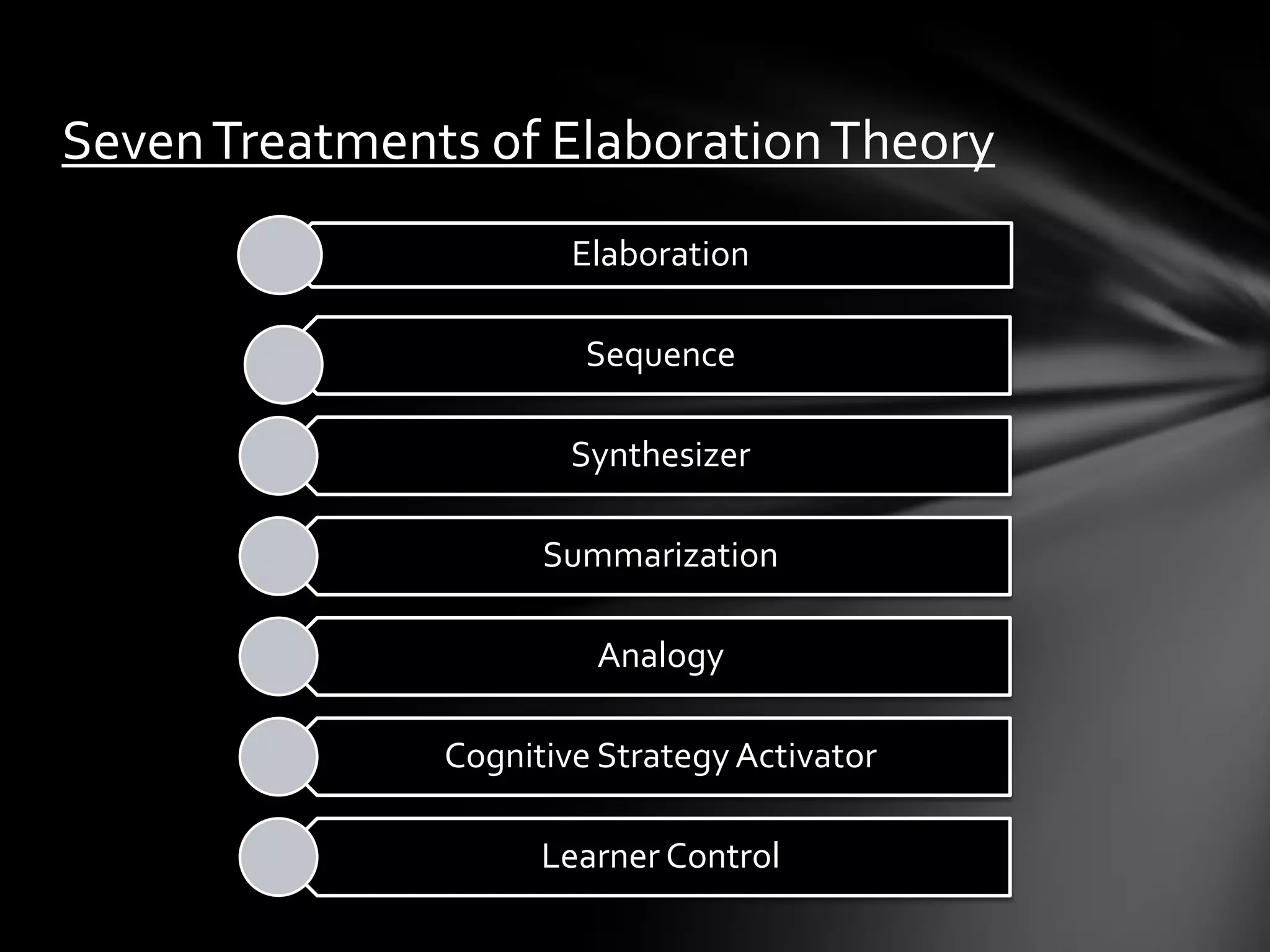
Seven Treatments of Elaboration Theory
                       Elaboration

                        Sequence

                       Synthesizer

                     Summarization

                        Analogy

               Cognitive Strategy Activator

                     Learner Control
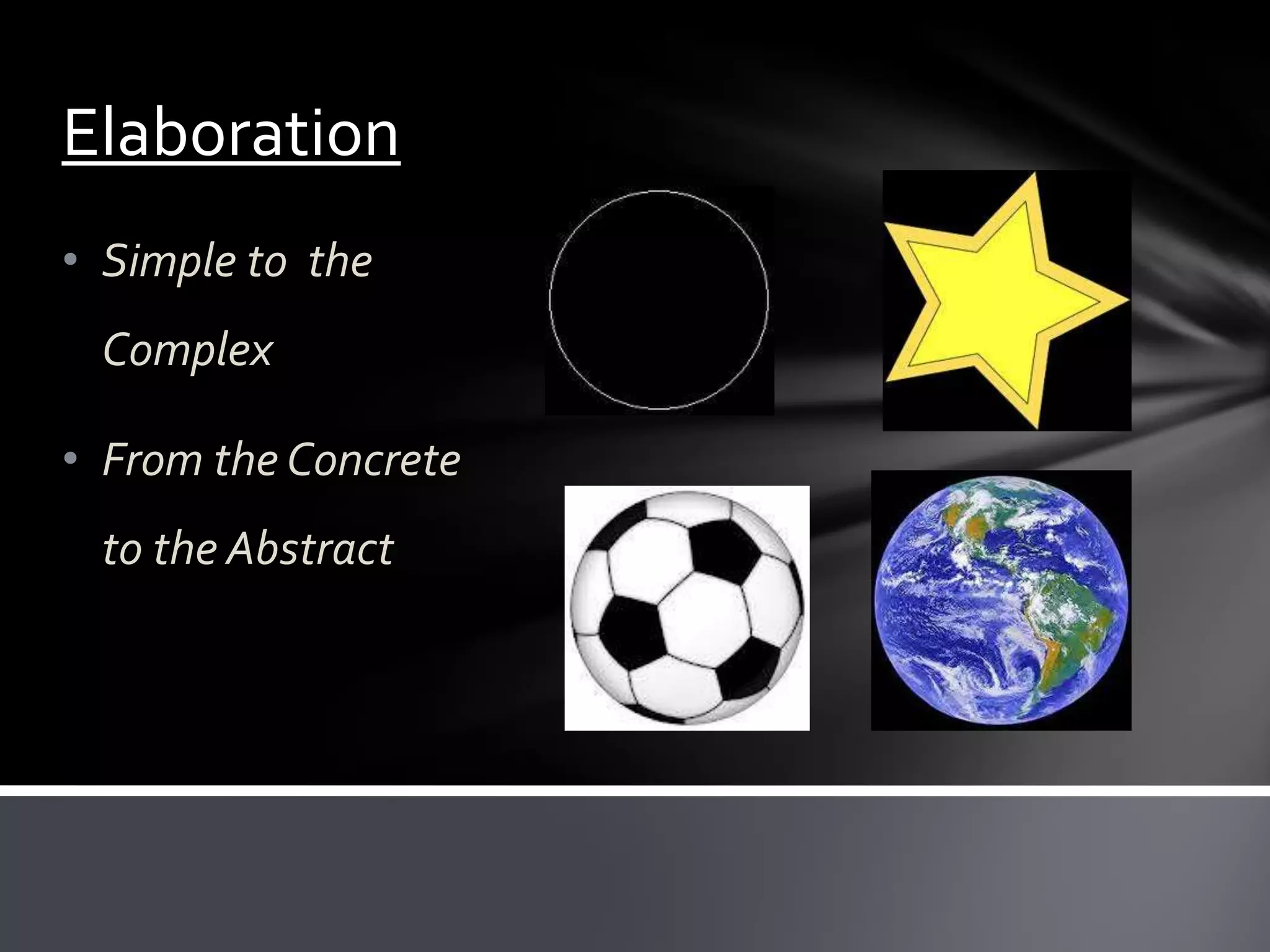
Elaboration
• Simple to the
 Complex

• From the Concrete
 to the Abstract
Sequence
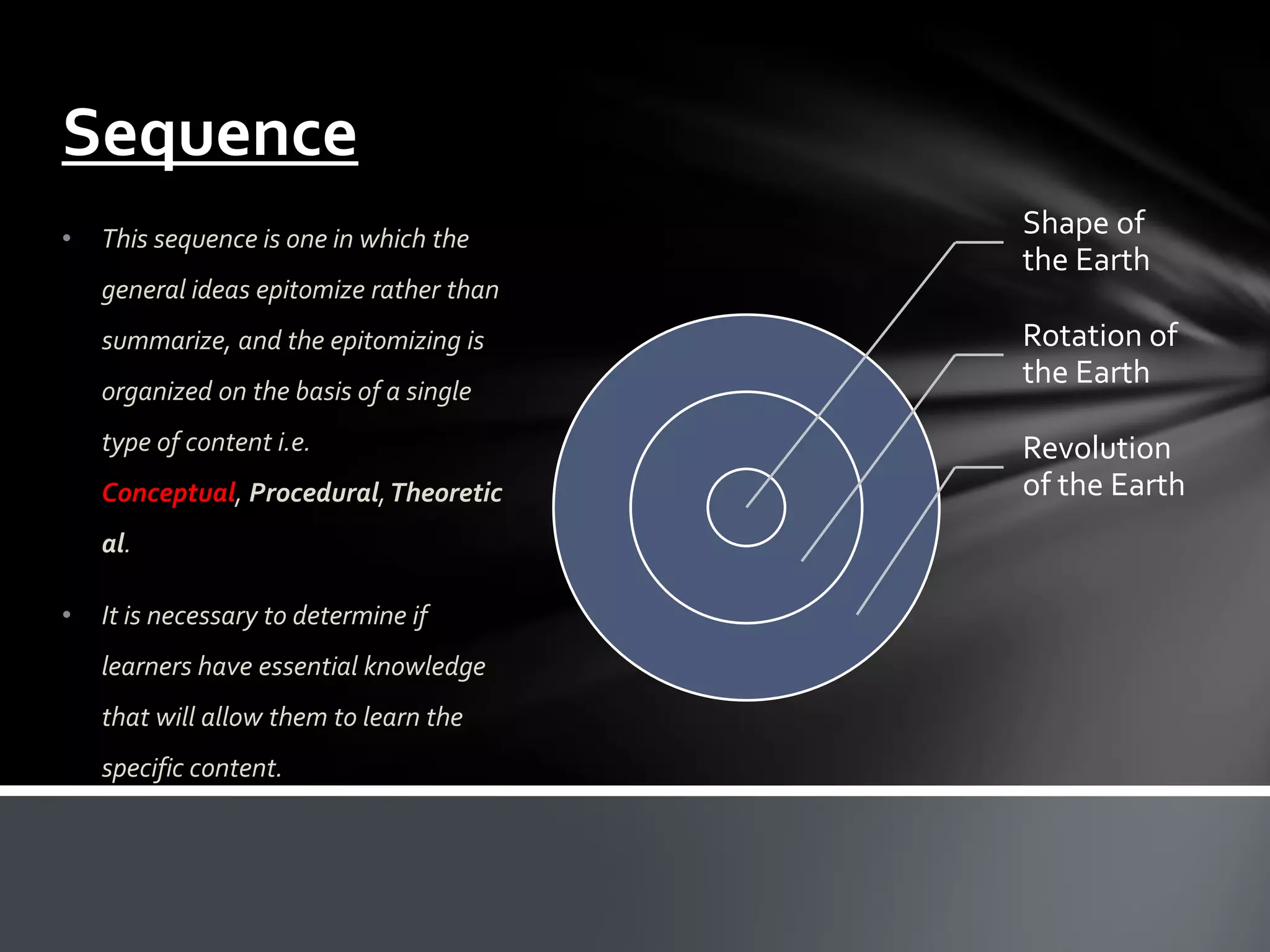
•   This sequence is one in which the
                                          Shape of
                                          the Earth
    general ideas epitomize rather than
    summarize, and the epitomizing is     Rotation of
                                          the Earth
    organized on the basis of a single
    type of content i.e.                  Revolution
    Conceptual, Procedural, Theoretic     of the Earth
    al.

•   It is necessary to determine if
    learners have essential knowledge
    that will allow them to learn the
    specific content.
Summarization
•   Summarization is the fourth
    treatment in which the content
    covered is reviewed and discussed
    again.

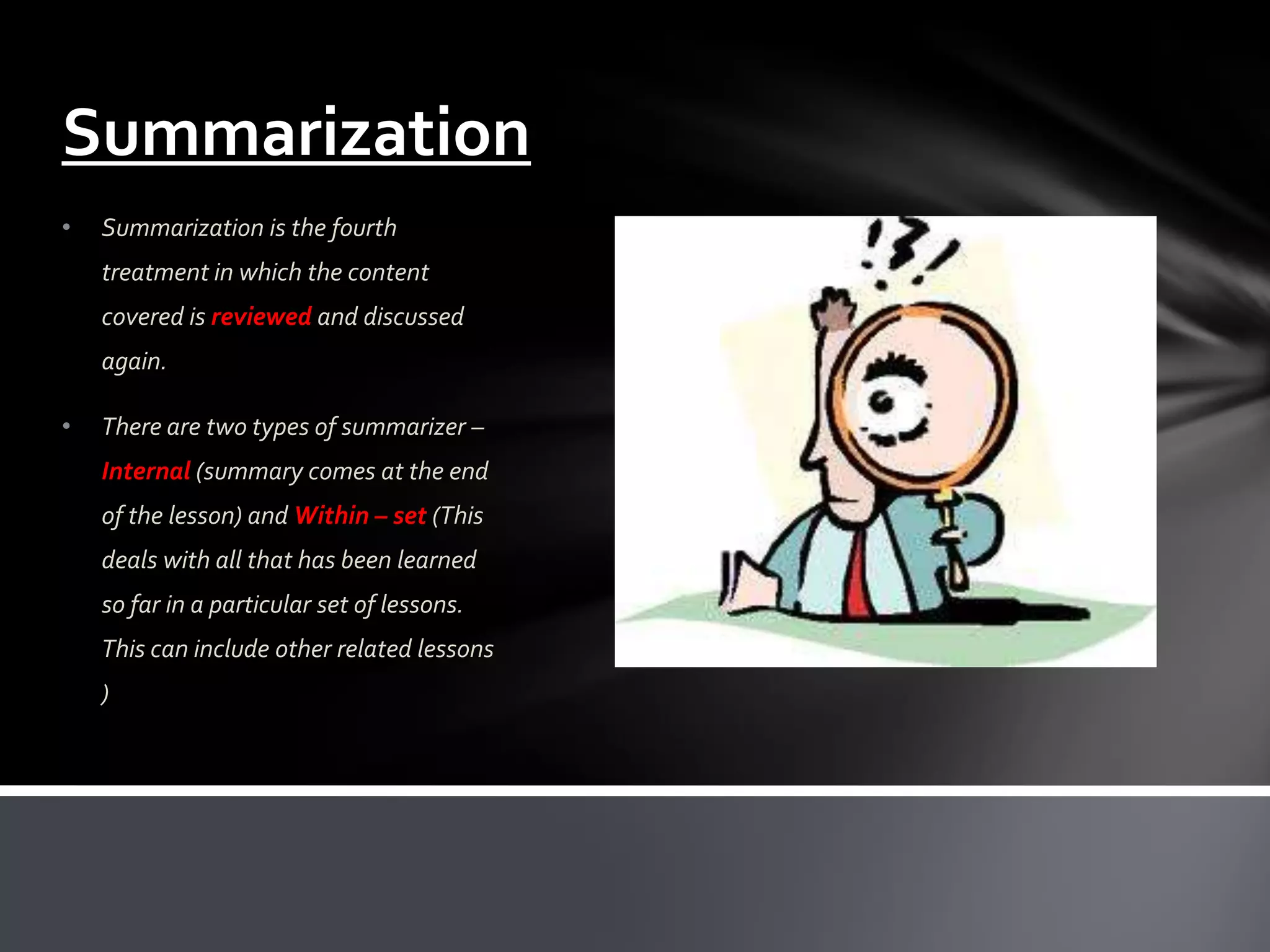
•   There are two types of summarizer –
    Internal (summary comes at the end
    of the lesson) and Within – set (This
    deals with all that has been learned
    so far in a particular set of lessons.
    This can include other related lessons
    )
Analogy
• It is an familiar idea or
   concept to define a new
   idea or concept.
Cognitive Strategy Activator
• In this treatment the learner
  is presented with a situation
  in which cognitive skills and
  processes are put into
  practice.
Learner Control
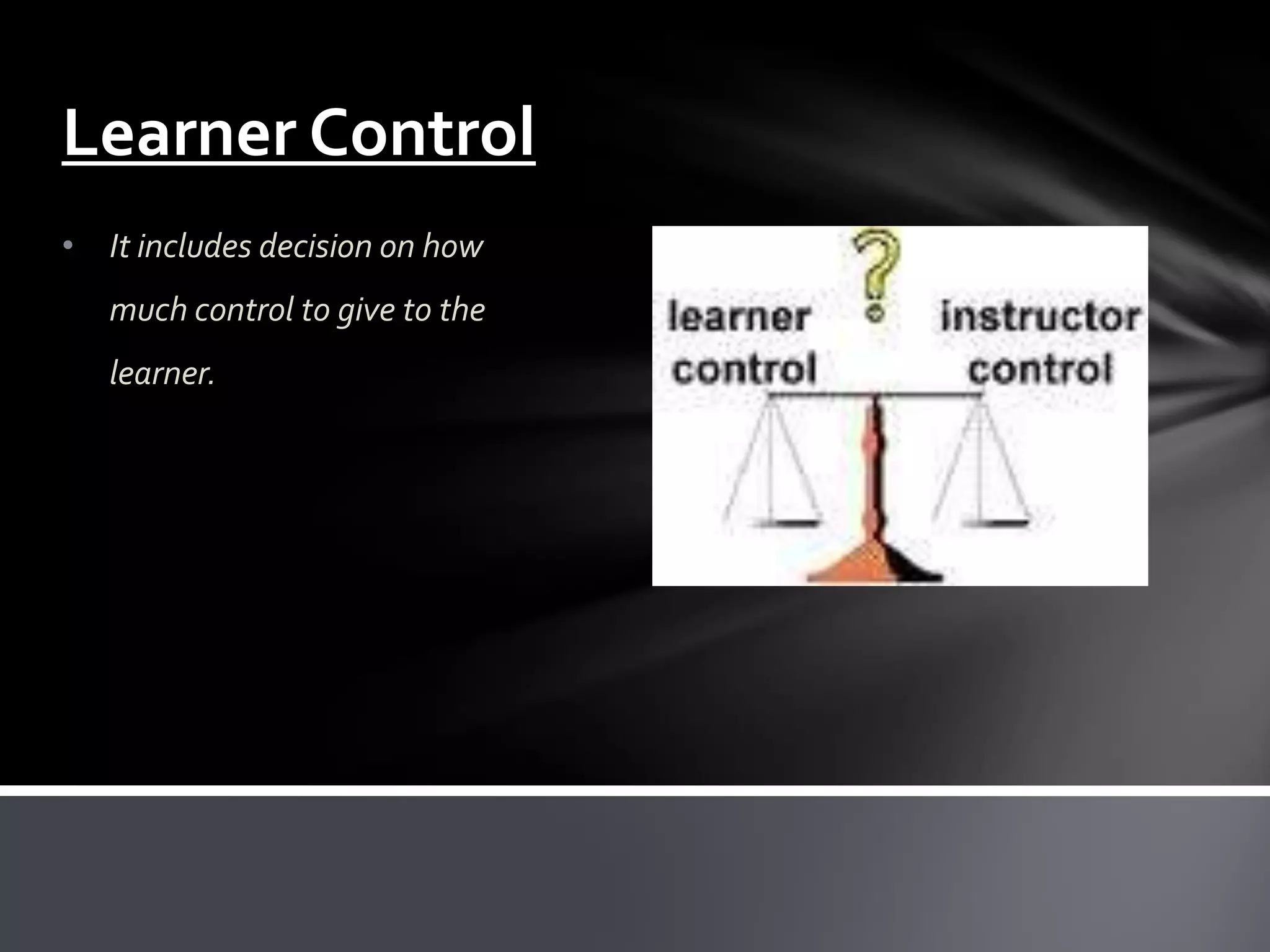
• It includes decision on how
   much control to give to the
   learner.

Reigeluth’s elaboration theory

  • 2.
    Charles Reigeluth • Reigeluthis an educational theorist who focuses on instructional design theories. • He is a professor at the Instructional Systems Technology Department at Indiana University.
  • 3.
    Reigeluth’s Elaboration Theory •This Theory includes Principles of COGNITIVISM and to a lesser extent those of BEHAVIOURISM as well. • Chief Aim of the Theory –To develop better retention and transfer and increase learner motivation.
  • 4.
    Seven Treatments ofElaboration Theory Elaboration Sequence Synthesizer Summarization Analogy Cognitive Strategy Activator Learner Control
  • 5.
    Elaboration • Simple tothe Complex • From the Concrete to the Abstract
  • 6.
    Sequence • This sequence is one in which the Shape of the Earth general ideas epitomize rather than summarize, and the epitomizing is Rotation of the Earth organized on the basis of a single type of content i.e. Revolution Conceptual, Procedural, Theoretic of the Earth al. • It is necessary to determine if learners have essential knowledge that will allow them to learn the specific content.
  • 7.
    Summarization • Summarization is the fourth treatment in which the content covered is reviewed and discussed again. • There are two types of summarizer – Internal (summary comes at the end of the lesson) and Within – set (This deals with all that has been learned so far in a particular set of lessons. This can include other related lessons )
  • 8.
    Analogy • It isan familiar idea or concept to define a new idea or concept.
  • 9.
    Cognitive Strategy Activator •In this treatment the learner is presented with a situation in which cognitive skills and processes are put into practice.
  • 10.
    Learner Control • Itincludes decision on how much control to give to the learner.