Introduction to Geophysics Ali Oncel [email_address] Department of Earth Sciences KFUPM Refraction Seismology: Field Work Introduction to Geophysics-KFUPM
Previous Lecture Earthquake Waves: As Probes of Earth's Interior  Travel Time Models of Earthquakes for flat earth  Travel Time Models of Earthquakes for Curved earth Field Work: Refraction   Introduction to Geophysics-KFUPM
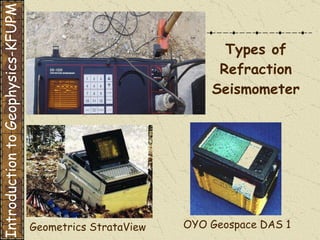
Types of Refraction Seismometer Introduction to Geophysics-KFUPM Geometrics StrataView   OYO Geospace DAS 1
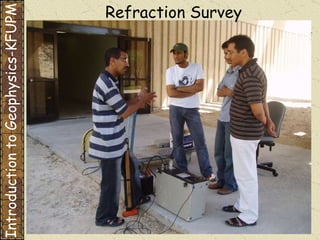
Refraction Survey   Introduction to Geophysics-KFUPM
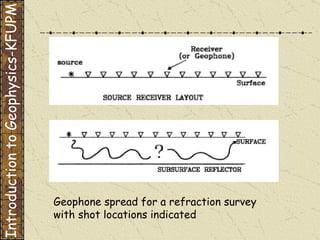
Geophone spread for a refraction survey with shot locations indicated Introduction to Geophysics-KFUPM
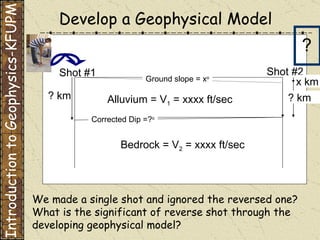
What does gravity surveying or “gravity” measure? Variation in gravitational acceleration ? km ? km Shot #1 Shot #2 Bedrock = V 2  = xxxx ft/sec  Alluvium = V 1  = xxxx ft/sec  x km Corrected Dip =? o Ground slope = x o Develop a Geophysical Model We made a single shot and ignored the reversed one?  What is the significant of reverse shot through the developing geophysical model? Introduction to Geophysics-KFUPM ?
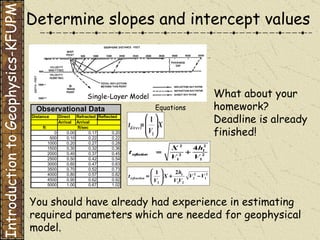
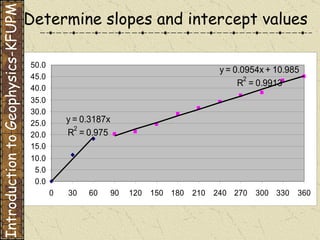
Determine slopes and intercept values You should have already had experience in estimating required parameters which are needed for geophysical model. What about your homework?  Deadline is already finished! Introduction to Geophysics-KFUPM
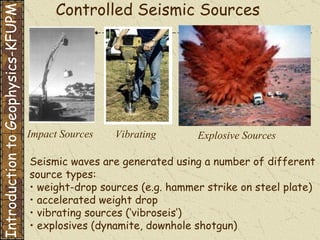
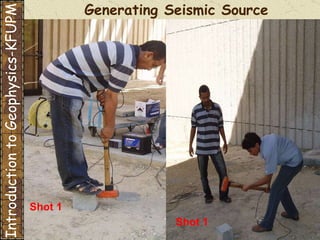
Controlled Seismic Sources   Impact Sources   Vibrating   Explosive Sources   Seismic waves are generated using a number of different source types: •  weight-drop sources (e.g. hammer strike on steel plate) •  accelerated weight drop •  vibrating sources (‘vibroseis’) •  explosives (dynamite, downhole shotgun) Introduction to Geophysics-KFUPM
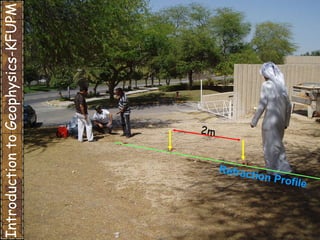
Introduction to Geophysics-KFUPM Refraction Profile 2m
Generating Seismic Source Introduction to Geophysics-KFUPM Shot 1 Shot 1
Introduction to Geophysics-KFUPM
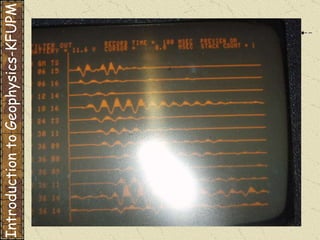
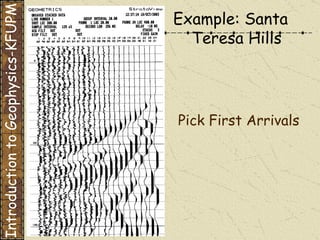
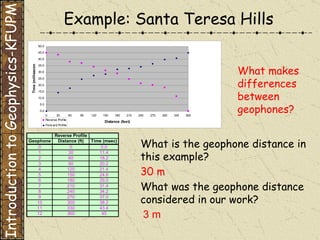
Pick First Arrivals Example: Santa Teresa Hills Introduction to Geophysics-KFUPM
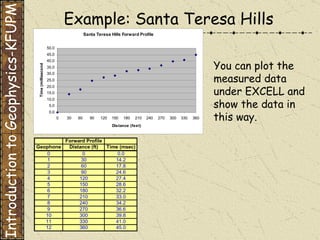
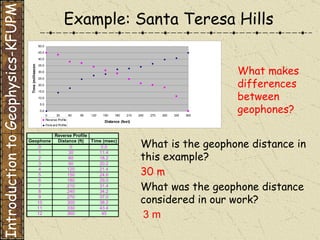
Example: Santa Teresa Hills You can plot the measured data under EXCELL and show the data in this way. Introduction to Geophysics-KFUPM
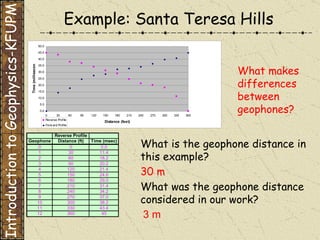
Example: Santa Teresa Hills What is the geophone distance in this example? 30 m What was the geophone distance considered in our work? 3 m What makes differences between geophones? Introduction to Geophysics-KFUPM
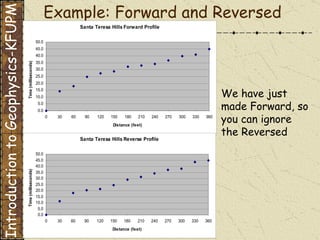
Example: Forward and Reversed Introduction to Geophysics-KFUPM We have just made Forward, so you can ignore the Reversed
Example: Santa Teresa Hills What is the geophone distance in this example? 30 m What was the geophone distance considered in our work? 3 m What makes differences between geophones? Introduction to Geophysics-KFUPM
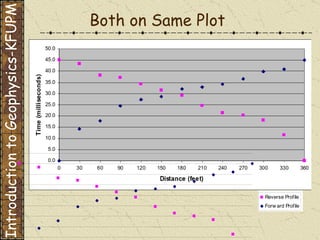
Both on Same Plot Introduction to Geophysics-KFUPM
Example: Santa Teresa Hills What is the geophone distance in this example? 30 m What was the geophone distance considered in our work? 3 m What makes differences between geophones? Introduction to Geophysics-KFUPM
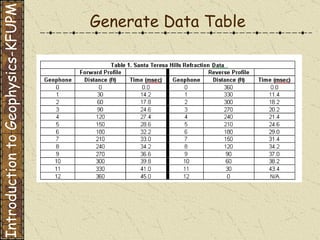
Generate Data Table Introduction to Geophysics-KFUPM
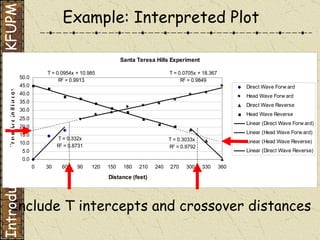
Example: Interpreted Plot Introduction to Geophysics-KFUPM Include T intercepts and crossover distances
Determine slopes and intercept values Introduction to Geophysics-KFUPM
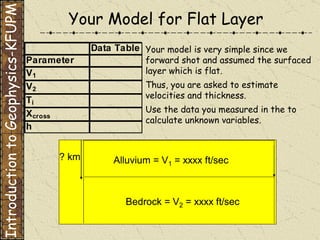
Introduction to Geophysics-KFUPM Your Model for Flat Layer Your model is very simple since we   forward shot and assumed the surfaced layer which is flat. Thus, you are asked to estimate velocities and thickness. Use the data you measured in the to calculate unknown variables.
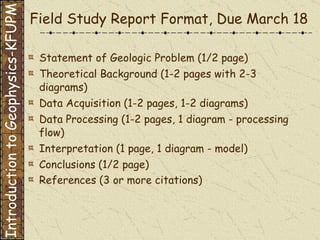
Field Study Report Format, Due March 18 Statement of Geologic Problem (1/2 page) Theoretical Background (1-2 pages with 2-3 diagrams) Data Acquisition (1-2 pages, 1-2 diagrams) Data Processing (1-2 pages, 1 diagram - processing flow) Interpretation (1 page, 1 diagram - model) Conclusions (1/2 page) References (3 or more citations)   Introduction to Geophysics-KFUPM

ÖNCEL AKADEMİ: INTRODUCTION TO GEOPHYSICS

  • 1.
    Introduction to GeophysicsAli Oncel [email_address] Department of Earth Sciences KFUPM Refraction Seismology: Field Work Introduction to Geophysics-KFUPM
  • 2.
    Previous Lecture EarthquakeWaves: As Probes of Earth's Interior Travel Time Models of Earthquakes for flat earth Travel Time Models of Earthquakes for Curved earth Field Work: Refraction Introduction to Geophysics-KFUPM
  • 3.
    Types of RefractionSeismometer Introduction to Geophysics-KFUPM Geometrics StrataView OYO Geospace DAS 1
  • 4.
    Refraction Survey Introduction to Geophysics-KFUPM
  • 5.
    Geophone spread fora refraction survey with shot locations indicated Introduction to Geophysics-KFUPM
  • 6.
    What does gravitysurveying or “gravity” measure? Variation in gravitational acceleration ? km ? km Shot #1 Shot #2 Bedrock = V 2 = xxxx ft/sec Alluvium = V 1 = xxxx ft/sec x km Corrected Dip =? o Ground slope = x o Develop a Geophysical Model We made a single shot and ignored the reversed one? What is the significant of reverse shot through the developing geophysical model? Introduction to Geophysics-KFUPM ?
  • 7.
    Determine slopes andintercept values You should have already had experience in estimating required parameters which are needed for geophysical model. What about your homework? Deadline is already finished! Introduction to Geophysics-KFUPM
  • 8.
    Controlled Seismic Sources Impact Sources Vibrating Explosive Sources Seismic waves are generated using a number of different source types: • weight-drop sources (e.g. hammer strike on steel plate) • accelerated weight drop • vibrating sources (‘vibroseis’) • explosives (dynamite, downhole shotgun) Introduction to Geophysics-KFUPM
  • 9.
    Introduction to Geophysics-KFUPMRefraction Profile 2m
  • 10.
    Generating Seismic SourceIntroduction to Geophysics-KFUPM Shot 1 Shot 1
  • 11.
  • 12.
    Pick First ArrivalsExample: Santa Teresa Hills Introduction to Geophysics-KFUPM
  • 13.
    Example: Santa TeresaHills You can plot the measured data under EXCELL and show the data in this way. Introduction to Geophysics-KFUPM
  • 14.
    Example: Santa TeresaHills What is the geophone distance in this example? 30 m What was the geophone distance considered in our work? 3 m What makes differences between geophones? Introduction to Geophysics-KFUPM
  • 15.
    Example: Forward andReversed Introduction to Geophysics-KFUPM We have just made Forward, so you can ignore the Reversed
  • 16.
    Example: Santa TeresaHills What is the geophone distance in this example? 30 m What was the geophone distance considered in our work? 3 m What makes differences between geophones? Introduction to Geophysics-KFUPM
  • 17.
    Both on SamePlot Introduction to Geophysics-KFUPM
  • 18.
    Example: Santa TeresaHills What is the geophone distance in this example? 30 m What was the geophone distance considered in our work? 3 m What makes differences between geophones? Introduction to Geophysics-KFUPM
  • 19.
    Generate Data TableIntroduction to Geophysics-KFUPM
  • 20.
    Example: Interpreted PlotIntroduction to Geophysics-KFUPM Include T intercepts and crossover distances
  • 21.
    Determine slopes andintercept values Introduction to Geophysics-KFUPM
  • 22.
    Introduction to Geophysics-KFUPMYour Model for Flat Layer Your model is very simple since we forward shot and assumed the surfaced layer which is flat. Thus, you are asked to estimate velocities and thickness. Use the data you measured in the to calculate unknown variables.
  • 23.
    Field Study ReportFormat, Due March 18 Statement of Geologic Problem (1/2 page) Theoretical Background (1-2 pages with 2-3 diagrams) Data Acquisition (1-2 pages, 1-2 diagrams) Data Processing (1-2 pages, 1 diagram - processing flow) Interpretation (1 page, 1 diagram - model) Conclusions (1/2 page) References (3 or more citations) Introduction to Geophysics-KFUPM

Editor's Notes