Downloaded 26 times
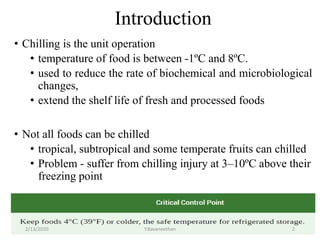







1. Chilling involves storing foods between 0-8°C to reduce microbiological growth and biochemical changes, extending shelf life. Not all foods can be chilled as some tropical fruits suffer chilling injury. 2. Chilled foods are grouped according to their storage temperature: -1-1°C, 0-5°C, and 0-8°C. Precise temperature control is essential at all stages of storage, transport, and retail to prevent food spoilage. 3. Refrigeration preserves freshness by reducing chemical reactions and microbial growth. Cooling contributes to extending shelf life by reducing respiration, transpiration, ethylene production, and microbial activity. The shelf life of fresh and processed chilled foods


