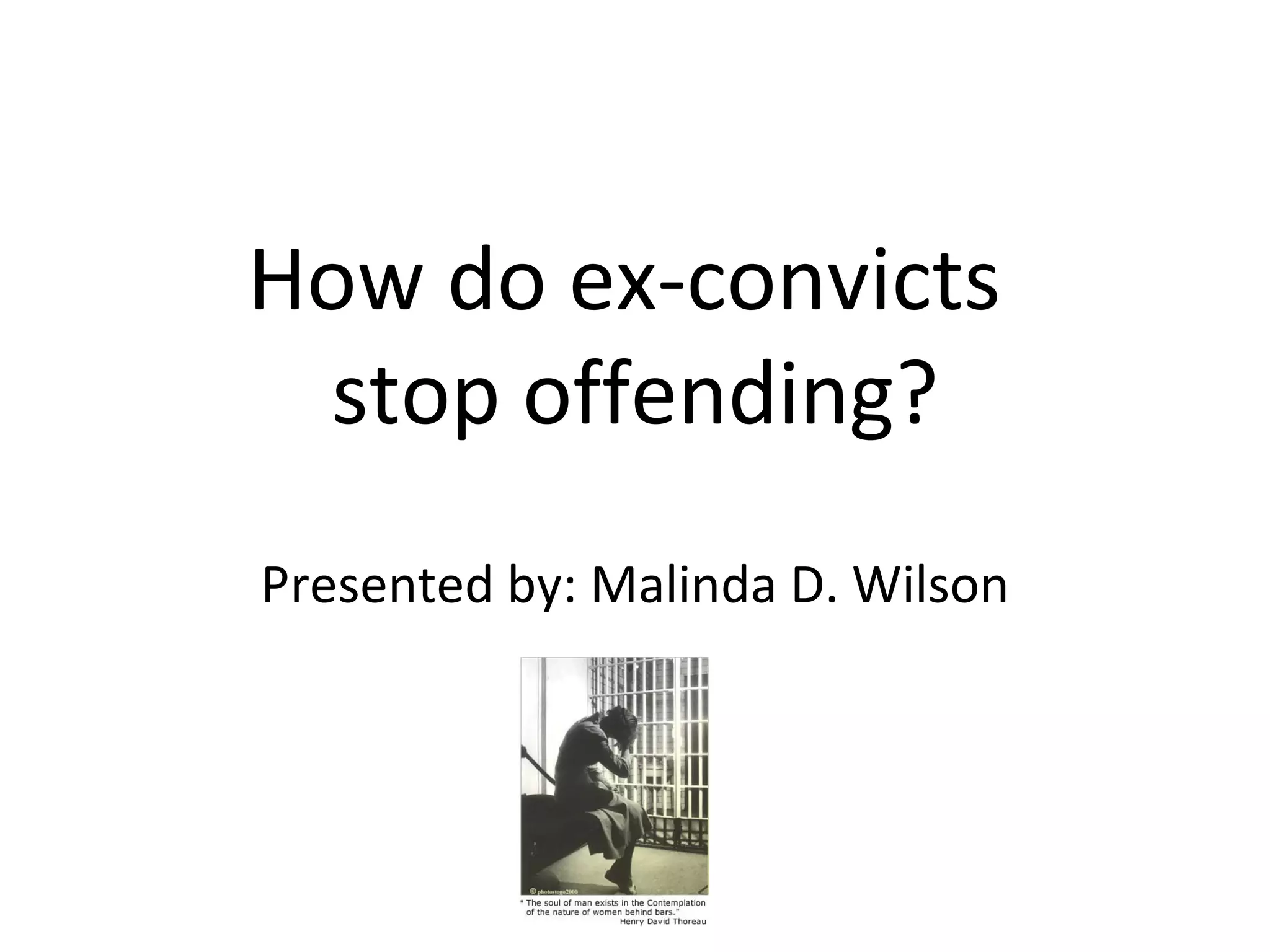
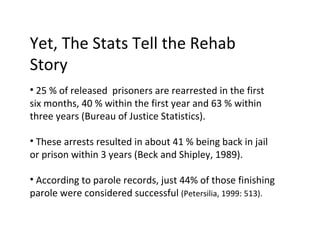
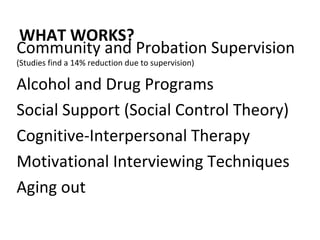
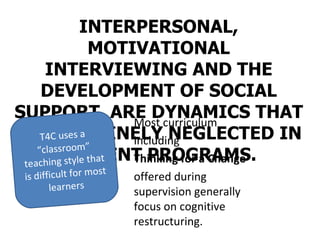
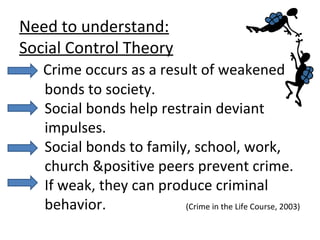
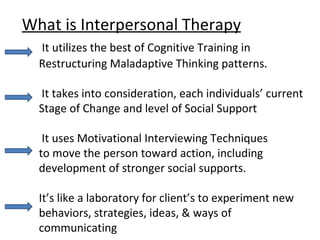
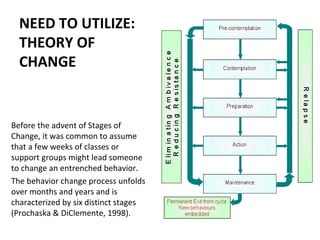
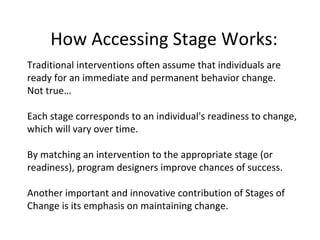
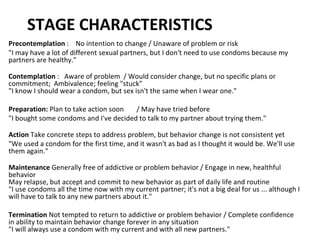
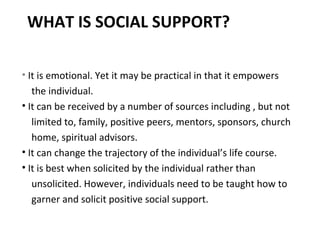
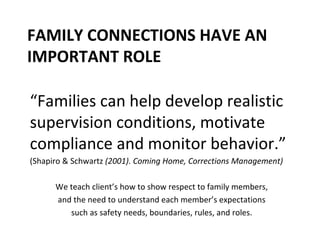
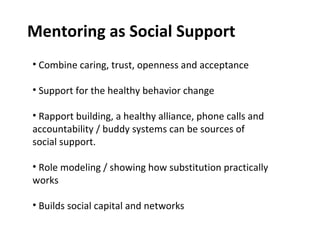
The document discusses the challenges ex-convicts face in stopping offending, highlighting key motivations such as family and a desire for a better life, while also presenting statistics on recidivism rates. It emphasizes the importance of social support, community supervision, and tailored therapeutic approaches, such as cognitive-interpersonal therapy and motivational interviewing, to facilitate lasting behavior change. The need for individualized strategies that align with a person's readiness to change is underscored, suggesting that effective support systems and interventions can significantly impact rehabilitation success.