Downloaded 14 times

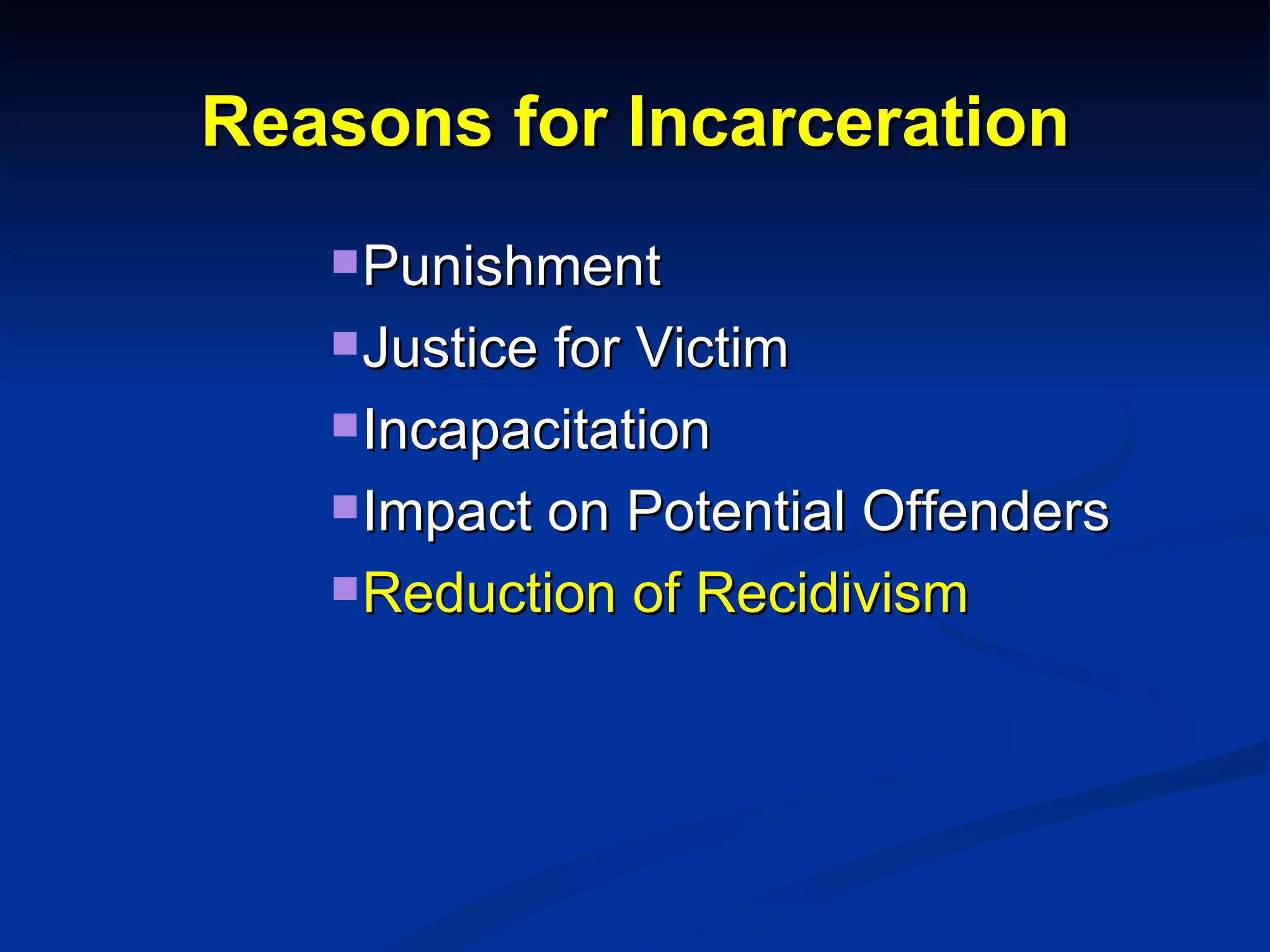
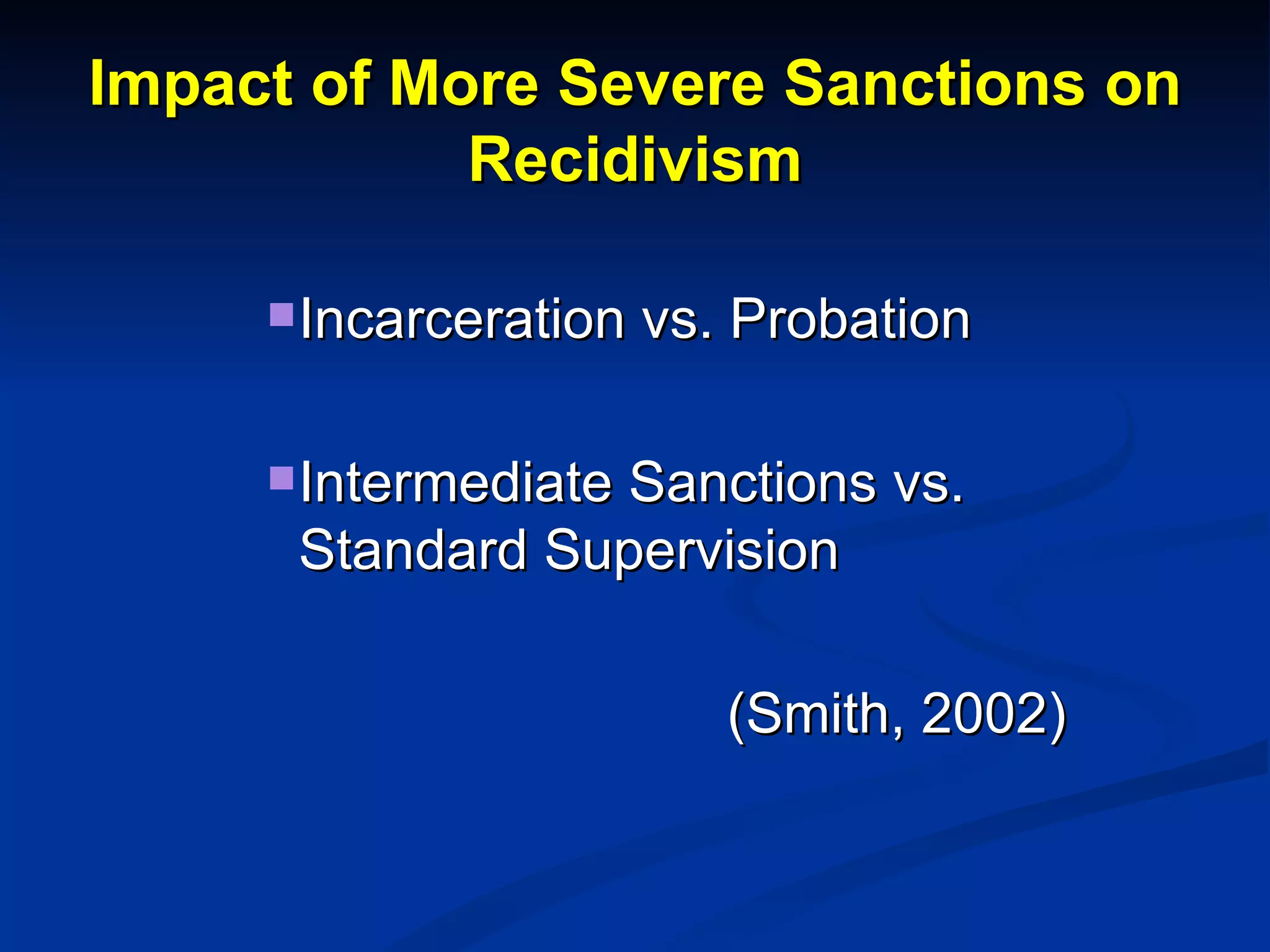
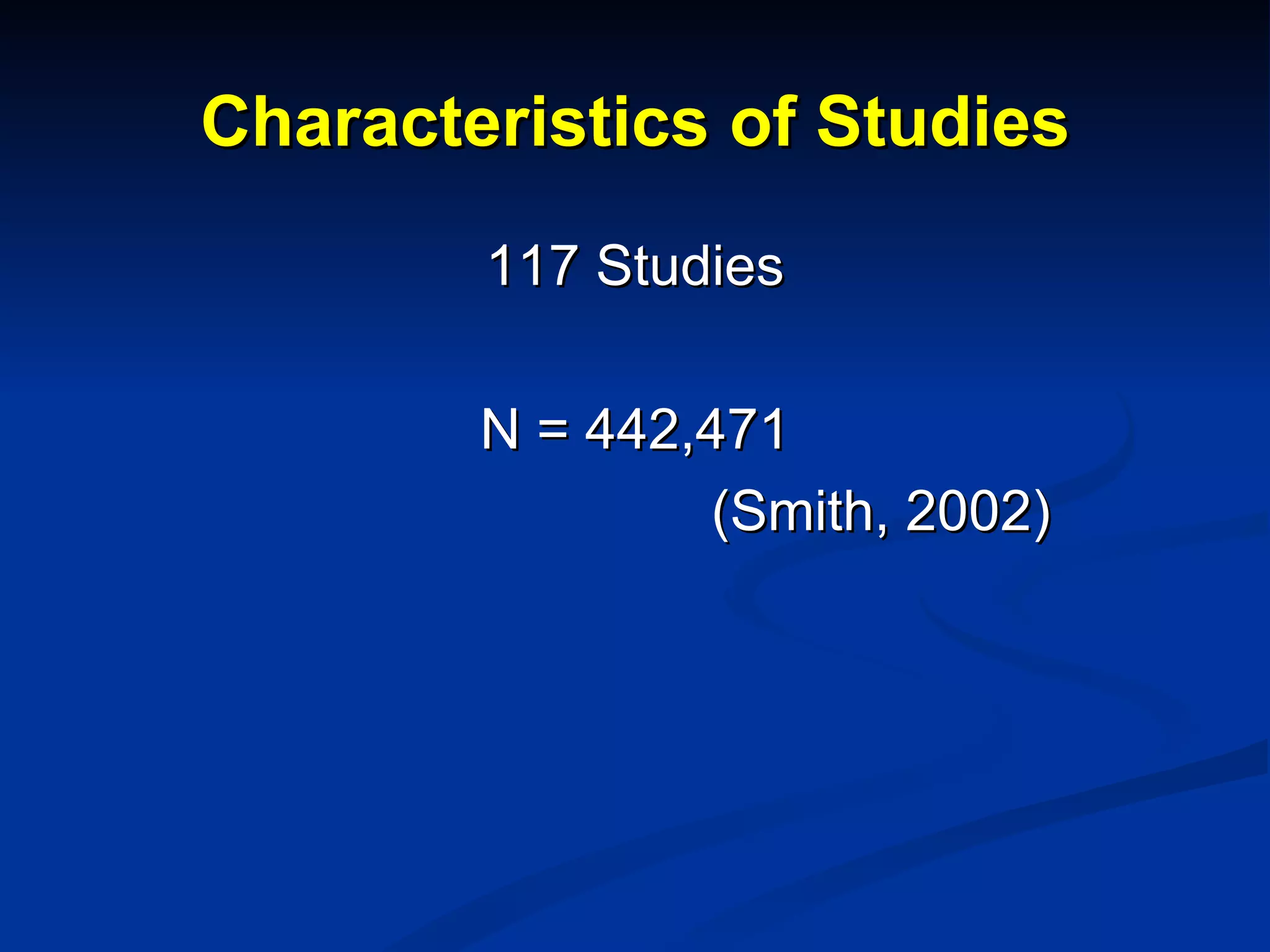
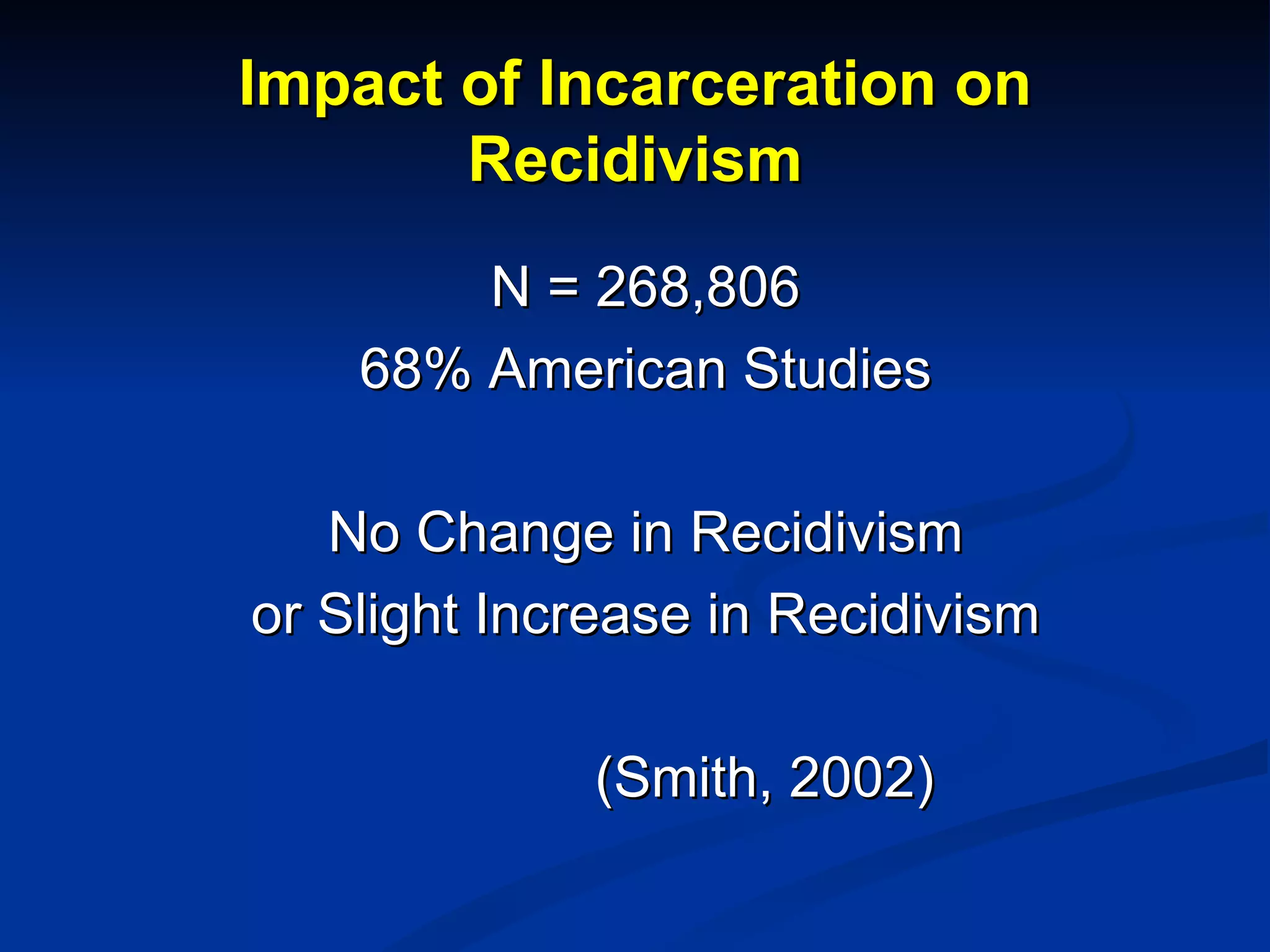
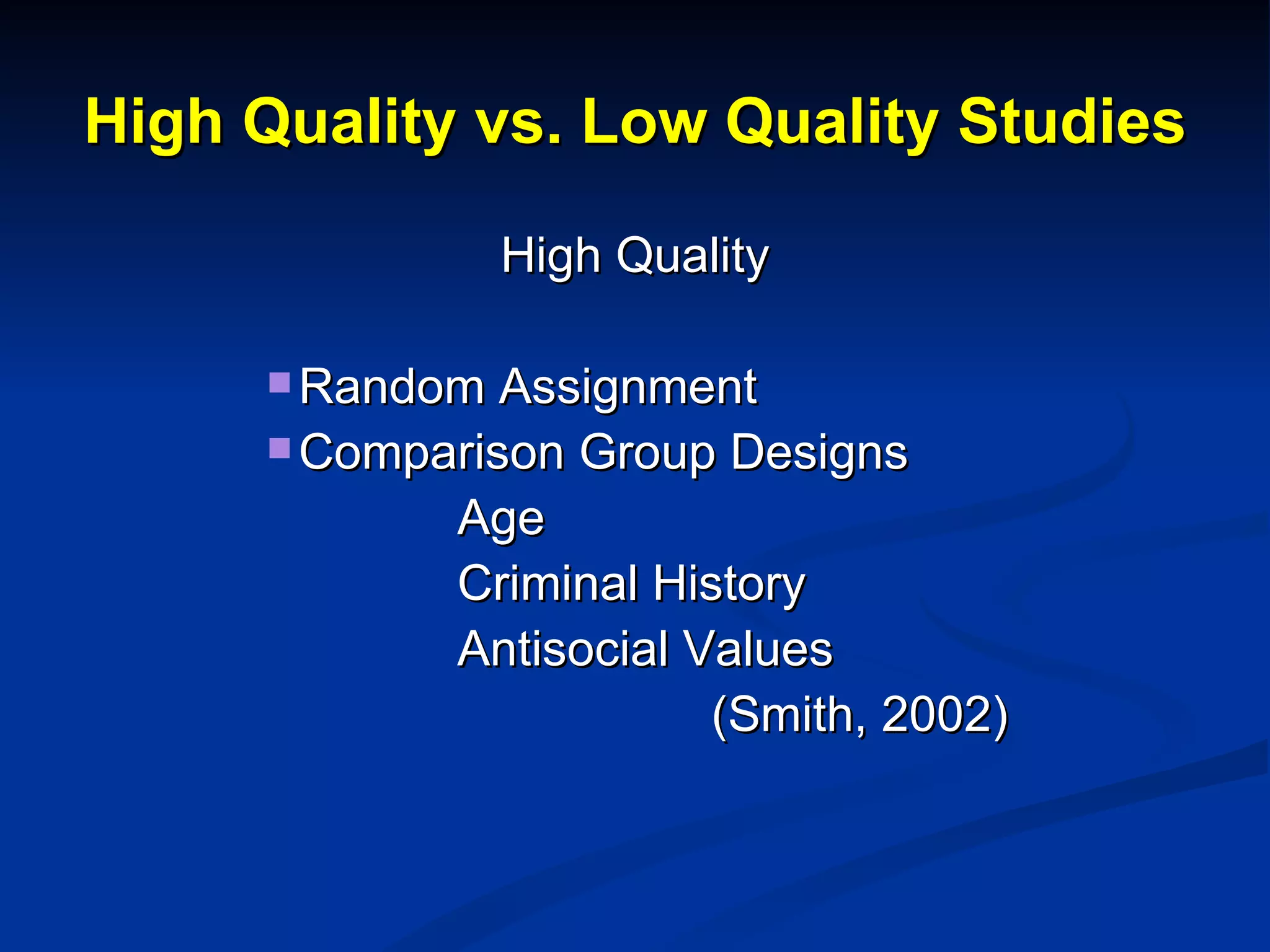
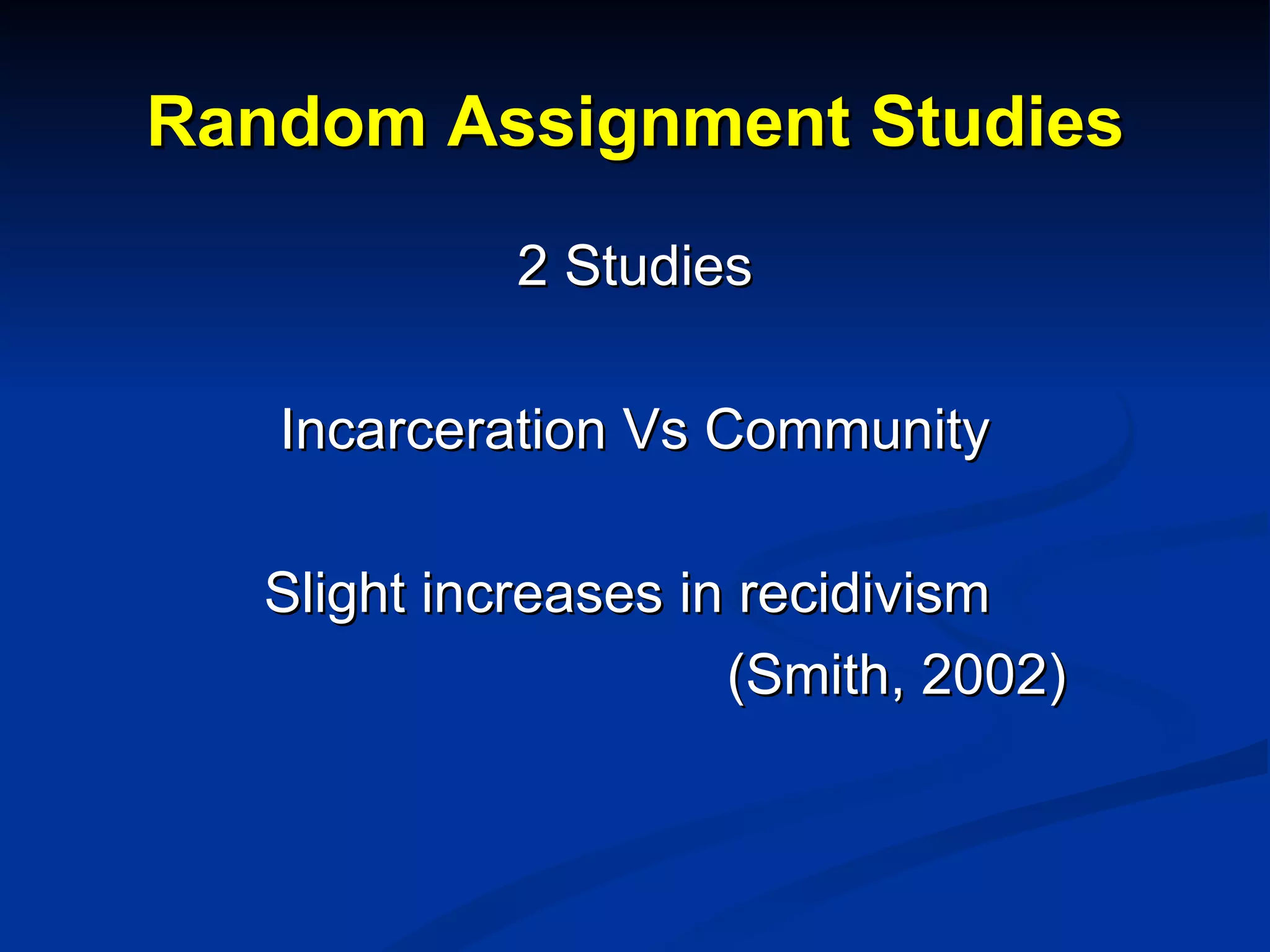
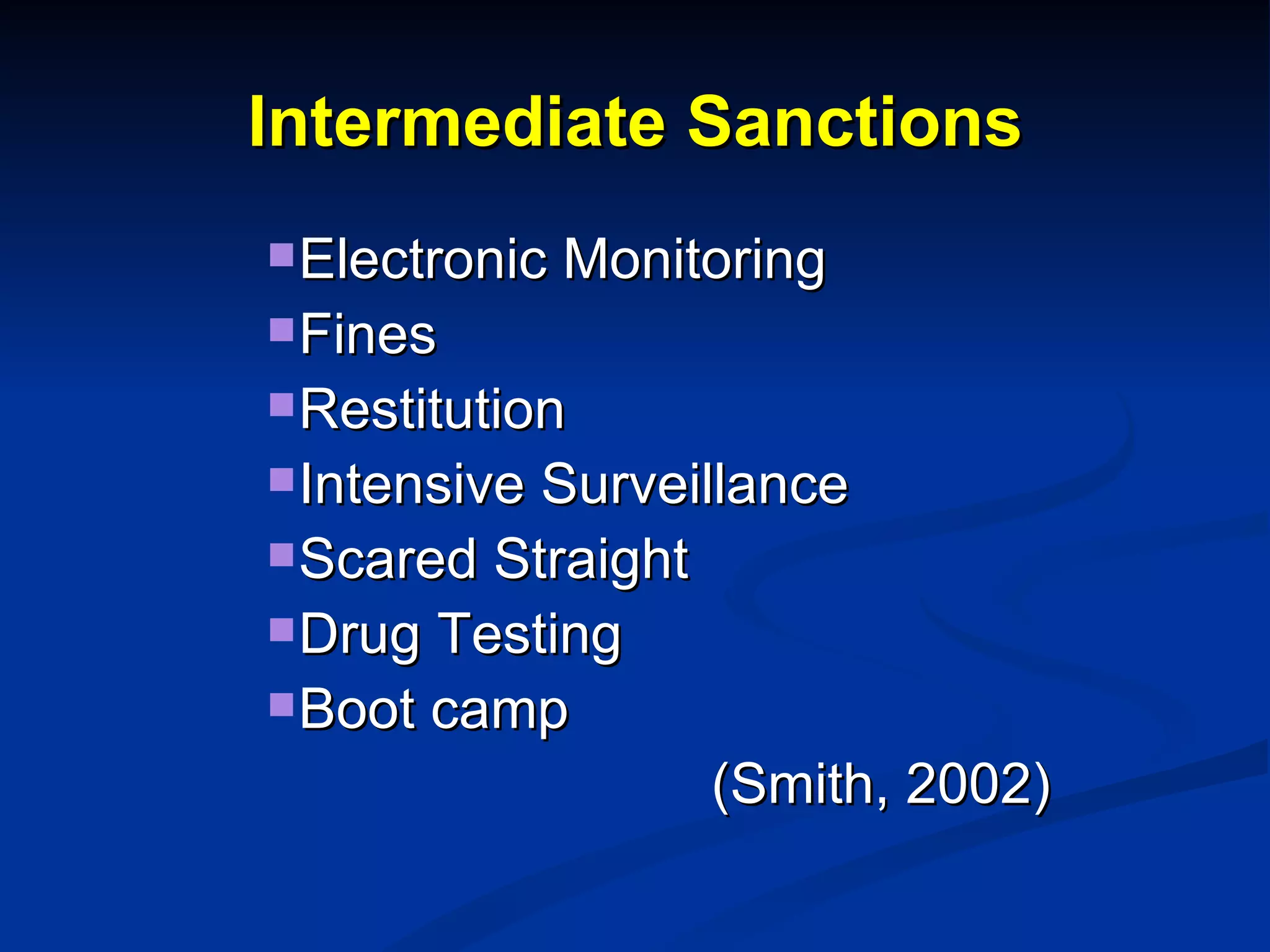
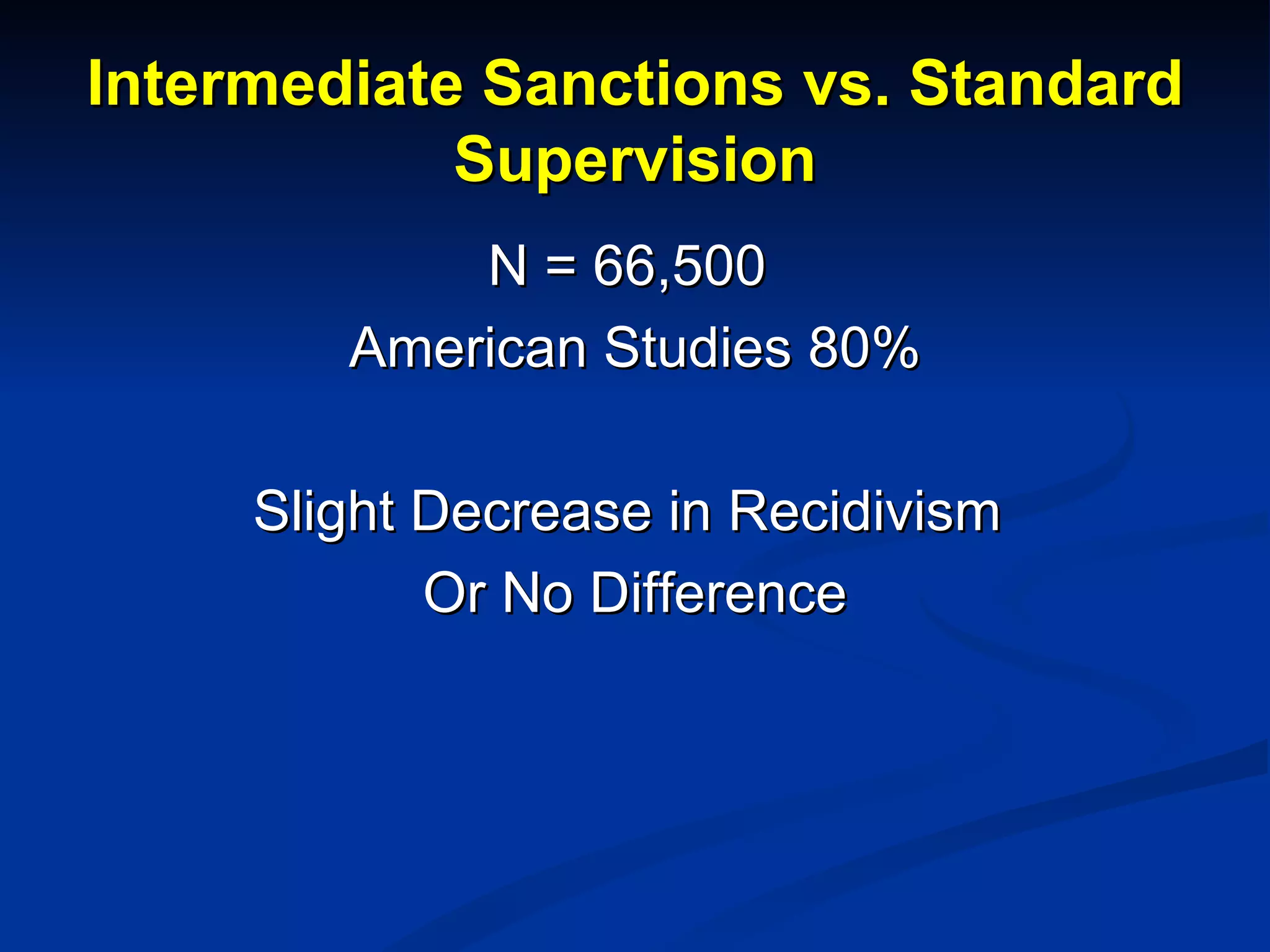
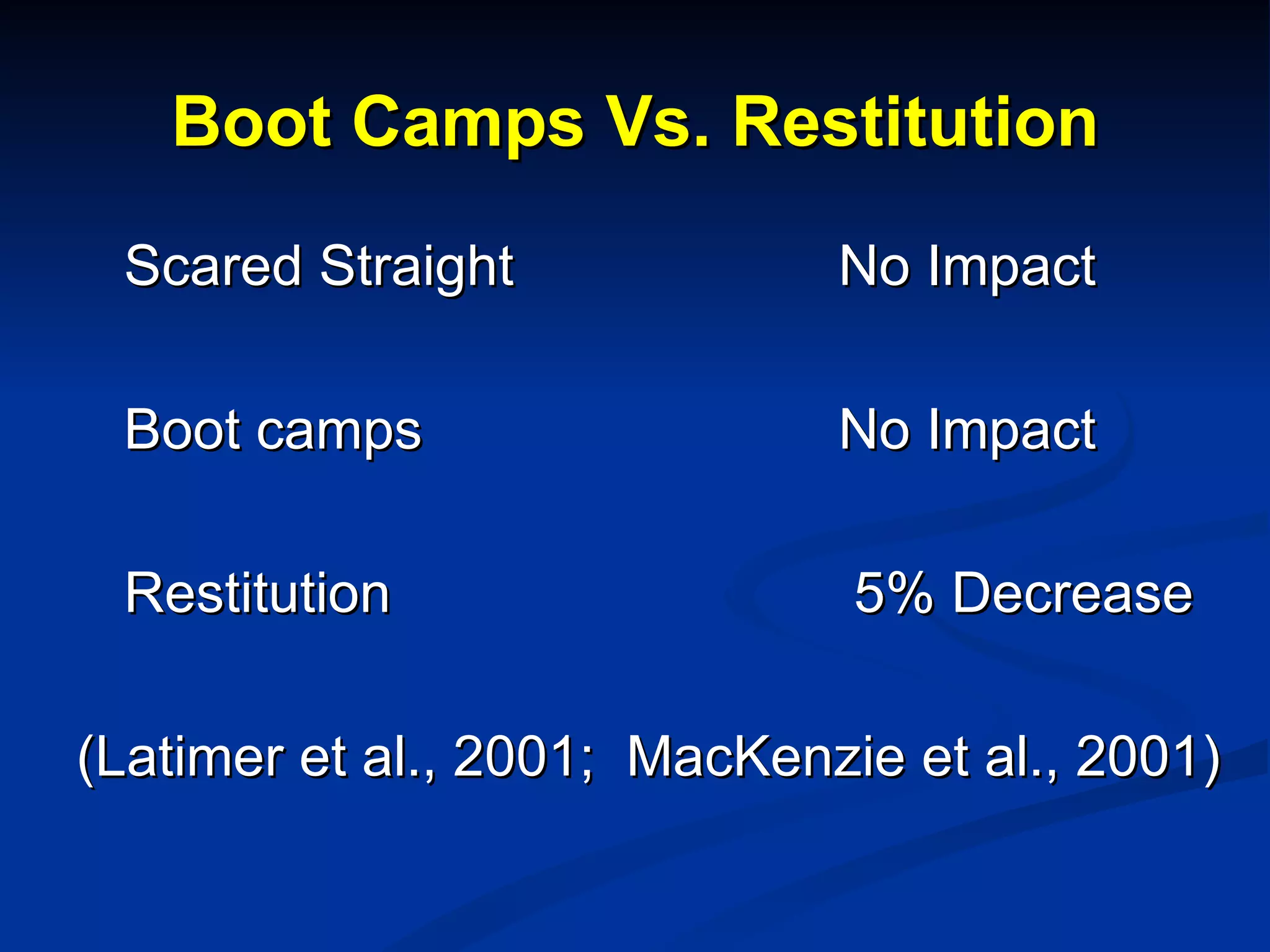
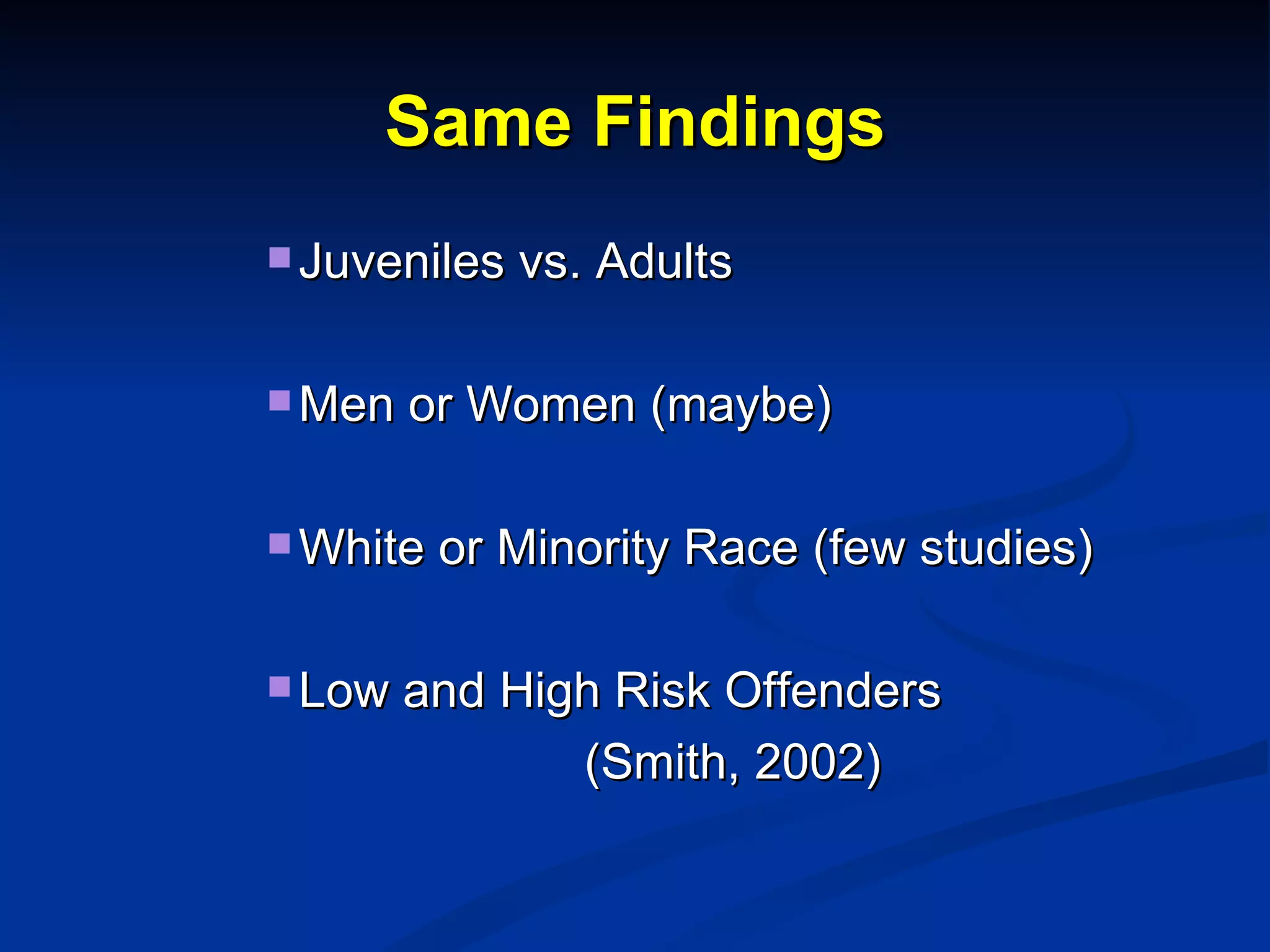
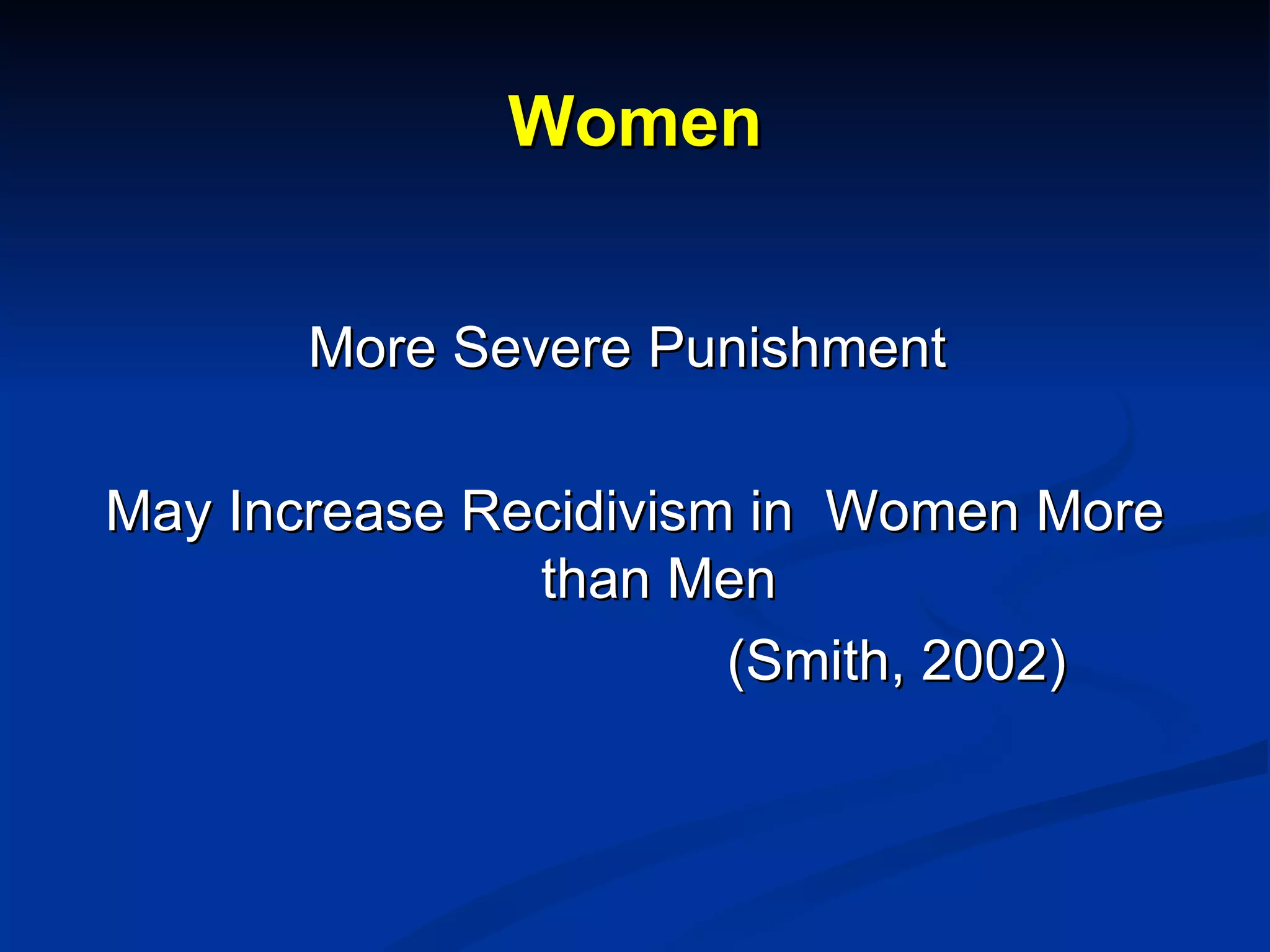
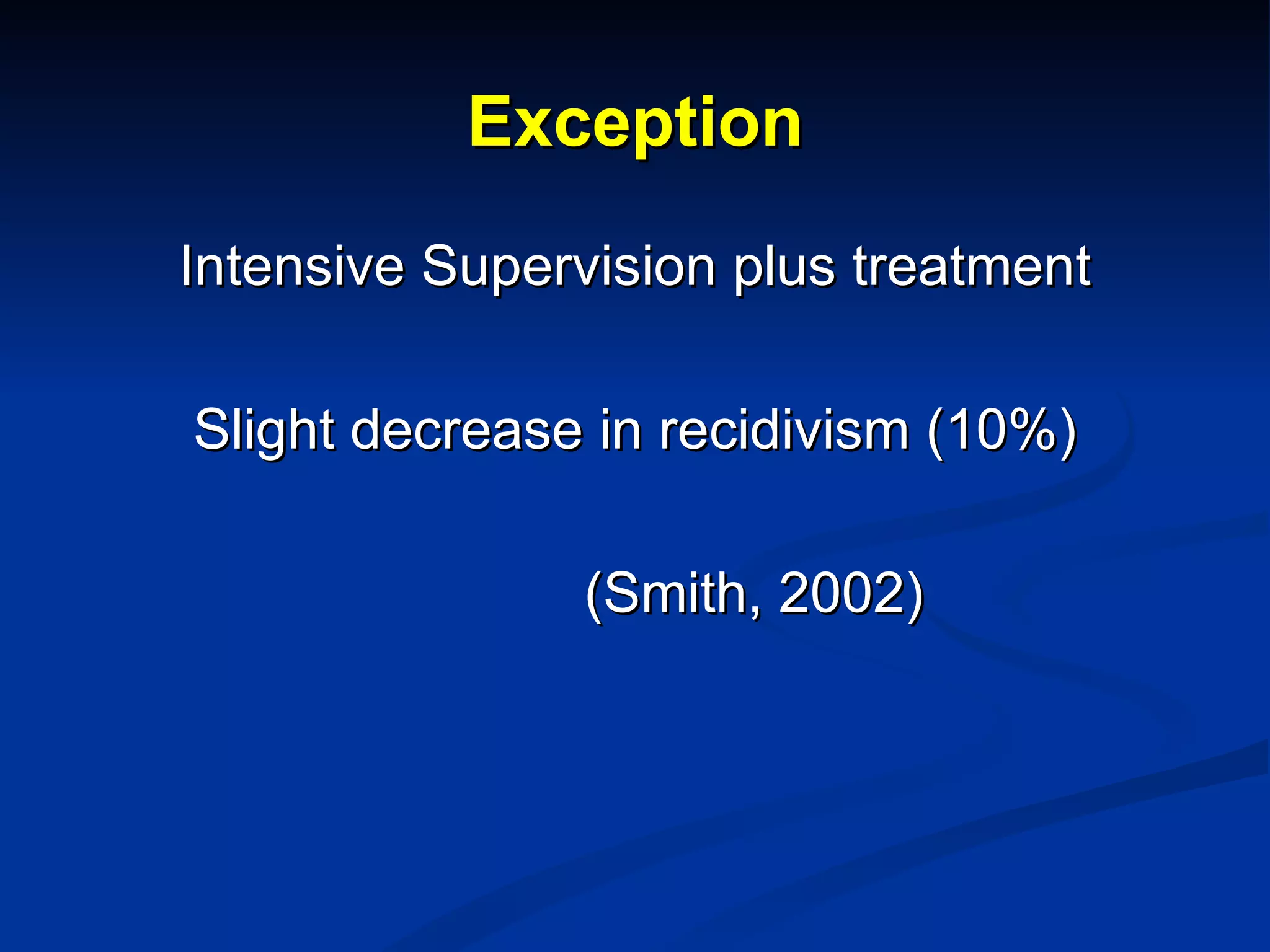
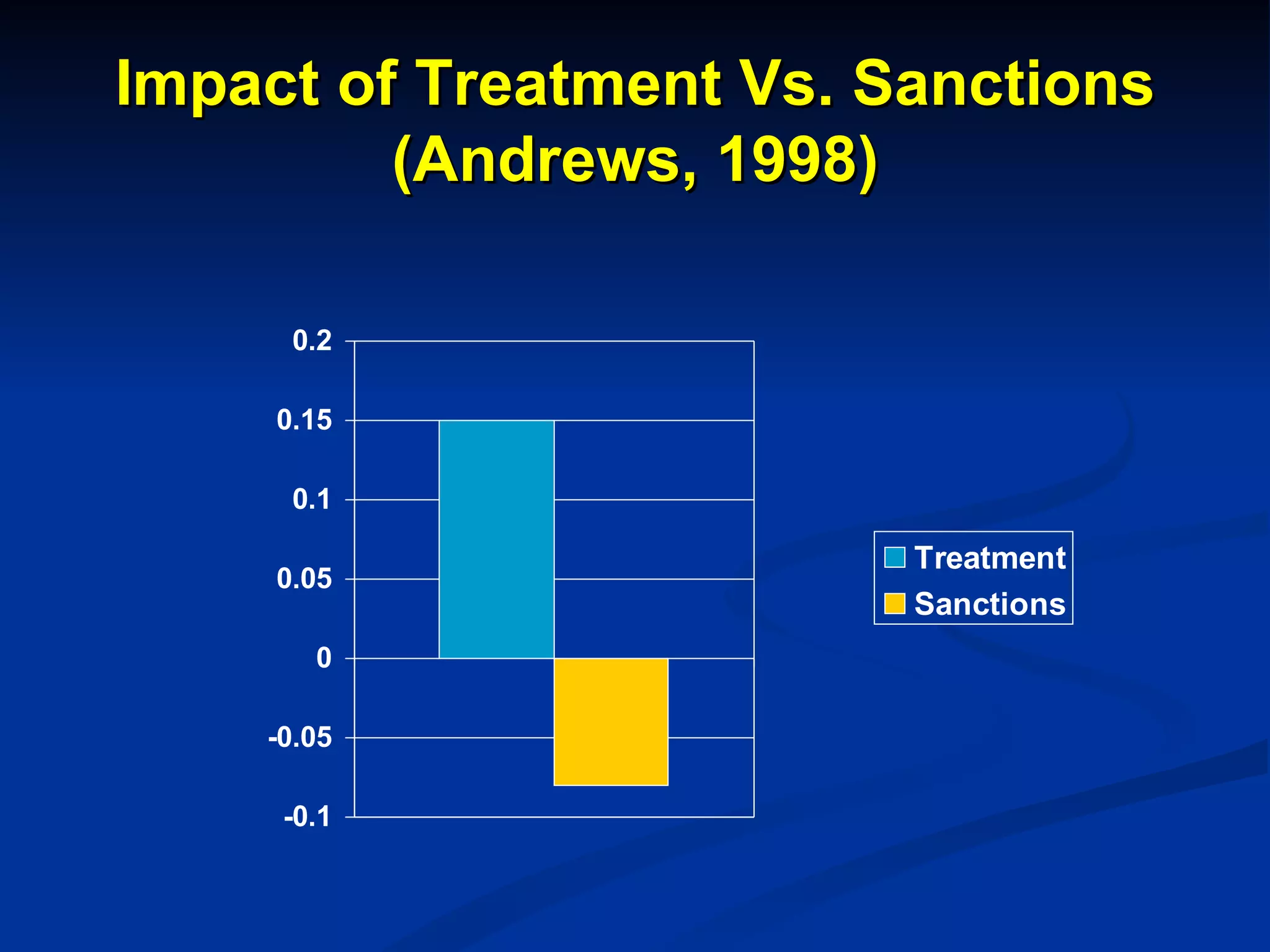
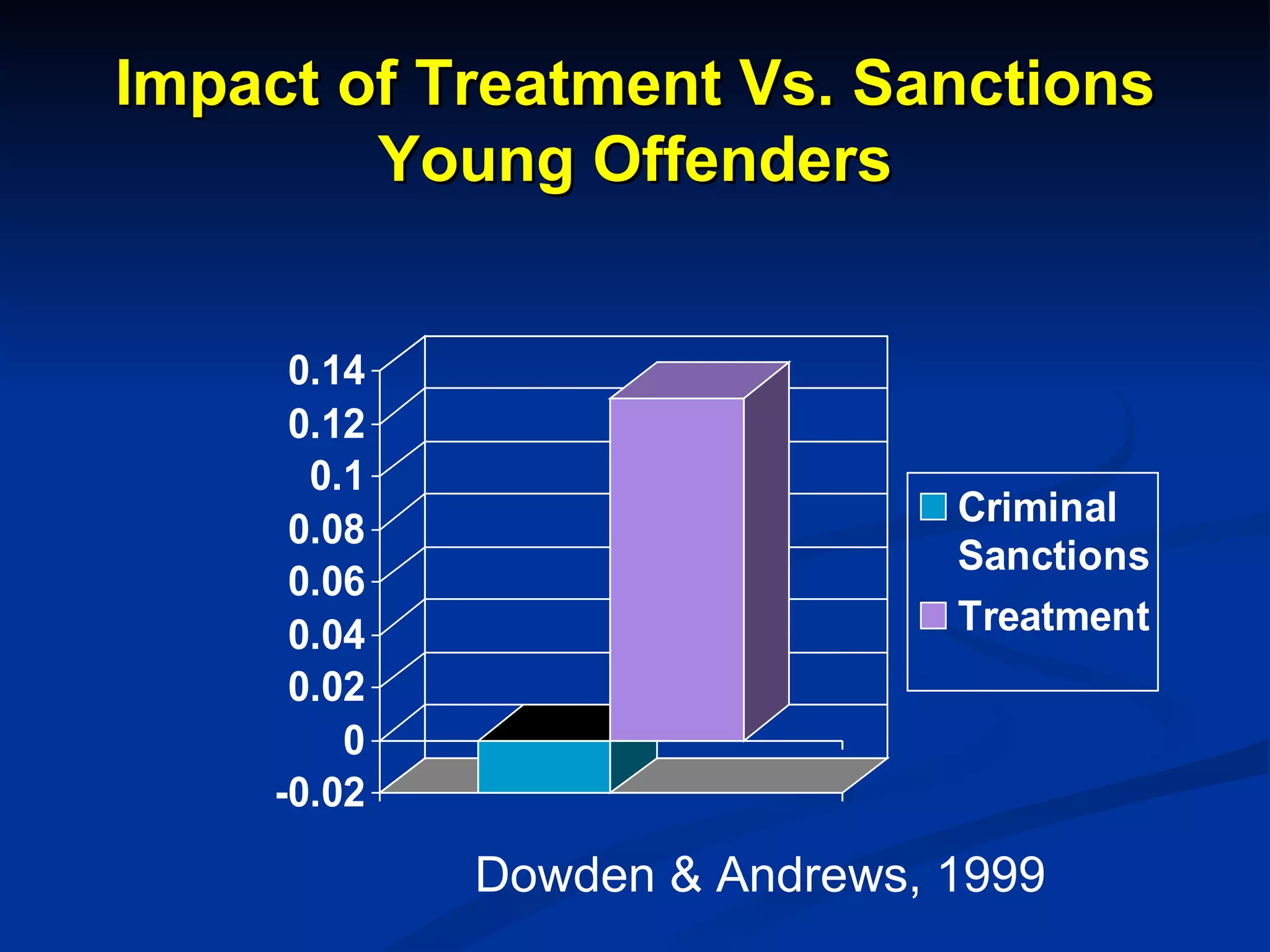
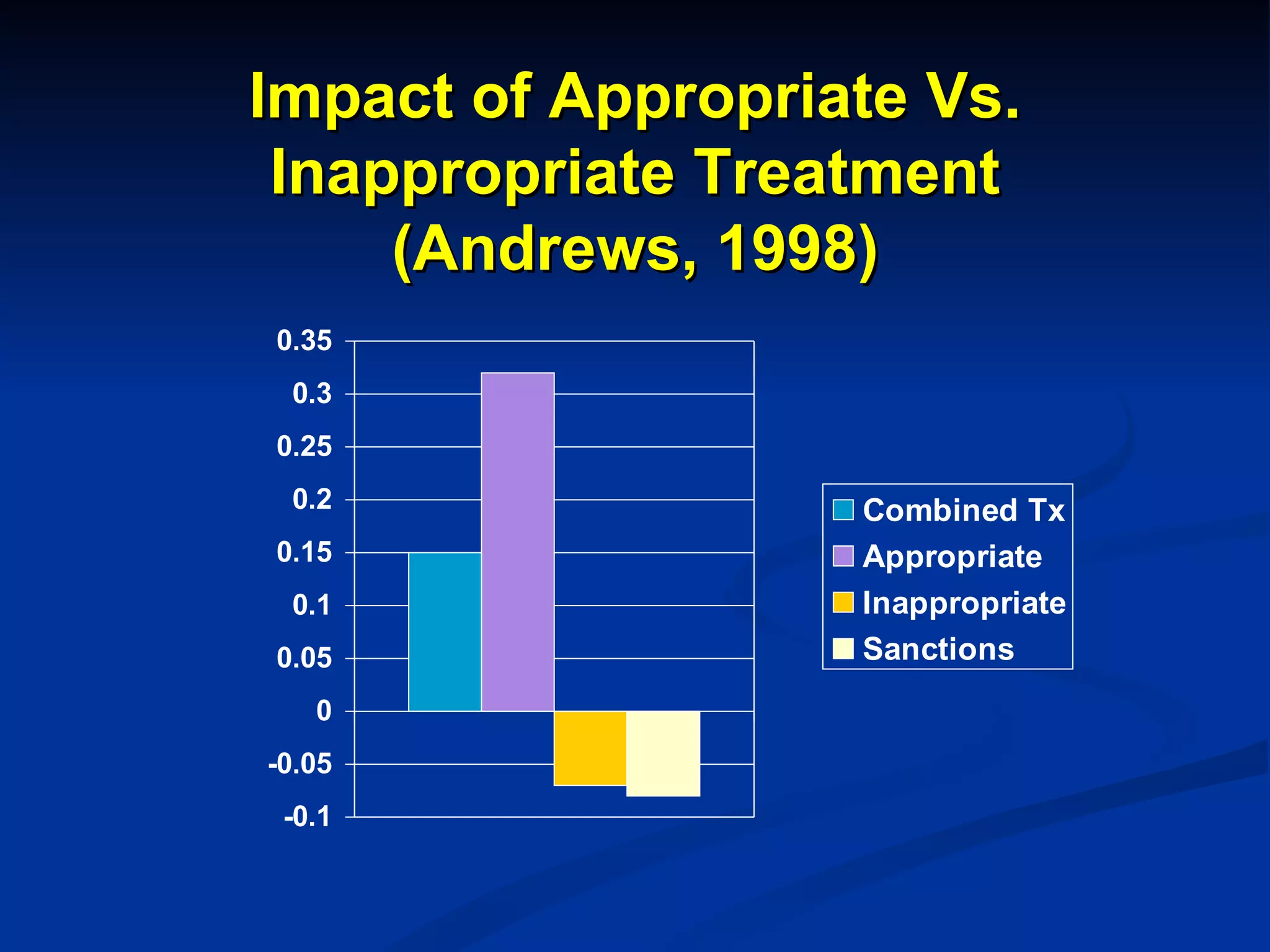
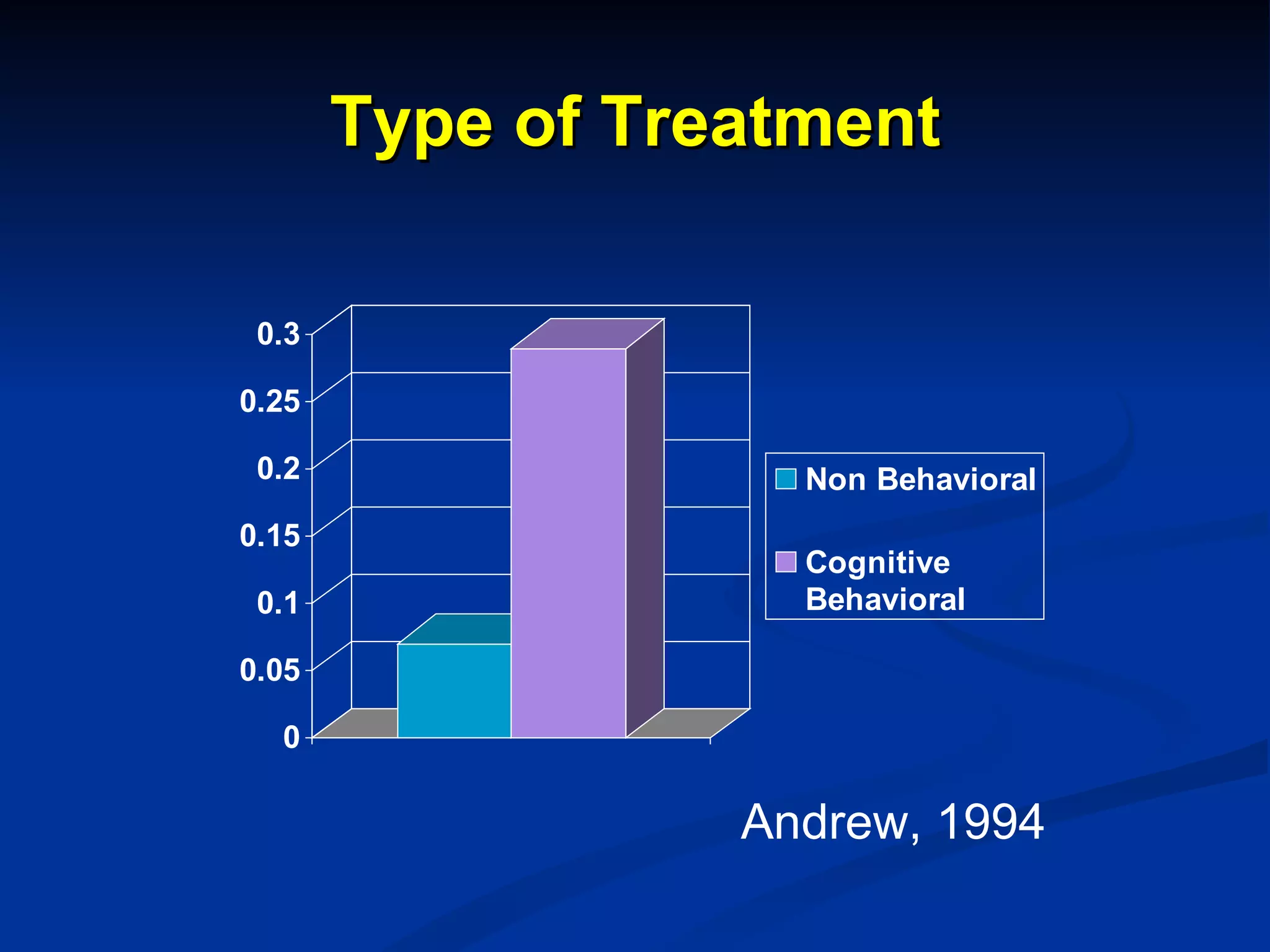
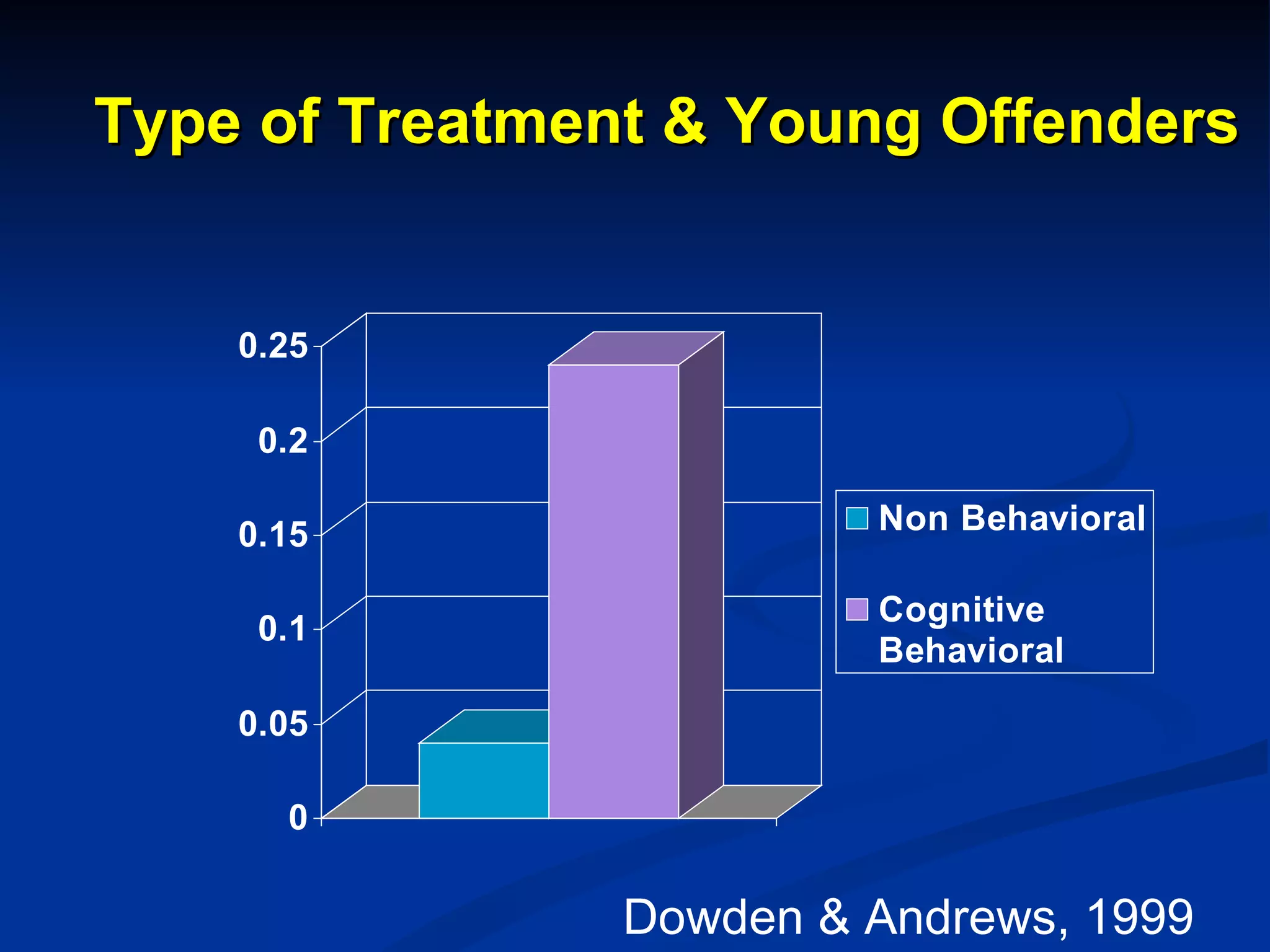
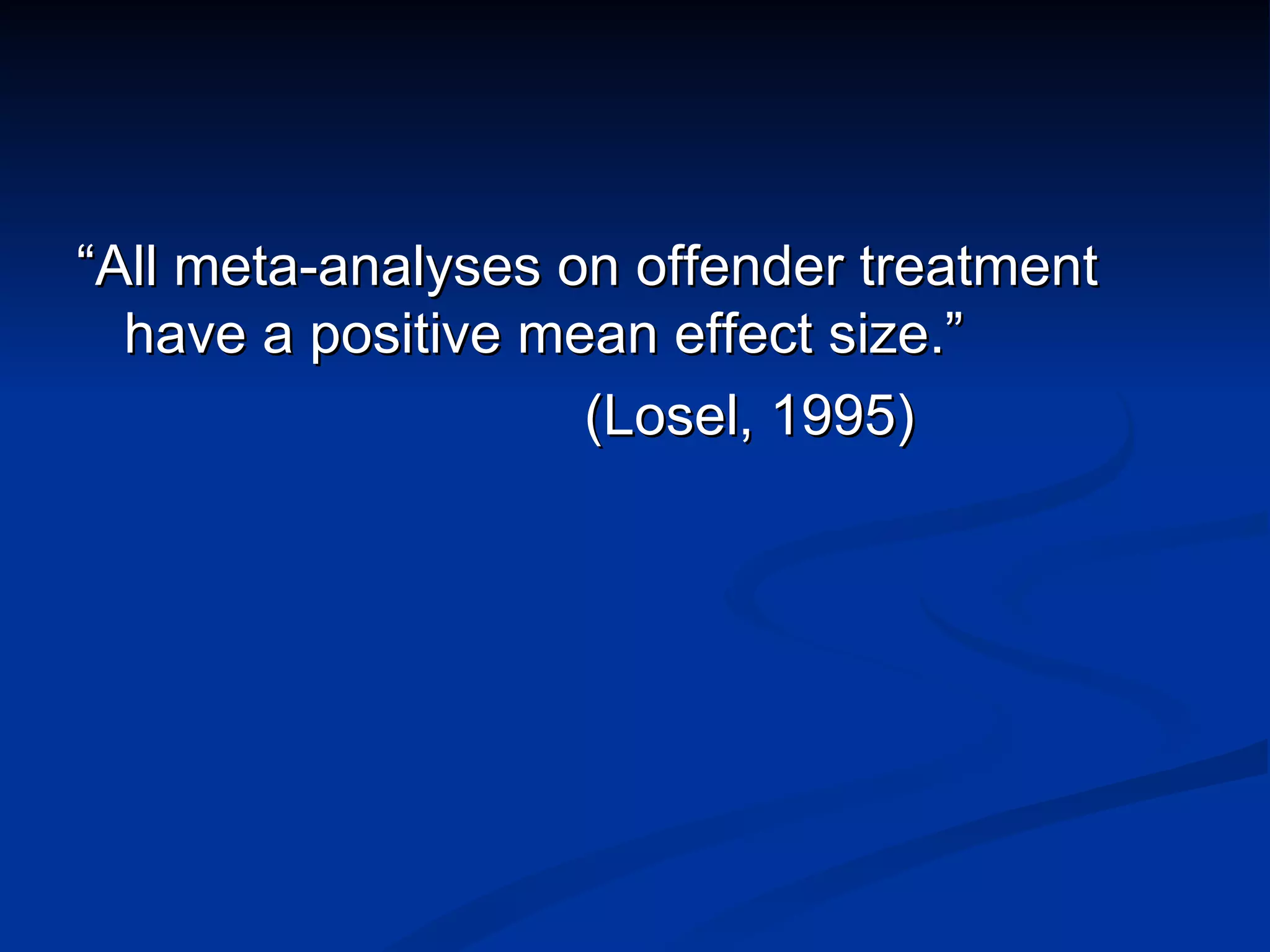
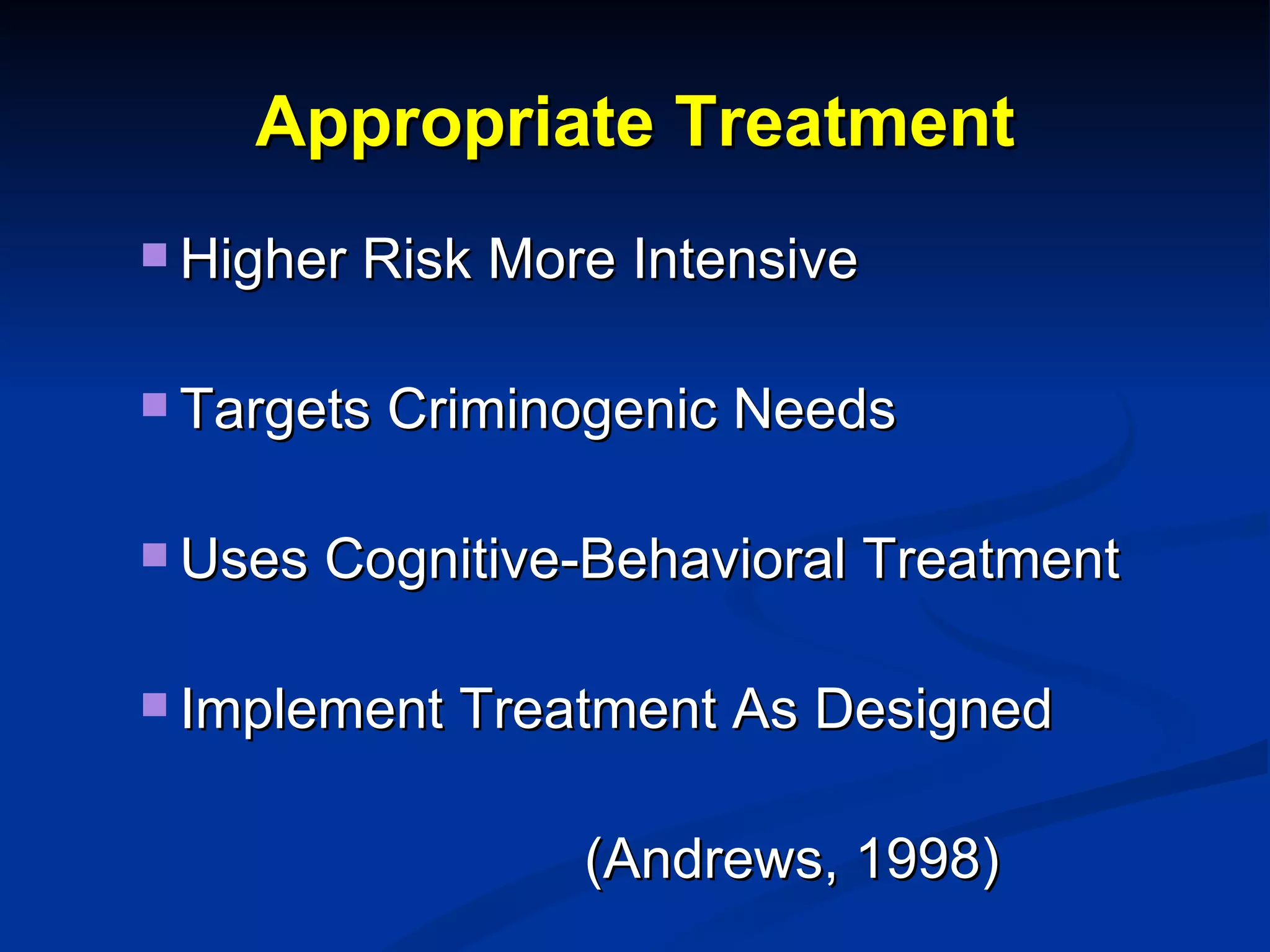

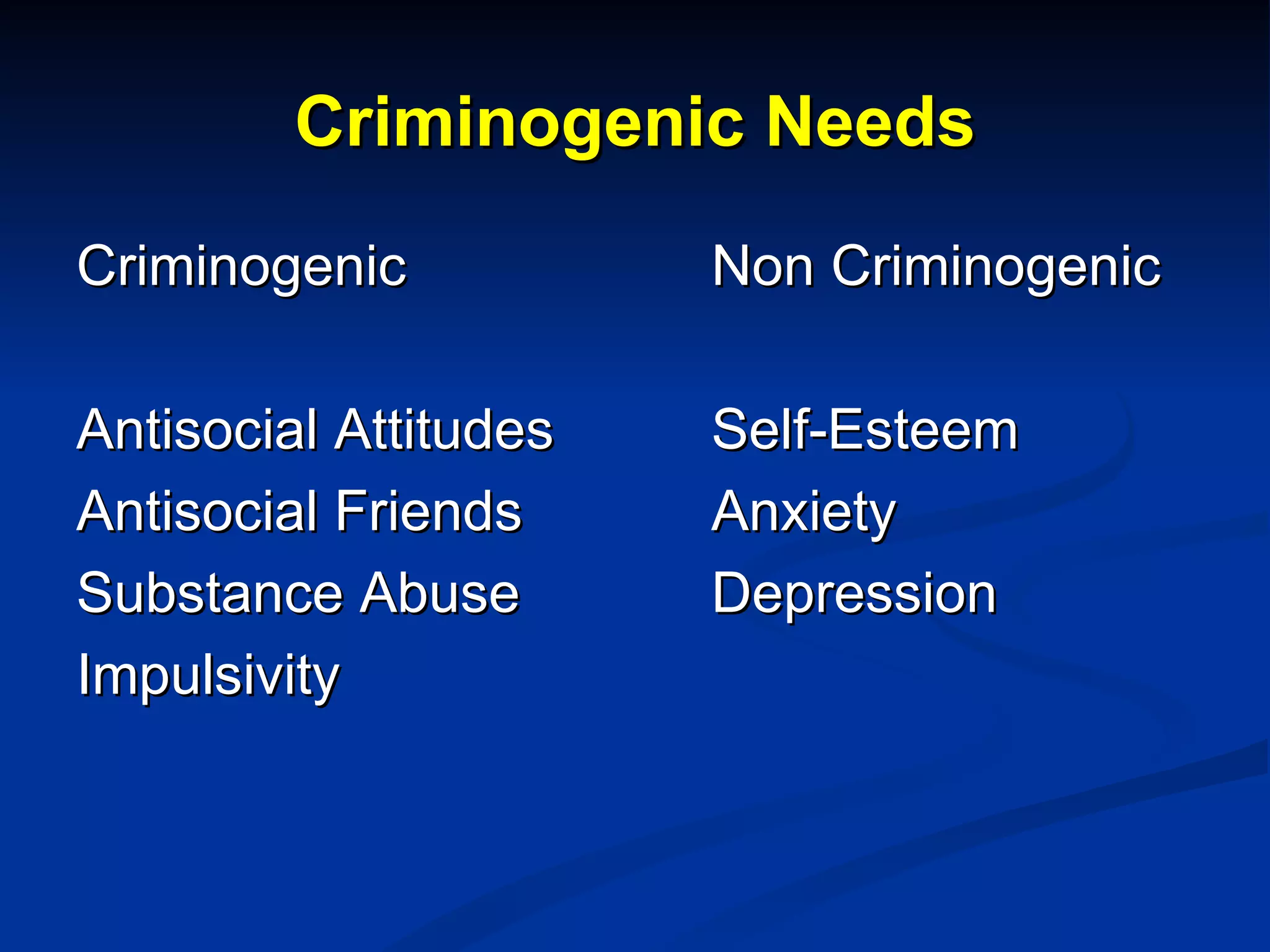
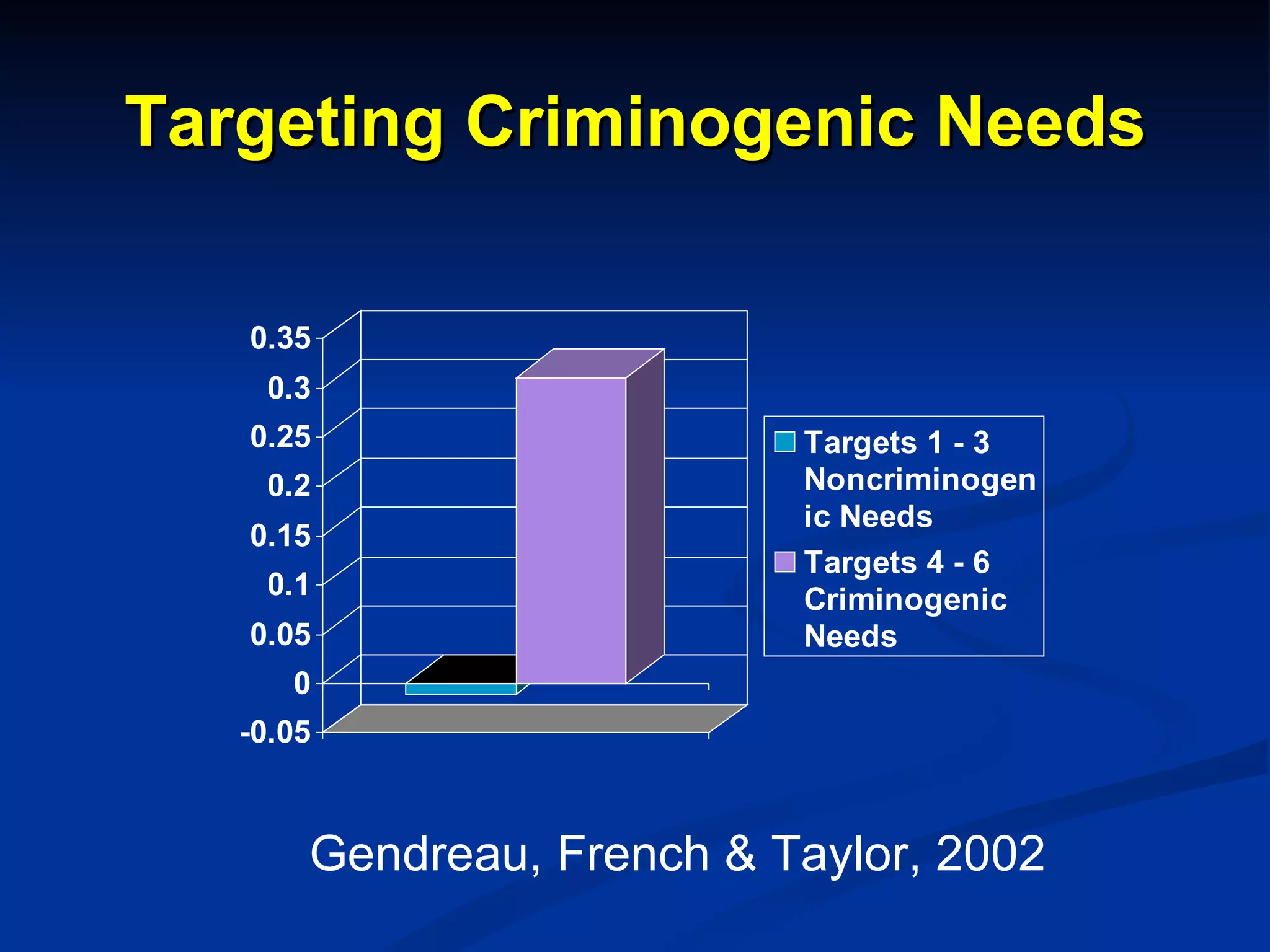
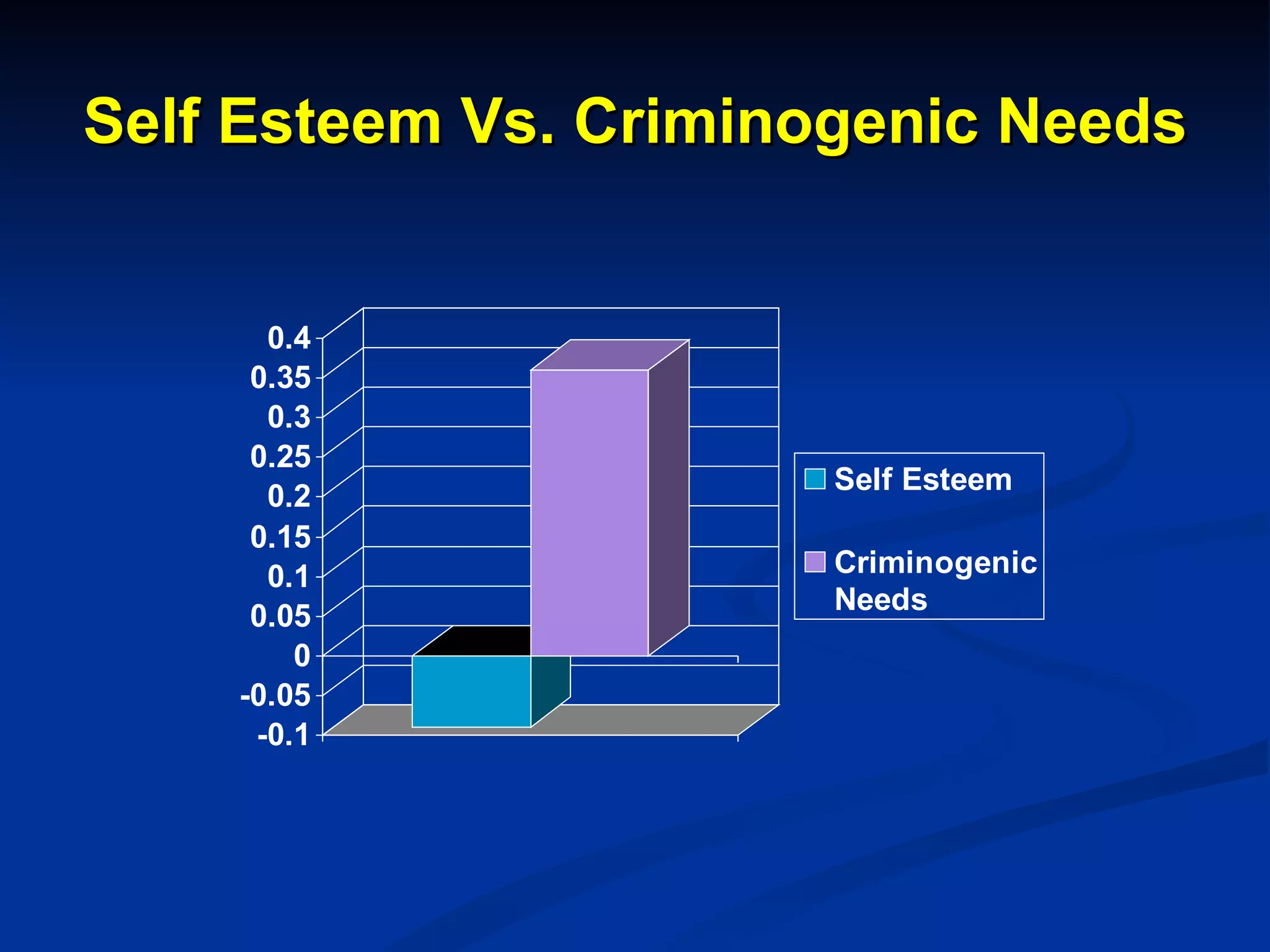
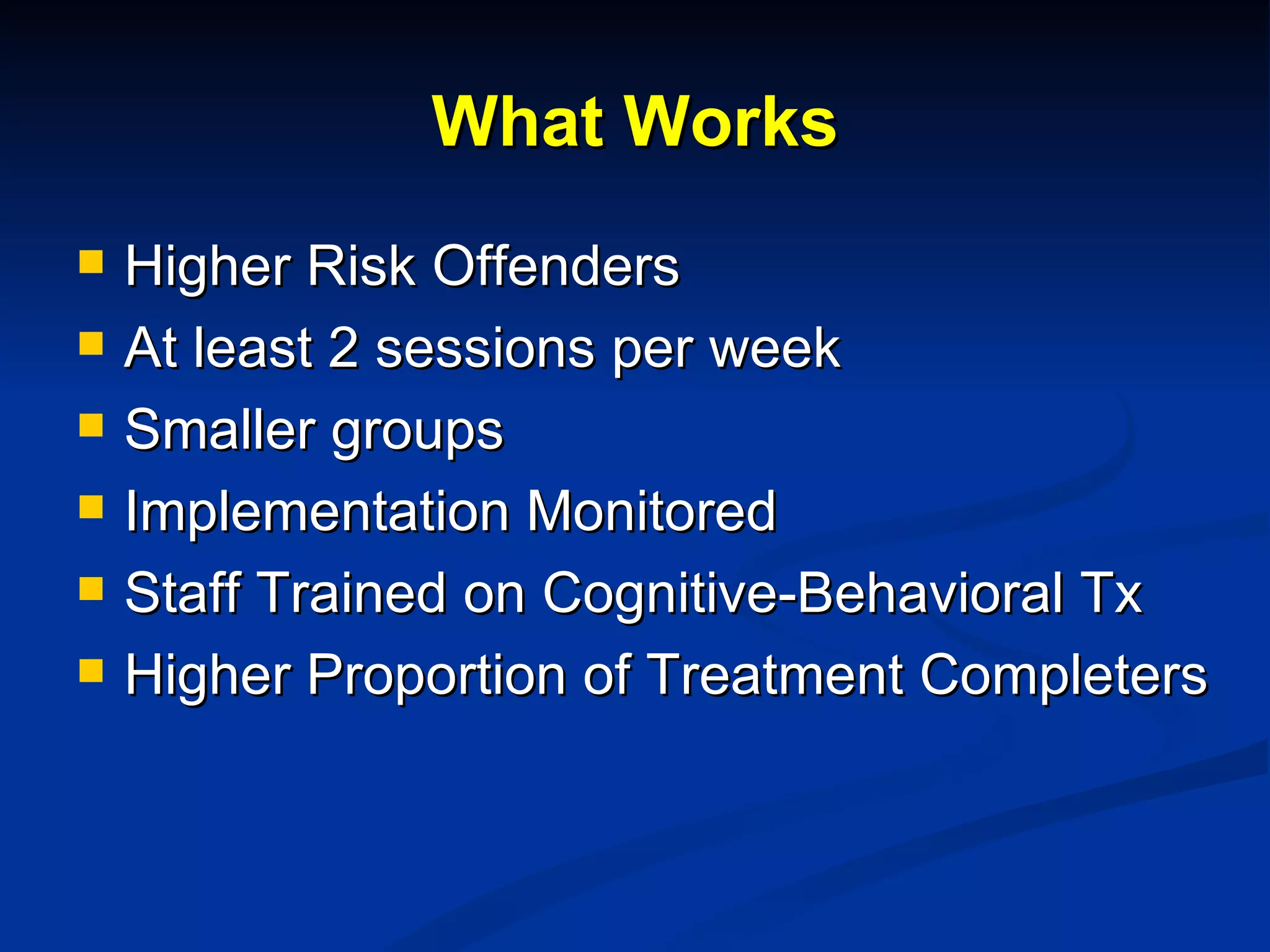
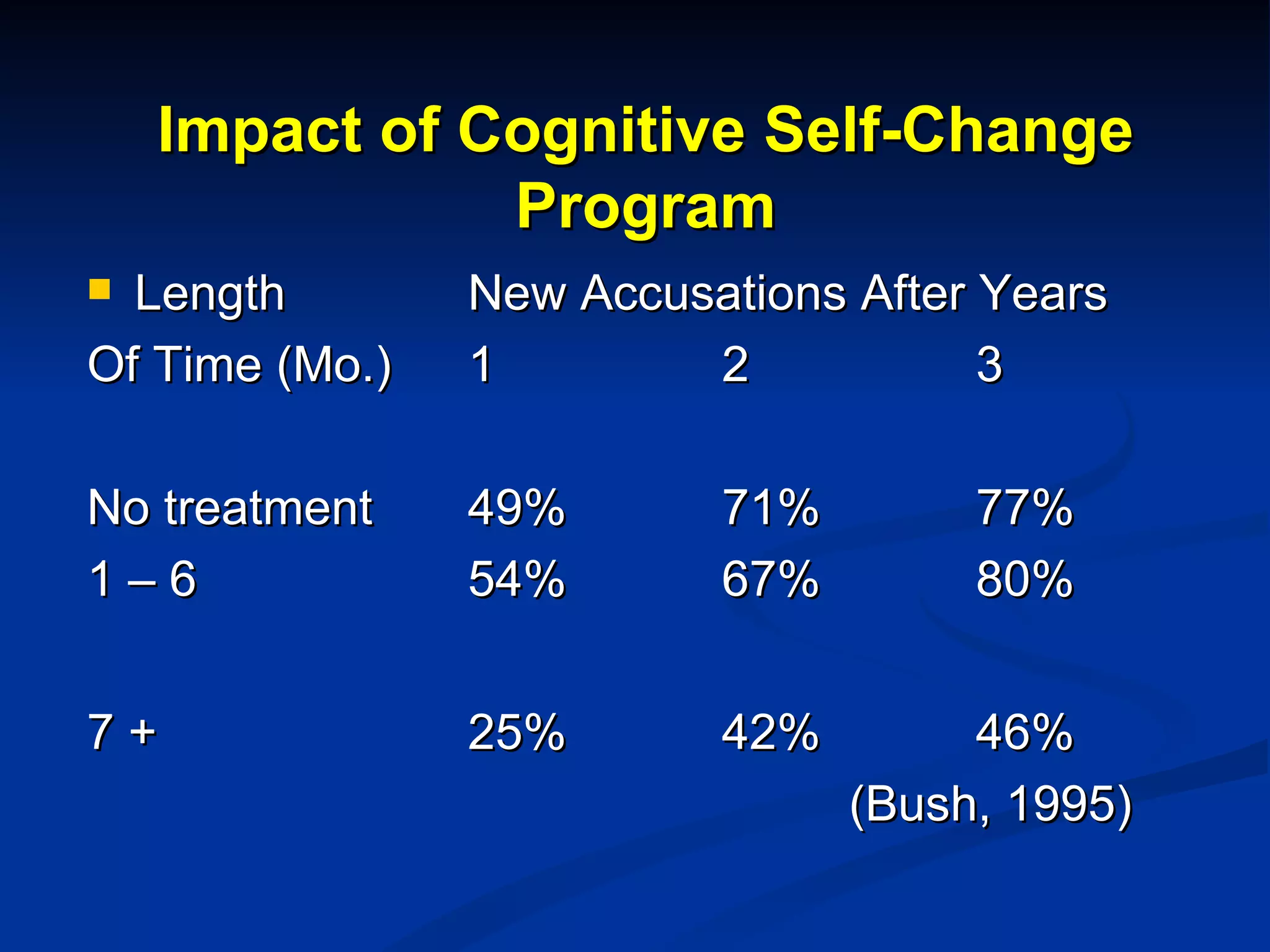
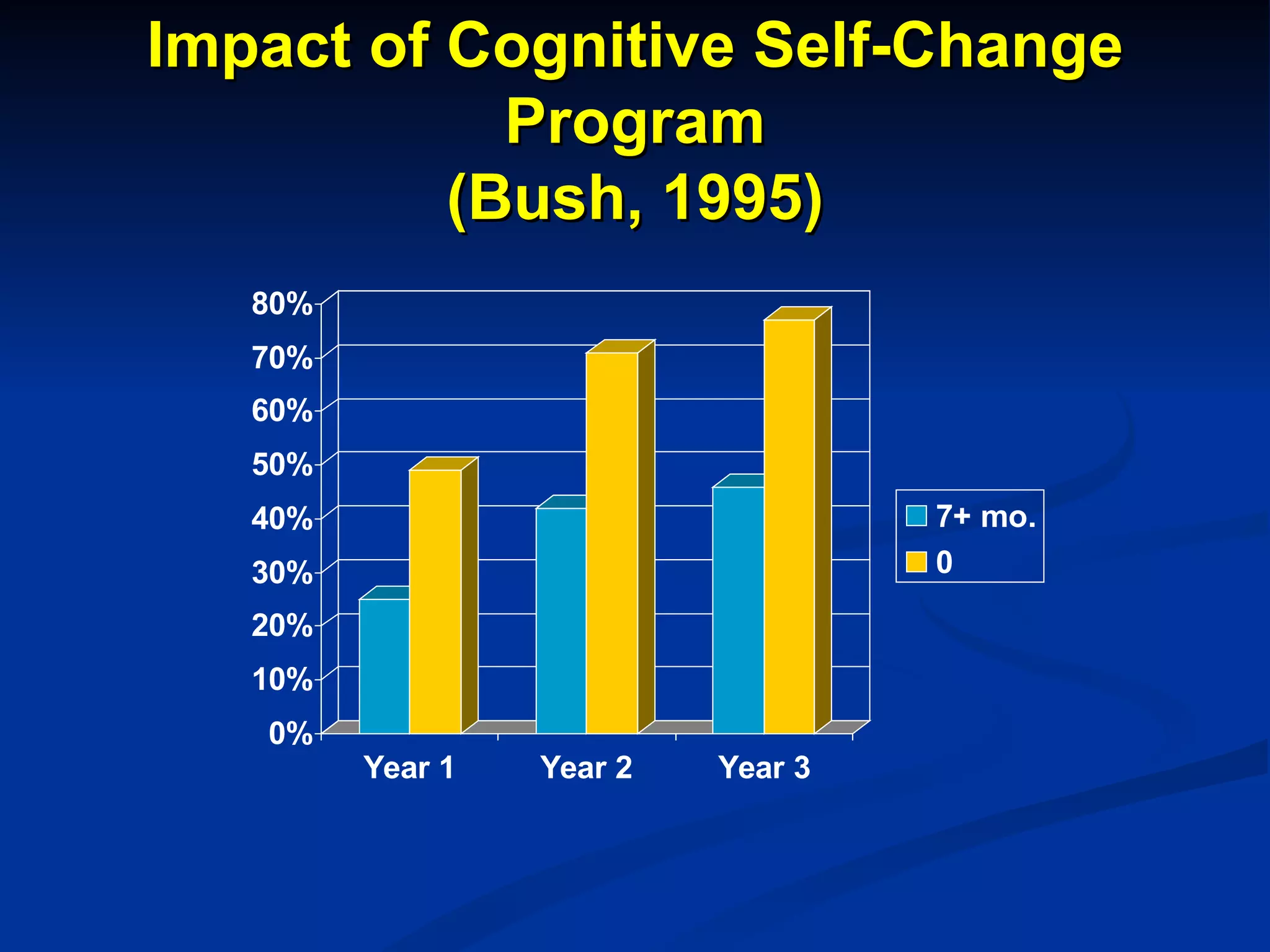
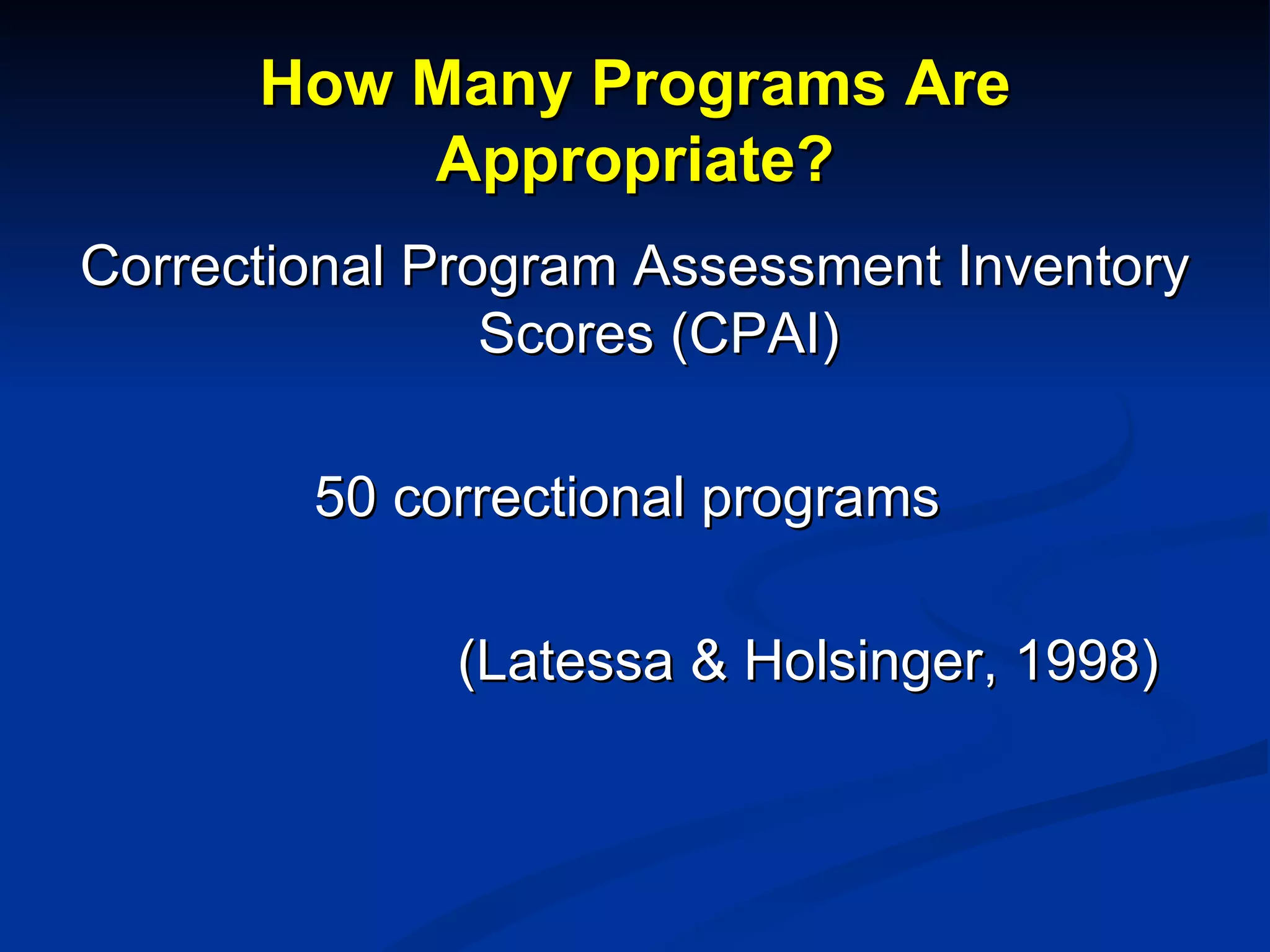
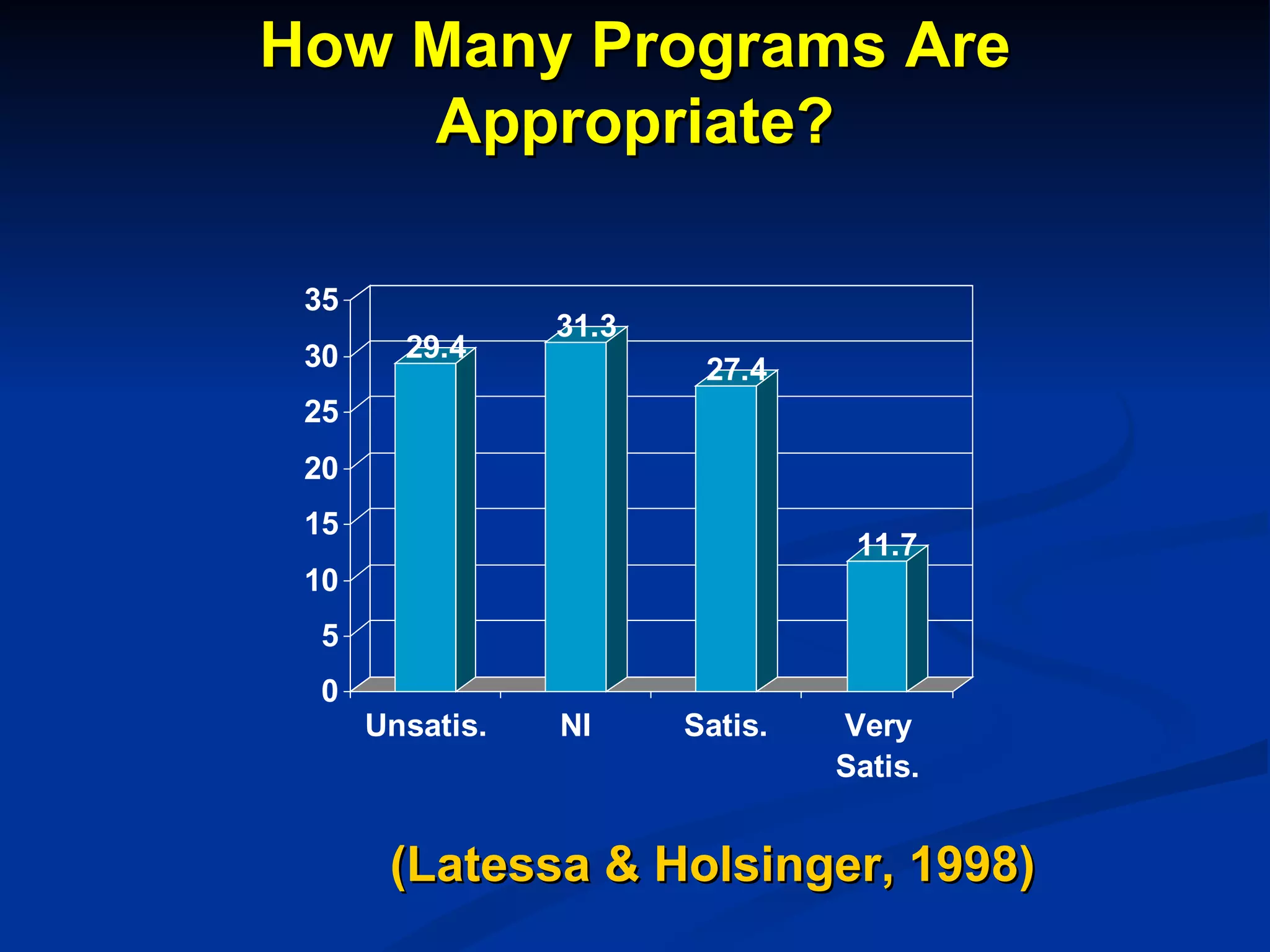
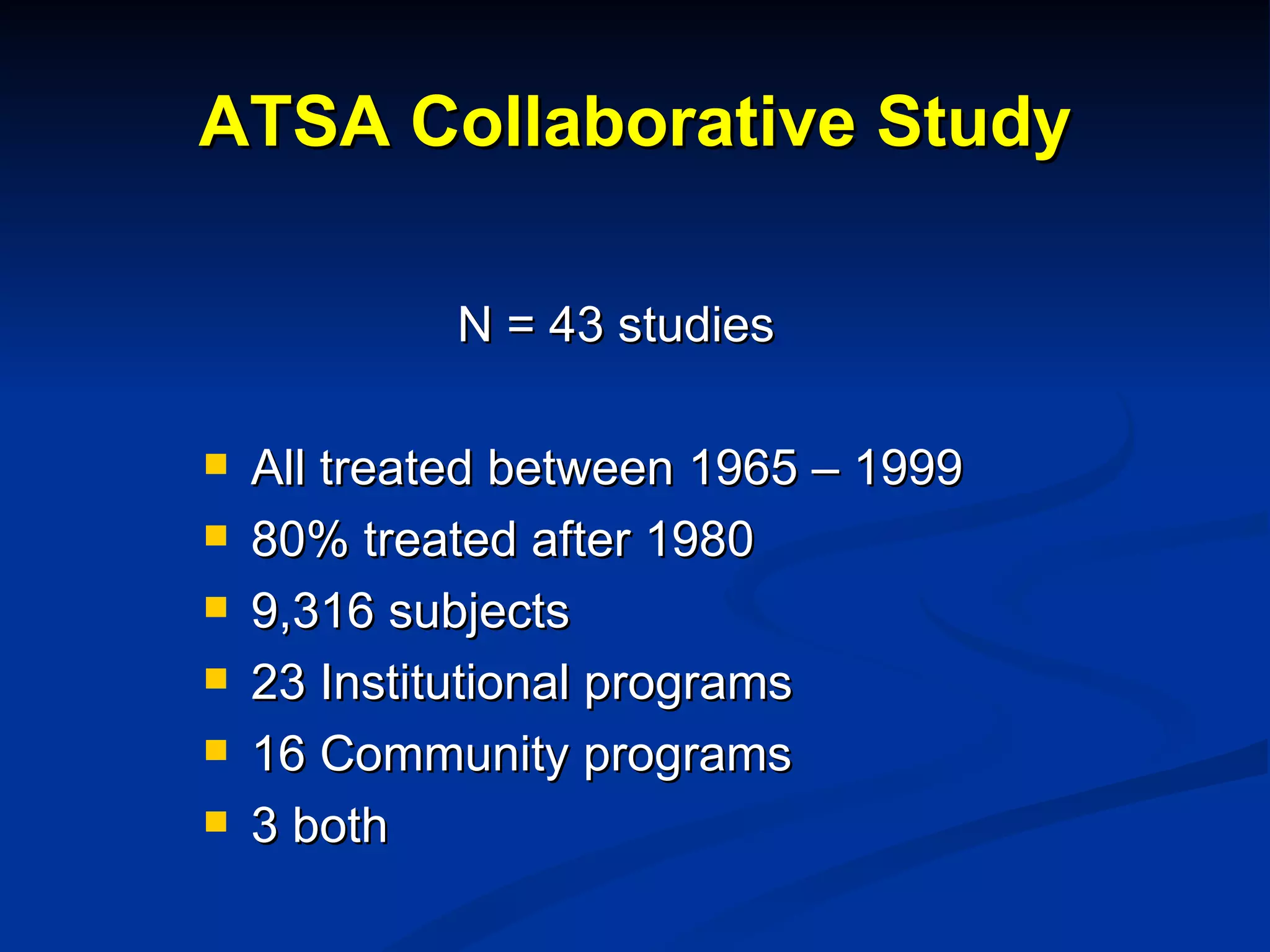
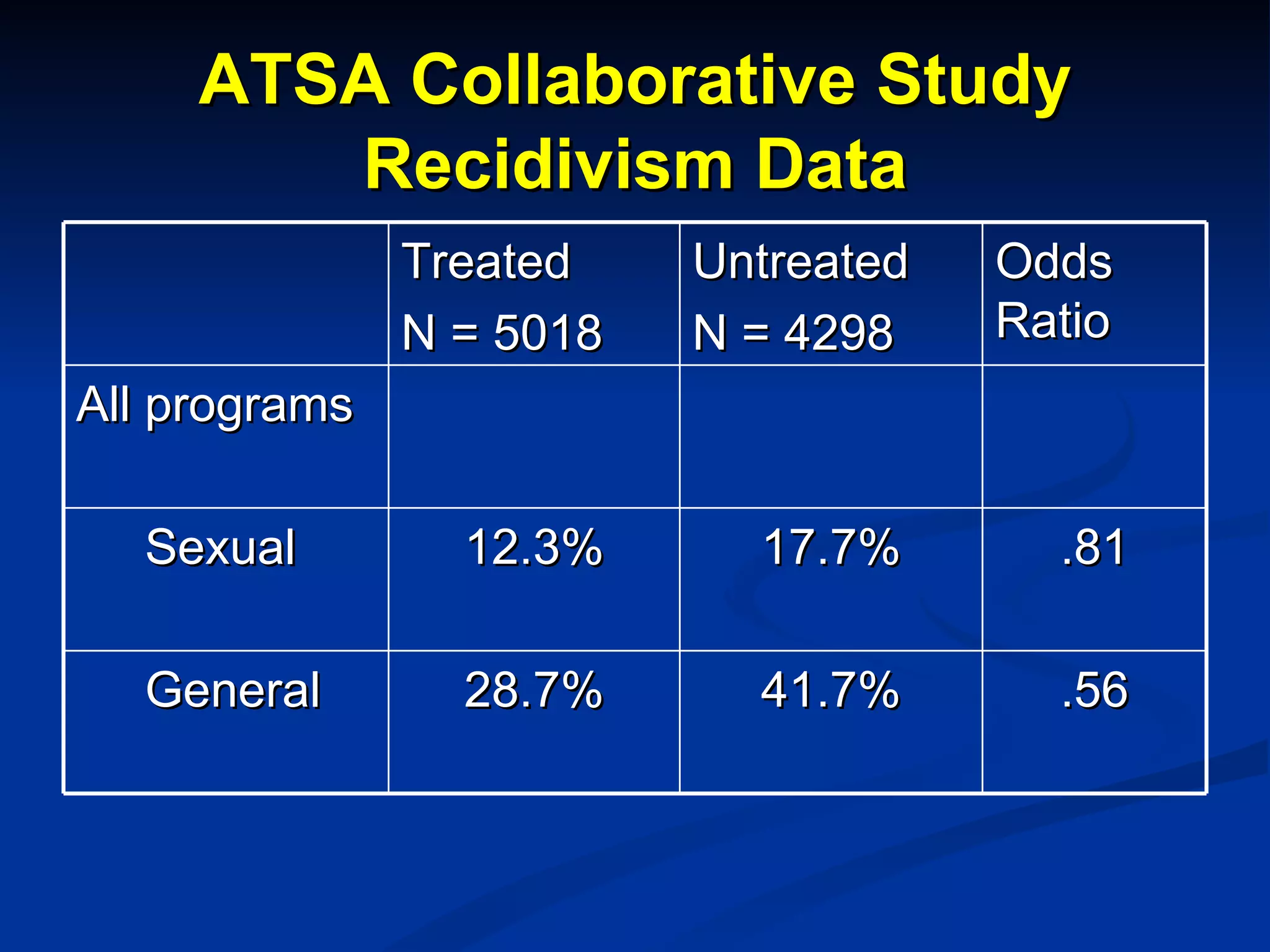
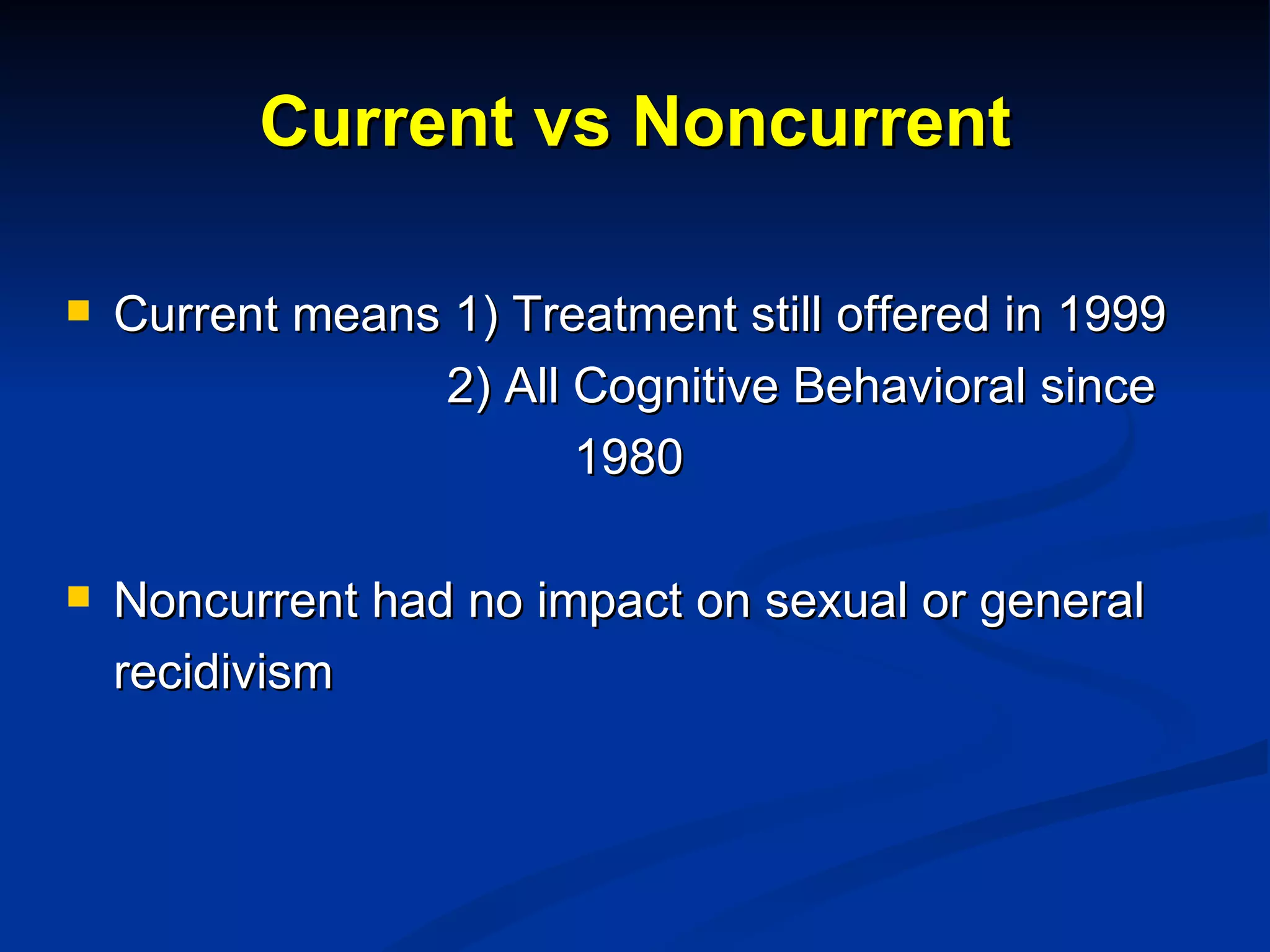
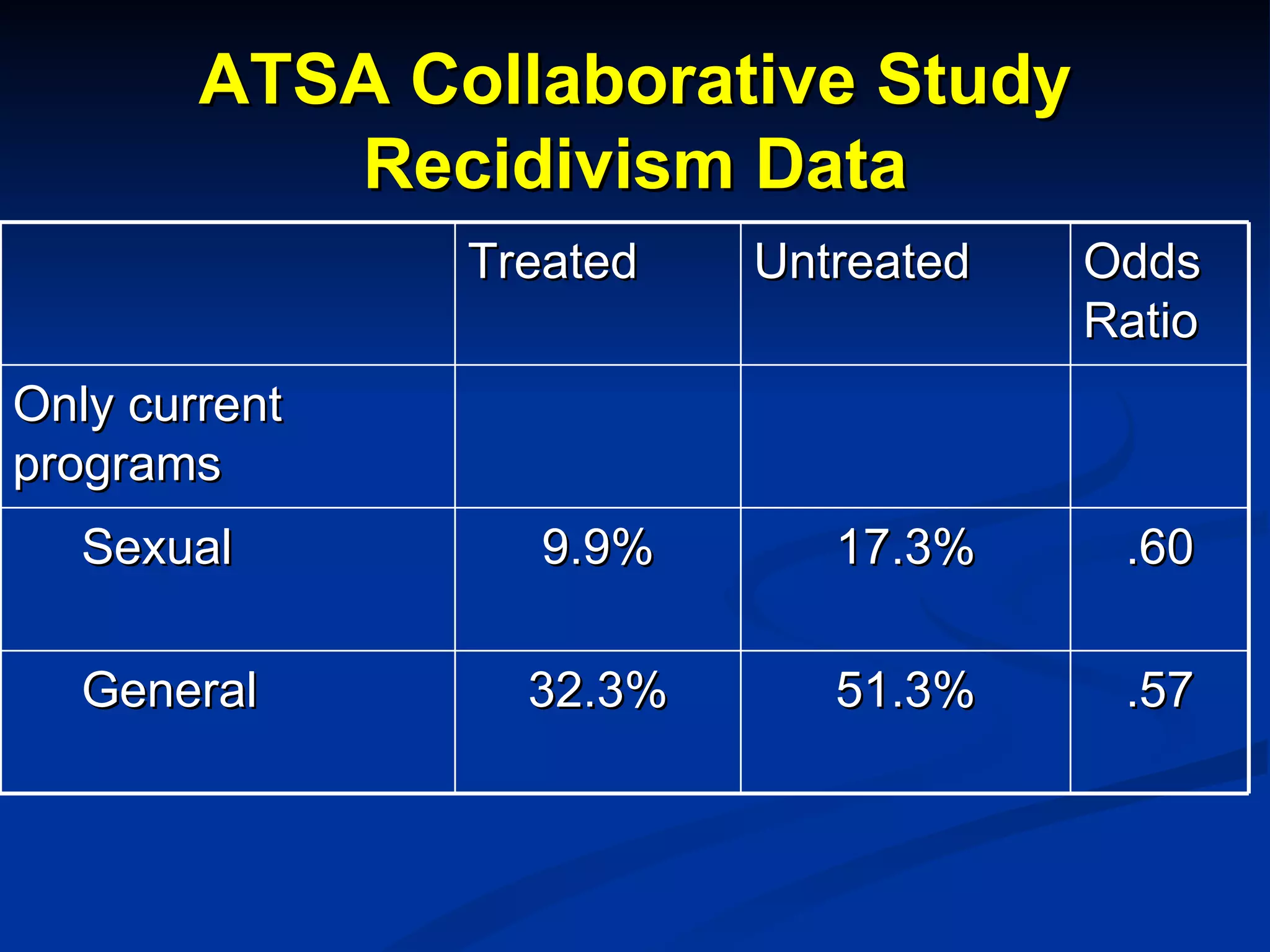
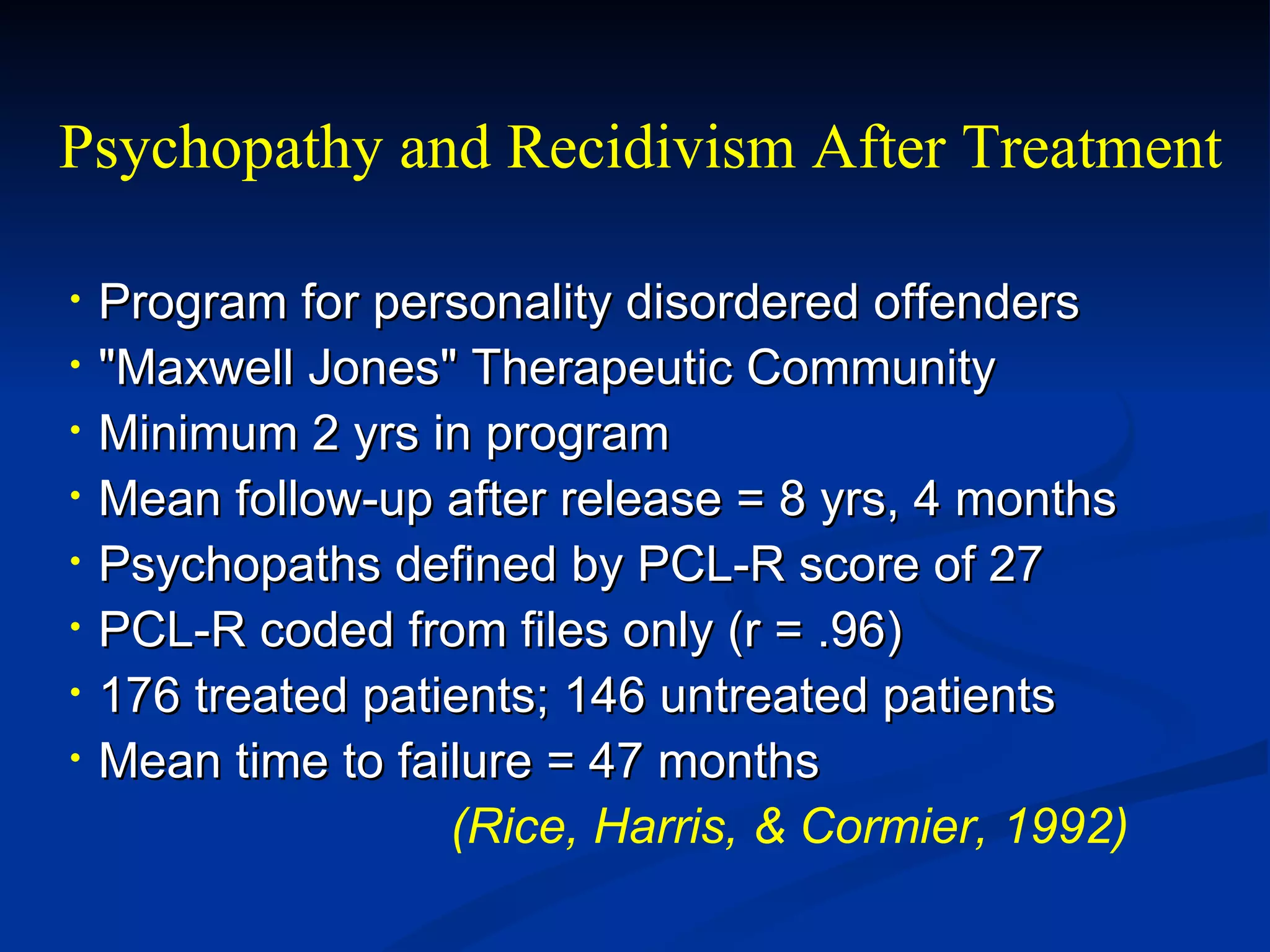
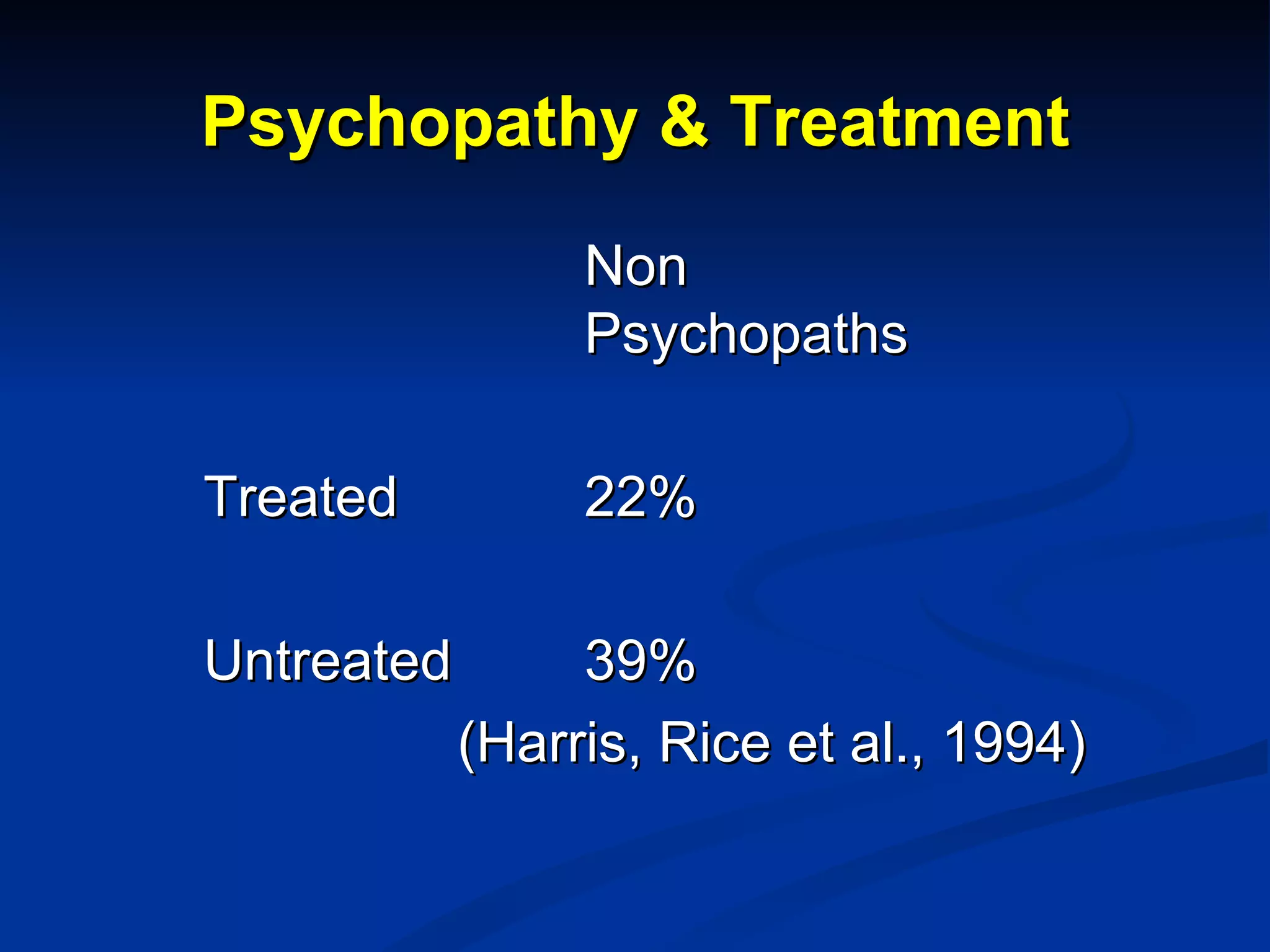
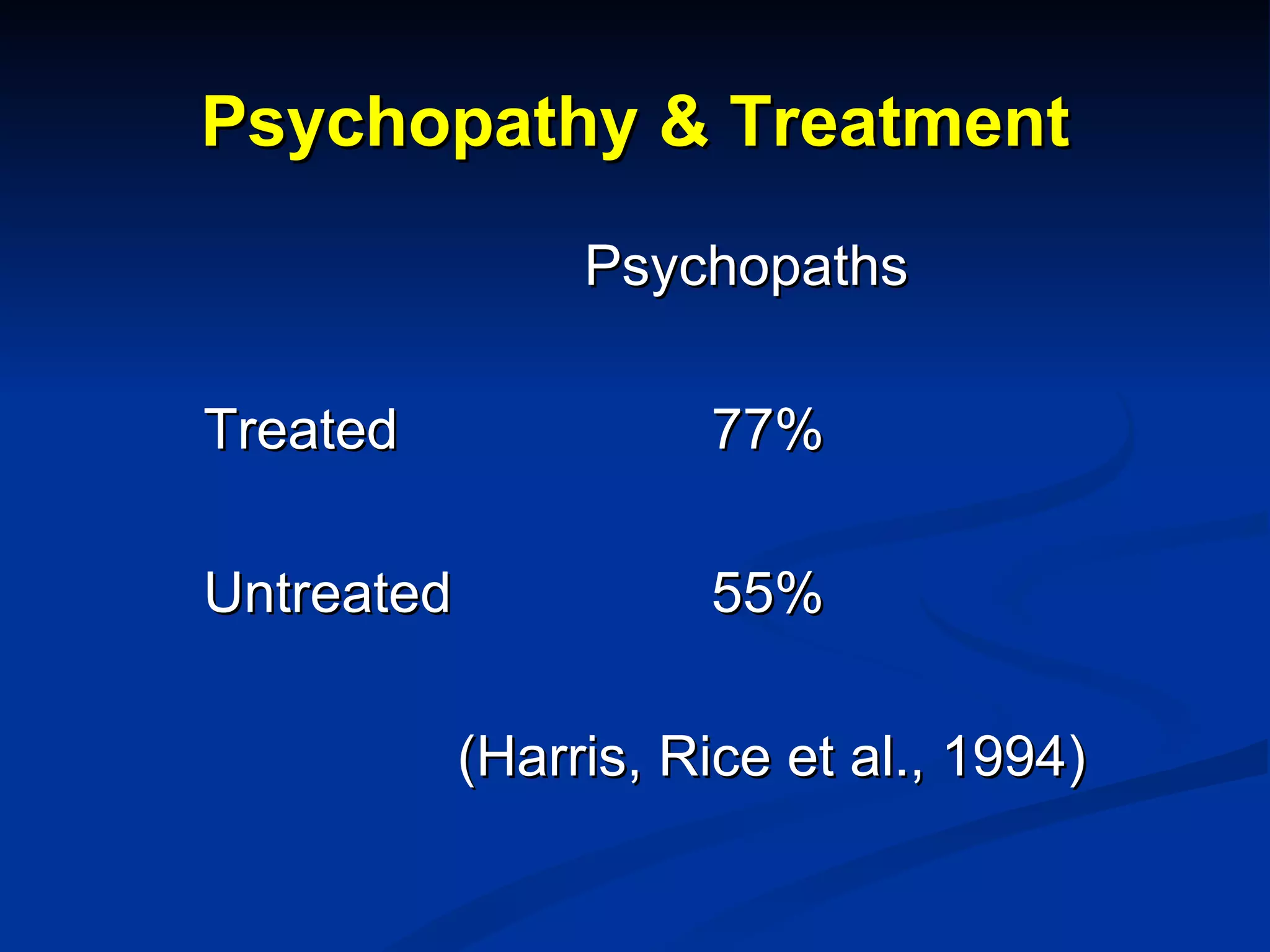
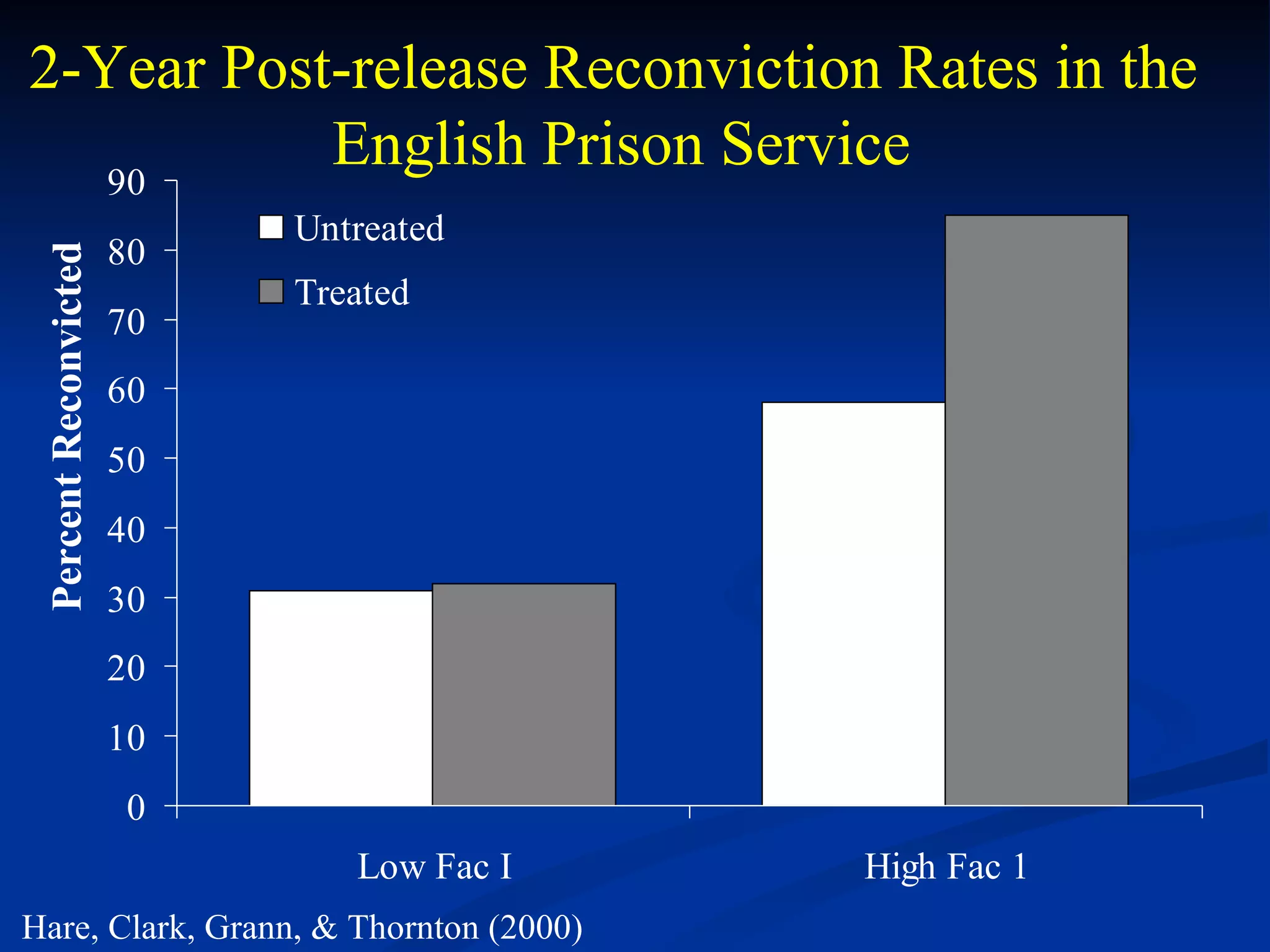
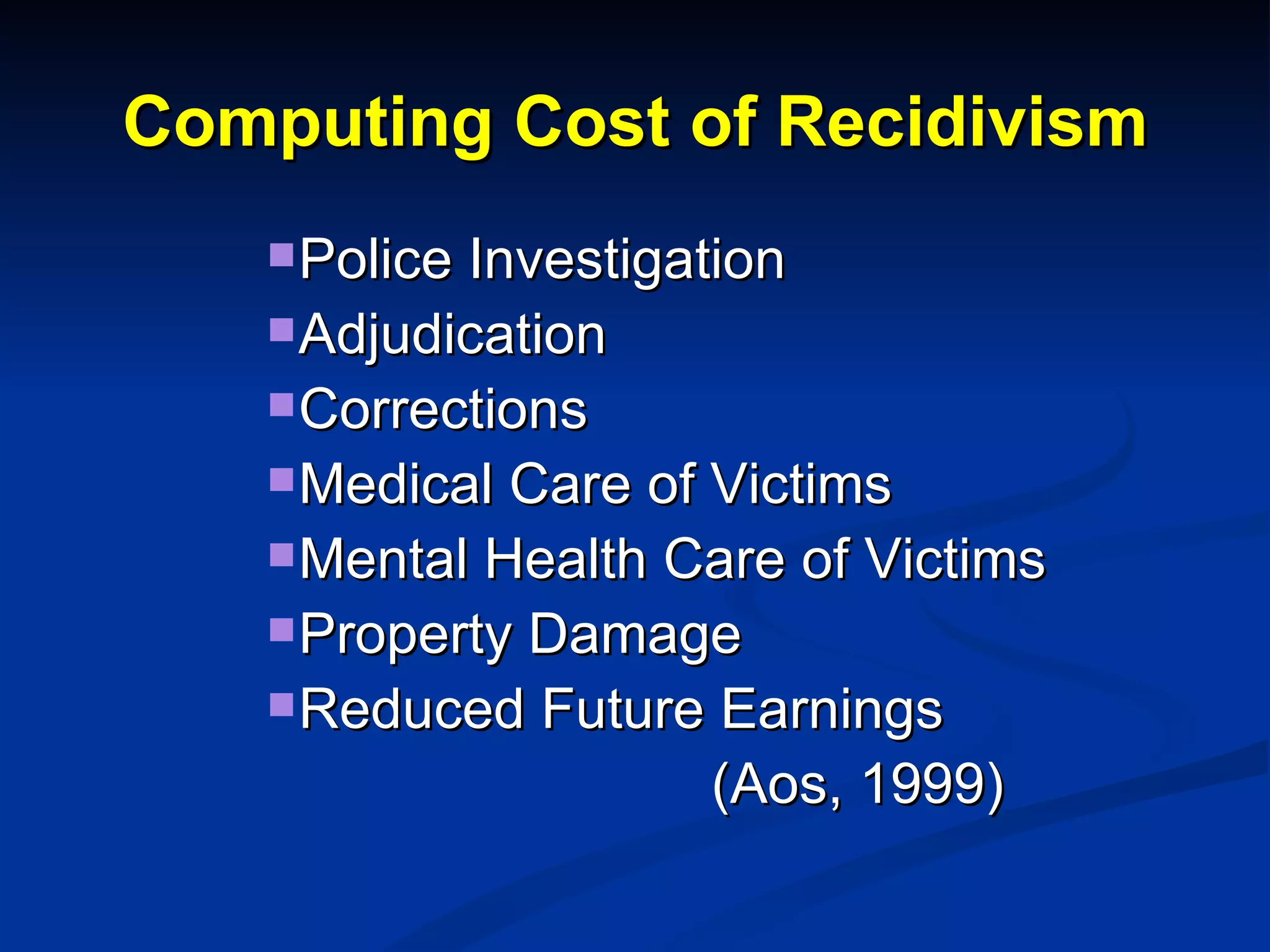
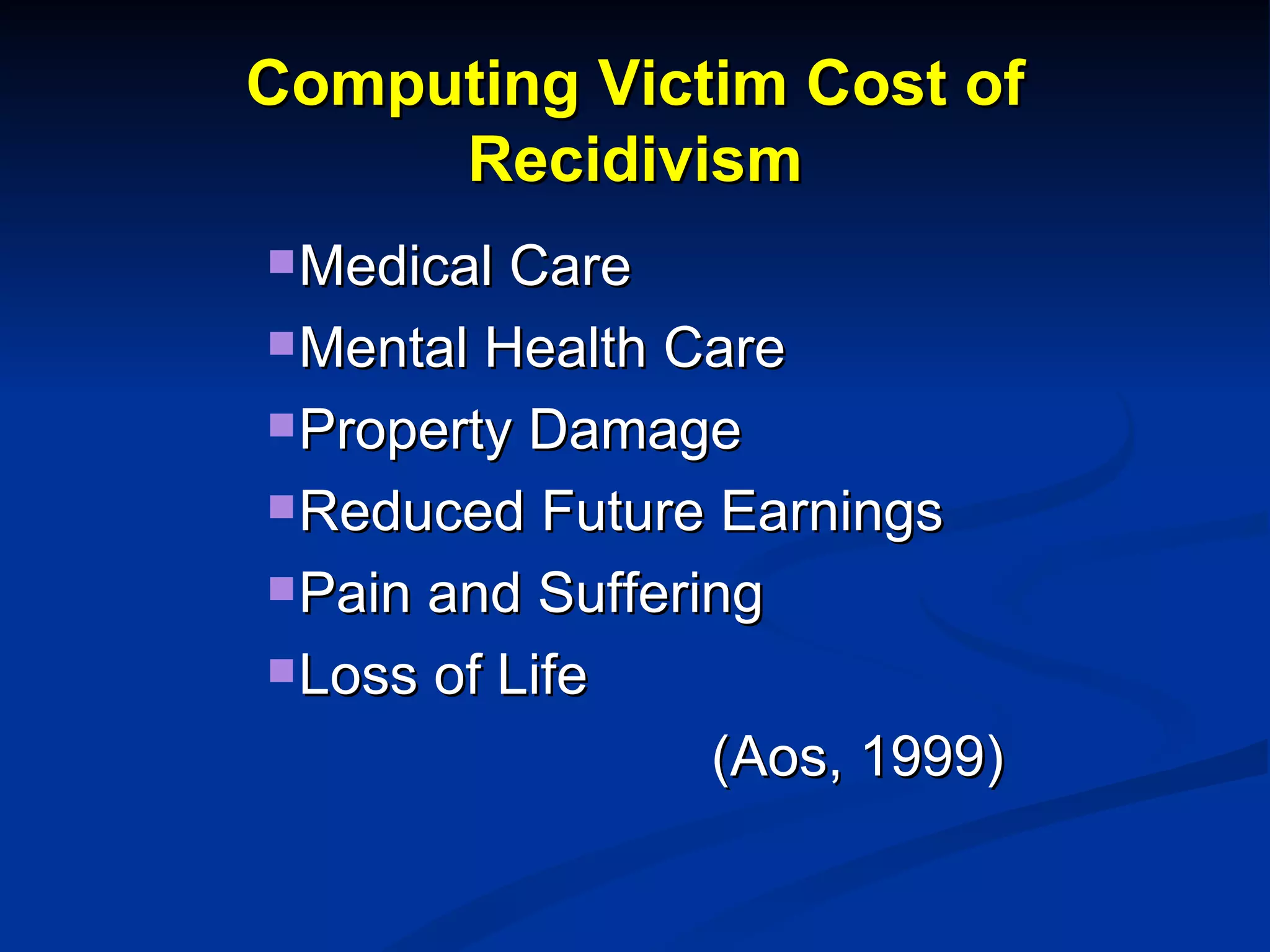
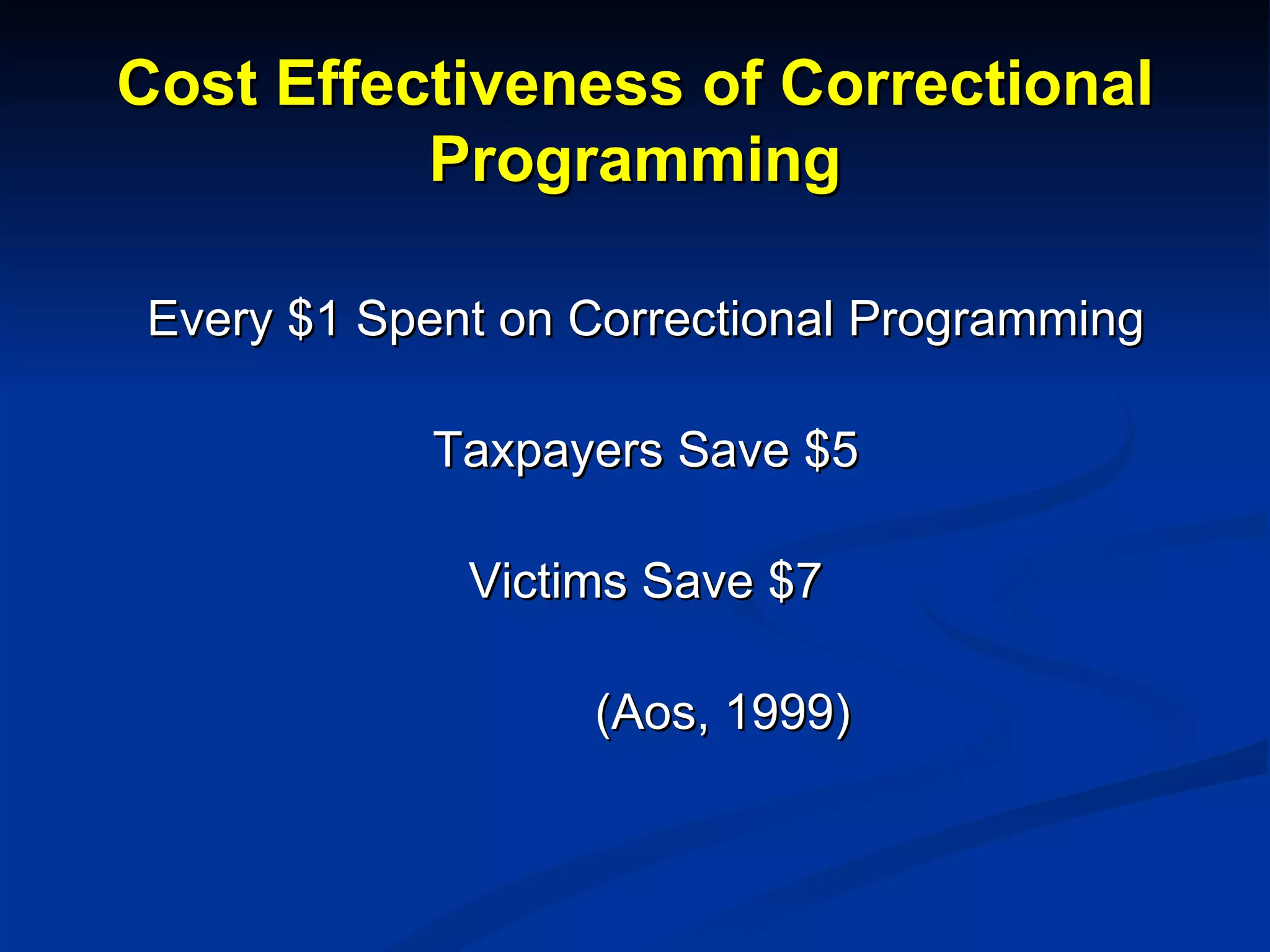

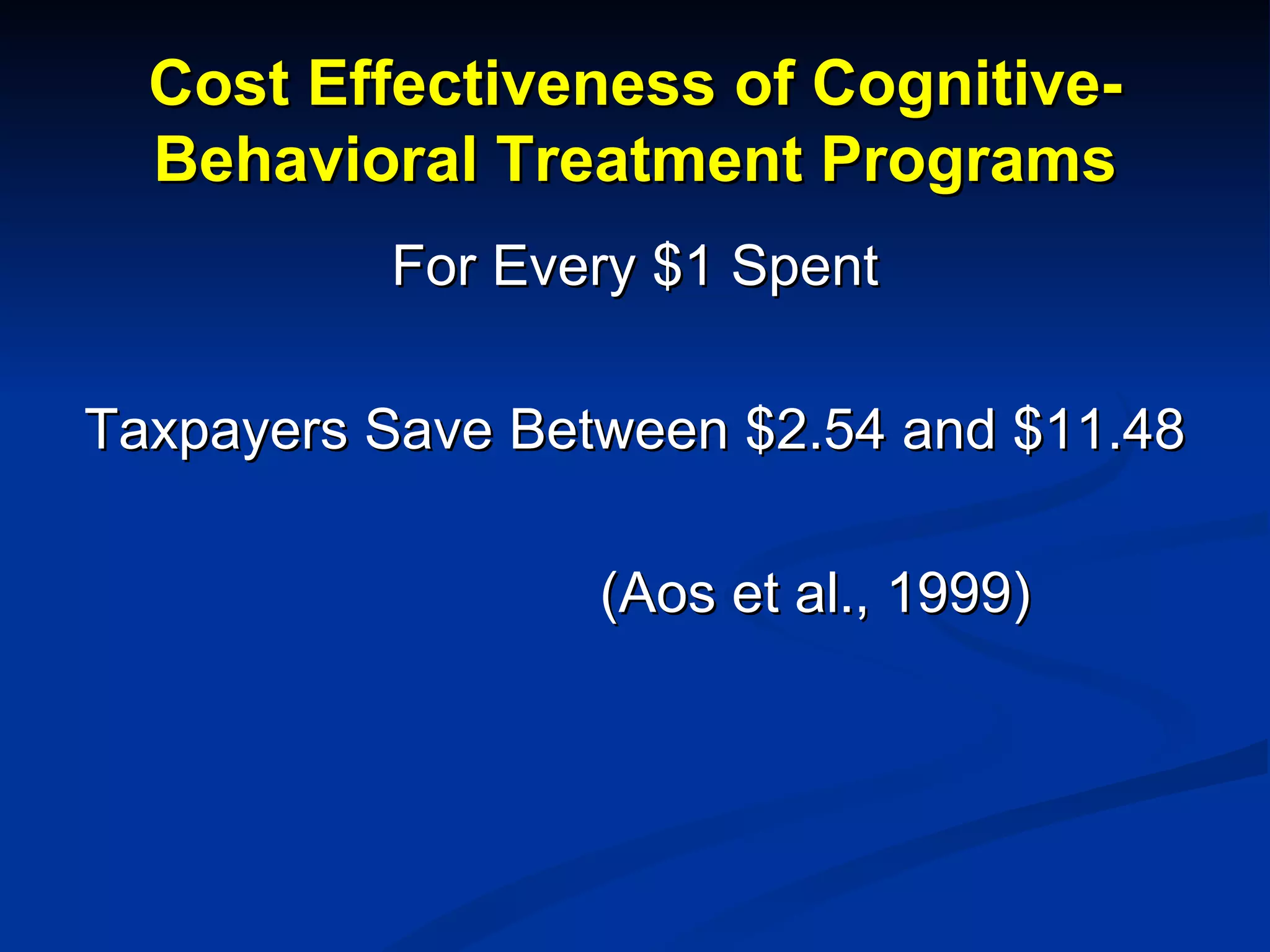
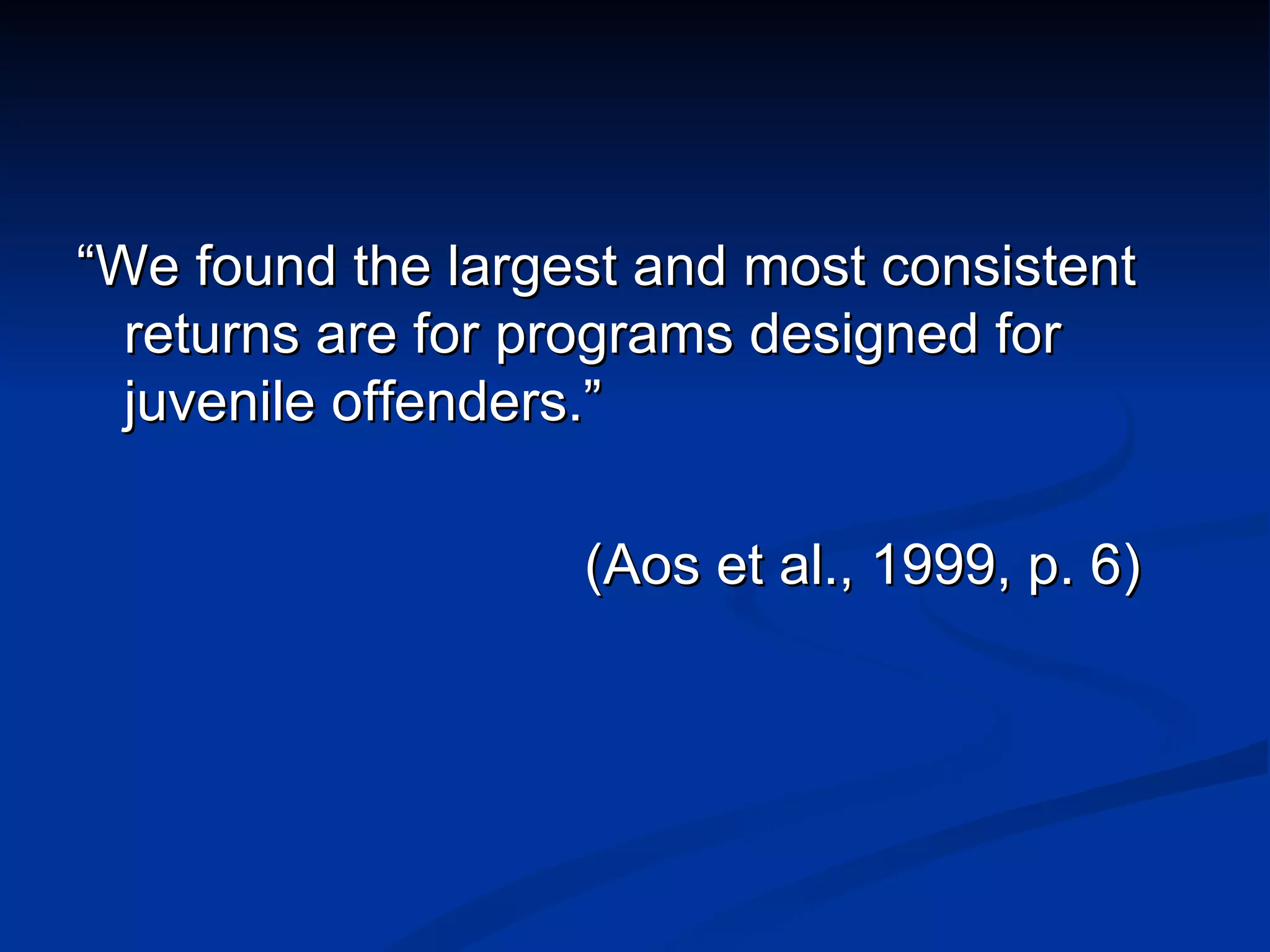
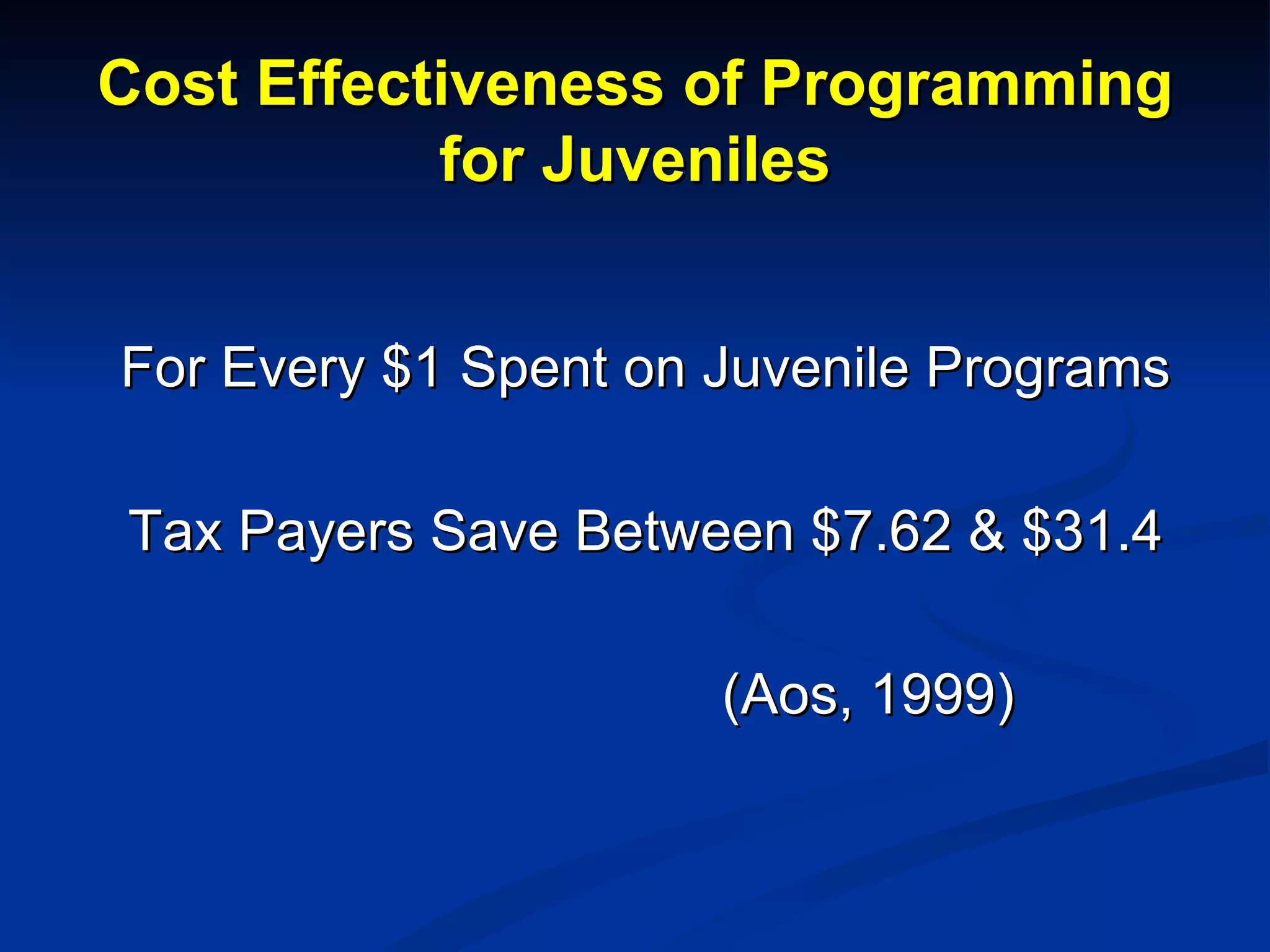
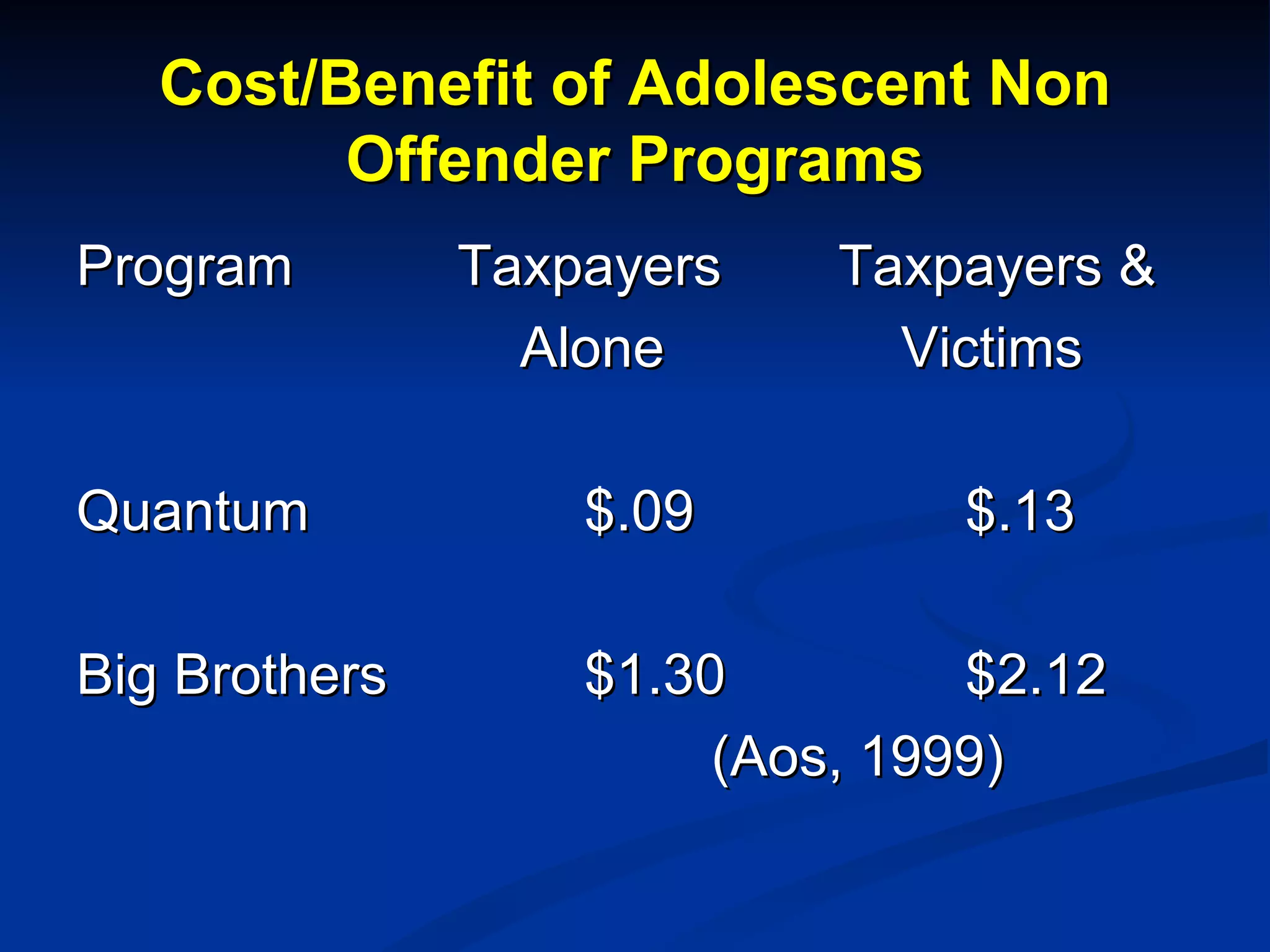
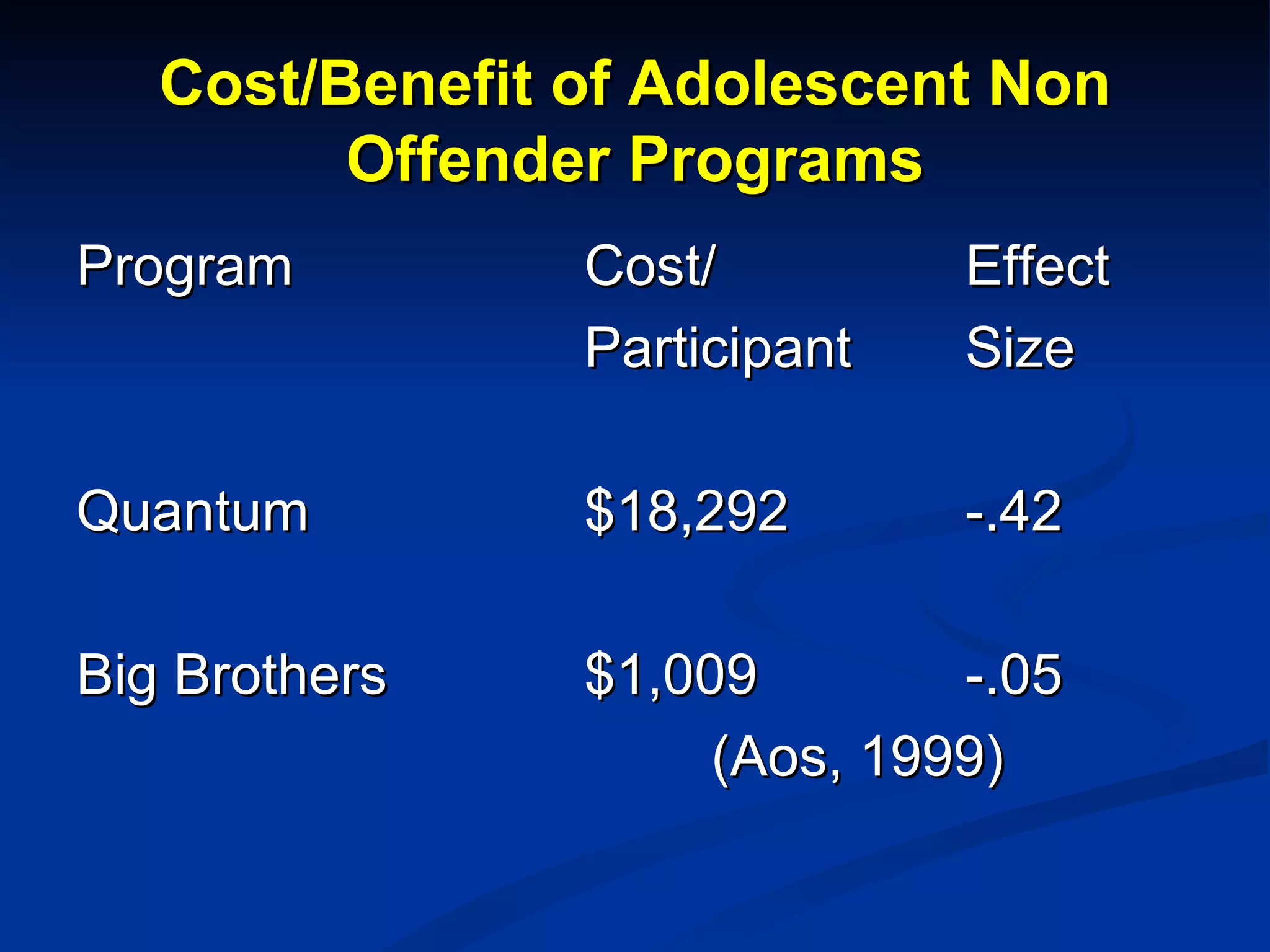
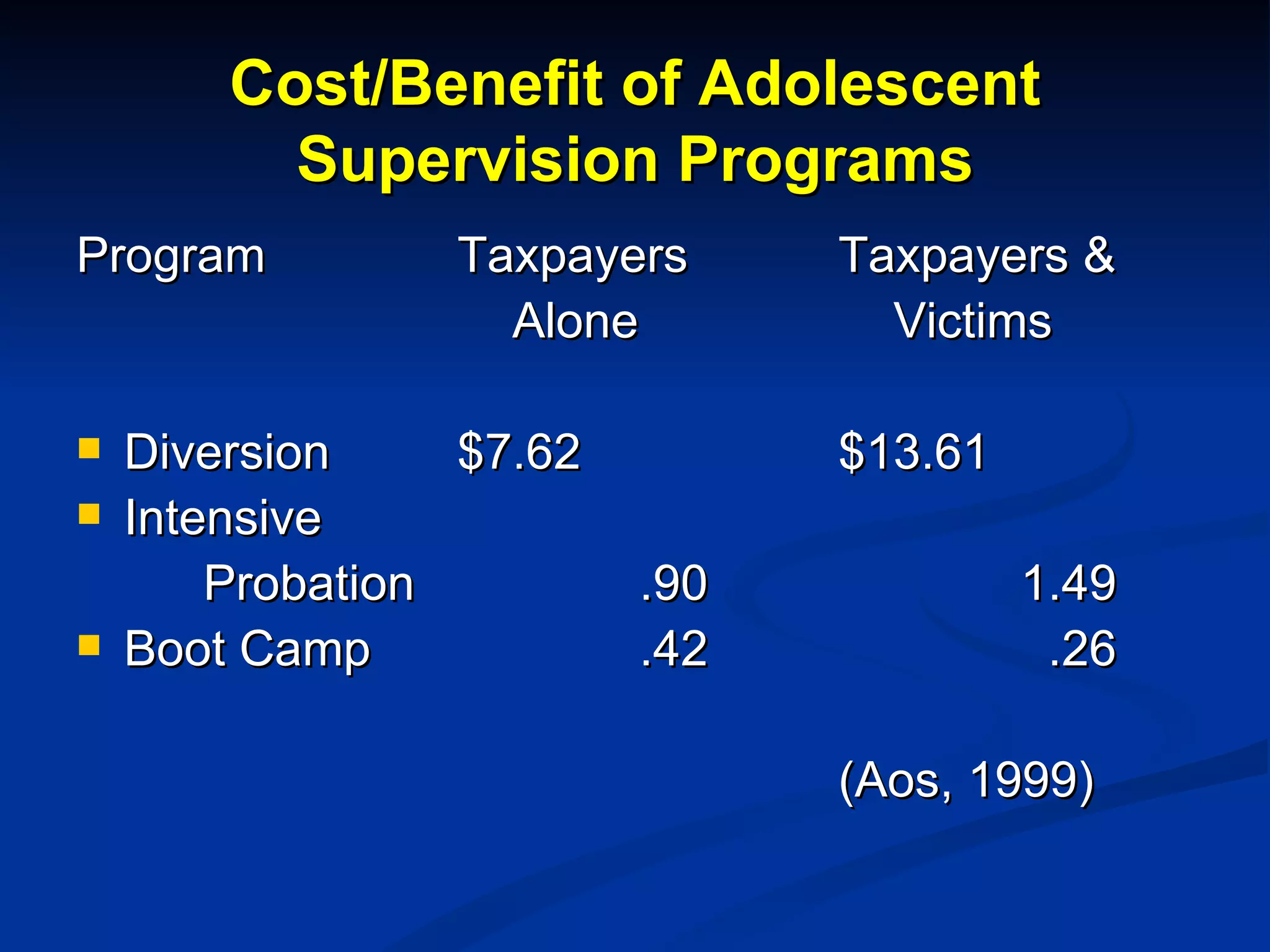
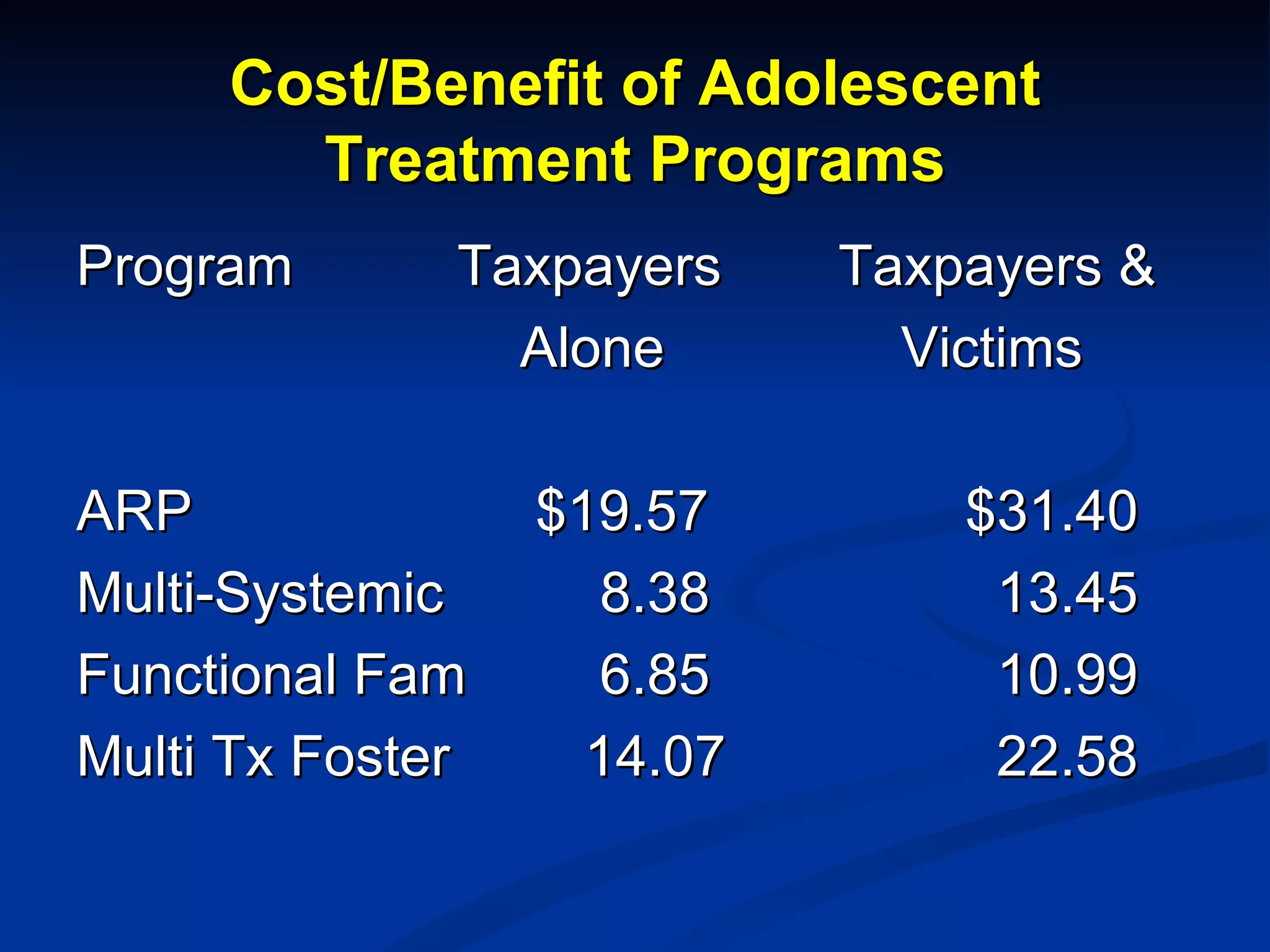
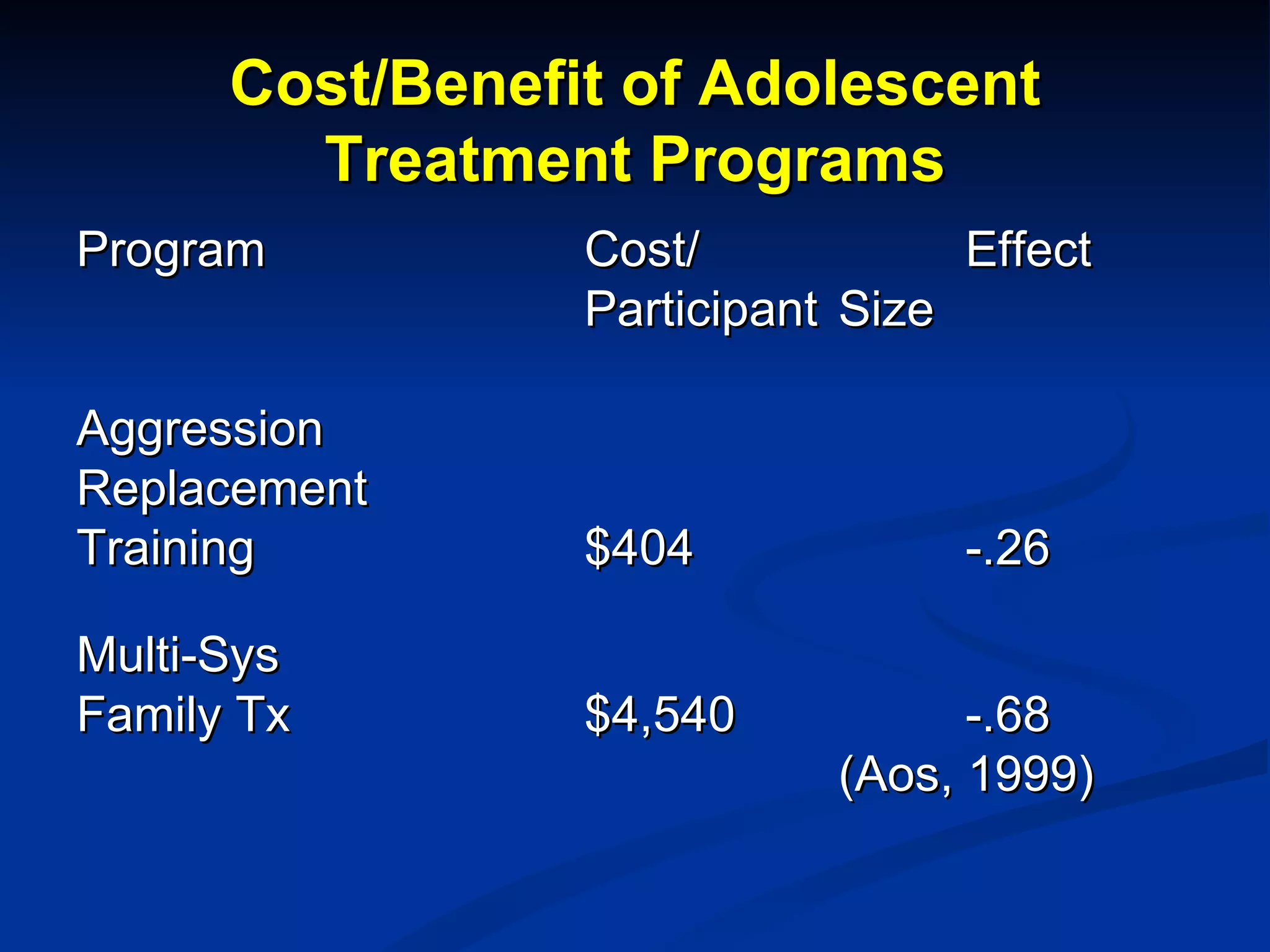
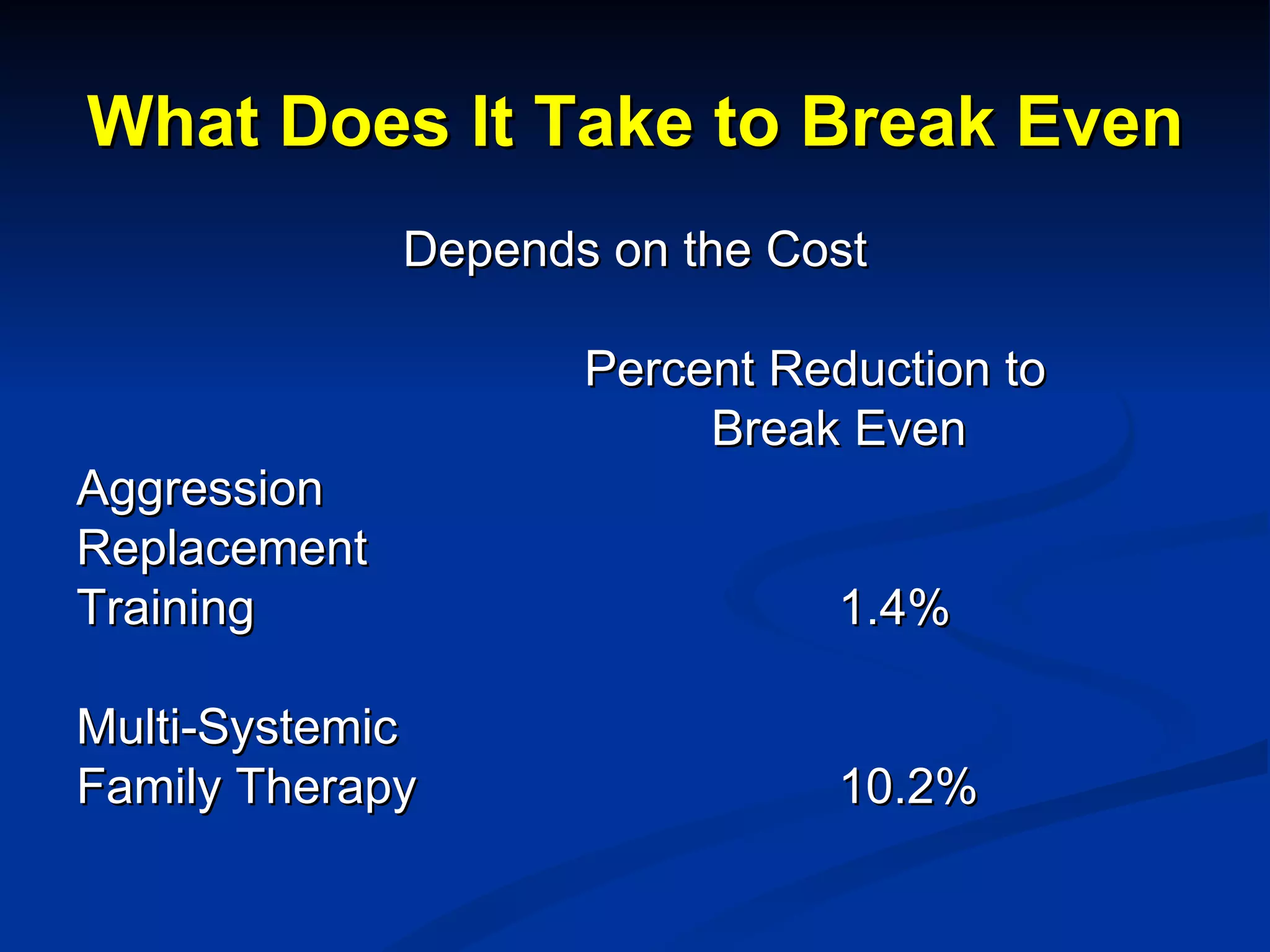

This document summarizes research on reducing criminal recidivism. It finds that incarceration has little to no effect or can slightly increase recidivism compared to probation. Intermediate sanctions like electronic monitoring also tend to show small decreases or no difference in recidivism compared to standard supervision. Treatment programs that target criminogenic needs using cognitive behavioral therapy and are properly implemented can reduce recidivism, especially for higher risk offenders. Cost-benefit analyses find that for every $1 spent on correctional programming, taxpayers save $5-7 on average due to reduced crime. Treatment programs for juveniles show the highest returns, with up to $31 saved for every $1 spent.


![A Preliminary Exploration For The Benefits Of Neurofeedback Ppt[1]](https://cdn.slidesharecdn.com/ss_thumbnails/apreliminaryexplorationforthebenefitsofneurofeedbackppt1-1274840767674-phpapp02-thumbnail.jpg?width=640&height=640&fit=bounds)


![Au Psy492 M7 A3 E Portf Griffin J[1]](https://cdn.slidesharecdn.com/ss_thumbnails/aupsy492m7a3eportfgriffinj1-12923033242575-phpapp01-thumbnail.jpg?width=640&height=640&fit=bounds)


