POPULATION GROWTH
KEY TRENDS (Consumer vs. Packaging)
SUSTAINABILITY CONCEPT
SUSTAINABILITY APPROACHES
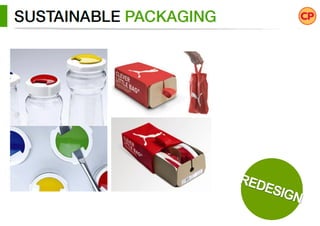
SUSTAINABLE PACKAGING
OPTIMIZATION CONCEPT
SUSTAINABILITY COMMUNICATION
MOST POPULOUS COUNTRIES, 2012 AND 2050
2012 2050
COUNTRY POPULATION (MILLIONS)
China 1,350
India 1,260
United States 314
Indonesia 241
Brazil 194
Pakistan 180
Nigeria 170
Bangladesh 153
Russia 143
Japan 128
COUNTRY POPULATION (MILLIONS)
India 1,691
China 1,311
United States 423
Nigeria 402
Pakistan 314
Indonesia 309
Bangladesh 226
Brazil 213
Congo, Dem. Rep. 194
Ethiopia 166
Ref.2012 Population Reference Bureau
7 billion in 2011 towards 9.5 billion in 2050
Ref.2012 Population Reference Bureau
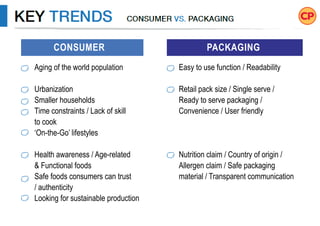
Aging of the world population
Urbanization
Smaller households
Time constraints / Lack of skill
to cook
‘On-the-Go’ lifestyles
Health awareness / Age-related
& Functional foods
Safe foods consumers can trust
/ authenticity
Looking for sustainable production
Easy to use function / Readability
Retail pack size / Single serve /
Ready to serve packaging /
Convenience / User friendly
Nutrition claim / Country of origin /
Allergen claim / Safe packaging
material / Transparent communication
CONSUMER PACKAGING
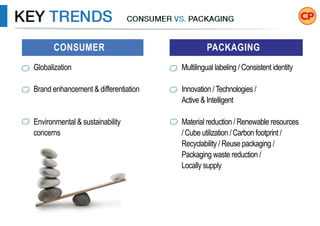
Globalization
Brand enhancement & differentiation
Environmental & sustainability
concerns
Multilingual labeling / Consistent identity
Innovation /Technologies /
Active & Intelligent
Material reduction / Renewable resources
/ Cube utilization / Carbon footprint /
Recyclability / Reuse packaging /
Packaging waste reduction /
Locally supply
CONSUMER PACKAGING
US EPA, 1969 “create and maintain conditions
under which [humans] and nature can exist in
productive harmony, and fulfill the social,
economic and other requirements of present
and future generations of Americans.”
Brundtland Commission (World Commission on
Environment and Development), 1987 “meeting
the needs of the present without compromising
the ability of future generations to meet their
own needs.”
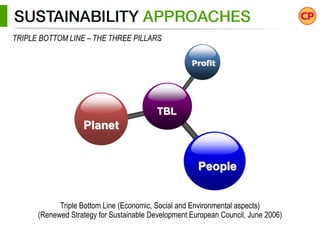
Triple Bottom Line (Economic, Social and Environmental aspects)
(Renewed Strategy for Sustainable Development European Council, June 2006)
TRIPLE BOTTOM LINE – THE THREE PILLARS
TBL
Profit
Planet
People
Reuse
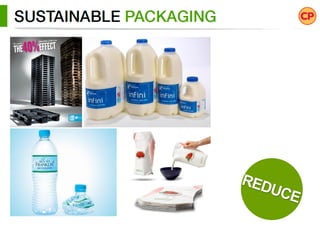
Reduce
Recover
Recycle
Replace
Remove
Ref.: http://www.epa.gov/osw/nonhaz/municipal/hierarchy.htm
FOSSIL BASED RESOURCE RENEWABLE RESOURCE
Water + CO2
Compost
Used Items
Reuse
Recycle
Plant
Material
Manufacturer
Product
Ultimate Sustainable Life Cycle Approach
Compost
Ref. energyinsights.net Ref. Partha Das Sharma’s Weblog
Energy Values
Material Btu/pound
Plastic
PET 10,900
HDPE 18,700
Other Plastic Containers 16,400
Other Plastics 17,900
Rubber & Leather 12,800
Newspaper 8,000
Corrugated Boxes (paper) 7,000
Textiles 9,400
Wood 7,300
Average for MSW 5,900
Yard Wastes 2,900
Food Wastes 2,900
Heat Content of Common Fuels
Fuel Oil 20,900
Wyoming Coal 9,600
Ref.: http://www.plasticsindustry.org/AboutPlastics/content.cfm?ItemNumber=793&navItemNumber=1124
WASTEtoENERGY
Big Belly Solar Trash Compactor Reverse Vending Machine
Protection / Transport / Consumption / Disposal
PROTECTION
Damage
-Physical
-Chemical
-Biological
TRANSPORT
Damage
-Shock/ Vibration
Cube utilization
Energy use
CONSUMPTION
Safety use
Functionality
DISPOSAL
3 R’s
Renewable
resource
Compostable
Sustainability is logic and essential.
It is the continuous improvement effort.
Consumers are willing to be told what the improvements
or changes are.
No unexpected frustration during use.
Promote the sustainability into everyday life.
http://www.cpfworldwide.com/mtrl/CPD/download/csr/en/CPF_SD_ReportEN2012.pdf
AFRIS. AsianFoodRegulationInformationService.
We have the largest database of Asian food regulations in the world and it’s
FREE to use.
We publish a range of communication services, list a very large number of
food events and online educational webinars and continue to grow our Digital
Library.
We look forward to hearing from you soon!
www.asianfoodreg.com
adrienna@asianfoodreg.com

Reducing Packaging Waste

  • 2.
    POPULATION GROWTH KEY TRENDS(Consumer vs. Packaging) SUSTAINABILITY CONCEPT SUSTAINABILITY APPROACHES SUSTAINABLE PACKAGING OPTIMIZATION CONCEPT SUSTAINABILITY COMMUNICATION
  • 3.
    MOST POPULOUS COUNTRIES,2012 AND 2050 2012 2050 COUNTRY POPULATION (MILLIONS) China 1,350 India 1,260 United States 314 Indonesia 241 Brazil 194 Pakistan 180 Nigeria 170 Bangladesh 153 Russia 143 Japan 128 COUNTRY POPULATION (MILLIONS) India 1,691 China 1,311 United States 423 Nigeria 402 Pakistan 314 Indonesia 309 Bangladesh 226 Brazil 213 Congo, Dem. Rep. 194 Ethiopia 166 Ref.2012 Population Reference Bureau 7 billion in 2011 towards 9.5 billion in 2050
  • 4.
  • 5.
    Aging of theworld population Urbanization Smaller households Time constraints / Lack of skill to cook ‘On-the-Go’ lifestyles Health awareness / Age-related & Functional foods Safe foods consumers can trust / authenticity Looking for sustainable production Easy to use function / Readability Retail pack size / Single serve / Ready to serve packaging / Convenience / User friendly Nutrition claim / Country of origin / Allergen claim / Safe packaging material / Transparent communication CONSUMER PACKAGING
  • 6.
    Globalization Brand enhancement &differentiation Environmental & sustainability concerns Multilingual labeling / Consistent identity Innovation /Technologies / Active & Intelligent Material reduction / Renewable resources / Cube utilization / Carbon footprint / Recyclability / Reuse packaging / Packaging waste reduction / Locally supply CONSUMER PACKAGING
  • 7.
    US EPA, 1969“create and maintain conditions under which [humans] and nature can exist in productive harmony, and fulfill the social, economic and other requirements of present and future generations of Americans.” Brundtland Commission (World Commission on Environment and Development), 1987 “meeting the needs of the present without compromising the ability of future generations to meet their own needs.”
  • 8.
    Triple Bottom Line(Economic, Social and Environmental aspects) (Renewed Strategy for Sustainable Development European Council, June 2006) TRIPLE BOTTOM LINE – THE THREE PILLARS TBL Profit Planet People
  • 9.
  • 10.
  • 11.
    FOSSIL BASED RESOURCERENEWABLE RESOURCE Water + CO2 Compost Used Items Reuse Recycle Plant Material Manufacturer Product Ultimate Sustainable Life Cycle Approach Compost Ref. energyinsights.net Ref. Partha Das Sharma’s Weblog
  • 12.
    Energy Values Material Btu/pound Plastic PET10,900 HDPE 18,700 Other Plastic Containers 16,400 Other Plastics 17,900 Rubber & Leather 12,800 Newspaper 8,000 Corrugated Boxes (paper) 7,000 Textiles 9,400 Wood 7,300 Average for MSW 5,900 Yard Wastes 2,900 Food Wastes 2,900 Heat Content of Common Fuels Fuel Oil 20,900 Wyoming Coal 9,600 Ref.: http://www.plasticsindustry.org/AboutPlastics/content.cfm?ItemNumber=793&navItemNumber=1124 WASTEtoENERGY
  • 16.
    Big Belly SolarTrash Compactor Reverse Vending Machine
  • 17.
    Protection / Transport/ Consumption / Disposal PROTECTION Damage -Physical -Chemical -Biological TRANSPORT Damage -Shock/ Vibration Cube utilization Energy use CONSUMPTION Safety use Functionality DISPOSAL 3 R’s Renewable resource Compostable
  • 19.
    Sustainability is logicand essential. It is the continuous improvement effort. Consumers are willing to be told what the improvements or changes are. No unexpected frustration during use. Promote the sustainability into everyday life.
  • 20.
  • 22.
    AFRIS. AsianFoodRegulationInformationService. We havethe largest database of Asian food regulations in the world and it’s FREE to use. We publish a range of communication services, list a very large number of food events and online educational webinars and continue to grow our Digital Library. We look forward to hearing from you soon! www.asianfoodreg.com adrienna@asianfoodreg.com