Food
Packaging
What is food
packaging?

               It protects food products
                 from outside influences
                          and damage, to
                   contain the food, and
                   to provide consumers
                      with ingredient and
                  nutritional information
History
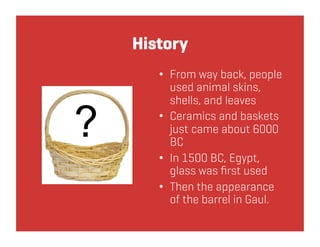
   •  From way back, people
      used animal skins,
      shells, and leaves
   •  Ceramics and baskets
      just came about 6000
      BC
   •  In 1500 BC, Egypt,
      glass was first used
   •  Then the appearance
      of the barrel in Gaul.
•  1746 – the first product
             package

          •  Antipyretic powder

          •  Raw materials were used from
History      then on: wood, cork, clay, fibers
             like flax, hemp, willow

          •  Then the evolution of the
             processed ones: glass, metals,
             paper

          •  20th century - widespread use
             of plastic
Origins of Packaging
           Packaging was important in
           the transport of basic goods
           during the preindustrial
           society

         •  19th century – bulk selling of
            goods

           Cereals in bags, flour in bags,
           tea in wooden boxes, tea in
           tinplate canisters, oils in jars,
           salted goods in jars, meat,
           pickled vegetables
•  One of the initial
                   packaging innovations
                   because of its availability
                   and reusability
   Role of      •  Natural materials like
Cardboard and      cellulose fiber and starch
                   are easily renewable
    Paper
                •  Board production is from
                   90% recycling

                •  Light, healthy, durable,
                   ergonomic, and
                   protective
•  1811, Bryan Donkin, an associate of
                 John Hall’s at his Dartford Iron Works
                 idea to use tougher iron containers
                 instead of glass which was fragile

              •  To prevent rusting, thin plating of tin
                 was used
 Origins of
              •  The “tin can” invention had the Royal
Packaging:       Navy as the first buyers


 Canning      •  Used in medical stores and supply
                 expeditions

              •  Meat - one of the first products in can

              •  Reynolds and Alcoa: first ones to
                 succeed in creating all – aluminium
                 cans out of one piece of metal
•  Fragile and a little bit more
                 expensive - glass has
                 some advantages over
                 cans

 Origins of   •  Iron, tin, and lead in cans
                 can sometimes come in
Packaging:       contact with the food
   Glass      •  Michael J. Owen - invented
                 an automated way of
                 making glass packages

              •  Closing glass bottles were
                 used with a cork
•  solution to high cost of
  Origins of      packaging
 Packaging:
               •  because some of the
   Paper,         packages used before
Cartons, and      were more expensive
   Plastic        than the food itself

               •  Problem: not yet suitable
                  for fluid packaging
•  Cellophane became important for a
                time but it was replaced by the more
                promising polyethylene

             •  Breakthrough: Tetra pak, invented in
Problem in      Sweden in 1952Then fully disposable
                packaging was invented in 1940
Packaging
             •  Then fully disposable packaging was
 Liquids        invented in 1940

             •  Modified Atmosphere Packaging
                (MAP) – develeoped because of the
                demand for ready – to – eat
                vegetables
Sustainability
       Issues
•  Studies and surveys: less people are
  willing to pay that little extra to protect
              the environment

•  Sustainability: development that meets
      the needs of the present without
     compromising the ability of future
    generations to meet their own needs
•  3 standards of sustainable packages
          (triple bottom line)

           - Environmental
                - Social
              -  Financial

•  There are innovations motivated by
unprecedented consumer demand for
      environmental awareness
Recent History of Sustainable Food
      Packaging Innovation
           •  McDonald’s - one of the forerunners
              for environmental friendly packaging

             McDonald’s founder Ray Kroc - spent
             millions for research on how they can
             care more for the environment
             Studies included the use of
             polystyrene clam shells and cups. This
             material was found to be easily
             recyclable
             Jamba Juice - also used this material.
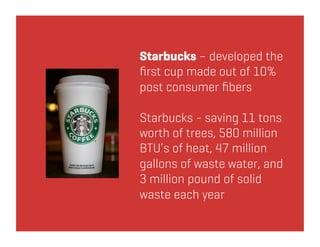
Starbucks – developed the
first cup made out of 10%
post consumer fibers

Starbucks - saving 11 tons
worth of trees, 580 million
BTU’s of heat, 47 million
gallons of waste water, and
3 million pound of solid
waste each year
Labels and Brand Names


•  first half of the nineteenth century - food manufacturers
   realized that their products would sell better if a brand name
   was attached to them
•  a name with prestige that potential customers could easily
   recognize
•  Initially, labels with information about the contents were put
   on glass containers or cans.
•  Nowadays, in most industrialized countries, legislation
   regulates the information that must be provided on
   packaging for consumers' protection.
    Information transmission -
                  how to use, transport, recycle,
                  or dispose of the package or
                  product. Some types of
                  information are required by
                  governments.
Promotions       Marketing - used by
                  marketers to encourage
                  potential buyers to purchase
                  the product. Package design
                  has been an important and
                  constantly evolving
                  phenomenon for several
                  decades. Marketing
                  communications and graphic
                  design are applied.
    Security - reducing the
                security risks of shipment

               Tampering: improved
                tamper resistance, some
Security        have tamper-evident
                features to help indicate
                tampering.

               Pilferage: Some package
                constructions are more
                resistant to pilferage, some
                have pilfer indicating seals
    Convenience - features which
                   add convenience in distribution,
                   handling, stacking, display, sale,
                   opening, reclosing, use, and
                   reuse.
Convenience
and Portion       Portion control - Single serving
                   packaging has a precise amount
  Control          of contents to control usage.

                  also aids the control of
                   inventory: selling sealed one-
                   liter-bottles of milk, rather than
                   having people bring their own
                   bottles to fill themselves.
Why use Food
           Packaging?
•    Containment   •    Product Information
•    Protection    •    Marketing
•    Barrier       •    Processing Requirement
•    Convenience   •    Dispensing
Guidelines on
  Packaging
Development
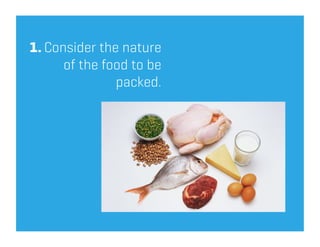
1. Consider the nature
      of the food to be
               packed.
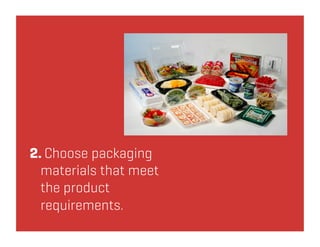
2. Choose packaging
  materials that meet
  the product
  requirements.
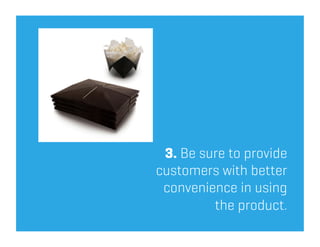
3. Be sure to provide
customers with better
 convenience in using
         the product.
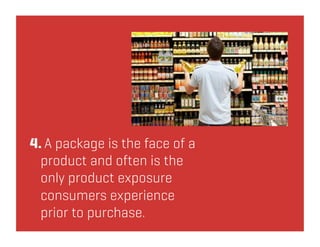
4. A package is the face of a
  product and often is the
  only product exposure
  consumers experience
  prior to purchase.
5. Keep in mind the
     availability and
         cost of the
          packaging
           material.
Types of
Packaging
Materials
Paper
    low cost, popular,
readily available, and
  versatile packaging
             material.
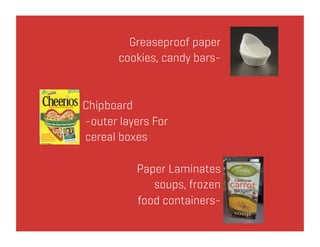
Greaseproof paper
       cookies, candy bars-


Chipboard
-outer layers For
cereal boxes

          Paper Laminates
             soups, frozen
          food containers-
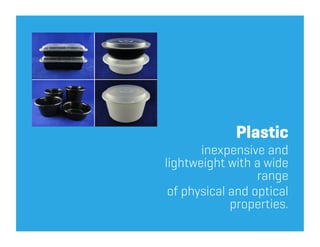
Plastic
       inexpensive and
lightweight with a wide
                  range
 of physical and optical
             properties.
Polystyrene
-disposable plastic ware


                 Polyethylene
         High density: bottles,
              margarine tubs
       Low density: food bags-


Polyethylene terephthalate
(PET or PETE)
-mineral water bottles,
 soda bottles
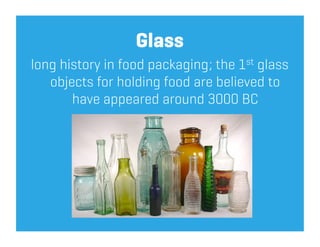
Glass
long history in food packaging; the 1st glass
   objects for holding food are believed to
       have appeared around 3000 BC
             -glass bottles, jars
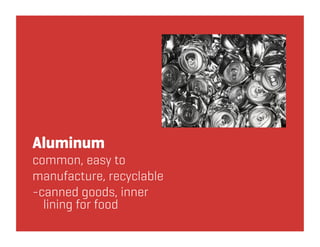
Aluminum
common, easy to
manufacture, recyclable
-canned goods, inner
  lining for food
Principles for
       Design
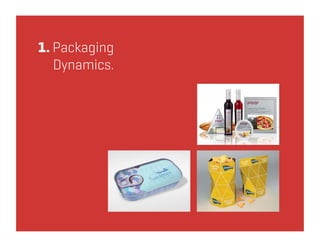
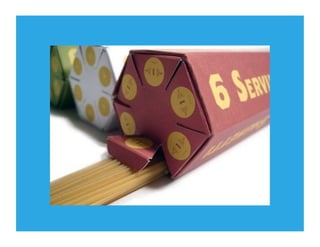
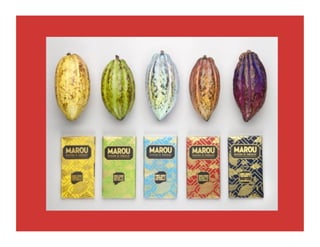
1. Packaging
   Dynamics.
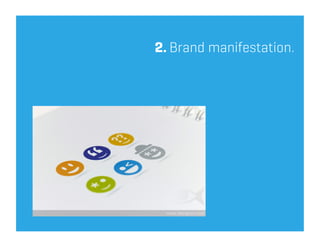
2. Brand manifestation.
3. Product Differentiation
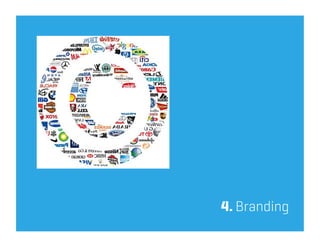
4. Branding
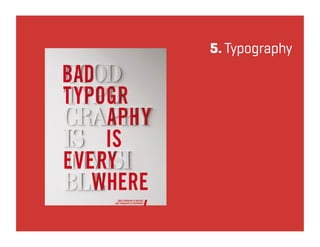
5. Typography
6. Information layout and
                hierarchy
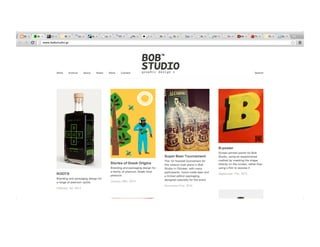
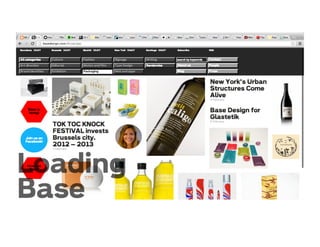
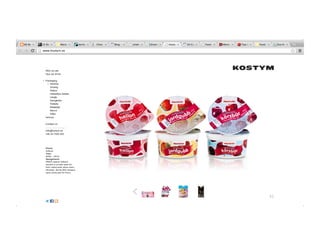
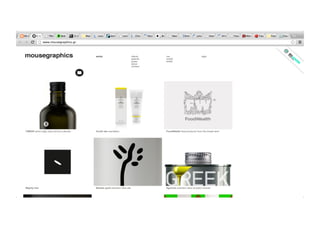
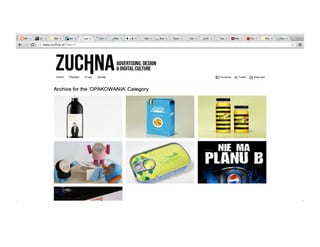
SAMPLES
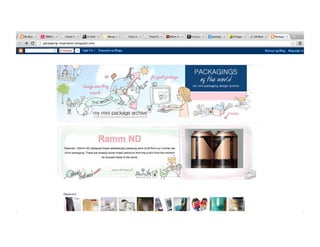
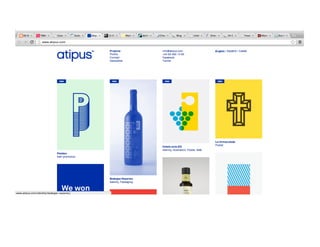
Websites and blogs
Conclusion
Merci Mucho.
  -Bueno, Nuñez, Ong

Food packaging

  • 1.
  • 2.
    What is food packaging? It protects food products from outside influences and damage, to contain the food, and to provide consumers with ingredient and nutritional information
  • 3.
    History •  From way back, people used animal skins, shells, and leaves •  Ceramics and baskets just came about 6000 BC •  In 1500 BC, Egypt, glass was first used •  Then the appearance of the barrel in Gaul.
  • 4.
    •  1746 –the first product package •  Antipyretic powder •  Raw materials were used from History then on: wood, cork, clay, fibers like flax, hemp, willow •  Then the evolution of the processed ones: glass, metals, paper •  20th century - widespread use of plastic
  • 5.
    Origins of Packaging Packaging was important in the transport of basic goods during the preindustrial society •  19th century – bulk selling of goods Cereals in bags, flour in bags, tea in wooden boxes, tea in tinplate canisters, oils in jars, salted goods in jars, meat, pickled vegetables
  • 6.
    •  One ofthe initial packaging innovations because of its availability and reusability Role of •  Natural materials like Cardboard and cellulose fiber and starch are easily renewable Paper •  Board production is from 90% recycling •  Light, healthy, durable, ergonomic, and protective
  • 7.
    •  1811, BryanDonkin, an associate of John Hall’s at his Dartford Iron Works idea to use tougher iron containers instead of glass which was fragile •  To prevent rusting, thin plating of tin was used Origins of •  The “tin can” invention had the Royal Packaging: Navy as the first buyers Canning •  Used in medical stores and supply expeditions •  Meat - one of the first products in can •  Reynolds and Alcoa: first ones to succeed in creating all – aluminium cans out of one piece of metal
  • 8.
    •  Fragile anda little bit more expensive - glass has some advantages over cans Origins of •  Iron, tin, and lead in cans can sometimes come in Packaging: contact with the food Glass •  Michael J. Owen - invented an automated way of making glass packages •  Closing glass bottles were used with a cork
  • 9.
    •  solution tohigh cost of Origins of packaging Packaging: •  because some of the Paper, packages used before Cartons, and were more expensive Plastic than the food itself •  Problem: not yet suitable for fluid packaging
  • 10.
    •  Cellophane becameimportant for a time but it was replaced by the more promising polyethylene •  Breakthrough: Tetra pak, invented in Problem in Sweden in 1952Then fully disposable packaging was invented in 1940 Packaging •  Then fully disposable packaging was Liquids invented in 1940 •  Modified Atmosphere Packaging (MAP) – develeoped because of the demand for ready – to – eat vegetables
  • 11.
  • 12.
    •  Studies andsurveys: less people are willing to pay that little extra to protect the environment •  Sustainability: development that meets the needs of the present without compromising the ability of future generations to meet their own needs
  • 13.
    •  3 standardsof sustainable packages (triple bottom line) - Environmental - Social -  Financial •  There are innovations motivated by unprecedented consumer demand for environmental awareness
  • 14.
    Recent History ofSustainable Food Packaging Innovation •  McDonald’s - one of the forerunners for environmental friendly packaging McDonald’s founder Ray Kroc - spent millions for research on how they can care more for the environment Studies included the use of polystyrene clam shells and cups. This material was found to be easily recyclable Jamba Juice - also used this material.
  • 15.
    Starbucks – developedthe first cup made out of 10% post consumer fibers Starbucks - saving 11 tons worth of trees, 580 million BTU’s of heat, 47 million gallons of waste water, and 3 million pound of solid waste each year
  • 16.
    Labels and BrandNames •  first half of the nineteenth century - food manufacturers realized that their products would sell better if a brand name was attached to them •  a name with prestige that potential customers could easily recognize •  Initially, labels with information about the contents were put on glass containers or cans. •  Nowadays, in most industrialized countries, legislation regulates the information that must be provided on packaging for consumers' protection.
  • 17.
      Information transmission - how to use, transport, recycle, or dispose of the package or product. Some types of information are required by governments. Promotions   Marketing - used by marketers to encourage potential buyers to purchase the product. Package design has been an important and constantly evolving phenomenon for several decades. Marketing communications and graphic design are applied.
  • 18.
      Security - reducing the security risks of shipment   Tampering: improved tamper resistance, some Security have tamper-evident features to help indicate tampering.   Pilferage: Some package constructions are more resistant to pilferage, some have pilfer indicating seals
  • 19.
      Convenience - features which add convenience in distribution, handling, stacking, display, sale, opening, reclosing, use, and reuse. Convenience and Portion   Portion control - Single serving packaging has a precise amount Control of contents to control usage.   also aids the control of inventory: selling sealed one- liter-bottles of milk, rather than having people bring their own bottles to fill themselves.
  • 20.
    Why use Food Packaging? •  Containment •  Product Information •  Protection •  Marketing •  Barrier •  Processing Requirement •  Convenience •  Dispensing
  • 21.
    Guidelines on Packaging Development
  • 22.
    1. Consider thenature of the food to be packed.
  • 23.
    2. Choose packaging materials that meet the product requirements.
  • 24.
    3. Be sureto provide customers with better convenience in using the product.
  • 25.
    4. A packageis the face of a product and often is the only product exposure consumers experience prior to purchase.
  • 26.
    5. Keep inmind the availability and cost of the packaging material.
  • 27.
  • 28.
    Paper low cost, popular, readily available, and versatile packaging material.
  • 29.
    Greaseproof paper cookies, candy bars- Chipboard -outer layers For cereal boxes Paper Laminates soups, frozen food containers-
  • 30.
    Plastic inexpensive and lightweight with a wide range of physical and optical properties.
  • 31.
    Polystyrene -disposable plastic ware Polyethylene High density: bottles, margarine tubs Low density: food bags- Polyethylene terephthalate (PET or PETE) -mineral water bottles, soda bottles
  • 32.
    Glass long history infood packaging; the 1st glass objects for holding food are believed to have appeared around 3000 BC -glass bottles, jars
  • 33.
    Aluminum common, easy to manufacture,recyclable -canned goods, inner lining for food
  • 34.
  • 35.
    1. Packaging Dynamics.
  • 36.
  • 37.
  • 38.
  • 39.
  • 40.
    6. Information layoutand hierarchy
  • 41.
  • 50.
  • 60.
  • 61.
    Merci Mucho. -Bueno, Nuñez, Ong