Rectal Prolapse - Do we really have a perfect
surgical solution?
DR AMIT DANGI
DEPARTMENT OF SURGICAL GASTROENTEROLOGY
KING GEORGE MEDICAL UNIVERSITY
LUCKNOW, INDIA
Outline
• About rectal prolapse – changing concepts
• Evaluation – changing patterns
• Surgical solution
 History
 Evolution
 New concepts
Author’s conclusion
Lack of high quality evidence
Small sample size of included trials
Methodological weakness
Severely limit the usefulness of this review for guiding - impossible to identify
or refute
Longer follow up with current studies and larger rigorous trials are needed.
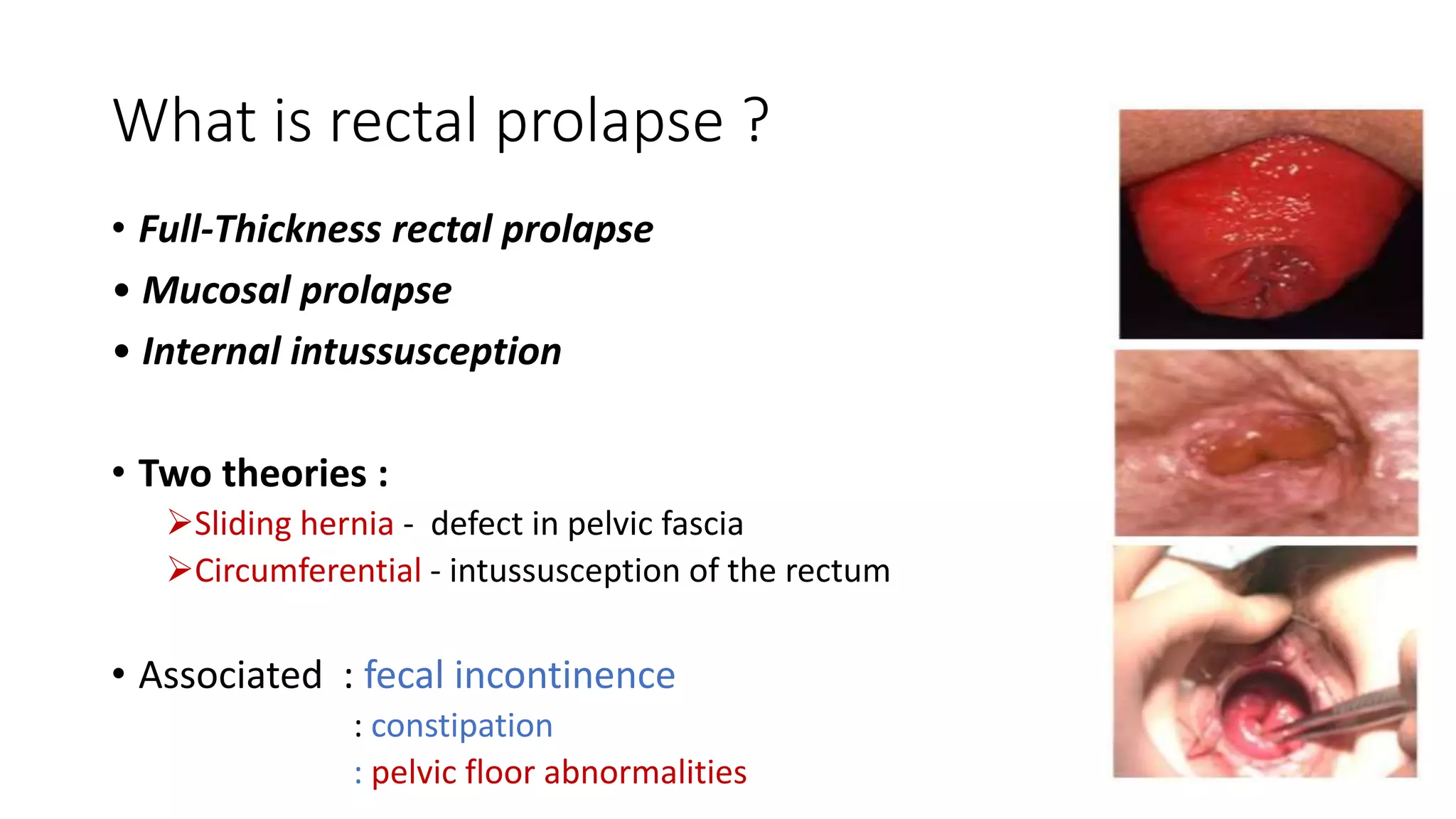
What is rectal prolapse ?
• Full-Thickness rectal prolapse
• Mucosal prolapse
• Internal intussusception
• Two theories :
Sliding hernia - defect in pelvic fascia
Circumferential - intussusception of the rectum
• Associated : fecal incontinence
: constipation
: pelvic floor abnormalities
Changing concepts
• No more an isolated disorder
• Often associated with other compartment
prolapse :
Anterior – Urethra, bladder
Middle – Vault, Uterus , Small bowel
Posterior – Rectocoele, Rectal prolapse
“POPS” ---- Pelvic organ prolapse Syndrome
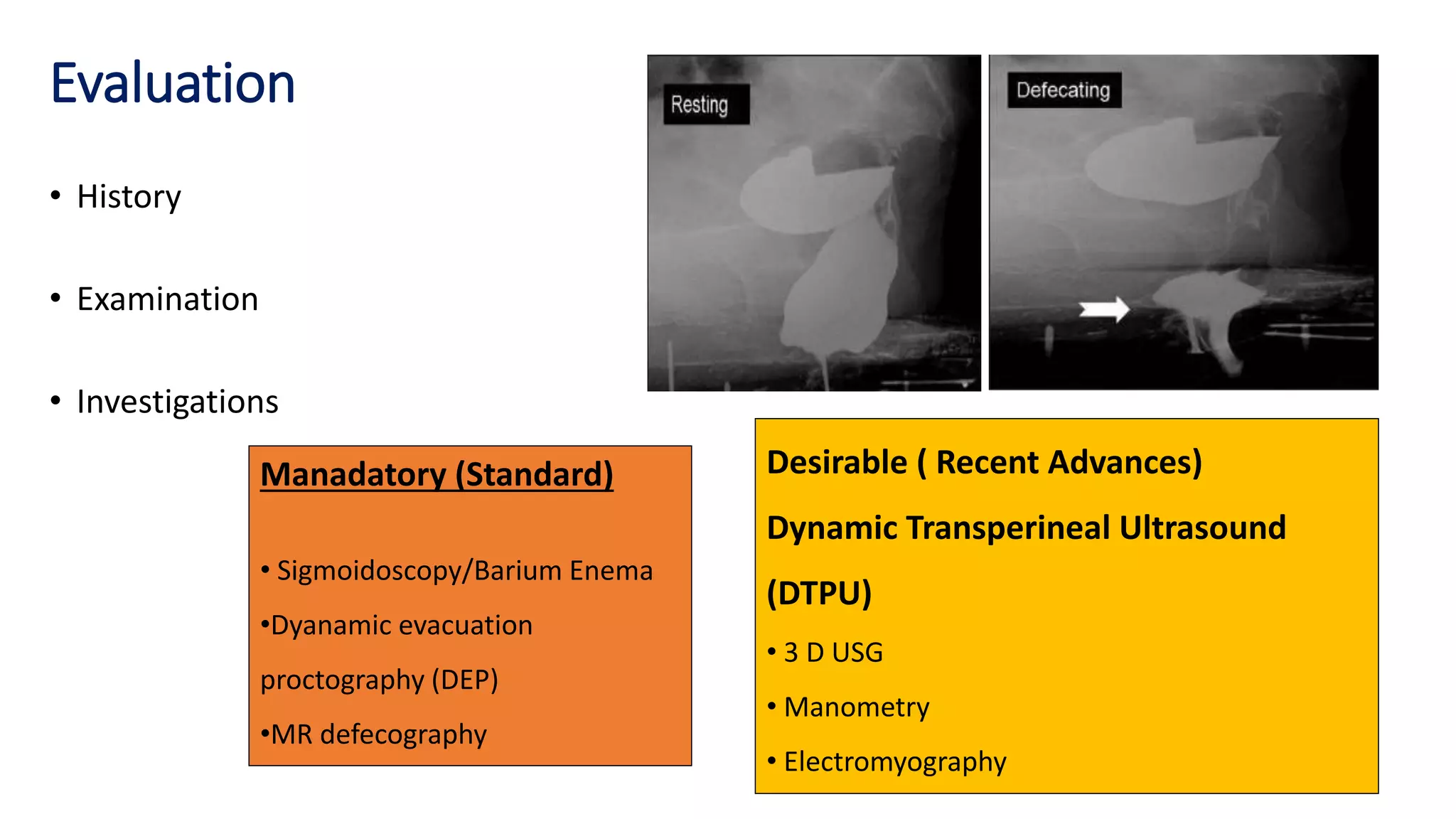
Evaluation
• History
• Examination
• Investigations
Manadatory (Standard)
• Sigmoidoscopy/Barium Enema
•Dyanamic evacuation
proctography (DEP)
•MR defecography
Desirable ( Recent Advances)
Dynamic Transperineal Ultrasound
(DTPU)
• 3 D USG
• Manometry
• Electromyography
Rectal prolapse. Normal position at rest (A). During defecation (B-
E), there is a rectorectal intussusception which progressively
descends and eventually causes a rectal prolapse with mucosal
outpouching through the anal verge (open arrow in E)
DYANAMIC TRANSPERINEAL USG
Surgical Strategy
Problems
100 techniques
Few randomized studies
Short follow up
Lack of standardized pre and postoperative evaluation
Very heterogenous patients
1. Young fit male with obstructive symptoms
2. Young females.
3. Middle age multiparous female with severe faecal incontinence
4. Nulliparous middle age female with chronic
obstipation/constipation
5. Aged active female with total pelvic prolapse
6. Aged senile male
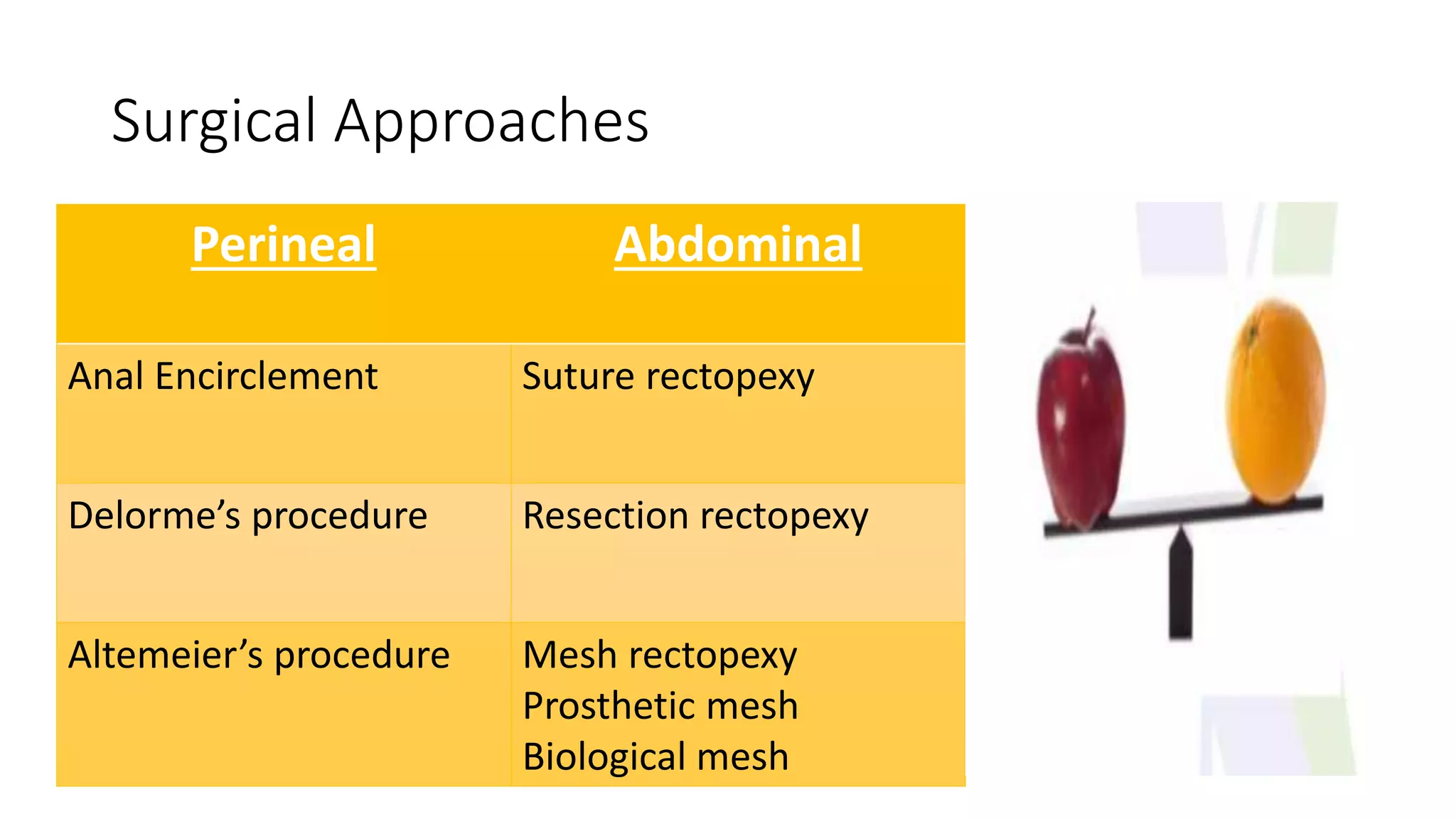
Surgical Approaches
Perineal Abdominal
Anal Encirclement Suture rectopexy
Delorme’s procedure Resection rectopexy
Altemeier’s procedure Mesh rectopexy
Prosthetic mesh
Biological mesh
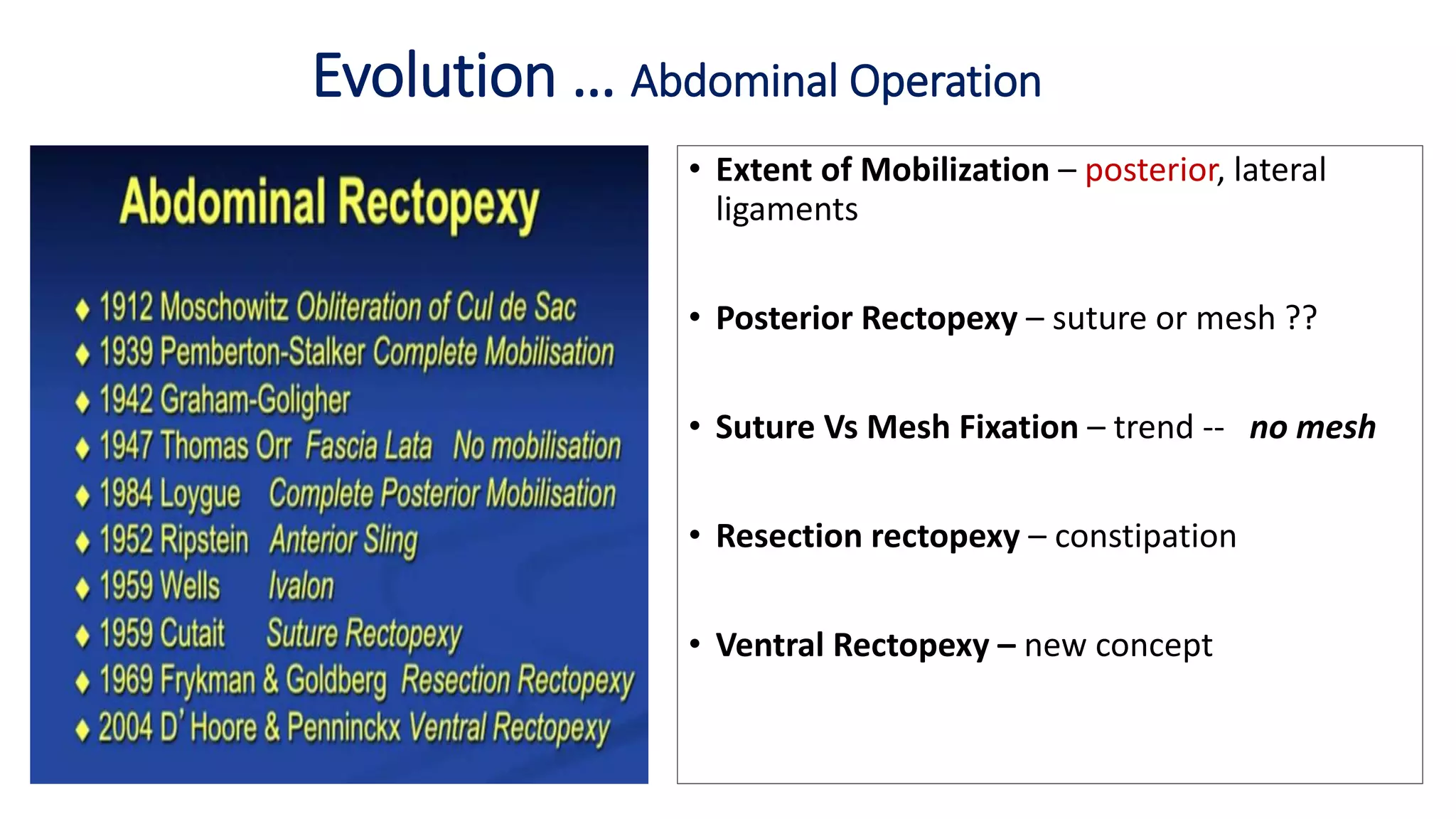
Evolution … Abdominal Operation
• Extent of Mobilization – posterior, lateral
ligaments
• Posterior Rectopexy – suture or mesh ??
• Suture Vs Mesh Fixation – trend -- no mesh
• Resection rectopexy – constipation
• Ventral Rectopexy – new concept
Which way is the best way?
• Perineal or abdominal?
• Open or Laparoscopic or Robotic Rectopexy?
• How should the rectum be mobilised ?
• Resection of redundant colon?
• How should the rectum be fixed?
• Prosthetic / Biological mesh?
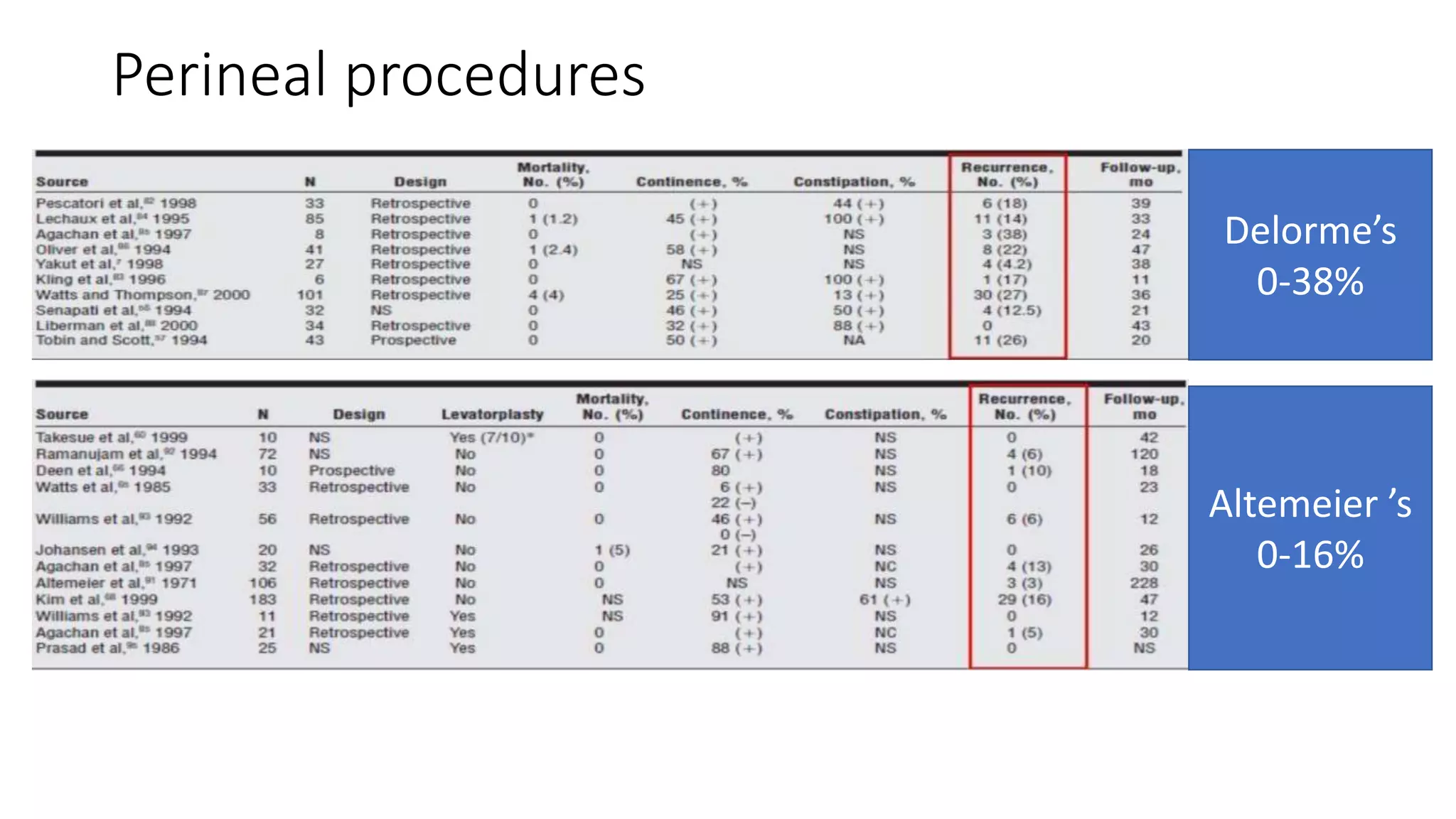
Perineal procedures
Delorme’s
0-38%
Altemeier ’s
0-16%
Rectopexy vs no rectopexy
Fixation: Nelson 2001, Raftopoulos 2005
2 non-randomised studies
– rectal mobilisation alone may be enough
Karas JR et al. No rectopexy vs rectopexy following rectal mobilisation for full-thickness Rectal Prolapse. Dis colon Rectum
2011;54(1):29-34.
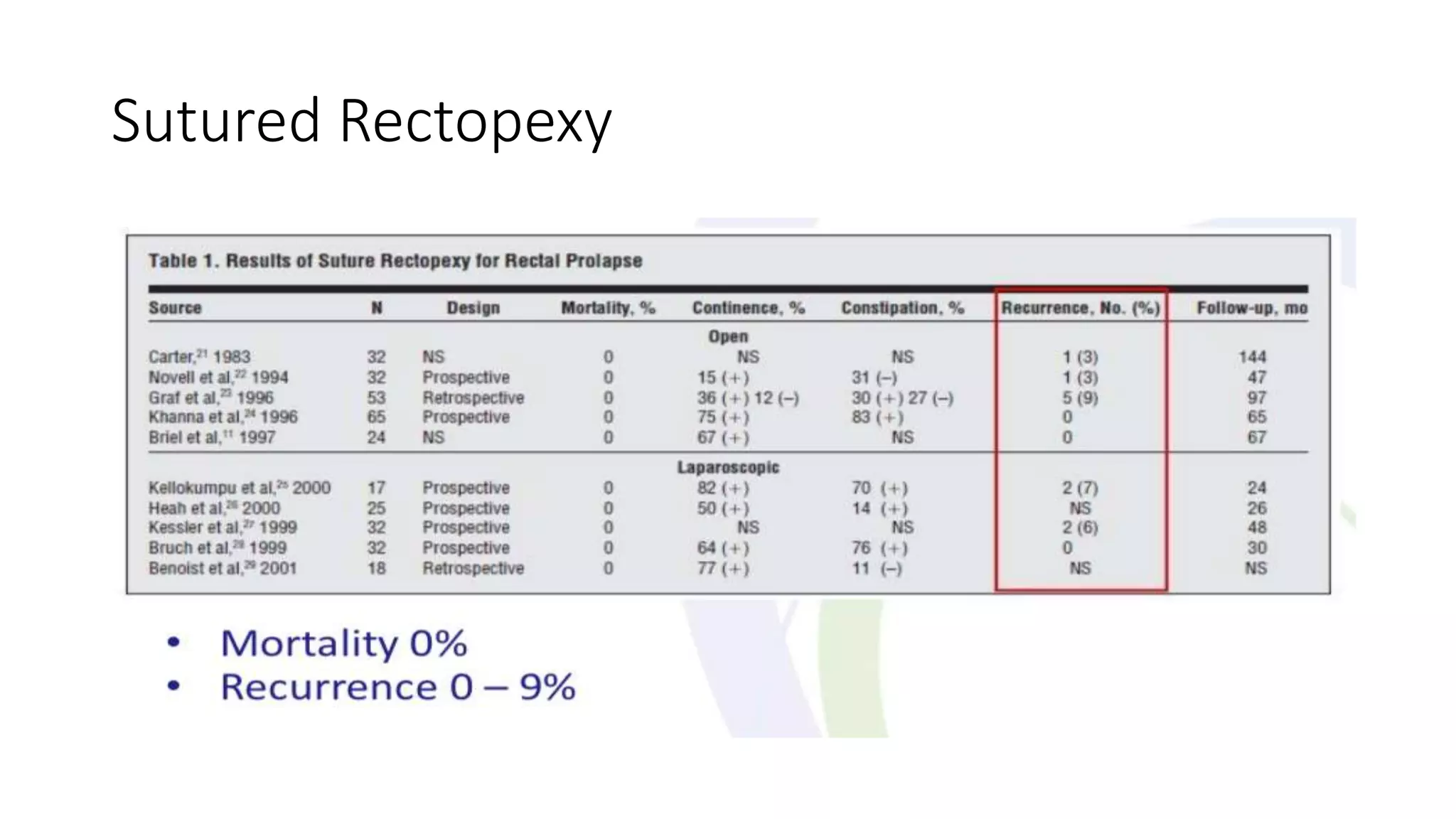
Sutured rectopexy
Sutured Rectopexy
Posterior mesh rectopexy
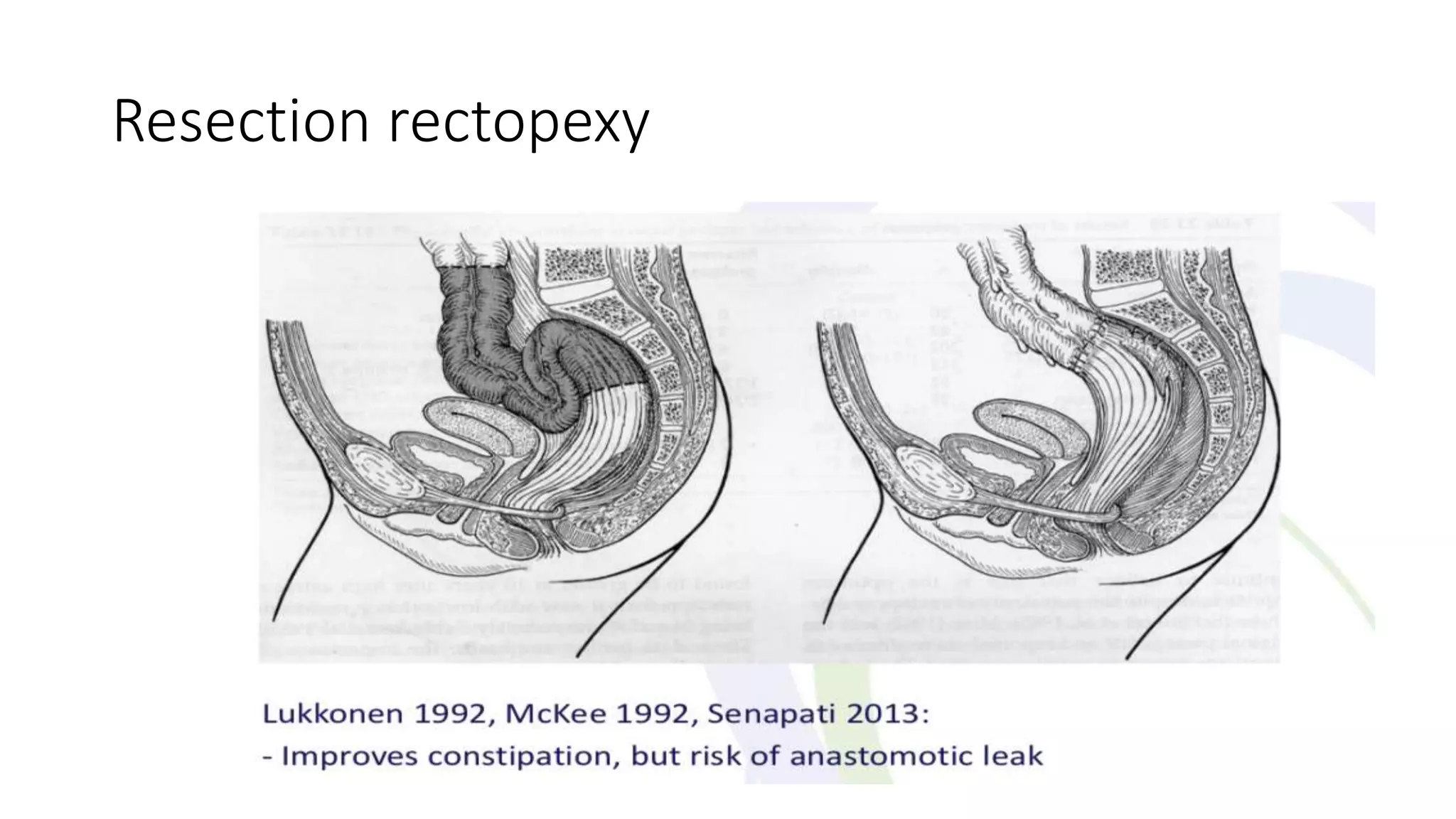
Resection rectopexy
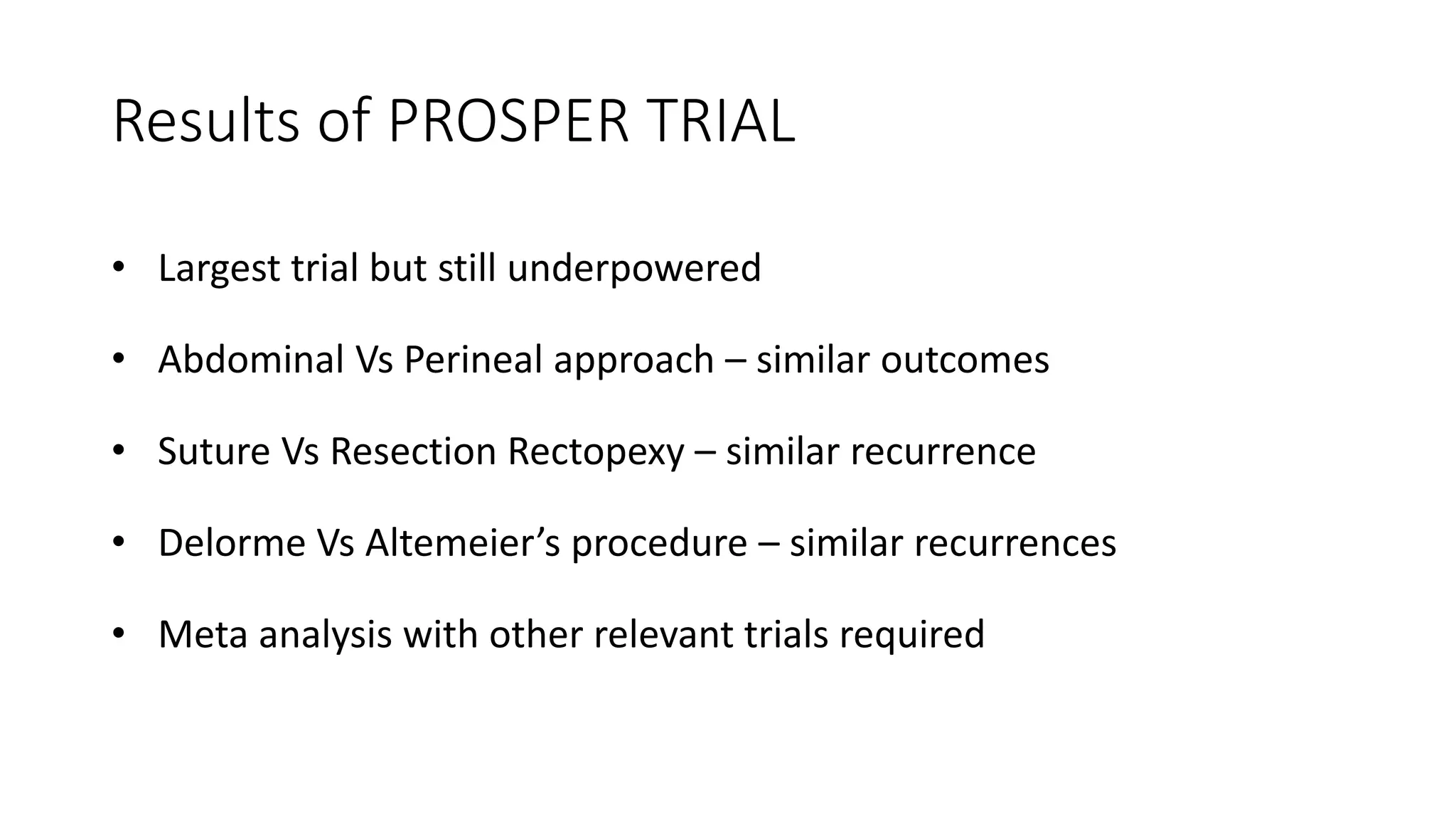
Results of PROSPER TRIAL
• Largest trial but still underpowered
• Abdominal Vs Perineal approach – similar outcomes
• Suture Vs Resection Rectopexy – similar recurrence
• Delorme Vs Altemeier’s procedure – similar recurrences
• Meta analysis with other relevant trials required
Alternatively……..
• Lateral ligaments: Speakman 1991, Mollen 2000
• Division may result in denervation of the rectum due to damage to
the parasympathetic component of the inferior hypogastric plexus,
causing more constipation
• Preservation may result in increased recurrence
Problems of Posterior Mobilisation
• High incidence of constipation – 30%
• Sexual and bladder dysfunction
• Autonomic denervation following posterior mobilization.
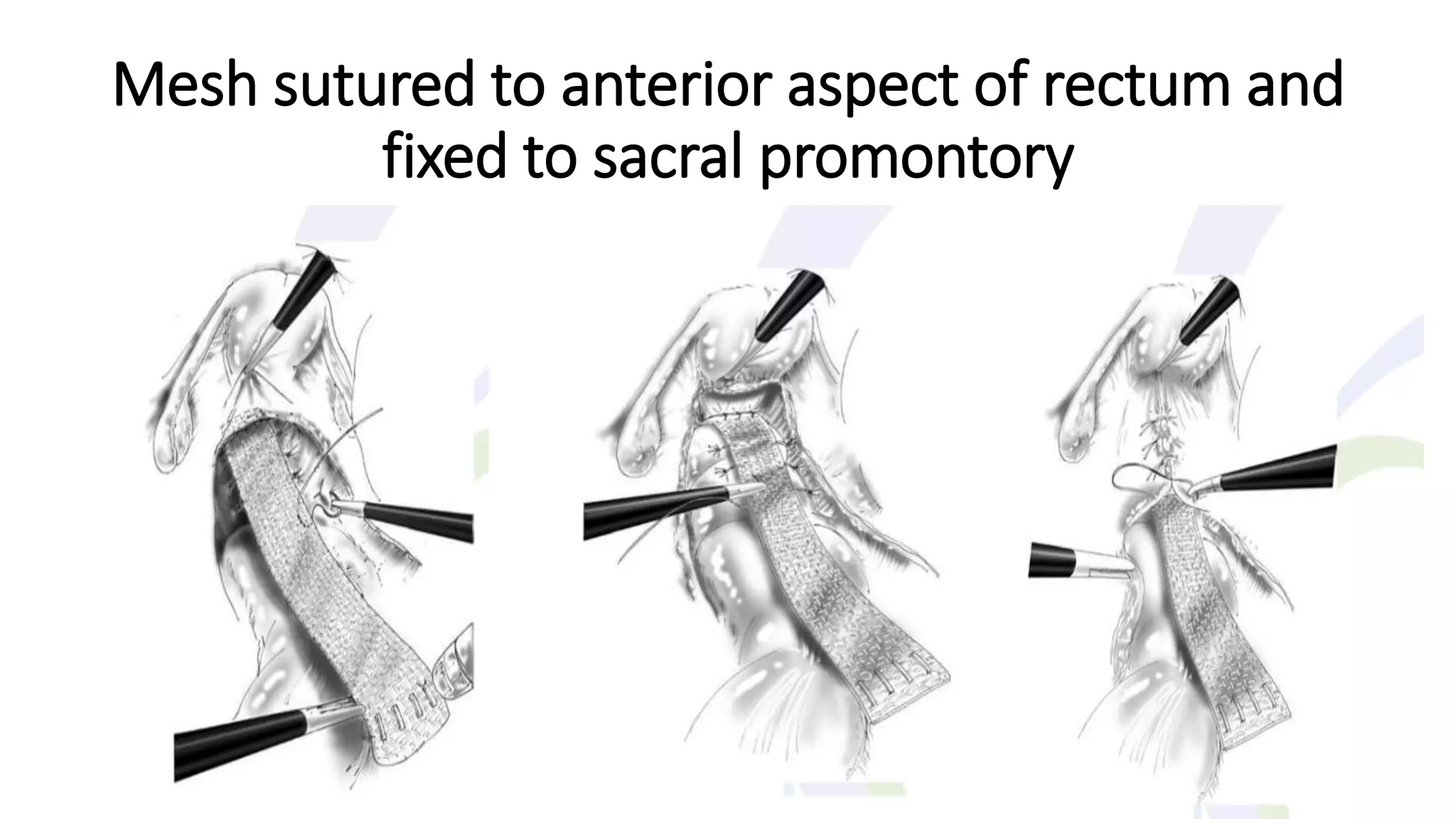
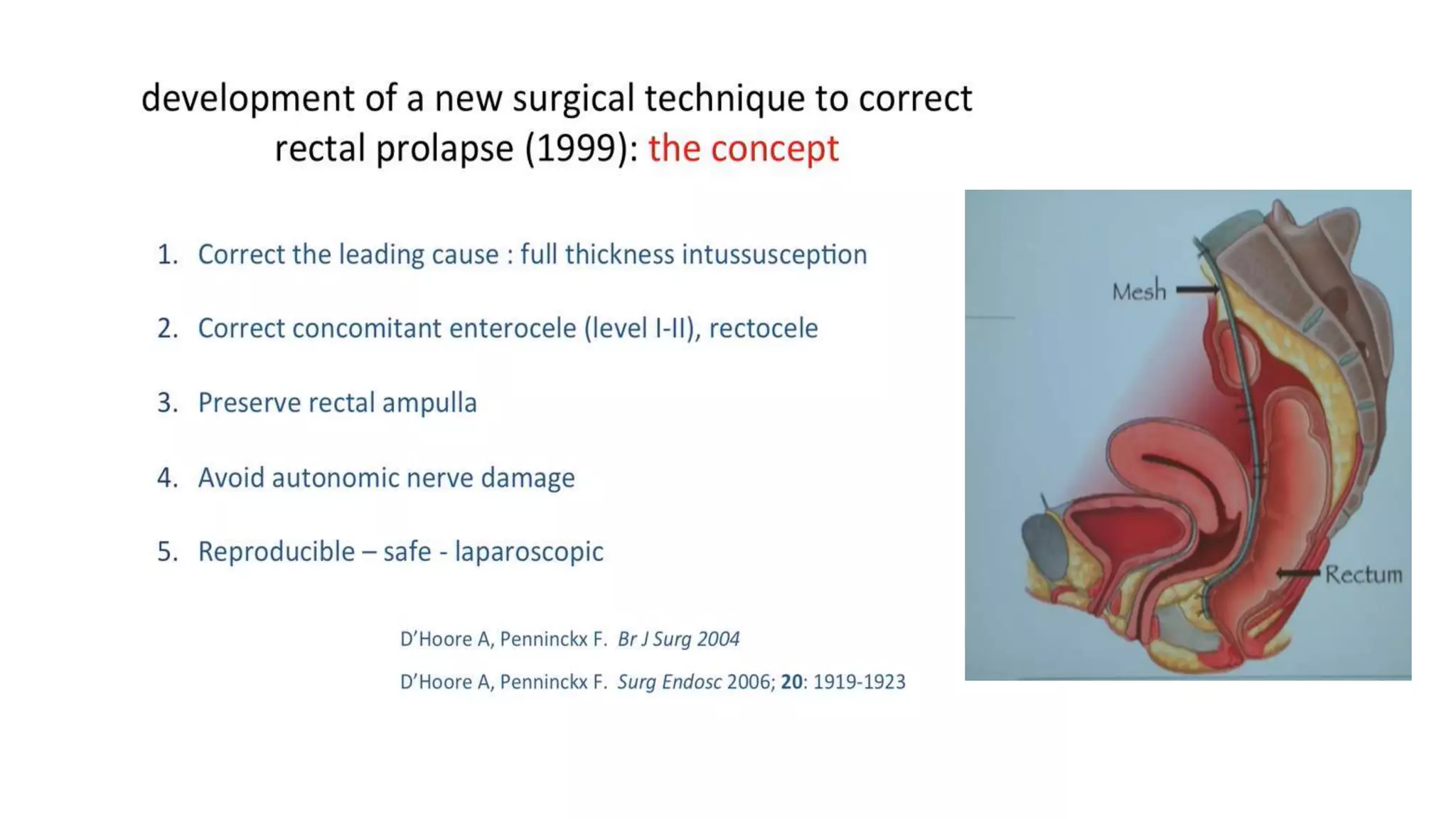
Mesh sutured to anterior aspect of rectum and
fixed to sacral promontory
Sarcocolpopexy
Introduction and uptake of LVMR
• 42 patients had LVMR for total rectal prolapse
• Median follow up: 61 months
• No major postoperative complications
• Late recurrence in 4.7% of patients.
• Improvement of FI in 80.6% of patients
• Improvement of ODS in 84.2% of patients.
• 109 consecutive patients with total rectal
prolapse
• Conversion rate: 3.7%
• No postoperative mortality or major
morbidity occurred.
• Minor morbidity in 7% of the patients.
• Recurrence rate: 3.6%
• The unique feature of LVMR is avoiding
posterolateral dissection of the rectum
Lap vs Open
• Studies show lap as effective as open
• Reduced pain
• Reduced hospital stay
• No difference in incontinence, constipation or recurrence
• Less complications in the Laparoscopic group
Young et al, Surg Endosc 2015; 29: 607-613
Lap vs Robotic
Mantoo et al, Colorectal Dis 2013:15:e469-75
• 17 patients with ODS due to IRP/rectocele were included.
• Median OR time was 199 min
• One conversion was required.
• 35.8% of patients had postoperative complications.
• Median hospital stay = 6 days
• Improvement in ODS in 88% of patients.
• In one patient the mesh was rejected and finally removed.
• 40 consecutive patients with intra-anal rectal intussusception
associated with FI were treated with LVMR.
• Mean CCI scores decreased from 13.2 to 3 postoperatively (p<0.001)
• 65% of patients were cured, 32.5% improved and 2.5% unchanged.
• Denovo constipation: 5%
• Improvement in constipation : 65%
• Recurrence: 1
• 72 patients with Grade IV IRP and FI not responding to maximum
medical treatment.
• Median FISI score decreased from 31 to 15 at one year after surgery
(p<0.01).
• 29% of patients were completely continent after surgery.
• 74% had a reduction in FISI score of at least 25% and 56% had a
reduction in FISI score of at least 50%.
• Wexner constipation score decreased from 13 to 8 (p<0.001)
• 48 patients, 79% women, median age = 43 years
• Median follow up was 33 months.
• ODS scores improved by 68% and QOL scores improved by 45%
(p<0.001).
• Significant improvement in QOL and VAS scores was maintained at 2
years.
• Symptomatic ODS recurrence in 8%
• Recurrence of SRUS in 4%.
• 12 non randomized case series studies.
• 728 patients.
• 7 studies: Orr Loygue procedure, and 5 studies: VR
• Weighted mean percentage decrease in FI rate was 45%.
• Weighted mean percentage decrease in ODS was 24%.
• Weighted mean recurrence rate was 3.4%.
• 1147 patients in 10 studies LVMR for
IRP.
• 90% were females, median age 59
years.
• 98% of procedures were done
laparoscopically.
• Median hospital stay of 2 days.
• Weighted mean rate of improvement
of constipation = 76.6%
• Weighted mean rate of improvement
of FI = 62.5%
• New onset or worsening of
constipation in 0-11.5%.
• New onset or worsening of FI in 0-
11%.
• Weighted mean recurrence rate :
6.5%.
• Weighted mean complication rate :
13.6%.
• Conversion to open : 0-29%
• Median follow up: 17 months
• An ex vivo experimental model.
• Polypropylene mesh was anchored on porcine spinal column using three different fixation
methods
1) Protack 5 mm tacker
2) Ethibond Excel 2-0 stitches
3) Karl storz screw
• The mean disruption force was 58 N for the three Protack tacks, 55 N for the two stitches, and 70
N for the new screw.
• The use of a screw therefore led to a significantly stronger fixation compared to the use of
stitches (p ≤ 0.05).
• No significant difference was determined between the tacks and the screw fixation and between
the tacks and the stitches fixation
• The use of one screw for proximal mesh fixation is therefore a reasonable alternative to the use of
several tacks or sutures.
• N= 176 female patients
• VMR with synthetic glue: 66
• VMR with suture: 110
• Mean recurrence free survival after VMR were 17.16 (Glue) and 17.33
(Suture group) months (p>0.05)
• No significant difference in short term postoperative morbidity,
procedure length, postoperative symptom improvement between the
two groups.
• 13 studies, 866 patients
• 11 studies (n=767): Synthetic Mesh
• 2 studies (n=99): Biological Mesh
• No difference in recurrence (3.7 vs 0%, p=0.78) or mesh
complications (0.7 vs 0%, p=1.0) between synthetic and biological
mesh repair.
• Biological meshes appear to be as effective as synthetic meshes in
short term for laparoscopic VMR.
• 231 patients with a median follow up of 47 months.
• Overall recurrence rate: 11.7%
• Age>70 years and poorer preoperative continence were associated
were associated with recurrence on univariate analysis.
• Predictors for recurrence: Prolonged PNTML (HR:5.57,p=0.04) and
using synthetic mesh as compared as compared to biological grafts
(HR:4.24; p=0.02)
• Techical failures contributing to recurrence included mesh
detachment from sacral promontory and inadequate mid rectal mesh
fixation.
• 2203 patients
• 80% synthetic mesh, 20% biological mesh
• Postoperative mortality: 0.1% (n=2)
• Mesh erosion: 45 patients (2%): Vaginal (n=20), Rectal (n=17), RVF
(n=7), Perineal (n=1).
• 23 patients (51.1%) required treatment for minor erosion morbidity
and 18 patients (40%) were treated for major erosion morbidity.
• Erosion : 2.4% of synthetic meshes, 0.7% of biological meshes.
• Median time to erosion was 23 months.
• Non mesh complication rate : 11.1%
Synthetic or biological mesh use in
laparoscopic ventral mesh rectopexy
• 13 observational studies; 866 patients.
• 11 studies (n=767) : Synthetic mesh
• 2 studies (n=99) : Biological mesh
• Similar recurrence (3.7% vs 4%)
• Similar complications (0.7% vs 0%)
• Biological meshes appear to be as effective as synthetic meshes in the
short term laparoscopic VMR.
Colorectal Dis. 2013 Jun;15(6):650-4
Functional outcome measured by preoperative-to-
postoperative change in ODS score was not significantly
superior in patients who underwent ventral mesh rectopexy
compared with those who had posterior sutured rectopexy.
Additional, large, randomised, multicentre studies with
long-term outcomes are warranted.
Warning
• In 2008, the FDA released a warning to healthcare professionals
outlining serious complications associated with transvaginal
placement of surgical mesh in treating pelvic organ prolapse and
stress urinary incontinence.
• To date, FDA has received almost 10,000 reports of adverse events
linked to the surgical mesh.
• The agency issued a second warning in July 2011 as a result of a spike
in reports of serious adverse events associated with mesh.
ACPGBI Coloproctology April 2016
MANAGEMENT OF MESH EROSION
Indication for rectopexy
Indications for ventral mesh rectopexy-vaginal sacrocolpopexy.
• Hysterectomy (Vaginal > Total abdominal hysterectomy), vault and/or vaginal prolapse.
• Large cystocele (additional laparoscopic colporraphy)
• Grade IV/V rectal intussusception, grade III enterocele, descending perineum.
• Poor sphincter function.
• External prolapse
• Young men with above and/or solitary rectal ulcer (SRU).
• SRU (Failed STARR), established and fibrotic SRU
• Relapsing symptoms post STARR
Slow transit constipation and internal prolapse
• Any of above (in women) plus urinary stress incontinence or stress incontinence post ventral mesh rectopexy
[additional tension free vaginal tape (TVT)]
• Failed gynecological repairs, Delorme’s, Altemeire, posterior rectopexy, poorly executed ventral rectopexy
Lindsey I, Nugent K, Dixon T. (2010) Pelvic floor disorders for Colorectal Surgeon, Oxford University Press.
Management of patients with rectal prolapse: 2017 Dutch guidelines
Are anorectal function tests indicated in patients with a
rectal prolapse and FI and/or OD?
Not indicated in ERP
How is an IRP adequately diagnosed? Conventional defecography/functional MRI
What is the conservative treatment for patients with IRP
and functional symptoms?
Lifestyle counselling (FI and/or OD caused by IRP
irrespectively of conservative or surgical therapy).
High fiber diet, sufficient fluid intake, regular
physical exercise and a careful attitude towards
heavy lifting.
In addition, patients are advised to start taking stool
bulking agents.
What is the optimal surgical treatment of IRP?
What is the optimal surgical treatment of ERP?
LVMR
What material should be used in LVR? Polypropylene (PP) mesh
…Conclusions
• Prolapse - not an isolated disorder
• Middle compartment involved
• Associated vaginocele , uterocele or vault prolapse
• POPS – Pelvic organ prolapse Syndrome
• Autonomic Nerve injury in Posterior dissection
• Need to preserve lateral ligaments
• LAP VENTRAL RECTOPEXY – New Gold Standard
• Improve ODS
• Improve FI and constipation
Conclusion
• Tailor the procedure to the patient’s condition, fitness and
anaesthetic risks
• Inform patients about the risks and recurrence rates
• Role for perineal procedure in elderly unfit patients
Low morbidity & high recurrence rate
• Role for rectopexy – preferable lap/robotic if fit
- Posterior suture rectopexy as good as posterior mesh (avoid
taking the lateral ligaments)
- Ventral mesh rectopexy adds the risks of mesh
But is superior if perineal descent and middle compartment
prolapse present.
DCR 2017

Rectal prolapse: Do we really have a perfect surgical solution? pptx copy

  • 1.
    Rectal Prolapse -Do we really have a perfect surgical solution? DR AMIT DANGI DEPARTMENT OF SURGICAL GASTROENTEROLOGY KING GEORGE MEDICAL UNIVERSITY LUCKNOW, INDIA
  • 2.
    Outline • About rectalprolapse – changing concepts • Evaluation – changing patterns • Surgical solution  History  Evolution  New concepts
  • 4.
    Author’s conclusion Lack ofhigh quality evidence Small sample size of included trials Methodological weakness Severely limit the usefulness of this review for guiding - impossible to identify or refute Longer follow up with current studies and larger rigorous trials are needed.
  • 5.
    What is rectalprolapse ? • Full-Thickness rectal prolapse • Mucosal prolapse • Internal intussusception • Two theories : Sliding hernia - defect in pelvic fascia Circumferential - intussusception of the rectum • Associated : fecal incontinence : constipation : pelvic floor abnormalities
  • 6.
    Changing concepts • Nomore an isolated disorder • Often associated with other compartment prolapse : Anterior – Urethra, bladder Middle – Vault, Uterus , Small bowel Posterior – Rectocoele, Rectal prolapse “POPS” ---- Pelvic organ prolapse Syndrome
  • 7.
    Evaluation • History • Examination •Investigations Manadatory (Standard) • Sigmoidoscopy/Barium Enema •Dyanamic evacuation proctography (DEP) •MR defecography Desirable ( Recent Advances) Dynamic Transperineal Ultrasound (DTPU) • 3 D USG • Manometry • Electromyography
  • 8.
    Rectal prolapse. Normalposition at rest (A). During defecation (B- E), there is a rectorectal intussusception which progressively descends and eventually causes a rectal prolapse with mucosal outpouching through the anal verge (open arrow in E)
  • 9.
  • 11.
    Surgical Strategy Problems 100 techniques Fewrandomized studies Short follow up Lack of standardized pre and postoperative evaluation
  • 12.
    Very heterogenous patients 1.Young fit male with obstructive symptoms 2. Young females. 3. Middle age multiparous female with severe faecal incontinence 4. Nulliparous middle age female with chronic obstipation/constipation 5. Aged active female with total pelvic prolapse 6. Aged senile male
  • 13.
    Surgical Approaches Perineal Abdominal AnalEncirclement Suture rectopexy Delorme’s procedure Resection rectopexy Altemeier’s procedure Mesh rectopexy Prosthetic mesh Biological mesh
  • 14.
    Evolution … AbdominalOperation • Extent of Mobilization – posterior, lateral ligaments • Posterior Rectopexy – suture or mesh ?? • Suture Vs Mesh Fixation – trend -- no mesh • Resection rectopexy – constipation • Ventral Rectopexy – new concept
  • 15.
    Which way isthe best way? • Perineal or abdominal? • Open or Laparoscopic or Robotic Rectopexy? • How should the rectum be mobilised ? • Resection of redundant colon? • How should the rectum be fixed? • Prosthetic / Biological mesh?
  • 16.
  • 17.
    Rectopexy vs norectopexy Fixation: Nelson 2001, Raftopoulos 2005 2 non-randomised studies – rectal mobilisation alone may be enough Karas JR et al. No rectopexy vs rectopexy following rectal mobilisation for full-thickness Rectal Prolapse. Dis colon Rectum 2011;54(1):29-34.
  • 18.
  • 19.
  • 20.
  • 21.
  • 23.
    Results of PROSPERTRIAL • Largest trial but still underpowered • Abdominal Vs Perineal approach – similar outcomes • Suture Vs Resection Rectopexy – similar recurrence • Delorme Vs Altemeier’s procedure – similar recurrences • Meta analysis with other relevant trials required
  • 24.
    Alternatively…….. • Lateral ligaments:Speakman 1991, Mollen 2000 • Division may result in denervation of the rectum due to damage to the parasympathetic component of the inferior hypogastric plexus, causing more constipation • Preservation may result in increased recurrence
  • 25.
    Problems of PosteriorMobilisation • High incidence of constipation – 30% • Sexual and bladder dysfunction • Autonomic denervation following posterior mobilization.
  • 26.
    Mesh sutured toanterior aspect of rectum and fixed to sacral promontory
  • 27.
  • 29.
    Introduction and uptakeof LVMR • 42 patients had LVMR for total rectal prolapse • Median follow up: 61 months • No major postoperative complications • Late recurrence in 4.7% of patients. • Improvement of FI in 80.6% of patients • Improvement of ODS in 84.2% of patients. • 109 consecutive patients with total rectal prolapse • Conversion rate: 3.7% • No postoperative mortality or major morbidity occurred. • Minor morbidity in 7% of the patients. • Recurrence rate: 3.6% • The unique feature of LVMR is avoiding posterolateral dissection of the rectum
  • 31.
    Lap vs Open •Studies show lap as effective as open • Reduced pain • Reduced hospital stay • No difference in incontinence, constipation or recurrence • Less complications in the Laparoscopic group
  • 32.
    Young et al,Surg Endosc 2015; 29: 607-613
  • 33.
    Lap vs Robotic Mantooet al, Colorectal Dis 2013:15:e469-75
  • 35.
    • 17 patientswith ODS due to IRP/rectocele were included. • Median OR time was 199 min • One conversion was required. • 35.8% of patients had postoperative complications. • Median hospital stay = 6 days • Improvement in ODS in 88% of patients. • In one patient the mesh was rejected and finally removed.
  • 36.
    • 40 consecutivepatients with intra-anal rectal intussusception associated with FI were treated with LVMR. • Mean CCI scores decreased from 13.2 to 3 postoperatively (p<0.001) • 65% of patients were cured, 32.5% improved and 2.5% unchanged. • Denovo constipation: 5% • Improvement in constipation : 65% • Recurrence: 1
  • 37.
    • 72 patientswith Grade IV IRP and FI not responding to maximum medical treatment. • Median FISI score decreased from 31 to 15 at one year after surgery (p<0.01). • 29% of patients were completely continent after surgery. • 74% had a reduction in FISI score of at least 25% and 56% had a reduction in FISI score of at least 50%. • Wexner constipation score decreased from 13 to 8 (p<0.001)
  • 38.
    • 48 patients,79% women, median age = 43 years • Median follow up was 33 months. • ODS scores improved by 68% and QOL scores improved by 45% (p<0.001). • Significant improvement in QOL and VAS scores was maintained at 2 years. • Symptomatic ODS recurrence in 8% • Recurrence of SRUS in 4%.
  • 39.
    • 12 nonrandomized case series studies. • 728 patients. • 7 studies: Orr Loygue procedure, and 5 studies: VR • Weighted mean percentage decrease in FI rate was 45%. • Weighted mean percentage decrease in ODS was 24%. • Weighted mean recurrence rate was 3.4%.
  • 41.
    • 1147 patientsin 10 studies LVMR for IRP. • 90% were females, median age 59 years. • 98% of procedures were done laparoscopically. • Median hospital stay of 2 days. • Weighted mean rate of improvement of constipation = 76.6% • Weighted mean rate of improvement of FI = 62.5% • New onset or worsening of constipation in 0-11.5%. • New onset or worsening of FI in 0- 11%. • Weighted mean recurrence rate : 6.5%. • Weighted mean complication rate : 13.6%. • Conversion to open : 0-29% • Median follow up: 17 months
  • 42.
    • An exvivo experimental model. • Polypropylene mesh was anchored on porcine spinal column using three different fixation methods 1) Protack 5 mm tacker 2) Ethibond Excel 2-0 stitches 3) Karl storz screw • The mean disruption force was 58 N for the three Protack tacks, 55 N for the two stitches, and 70 N for the new screw. • The use of a screw therefore led to a significantly stronger fixation compared to the use of stitches (p ≤ 0.05). • No significant difference was determined between the tacks and the screw fixation and between the tacks and the stitches fixation • The use of one screw for proximal mesh fixation is therefore a reasonable alternative to the use of several tacks or sutures.
  • 43.
    • N= 176female patients • VMR with synthetic glue: 66 • VMR with suture: 110 • Mean recurrence free survival after VMR were 17.16 (Glue) and 17.33 (Suture group) months (p>0.05) • No significant difference in short term postoperative morbidity, procedure length, postoperative symptom improvement between the two groups.
  • 44.
    • 13 studies,866 patients • 11 studies (n=767): Synthetic Mesh • 2 studies (n=99): Biological Mesh • No difference in recurrence (3.7 vs 0%, p=0.78) or mesh complications (0.7 vs 0%, p=1.0) between synthetic and biological mesh repair. • Biological meshes appear to be as effective as synthetic meshes in short term for laparoscopic VMR.
  • 47.
    • 231 patientswith a median follow up of 47 months. • Overall recurrence rate: 11.7% • Age>70 years and poorer preoperative continence were associated were associated with recurrence on univariate analysis. • Predictors for recurrence: Prolonged PNTML (HR:5.57,p=0.04) and using synthetic mesh as compared as compared to biological grafts (HR:4.24; p=0.02) • Techical failures contributing to recurrence included mesh detachment from sacral promontory and inadequate mid rectal mesh fixation.
  • 48.
    • 2203 patients •80% synthetic mesh, 20% biological mesh • Postoperative mortality: 0.1% (n=2) • Mesh erosion: 45 patients (2%): Vaginal (n=20), Rectal (n=17), RVF (n=7), Perineal (n=1). • 23 patients (51.1%) required treatment for minor erosion morbidity and 18 patients (40%) were treated for major erosion morbidity. • Erosion : 2.4% of synthetic meshes, 0.7% of biological meshes. • Median time to erosion was 23 months. • Non mesh complication rate : 11.1%
  • 49.
    Synthetic or biologicalmesh use in laparoscopic ventral mesh rectopexy • 13 observational studies; 866 patients. • 11 studies (n=767) : Synthetic mesh • 2 studies (n=99) : Biological mesh • Similar recurrence (3.7% vs 4%) • Similar complications (0.7% vs 0%) • Biological meshes appear to be as effective as synthetic meshes in the short term laparoscopic VMR. Colorectal Dis. 2013 Jun;15(6):650-4
  • 51.
    Functional outcome measuredby preoperative-to- postoperative change in ODS score was not significantly superior in patients who underwent ventral mesh rectopexy compared with those who had posterior sutured rectopexy. Additional, large, randomised, multicentre studies with long-term outcomes are warranted.
  • 52.
    Warning • In 2008,the FDA released a warning to healthcare professionals outlining serious complications associated with transvaginal placement of surgical mesh in treating pelvic organ prolapse and stress urinary incontinence. • To date, FDA has received almost 10,000 reports of adverse events linked to the surgical mesh. • The agency issued a second warning in July 2011 as a result of a spike in reports of serious adverse events associated with mesh. ACPGBI Coloproctology April 2016
  • 55.
  • 57.
    Indication for rectopexy Indicationsfor ventral mesh rectopexy-vaginal sacrocolpopexy. • Hysterectomy (Vaginal > Total abdominal hysterectomy), vault and/or vaginal prolapse. • Large cystocele (additional laparoscopic colporraphy) • Grade IV/V rectal intussusception, grade III enterocele, descending perineum. • Poor sphincter function. • External prolapse • Young men with above and/or solitary rectal ulcer (SRU). • SRU (Failed STARR), established and fibrotic SRU • Relapsing symptoms post STARR Slow transit constipation and internal prolapse • Any of above (in women) plus urinary stress incontinence or stress incontinence post ventral mesh rectopexy [additional tension free vaginal tape (TVT)] • Failed gynecological repairs, Delorme’s, Altemeire, posterior rectopexy, poorly executed ventral rectopexy Lindsey I, Nugent K, Dixon T. (2010) Pelvic floor disorders for Colorectal Surgeon, Oxford University Press.
  • 58.
    Management of patientswith rectal prolapse: 2017 Dutch guidelines Are anorectal function tests indicated in patients with a rectal prolapse and FI and/or OD? Not indicated in ERP How is an IRP adequately diagnosed? Conventional defecography/functional MRI What is the conservative treatment for patients with IRP and functional symptoms? Lifestyle counselling (FI and/or OD caused by IRP irrespectively of conservative or surgical therapy). High fiber diet, sufficient fluid intake, regular physical exercise and a careful attitude towards heavy lifting. In addition, patients are advised to start taking stool bulking agents. What is the optimal surgical treatment of IRP? What is the optimal surgical treatment of ERP? LVMR What material should be used in LVR? Polypropylene (PP) mesh
  • 59.
    …Conclusions • Prolapse -not an isolated disorder • Middle compartment involved • Associated vaginocele , uterocele or vault prolapse • POPS – Pelvic organ prolapse Syndrome • Autonomic Nerve injury in Posterior dissection • Need to preserve lateral ligaments • LAP VENTRAL RECTOPEXY – New Gold Standard • Improve ODS • Improve FI and constipation
  • 60.
    Conclusion • Tailor theprocedure to the patient’s condition, fitness and anaesthetic risks • Inform patients about the risks and recurrence rates • Role for perineal procedure in elderly unfit patients Low morbidity & high recurrence rate • Role for rectopexy – preferable lap/robotic if fit - Posterior suture rectopexy as good as posterior mesh (avoid taking the lateral ligaments) - Ventral mesh rectopexy adds the risks of mesh But is superior if perineal descent and middle compartment prolapse present.
  • 61.