PROPERTIES OF A GOOD
Recombinant VACCINE
 Ability to elicit the appropriate immune response for
a particular pathogen.
 Long term protection
 Safety
 Stability
 inexpensiveness
RECOMBINANT VACCINE
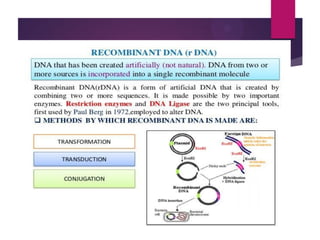
 A recombinant vaccine is a vaccine is produced by
r-DNA technology.
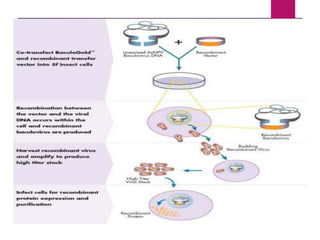
 This involves inserting the DNA encoding an antigen
that stimulates an immune response into
mammalian cells or bacterial cells ;expressing the
antigen in these cells and purifying it from them.
 First recombinant vaccine –Hepatitis B vaccine
Types of Recombinant
vaccines
 Subunit recombinant vaccines – includes proteins, peptides and dna
 Attenuated recombinant vaccines –these genetically modified
pathogenic organism(bact. , virus) that are made of non pathogenic
and use as vaccines.
 Vector recombinant vaccines- these are genetically modified viral
vectors that van be used as vaccines against certain pathogens.
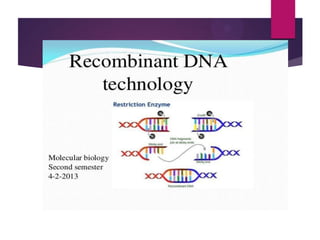
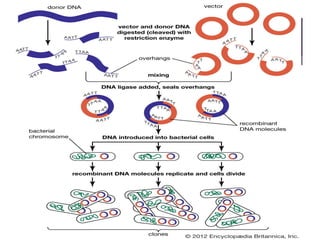
Processing of recombinant DNA
Technology
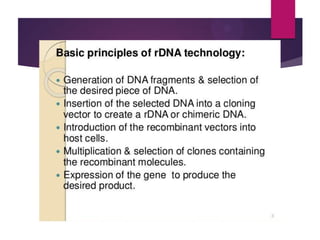
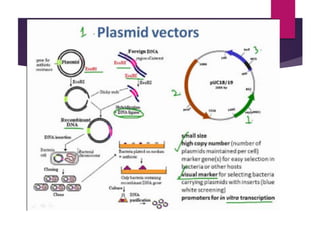
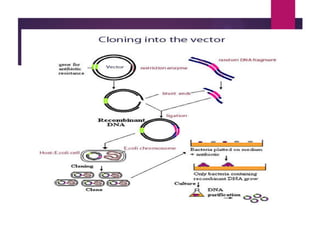
 Isolation of the genetic material
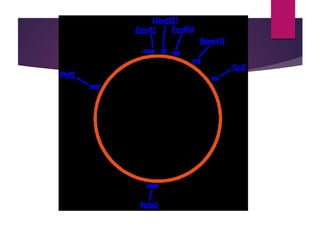
 Cutting of DNA at Specific location
 Amplification of Gene of interest using PCR
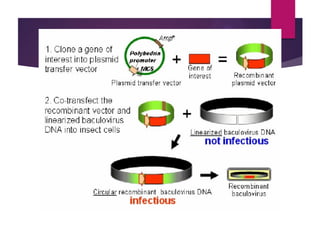
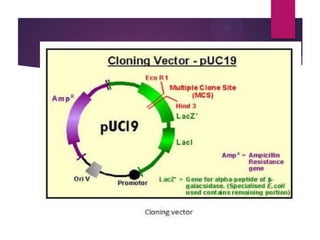
 Inserting of Recombinant DNA into the Host
cell/organism
 Obtaining the foreign gene product
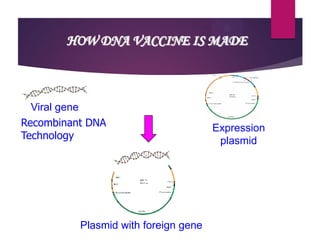
HOW DNA VACCINE IS MADE
Viral gene
Expression
plasmid
Plasmid with foreign gene
Recombinant DNA
Technology
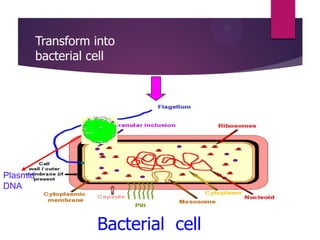
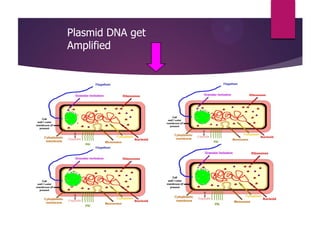
Bacterial cell
Transform into
bacterial cell
Plasmid
DNA
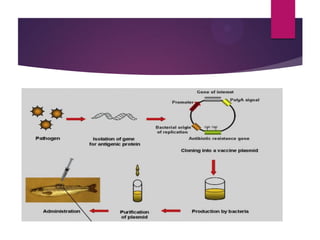
Plasmid DNA get
Amplified
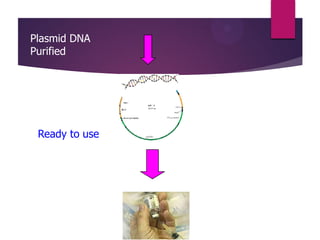
Plasmid DNA
Purified
Ready to use
Advantages of the recombinant
vaccine
 Produced more quickly
 In larger quantities
 Free from infectious viral particles.
 They can safely be given to immunosuppressed
animal.
 They are less likely to induce side effects

Recombinant-DNA-Technology.pdf

  • 21.
    PROPERTIES OF AGOOD Recombinant VACCINE  Ability to elicit the appropriate immune response for a particular pathogen.  Long term protection  Safety  Stability  inexpensiveness
  • 22.
    RECOMBINANT VACCINE  Arecombinant vaccine is a vaccine is produced by r-DNA technology.  This involves inserting the DNA encoding an antigen that stimulates an immune response into mammalian cells or bacterial cells ;expressing the antigen in these cells and purifying it from them.  First recombinant vaccine –Hepatitis B vaccine
  • 23.
    Types of Recombinant vaccines Subunit recombinant vaccines – includes proteins, peptides and dna  Attenuated recombinant vaccines –these genetically modified pathogenic organism(bact. , virus) that are made of non pathogenic and use as vaccines.  Vector recombinant vaccines- these are genetically modified viral vectors that van be used as vaccines against certain pathogens.
  • 24.
    Processing of recombinantDNA Technology  Isolation of the genetic material  Cutting of DNA at Specific location  Amplification of Gene of interest using PCR  Inserting of Recombinant DNA into the Host cell/organism  Obtaining the foreign gene product
  • 25.
    HOW DNA VACCINEIS MADE Viral gene Expression plasmid Plasmid with foreign gene Recombinant DNA Technology
  • 27.
  • 28.
  • 29.
  • 30.
    Advantages of therecombinant vaccine  Produced more quickly  In larger quantities  Free from infectious viral particles.  They can safely be given to immunosuppressed animal.  They are less likely to induce side effects