GBH Enterprises, Ltd.

Process Engineering Guide:
GBHE-PEG-RXT-807

Reactor and Catalyst Design

Information contained in this publication or as otherwise supplied to Users is
believed to be accurate and correct at time of going to press, and is given in
good faith, but it is for the User to satisfy itself of the suitability of the information
for its own particular purpose. GBHE gives no warranty as to the fitness of this
information for any particular purpose and any implied warranty or condition
(statutory or otherwise) is excluded except to the extent that exclusion is
prevented by law. GBHE accepts no liability resulting from reliance on this
information. Freedom under Patent, Copyright and Designs cannot be assumed.

Refinery Process Stream Purification Refinery Process Catalysts Troubleshooting Refinery Process Catalyst Start-Up / Shutdown
Activation Reduction In-situ Ex-situ Sulfiding Specializing in Refinery Process Catalyst Performance Evaluation Heat & Mass
Balance Analysis Catalyst Remaining Life Determination Catalyst Deactivation Assessment Catalyst Performance
Characterization Refining & Gas Processing & Petrochemical Industries Catalysts / Process Technology - Hydrogen Catalysts /
Process Technology – Ammonia Catalyst Process Technology - Methanol Catalysts / process Technology – Petrochemicals
Specializing in the Development & Commercialization of New Technology in the Refining & Petrochemical Industries
Web Site: www.GBHEnterprises.com
Process Engineering Guide:

Reactor and Catalyst Design

CONTENTS

SECTION

0

INTRODUCTION/PURPOSE

2

1

SCOPE

2

2

FIELD OF APPLICATION

2

3

DEFINITIONS

2

4

CATALYST DESIGN

2

4.1
4.2
4.3

Equivalent Pellet Diameter
Voidage
Pellet Density

3
6
8

5

REACTOR DESIGN

8

6

CATALYST SUPPORT

10

6.1

Choice of Support

10

Refinery Process Stream Purification Refinery Process Catalysts Troubleshooting Refinery Process Catalyst Start-Up / Shutdown
Activation Reduction In-situ Ex-situ Sulfiding Specializing in Refinery Process Catalyst Performance Evaluation Heat & Mass
Balance Analysis Catalyst Remaining Life Determination Catalyst Deactivation Assessment Catalyst Performance
Characterization Refining & Gas Processing & Petrochemical Industries Catalysts / Process Technology - Hydrogen Catalysts /
Process Technology – Ammonia Catalyst Process Technology - Methanol Catalysts / process Technology – Petrochemicals
Specializing in the Development & Commercialization of New Technology in the Refining & Petrochemical Industries
Web Site: www.GBHEnterprises.com
TABLES

1

CATALYST SUPPORT SHAPES

12

2

SECONDARY REFORMER SPREADSHEET

13

FIGURES
1

GRAPH OF EFFECTIVENESS v THIELE MODULUS

4

2

VARIATION OF COSTS WITH CATALYST SIZE

6

3

VARIATION OF COSTS WITH CATALYST BED VOIDAGE

8

4

VARIATION OF COSTS WITH VESSEL DIAMETER

9

Refinery Process Stream Purification Refinery Process Catalysts Troubleshooting Refinery Process Catalyst Start-Up / Shutdown
Activation Reduction In-situ Ex-situ Sulfiding Specializing in Refinery Process Catalyst Performance Evaluation Heat & Mass
Balance Analysis Catalyst Remaining Life Determination Catalyst Deactivation Assessment Catalyst Performance
Characterization Refining & Gas Processing & Petrochemical Industries Catalysts / Process Technology - Hydrogen Catalysts /
Process Technology – Ammonia Catalyst Process Technology - Methanol Catalysts / process Technology – Petrochemicals
Specializing in the Development & Commercialization of New Technology in the Refining & Petrochemical Industries
Web Site: www.GBHEnterprises.com
0

INTRODUCTION/PURPOSE

When the catalyst chemistry of a new fixed feed chemical reaction has been
developed, decisions need to be made about the catalyst design. The issues that
need to be decided are:
(a)

The catalyst particle size.

(b)

The catalyst shape to give a reasonable optimum pressure drop in the
catalyst bed.

(c)

The catalyst particle density to make the catalyst particles reasonably
effective.

These issues are closely related to the reactor shape and the cost of pressure
drop.
This Process Engineering Guide provides some explanation of these issues and
equations by which the key parameters can be determined.

1

SCOPE

This Process Engineering Guide deals with the design of the catalyst, particularly
its size and shape, and the reactor geometry as well as catalyst support types. It
does not cover the chemical selection of the catalyst.

2

FIELD OF APPLICATION

This Guide applies to process engineers and technologists in GBH Enterprises
worldwide, who may be involved in the design of reactors and catalysts.

3

DEFINITIONS

For the purposes of this Guide no specific definitions apply.

Refinery Process Stream Purification Refinery Process Catalysts Troubleshooting Refinery Process Catalyst Start-Up / Shutdown
Activation Reduction In-situ Ex-situ Sulfiding Specializing in Refinery Process Catalyst Performance Evaluation Heat & Mass
Balance Analysis Catalyst Remaining Life Determination Catalyst Deactivation Assessment Catalyst Performance
Characterization Refining & Gas Processing & Petrochemical Industries Catalysts / Process Technology - Hydrogen Catalysts /
Process Technology – Ammonia Catalyst Process Technology - Methanol Catalysts / process Technology – Petrochemicals
Specializing in the Development & Commercialization of New Technology in the Refining & Petrochemical Industries
Web Site: www.GBHEnterprises.com
4

CATALYST DESIGN

The design of catalyst particles can be characterized by three independent
variables:
(a)

Equivalent pellet diameter

de

(b)

Voidage

e

(c)

Density

ρ

These can all be optimized.

4.1

Equivalent Pellet Diameter

Larger catalyst size leads to:
(a) Lower pressure drop in reactor:
(1)

Lower compression power.

(b) Lower catalyst effectiveness:
(1)
(2)
(3)

Larger catalyst volume
Higher vessel cost
Higher catalyst cost.
Thiele modulus F = b x de

.......................................... (1)

where:
b

is assumed to be a constant (probably related to the pore structure)

de

is the equivalent sphere diameter of the particle.
de = 6 x particle volume / particle surface area

.......................... (2)

Refinery Process Stream Purification Refinery Process Catalysts Troubleshooting Refinery Process Catalyst Start-Up / Shutdown
Activation Reduction In-situ Ex-situ Sulfiding Specializing in Refinery Process Catalyst Performance Evaluation Heat & Mass
Balance Analysis Catalyst Remaining Life Determination Catalyst Deactivation Assessment Catalyst Performance
Characterization Refining & Gas Processing & Petrochemical Industries Catalysts / Process Technology - Hydrogen Catalysts /
Process Technology – Ammonia Catalyst Process Technology - Methanol Catalysts / process Technology – Petrochemicals
Specializing in the Development & Commercialization of New Technology in the Refining & Petrochemical Industries
Web Site: www.GBHEnterprises.com
For a spherical catalyst particle:
Effectiveness E = 3/F x (1/tanh(F) - 1/F))

................. (3)

The constant b may be calculated from measurements of the effective catalyst
activity at two different particle sizes.
The intrinsic activity is defined as:
Intrinsic Activity = Apparent Activity / Effectiveness ....... (4)

4.1.1

Example: Calculation of Intrinsic Activity

Results from pellet testing give:
Test

Pellet size

1
2

2
4

Apparent Activity
4.2
3

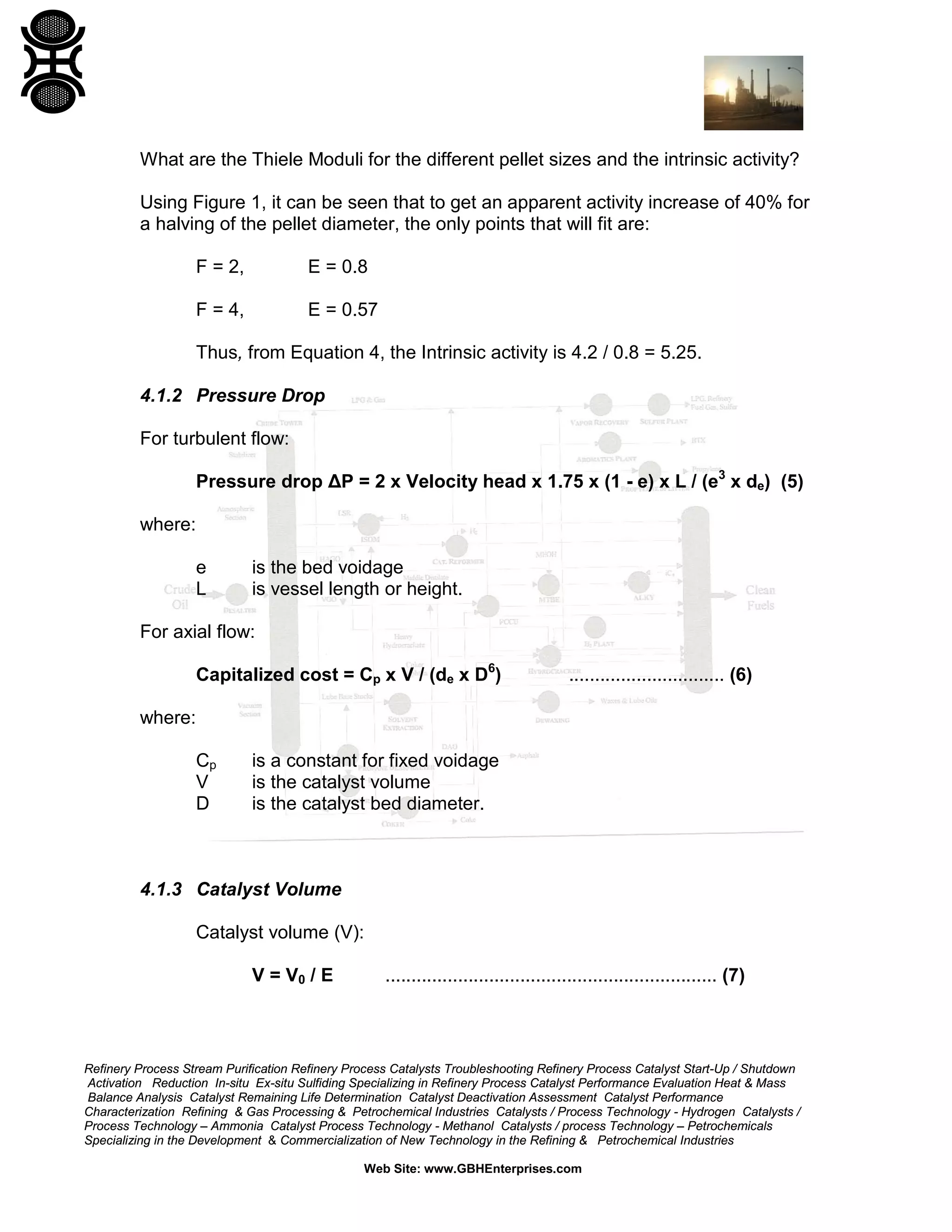
Figure 1 shows a graph of Effectiveness v Thiele Modulus based on Equation 3.
FIGURE 1 GRAPH OF EFFECTIVENESS v THIELE MODULUS

Refinery Process Stream Purification Refinery Process Catalysts Troubleshooting Refinery Process Catalyst Start-Up / Shutdown
Activation Reduction In-situ Ex-situ Sulfiding Specializing in Refinery Process Catalyst Performance Evaluation Heat & Mass
Balance Analysis Catalyst Remaining Life Determination Catalyst Deactivation Assessment Catalyst Performance
Characterization Refining & Gas Processing & Petrochemical Industries Catalysts / Process Technology - Hydrogen Catalysts /
Process Technology – Ammonia Catalyst Process Technology - Methanol Catalysts / process Technology – Petrochemicals
Specializing in the Development & Commercialization of New Technology in the Refining & Petrochemical Industries
Web Site: www.GBHEnterprises.com
What are the Thiele Moduli for the different pellet sizes and the intrinsic activity?
Using Figure 1, it can be seen that to get an apparent activity increase of 40% for
a halving of the pellet diameter, the only points that will fit are:
F = 2,

E = 0.8

F = 4,

E = 0.57

Thus, from Equation 4, the Intrinsic activity is 4.2 / 0.8 = 5.25.
4.1.2 Pressure Drop
For turbulent flow:
Pressure drop ΔP = 2 x Velocity head x 1.75 x (1 - e) x L / (e3 x de) (5)
where:
e
L

is the bed voidage
is vessel length or height.

For axial flow:
Capitalized cost = Cp x V / (de x D6)

.............................. (6)

where:
Cp
V
D

is a constant for fixed voidage
is the catalyst volume
is the catalyst bed diameter.

4.1.3 Catalyst Volume
Catalyst volume (V):
V = V0 / E

................................................................ (7)

Refinery Process Stream Purification Refinery Process Catalysts Troubleshooting Refinery Process Catalyst Start-Up / Shutdown
Activation Reduction In-situ Ex-situ Sulfiding Specializing in Refinery Process Catalyst Performance Evaluation Heat & Mass
Balance Analysis Catalyst Remaining Life Determination Catalyst Deactivation Assessment Catalyst Performance
Characterization Refining & Gas Processing & Petrochemical Industries Catalysts / Process Technology - Hydrogen Catalysts /
Process Technology – Ammonia Catalyst Process Technology - Methanol Catalysts / process Technology – Petrochemicals
Specializing in the Development & Commercialization of New Technology in the Refining & Petrochemical Industries
Web Site: www.GBHEnterprises.com
where:
V0 is the catalyst volume for unit effectiveness.
Vessel cost:
Capital cost = Cv x (V + D3)

....................................... (8)

where:
Cv is a constant.
Catalyst cost:
Capitalized cost = Ccat x V

............................................ (9)

where:
Ccat is a constant that depends on catalyst cost and catalyst change frequency.
Calculate the parameter (q):
q = 1.89 / (Cv + Ccat) x (Cv / V0)0.67 x (Cp x b)0.33 .............................(10)
For axial flow in an adiabatic pressure vessel optimum pellet size is given by:
q = (b x de)0.375 x (0.4 + 0.022 x (b x de)2) .................................... (11)
If q < 20, calculate:
de = (2.5 x q)0.375 / b

................................................. (12)

If q > 20, calculate:
d e = (q / 0.022)3/14 / b

................................................. (13)

Refinery Process Stream Purification Refinery Process Catalysts Troubleshooting Refinery Process Catalyst Start-Up / Shutdown
Activation Reduction In-situ Ex-situ Sulfiding Specializing in Refinery Process Catalyst Performance Evaluation Heat & Mass
Balance Analysis Catalyst Remaining Life Determination Catalyst Deactivation Assessment Catalyst Performance
Characterization Refining & Gas Processing & Petrochemical Industries Catalysts / Process Technology - Hydrogen Catalysts /
Process Technology – Ammonia Catalyst Process Technology - Methanol Catalysts / process Technology – Petrochemicals
Specializing in the Development & Commercialization of New Technology in the Refining & Petrochemical Industries
Web Site: www.GBHEnterprises.com
If optimum pellet diameter is greater than 3mm
If optimum diameter is less than 3mm

- use pellets or rings.

- examine other supports (see later).

The necessary data to determine the Thiele Modulus and hence the optimum
pellet diameter of most of the catalysts that GBHE uses is not available.
Typical optimum particle sizes:
Ammonia plant:
HT Shift
Methanator
Secondary Reformer
Methanol synthesis

3.8 mm
1.8 mm
0.1 mm
4.7 mm

Figure 2 shows the variation of capitalized costs (pressure drop cost, vessel cost,
catalyst cost and total cost) and effectiveness with catalyst size.
FIGURE 2

VARIATION OF COSTS WITH CATALYST SIZE

Refinery Process Stream Purification Refinery Process Catalysts Troubleshooting Refinery Process Catalyst Start-Up / Shutdown
Activation Reduction In-situ Ex-situ Sulfiding Specializing in Refinery Process Catalyst Performance Evaluation Heat & Mass
Balance Analysis Catalyst Remaining Life Determination Catalyst Deactivation Assessment Catalyst Performance
Characterization Refining & Gas Processing & Petrochemical Industries Catalysts / Process Technology - Hydrogen Catalysts /
Process Technology – Ammonia Catalyst Process Technology - Methanol Catalysts / process Technology – Petrochemicals
Specializing in the Development & Commercialization of New Technology in the Refining & Petrochemical Industries
Web Site: www.GBHEnterprises.com
4.2

Voidage
Higher voidage leads to:
(a)

Lower pressure drop.

(b)

Larger catalyst vessel.

It is possible to increase voidage by moving to more eccentric particles, i.e.
length / diameter L / D ratio greater than 1.3, or by using rings instead of pellets.
4.2.1 Pressure Drop Cost
Pressure drop cost:
Capitalized cost = Cp1 x Vs / D6 / e3

................. (14)

where:
Cp1 is a constant for constant particle diameter, etc.
Vs is the solid volume of catalyst
D is the vessel diameter
e is the bed voidage.

Vs = V x (1 - e)

............................................................... (15)

where:
V is the catalyst volume of catalyst.

4.2.2 Vessel Cost
Vessel cost:
Capital cost = Cv x (V + D3) ............................................. (16)
where:
Cv is a constant
Refinery Process Stream Purification Refinery Process Catalysts Troubleshooting Refinery Process Catalyst Start-Up / Shutdown
Activation Reduction In-situ Ex-situ Sulfiding Specializing in Refinery Process Catalyst Performance Evaluation Heat & Mass
Balance Analysis Catalyst Remaining Life Determination Catalyst Deactivation Assessment Catalyst Performance
Characterization Refining & Gas Processing & Petrochemical Industries Catalysts / Process Technology - Hydrogen Catalysts /
Process Technology – Ammonia Catalyst Process Technology - Methanol Catalysts / process Technology – Petrochemicals
Specializing in the Development & Commercialization of New Technology in the Refining & Petrochemical Industries
Web Site: www.GBHEnterprises.com
Calculate the parameter (w):
w = 1.89 x (Cp1 / Cv / Vs 2 )0.33

...................................... (17)

For axial flow in an adiabatic pressure vessel:
Optimum voidage = w0.5 / (1 + w 0.5)
If optimum voidage is less than 0.4
If optimum voidage is greater than 0.4
Typical optimum voidages:

........................... (18)

- use pellets or beads.
- use rings or maybe eccentric

Ammonia plant secondary reformer
Ammonia plant methanator
Methanol plant converter

0.5
0.36
0.5

The catalyst needs to be strong to maintain a voidage above 0.4, so GBHE still
uses pellets for methanol synthesis catalyst.
Figure 3 shows the variation of costs (pressure drop cost, vessel cost and total
cost) with catalyst bed voidage.

FIGURE 3

VARIATION OF COSTS WITH CATALYST BED VOIDAGE

Refinery Process Stream Purification Refinery Process Catalysts Troubleshooting Refinery Process Catalyst Start-Up / Shutdown
Activation Reduction In-situ Ex-situ Sulfiding Specializing in Refinery Process Catalyst Performance Evaluation Heat & Mass
Balance Analysis Catalyst Remaining Life Determination Catalyst Deactivation Assessment Catalyst Performance
Characterization Refining & Gas Processing & Petrochemical Industries Catalysts / Process Technology - Hydrogen Catalysts /
Process Technology – Ammonia Catalyst Process Technology - Methanol Catalysts / process Technology – Petrochemicals
Specializing in the Development & Commercialization of New Technology in the Refining & Petrochemical Industries
Web Site: www.GBHEnterprises.com
4.3

Pellet Density

Higher density gives:
(a)
(b)

More active catalyst component.
Lower pore volume:
(1)
Lower effectiveness
(2)
Possibly lower selectivity.

There appear to be no established relationships to determine optimum pellet
density.
5

REACTOR DESIGN

Optimum length to diameter ratio of the reactor may be determined as follows:
Pressure drop cost:
Capitalized cost = Cp x V / (de x D6) ................................ (6)
where:
Cp is a constant for fixed voidage
V is the catalyst volume
de is the equivalent sphere diameter
D is the catalyst bed diameter.

Vessel cost:
Capital cost = Cv x (V + D3) ............................................ (8)
where:
Cv is a constant.
Optimum diameter D = ( 2 x Cp x V / (Cv x de))1/9 ...... (19)
If optimum L / D ratio is greater than 1
If optimum L / D ratio is between 0.2 and 1
If optimum L / D ratio is less than 0.2

- use axial flow in vertical vessel.
- consider horizontal vessel.
- consider radial flow vessel.

Refinery Process Stream Purification Refinery Process Catalysts Troubleshooting Refinery Process Catalyst Start-Up / Shutdown
Activation Reduction In-situ Ex-situ Sulfiding Specializing in Refinery Process Catalyst Performance Evaluation Heat & Mass
Balance Analysis Catalyst Remaining Life Determination Catalyst Deactivation Assessment Catalyst Performance
Characterization Refining & Gas Processing & Petrochemical Industries Catalysts / Process Technology - Hydrogen Catalysts /
Process Technology – Ammonia Catalyst Process Technology - Methanol Catalysts / process Technology – Petrochemicals
Specializing in the Development & Commercialization of New Technology in the Refining & Petrochemical Industries
Web Site: www.GBHEnterprises.com
Typical optimum L / D ratios:
Ammonia plant secondary reformer
Ammonia plant desulfurizer
Ammonia plant LT shift

0.8
2.8
1.1

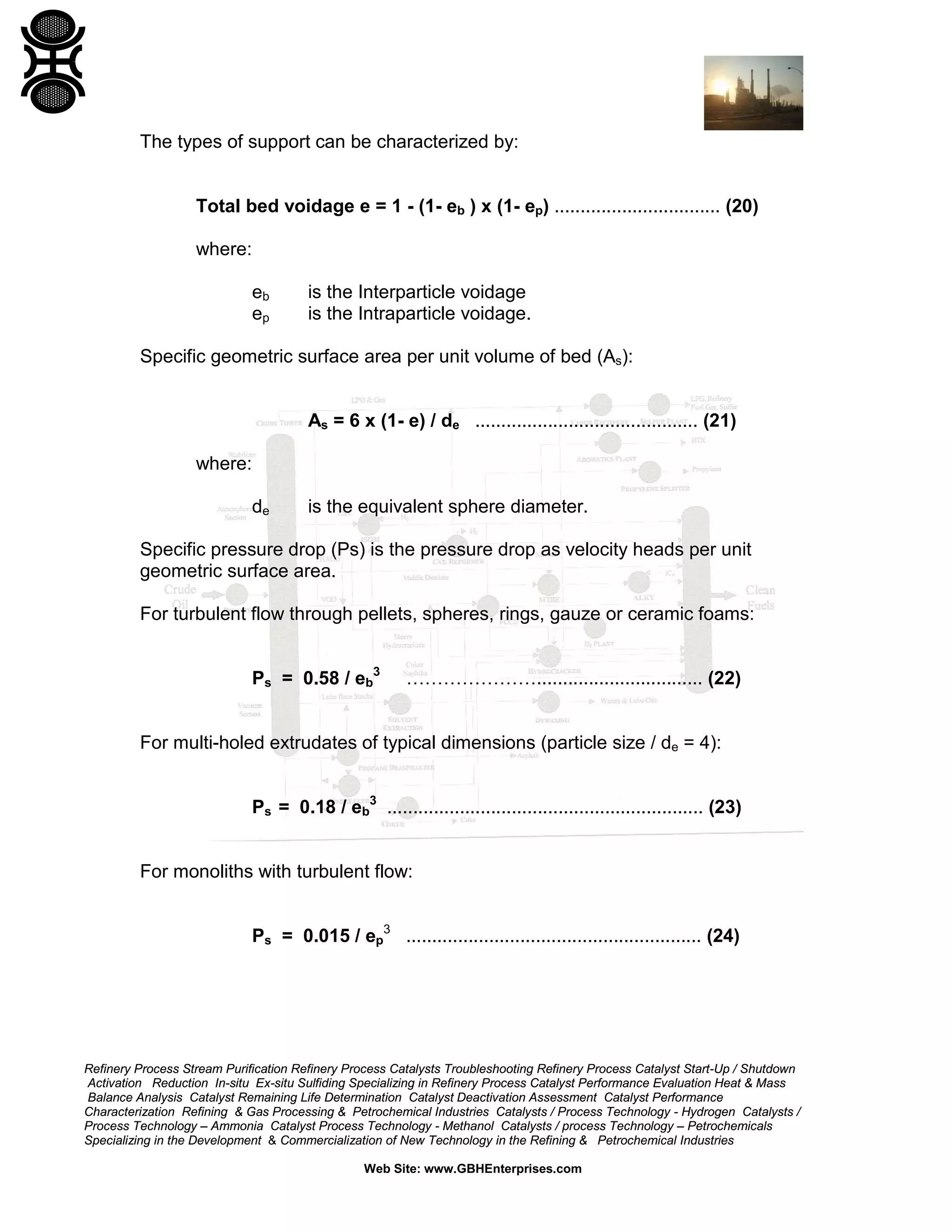
Figure 4 shows the variation of costs (vessel cost, pressure drop cost and total
cost) with vessel diameter).
FIGURE 4

6

VARIATION OF COSTS WITH VESSEL DIAMETER

CATALYST SUPPORT TYPES
The following catalyst support types are available:
(a)
(b)
(c)
(d)

(e)
(f)

Pellets, beads, extrudates
Rings.
Monoliths (honeycombs).
Ceramic foams (macroporous catalyst):
(1)
Sheet
(2)
Pellets.
Knitted wire mesh.
Multi-holed extrudates

Refinery Process Stream Purification Refinery Process Catalysts Troubleshooting Refinery Process Catalyst Start-Up / Shutdown
Activation Reduction In-situ Ex-situ Sulfiding Specializing in Refinery Process Catalyst Performance Evaluation Heat & Mass
Balance Analysis Catalyst Remaining Life Determination Catalyst Deactivation Assessment Catalyst Performance
Characterization Refining & Gas Processing & Petrochemical Industries Catalysts / Process Technology - Hydrogen Catalysts /
Process Technology – Ammonia Catalyst Process Technology - Methanol Catalysts / process Technology – Petrochemicals
Specializing in the Development & Commercialization of New Technology in the Refining & Petrochemical Industries
Web Site: www.GBHEnterprises.com
6.1

Choice Of Support

6.1.1 General Guidance
(a)

Use pellets, rings or extrudates when optimum particle diameter is
greater than 2 mm.

(b)

Use rings if optimum voidage is greater than 0.4.

(c)

Use monoliths if optimum particle diameter is less than 2 mm and
cost of pressure drop is high.

(d)

Use ceramic foams or knitted wire mesh if optimum particle
diameter is less than 1 mm.

(e)

Use multi-holed extrudates when optimum particle diameter is less
than 2 mm and using a tubular reactor.

Other factors that come into play are:
(1)

Length / diameter limitations.

(2)

Fouling.

(3)

Heat transfer limit in tubular reactors.

(4)

Vessel length / particle diameter ratio.

(5)

Degree of conversion required.

(6)

Want to be film diffusion limited.

6.1.2 Quantitative Evaluation
The best method to evaluate alternative catalysts is on a spreadsheet model. In
order to do this the supports need to be characterized.
Since most novel supports are only generally used when the catalyst is severely
pore diffusion limited (in order to get high surface areas), they can be
characterized most easily on the basis of their geometric surface area.
Refinery Process Stream Purification Refinery Process Catalysts Troubleshooting Refinery Process Catalyst Start-Up / Shutdown
Activation Reduction In-situ Ex-situ Sulfiding Specializing in Refinery Process Catalyst Performance Evaluation Heat & Mass
Balance Analysis Catalyst Remaining Life Determination Catalyst Deactivation Assessment Catalyst Performance
Characterization Refining & Gas Processing & Petrochemical Industries Catalysts / Process Technology - Hydrogen Catalysts /
Process Technology – Ammonia Catalyst Process Technology - Methanol Catalysts / process Technology – Petrochemicals
Specializing in the Development & Commercialization of New Technology in the Refining & Petrochemical Industries
Web Site: www.GBHEnterprises.com
The types of support can be characterized by:

Total bed voidage e = 1 - (1- eb ) x (1- ep) ................................ (20)
where:
eb
ep

is the Interparticle voidage
is the Intraparticle voidage.

Specific geometric surface area per unit volume of bed (As):
As = 6 x (1- e) / de ........................................... (21)
where:
de

is the equivalent sphere diameter.

Specific pressure drop (Ps) is the pressure drop as velocity heads per unit
geometric surface area.
For turbulent flow through pellets, spheres, rings, gauze or ceramic foams:
Ps = 0.58 / eb3

…………………................................ (22)

For multi-holed extrudates of typical dimensions (particle size / de = 4):
Ps = 0.18 / eb3 ............................................................. (23)
For monoliths with turbulent flow:
Ps = 0.015 / ep3 ......................................................... (24)

Refinery Process Stream Purification Refinery Process Catalysts Troubleshooting Refinery Process Catalyst Start-Up / Shutdown
Activation Reduction In-situ Ex-situ Sulfiding Specializing in Refinery Process Catalyst Performance Evaluation Heat & Mass
Balance Analysis Catalyst Remaining Life Determination Catalyst Deactivation Assessment Catalyst Performance
Characterization Refining & Gas Processing & Petrochemical Industries Catalysts / Process Technology - Hydrogen Catalysts /
Process Technology – Ammonia Catalyst Process Technology - Methanol Catalysts / process Technology – Petrochemicals
Specializing in the Development & Commercialization of New Technology in the Refining & Petrochemical Industries
Web Site: www.GBHEnterprises.com
For monoliths with laminar flow (Re < 3500 ):
Reynolds number Re = actual velocity x hole diameter / viscosity.. (25)
Hole diameter = 2/3 x de x ep / (1 – ep)

................................. (26)

Ps = 16 / Re / ep3 ……………...................................................... (27)
Pressure drop:
Pressure drop = Ps x surface area x superficial velocity head ... (28)
6.1.3 Cost of Catalyst
For some types of support it is most appropriate to measure the cost of the
catalyst per unit volume, whereas for others, it is appropriate to measure it per
unit geometric surface area.
The vessel cost can be determined as before.
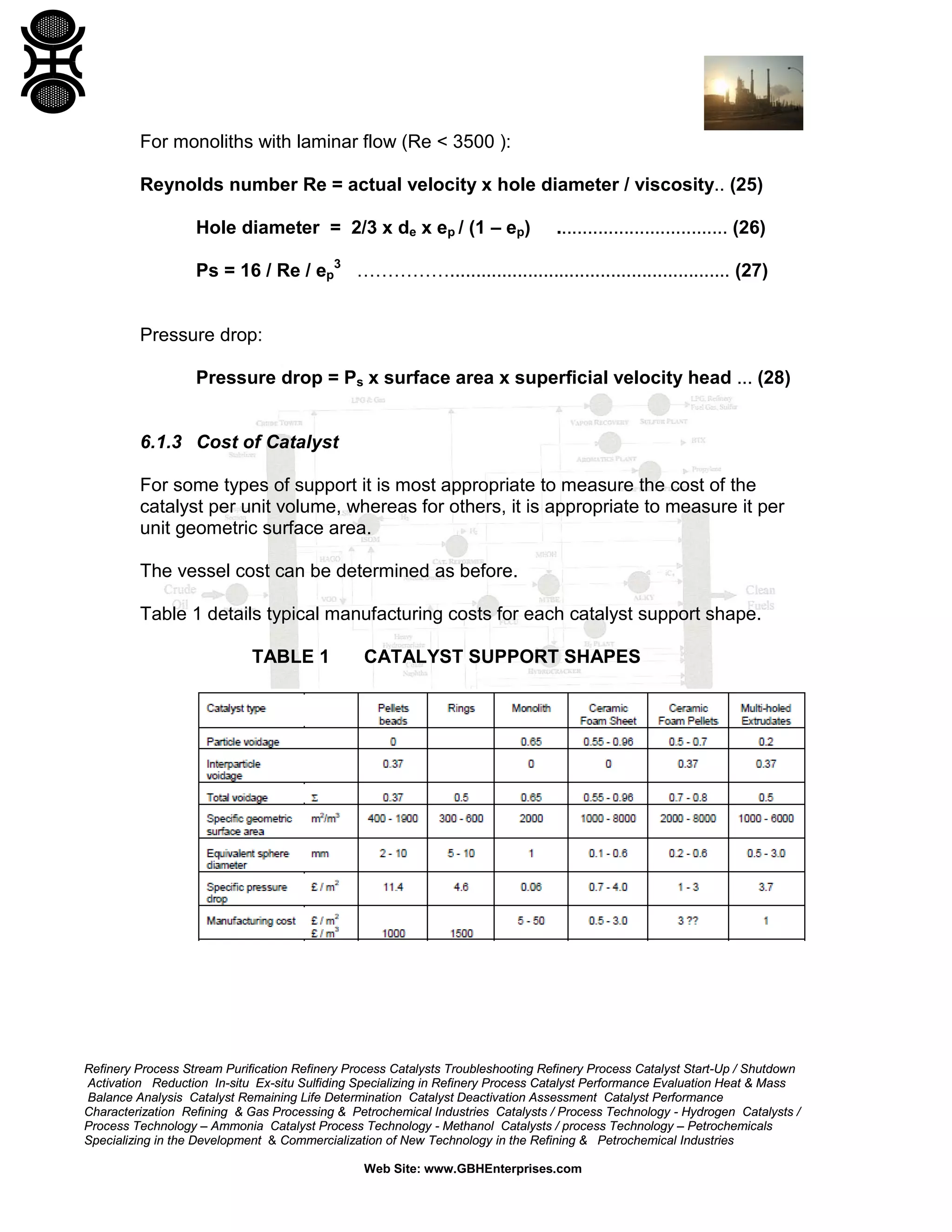
Table 1 details typical manufacturing costs for each catalyst support shape.
TABLE 1

CATALYST SUPPORT SHAPES

Refinery Process Stream Purification Refinery Process Catalysts Troubleshooting Refinery Process Catalyst Start-Up / Shutdown
Activation Reduction In-situ Ex-situ Sulfiding Specializing in Refinery Process Catalyst Performance Evaluation Heat & Mass
Balance Analysis Catalyst Remaining Life Determination Catalyst Deactivation Assessment Catalyst Performance
Characterization Refining & Gas Processing & Petrochemical Industries Catalysts / Process Technology - Hydrogen Catalysts /
Process Technology – Ammonia Catalyst Process Technology - Methanol Catalysts / process Technology – Petrochemicals
Specializing in the Development & Commercialization of New Technology in the Refining & Petrochemical Industries
Web Site: www.GBHEnterprises.com
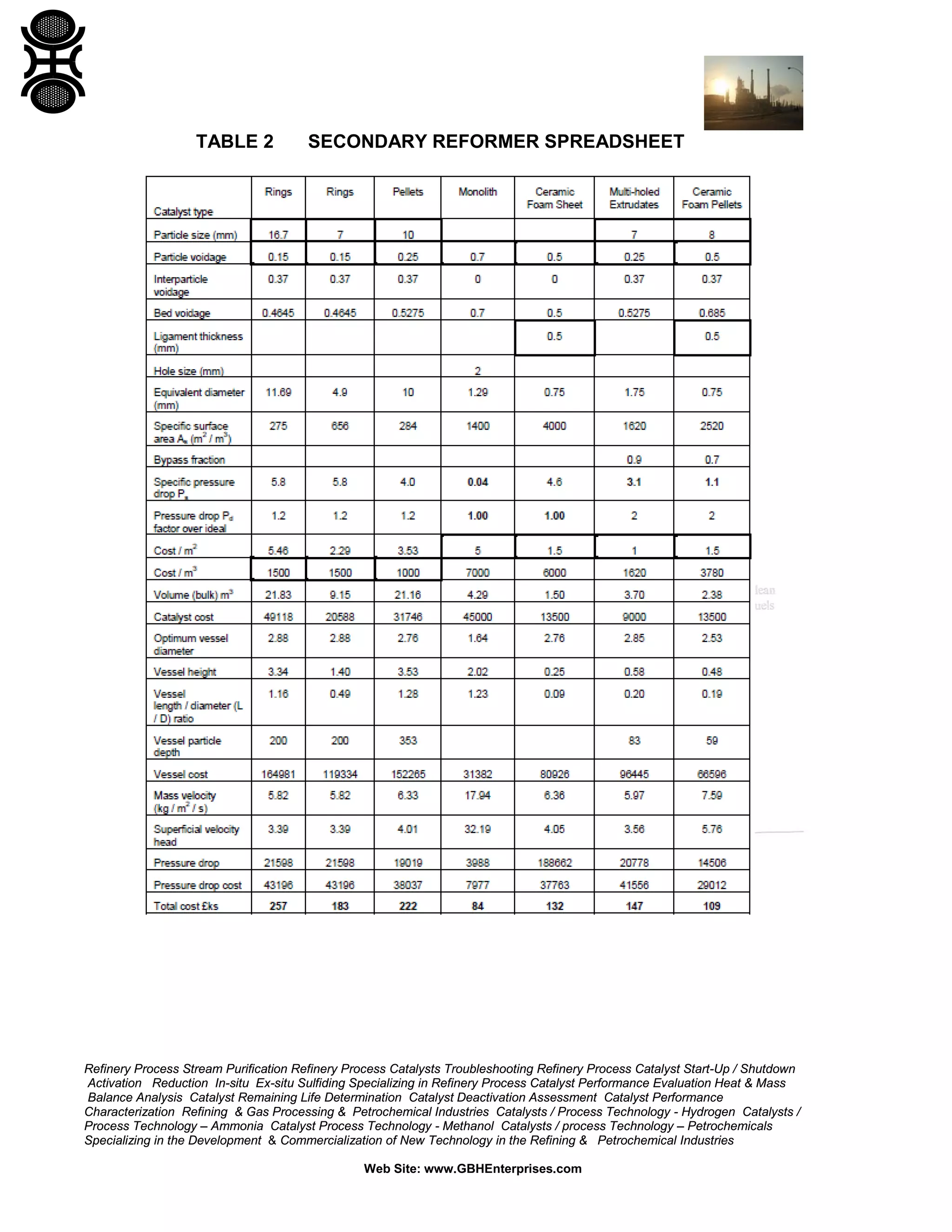
6.1.4 Example: Secondary Reformer
What is the optimum support and surface area / unit volume for the following
example:
Surface area required A

=

6000 m2

Cost of vessel Cd

=

3600 (V + D3)

Capitalized pressure drop cost Cp

=

£2 / pascal

Mass flow M

=

38 kg / s

Density

=

5 kg / m3

Catalyst life

=

2 yrs

Viscosity * 1000

=

0.4

Factor for optimum diameter b

=

1990

The optimum support and surface area / unit volume can be determined from
Table 2.

Refinery Process Stream Purification Refinery Process Catalysts Troubleshooting Refinery Process Catalyst Start-Up / Shutdown
Activation Reduction In-situ Ex-situ Sulfiding Specializing in Refinery Process Catalyst Performance Evaluation Heat & Mass
Balance Analysis Catalyst Remaining Life Determination Catalyst Deactivation Assessment Catalyst Performance
Characterization Refining & Gas Processing & Petrochemical Industries Catalysts / Process Technology - Hydrogen Catalysts /
Process Technology – Ammonia Catalyst Process Technology - Methanol Catalysts / process Technology – Petrochemicals
Specializing in the Development & Commercialization of New Technology in the Refining & Petrochemical Industries
Web Site: www.GBHEnterprises.com
TABLE 2

SECONDARY REFORMER SPREADSHEET

Refinery Process Stream Purification Refinery Process Catalysts Troubleshooting Refinery Process Catalyst Start-Up / Shutdown
Activation Reduction In-situ Ex-situ Sulfiding Specializing in Refinery Process Catalyst Performance Evaluation Heat & Mass
Balance Analysis Catalyst Remaining Life Determination Catalyst Deactivation Assessment Catalyst Performance
Characterization Refining & Gas Processing & Petrochemical Industries Catalysts / Process Technology - Hydrogen Catalysts /
Process Technology – Ammonia Catalyst Process Technology - Methanol Catalysts / process Technology – Petrochemicals
Specializing in the Development & Commercialization of New Technology in the Refining & Petrochemical Industries
Web Site: www.GBHEnterprises.com
Refinery Process Stream Purification Refinery Process Catalysts Troubleshooting Refinery Process Catalyst Start-Up / Shutdown
Activation Reduction In-situ Ex-situ Sulfiding Specializing in Refinery Process Catalyst Performance Evaluation Heat & Mass
Balance Analysis Catalyst Remaining Life Determination Catalyst Deactivation Assessment Catalyst Performance
Characterization Refining & Gas Processing & Petrochemical Industries Catalysts / Process Technology - Hydrogen Catalysts /
Process Technology – Ammonia Catalyst Process Technology - Methanol Catalysts / process Technology – Petrochemicals
Specializing in the Development & Commercialization of New Technology in the Refining & Petrochemical Industries
Web Site: www.GBHEnterprises.com

Reactor and Catalyst Design

  • 1.
    GBH Enterprises, Ltd. ProcessEngineering Guide: GBHE-PEG-RXT-807 Reactor and Catalyst Design Information contained in this publication or as otherwise supplied to Users is believed to be accurate and correct at time of going to press, and is given in good faith, but it is for the User to satisfy itself of the suitability of the information for its own particular purpose. GBHE gives no warranty as to the fitness of this information for any particular purpose and any implied warranty or condition (statutory or otherwise) is excluded except to the extent that exclusion is prevented by law. GBHE accepts no liability resulting from reliance on this information. Freedom under Patent, Copyright and Designs cannot be assumed. Refinery Process Stream Purification Refinery Process Catalysts Troubleshooting Refinery Process Catalyst Start-Up / Shutdown Activation Reduction In-situ Ex-situ Sulfiding Specializing in Refinery Process Catalyst Performance Evaluation Heat & Mass Balance Analysis Catalyst Remaining Life Determination Catalyst Deactivation Assessment Catalyst Performance Characterization Refining & Gas Processing & Petrochemical Industries Catalysts / Process Technology - Hydrogen Catalysts / Process Technology – Ammonia Catalyst Process Technology - Methanol Catalysts / process Technology – Petrochemicals Specializing in the Development & Commercialization of New Technology in the Refining & Petrochemical Industries Web Site: www.GBHEnterprises.com
  • 2.
    Process Engineering Guide: Reactorand Catalyst Design CONTENTS SECTION 0 INTRODUCTION/PURPOSE 2 1 SCOPE 2 2 FIELD OF APPLICATION 2 3 DEFINITIONS 2 4 CATALYST DESIGN 2 4.1 4.2 4.3 Equivalent Pellet Diameter Voidage Pellet Density 3 6 8 5 REACTOR DESIGN 8 6 CATALYST SUPPORT 10 6.1 Choice of Support 10 Refinery Process Stream Purification Refinery Process Catalysts Troubleshooting Refinery Process Catalyst Start-Up / Shutdown Activation Reduction In-situ Ex-situ Sulfiding Specializing in Refinery Process Catalyst Performance Evaluation Heat & Mass Balance Analysis Catalyst Remaining Life Determination Catalyst Deactivation Assessment Catalyst Performance Characterization Refining & Gas Processing & Petrochemical Industries Catalysts / Process Technology - Hydrogen Catalysts / Process Technology – Ammonia Catalyst Process Technology - Methanol Catalysts / process Technology – Petrochemicals Specializing in the Development & Commercialization of New Technology in the Refining & Petrochemical Industries Web Site: www.GBHEnterprises.com
  • 3.
    TABLES 1 CATALYST SUPPORT SHAPES 12 2 SECONDARYREFORMER SPREADSHEET 13 FIGURES 1 GRAPH OF EFFECTIVENESS v THIELE MODULUS 4 2 VARIATION OF COSTS WITH CATALYST SIZE 6 3 VARIATION OF COSTS WITH CATALYST BED VOIDAGE 8 4 VARIATION OF COSTS WITH VESSEL DIAMETER 9 Refinery Process Stream Purification Refinery Process Catalysts Troubleshooting Refinery Process Catalyst Start-Up / Shutdown Activation Reduction In-situ Ex-situ Sulfiding Specializing in Refinery Process Catalyst Performance Evaluation Heat & Mass Balance Analysis Catalyst Remaining Life Determination Catalyst Deactivation Assessment Catalyst Performance Characterization Refining & Gas Processing & Petrochemical Industries Catalysts / Process Technology - Hydrogen Catalysts / Process Technology – Ammonia Catalyst Process Technology - Methanol Catalysts / process Technology – Petrochemicals Specializing in the Development & Commercialization of New Technology in the Refining & Petrochemical Industries Web Site: www.GBHEnterprises.com
  • 4.
    0 INTRODUCTION/PURPOSE When the catalystchemistry of a new fixed feed chemical reaction has been developed, decisions need to be made about the catalyst design. The issues that need to be decided are: (a) The catalyst particle size. (b) The catalyst shape to give a reasonable optimum pressure drop in the catalyst bed. (c) The catalyst particle density to make the catalyst particles reasonably effective. These issues are closely related to the reactor shape and the cost of pressure drop. This Process Engineering Guide provides some explanation of these issues and equations by which the key parameters can be determined. 1 SCOPE This Process Engineering Guide deals with the design of the catalyst, particularly its size and shape, and the reactor geometry as well as catalyst support types. It does not cover the chemical selection of the catalyst. 2 FIELD OF APPLICATION This Guide applies to process engineers and technologists in GBH Enterprises worldwide, who may be involved in the design of reactors and catalysts. 3 DEFINITIONS For the purposes of this Guide no specific definitions apply. Refinery Process Stream Purification Refinery Process Catalysts Troubleshooting Refinery Process Catalyst Start-Up / Shutdown Activation Reduction In-situ Ex-situ Sulfiding Specializing in Refinery Process Catalyst Performance Evaluation Heat & Mass Balance Analysis Catalyst Remaining Life Determination Catalyst Deactivation Assessment Catalyst Performance Characterization Refining & Gas Processing & Petrochemical Industries Catalysts / Process Technology - Hydrogen Catalysts / Process Technology – Ammonia Catalyst Process Technology - Methanol Catalysts / process Technology – Petrochemicals Specializing in the Development & Commercialization of New Technology in the Refining & Petrochemical Industries Web Site: www.GBHEnterprises.com
  • 5.
    4 CATALYST DESIGN The designof catalyst particles can be characterized by three independent variables: (a) Equivalent pellet diameter de (b) Voidage e (c) Density ρ These can all be optimized. 4.1 Equivalent Pellet Diameter Larger catalyst size leads to: (a) Lower pressure drop in reactor: (1) Lower compression power. (b) Lower catalyst effectiveness: (1) (2) (3) Larger catalyst volume Higher vessel cost Higher catalyst cost. Thiele modulus F = b x de .......................................... (1) where: b is assumed to be a constant (probably related to the pore structure) de is the equivalent sphere diameter of the particle. de = 6 x particle volume / particle surface area .......................... (2) Refinery Process Stream Purification Refinery Process Catalysts Troubleshooting Refinery Process Catalyst Start-Up / Shutdown Activation Reduction In-situ Ex-situ Sulfiding Specializing in Refinery Process Catalyst Performance Evaluation Heat & Mass Balance Analysis Catalyst Remaining Life Determination Catalyst Deactivation Assessment Catalyst Performance Characterization Refining & Gas Processing & Petrochemical Industries Catalysts / Process Technology - Hydrogen Catalysts / Process Technology – Ammonia Catalyst Process Technology - Methanol Catalysts / process Technology – Petrochemicals Specializing in the Development & Commercialization of New Technology in the Refining & Petrochemical Industries Web Site: www.GBHEnterprises.com
  • 6.
    For a sphericalcatalyst particle: Effectiveness E = 3/F x (1/tanh(F) - 1/F)) ................. (3) The constant b may be calculated from measurements of the effective catalyst activity at two different particle sizes. The intrinsic activity is defined as: Intrinsic Activity = Apparent Activity / Effectiveness ....... (4) 4.1.1 Example: Calculation of Intrinsic Activity Results from pellet testing give: Test Pellet size 1 2 2 4 Apparent Activity 4.2 3 Figure 1 shows a graph of Effectiveness v Thiele Modulus based on Equation 3. FIGURE 1 GRAPH OF EFFECTIVENESS v THIELE MODULUS Refinery Process Stream Purification Refinery Process Catalysts Troubleshooting Refinery Process Catalyst Start-Up / Shutdown Activation Reduction In-situ Ex-situ Sulfiding Specializing in Refinery Process Catalyst Performance Evaluation Heat & Mass Balance Analysis Catalyst Remaining Life Determination Catalyst Deactivation Assessment Catalyst Performance Characterization Refining & Gas Processing & Petrochemical Industries Catalysts / Process Technology - Hydrogen Catalysts / Process Technology – Ammonia Catalyst Process Technology - Methanol Catalysts / process Technology – Petrochemicals Specializing in the Development & Commercialization of New Technology in the Refining & Petrochemical Industries Web Site: www.GBHEnterprises.com
  • 7.
    What are theThiele Moduli for the different pellet sizes and the intrinsic activity? Using Figure 1, it can be seen that to get an apparent activity increase of 40% for a halving of the pellet diameter, the only points that will fit are: F = 2, E = 0.8 F = 4, E = 0.57 Thus, from Equation 4, the Intrinsic activity is 4.2 / 0.8 = 5.25. 4.1.2 Pressure Drop For turbulent flow: Pressure drop ΔP = 2 x Velocity head x 1.75 x (1 - e) x L / (e3 x de) (5) where: e L is the bed voidage is vessel length or height. For axial flow: Capitalized cost = Cp x V / (de x D6) .............................. (6) where: Cp V D is a constant for fixed voidage is the catalyst volume is the catalyst bed diameter. 4.1.3 Catalyst Volume Catalyst volume (V): V = V0 / E ................................................................ (7) Refinery Process Stream Purification Refinery Process Catalysts Troubleshooting Refinery Process Catalyst Start-Up / Shutdown Activation Reduction In-situ Ex-situ Sulfiding Specializing in Refinery Process Catalyst Performance Evaluation Heat & Mass Balance Analysis Catalyst Remaining Life Determination Catalyst Deactivation Assessment Catalyst Performance Characterization Refining & Gas Processing & Petrochemical Industries Catalysts / Process Technology - Hydrogen Catalysts / Process Technology – Ammonia Catalyst Process Technology - Methanol Catalysts / process Technology – Petrochemicals Specializing in the Development & Commercialization of New Technology in the Refining & Petrochemical Industries Web Site: www.GBHEnterprises.com
  • 8.
    where: V0 is thecatalyst volume for unit effectiveness. Vessel cost: Capital cost = Cv x (V + D3) ....................................... (8) where: Cv is a constant. Catalyst cost: Capitalized cost = Ccat x V ............................................ (9) where: Ccat is a constant that depends on catalyst cost and catalyst change frequency. Calculate the parameter (q): q = 1.89 / (Cv + Ccat) x (Cv / V0)0.67 x (Cp x b)0.33 .............................(10) For axial flow in an adiabatic pressure vessel optimum pellet size is given by: q = (b x de)0.375 x (0.4 + 0.022 x (b x de)2) .................................... (11) If q < 20, calculate: de = (2.5 x q)0.375 / b ................................................. (12) If q > 20, calculate: d e = (q / 0.022)3/14 / b ................................................. (13) Refinery Process Stream Purification Refinery Process Catalysts Troubleshooting Refinery Process Catalyst Start-Up / Shutdown Activation Reduction In-situ Ex-situ Sulfiding Specializing in Refinery Process Catalyst Performance Evaluation Heat & Mass Balance Analysis Catalyst Remaining Life Determination Catalyst Deactivation Assessment Catalyst Performance Characterization Refining & Gas Processing & Petrochemical Industries Catalysts / Process Technology - Hydrogen Catalysts / Process Technology – Ammonia Catalyst Process Technology - Methanol Catalysts / process Technology – Petrochemicals Specializing in the Development & Commercialization of New Technology in the Refining & Petrochemical Industries Web Site: www.GBHEnterprises.com
  • 9.
    If optimum pelletdiameter is greater than 3mm If optimum diameter is less than 3mm - use pellets or rings. - examine other supports (see later). The necessary data to determine the Thiele Modulus and hence the optimum pellet diameter of most of the catalysts that GBHE uses is not available. Typical optimum particle sizes: Ammonia plant: HT Shift Methanator Secondary Reformer Methanol synthesis 3.8 mm 1.8 mm 0.1 mm 4.7 mm Figure 2 shows the variation of capitalized costs (pressure drop cost, vessel cost, catalyst cost and total cost) and effectiveness with catalyst size. FIGURE 2 VARIATION OF COSTS WITH CATALYST SIZE Refinery Process Stream Purification Refinery Process Catalysts Troubleshooting Refinery Process Catalyst Start-Up / Shutdown Activation Reduction In-situ Ex-situ Sulfiding Specializing in Refinery Process Catalyst Performance Evaluation Heat & Mass Balance Analysis Catalyst Remaining Life Determination Catalyst Deactivation Assessment Catalyst Performance Characterization Refining & Gas Processing & Petrochemical Industries Catalysts / Process Technology - Hydrogen Catalysts / Process Technology – Ammonia Catalyst Process Technology - Methanol Catalysts / process Technology – Petrochemicals Specializing in the Development & Commercialization of New Technology in the Refining & Petrochemical Industries Web Site: www.GBHEnterprises.com
  • 10.
    4.2 Voidage Higher voidage leadsto: (a) Lower pressure drop. (b) Larger catalyst vessel. It is possible to increase voidage by moving to more eccentric particles, i.e. length / diameter L / D ratio greater than 1.3, or by using rings instead of pellets. 4.2.1 Pressure Drop Cost Pressure drop cost: Capitalized cost = Cp1 x Vs / D6 / e3 ................. (14) where: Cp1 is a constant for constant particle diameter, etc. Vs is the solid volume of catalyst D is the vessel diameter e is the bed voidage. Vs = V x (1 - e) ............................................................... (15) where: V is the catalyst volume of catalyst. 4.2.2 Vessel Cost Vessel cost: Capital cost = Cv x (V + D3) ............................................. (16) where: Cv is a constant Refinery Process Stream Purification Refinery Process Catalysts Troubleshooting Refinery Process Catalyst Start-Up / Shutdown Activation Reduction In-situ Ex-situ Sulfiding Specializing in Refinery Process Catalyst Performance Evaluation Heat & Mass Balance Analysis Catalyst Remaining Life Determination Catalyst Deactivation Assessment Catalyst Performance Characterization Refining & Gas Processing & Petrochemical Industries Catalysts / Process Technology - Hydrogen Catalysts / Process Technology – Ammonia Catalyst Process Technology - Methanol Catalysts / process Technology – Petrochemicals Specializing in the Development & Commercialization of New Technology in the Refining & Petrochemical Industries Web Site: www.GBHEnterprises.com
  • 11.
    Calculate the parameter(w): w = 1.89 x (Cp1 / Cv / Vs 2 )0.33 ...................................... (17) For axial flow in an adiabatic pressure vessel: Optimum voidage = w0.5 / (1 + w 0.5) If optimum voidage is less than 0.4 If optimum voidage is greater than 0.4 Typical optimum voidages: ........................... (18) - use pellets or beads. - use rings or maybe eccentric Ammonia plant secondary reformer Ammonia plant methanator Methanol plant converter 0.5 0.36 0.5 The catalyst needs to be strong to maintain a voidage above 0.4, so GBHE still uses pellets for methanol synthesis catalyst. Figure 3 shows the variation of costs (pressure drop cost, vessel cost and total cost) with catalyst bed voidage. FIGURE 3 VARIATION OF COSTS WITH CATALYST BED VOIDAGE Refinery Process Stream Purification Refinery Process Catalysts Troubleshooting Refinery Process Catalyst Start-Up / Shutdown Activation Reduction In-situ Ex-situ Sulfiding Specializing in Refinery Process Catalyst Performance Evaluation Heat & Mass Balance Analysis Catalyst Remaining Life Determination Catalyst Deactivation Assessment Catalyst Performance Characterization Refining & Gas Processing & Petrochemical Industries Catalysts / Process Technology - Hydrogen Catalysts / Process Technology – Ammonia Catalyst Process Technology - Methanol Catalysts / process Technology – Petrochemicals Specializing in the Development & Commercialization of New Technology in the Refining & Petrochemical Industries Web Site: www.GBHEnterprises.com
  • 12.
    4.3 Pellet Density Higher densitygives: (a) (b) More active catalyst component. Lower pore volume: (1) Lower effectiveness (2) Possibly lower selectivity. There appear to be no established relationships to determine optimum pellet density. 5 REACTOR DESIGN Optimum length to diameter ratio of the reactor may be determined as follows: Pressure drop cost: Capitalized cost = Cp x V / (de x D6) ................................ (6) where: Cp is a constant for fixed voidage V is the catalyst volume de is the equivalent sphere diameter D is the catalyst bed diameter. Vessel cost: Capital cost = Cv x (V + D3) ............................................ (8) where: Cv is a constant. Optimum diameter D = ( 2 x Cp x V / (Cv x de))1/9 ...... (19) If optimum L / D ratio is greater than 1 If optimum L / D ratio is between 0.2 and 1 If optimum L / D ratio is less than 0.2 - use axial flow in vertical vessel. - consider horizontal vessel. - consider radial flow vessel. Refinery Process Stream Purification Refinery Process Catalysts Troubleshooting Refinery Process Catalyst Start-Up / Shutdown Activation Reduction In-situ Ex-situ Sulfiding Specializing in Refinery Process Catalyst Performance Evaluation Heat & Mass Balance Analysis Catalyst Remaining Life Determination Catalyst Deactivation Assessment Catalyst Performance Characterization Refining & Gas Processing & Petrochemical Industries Catalysts / Process Technology - Hydrogen Catalysts / Process Technology – Ammonia Catalyst Process Technology - Methanol Catalysts / process Technology – Petrochemicals Specializing in the Development & Commercialization of New Technology in the Refining & Petrochemical Industries Web Site: www.GBHEnterprises.com
  • 13.
    Typical optimum L/ D ratios: Ammonia plant secondary reformer Ammonia plant desulfurizer Ammonia plant LT shift 0.8 2.8 1.1 Figure 4 shows the variation of costs (vessel cost, pressure drop cost and total cost) with vessel diameter). FIGURE 4 6 VARIATION OF COSTS WITH VESSEL DIAMETER CATALYST SUPPORT TYPES The following catalyst support types are available: (a) (b) (c) (d) (e) (f) Pellets, beads, extrudates Rings. Monoliths (honeycombs). Ceramic foams (macroporous catalyst): (1) Sheet (2) Pellets. Knitted wire mesh. Multi-holed extrudates Refinery Process Stream Purification Refinery Process Catalysts Troubleshooting Refinery Process Catalyst Start-Up / Shutdown Activation Reduction In-situ Ex-situ Sulfiding Specializing in Refinery Process Catalyst Performance Evaluation Heat & Mass Balance Analysis Catalyst Remaining Life Determination Catalyst Deactivation Assessment Catalyst Performance Characterization Refining & Gas Processing & Petrochemical Industries Catalysts / Process Technology - Hydrogen Catalysts / Process Technology – Ammonia Catalyst Process Technology - Methanol Catalysts / process Technology – Petrochemicals Specializing in the Development & Commercialization of New Technology in the Refining & Petrochemical Industries Web Site: www.GBHEnterprises.com
  • 14.
    6.1 Choice Of Support 6.1.1General Guidance (a) Use pellets, rings or extrudates when optimum particle diameter is greater than 2 mm. (b) Use rings if optimum voidage is greater than 0.4. (c) Use monoliths if optimum particle diameter is less than 2 mm and cost of pressure drop is high. (d) Use ceramic foams or knitted wire mesh if optimum particle diameter is less than 1 mm. (e) Use multi-holed extrudates when optimum particle diameter is less than 2 mm and using a tubular reactor. Other factors that come into play are: (1) Length / diameter limitations. (2) Fouling. (3) Heat transfer limit in tubular reactors. (4) Vessel length / particle diameter ratio. (5) Degree of conversion required. (6) Want to be film diffusion limited. 6.1.2 Quantitative Evaluation The best method to evaluate alternative catalysts is on a spreadsheet model. In order to do this the supports need to be characterized. Since most novel supports are only generally used when the catalyst is severely pore diffusion limited (in order to get high surface areas), they can be characterized most easily on the basis of their geometric surface area. Refinery Process Stream Purification Refinery Process Catalysts Troubleshooting Refinery Process Catalyst Start-Up / Shutdown Activation Reduction In-situ Ex-situ Sulfiding Specializing in Refinery Process Catalyst Performance Evaluation Heat & Mass Balance Analysis Catalyst Remaining Life Determination Catalyst Deactivation Assessment Catalyst Performance Characterization Refining & Gas Processing & Petrochemical Industries Catalysts / Process Technology - Hydrogen Catalysts / Process Technology – Ammonia Catalyst Process Technology - Methanol Catalysts / process Technology – Petrochemicals Specializing in the Development & Commercialization of New Technology in the Refining & Petrochemical Industries Web Site: www.GBHEnterprises.com
  • 15.
    The types ofsupport can be characterized by: Total bed voidage e = 1 - (1- eb ) x (1- ep) ................................ (20) where: eb ep is the Interparticle voidage is the Intraparticle voidage. Specific geometric surface area per unit volume of bed (As): As = 6 x (1- e) / de ........................................... (21) where: de is the equivalent sphere diameter. Specific pressure drop (Ps) is the pressure drop as velocity heads per unit geometric surface area. For turbulent flow through pellets, spheres, rings, gauze or ceramic foams: Ps = 0.58 / eb3 …………………................................ (22) For multi-holed extrudates of typical dimensions (particle size / de = 4): Ps = 0.18 / eb3 ............................................................. (23) For monoliths with turbulent flow: Ps = 0.015 / ep3 ......................................................... (24) Refinery Process Stream Purification Refinery Process Catalysts Troubleshooting Refinery Process Catalyst Start-Up / Shutdown Activation Reduction In-situ Ex-situ Sulfiding Specializing in Refinery Process Catalyst Performance Evaluation Heat & Mass Balance Analysis Catalyst Remaining Life Determination Catalyst Deactivation Assessment Catalyst Performance Characterization Refining & Gas Processing & Petrochemical Industries Catalysts / Process Technology - Hydrogen Catalysts / Process Technology – Ammonia Catalyst Process Technology - Methanol Catalysts / process Technology – Petrochemicals Specializing in the Development & Commercialization of New Technology in the Refining & Petrochemical Industries Web Site: www.GBHEnterprises.com
  • 16.
    For monoliths withlaminar flow (Re < 3500 ): Reynolds number Re = actual velocity x hole diameter / viscosity.. (25) Hole diameter = 2/3 x de x ep / (1 – ep) ................................. (26) Ps = 16 / Re / ep3 ……………...................................................... (27) Pressure drop: Pressure drop = Ps x surface area x superficial velocity head ... (28) 6.1.3 Cost of Catalyst For some types of support it is most appropriate to measure the cost of the catalyst per unit volume, whereas for others, it is appropriate to measure it per unit geometric surface area. The vessel cost can be determined as before. Table 1 details typical manufacturing costs for each catalyst support shape. TABLE 1 CATALYST SUPPORT SHAPES Refinery Process Stream Purification Refinery Process Catalysts Troubleshooting Refinery Process Catalyst Start-Up / Shutdown Activation Reduction In-situ Ex-situ Sulfiding Specializing in Refinery Process Catalyst Performance Evaluation Heat & Mass Balance Analysis Catalyst Remaining Life Determination Catalyst Deactivation Assessment Catalyst Performance Characterization Refining & Gas Processing & Petrochemical Industries Catalysts / Process Technology - Hydrogen Catalysts / Process Technology – Ammonia Catalyst Process Technology - Methanol Catalysts / process Technology – Petrochemicals Specializing in the Development & Commercialization of New Technology in the Refining & Petrochemical Industries Web Site: www.GBHEnterprises.com
  • 17.
    6.1.4 Example: SecondaryReformer What is the optimum support and surface area / unit volume for the following example: Surface area required A = 6000 m2 Cost of vessel Cd = 3600 (V + D3) Capitalized pressure drop cost Cp = £2 / pascal Mass flow M = 38 kg / s Density = 5 kg / m3 Catalyst life = 2 yrs Viscosity * 1000 = 0.4 Factor for optimum diameter b = 1990 The optimum support and surface area / unit volume can be determined from Table 2. Refinery Process Stream Purification Refinery Process Catalysts Troubleshooting Refinery Process Catalyst Start-Up / Shutdown Activation Reduction In-situ Ex-situ Sulfiding Specializing in Refinery Process Catalyst Performance Evaluation Heat & Mass Balance Analysis Catalyst Remaining Life Determination Catalyst Deactivation Assessment Catalyst Performance Characterization Refining & Gas Processing & Petrochemical Industries Catalysts / Process Technology - Hydrogen Catalysts / Process Technology – Ammonia Catalyst Process Technology - Methanol Catalysts / process Technology – Petrochemicals Specializing in the Development & Commercialization of New Technology in the Refining & Petrochemical Industries Web Site: www.GBHEnterprises.com
  • 18.
    TABLE 2 SECONDARY REFORMERSPREADSHEET Refinery Process Stream Purification Refinery Process Catalysts Troubleshooting Refinery Process Catalyst Start-Up / Shutdown Activation Reduction In-situ Ex-situ Sulfiding Specializing in Refinery Process Catalyst Performance Evaluation Heat & Mass Balance Analysis Catalyst Remaining Life Determination Catalyst Deactivation Assessment Catalyst Performance Characterization Refining & Gas Processing & Petrochemical Industries Catalysts / Process Technology - Hydrogen Catalysts / Process Technology – Ammonia Catalyst Process Technology - Methanol Catalysts / process Technology – Petrochemicals Specializing in the Development & Commercialization of New Technology in the Refining & Petrochemical Industries Web Site: www.GBHEnterprises.com
  • 19.
    Refinery Process StreamPurification Refinery Process Catalysts Troubleshooting Refinery Process Catalyst Start-Up / Shutdown Activation Reduction In-situ Ex-situ Sulfiding Specializing in Refinery Process Catalyst Performance Evaluation Heat & Mass Balance Analysis Catalyst Remaining Life Determination Catalyst Deactivation Assessment Catalyst Performance Characterization Refining & Gas Processing & Petrochemical Industries Catalysts / Process Technology - Hydrogen Catalysts / Process Technology – Ammonia Catalyst Process Technology - Methanol Catalysts / process Technology – Petrochemicals Specializing in the Development & Commercialization of New Technology in the Refining & Petrochemical Industries Web Site: www.GBHEnterprises.com