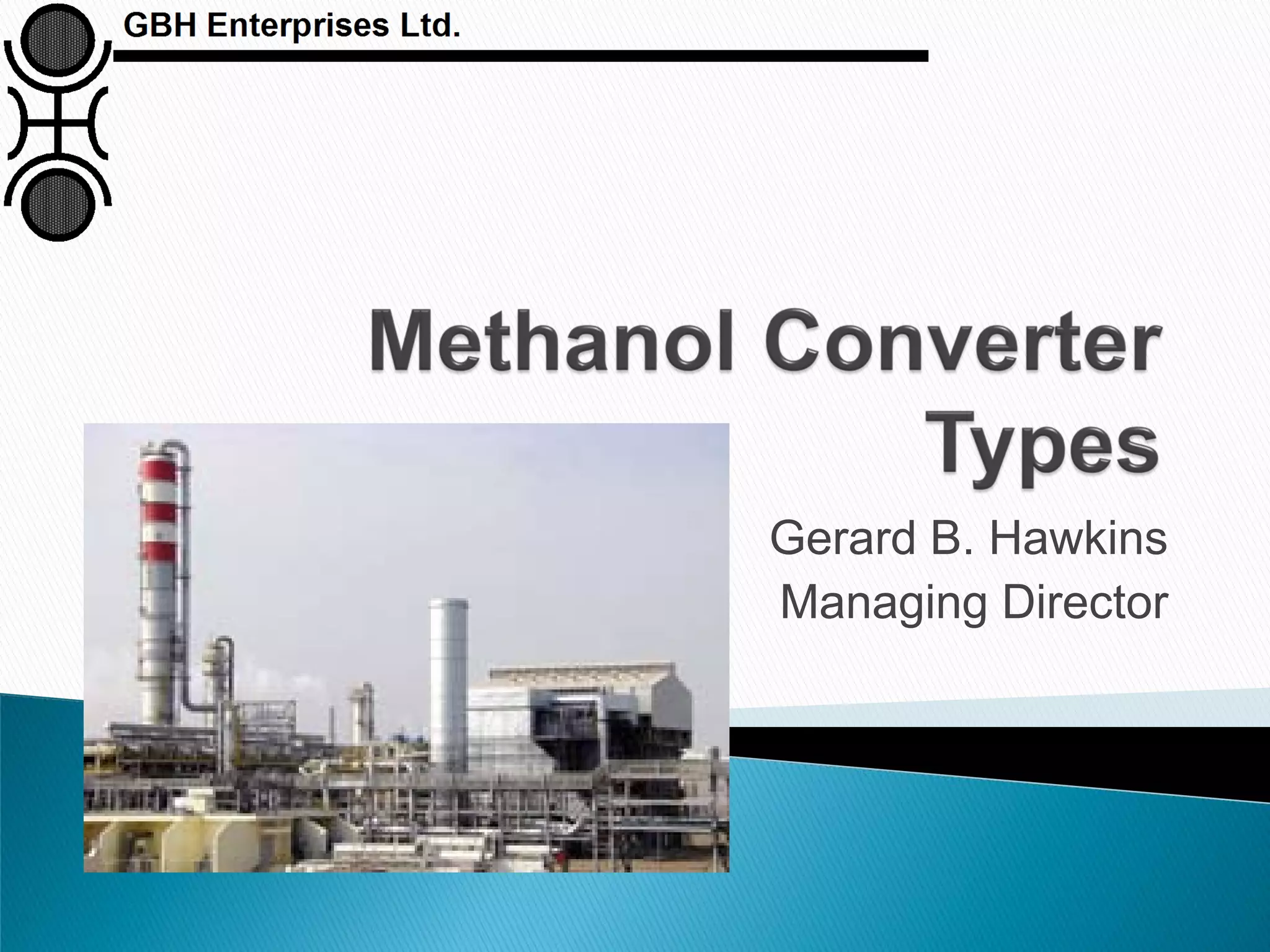
Gerard B. Hawkins
Managing Director
• Quench Converter
• ARC Converter
• Tube Cooled
• Toyo MRF-Z
• Adiabatic Beds
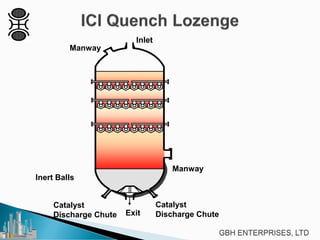
Exit
Catalyst
Discharge Chute
Catalyst
Discharge Chute
Manway
Manway
Inlet
Inert Balls
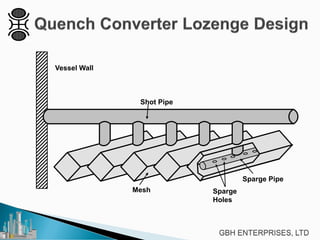
Vessel Wall
Shot Pipe
Sparge Pipe
Sparge
Holes
Mesh
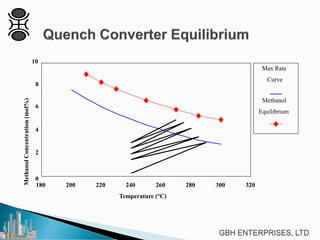
180 200 220 240 260 280 300 320
0
2
4
6
8
10
Temperature (°C)
MethanolConcentration(mol%)
Max Rate
Curve
Methanol
Equilibrium
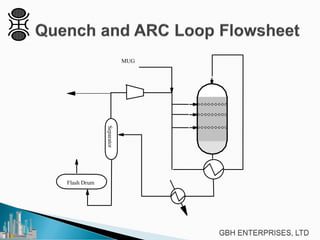
MUG
Flash Drum
Separator
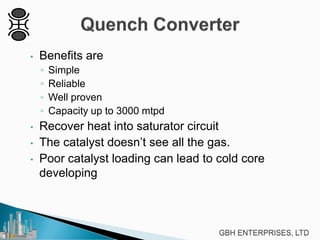
• Benefits are
◦ Simple
◦ Reliable
◦ Well proven
◦ Capacity up to 3000 mtpd
• Recover heat into saturator circuit
• The catalyst doesn’t see all the gas.
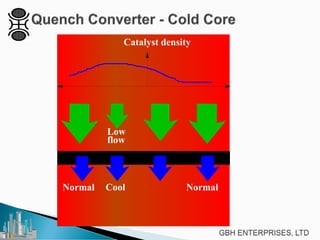
• Poor catalyst loading can lead to cold core
developing
• Significant flow mal-distribution
• Some zones are cold
◦ Can lose reaction
• Some zones are hot
◦ High byproducts levels
◦ High rate of catalyst deactivation
Cool NormalNormal
Catalyst density
Low
flow
• It is not caused by the quench lozenges being
poor distributors of the cool incoming gas.
• The reverse is true - the lozenges are very good
distributors.
• The problem is that voidage variations across the
bed can cause varying flows down different parts
of the reactor.
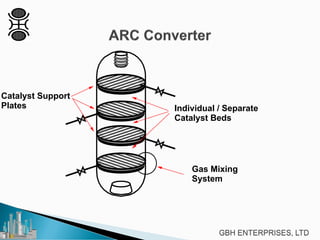
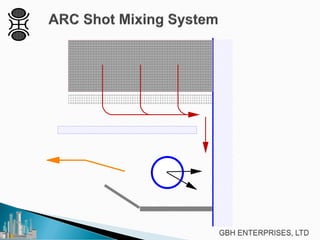
• ARC retrofit developed to overcome problem.
Catalyst Support
Plates Individual / Separate
Catalyst Beds
Gas Mixing
System
x x xx x x x xx x x xx x x x xx x x x xx x x x xx x x x xx x x x xx x x x xx x x x xx x x xx x x x xx x x x xx x
C a t aly s t be d
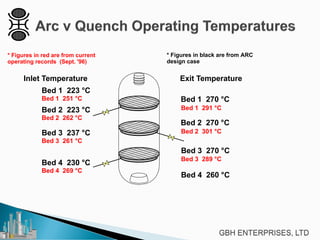
Inlet Temperature Exit Temperature
Bed 3 237 °C
Bed 1 223 °C
Bed 4 230 °C
Bed 3 270 °C
Bed 1 270 °C
Bed 2 223 °C
Bed 4 260 °C
Bed 2 270 °C
Bed 3 261 °C
Bed 1 251 °C
Bed 4 269 °C
Bed 3 289 °C
Bed 1 291 °C
Bed 2 262 °C
Bed 2 301 °C
* Figures in red are from current
operating records (Sept. '96)
* Figures in black are from ARC
design case
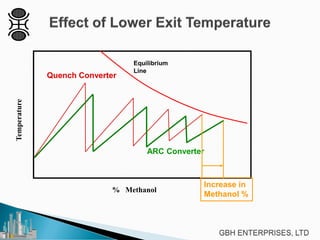
Temperature
% Methanol
Equilibrium
Line
Quench Converter
ARC Converter
Increase in
Methanol %
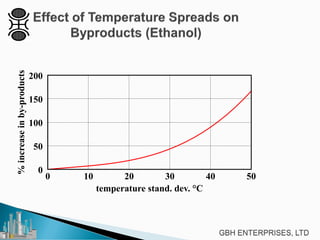
0 10 20 30 40 50
0
50
100
150
200
temperature stand. dev. °C
%increaseinby-products
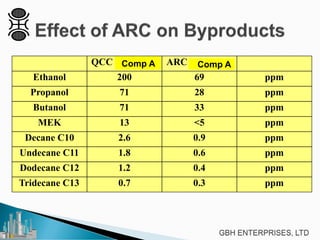
QCC + ICI 51-7 ARC + ICI 51-7
Ethanol 200 69 ppm
Propanol 71 28 ppm
Butanol 71 33 ppm
MEK 13 <5 ppm
Decane C10 2.6 0.9 ppm
Undecane C11 1.8 0.6 ppm
Dodecane C12 1.2 0.4 ppm
Tridecane C13 0.7 0.3 ppm
Comp A Comp A
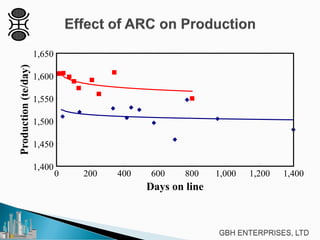
0 200 400 600 800 1,000 1,200 1,400
1,400
1,450
1,500
1,550
1,600
1,650
Days on line
Production(te/day)
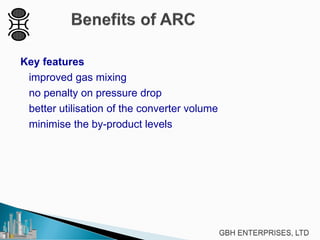
Key features
improved gas mixing
no penalty on pressure drop
better utilisation of the converter volume
minimise the by-product levels
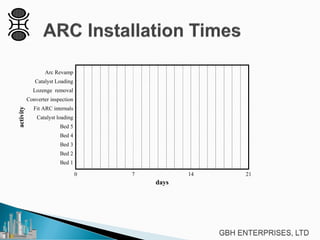
Arc Revamp
Catalyst Loading
Lozenge removal
Converter inspection
Fit ARC internals
Catalyst loading
Bed 5
Bed 4
Bed 3
Bed 2
Bed 1
0 7 14 21
activity
days
• ARC converters have exhibited an instability
• This is highlighted by inlet and outlet temperatures
varying as per a sine wave
• Feedback occurs over warm loop interchanger
• Normally stable but can become unstable
◦ Leads to loss of strike in converter
• Action is to reduce circulation rate
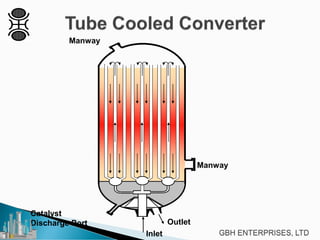
Manway
Outlet
Manway
Inlet
Catalyst
Discharge Port
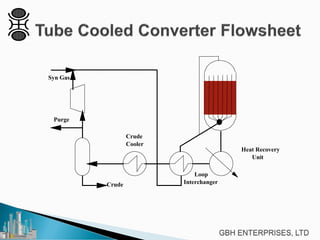
Heat Recovery
Unit
Crude
Crude
Cooler
Loop
Interchanger
Syn Gas
Purge
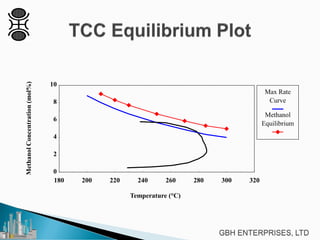
180 200 220 240 260 280 300 320
0
2
4
6
8
10
Temperature (°C)
MethanolConcentration(mol%)
Max Rate
Curve
Methanol
Equilibrium
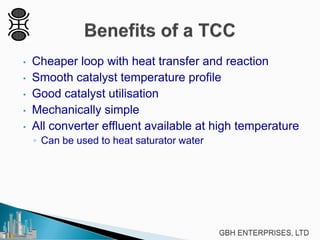
• Cheaper loop with heat transfer and reaction
• Smooth catalyst temperature profile
• Good catalyst utilisation
• Mechanically simple
• All converter effluent available at high temperature
◦ Can be used to heat saturator water
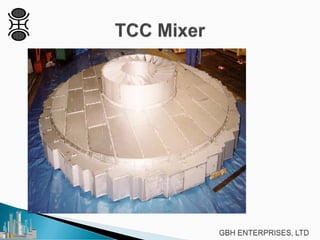
• Mixing shall be effective
• Mixer should
◦ either not impede loading
◦ or be easy to install and remove.
• Mixer should enhance safe operation and be
mechanically robust.
• Leakage of gas bypassing mixer should be
minimized.
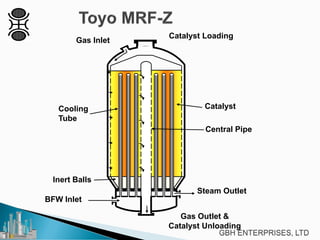
Steam Outlet
Central Pipe
Catalyst Loading
Gas Inlet
Gas Outlet &
Catalyst Unloading
BFW Inlet
Cooling
Tube
Catalyst
Inert Balls
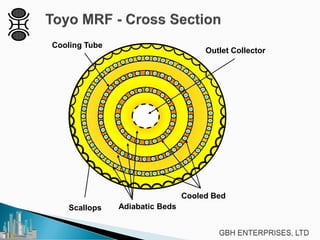
Outlet Collector
Scallops Adiabatic Beds
Cooled Bed
Cooling Tube
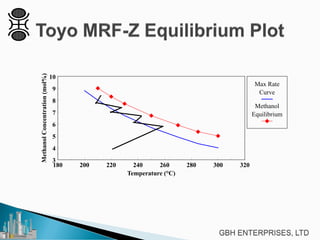
180 200 220 240 260 280 300 320
3
4
5
6
7
8
9
10
Temperature (°C)
MethanolConcentration(mol%)
Max Rate
Curve
Methanol
Equilibrium
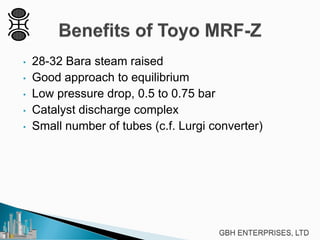
• 28-32 Bara steam raised
• Good approach to equilibrium
• Low pressure drop, 0.5 to 0.75 bar
• Catalyst discharge complex
• Small number of tubes (c.f. Lurgi converter)
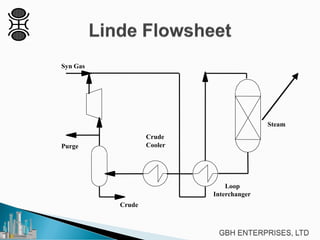
Crude
Crude
Cooler
Loop
Interchanger
Syn Gas
Purge
Steam
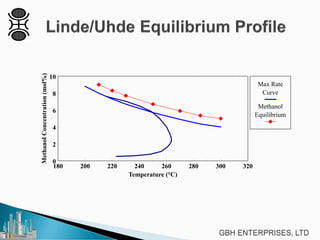
180 200 220 240 260 280 300 320
0
2
4
6
8
10
Temperature (°C)
MethanolConcentration(mol%)
Max Rate
Curve
Methanol
Equilibrium
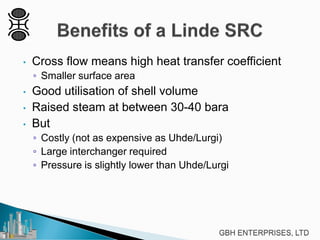
• Cross flow means high heat transfer coefficient
◦ Smaller surface area
• Good utilisation of shell volume
• Raised steam at between 30-40 bara
• But
◦ Costly (not as expensive as Uhde/Lurgi)
◦ Large interchanger required
◦ Pressure is slightly lower than Uhde/Lurgi
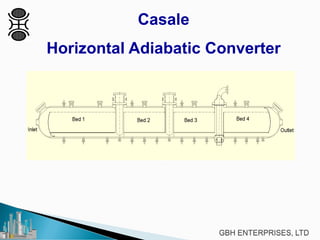
Casale
Horizontal Adiabatic Converter
180 200 220 240 260 280 300 320
0
2
4
6
8
10
Temperature (°C)
MethanolConcentration(mol%)
Max Rate
Curve
Methanol
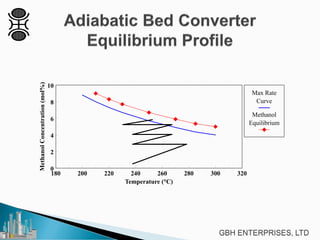
Equilibrium
• All the gas sees all of the catalyst
• Cheap vessels - can be spherical
• Vessels can be designed the same
◦ Reduces CAPEX
• But
◦ Large loop interchanger
◦ Multiple vessels (excluding Casale’s Horizontal
Converter)
◦ Beds are shallow and so mal distribution can be a
problem
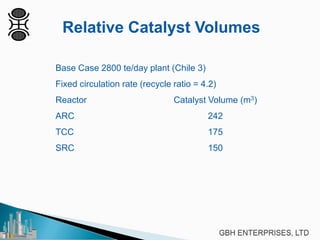
Relative Catalyst Volumes
Base Case 2800 te/day plant (Chile 3)
Fixed circulation rate (recycle ratio = 4.2)
Reactor Catalyst Volume (m3)
ARC 242
TCC 175
SRC 150
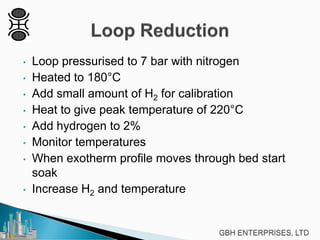
• Loop pressurised to 7 bar with nitrogen
• Heated to 180°C
• Add small amount of H2 for calibration
• Heat to give peak temperature of 220°C
• Add hydrogen to 2%
• Monitor temperatures
• When exotherm profile moves through bed start
soak
• Increase H2 and temperature
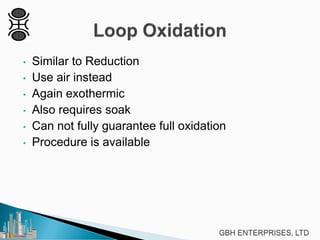
• Similar to Reduction
• Use air instead
• Again exothermic
• Also requires soak
• Can not fully guarantee full oxidation
• Procedure is available
Process Information Disclaimer
Information contained in this publication or as otherwise
supplied to Users is believed to be accurate and correct
at time of going to press, and is given in good faith, but it
is for the User to satisfy itself of the suitability of the
Product for its own particular purpose. GBHE gives no
warranty as to the fitness of the Product for any
particular purpose and any implied warranty or condition
(statutory or otherwise) is excluded except to the extent
that exclusion is prevented by law. GBHE accepts no
liability for loss or damage resulting from reliance on this
information. Freedom under Patent, Copyright and
Designs cannot be assumed.
Methanol Converter Types

Methanol Converter Types

  • 1.
  • 2.
    • Quench Converter •ARC Converter • Tube Cooled • Toyo MRF-Z • Adiabatic Beds
  • 3.
  • 5.
    Vessel Wall Shot Pipe SpargePipe Sparge Holes Mesh
  • 6.
    180 200 220240 260 280 300 320 0 2 4 6 8 10 Temperature (°C) MethanolConcentration(mol%) Max Rate Curve Methanol Equilibrium
  • 7.
  • 8.
    • Benefits are ◦Simple ◦ Reliable ◦ Well proven ◦ Capacity up to 3000 mtpd • Recover heat into saturator circuit • The catalyst doesn’t see all the gas. • Poor catalyst loading can lead to cold core developing
  • 9.
    • Significant flowmal-distribution • Some zones are cold ◦ Can lose reaction • Some zones are hot ◦ High byproducts levels ◦ High rate of catalyst deactivation
  • 10.
  • 11.
    • It isnot caused by the quench lozenges being poor distributors of the cool incoming gas. • The reverse is true - the lozenges are very good distributors. • The problem is that voidage variations across the bed can cause varying flows down different parts of the reactor. • ARC retrofit developed to overcome problem.
  • 12.
    Catalyst Support Plates Individual/ Separate Catalyst Beds Gas Mixing System
  • 13.
    x x xxx x x xx x x xx x x x xx x x x xx x x x xx x x x xx x x x xx x x x xx x x x xx x x xx x x x xx x x x xx x C a t aly s t be d
  • 14.
    Inlet Temperature ExitTemperature Bed 3 237 °C Bed 1 223 °C Bed 4 230 °C Bed 3 270 °C Bed 1 270 °C Bed 2 223 °C Bed 4 260 °C Bed 2 270 °C Bed 3 261 °C Bed 1 251 °C Bed 4 269 °C Bed 3 289 °C Bed 1 291 °C Bed 2 262 °C Bed 2 301 °C * Figures in red are from current operating records (Sept. '96) * Figures in black are from ARC design case
  • 15.
  • 16.
    0 10 2030 40 50 0 50 100 150 200 temperature stand. dev. °C %increaseinby-products
  • 17.
    QCC + ICI51-7 ARC + ICI 51-7 Ethanol 200 69 ppm Propanol 71 28 ppm Butanol 71 33 ppm MEK 13 <5 ppm Decane C10 2.6 0.9 ppm Undecane C11 1.8 0.6 ppm Dodecane C12 1.2 0.4 ppm Tridecane C13 0.7 0.3 ppm Comp A Comp A
  • 18.
    0 200 400600 800 1,000 1,200 1,400 1,400 1,450 1,500 1,550 1,600 1,650 Days on line Production(te/day)
  • 19.
    Key features improved gasmixing no penalty on pressure drop better utilisation of the converter volume minimise the by-product levels
  • 20.
    Arc Revamp Catalyst Loading Lozengeremoval Converter inspection Fit ARC internals Catalyst loading Bed 5 Bed 4 Bed 3 Bed 2 Bed 1 0 7 14 21 activity days
  • 21.
    • ARC convertershave exhibited an instability • This is highlighted by inlet and outlet temperatures varying as per a sine wave • Feedback occurs over warm loop interchanger • Normally stable but can become unstable ◦ Leads to loss of strike in converter • Action is to reduce circulation rate
  • 22.
  • 23.
  • 24.
    180 200 220240 260 280 300 320 0 2 4 6 8 10 Temperature (°C) MethanolConcentration(mol%) Max Rate Curve Methanol Equilibrium
  • 25.
    • Cheaper loopwith heat transfer and reaction • Smooth catalyst temperature profile • Good catalyst utilisation • Mechanically simple • All converter effluent available at high temperature ◦ Can be used to heat saturator water
  • 26.
    • Mixing shallbe effective • Mixer should ◦ either not impede loading ◦ or be easy to install and remove. • Mixer should enhance safe operation and be mechanically robust. • Leakage of gas bypassing mixer should be minimized.
  • 28.
    Steam Outlet Central Pipe CatalystLoading Gas Inlet Gas Outlet & Catalyst Unloading BFW Inlet Cooling Tube Catalyst Inert Balls
  • 29.
    Outlet Collector Scallops AdiabaticBeds Cooled Bed Cooling Tube
  • 30.
    180 200 220240 260 280 300 320 3 4 5 6 7 8 9 10 Temperature (°C) MethanolConcentration(mol%) Max Rate Curve Methanol Equilibrium
  • 31.
    • 28-32 Barasteam raised • Good approach to equilibrium • Low pressure drop, 0.5 to 0.75 bar • Catalyst discharge complex • Small number of tubes (c.f. Lurgi converter)
  • 33.
  • 34.
    180 200 220240 260 280 300 320 0 2 4 6 8 10 Temperature (°C) MethanolConcentration(mol%) Max Rate Curve Methanol Equilibrium
  • 35.
    • Cross flowmeans high heat transfer coefficient ◦ Smaller surface area • Good utilisation of shell volume • Raised steam at between 30-40 bara • But ◦ Costly (not as expensive as Uhde/Lurgi) ◦ Large interchanger required ◦ Pressure is slightly lower than Uhde/Lurgi
  • 36.
  • 37.
    180 200 220240 260 280 300 320 0 2 4 6 8 10 Temperature (°C) MethanolConcentration(mol%) Max Rate Curve Methanol Equilibrium
  • 38.
    • All thegas sees all of the catalyst • Cheap vessels - can be spherical • Vessels can be designed the same ◦ Reduces CAPEX • But ◦ Large loop interchanger ◦ Multiple vessels (excluding Casale’s Horizontal Converter) ◦ Beds are shallow and so mal distribution can be a problem
  • 39.
    Relative Catalyst Volumes BaseCase 2800 te/day plant (Chile 3) Fixed circulation rate (recycle ratio = 4.2) Reactor Catalyst Volume (m3) ARC 242 TCC 175 SRC 150
  • 40.
    • Loop pressurisedto 7 bar with nitrogen • Heated to 180°C • Add small amount of H2 for calibration • Heat to give peak temperature of 220°C • Add hydrogen to 2% • Monitor temperatures • When exotherm profile moves through bed start soak • Increase H2 and temperature
  • 41.
    • Similar toReduction • Use air instead • Again exothermic • Also requires soak • Can not fully guarantee full oxidation • Procedure is available
  • 42.
    Process Information Disclaimer Informationcontained in this publication or as otherwise supplied to Users is believed to be accurate and correct at time of going to press, and is given in good faith, but it is for the User to satisfy itself of the suitability of the Product for its own particular purpose. GBHE gives no warranty as to the fitness of the Product for any particular purpose and any implied warranty or condition (statutory or otherwise) is excluded except to the extent that exclusion is prevented by law. GBHE accepts no liability for loss or damage resulting from reliance on this information. Freedom under Patent, Copyright and Designs cannot be assumed.