Group 1
Hadia Azhar
Amna Hafeez
Muqadas Shehzad
Umm-e-Farwa
“Oxidative Stress &
Redox Regulation”
Oxidative stress
• “A disturbance in the balance between reactive oxygen
species (ROS) and antioxidants is called oxidative
stress.”
• Under normal conditions, cells are able to balance the
production of oxidants and antioxidants.
• Oxidative stress occurs when there is imbalance in our
cells due to either an increase in free radicals or a
decrease in antioxidants.
Reactive Oxygen Species
Reactive oxygen species (ROS) are chemically
reactive chemical species containing oxygen.
Examples:
1. peroxides (H2O2),
2. superoxide (O2-֗),
3. hydroxyl radical ( HO-),
4. singlet oxygen(O2).
Generation of ROS
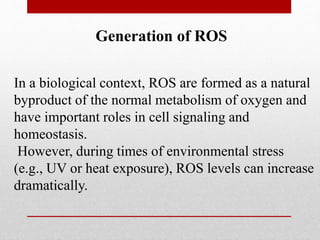
In a biological context, ROS are formed as a natural
byproduct of the normal metabolism of oxygen and
have important roles in cell signaling and
homeostasis.
However, during times of environmental stress
(e.g., UV or heat exposure), ROS levels can increase
dramatically.
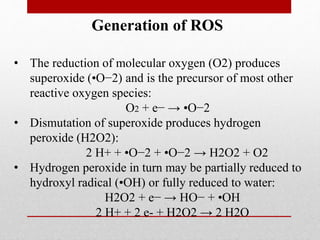
• The reduction of molecular oxygen (O2) produces
superoxide (•O−2) and is the precursor of most other
reactive oxygen species:
O2 + e− → •O−2
• Dismutation of superoxide produces hydrogen
peroxide (H2O2):
2 H+ + •O−2 + •O−2 → H2O2 + O2
• Hydrogen peroxide in turn may be partially reduced to
hydroxyl radical (•OH) or fully reduced to water:
H2O2 + e− → HO− + •OH
2 H+ + 2 e- + H2O2 → 2 H2O
Generation of ROS
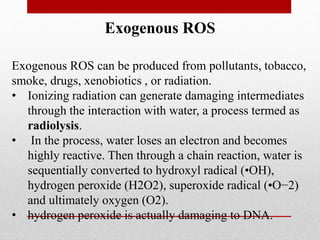
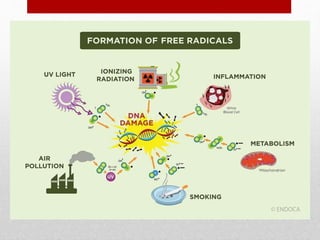
Exogenous ROS
Exogenous ROS can be produced from pollutants, tobacco,
smoke, drugs, xenobiotics , or radiation.
• Ionizing radiation can generate damaging intermediates
through the interaction with water, a process termed as
radiolysis.
• In the process, water loses an electron and becomes
highly reactive. Then through a chain reaction, water is
sequentially converted to hydroxyl radical (•OH),
hydrogen peroxide (H2O2), superoxide radical (•O−2)
and ultimately oxygen (O2).
• hydrogen peroxide is actually damaging to DNA.
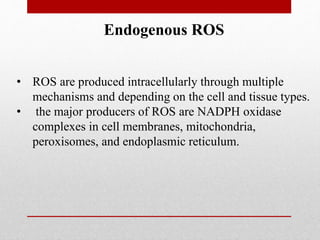
Endogenous ROS
• ROS are produced intracellularly through multiple
mechanisms and depending on the cell and tissue types.
• the major producers of ROS are NADPH oxidase
complexes in cell membranes, mitochondria,
peroxisomes, and endoplasmic reticulum.
Damaging effects
Harmful effects of reactive oxygen species on the cell are
most often:
1. damage of DNA or RNA
2. oxidations of polyunsaturated fatty acids in lipids (lipid
peroxidation)
3. oxidations of amino acids in proteins
4. oxidative deactivation of specific enzymes by oxidation
of co-factors
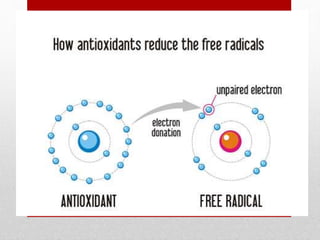
Antioxidants
• An antioxidant is a molecule that inhibits the oxidation
of other molecules.
• Oxidation is a chemical reaction that can produce free
radicals (ROS).
• Source:
Most antioxidants are obtained from diet but they
can also be taken as supplements in the form of capsules
or tablets.
Endogenous Antioxidants:
• Vitamins ( vit A ,C , E , K)
• Minerals ( zinc, selenium)
• Amin acids ( GSH, methionine, N- acetyl cysteine)
• Enzymes ( co enzyme Q, superoxide dismutase ( SOD),
glutathione peroxidase)
Disease prevention:
• Antioxidants may be used in disease prevention but the
extent of their benefits is not fully understood. The use
of antioxidants to treat disease states induced by
oxidative stress is controversial.
• For example, antioxidants may be useful in treating
patients after a stroke to protect the nerves and brain
cells from oxidative damage.
• consumption of food rich in vitamin E may reduce the
risk of coronary heart disease in middle-aged to older
men and women.
Diseases caused by Oxidative stress
Damage to biomolecules like lipids , proteins , DNA will
eventually lead to diseases like:
• Cancer
• Diabetes
• Rheumatoid arthritis
• Myocardial infarction
• Cardiovascular diseases
• Chronic inflammation
• Atherosclerosis
Redox Regulation
• Redox (short for reduction–oxidation reaction) is
a chemical reaction in which the oxidation states of atoms
are changed. Any such reaction involves both a reduction
process and a complementary oxidation process, two key
concepts involved with electron transfer processes.
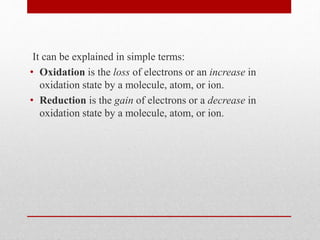
It can be explained in simple terms:
• Oxidation is the loss of electrons or an increase in
oxidation state by a molecule, atom, or ion.
• Reduction is the gain of electrons or a decrease in
oxidation state by a molecule, atom, or ion.
EXAMPLE OF REDOX
REGULATION
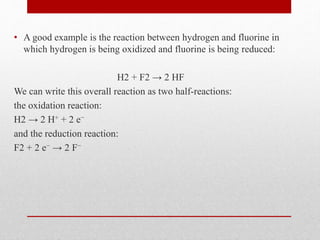
• A good example is the reaction between hydrogen and fluorine in
which hydrogen is being oxidized and fluorine is being reduced:
H2 + F2 → 2 HF
We can write this overall reaction as two half-reactions:
the oxidation reaction:
H2 → 2 H+ + 2 e−
and the reduction reaction:
F2 + 2 e− → 2 F−
Redox regulation of
cell survival at the
signal-transduction
level
• Mitogen-activated protein kinase
MAPK operates in a cascade fashion with a MAP kinase
kinase kinase (MAPKKK) phosphorylating and activating a
MAP kinase kinase (MAPKK), which then phosphorylates
and activates a MAP kinase (MAPK).
Role of MAPK for cell survival under oxidative stress:
signaling promotes cell survival under mild oxidative stress,
whereas SAPKs seem to induce cell death as a response to
oxidative injuries.
b. Redox regulation of MAPK:
• Multiple evidence shows that oxidative stress can activate
the ERK pathway.
• Redox modification can regulate ERK activation at the
level of the tyrosine kinase receptor and the Ras
activation.

ROS and redox regulation

  • 1.
    Group 1 Hadia Azhar AmnaHafeez Muqadas Shehzad Umm-e-Farwa
  • 2.
  • 3.
    Oxidative stress • “Adisturbance in the balance between reactive oxygen species (ROS) and antioxidants is called oxidative stress.” • Under normal conditions, cells are able to balance the production of oxidants and antioxidants. • Oxidative stress occurs when there is imbalance in our cells due to either an increase in free radicals or a decrease in antioxidants.
  • 4.
    Reactive Oxygen Species Reactiveoxygen species (ROS) are chemically reactive chemical species containing oxygen. Examples: 1. peroxides (H2O2), 2. superoxide (O2-֗), 3. hydroxyl radical ( HO-), 4. singlet oxygen(O2).
  • 5.
    Generation of ROS Ina biological context, ROS are formed as a natural byproduct of the normal metabolism of oxygen and have important roles in cell signaling and homeostasis. However, during times of environmental stress (e.g., UV or heat exposure), ROS levels can increase dramatically.
  • 6.
    • The reductionof molecular oxygen (O2) produces superoxide (•O−2) and is the precursor of most other reactive oxygen species: O2 + e− → •O−2 • Dismutation of superoxide produces hydrogen peroxide (H2O2): 2 H+ + •O−2 + •O−2 → H2O2 + O2 • Hydrogen peroxide in turn may be partially reduced to hydroxyl radical (•OH) or fully reduced to water: H2O2 + e− → HO− + •OH 2 H+ + 2 e- + H2O2 → 2 H2O Generation of ROS
  • 7.
    Exogenous ROS Exogenous ROScan be produced from pollutants, tobacco, smoke, drugs, xenobiotics , or radiation. • Ionizing radiation can generate damaging intermediates through the interaction with water, a process termed as radiolysis. • In the process, water loses an electron and becomes highly reactive. Then through a chain reaction, water is sequentially converted to hydroxyl radical (•OH), hydrogen peroxide (H2O2), superoxide radical (•O−2) and ultimately oxygen (O2). • hydrogen peroxide is actually damaging to DNA.
  • 8.
    Endogenous ROS • ROSare produced intracellularly through multiple mechanisms and depending on the cell and tissue types. • the major producers of ROS are NADPH oxidase complexes in cell membranes, mitochondria, peroxisomes, and endoplasmic reticulum.
  • 9.
    Damaging effects Harmful effectsof reactive oxygen species on the cell are most often: 1. damage of DNA or RNA 2. oxidations of polyunsaturated fatty acids in lipids (lipid peroxidation) 3. oxidations of amino acids in proteins 4. oxidative deactivation of specific enzymes by oxidation of co-factors
  • 11.
    Antioxidants • An antioxidantis a molecule that inhibits the oxidation of other molecules. • Oxidation is a chemical reaction that can produce free radicals (ROS). • Source: Most antioxidants are obtained from diet but they can also be taken as supplements in the form of capsules or tablets.
  • 12.
    Endogenous Antioxidants: • Vitamins( vit A ,C , E , K) • Minerals ( zinc, selenium) • Amin acids ( GSH, methionine, N- acetyl cysteine) • Enzymes ( co enzyme Q, superoxide dismutase ( SOD), glutathione peroxidase)
  • 14.
    Disease prevention: • Antioxidantsmay be used in disease prevention but the extent of their benefits is not fully understood. The use of antioxidants to treat disease states induced by oxidative stress is controversial. • For example, antioxidants may be useful in treating patients after a stroke to protect the nerves and brain cells from oxidative damage. • consumption of food rich in vitamin E may reduce the risk of coronary heart disease in middle-aged to older men and women.
  • 15.
    Diseases caused byOxidative stress Damage to biomolecules like lipids , proteins , DNA will eventually lead to diseases like: • Cancer • Diabetes • Rheumatoid arthritis • Myocardial infarction • Cardiovascular diseases • Chronic inflammation • Atherosclerosis
  • 16.
  • 17.
    • Redox (shortfor reduction–oxidation reaction) is a chemical reaction in which the oxidation states of atoms are changed. Any such reaction involves both a reduction process and a complementary oxidation process, two key concepts involved with electron transfer processes.
  • 18.
    It can beexplained in simple terms: • Oxidation is the loss of electrons or an increase in oxidation state by a molecule, atom, or ion. • Reduction is the gain of electrons or a decrease in oxidation state by a molecule, atom, or ion.
  • 19.
  • 20.
    • A goodexample is the reaction between hydrogen and fluorine in which hydrogen is being oxidized and fluorine is being reduced: H2 + F2 → 2 HF We can write this overall reaction as two half-reactions: the oxidation reaction: H2 → 2 H+ + 2 e− and the reduction reaction: F2 + 2 e− → 2 F−
  • 21.
    Redox regulation of cellsurvival at the signal-transduction level
  • 22.
    • Mitogen-activated proteinkinase MAPK operates in a cascade fashion with a MAP kinase kinase kinase (MAPKKK) phosphorylating and activating a MAP kinase kinase (MAPKK), which then phosphorylates and activates a MAP kinase (MAPK). Role of MAPK for cell survival under oxidative stress: signaling promotes cell survival under mild oxidative stress, whereas SAPKs seem to induce cell death as a response to oxidative injuries.
  • 23.
    b. Redox regulationof MAPK: • Multiple evidence shows that oxidative stress can activate the ERK pathway. • Redox modification can regulate ERK activation at the level of the tyrosine kinase receptor and the Ras activation.