RATIONAL DRUG
    DESIGN


        Presented by,
        J.NARESH.
Rational Drug design
• Rational drug design is also sometimes referred as Drug design or
  Rational design. It is a process in which finding of new medication
  based on knowledge of biological target is done. It involves design of
  small molecules that are complementary in shape and charge to
  bimolecular target.
• . The drug is most commonly an organic small molecule that activates
  or inhibits the function of a bio molecule such as a protein, which in
  turn results in a therapeutic benefit to the patient
• In contrast to traditional methods of drug discovery, which rely on
  trial-and-error testing of chemical substances on cultured cells or
  animals, and matching the apparent effects to treatments, rational drug
  design begins with a hypothesis that modulation of a specific
  biological target may have therapeutic value.
Method of Rational drug design
• SAR analysis try to convert structure- activity observations into
  structure-activity relationships. We have to aim at maximizing the
  knowledge that can be extracted from the raw data in molecular terms,
  exploit this knowledge to identify which molecule should be
  synthesized ant identify lead compounds for either additional
  modification or further pre-clinical studies
Rational Drug Design; Example -
   Cimetadine (Tagamet)
     Starts with a validated biological target and ends up with a drug
     that optimally interacts with the target and triggers the desired
     biological action.
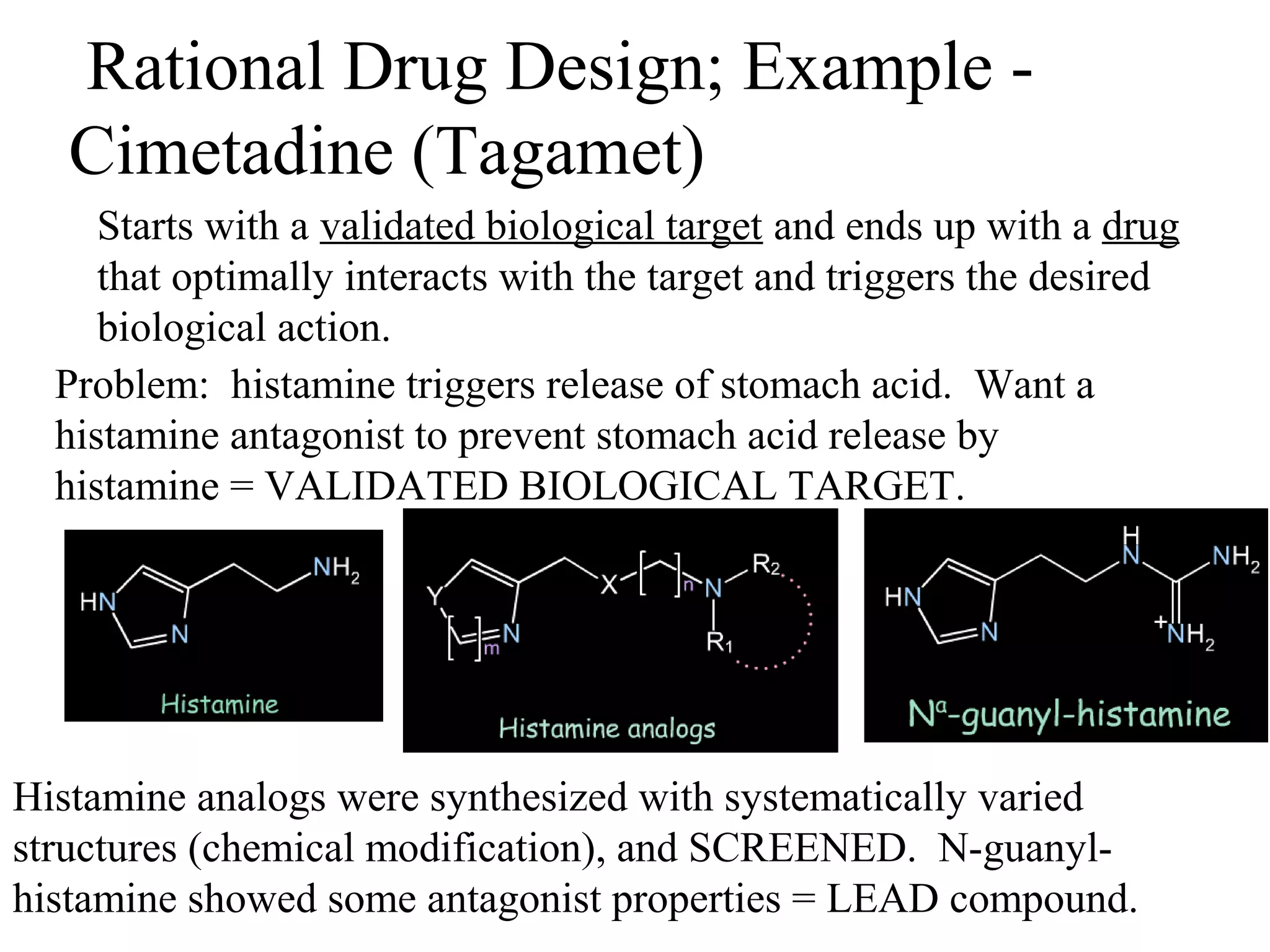
  Problem: histamine triggers release of stomach acid. Want a
  histamine antagonist to prevent stomach acid release by
  histamine = VALIDATED BIOLOGICAL TARGET.


Histamine analogs were synthesized with systematically varied
structures (chemical modification), and SCREENED. N-guanyl-
histamine showed some antagonist properties = LEAD compound.
Rational Drug Design - Cimetidine
  (Tagamet) - continued
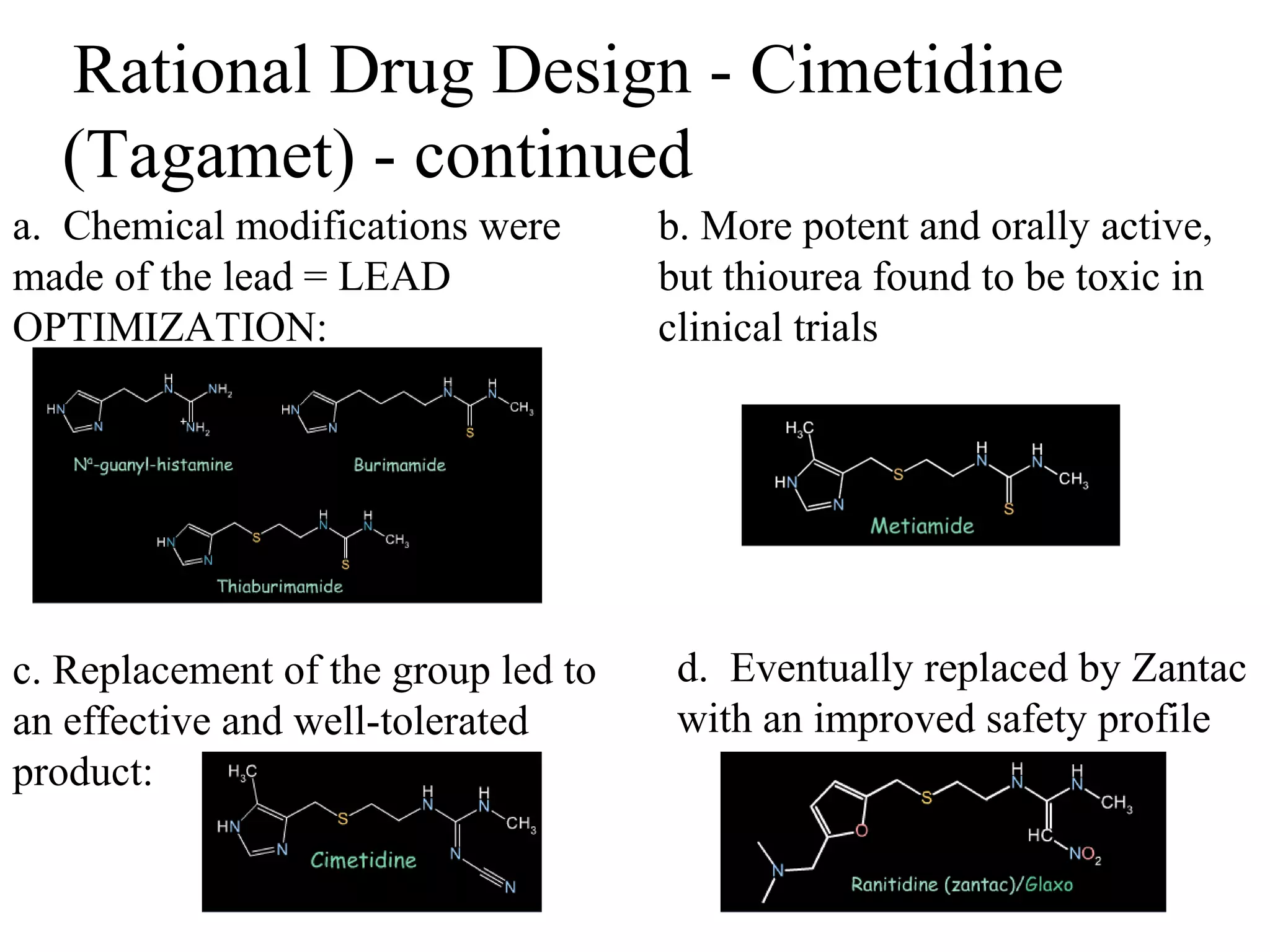
a. Chemical modifications were       b. More potent and orally active,
made of the lead = LEAD              but thiourea found to be toxic in
OPTIMIZATION:                        clinical trials


c. Replacement of the group led to    d. Eventually replaced by Zantac
an effective and well-tolerated       with an improved safety profile
product:
Rational Drug Design -
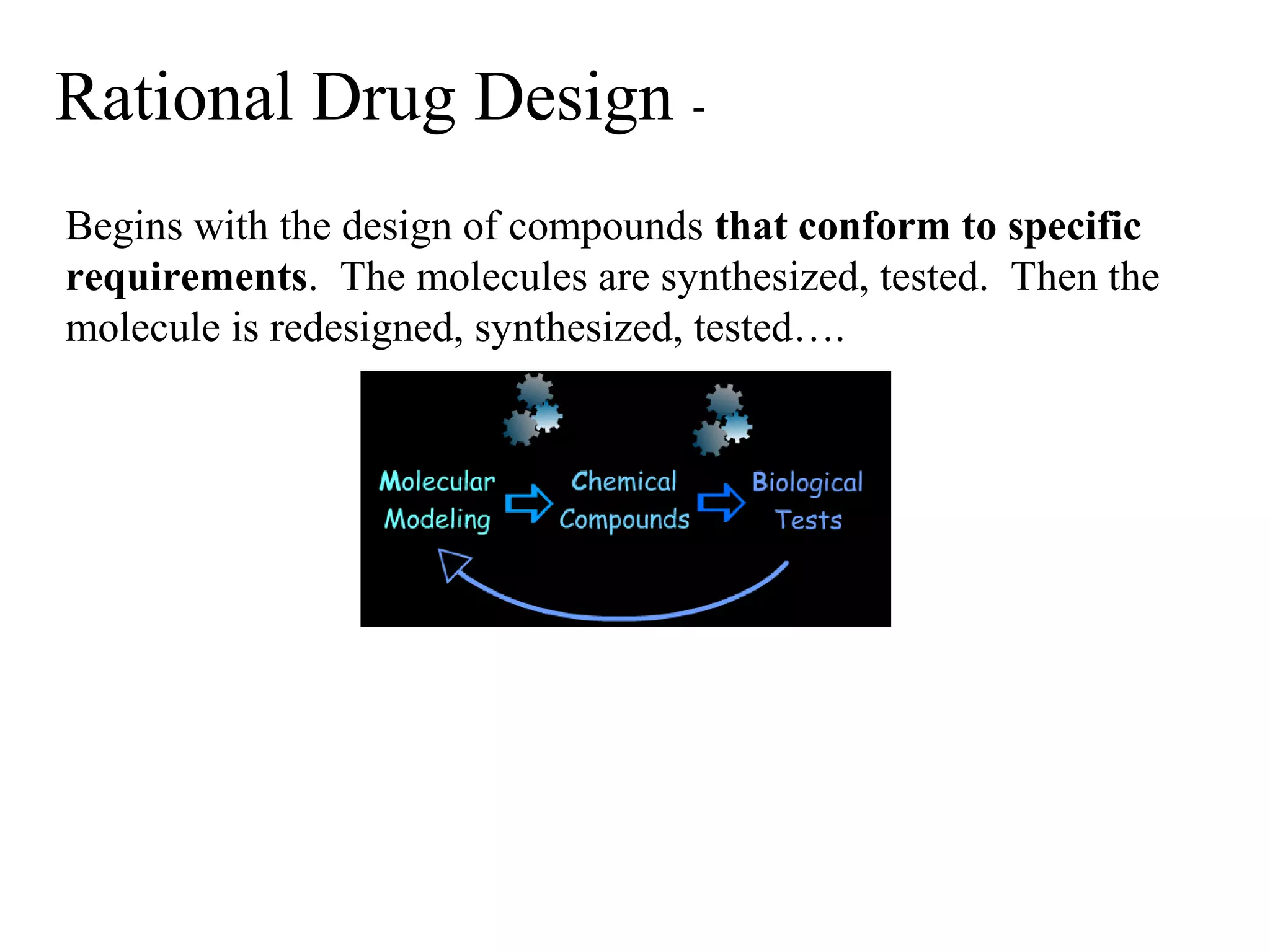
Begins with the design of compounds that conform to specific
requirements. The molecules are synthesized, tested. Then the
molecule is redesigned, synthesized, tested….
Types of Rational Drug Designing
  Methods:
1. 3D structure of biological target (receptor-based
   drug design)
2. Structure(s) of known active small molecules
   (pharmacophore-based drug design)
3)Computer –assisted drug design(CADD)
4) Molecular graphics
5)Pattern recognition
6)Receptor -fit
Rational Drug Design -
Pharmacophore-based Drug Design
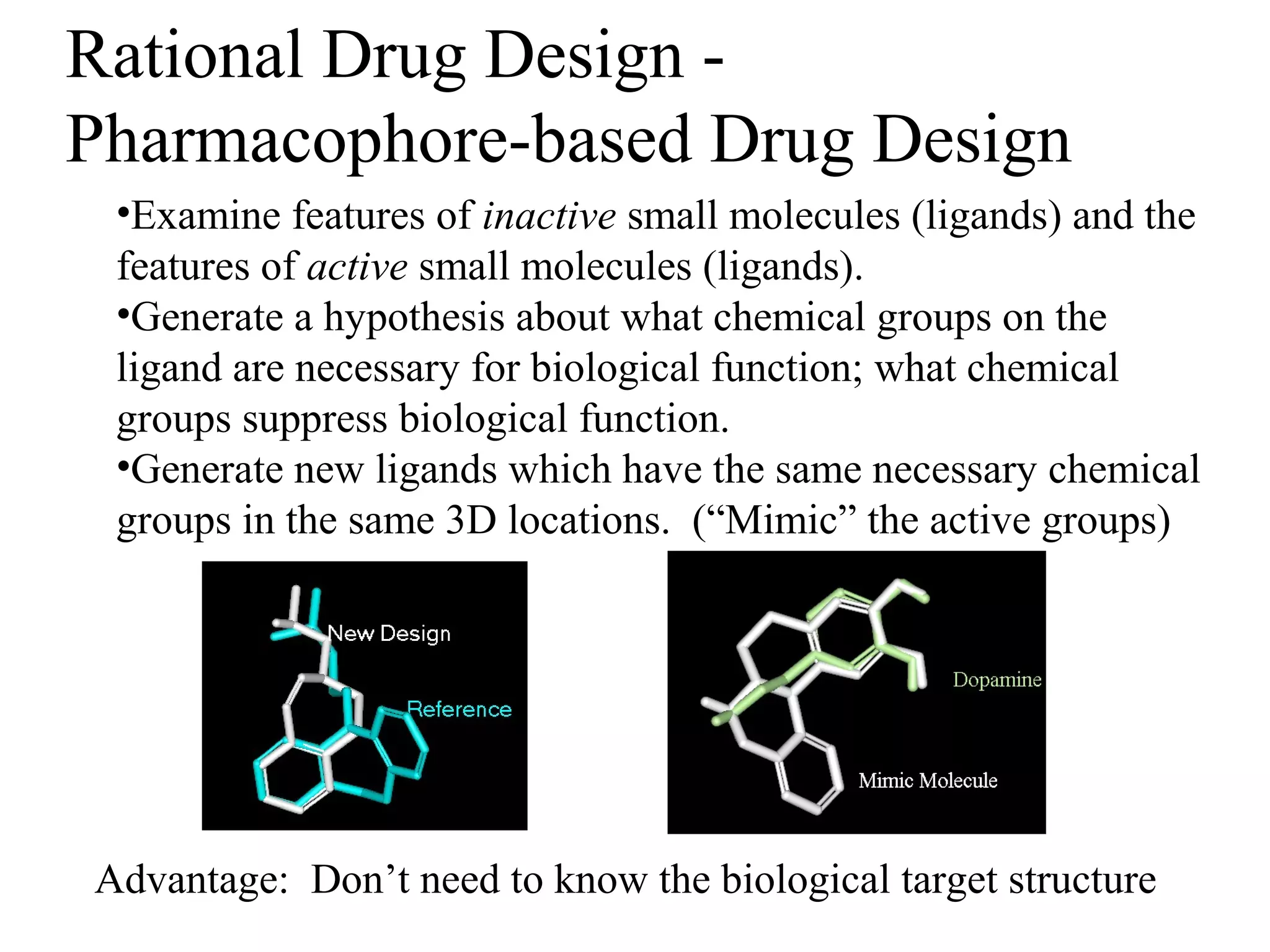
 •Examine features of inactive small molecules (ligands) and the
 features of active small molecules (ligands).
 •Generate a hypothesis about what chemical groups on the
 ligand are necessary for biological function; what chemical
 groups suppress biological function.
 •Generate new ligands which have the same necessary chemical
 groups in the same 3D locations. (“Mimic” the active groups)


Advantage: Don’t need to know the biological target structure
Rational Drug Design - Receptor-based
Drug Design
 •Examine the 3D structure of the biological target (usually an X-
 ray structure; hopefully one where the target is complexed with
 a small molecule ligand; if no data is available, look for
 homologous protein structures/sequences.)
 •Look for specific chemical groups that could be part of an
 attractive interaction between the target protein and the drug.
 •Design a drug candidate that will have multiple sites of
 complementary interactions with the biological target.
                                    Advantage: Visualization
                                    allows direct design of
                                    molecules
3)computer-assisted drug design:
This is concerned primarily with physicochemical parameters involved
  in drug activity, quantitative structure –activity relationship (QSAR)
  and quantam chemistry models ,to determine the most promising
  substance of a series.
4)Molecular graphics:
  It also called molecular modeling and conformational analysis.In
  which the conformation or molecular shape of drug,sometimes
  determined by computer orX-ray crystrollography, is
  takenintoaccount as aguide to design anologs.
5) Pattern recognition: this method is used to save time and
  money in selecting the best option for the synthesis of potential
  desired drugs.
6) Receptor-fit: this is also called pharmacological receptor
  characterization , in which several modern techniques are used ,
  including NMR spectroscopy ,to ascertain how drug-receptor
  interaction may take place and based on this information , design a
  drug that may be considered as a template of receptor.
• Examples  of the drug that are synthesized by using
  rational drug design method.
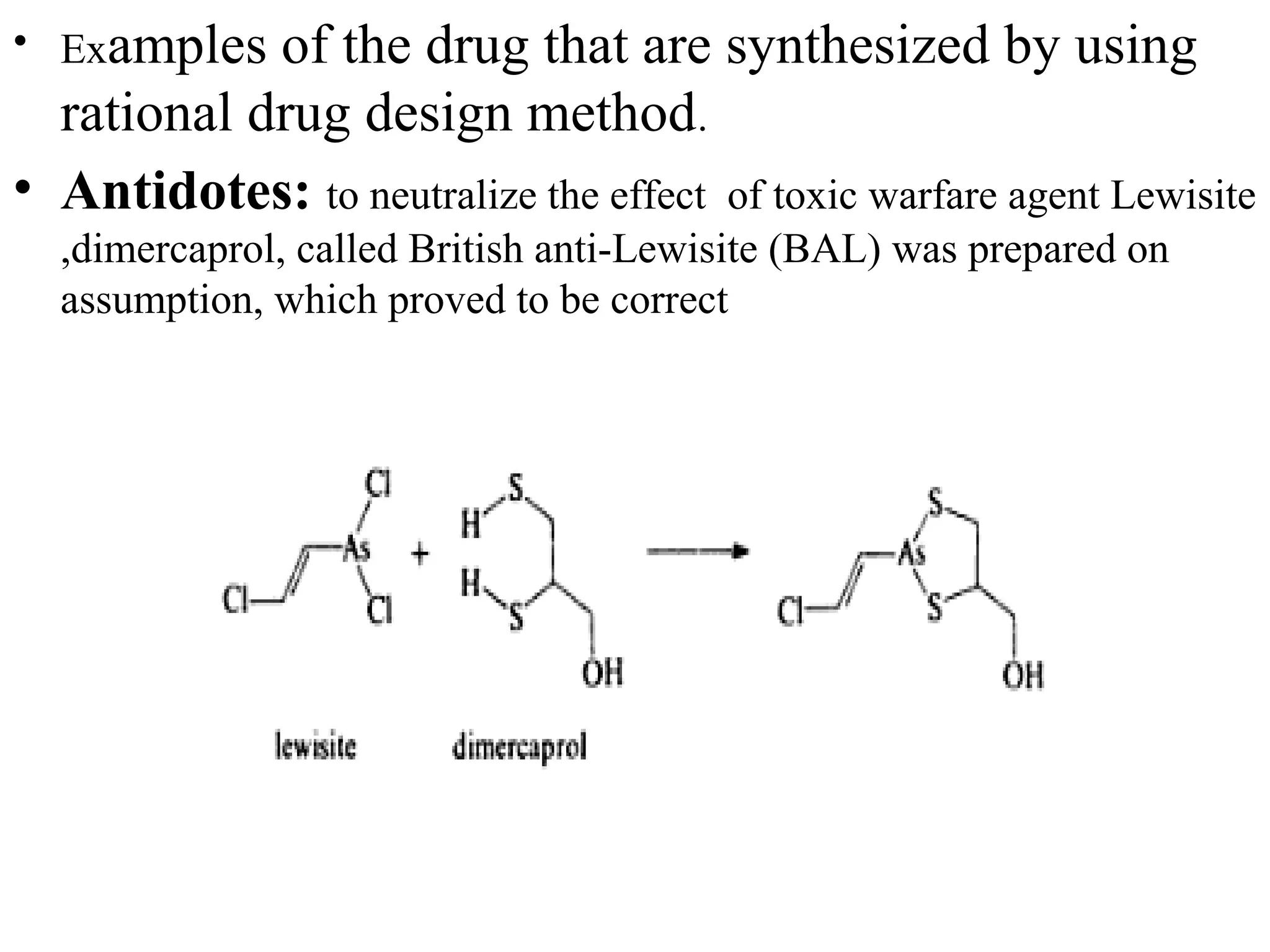
• Antidotes: to neutralize the effect of toxic warfare agent Lewisite
  ,dimercaprol, called British anti-Lewisite (BAL) was prepared on
  assumption, which proved to be correct
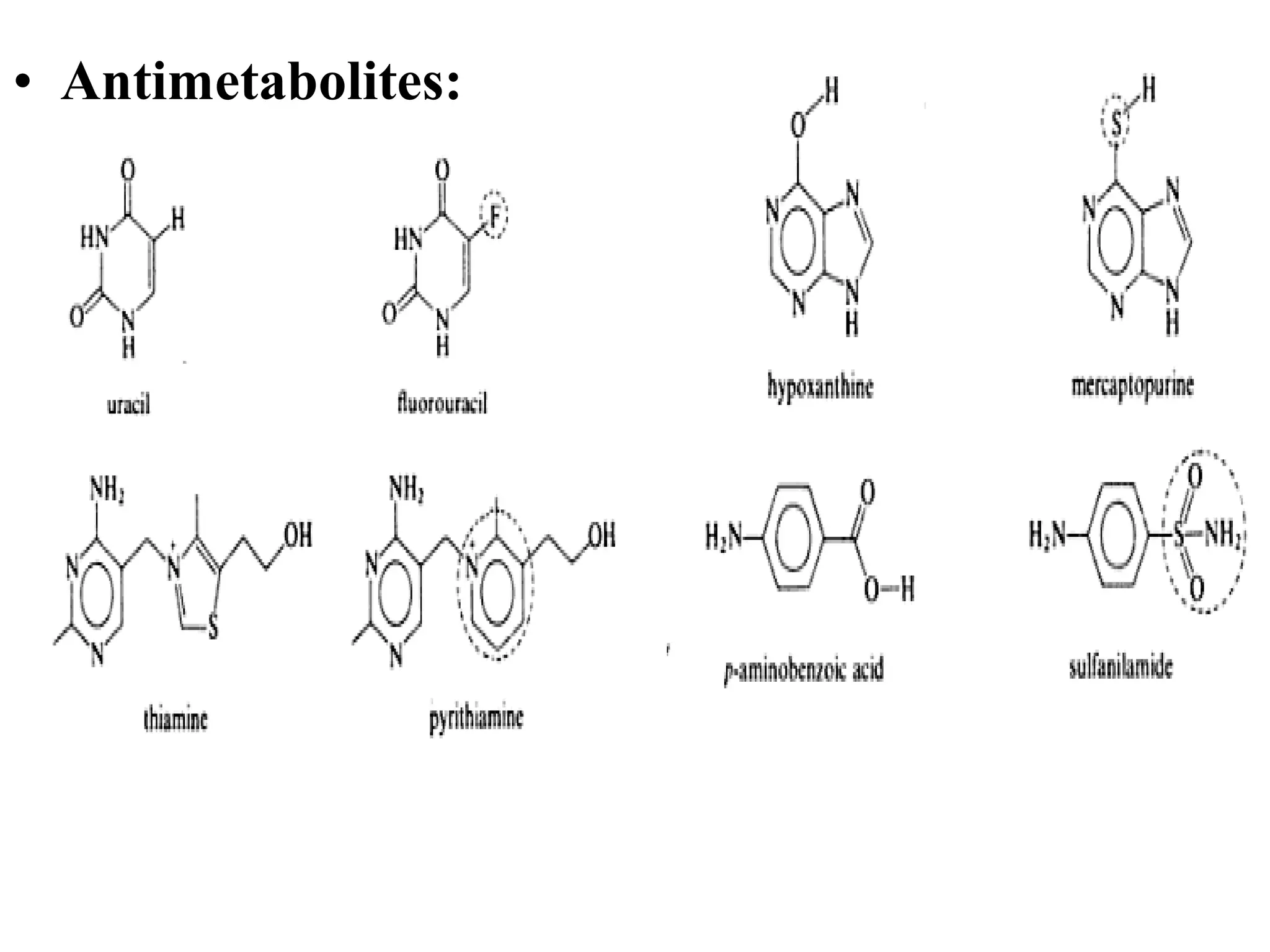
• Antimetabolites : these are the drugs that owing to their
  structural resemblance to normal cellular metabolites ,can replace
  them in biological process but can not carryout their normal role ,
  they are designed by isosteric replacement of certain atoms or
  chemical groups of essential metabolites
• Antimetabolites:
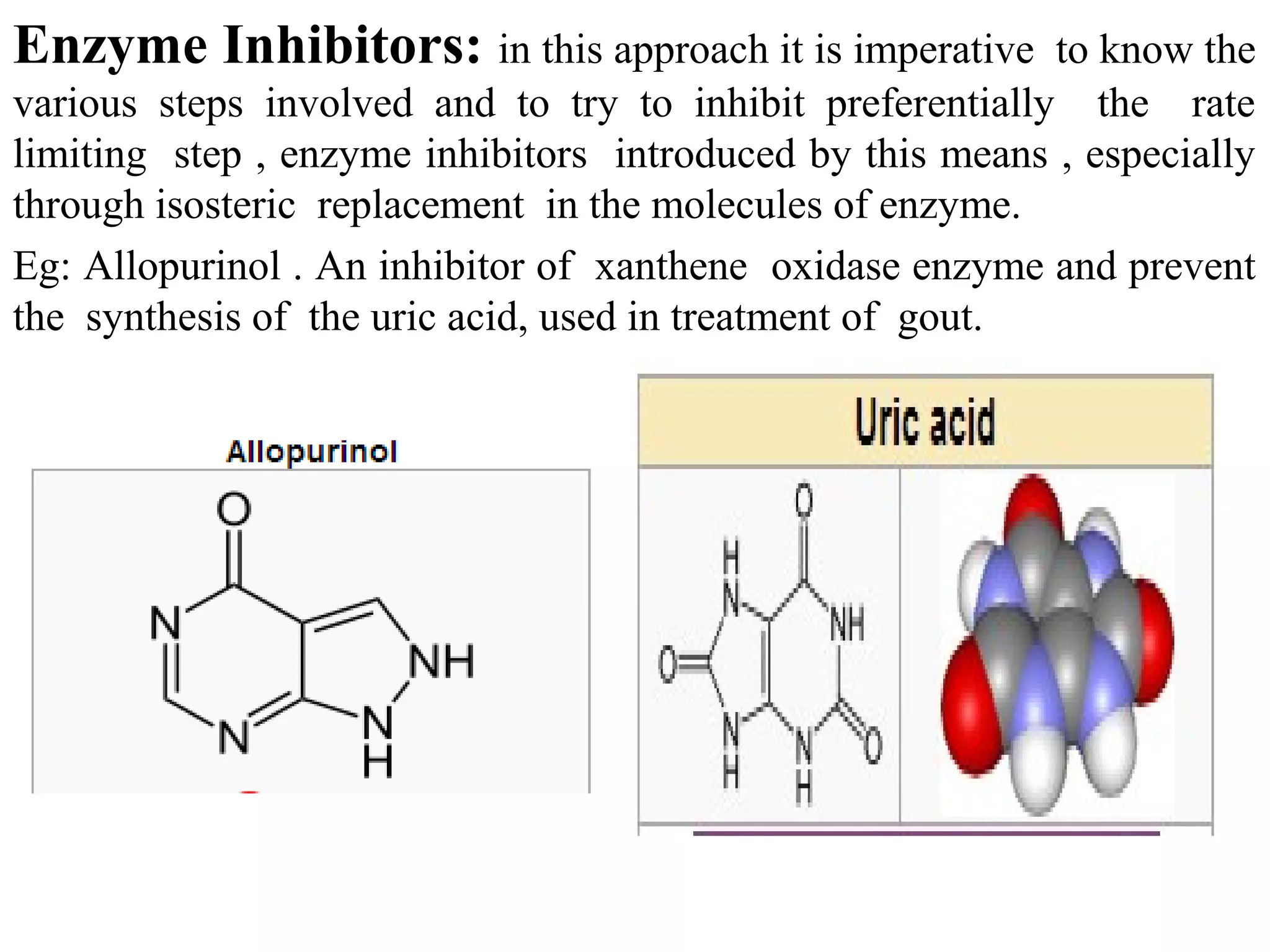
Enzyme Inhibitors: in this approach it is imperative       to know the
various steps involved and to try to inhibit preferentially the rate
limiting step , enzyme inhibitors introduced by this means , especially
through isosteric replacement in the molecules of enzyme.
Eg: Allopurinol . An inhibitor of xanthene oxidase enzyme and prevent
the synthesis of the uric acid, used in treatment of gout.
References:
 Andrejus Korolkovas ESSENTIALS OF MEDICINAL CHEMISTRY, 2ND ED
Friary, R. Jobs in the Drug Industry A Career Guide for Chemists; Academic Press: San
Diego, CA, 2000.
Thomas, G. Medicinal Chemistry An Introduction; John Wiley & Sons: New York, NY,
2000.
Williams, D. A.; Lemke, T.L. Foye's Principles of Medicinal Chemistry; Lippincott
Williams & Wilkins: Baltimore, MD, 2002.

Rational drug design

  • 1.
    RATIONAL DRUG DESIGN Presented by, J.NARESH.
  • 2.
    Rational Drug design •Rational drug design is also sometimes referred as Drug design or Rational design. It is a process in which finding of new medication based on knowledge of biological target is done. It involves design of small molecules that are complementary in shape and charge to bimolecular target. • . The drug is most commonly an organic small molecule that activates or inhibits the function of a bio molecule such as a protein, which in turn results in a therapeutic benefit to the patient • In contrast to traditional methods of drug discovery, which rely on trial-and-error testing of chemical substances on cultured cells or animals, and matching the apparent effects to treatments, rational drug design begins with a hypothesis that modulation of a specific biological target may have therapeutic value.
  • 3.
    Method of Rationaldrug design • SAR analysis try to convert structure- activity observations into structure-activity relationships. We have to aim at maximizing the knowledge that can be extracted from the raw data in molecular terms, exploit this knowledge to identify which molecule should be synthesized ant identify lead compounds for either additional modification or further pre-clinical studies
  • 4.
    Rational Drug Design;Example - Cimetadine (Tagamet) Starts with a validated biological target and ends up with a drug that optimally interacts with the target and triggers the desired biological action. Problem: histamine triggers release of stomach acid. Want a histamine antagonist to prevent stomach acid release by histamine = VALIDATED BIOLOGICAL TARGET. Histamine analogs were synthesized with systematically varied structures (chemical modification), and SCREENED. N-guanyl- histamine showed some antagonist properties = LEAD compound.
  • 5.
    Rational Drug Design- Cimetidine (Tagamet) - continued a. Chemical modifications were b. More potent and orally active, made of the lead = LEAD but thiourea found to be toxic in OPTIMIZATION: clinical trials c. Replacement of the group led to d. Eventually replaced by Zantac an effective and well-tolerated with an improved safety profile product:
  • 6.
    Rational Drug Design- Begins with the design of compounds that conform to specific requirements. The molecules are synthesized, tested. Then the molecule is redesigned, synthesized, tested….
  • 7.
    Types of RationalDrug Designing Methods: 1. 3D structure of biological target (receptor-based drug design) 2. Structure(s) of known active small molecules (pharmacophore-based drug design) 3)Computer –assisted drug design(CADD) 4) Molecular graphics 5)Pattern recognition 6)Receptor -fit
  • 8.
    Rational Drug Design- Pharmacophore-based Drug Design •Examine features of inactive small molecules (ligands) and the features of active small molecules (ligands). •Generate a hypothesis about what chemical groups on the ligand are necessary for biological function; what chemical groups suppress biological function. •Generate new ligands which have the same necessary chemical groups in the same 3D locations. (“Mimic” the active groups) Advantage: Don’t need to know the biological target structure
  • 10.
    Rational Drug Design- Receptor-based Drug Design •Examine the 3D structure of the biological target (usually an X- ray structure; hopefully one where the target is complexed with a small molecule ligand; if no data is available, look for homologous protein structures/sequences.) •Look for specific chemical groups that could be part of an attractive interaction between the target protein and the drug. •Design a drug candidate that will have multiple sites of complementary interactions with the biological target. Advantage: Visualization allows direct design of molecules
  • 11.
    3)computer-assisted drug design: Thisis concerned primarily with physicochemical parameters involved in drug activity, quantitative structure –activity relationship (QSAR) and quantam chemistry models ,to determine the most promising substance of a series. 4)Molecular graphics: It also called molecular modeling and conformational analysis.In which the conformation or molecular shape of drug,sometimes determined by computer orX-ray crystrollography, is takenintoaccount as aguide to design anologs.
  • 12.
    5) Pattern recognition:this method is used to save time and money in selecting the best option for the synthesis of potential desired drugs. 6) Receptor-fit: this is also called pharmacological receptor characterization , in which several modern techniques are used , including NMR spectroscopy ,to ascertain how drug-receptor interaction may take place and based on this information , design a drug that may be considered as a template of receptor.
  • 13.
    • Examples of the drug that are synthesized by using rational drug design method. • Antidotes: to neutralize the effect of toxic warfare agent Lewisite ,dimercaprol, called British anti-Lewisite (BAL) was prepared on assumption, which proved to be correct
  • 14.
    • Antimetabolites :these are the drugs that owing to their structural resemblance to normal cellular metabolites ,can replace them in biological process but can not carryout their normal role , they are designed by isosteric replacement of certain atoms or chemical groups of essential metabolites
  • 15.
  • 16.
    Enzyme Inhibitors: inthis approach it is imperative to know the various steps involved and to try to inhibit preferentially the rate limiting step , enzyme inhibitors introduced by this means , especially through isosteric replacement in the molecules of enzyme. Eg: Allopurinol . An inhibitor of xanthene oxidase enzyme and prevent the synthesis of the uric acid, used in treatment of gout.
  • 17.
    References: Andrejus KorolkovasESSENTIALS OF MEDICINAL CHEMISTRY, 2ND ED Friary, R. Jobs in the Drug Industry A Career Guide for Chemists; Academic Press: San Diego, CA, 2000. Thomas, G. Medicinal Chemistry An Introduction; John Wiley & Sons: New York, NY, 2000. Williams, D. A.; Lemke, T.L. Foye's Principles of Medicinal Chemistry; Lippincott Williams & Wilkins: Baltimore, MD, 2002.