VACCINE SAFETY
SURVEILLANCE
PRESENTED BY,
G. GOPI
BACHELOR OF PHARMACY – FINAL YEAR
VACCINES
 A complex biological formulation that gives acquired immunity to a particular infectious
disease is called vaccine.
 The process of ingestion of antigenic agents to stimulate an individuals immune system
for against particular pathogen is called vaccination. It is one of the most effective way.
 Vaccine Pharmacovigilance,
Detection
Assessment
Understanding
Reporting AEFI
VACCINE PROVIDE BY GOVT. OF INDIA
 Govt. of India is providing vaccination to prevent 7 vaccines preventable diseases
namely,
 Diphtheria
 Pertussis
 Tetanus
 Polio
 Measles
 Hepatitis B
 BCG
OTHER VACCINES
 Pneumococcal vaccine
 Rotavirus vaccine
 Hepatitis A
 MMR
 Influenza
 Meningococcal
 Cholera
 JE
 HPV
 Typhoid
 Varicella
TYPES OF VACCINES
Live attenuated (LAV)
Subunit (Purified Antigen)
Inactive (Killed Antigen)
Toxoid (Inactive Toxins)
Viral Vector
Nucleic acid
COMPONENTS OF VACCINE
VACCINE PHARMACOVIGILANCE
 OBJECTIVES:
 Minimize negative effect.
 To promote safe use of vaccines.
 Detect the adverse event early.
 To Make sure that healthy people usually receive the vaccines.
 To ensure that infants and children consume most of the vaccines.
 To administer the vaccines globally
STEPS OF VACCINE
PHARMACOVIGILANE
Detect signal suggesting AEFI is related to vaccine
Develop hypothesis about casual association b/w an AEFI
and vaccination
Test hypothesis through appropriate epidemiological
methods
VACCINATION FAILURE
 When the disease occurs in a person despite being vaccinated for it, this is called vaccine
failure
Vaccine failure
Primary
Fails to make adequate
immune response to the
initial vaccination
Secondary
Makes an adequate Immune
response initially but then
immunity wanes over time
CAUSES OF VACCINE FAILURE
 Manufacture
 Incorrect vaccination timing
 Vaccine administration method
 Improper duration of
vaccination
 Poor health status
 immunosuppression
 Lack of maintenance
 inappropriate choice of vaccine
Poor vaccine storage
ageing
Vaccine transportation
use of expired vaccine
Light exposure
genetic resistance
AEFI
 Unfavourable or unintended response
 CLASSIFICATION
Vaccine Product
related
Vaccine Quality
related
Immunization Error
related
Immunization Anxiety
related
Coincidental Event
CLASSIFICATION OF AEFIs
 Vaccine Product related
 Vaccine Quality related
 Immunization Error related – Inappropriate vaccine management or administration
(preventable in nature)
 Immunization Anxiety related – Anxiety about immunization (Eg: Vasovagal syncope
in an adolescent during immunization)
 Coincidental Events – Fever occurs at the time of the vaccination
TYPES OF AEFI BASED ON SEVERITY
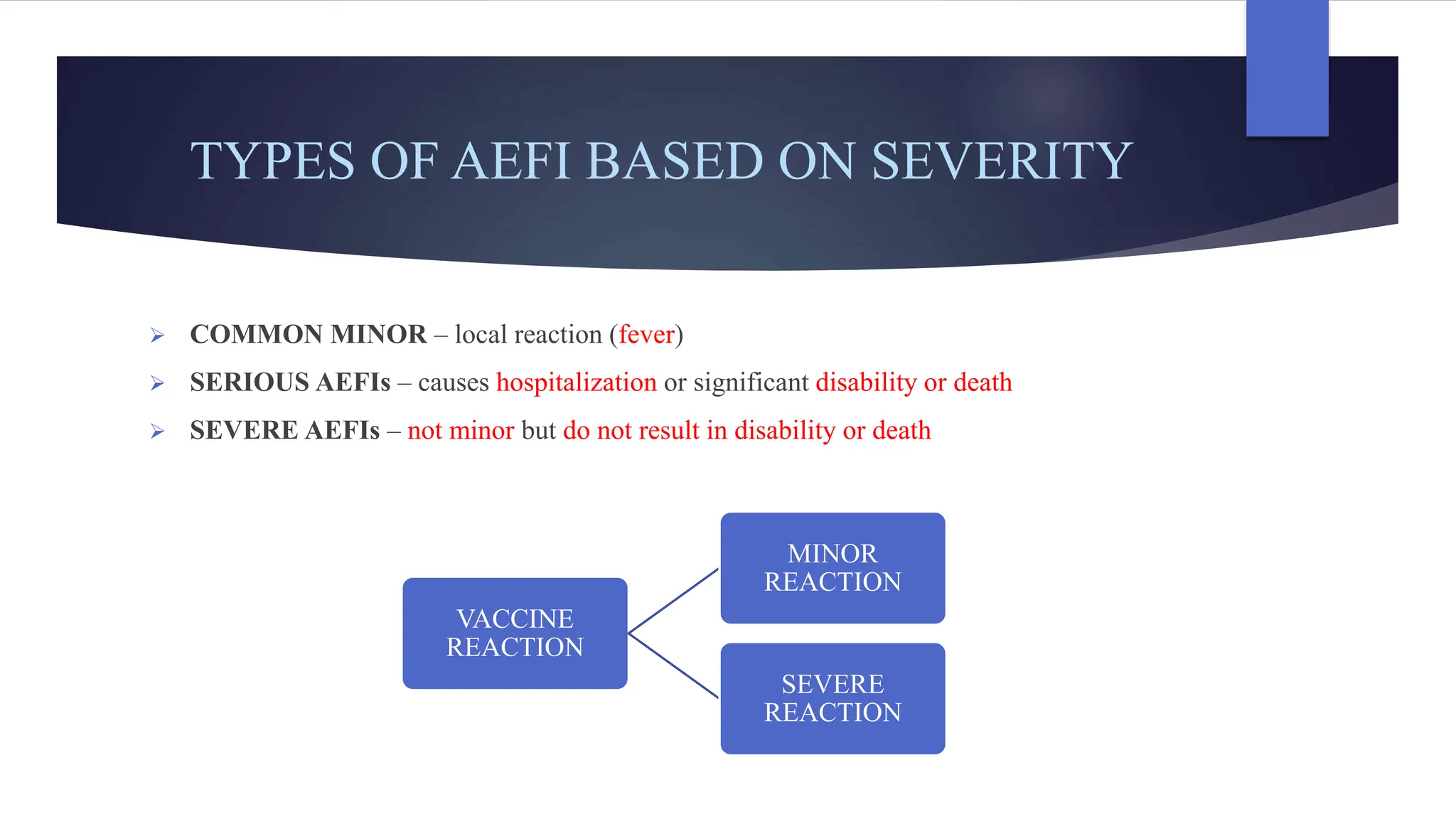
 COMMON MINOR – local reaction (fever)
 SERIOUS AEFIs – causes hospitalization or significant disability or death
 SEVERE AEFIs – not minor but do not result in disability or death
VACCINE
REACTION
MINOR
REACTION
SEVERE
REACTION
MINOR REACTION SEVERE REACTION
Happens within few hrs of injection Normally no long term problem is observed
Resolved after short period of time Disabling is observed
Local reaction Symptoms like pain, swelling or redness at
the site of injection
Rarely lives threatening
Systemic reaction – muscle pain, headache, loss of
appetite or fever
Seizures or anaphylaxis
COMPONENTS OF AEFI
 DETECTION AND REPORTING - Parents or Health care workers (trained), immunization
program manager describe the role and responsibilities of healthcare workers
 INVESTIGATION – confirm the diagnosis, outcome of adverse event , identify the specification of
implicated vaccine, examine operational aspects (immunization error)
WHO provide key instrument- Aide-Memorie on AEFI investigation provide guidelines
Only for Serious reaction (death, cluster investigation, disability and vaccine product)
 CAUSALITY ASSESSMENT OF AEFI – systematic review data of AEFI care reports
 RISK/BENEFIT ASSESSMENT
THANK YOU FOR YOUR ATTENTION

VACCINE SAFETY SURVEILLANCE.pptx

  • 1.
    VACCINE SAFETY SURVEILLANCE PRESENTED BY, G.GOPI BACHELOR OF PHARMACY – FINAL YEAR
  • 2.
    VACCINES  A complexbiological formulation that gives acquired immunity to a particular infectious disease is called vaccine.  The process of ingestion of antigenic agents to stimulate an individuals immune system for against particular pathogen is called vaccination. It is one of the most effective way.  Vaccine Pharmacovigilance, Detection Assessment Understanding Reporting AEFI
  • 3.
    VACCINE PROVIDE BYGOVT. OF INDIA  Govt. of India is providing vaccination to prevent 7 vaccines preventable diseases namely,  Diphtheria  Pertussis  Tetanus  Polio  Measles  Hepatitis B  BCG
  • 4.
    OTHER VACCINES  Pneumococcalvaccine  Rotavirus vaccine  Hepatitis A  MMR  Influenza  Meningococcal  Cholera  JE  HPV  Typhoid  Varicella
  • 5.
    TYPES OF VACCINES Liveattenuated (LAV) Subunit (Purified Antigen) Inactive (Killed Antigen) Toxoid (Inactive Toxins) Viral Vector Nucleic acid
  • 7.
  • 8.
    VACCINE PHARMACOVIGILANCE  OBJECTIVES: Minimize negative effect.  To promote safe use of vaccines.  Detect the adverse event early.  To Make sure that healthy people usually receive the vaccines.  To ensure that infants and children consume most of the vaccines.  To administer the vaccines globally
  • 9.
    STEPS OF VACCINE PHARMACOVIGILANE Detectsignal suggesting AEFI is related to vaccine Develop hypothesis about casual association b/w an AEFI and vaccination Test hypothesis through appropriate epidemiological methods
  • 10.
    VACCINATION FAILURE  Whenthe disease occurs in a person despite being vaccinated for it, this is called vaccine failure Vaccine failure Primary Fails to make adequate immune response to the initial vaccination Secondary Makes an adequate Immune response initially but then immunity wanes over time
  • 11.
    CAUSES OF VACCINEFAILURE  Manufacture  Incorrect vaccination timing  Vaccine administration method  Improper duration of vaccination  Poor health status  immunosuppression  Lack of maintenance  inappropriate choice of vaccine Poor vaccine storage ageing Vaccine transportation use of expired vaccine Light exposure genetic resistance
  • 12.
    AEFI  Unfavourable orunintended response  CLASSIFICATION Vaccine Product related Vaccine Quality related Immunization Error related Immunization Anxiety related Coincidental Event
  • 13.
    CLASSIFICATION OF AEFIs Vaccine Product related  Vaccine Quality related  Immunization Error related – Inappropriate vaccine management or administration (preventable in nature)  Immunization Anxiety related – Anxiety about immunization (Eg: Vasovagal syncope in an adolescent during immunization)  Coincidental Events – Fever occurs at the time of the vaccination
  • 14.
    TYPES OF AEFIBASED ON SEVERITY  COMMON MINOR – local reaction (fever)  SERIOUS AEFIs – causes hospitalization or significant disability or death  SEVERE AEFIs – not minor but do not result in disability or death VACCINE REACTION MINOR REACTION SEVERE REACTION
  • 15.
    MINOR REACTION SEVEREREACTION Happens within few hrs of injection Normally no long term problem is observed Resolved after short period of time Disabling is observed Local reaction Symptoms like pain, swelling or redness at the site of injection Rarely lives threatening Systemic reaction – muscle pain, headache, loss of appetite or fever Seizures or anaphylaxis
  • 16.
    COMPONENTS OF AEFI DETECTION AND REPORTING - Parents or Health care workers (trained), immunization program manager describe the role and responsibilities of healthcare workers  INVESTIGATION – confirm the diagnosis, outcome of adverse event , identify the specification of implicated vaccine, examine operational aspects (immunization error) WHO provide key instrument- Aide-Memorie on AEFI investigation provide guidelines Only for Serious reaction (death, cluster investigation, disability and vaccine product)  CAUSALITY ASSESSMENT OF AEFI – systematic review data of AEFI care reports  RISK/BENEFIT ASSESSMENT
  • 17.
    THANK YOU FORYOUR ATTENTION