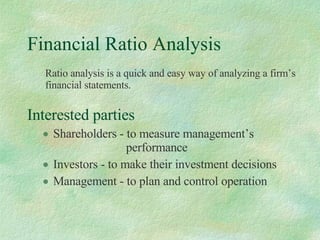
Financial Ratio Analysis Interested parties Shareholders - to measure management’s     performance Investors - to make their investment decisions Management - to plan and control operation Ratio analysis is a quick and easy way of analyzing a firm’s financial statements.
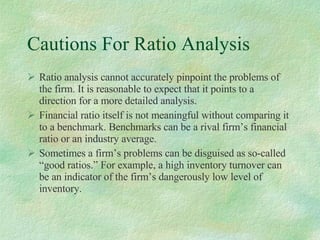
Cautions For Ratio Analysis Ratio analysis cannot accurately pinpoint the problems of the firm. It is reasonable to expect that it points to a direction for a more detailed analysis. Financial ratio itself is not meaningful without comparing it to a benchmark. Benchmarks can be a rival firm’s financial ratio or an industry average.  Sometimes a firm’s problems can be disguised as so-called “good ratios.” For example, a high inventory turnover can be an indicator of the firm’s dangerously low level of inventory.
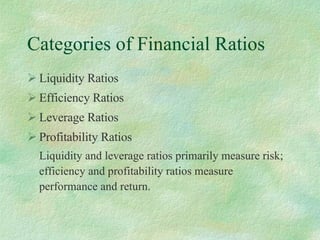
Categories of Financial Ratios Liquidity Ratios Efficiency Ratios Leverage Ratios Profitability Ratios Liquidity and leverage ratios primarily measure risk; efficiency and profitability ratios measure performance and return.
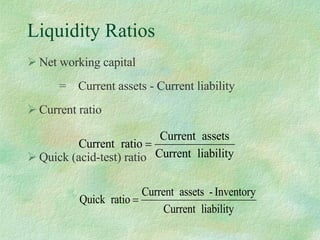
Liquidity Ratios Net working capital  =  Current assets - Current liability Current ratio Quick (acid-test) ratio
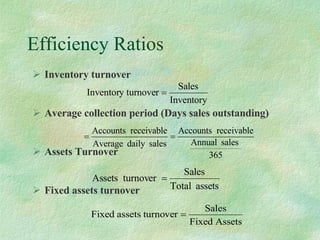
Efficiency Ratios Inventory turnover Average collection period (Days sales outstanding) Assets Turnover Fixed assets turnover
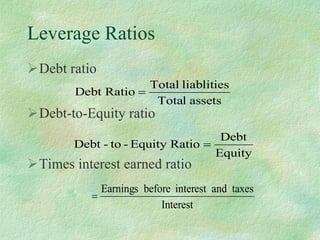
Leverage Ratios Debt ratio Debt-to-Equity ratio Times interest earned ratio
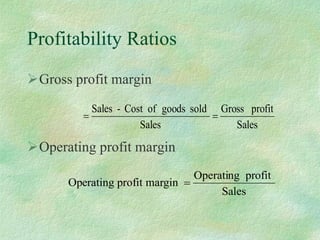
Profitability Ratios Gross profit margin Operating profit margin
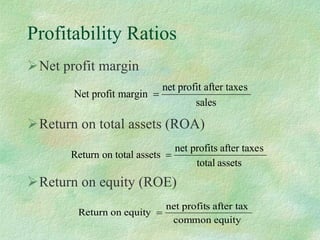
Profitability Ratios Net profit margin Return on total assets (ROA)   Return on equity (ROE)
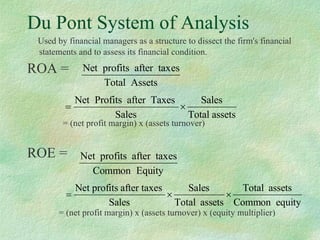
Du Pont System of Analysis Used by financial managers as a structure to dissect the firm's financial statements and to assess its financial condition. ROA =    = (net profit margin) x (assets turnover)  ROE =  = (net profit margin) x (assets turnover) x (equity multiplier)
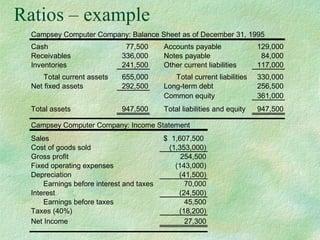
Ratios – example
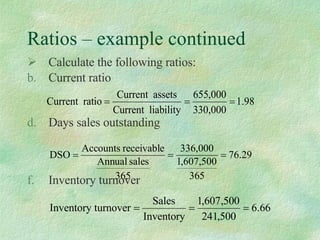
Ratios – example continued Calculate the following ratios: Current ratio  Days sales outstanding Inventory turnover
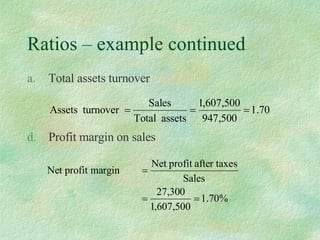
Ratios – example continued Total assets turnover Profit margin on sales
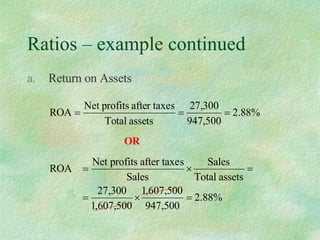
Ratios – example continued Return on Assets OR
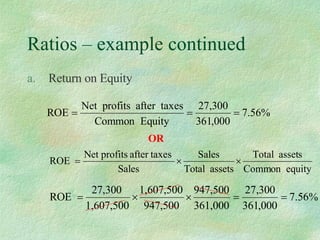
Ratios – example continued Return on Equity OR
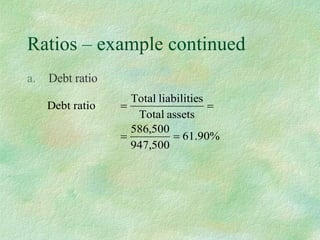
Ratios – example continued Debt ratio
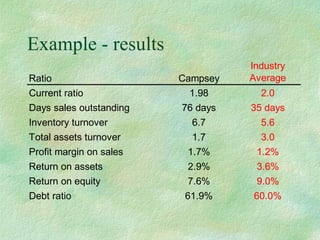
Example - results

Ratio Analysis

  • 1.
    Financial Ratio AnalysisInterested parties Shareholders - to measure management’s performance Investors - to make their investment decisions Management - to plan and control operation Ratio analysis is a quick and easy way of analyzing a firm’s financial statements.
  • 2.
    Cautions For RatioAnalysis Ratio analysis cannot accurately pinpoint the problems of the firm. It is reasonable to expect that it points to a direction for a more detailed analysis. Financial ratio itself is not meaningful without comparing it to a benchmark. Benchmarks can be a rival firm’s financial ratio or an industry average. Sometimes a firm’s problems can be disguised as so-called “good ratios.” For example, a high inventory turnover can be an indicator of the firm’s dangerously low level of inventory.
  • 3.
    Categories of FinancialRatios Liquidity Ratios Efficiency Ratios Leverage Ratios Profitability Ratios Liquidity and leverage ratios primarily measure risk; efficiency and profitability ratios measure performance and return.
  • 4.
    Liquidity Ratios Networking capital = Current assets - Current liability Current ratio Quick (acid-test) ratio
  • 5.
    Efficiency Ratios Inventoryturnover Average collection period (Days sales outstanding) Assets Turnover Fixed assets turnover
  • 6.
    Leverage Ratios Debtratio Debt-to-Equity ratio Times interest earned ratio
  • 7.
    Profitability Ratios Grossprofit margin Operating profit margin
  • 8.
    Profitability Ratios Netprofit margin Return on total assets (ROA) Return on equity (ROE)
  • 9.
    Du Pont Systemof Analysis Used by financial managers as a structure to dissect the firm's financial statements and to assess its financial condition. ROA = = (net profit margin) x (assets turnover) ROE = = (net profit margin) x (assets turnover) x (equity multiplier)
  • 10.
  • 11.
    Ratios – examplecontinued Calculate the following ratios: Current ratio Days sales outstanding Inventory turnover
  • 12.
    Ratios – examplecontinued Total assets turnover Profit margin on sales
  • 13.
    Ratios – examplecontinued Return on Assets OR
  • 14.
    Ratios – examplecontinued Return on Equity OR
  • 15.
    Ratios – examplecontinued Debt ratio
  • 16.