Downloaded 122 times

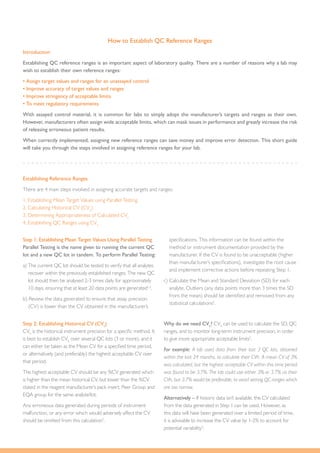



The document outlines the process for establishing quality control (QC) reference ranges in laboratory settings, emphasizing the importance of using lab-specific data to enhance accuracy and compliance with regulatory standards. It details four main steps: establishing mean target values through parallel testing, calculating historical coefficients of variation (cvh), determining the appropriateness of cvh, and establishing QC ranges based on these calculations. By following these steps, laboratories can improve error detection and potentially reduce costs by avoiding broad manufacturer ranges that may hide performance issues.


